Finding Brave Ep #39: How To Leverage Technology to Increase Your Happiness, with Amy Blankson
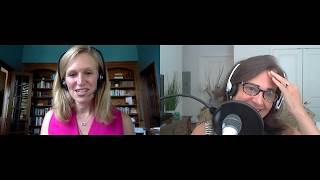
Amy Blankson explains how to use technology for happiness instead of harm. She identifies addictive habits like filling downtime and chasing validation, then offers concrete fixes: set email boundaries, use calendar blocks, co-create screen rules with kids, and choose action-oriented social media over passive scrolling.
Chapters
Hello, everybody. Welcome to Finding Brave. How was your. We were recording this right after Labor Day. How was it for you? For those who celebrate it, I hope you had a wonderful, brave, exciting, relaxing, anything, any word you want for your. For your long weekend. I had a staycation. I was just telling my awesome guest Amy and wow, that was beautiful. To unplug right in your own home. I tend not to be able to do that. We're going to talk all about technology, aren't we? But it was just a joy. And I hope you've had a wonderful week since we last connected. But right now I want to jump in and introduce to you my dear friend and such an inspiring author and speaker and a true light in the world in many senses, Amy Blankson. Amy, thank you for joining me, Kathy.
My absolute pleasure. I am so honored to get to join you on Finding Brave.
Oh, me too. And boy, I love this view. What did you call it? Your Beauty and the Beast library?
Yes, I love books. And now I finally have a place to put them all in my house.
I love that. I'm envious in a good way. All right, everybody, before we jump in, we are. I want to introduce you to Amy and have you understand her amazingness. And we are talking about how to leverage technology, technology to expand your happiness, which, you know, we all hear how technology erodes our happiness and stresses us out. And Amy's gonna set us straight in all these ways. But let me tell you about Amy. Amy Blankson is the only person to receive a point of light from two US Presidents. And Amy's gonna tell you what that is. Kind of got choked up when she told me. Amazing. After graduating from Harvard College and Yale School of Management, she co founded Good Thinking with you want to share who you co founded it with?
My brother, Shawn Acor.
Another favorite of mine to bring the science of happiness to life for others. Amy has since focused her work on understanding how to cultivate happiness in a digital era. You know, I've never asked you how you got into that. I'm going to ask you that in a minute. She is a member of the UN Global Happiness Council, a fellow of the World Innovation Organization, and is working with ieee. Oh, I used to deal with them when I was in science publishing to create standards for well being in artificial intelligence. Gosh, Amy, too bad you're not doing much over there. Amy, regular contributor for Forbes and author of the best selling book the Future of Happiness. Holy cow. And you've got little ones as well, right?
I do. I have three daughters, 118 and 5, who keep me very busy.
Oh, my gosh, what an. All right, we're going to dig in about all about technology and happiness, but can you tell us what point of light is?
I'd be happy to. So for many years, the United States presidents would nominate one person every day of their term to be a beacon of light for the community, for something they've done that inspired other people. And so I received my point of light back in high school long, long ago, when I organized a conference on civic engage for young people to get them inspired to take action in their community. And that was incredible and unexpected. Honor.
Wow. How meaningful. And then you got one a second time, right?
So I did. It was actually back to back because the day that I got my award was the day in between the two presidencies. So I got to have the award from both presidents. I love it. But at the same time. All right.
Oh my gosh. Gosh. That's an honor that no one else has. That's amazing. All right, let us dig in. Amy, about. Tell me how you. We've talked many times before, but how did you get into this focus of happiness vis a vis technology or in the intersection of. How did that come about?
Well, you know that my brother and I co founded Good Think about 11 years ago, which is a positive psychology consulting firm. And we started that organization with this idea that people were in the midst of the recession. They needed the research that was emerging at that time in the field of positive psychology. At that moment seems like a strange time to study happiness. But sometimes we find that in the midst of struggle is the very moment that people are most searching. And so we were speaking, traveling, researching, consulting with organizations for many years. And what I began to notice about three to four years ago was that the questions that we were getting from audiences began to shift from uncertainty about the future to technological uncertainty. And it became a bit more of a rising panic among people who are worried about our society falling apart, no longer having face to face communication. Our young people who don't know how to interact in a polite way anymore, whether robots will take over our jobs. I mean, these were real fears that people struggled with. And so I began doing research to figure out what positive psychology could say about how we use technology. We can glean some of the best resources that were emerging to apply it to this pain point that was emerging.
Wow. You know those questions that you just addressed, I'd love the answer to every one of those. Maybe we'll make this an hour.
Hopefully we'll dig in.
So let's talk about is technology good or bad for happiness? And how do we know?
I get that question a lot. And my response is usually echoing of William Shakespeare, actually, who said that there's nothing good nor bad, but thinking makes it so. And I love that quote. I love it because what it says to me is that our mindset and our attitude, the lens with which we're seeing the world, shapes our outcomes. Right. And when you think about it, technology is just a screen. Between you and me and between our viewers and listeners and us, it's just a piece of glass. It's not anything that has personification. And yet sometimes we think technology, it's working against us. It's definitely out there to get us. And what we're saying is we feel and experience a threat to who we are in a way, because we don't know how to interact in the best possible way across these new mediums. The iPhone came out 11 years ago. It was. I mean, when you think about it, it's just been 11 years. And yet our world is night and day different from our ability to speak to people over zoom or facetime, and our abilities to understand ourselves on a data level completely different from just a short period of time ago. And we've also seen that our behaviors have shifted, that we tend to lean towards overuse of new, exciting resources. And it doesn't have to be smartphones. It could have been televisions. It could have been newspapers back in the day, or radios before that. There has been a cycle of overuse of new information sources that we have to relearn. How do we interact with this in a healthy way? And I think positive psychology gives us some clues that say, you know, these are things that human beings have struggled with since the beginning of time. It's just that the medium has changed for us and we have to reapply what we already know to be our best selves and reach our potential.
I love that. That calms me down just hearing that. I do have to ask, if you don't mind me interjecting something on my staycation, I was really trying to unplug where possible. And those of us who write and all that, we're all always connected. But you know, what I found with myself, and I'm sure you've heard this a million times. So you say that the overuse of new meat resources or means of connecting or means of information is a historical thing we've seen. Let me ask you this question. I was walking my dog and I realized in one fell swoop, I had this flashback of when I used to smoke cigarettes and I stopped when I was 24, but I smoked a packet, pack, pack a half a day, especially writing, you know, that's how writers back in the day did it.
Absolutely.
And I would quickly feel like I couldn't go to a bar and wait for a friend without whipping out a cigarette, or I couldn't take a walk to the top of a mountain without having a cigarette to punctuate the joy of that. And all of a sudden, yesterday, walking my dog, whipping out my phone 10 times in a 20 minute walk. What is, isn't, it's an addiction. Now tell me if I'm wrong, but I can't see people going to the New York Times in an addicted way 80 years ago.
There's an addictive pop.
Tell us about that. That's what I think we're worried about with us and our kids, right?
Yes, yes. So I think that we see that the impulse to pick up our phones on a regular basis, just like you pointed out, I really love that analogy of picking up a cigarette. What we're doing is filling awkward space and quiet white space with noise because it makes us feel less alone. It makes us feel like we're engaged or we're needed. I never smoke, so I don't know for sure about that. But I know for phones, what's most addictive and has been scientifically studied has been that ding of a text message coming through which triggers dopamine because it tells you that somebody needs you. And so underlying this impulse to check is the need to be needed. And that's what's been there all along. Now, the newspaper, the radio, whatever technologies have emerged before that the temptations were slightly different. It wasn't the same. It wasn't the level of color and flashing lights and AI that knows your very weaknesses on Amazon that will target your moment of, oh, I have to have those shots. But so what we're seeing is a sophistication of what we've seen cyclically happen in the past. And because of that, I think that it is all the more important that individuals who want to reach their full potential, and particularly leaders, are tuned in to how that dynamic is playing out and how you can short circuit it by changing your behaviors intentionally. When I work with executives and I share with them how often they've been checking their phone, we'll look at their data together. Shocking, literally shocking for people to realize that upwards of 25% of their day is spent on a device where suddenly they realize they've been sucked in and they thought they were being productive, but turns out they were just filling white space. They were surfing, they were looking, they were hunting for something that was going to fill something much deeper within them. And so I want to call people out, particularly because we're on the Finding Brave podcast here to be brave and to look at those hard questions underneath that says, why am I doing this? What is it that I'm getting out of it? And what is it that I really need to fill that void?
Oh, gosh, so good. Can I offer everyone an example of that and see if this is helpful? Anyone who writes, anyone who remember in the day when you'd have a book out, you'd go to Amazon and see what your ranking is. The first few months, months, weeks of my breakthrough, I would check that thing obsessively well. Another thing that's happening with my phone is, and everyone else's, when I post something on Forbes, I can refresh it and see what the views are. And yesterday I had a thing go viral. You know, 90,000 views in two days. I was refreshing that I'll be really honest so much. I don't even want to tell you how often. And I think the point was, is it going to hit 500,000? Is it going to go to a million, which we all love, or is it going to stay? But I stopped myself and said, you know what, what are you actually getting out of the knowledge that it went from 80 to 90,000? What, what, what am I seeking? And so you're saying the research shows it's that someone needs you, don't you think? Also, it's how many people looked at my uploaded selfie? How many people like me?
That validation that what you have to say is valuable and really insightful and unique. And of course, those are wonderful things. And congratulations, by the way, because I think anytime that you're able to get beautiful thought leadership out there to people in a way that they listen, that should be celebrated, right? Like, that's. That's fantastic.
Why do I need. Why does one need to look at it every three minutes? Why I say I'll check it at noon and at midnight, twice a day. What are we doing?
Maybe there's a fear that it could be a bit of fomo, right? The fear of missing out, but it could also be that, what if it goes away? What if that's the end of it and all this fun is no longer. There's a temporal feeling that what we're experiencing is so fleeting. And maybe that's because we live in such a fast paced world, but we want to have a lasting change. And so when I have the same problem you do, I want to make sure that if I've spent all these hours writing a blog or, you know, recording a course, that people are going to use it and if they're not using it, I'm doing something wrong. That's a bit of the world that you and I live in. But I think that everybody who has social media presence out there is something they could probably feel as well. What I can arm people with though, is the knowledge that when you check your email only three times a day. So let's just focus on email for a second. If you're just checking your email three times a day, it's been scientifically proven to be more effective and productive than checking constantly. So there's a bit of retraining going on here. Yes, it feels good to check constantly and to see that, but we know maybe that wasn't the best use of your time. Looking back, maybe there's some guilt or some feelings like, oh, man, I had so many other things I needed to be doing and now I don't have that time back. So I was reading recently at this blog about how we have these time blocks in our lives that if you count up the number of blocks of time you have until you die, which is a little bit morbid, you begin to realize, you know, I have X number of dinners with my family. I have this much time to write this book, I have that much time to learn a new instrument, and all of a sudden, time, the value of time, really rises to the surface and we begin to say, okay, yes, I want to check that. But what's best for me right now, who I want to be is the person who can find balance amidst all of that temptation and say, this is what I need to do. It's developing that discipline that is adjusting to the new era that we're living in.
Oh, gosh, Amy, come and live with me and tell me what I'm doing wrong here. Let me ask another question. I know that I look at my email constantly because there's a belief and I think there's a validation that if I can fire off the quick response that's necessary or send them the quick thing that's needed, the sooner I can do that and get it off my plate, the better. Does the research show that that's actually not accurate?
So you've hit on a million dollar question right here. I get this question constantly, and I think this one is such a central question. I'm delighted you brought it up because what the research is showing is that there is this sort of myth of the zero inbox, right? If I can just get my inbox to zero, which let me just admit right now, I've never done, I've gotten.
The spam to zero.
I can do that no problem. The spam is no problem. But if I could just get my inbox to zero, then I'll be on top of everything, which is the one of those predictably irrational things that we think about. Because what we know and what the science is showing us is that for every email you send, it triggers for in return. I like to think of it as like spawning sort of like zombies that come back to life, right? The walking dead. But I, I think that when you hear that, it's so defeating, right? It's, it's like, why would I bother to write any emails if it's just going to multiply except exponentially into more. Well, the idea is that maybe we don't need to be answering every single email. Maybe we need to be prioritizing. Maybe we need to not be training each other to constantly respond. And one of the statistics I read last month that just blew my mind was that I hope I'm getting this right. It was 57% of employees feel like they have to check their email after 11pm at night in order to stay afloat with work. So 57% of people, I mean, one out of two of us is up late at night. And the reason is that, say your boss sends an email on Sunday night. They have young children, they're trying to work flexibly with their schedule. They think, okay, you know, I'm working after 9pm so that I can get my stuff done so I can be with my children. Wonderful. When that boss sends the email to the employees, everybody on that thread has the decision, do I respond or do I not? And the first person to respond begins to create sort of an arms race, or I guess you could say a finger race, right? And if you're cc'd and you don't respond, suddenly you look like, oh, that person's not that on the ball, or why didn't they jump into the conversation? Where were they? So Monday morning hits. The boss now has emails from everybody on that email thread. And all that time he thought he was going to have to do the really meaningful work. That next morning is now flooded with responses from, from sort of guilt induced emailing over the Weekend and after hours. Somewhere along the line that has to stop. And what I am trying to call out leaders to do now is to say, leaders, you have a duty of care to stop the buck somewhere. And what's beautiful is that, you know, while this has been a pressure that managers have had for years, what we're seeing is that there is a beginning shift now where digital etiquette about maybe delaying a message till Monday morning and not sending it on the weekend or not sending it after hours is actually respected. And those individuals who do so are seen as more charismatic, thoughtful, engaged leaders. So the more digital etiquette you're showing, the more it's actually appreciated. So I say if this is the trend we're seeing, let's jump on board, let's make use of this. Because none of us want to be up at 11 o' clock checking an email thread from everyone. So somebody has to take the leadership to do that.
I love it. Can you give me another tip here for everyone who's, who is client facing or customer facing? One thing that I've kind of built a reputation around is being responsive. Like people will say, you are so uber responsive. And there's a stroking there. They love it. Especially in an age where if someone has a big following, they tend never to engage at all. But there comes a point where that's impossible to keep up. And one thing I think about staycation that was so great for me is I put on an autoresponder. I'm out.
Yes.
And a hundred people have said to me, put on a continual autoresponder that will do our best to respond to your client or customer question within 24 hours. You know, other blah, blah, blah. Tell us what you think about. You know, am I people pleasing to be uber, uber responsive? Or I mean, it is something that I feel separates me from other people with a big following. I don't just want to be out there putting out in one direction. I want it to be a dialogue. But how do you help leaders and thought leaders process this balance? You know, I want to be responsive, but it's, it's killing me.
Yeah. You know, when I've been interviewing for my Forbes blog, I've been interviewing heads of technology firms. And the individuals I've spoken with often work in very different industries ranging from events management, technology solutions to events management, all the way to association management where people will send in, I have an emergency in my house that needs to get fixed. Somebody needs to come and do this. So there's these time sensitive topics where you feel like I have to be on all the time. When you stop and really dig with these managers though, what emerges is a bunch of secret strategies that individuals have not been sharing with each other. And for instance, I shut off my computer every night from 6 to 7. I don't put an autoresponder. I'm just, I'll get back to it later. But I give that time to myself.
You do that actually you or that's a tip someone.
That was a tip from one of the event managers who felt like she was on 247 because she worked in a global environment, but she at least gave herself one hour to sort of play hooky and she could probably push that a little bit more. But the other people she's working with didn't know she was doing that. They're also using secret strategies. But if it was brought into the light that people could dialogue and say, hey, what we want is a really positive digital culture, here's something that's worked great for me then we've brought some authenticity and transparency to a work environment that's more sustainable. Because even as responsive as you are, I hear in your voice saying like, it's just I'm going to hit a point where I can't physically get back to everyone. And so you have to make choices in that process. And among those choices might be creating new content, not just responding to emails, but getting those thoughts and ideas and the stories out there might trump responding to every email. And that's okay. One of the things though that I think is helpful as a forward thinking strategy, number one, is that I do use my out of office message for creative time. So I actually block time on my calendar every day that is specifically for writing so that nobody can schedule meetings during that time. I don't feel tempted to have to defend that against possible phone calls. That that is my time where I can actually put pen to paper to move forward, otherwise I would get stuck in meetings. The other helpful advice is there are some really fun out of office responders that you can engage with. For instance, just last week HubSpot came out with a free out of office generator. That's funny. And you don't have to have HubSpot to be able to use it, but you'll type in to their out of office generator what you're doing, what dates you're at, what times, and it'll create a really humorous story around what you're doing based on keywords. It was great. And so not only then are you alerting people who would have gotten an email from you that you're gonna get back to them? Maybe not right away. You've given yourself space and time, but you've also entertained somebody in the process and brought them happiness by giving them something more enjoyable to read than I'm out of the office, I'll respond to you and blah, blah, blah. Right?
That's so clever. Check it out. Awesome. All right. Now let's talk about. Can we talk for a minute about the parenting issue that we have? And I know you teach and train all about this, but what are a few tips you would give to parents who feel they've lost their children into the black hole of technology, that their children, as you said, aren't respectful or don't really know how to relate to people or speak to people like we used to when we taught kids. What are three things you tell parents today, Amy, that are going to help them?
One of the things that's fairly radical in terms of conversation right now is that screen time limits for parents are the buzzword. Right? All responsible parents are supposed to be setting screen time limits for their young people. And the American Academy of Pediatrics says no more than two hours a day of non of entertainment related screen time. And so it becomes this very structured plan of this is what should be allowed. I actually advocate that parents spend more time working with their young person to understand their own body's cues and their own mind about when they've had too much technology of certain kinds. So in the same way that you and I know, you know, when I go out in the Texas heat, I have to wear Sunscreen within about 30 minutes or I'll burn to a crisp.
Right.
I know my sensitivity there, but I know when I go online, I actually can handle three to four hours of focus time and then I need to step away for a long time. For my mother, it's actually closer to 30 minutes before she is about to internally combust. Right. I have a survey that I offer on my website that is actually just a tech health survey where people can type in information and they can explore how their technology use is impacting their physical body and learn a little bit about when they've overstepped a line for what's helpful to them.
We will link to that below, folks. I'm taking it in two seconds.
Absolutely. What I think is so helpful is when I started creating the survey, I worked actually with a tech help desk employee at Google and I was quite sure that this individual was going to get the worst score on the survey. That had ever been given out because he's on his computer constantly. He's a, he works at a tech help desk. So when he took it, I was so shocked that he was one of the most tech healthy people I've ever worked with and the reason why. So he works 12 hours a day on a computer. 12 hours. But he bikes five miles to work in the morning, five miles home in the afternoon. He takes a solid hour long lunch break which he shuts off from his computer and just hangs out with friends. And on the weekend he's completely unplugged because he's renovating some vintage cars. That's his hobby. And so what he was able to do was create balance in his life around how much screen time and he knew when he needed to step away from his computer and what was healthy for him. Most of us don't think about that at all. In fact, it'll hit us after the fact like, oh gosh, my back hurts. Why does my neck hurt? Why do my eyes feel like they're burning? Right. I think we need to pay attention to those clues more than we need to run an alarm clock about how long I've been on a computer. Because when I'm thinking about my young people growing up, my children, I don't think I'm going to have an egg timer or a kitchen timer with me constantly. I want to empower them with the tools they have and in their own disposal to learn how to manage themselves. So that's tip number one. I love it.
Let me just push one thing. I think what I know some family members would say to that, and in my own family, I think addiction kicks in there. And I've seen that teens and kids can't regulate themselves.
Yes.
What do you do with that? Would you still say a timer doesn't work?
Or.
When they literally are not able to, they're throwing off. It's addiction. You know, they're not doing their schoolwork, they're not going out and playing, they're not whatever. They just can't pull themselves away. What do you do with that?
So I call those tech tantrums. When you try to take the technology away from somebody and then they completely freak out, which I've seen many, many times. So yes, I do think paying attention to your bodily symptoms is your first line of defense for those young people who need more structure. Screen time limits are a useful tactic. I also think it's incredibly important for parents to monitor their children. And some parents will push back and say, oh, I feel Bad. You know, it's like reading my child's diary. I don't want to invade their privacy. Actually, when your child is on the big open world wide web, it is not private. Everybody else is going to read it too. So you might as well join in and know what your young person is doing. Right. So I actually use, in my house, I use a device called Disney Circle. It's a router that hops onto my home routing network and it tells me how often my kids are on their phones. It will actually shut off their WI fi after a certain point, like a certain time of night. It'll block sites that shouldn't be seen. But it also provides me with the mental sanity and safety of knowing that when other people come into my house that they can't introduce my child to other content because if they're using my WI fi router, it's controlled for everybody in the house. I'm not necessarily monitoring visitors, but I am using base levels of security for them. So there's, there's both time limits and the age appropriate content that I do think parents need to pay attention to. And if you start to see patterns or habits of, you know, excessive time use, then it is a conversation that needs to be had for sure. Which leads me to my.
Yeah, go ahead.
Yeah, I was gonna say that leads to me to my third point, which is that when parents are setting these limits, it been proven to be significantly more effective for parents to co create rules with their young person rather than telling the young person what they're going to do. There's a fantastic documentary called Screenagers that is. Yeah, so a lot of schools have brought Screenagers to their school and they'll have the parents watch it, the young people watch it, and then bring the young people and parents together for a dialogue about how do you create a code of conduct, but really expectations and a conversation around what is possible and what's useful. This is so important because if the young person is not on board, they will find a way around the rules and the strategies. In fact, my own daughter Ana was. She loves fashion. She's 11. And a couple years ago when I was trying out another device that was called Kids WI Fi, the router told me that she was checking something inappropriate. So I went to go see what she was up to. And at the same moment she collided with me. She said, mom, mom, the Internet's broken. And I said, what were you looking for, sweetie? And she said, I was just looking at cute girl, short skirt. And it said that I couldn't see whatever content it was. And I was like, you know, she had no idea, but it blocked her. So that's not the end of the story. The end of the story was that I told this story to a public audience and she happened to be there. She heard me explain what had happened and she went right home and unplugged the router from the wall. And so what I was like, are you for real? She was like nine at this point. And so what opened was a conversation about why we have the device and why it's important to leave it plugged in, both for herself and for her younger siblings. And now she has never gone back to unplug these devices. In fact, she can rattle off the importance of why we have them. It's just a microcosm.
Yeah, that reminds me one time, I'm sorry, my blinds are giving me a nice highlight. Quickly, former leader of mine, vice president, told me, and his daughter's all grown up now, way grown up. But he, in the beginning, wouldn't tell her how to use the remote, so the only channel she could watch was what he put on. And I remember feeling that is so wrong on so many levels, but I don't even know how to describe it, but I think it's what you're saying. Why don't we arm our children with the age appropriate information about why we're doing what we're doing and help them grow in that way intellectually and otherwise, rather than they're too young or too stupid or too naive. So I'm not even going to show them how to use the. I'm with you. I'm with you. Yeah, I could talk to you for hours, but I know you have other really important things for us to know. What do we need to know, Amy, about increasing our happiness? And, you know, you talk the future of technology, which I don't want to eclipse. What would you say to calm us down that, you know, I'm sure, right. You hear robots are going to take over everything. And what do you say to that? What do you say to what do we need to hear about the future of technology and calm ourselves down here?
Well, I get the benefit of getting to see the latest, greatest new technologies emerge on a regular basis. I'm constantly testing out new devices. I've tested over 500 now. And my family actually laughs at me because I always have some sort of wearable strapped on somewhere. And I'm trying to test out new toys that'll be running around the house. It's A fun job. But I also get to see the. I get to see some really great examples of technology that are doing a fantastic job of elevating our experience of using technology for what I call its best and highest purposes. And I see a lot of junk as well, a lot of things that we just don't need that look shiny and flashy. And so when I hear people start to worry about where we're heading in the future with all this distraction and all these devices and all this pressure of time speeding up, I want to reassure people that I think we are more empowered and enlightened than we give ourselves credit for. I think that we don't want to be a fear based society and we can buy into it if we're listening to the media talk about how the world is literally like screen time is digital crack and how our society is falling apart. Those things can seep into you if you let it. But I want to impress upon those of us, those of you who are joining us, to really think about how the choices that you're making in your life today can help shape the future. That we have the ability to use our consumerism power, to use our personal choice and our intentions to signal both to the companies who are developing technology as well as to our peers, our family members, our colleagues, about how we want to engage with the world. And if we want to go out to restaurants for the rest of our lives and see everybody at the dinner table, you know, hunched over a device and not interacting, we can probably stop right now, today and do nothing else. And that will happen for the next 10, 20, 30 years, right? But if we want a different world, it starts with us putting down our phone or us engaging our children in a dialogue, or us showing leadership to people in a team meeting and saying, hey, you know, I'm going to do something just a little bit different than we've done before because of X, Y or Z. So I really want to impress upon people that we have that power to do that. And I need. It takes all of us, I need you and the rest of the world needs you to help start making those changes.
I can see why you're a point of light. I feel so talking to you. I want to throw out one more thing and I'm going to let you go. We are seeing a proliferation of using social media, Twitter, etc. As a way to diffuse a lot. Blame, anxiety, rage, any words. I know what I want to say about it. Let me say that first and then I'll. Then I really invite Your amazing perspective. You know, as a writer, I've become increasingly, increasingly aware of how words are weapons or beacons of light. They're one or the other. You're either spreading love or you're not. And I mean, I think we're all human. We see things on the news, we see things that upset us. And I don't know about you, but I'm not a saint yet. And things will run through my mind that I will want to say, but thank goodness there's a regulatory process. A regulation process where I realize, no, that's not even what I want to say. I'm just so anxious or so angry. So I think many of us who write have gone through that process of filtering what we knee jerk believe and into what we really want to say. And they're not the same. What would you say to people that are abusing, using whatever social media in ways that tear down society? What's a tip? What's a tip for us?
I think that people who are using social media to tear other people down are doing so because they think it's an effective strategy. What's interesting is that positive psychology is showing that individuals who post regularly with a more positive angle are read 70% more. 70%. So if you want to get your message out there, find a way to say it positively. We also find that individuals are stopping reading social media and the news because they feel like it's so negative that they would rather disengage altogether. I think that there's a better way that we can engage on social media and with media in general, and I'm speaking, you know, writer to writer here, that I think that if we were able to give people information that they could actually do something with that it would be more palatable. But instead what we see happen is that when I'm talking to individuals about why they stop watching the news, it's because they feel powerless, that there's nothing you get to the end of an article and there's nothing you can do about it unless, you know, you fly across the world or you have loads of money to donate or you're going to start a nonprofit, right? So when I've been talking with my sister in law, Michelle Gillen, she's a former network news anchor, as you know, and she wrote a book called Broadcasting Happiness. And in the book she talks about how as a reporter she learned that there are multiple ways you can tell the same story with the same facts. But one of them is a transformative journalism where you get to understand what you can do with this information at the end of it. So what I'm advocating here is if you're going to post on social and you want to create a change, you care so passionately, you want something to be done about it. Give people an action step for what to do. Post positive and give them an action step because people want to come alongside you. But if we just feel depressed, nobody will read it, nobody will be there with you.
I think that you've just described why some of the most unlikely posts of mine have gone viral. Like six toxic behaviors that put push people away, how to recognize them in yourself, change them. I whipped that thing off and 3 million views. And I think it's because, I mean I never would have expected it but people wrote back, oh my gosh, I'm toxic. But it gave tips about if this is you, what to do rather than leave them with, oh good grief, I'm more toxic than I ever knew. So you've just given me, you know, the research backing for why those, those posts get shared. Because we need help today. We need help, we need guidance, we need uplifting messages. Oh Amy, thank you so much for sharing. Now tell us you have a special course coming out. Tell us where people can get your survey, where they can learn more. Tell us about everything.
Absolutely. So on my website it's amyblankson.com and on the website there are a number of free resour including the Stay grounded challenge. That is a 21 day email challenge where people can join me. I'll send an email every day trying to give you tips and tricks for being more grounded in the digital era with some of the things you've heard today, but many, many more pieces of advice. I also have some attention screens so if you need help not constantly reaching for your phone, you can download this wallpaper that helps you really stop and think. Do I need to open my phone?
Oh, oh, I'm gonna get it.
I know. And then there's also the tech health survey that we mentioned where you can go and check your own tech health and see if your behavior is concerning acceptable or if it's just fantastic. And you need to be teaching courses out there too to everyone you know. So I hope you'll check out amyblankson.com and enjoy those resources.
Oh Amy, thank you so much. I just literally feel so much calmer and more in control speaking to you. You have this incredible mix of intensely focused research based strategies, but also from the heart.
Absolutely.
What a gift you are.
Thank you Kathy.
Thank you. Come back soon.
Thank you.
And I can't wait to have Sean and Michelle and everyone in your whole family. Thank you so much.
Thank you.
And everyone, I hope this. This inspires you that you can make changes. They don't have to be cataclysmic changes. They can be small micro steps to kind of reclaiming the control and balance that you're looking for in life. So I hope you found this helpful, and we'll see you next time at Finding Brave. Thanks, everybody.
More from Kathy


Elevate Yourself, Elevate Others, and Amplify Good | Chris Cooper | Finding Brave Ep. 334

Finding Brave Epis #333: How Leaders Can Harness AI Without Losing Their Humanity, w/Bennett Borden

Finding Brave Epis 332- How to Stay Brave, Valuable and Visible in the Age of AI, with Raman Rai

Finding Brave Epis 331 - The Power of Positive Disruption, with Dr. Patrick Leddin


Finding Brave Epis 330 - Being 40: Letting Go and Embracing Who You Are, with Stacey Lindsay

Disrupt Career Reinvention with Kathy Caprino - via The Disruption Lab Podcast w/Patrick Leddin

Creating Neurodiversity-Friendly Work Cultures: Simple Workplace Adjustments Matter

Finding Brave Epis 329 - How To Create a Neurodiversity-Friendly Workplace, with Kristen Pressner

Finding Brave Epis. 328: Reclaiming the Power to Trust Your Own Voice, with Dr. Cindy McGovern