Finding Brave Ep #41: The New Definition of Leadership, with Karen Kimsey-House
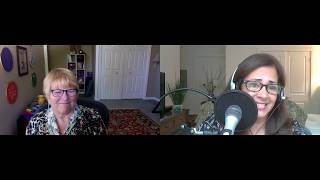
This is a transcript of a Finding Brave podcast episode (Ep. 41) in which Kathy Caprino interviews Karen Kimsey-House, cofounder of the Coaches Training Institute (CTI). Key points: CTI began in 1992 as a small two-and-a-half-day workshop and grew into a major coach-training organization; coaching is deeply relational and central to modern leadership development; CTI defines leadership as a capacity available to everyone ("leader within") characterized by responsibility, creativity, and the ability to respond rather than react; coaching requires significant training and ethical care despite market commoditization; coactive/co-active (the CTI model) emphasizes holding being and action together (the hyphen as a paradox); practical tips include slowing down leadership, listening to be changed, and "believe in the truth of your own heart."
Questions this video answers
1992 (started with a two-and-a-half-day workshop).
Website: www.coactive.com; books: Coactive Coaching and Coactive Leadership (available on Amazon).
Chapters
Hello, everybody. Welcome to Finding Brave. I'm Kathy Caprino and I wonder how your week is going. Is it brave? Is it not so brave? Is it unbelievably courageous? I can't wait to hear. I would love you to share and I'd love you to share what you're getting out of this podcast because we sure are love loving doing it. And I am so honored, truly. I got chills having my guest here here today, Karen Kimsey House. Karen, thank you for being here and taking the time. So appreciate it.
Oh, it's my total pleasure, Kathy. I love the title of your podcast series.
Oh, thank you. I bet you have a lot to say about bravery. Tons. Tons. Good. We're going to get into that and we are talking about the new definition of leadership, folks. And Karen is the one to talk about it. So let me tell you about Karen and her illustrious background. One of the earliest recognized luminaries in the coaching profession, Karen Kimsey House is the co founder of cti, the Coaches Training Institute, one of the largest coaching and leadership development companies in the world. Karen is also the co author of Coactive Coaching. Fantastic book. The best selling industry bible. Now in its fourth edition. That's no small feat. Congratulations. And Coactive Leadership. Five Ways to Lead on a Mission of Global Transformative Change. Is that all? Karen continues to lead CTI Workshop and is a dynamic keynote speaker on leadership around the world. Thank you again for being here. You're in California, right, Karen?
I'm in Oregon, actually. I moved from California recently in Ashland, Oregon.
Oh my goodness. Oh, that's why you seem like you're glowingly happy. Connected to the earth, maybe?
You bet.
All right, let us dive in here before I even, you know, we love to go off script, folks, you know that. But before we even talk about these questions about the new definition of leadership, can I ask you just quickly about cti? And you know, I just mentioned earlier, there's a lot of coaching training organizations out there and yours is the one I recommend at the highest, highest, highest, highest. I have met so many people who've been trained by your organization who are just brilliant at what they do and special people you must try. I know that you do attract just, just beautiful souls who want to make a difference, but can you just tell me, because I'm personally interested, how did you start cti? Was it just a tiny little, you know, vision in your mind? Did it take years and years?
Can I hear that both end? It was a tiny little vision in our mind. We started CTI in 1992, with a two and a half day workshop. My husband and our third partner, Laura Whitworth, had been doing something we were calling coaching along with a couple of other people. And I don't know, I thought we'd train people how to coach in two and a half days. So we started out tiny, tiny, tiny. And really, through the beautiful people we attract and the lack of timing, we've grown to be. Actually, we're the largest coach training organization in the world.
That's what we said and did. You had. You had a lot of training in terms of how to train coaches?
No, we really made it up as we went along. My husband and I both have a background in theater, which I think is actually excellent training to understand how people work. And we just kept doing what made sense to us and letting go of that, which didn't, and listening to feedback from other people. We were really fortunate.
Oh, it's so, it's so inspiring. And I love that, you know, I have my own coach certification training and people say, is it ICF certified? No, and I have no problem with that. But you know, at a certain point you feel like you can teach something and you learn as you go along and you're not the be all and end all, but you know, you have something important to teach and you do it. I mean, that's how, that's how big things start, right?
Oh, love. It comes from sharing that, you know, which you love and which is in your heart. I mean, that's where it all starts.
Oh, I think that's it. Oh, I love it. So let's talk about, you know, in doing what you've done, you know a lot about leadership. So let's talk about how coaching is a driver to great, effective leadership. Tell us, tell us what the relationship is there.
Well, that's just it. It's about relationship. You know, I think that organizations have been waking up for some time now to the fact that leadership isn't just transactional. It's not just about getting people to do something. It's really relational. And yet a lot of people in leadership roles inside organizations don't really have the training or the support to really establish those dynamic, productive, empowering relationships inside their organizations. And I think that coaching and coach training is such a beautiful training for people and a few really simple things that we should all know how to do. And yet, many of us are not very good at things like listening, I mean, really, deeply listening to another person and asking really, really great questions and holding other people as creative and Resourceful and trusting that they'll be able to figure out the solutions for themselves. So I think that coaching has more and more really become central to leadership development that's effective for our current time. And I'm thrilled about that. I think it's going to be really create a big change in how we, how we work together.
So can I dimensionalize that for a minute and tell me if I didn't get it right? It seems like what you're saying is that corporate great leaders, in order to become greater, need coaching around all of these things. Listening, communicating, engaging, you know, envisioning. But I think you're also saying what you learned as a coach, you're now teaching leaders. What you learned about how to be a good coach, you impart to leaders. Is that right?
Well, that's really true. I think it's. Coaching is about empowering people. I think really effective and great leading is about empowering people.
That's it. And I don't know if you have children, Karen, but you know, I, you know, I had an 18 year corporate career, then became a marriage and family therapist, which is all about, you know, behavioral and solution focused scenarios and communication theory. But then becoming a coach, all of it has made me a better parent, I think a better boss. It's helped in every possible way. You know, a better friend, a better daughter, better. What does better mean? You know, more engaged, more loving, more peaceful, more impactful. So I'm 100% with you for sure. So let's, let's roll it back. We if I would be rich if I even counted how many leadership books there are. Good grief, there's a lot of leadership books. Don't you feel they're coming out, you.
Know, a mile a minute?
And my gosh, there's a lot to say, but I feel like some of it really misses the boat. Can you just talk about the most fundamental definition of what leadership is? And what do you think about all these new ideas about leadership? What's going on here? What's happening for us?
Oh, I love that question. I love the talk about this. So we tend to think about leadership as being one dimensional. It's the person at the front, it's the person at the top, it's the designated driver.
Right.
And we really feel at CTI that leadership is much more multidimensional. But actually everyone has the capacity within them to lead and that leadership is really about being responsible, able to respond other than to react in a creative way and responsible, able to really take the lead and follow your Heart and have the courage, you know, to find brave and to really give your gifts to the world. So we define leadership really as about leaders or those who are responsible for their world. It's not designated, it's not about the title. Nobody tells you you can or can't. Everyone really has the capacity to lead. And when you stand there, leadership really is for everyone. It's not just for the big cheeses at the top, you know, and we all become a part of a creative process of moving forward with any endeavor, whether it's in the workplace or in our families or with, you know, in our personal life.
So it's really, it's an endeavor for every human on the planet who.
Absolutely.
So would you agree with this statement? If not, please push back. I was just speaking at the she Summit, Bacardi recently. So fun. And one of the things I said was this. I don't believe you can lead anything if you can't lead your own life. Do you agree with that?
I do. Well, it depends on what your criteria for leading is, but with my definition, yeah, I do. I think it starts with what we call leader within, which is really being grounded in self acceptance and self authority. You know, really owning all the parts of yourself, the good, the bad and the ugly, and then really, you know, claiming responsibility for your life and really realizing that you're a victim of somebody else. The circumstances of life come and go, come and go.
Right.
But I'm the one that writes the story. So yeah, I don't know how you can effectively contribute that to other people if you're not owning it in yourself. Otherwise you don't have a, you don't have a North Star.
Oh, I just. What a beautiful way to put it. So when you're, Let me just ask. When you're dealing with or helping coach a very high level person of a billion dollar organization and you sense that they're actually not leading their own life or the leader within is frail, or you start there. Do you work?
I meet them wherever they are to begin, but very slowly I do a couple things. First of all, I do everything I can to slow things down. Because inside an organizational setting, particularly at that level, things are moving so fast, those leaders don't really have a chance to even look, you know, So I let them know that the coaching relationship is a safe space for them to slow down a little bit. And then I'd just be curious. And I find that it's so rare really for those people at the top to be listened to.
And that must Be very scary for them to share those. Who are they going to tell that they're up at night scared to death.
Or that they don't know? You know, they don't because we all think that our leaders are supposed to know and have the answer. We all haven't learned yet that it's more collaborative than definitive. You know, and so they need a place to really tell the truth and to be vulnerable. That said, I'm seeing a real change in the C suite executives that I work with. I'm seeing more natural vulnerability, more willingness to tell the truth, more openness to this idea of collaborative leadership as, you know, time passes, is accelerating really, really rapidly. And I find that so hopeful.
Oh, wow, how wonderful. What a joy. So I'm gonna. I'm gonna bring up kind of the opposite for a minute. And this again, folks, it unscripted. We haven't talked about this. You know, I don't. You might not know, but I do write a lot about narcissism and narcissistic personality disorder. And I've had the unfortunate misfortune of having more than my share of leader bosses who were true NPD's. You know, it was a true personality disorder. Can you talk about that in leadership? Do you see it? Do you coach it? Do you deal with it?
How can I not see it? It's everywhere, especially in our political situation right now, you know, regardless of which side you're on. I think the first thing. I'm not a therapist, so I wouldn't begin to diagnose anything, but I think the first thing to understand is that there's a limited view that, you know, a narcissistic personality has a very, very limited view of what's really going on. And so the ability to have a really dynamic relationship is somewhat limited. That said, it doesn't work to just throw up your hands and say, what a jerk, I give up. You know, how far can you go? What kind of relationship can you create? You know, and if you find it untenable, then you really have to have the courage to exit the situation and move on to something that's more productive and more healthy for you. But if you're in a situation, you might as well see what you can get done and use that situation as an opportunity to experiment and to try a wide range of things before giving up on the other person. I tend to give people a real big benefit of the doubt, regardless of the presenting behavior. And I find that that doesn't always, but often creates opportunity for openings that I Never would have believed possible in the initial engagement. So my advice would be, go as far as you can. If you find you can't go far enough, get out. Oh, it's kind of simple.
I gotta ask you a question again, unscripted. When I talk to you and when I'm with you, Karen, it's like a spiritual experience. You. There's a spirituality about you or way of being, and you may not use that term, but I'm wondering if you do talk about, deal with, address spirituality in the work that you do.
We do in a very spacious way. You know, we don't want to bump into people's religious ideology because it's not necessary. But I do believe that we're all here for a reason, that it's not an accident that we're all here together, whether we think so or not. You know, the notion that we're not connected to one another is kind of nonsense in this day and age, and that whatever solutions lie ahead for our human species are solutions we're going to need to figure out together that we belong to one another. And I also believe in. And I think CTI is based in the benign nature of the universe. Bad things happen, good things happen. We're challenged, people come, people die, our hearts break. But I think life in general has an overall. What is it? That great quote, you know, the arc of. The arc of change is long and it bends towards justice.
Oh, that's kind of beautiful.
How I feel. I think I've messed the quote up, but it's something gorgeous.
We'll find it and link to that. And it's a benign universe, you feel?
I think that's one of the most important decisions we can make as human beings. Are we going to hold the universe as a relatively friendly place?
I think if it starts with that, and if your answer is not no, then I think there's a series of challenges that you might be participating in or. I mean, we all know that what's on our radar is what will be brought to us, period. What we focus on is what expands. Yeah, Right. So.
And I don't. I don't mean to be Pollyanna about it. I think that people feel very negative about their lives and about the world for good reasons. It's not to dismiss that. It's just to say that that's a place to start, not a place to stop, and that you can move on from that place. I did, you know.
Did you have a rough experience?
Oh, in my younger years and up until about 30, I had a really dark view of the world. And I was. I was very challenged. I won't say the rough childhood, the whole thing. And I got to a point where I just really realized that my life belonged to me and that I could. I could establish my own beliefs and my own understanding of the world. I could make different choices, and I did.
How did you make that shift? Did somebody prompt that or did you find that on your own?
Well, yes, both. I had a lot of support from really great people, and I also followed the truth of my own heart. I kind of realized, okay, I'm here for however long I am until I die. And who knows what happens then? And what do I want to make of it? What do I want to build with this resource called Karen that I've been given and that I needed to make some different choices in both how I live my life and the choices I made.
You're such a poet. I just. I cry at your words. It's so simple, but so. Oh, love it. All right, let's talk about two things here. I'm a coach. You're a coach. We've got a lot of coaches listening. How have you seen. I've seen some big changes in the field of coaching. Can you talk about how you've seen it change in the past? Whatever, 10 years, 8 years? I'd love to hear.
I won't go all. I won't spend much time in the past. But when we started CTI in 1992, nobody knew about coaching. Really. People didn't know what you were talking about. And so it's become. Coaching has become much more a part of the world that we live in. It's a 3, $4 billion industry globally now, so it's much, much more widely known. And I think organizations have embraced coaching in the past 10 years. The biggest change I see is that organizations have come to stand, that people need to be supported, that actually their people are their greatest asset, not their buildings or their technology, whatever else they've got going on. And that how they invest in their people is by supporting them. And the coaching is a great tool for support.
And CTI goes in. Or tell me how that works. Do people hire CTI to provide coaching for their leaders, or is it the certified folks within CTI that go. Or do you all, as founders, go? Tell me about that.
All of the above organizations hire CTI because they want to help their senior leaders become more effective. And they understand that coaching is a key component of that. So they'll hire cti, come in and do some Coach training. I recently read a LinkedIn study that 85% of managers inside organizations helping you support and learning how to coach their people more effectively. So they'll call cti and for that they'll also broker coaching through CTI because we have such a big network and coaches who are able to deliver in many, many languages. So they'll engage CTI to coach their people and then they'll engage CTI at a high level to consult with the organization to help really establish a clear vision for a coaching culture inside their organization.
Oh, golly, you're in a good spot over there in Oregon, doing great things. All right. I have a feeling you're going to have a very different, more beautiful, loving response than I about this one thing. There is a bugaboo I have, and I think it's come from one, my own values and what I align with, which is expertise and training. Number two, having been trained as a therapist, there are such high bars about ethics and confidentiality and knowledge and, you know, it's a heavy thing. And then. So what I see is a proliferation of coaches and coaching. I see a proliferation of zero trained coaches. And that really upsets me and I just want to share why. But, Karen, I would love to hear what you think whether, no, it's not therapy, but all the coaching I've ever done with individuals, you are holding them in the palm of your hand in some way. You know, you are something important to this, this client. Your behavior can scar them. Frankly, it can uplift them, it can enliven them, it can help them fly, and it can scar them and suppress them and diminish them and hurt them. So I have a real problem with people saying, I don't have training. I was an HR person or I was a marketing exec and I'm just going to be a coach. That's my feeling. What do you think about that, Karen? I'd love to hear your measured view of that.
I agree with you. It's a bugaboo of mine, too. You know, coaching was commoditized over the last 10 years. Yay. Coaching was commoditized over the last 10 years. Boo. Because everybody and his brother can call themselves. I've heard gardening coaches and cooking coaches and I don't know what all. And it's tragic because it really diminishes the craft and the art of coaching. It's profound and intimate relationship that a coach creates with a client. No, it's not therapy and shouldn't be. And it is sacred. And I think it Takes quite a bit of training and work to be able to hold that cleanly and to be able to sort, you know, support clients without getting your own ego and agenda in the way. And I have been coaching since 1988 and I still think I've got a lot to learn about coaching. So I'd love for the world to kind of get over it that coaching is easy peasy and anybody can do it. Coaching is easy peasy and anyone can do it. And it takes a lot of training.
Oh, thank you. I love it. All right, I have another question that I'm personally interested in and then we'll go back to our script. Karen, one thing that I do that people have told me, people that live by the rules of coaching have said, well, you're not coaching then. I think that part of why my work is very successful in terms of helping generate results is that at certain times I will do a little teaching, at certain times I will do a little consulting and I will do coaching. I do put a different hat on and I'll say, I'd like to veer out of coaching for a minute and be a little more consultative and directive. And they'll go, well, what does that mean? I'm going to say what I think here about your direction and what I want for you. And I'm giving the language to folks if they're interested. If this doesn't feel right to you, I want you to push back on me. Right. I have to say that because they do look at me as mentor, guide, and if I just say it, I'm afraid, concerned that they will run off thinking, she said I had to do that. So part of the whole coaching process is allowing me to be directed and allowing them to push back and say, truthfully, that doesn't feel right, but this does feel right. What do you think? And I've heard, oh, you're not coaching. You're not. What do you think about that, Karen? I'm dying to know.
Oh, gosh, we have guidelines. We have things that we follow in the coaching profession so that we can kind of keep it together. And one of, one of my great sadnesses is that that becomes then dogma and rules. I think that's so sad because I, I think when I'm coaching, I pull everything and I got my hands on to help my clients.
You know what? Let me have that big Mary Poppins bag.
What is on my desk today that I can. And I think that you really highlighted the important distinction, which is whether I get attached to what I'M offering and have it be my agenda or whether I'm really, really sure to offer the client that I'm working with, this sort of the, you know, the, the whole banquet of whatever I have to offer and empower them to pick and choose what's going to work best for them.
Oh, gosh, I gotta come to do a training with you, Karen.
I got it.
Got it. All right. Now we have a few more minutes. What else do we need to know about leadership? You've called it the new language of leadership, the new definition. What else do we need to know about leadership? Leadership? And what do we need to do about. Know about coaching? What? Tell us more. I could just listen to you all day.
I think the thing I feel most called to say in this moment is that CTI is really about the word coactive, which in its simplest terms is. And not this or that, but this and that. And I think it's in cti. If you think of co, that's the being or the essence of a person. Inactive is the action or the making things real. And the really important part of coactive is the hyphen in the middle. And I think that that paradoxical and that ability to hold two opposing things as being equally important is going to be our way forward as a, as a species. You know, you look, especially in the United States, things are so divisive right now.
Please tell us what to do about that. Please. What happened?
Open our hearts and give ourselves permission to disagree without having to be personal. You and I are completely capable of holding opposing points of view while still loving each other like crazy and respecting each other like crazy. It doesn't have to happen.
Why did we forget that, Karen? What did we.
What happened? Oh, that's a bigger question, I think, than we have time to answer. I think we just forgot. I think we need other things more important and we forgot that we belong to one another as Americans and as people globally.
You know what I would like to do? Maybe you'll come back and do this. I would love to give role model what it is to have a conversation with somebody you violently disagree with.
Oh, I'd love to do that.
Wouldn't that be fun?
Interesting, Helpful.
Because I think we. I do believe that our hearts are engaged and we want to know how to do this, but we don't have the words. I just, on my 16 week amazing career project, last call an hour ago. The question was how do I respond when someone has attacked me? I basically, you know, attacked my idea or said that's Stupid or what do you know about it? You know, I would love to just role play five to ten different really hellacious, hard conversations. Will you maybe come back and do that?
I would love that. I love those kind of conversations because I think that people want that and they're just scared and they don't know how. No, it's not hard.
No. I would say this. Let's not be Pollyanna. I did a post in a video on what is feminism and why so why do so many men and women still hate it? Oh, my God, Karen. It went on YouTube and two men said, shut up, you dumb C word.
Oh, and you know, I'm used to.
Forbes, where people respectfully disagree. And I cried. And my daughter, who's now 24, said, Ma, what are you putting it up on YouTube for? Don't you understand? It's uncensored, uncontrolled. They could call themselves Little Green Lizard. What? Why did you put yourself in a place where you're going to receive that, pull it down or stop the comments, which is a really good point. There is hatred in the world. There's vitriol, there's anger, there's fear. So it's not all a walk in the park. We all know that. We don't want anyone to think that's what we're saying. Right, Karen?
Oh, no, I'm not saying that at all. Thank you, Kathy. I can sound a little airy fairy sometimes. Not that I think that it's a piece of cake. And there's a lot of fear and a lot of anger, and social media in particular is a great place to dump all that because you talk about no responsibility, man. You can just go off the deep end.
Off the deep end.
That said, if we have a desire to connect with people who disagree with us, that's very possible. And we don't have to let the people that are bullies and responsible in that way that you just demonstrated. I'm so sorry that happened to you. I want to just, like, have a little shadow.
Not good.
You know, we don't want those people to dominate.
I learned. I learned, Karen. I learned a lot about myself. And, you know, I just want to say I had a wonderful chat with Chad Littlefield, who is going to be on the podcast. Love him. And you know what he said, and I know you're going to love it. Listening is the willingness to be changed by what you hear. And I don't mean you're going to turn me into a Republican. I'm not. I'm a Democrat. I'm a liberal, but I might be changed about how I feel about you and what I understand about you and.
Why I feel about you. I want to be changed. I'm longing for that, you know.
Well, you are, because you're an exceptional person. Can I ask one last question?
Of course.
For anyone who wants to be a coach, is a coach, is involved in some way. Coaching, mentoring, advising. Can you give us one tip about how to elevate what we do in the service of other people? That's not one tip. That's 10,000 tips. But just one.
One big tip. Believe in yourself. Believe in yourself. Believe in the truth of your own heart. You know, don't hand that over to other people to tell you what's right and good and true. Follow your heart.
Oh, that's just beautiful.
It won't make things perfect, but it will serve you in good stead.
Oh, Karen, you're so uplifting to listen to. I can't thank you enough. And where can people learn more? Where should we point them? And what do you got? You have a toolbox. When they buy the book, you have all sorts of things. Tell us about it.
Well, there's a couple of places you can go. For more information, you can take a look at the book Coactive Coaching, which is available on Amazon, or Coactive Leadership, also available on Amazon. And if you want more information, you can go to CTI's website, which is easy to find. It's www.coactive.com.
Great.
And if you're even thinking about trying it on, I strongly recommend you either take our intro coaching course or our intro leadership course. It's two and a half or three days, comes with a money back guarantee. You'll know at the end of those three days that CTI is something you want to pursue. And if not, you'll have had a great time. I learned a bunch. So easy to find.
I tell you, I've sent so many people to those introductory and. And some have said I'm a coach, I know I am. And some have said I'm not going to pursue that as a professional identity. But my gosh, what I'm bringing back to my role as finance director or marketing, you are doing beautiful things in the world. Thank you for joining us and everyone. I hope this is a big dose of brave, whether it's I want to connect from the heart.
What is the word you use?
You said, believe what you know to be true in your heart. No, you said it differently. Karen, say it again.
Believe in the truth of your own heart.
Believe in the truth of your own heart. There's a tweetable for you. Thank you again, and everybody, that takes bravery. It does. We. We both know it, and we all know it. But you can do it. Because you wouldn't be listening to this if you weren't drawn to doing it. So thank you, everybody. Have a brave, wonderful week, and we'll see you next time. Thank you.
Thanks for having me. Kathy. It's been great talking to you. Bye, everybody.
More from Kathy


Elevate Yourself, Elevate Others, and Amplify Good | Chris Cooper | Finding Brave Ep. 334

Finding Brave Epis #333: How Leaders Can Harness AI Without Losing Their Humanity, w/Bennett Borden

Finding Brave Epis 332- How to Stay Brave, Valuable and Visible in the Age of AI, with Raman Rai

Finding Brave Epis 331 - The Power of Positive Disruption, with Dr. Patrick Leddin


Finding Brave Epis 330 - Being 40: Letting Go and Embracing Who You Are, with Stacey Lindsay

Disrupt Career Reinvention with Kathy Caprino - via The Disruption Lab Podcast w/Patrick Leddin

Creating Neurodiversity-Friendly Work Cultures: Simple Workplace Adjustments Matter

Finding Brave Epis 329 - How To Create a Neurodiversity-Friendly Workplace, with Kristen Pressner

Finding Brave Epis. 328: Reclaiming the Power to Trust Your Own Voice, with Dr. Cindy McGovern