Finding Brave Ep 47: How To Entice Top Publishers To Say YES! To Your Book Project, with Lou Johnson
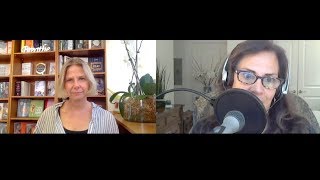
This is a recorded interview (Finding Brave Ep. 47) in which Kathy Caprino interviews publishing executive Lou Johnson about how to persuade top publishers to accept a book project. Lou explains publisher-side criteria (fit to list/voice, clear need, market gap, commercial potential), emphasizes testing concepts and doing market research, and details the importance of platform measured by engagement (not just follower counts) and contextual market size. Additional themes include the editorial partnership, trusting the publisher–author relationship, common pitching mistakes, alternatives (self-publishing), and practical submission advice (sample chapters, mailing lists, and demonstrable audience engagement).
Chapters
Hello everybody. Welcome to finding brave. Kathy Caprino here. How's it going right now when we're recording, we are on the way to Thanksgiving and my wonderful guest Lou Johnson and I, who's in Australia, we're talking about the meaning of Thanksgiving. I hope wherever you are in the holiday season when you hear this, that.
It'S full of love and joy and peace.
And I am just so beyond thrilled, honestly and honored to have our guest Lou here today. And we were just reminiscing, I guess we've known each other maybe two and a half years. Lou. Right.
Maybe a little bit longer.
Maybe long. And I just, I love to tell you all why these guests that I have mean so much to me. And Lou is one of those people. Lou is. I'm going to read her bio in a minute. But just an incredible figure in the publishing industry and has worked with so many top authors and writers and you're going to hear all about that. But Lou was one of the very first people that supported this new book I have in development. And you know, when you meet someone that doesn't need to see it all fully baked and just believes in you, it's a precious gift in life. So to me that is Lou. She, she supports from the heart and doesn't over attach to the outcome. You know what I mean? That she believes in you and when you have that, you feel like you can move mountains. So I'm so grateful, Lou, thank you for everything you've done for me.
I so appreciate it.
And we are talking about how to entice top publishers to say yes to your book project and we have just such an expert on that. So let me tell you all about Lou. Lou Johnson is an experienced, dynamic and highly effective business leader with a deep passion for supporting creators, developing people, workplace culture and business performance. She is a well known publishing industry figure with over 25 years of industry experience including senior roles at Random House, Allen and Unwin. Is that how we pronounce it?
Wow.
And Simon and Schuster, where she was managing director between 2010 and 2014, launching her own startup, the Author People, and now publishing Director at Murdoch Books in Australia.
Yikes.
In addition, her industry representation includes vice presidency of the Australian Publishers Association, Chair of the Book Industry Collaborative Council Distribution Expert Reference Group. Whoa, that's a mouthful. That's a lot. And board membership of the Stella Prize and founding committee member of the Indigenous Literacy Foundation.
Wow.
You are a busy woman and here you are. And you have worked with a vast range of books including authors like Rhonda Burns, Kate Morton, Elizabeth Gilbert. I did not know this. Al Gore, Hillary Clinton, and J.K. ross.
So.
Oh, my gosh. Thank you for being here.
It's just a pleasure.
All right, now let's dive in. So what are we talking about? We're talking. Hopefully this will speak to anyone who has a book idea, a literary idea. We are probably talking mostly about nonfiction right now, but we'll touch on. Lou, if there's a big difference between memoir and other types of books. But the very first thing. And you know, I'm in the throes of this right this second in my second book, but tell us, from a top publisher's perspective, what are you looking for in general, your whole field, but you in particular, for a book project that you would say yes to it. What has to happen here?
Okay, well, I figure that none of these are going to be short answers as we chat. Okay, me too. Okay. So to provide a bit of context, and I find that's critical because every publisher is looking for something subtly different. So at Murdoch Books, what we do is we really have everything grouped under an underlying purpose to add value for our audience. And we group everything under this promise to people that we're really going to give them the tools to live life well. So stepping back from that, that means that we're a lifestyle publisher, so we exclusively publish nonfiction. And our set of criteria from there, there'd definitely be crossover with all publishers, but we have, I guess, our own subset within that. So to begin with, we firstly say, well, there are one of two ways that we go, because often we actually commission. Often we are thinking about areas that we know are pain points, if you like, for our customer or conversations that are starting to happen, and we go and find people who we think are going to be able to provide a really helpful voice in that space. But if we take it back the other way, if somebody were pitching to us the questions that we would ask of that, we would say, firstly, does it fit the publishing term? Is our list, and is it us? Does the voice fit what we're looking for? Is the voice going to work for the audience we're speaking to? And I often say in the business that I'm running at Murdoch Books, that I liken our relationship with the audience as having an ongoing conversation with them. And, you know, when you go to a dinner party and you end up chatting to that one person that you didn't expect to, and you have this really rich conversation, and it takes you into all sorts of interesting spaces, that's the voice that I want to have for our Murdoch Books authors. So that's really important for us. Then we are saying, is there a need. Is there actually a need for this conversation? Then we say, what else is actually before we get to the next one? Then we go, is there a need for this conversation in book form or is that going to be serviced by a whole host of other mediums? Then we say, if we're saying it is book form, then we say, is it. Is there a gap? Like, what does the rest of the market look like? Is there a way we can get this message out into the market? What is the best way to shape that? And the clearer that the author's own understanding of why their voice counts, why their voice is actually going to add value for other people and how they're going to frame their message, then obviously that is much more compelling for us, because one of the things I think that we do really well is that we collaborate to help to determine the best final shape for the work. But if the author themselves isn't really clear about why their message is worth sharing, then that's. That's very difficult, you know, because it's a muddy, muddy message from the very beginning. And I know that was a question.
Wish I Talked to you 10 years ago about all this. Can I. Let me ask this of, you know, when you. You shared your list of the criteria. It seems to me, if we're really looking honestly at what people write in general, and, you know, I'm on Forbes and I see. On LinkedIn and I see a lot of writing, some of it wonderful, some of it not. What percent of projects that you hear from. And you don't have to talk only about Murdoch Books, if that's proprietary. You know, what percentage of any project that you. Of the projects that you hear about in a year fit that criteria?
Oh, I probably couldn't put it in. I probably couldn't put in percentage terms. Not very many.
Not very many. Right.
And it depends, again, it depends on a publisher's model. So without spending too much time, more on Murdoch Books, but we curate really heavily and because we have that commissioning model as well, we have a highest strike rate. Having said that, it's hard. It is like I often say, it's like panning for gold, because there's no shortage of material, there is no shortage of people who want to be published. But if we are going to actually deliver on our promise to our audience that we're really going to add value rather than just serving them up a product and Putting something on the conveyor belt, then it's a sharper set of criteria. But the other thing I didn't mention before, and it's really, really critical for many, many publishers, they're also really looking at the return on investment or the return on the potential. Return on the potential investment.
Oh, I love it. So I want to go to something that I think addresses that really clearly, but the idea of the platform that you're looking for. And I want to say, when my book Breakdown Breakthrough first came out 10 years ago, and I'd love to ask a question on this, I did think I had something unusual and special to say. But sometimes how we evaluate our own value is not quite the way the rest of the world does.
I think that's so true. Yeah.
So what. What is one tip we can give a prospective writer or a new author so that when they're describing to you why their voice is unique, they're actually giving you information that. That is grounded in reality. What. What can they do?
I think the really critical thing is to step back from your own work. And I mean, this is also one of the reasons once a publishing. I think it's one of the things that publishers add real value in is when there has been a decision, or at least when there's been an agreement to at least enter into a dance, which may be free contract, that like many ideas, it actually can become. They're iterative, and it can become better through sharing the idea. And when you're in the early stages as the creator, and even when we as publishers are having early conversations with authors before we even go into our own internal process, there's something that's quite precious about the idea at that point that you can almost. You've got to be careful you don't snuff the. Snuff the flame of it. The life out of it. Yeah, yeah. And sort of ground it and anchor it, and then suddenly you go, where's it gone? But I think the reality is, the minute it goes into publishing process, it's moved into a business environment. So I think, and particularly in nonfiction, you actually like with every concept, you have to test your concept. It's much better to test it before you ever put it in front of a publisher, unless you have a friendly one. Like you and I had that relationship where we could bounce things and forth. So you. You need to get outside your project yourself, because when you're in it, of course, you lose perspective. So you have to test it firstly yourself. But you actually. It's a Good idea to share it with some other people, to test it with them, to do lots of market research to see what the competition looks like, not just in the publishing space, but in other mediums. And as part of your pitch, I think it's really important to highlight that market research, because otherwise that is one of the first things a publisher is going to go off and do. So if you've done that and you've made it really easy for them and you're showing the USP behind your, not only your idea, but it might be actually the way you frame the idea or the voice that you share it with, or the strength of your platform, but you have to be ticking at least one of those boxes pretty solidly for a publisher to be interested in actually taking a look. This is so helpful.
So let's talk about platform. You know, I did get published with no platform, but there wasn't an advance involved. And I felt very grateful 10 years ago, having zero platform. Tell us, what do we really need to understand here? What is a platform and how big does it need to be to be considered?
Yeah, okay, so look, it's, it's such an interesting, such an interesting question. It's a really obvious question, but it's really interesting one because a platform without you could have the biggest platform in the world. And when we say platform, that might be, it's not just about the number of people who you can demonstrate are following you on whatever medium. You know, whether it's your podcast or your social platform or a platform could be that you actually go and do constant speaking engagements. These days, really, nobody is going to be doing one of those single things in isolation. But what we're really looking for, if you think about platform, is it's partly reach, but it's also about engagement. And engagement is actually far more important than size of audience. Though obviously the engagement levels need to be of a high enough critical mass for a publisher to be able to go, ah, okay, well, only a percentage of those people are then going to buy it. Is that getting us to somewhere that looks interesting commercially? And then we're also looking at, generally at a proposal that can leapfrog in a way, the author's existing platform, because that's kind of a point of ignition, if you like. And what I find fascinating is that things that have held true for years and years and years still exist. And that's the power of word of mouth. It's just that word of mouth travels in a different way these days. So if you don't have anything Underneath your. You. You're going from a standing start. And that's very difficult. It's not impossible, but it's difficult. And it can work if you have something that is so groundbreaking, that you deliver in such a compelling way. But it's hard, it's hard to go from that stand. And normally we would then be saying to an author, wow, this is a really interesting idea. How are you going to go about building your engagement with your potential audience? So let's step away from platform. How are people going to get to know about you? Why are people going to be interested? What are the things that are going to start to trigger people, you entering the conversation?
Oh, gosh, how fascinating. So tell me about.
Can I jump back on that? There is another really interesting point. You can have a big platform or a big following in one particular market, but Australia, for instance, has a much, much smaller population than the US. When I'm talking to US publishers, I might say we're publishing this author who's got this massive platform on massive Instagram following. And I'll talk to a New York publisher and they'll what, you know, like 400,000 people? Forget about it. So context is really important as well. Wow.
So tell us about engagement versus. Okay, someone. Let's say, you know, right now I have 860,000 followers on LinkedIn. But that I think demonstrates a certain something, that perhaps there's a. There's a series of compelling messages that keep people right. But that's not necessarily engagement in a way that is going to translate to dollars spent on a book. Is that the way a publisher would look at it?
Yes, though a publisher would look at that and say, does that have the potential to lead to engagement to buy a book? Because of course, when you're, if you're, if you truly have a powerful platform, it's obviously steeped in authenticity. So people are there and they'll only come back because you're adding some level of value. I mean, there is so much in front of people every day, as you know, so it can't be in many ways an immediate platform to go and sell a book. Because the book message or the. It actually should be cleverly executed, but not feel like a selling message to people at any time. So that's the value for having that existing relationship with your audience. Because the, the fairy dust, the magic is when you're sort of at a point where they're going, I want this from you. So, you know, Cathy, if you've got people all the time saying, cathy, I Love talking to you. And it's not just about the engagement. We might see visibly, but there might be other forums in which people are talking to you and they're saying very clearly and enough of them, because that's a mistake that people often make. They might say to a publisher, oh, everybody's asking me when I'm going to do a book. Well, help us understand what everybody means. Is it 100 people in your Facebook group or is it, you know, what other research have you got that's actually telling you that that could be, again, enough of a critical mass?
And engagement also can be measured by a new mailing list and open rates, Is that right?
Absolutely, yeah.
Are they reading you on a regular basis or was it a one off thing that they liked and 100,000 people liked it, but it's not you, Right.
Or was there a post that went viral and is it continuing to be used? Are there things that people will almost, in a way, it's either so deeply attached to you or the idea itself has almost become bigger than its creator, which is showing that there's a really receptive audience. And then you got to work out how to bottle all those things.
How fascinating. And just the way you speak, I feel like. Tell me if I'm crazy. I know that you are a consummate business person, but I feel like you take an idea and you. It's in your hands, you nurture it, you believe in it, you honor it. Like just the fact that you said we don't want to grab it and then ground it in such a way that we snuff the life out of it. I don't know. I'm guessing that not every publisher gets it the way you do, you know, understands what the heart of being a creative is and how it's. It's a fine balance, right?
Yeah, absolutely. I've come to the role that I have now in a fairly unusual way in that my background in publishing was very much in sales and marketing. Yeah. So those roles that you talked about and up until Simon and Schuster were sales and marketing roles. In those roles, I often worked very closely, closely with publishers and worked closely with authors or in this market, worked to be. So in the case of Elizabeth Gilbert, I don't have a personal relationship with Elizabeth Gilbert, but was the second person in Australia to read Eat Pray Love and was really just so excited about taking that message to market. And you often find with those big phenomena books, you'll find a million people who feel like they were the one.
No, I'm the one I'm the one who recognizes.
But it kind of takes the, it takes an army really of people to do that. But in those roles, the things that always really drove me were relationships and also the connecting, like the sharing of the ideas. And so then when I moved to Simon and Schuster, I was involved in setting up a publishing division, an Australian publishing division. And then I went and took a big leap and set up my own business because I felt that there were, there were things that could be looked at differently in the publisher's role in that relationship between the creator and audience. The reason I love the role I have now is it is a fantastic, it's a really perfect combination of creativity and of the commercial reality. And so what I often found is that somebody coming up through sales often found lots of publishers will get irritated with me here, but I often found that they didn't have enough of a knowledge of the commercial imperatives. That wasn't actually their fault. That was very much the business model didn't actually. There wasn't enough shared knowledge probably. And if you can give people access to the knowledge and they can understand what the links in the chain look like and all the things that they can do to actually make that book project that idea, be the most powerful one and received as strongly as it can, then obviously that's going to have a benefit. So look, in a long winded way I. What I learned when I got closer into publishing. So for all those years I thought I kind of got it. Then when I got closer, and particularly when I had my own business, I really got up close to the creators. And so I learned that it's totally different, as you say, and there's a vulnerability in that. And I think that as the partner in that space, whether you end up going and publishing that book or you don't, there's kind of a human responsibility in that. But the vulnerability and the kind of the gestation of the idea, that's really beautiful because that's true creative process. Now it can be hard still connecting that into the practicalities of a business. But I still find for myself the fact that I have that deep knowledge of the commercial realities means that we can actually have a frank exchange with an author back the other way because then it can be, look this, that your idea is rubbish. It's actually that it's not going to work with the commercial imperatives we have in our business. And this is what that looks like.
Oh man, there's so much there. I love it.
So most publishers though, most all Editors do are essentially they're the author advocate and they're the reader advocate rather than the. I mean, they're aware of the commercial imperatives of the business, but their primary interest lies between those two. That part of the exchange, the creator and the. So often the publisher. So it's a little different in every country in terms of what we call the roles. But in Australia we call the publisher really post misconditioning and carries that initial primary relationship with the author. And then obviously you have an editorial team. So the editorial team often comes in even more so as the reader advocate, but working really collaboratively with the author. And they're just in there in a very gentle way, sometimes quite strongly gentle. Strongly gentle, saying, I'm not getting that bit or give me more. And it's to really pull the best out because as I said before, when you're in it, you lose a bit of perspective.
So true. And I want to just do a plug for going with a great publisher. You know, my book Breakdown Breakthrough would not have been the book, it wouldn't have even been a close facsimile of what emerged had it not been for the editorial.
Amazing Guide is the most valuable part of.
It's your partner in birthing an idea that I find for me, I'm so close to it as my ideas because I'm teaching them every day I'm writing that. You know, if someone says, explain that to me, I'm a little like, it's self evident. What do you mean?
No, it isn't.
You know, take me back to the beginning. Why are you calling it this? Or whatever.
Wow, so good. And I used the word vulnerability before. I think at that point in time it has to be all about trust. And so the. That's why I was saying also there's a basic human responsibility in this because if somebody has then entrusted you with their ip, then it's your responsibility to be managing that. You know, to be honouring that. That was the word that you used before. But part of the honouring it is also ensuring it's going to be the best possible thing it can be to deliver the commercial outcome that everybody, I'm assuming, particularly in this space is actually looking for.
Yeah, I love. And you know, I want to say, sure, millions of people want a book deal, but don't go, don't. Don't go with the person that you don't feel like you can trust. I mean, either way, I'm sure that works for you, isn't working with an author, but, you know, There are people that might give me money for a book project or a project, but if I don't feel like I can trust them, that is going to be a mistake. You know, am I making sense?
Totally. And I said before, amongst our criteria, we say, will it fit? Now, that's not just will the subject fit what we. The areas we're interested in publishing, but actually is there a fit between us as people? Because if we sometimes also as a publisher, you just make a decision early on that this might be a great project. But actually two things. Either the author isn't. It's just not going to be the right fit. You might have an author who has. Their expectations are wildly out of whack with reality. The other might be that actually as a publisher, you are not going to be the best fit for that author because it just actually doesn't quite fit the identity of your list. Or somebody can do a better job. Or sometimes an author has published with a publisher for several books and there comes a moment where it's actually better for them to move somewhere else. So it's important to recognize those things as well.
I love it. As hard as it can be, we all just wanted to move along smoothly, but that's not how it best projects, I think, are a real interplay. And they're work. Right? They're really.
They're a lot of work.
It's a lot of work.
A lot of people really underestimate that. And in the nonfiction phase, too, it's really important that you're thinking about how closely your objectives for that actually align with the publisher's potential objectives. Many people in the nonfiction space are looking to do a book because it's a really great business card. And I know a lot of courses these days say, okay, if you're going to build your platform, the steps that you've got to do are set up your social, write a paper, publish a book. Now, if it's all about publishing a book for that purpose, that's hard yards for the publisher, because for the publisher, for us, it's our primary product. Often for an author, it's just one part of their product mix.
Oh, wow, this is so fascinating. Golly. So tell me now, I think you've touched on if platform isn't there, what else do people need to be accepted? But if. If you haven't touched on that, let us know. But I'd love to jump to what are the biggest mistakes then that nonfiction authors or book projects make? What do we need to avoid?
So I think we've touched on some of those as well. One of them is actually not doing the testing before you put it in front of a publisher, unless it's, as I said, a friendly person that you can have a chat with over a drink. And also don't really approach a publisher asking if, if a publisher doesn't reach out to you or if you haven't met them through a fabulous piece of serendipity as you and I did, don't waste their time. They're also really busy. And the other thing is, reading content is really time consuming. So I mean, I have so many people and I know anybody else I know in publishing has so many people saying, look, I've got this friend who's got this thing. Can I just send it to you? That's actually not respecting our time or our craft. So make it easy, do all the homework that you can before you even get there. Really think hard about which publisher would be the right fit for you. So even doing the research to see the kinds of, the kind of space that you think that your book would fit and maybe look at some of the precedents in that space space, get those books, see who the publisher is, maybe do a bit of research, see who the actual publisher or editor within that publishing house has actually. So you look at the acknowledgement pages and all those things, do some research on them, understand the things that actually might be driving them and make sure that when you get to a point of presenting it that you do a really, really well formed pitch. I love it. Yours was a very good example of that because it had sample text. It showed. Because I think one of the things you wanted to ask me is does it all have to be written? No, it doesn't. Sometimes that can anchor too quickly. But as a publisher, you need to know this person's got a clear vision of what they expect this to be and what they're hoping for this to be and the result they're hoping to get for it and what they're hoping it's going to give their readers. And we also want to know that the author's actually going to be able to deliver on that promise to us. Because generally if you're then taking on a book, you're thinking about where it sits within your publishing program, which means you've allocated some kind of budget expectations around it. So if you do all of those and then suddenly it all falls over and that book doesn't happen or it gets delayed, that's created a hole in our publishing program. And that hole is, has Dollars attached to it.
Can I give practical examples of what I think you're referring to? So for instance, in my current submission it'll be two chapters that I've written so a publisher can see. Oh, she says she's going to address this. How is she going to address it? Right. So it. Excuse me, you said don't write too much so that it could actually anchor. Does that mean die on the vine that they've published, they've written so much and you're not in the iterative process that it could look, it could appear that it isn't going to be successful even though the person. Is that what you mean?
Oops, I'm having tonight.
That's okay. Yes. We'll just hang on a minute. I'm going to pause. Hang on sec.
Okay.
There we go. All right.
Yeah, sorry about that.
Uh huh. So when you say. Let's go back to that. When you say if you write too much of it, it could anchor it, that means vomit. It could end right there. Because there's. Right. Tell us about that.
I think the publisher wants to see.
Potential but not the completed project.
Often they don't need to see the completed project, but there's no hard and fast rule. If somebody has written a whole thing and it's great, excellent, it can be published faster. But don't feel that you have to go and write it. You're better off actually firstly testing whether you really, really are committed to doing this and doing all that other testing that I talked about before. Because you don't have to have a full manuscript written to pitch it to pitch to a publisher. But you do have to have at least a couple of sample chapters and you need to make sure that those sample chapters are the best that they can be.
Wonderful. So Lou, I'm so aware of our time and I could stay on for hours and I know everyone wants to hear more, but would there be one final tip? You would want to leave people who are pouring their heart out into their writing and so want it to be spread in the world in a beneficial way. What's the one thing that you haven't said that you'd love to leave us with?
1. But there are options. Firstly, be sure that just because you think it's going to add value to the world, that it really is. And secondly, know that there are options. There are lots of different publishers you can self publish. There are ways of getting your message out to people beyond a book. So it's a mess.
Don't despair. Right. And don't over attach to the outcome if this publisher that you've loved isn't gonna. Isn't the right fit. Don't break your head against that. Move on.
Yeah.
If it's meant to be, it will be in some iteration, some. Right. Yeah.
And there might be good things to learn about, but I can attest to that. Oh yeah.
Be open. Be open to the beautiful feedback. Oh my gosh, Luce. Now where do people learn more about you? Where do they go to learn more about Murdoch? And we'll link to this below. But where, where should they go?
Okay, so our website, Murdoch Books, which is the link will be there. So murdochbooks.com au I'm up on LinkedIn, so pretty easy to find.
I can't thank you enough, Lou. What an inspiration you are. You're an angel in the book industry. Thank you everybody. I hope you're ready. I hope this inspires you and gives you real life strategy, solutions and tips. Don't despair. Your messages are needed in the world. Keep going, don't give up. Thanks everybody. See you next time.
More from Kathy


Elevate Yourself, Elevate Others, and Amplify Good | Chris Cooper | Finding Brave Ep. 334

Finding Brave Epis #333: How Leaders Can Harness AI Without Losing Their Humanity, w/Bennett Borden

Finding Brave Epis 332- How to Stay Brave, Valuable and Visible in the Age of AI, with Raman Rai

Finding Brave Epis 331 - The Power of Positive Disruption, with Dr. Patrick Leddin


Finding Brave Epis 330 - Being 40: Letting Go and Embracing Who You Are, with Stacey Lindsay

Disrupt Career Reinvention with Kathy Caprino - via The Disruption Lab Podcast w/Patrick Leddin

Creating Neurodiversity-Friendly Work Cultures: Simple Workplace Adjustments Matter

Finding Brave Epis 329 - How To Create a Neurodiversity-Friendly Workplace, with Kristen Pressner

Finding Brave Epis. 328: Reclaiming the Power to Trust Your Own Voice, with Dr. Cindy McGovern