Finding Brave Ep 49: How Your Words Create Your Reality and Your Happiness, with Michelle Gielan
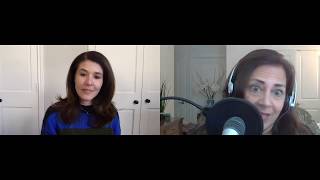
Podcast episode (Finding Brave) in which host Kathy Caprino interviews Michelle Gielan about the science of happiness and how language—both internal self-talk and spoken words—shapes our reality, relationships, career outcomes, and health. Michelle summarizes research identifying a “success mindset” (optimism, viewing stress as challenge, and social support), quantifies impacts (e.g., higher promotion likelihood, lower burnout), and offers practical, short habits (gratitude lists, a 21-day challenge of sending positive notes, media-moat/curation of news) to boost optimism and resilience.
Chapters
Hello, everybody. Kathy Caprino here and welcome to another episode of Finding Brave. They're coming right along and I'm still in the week after Thanksgiving and I would love to hear how your holiday went and if you felt brave and had any brave conversations. I did, actually, and I'm proud of that, although they're not always easy. So good for you for Finding Brave every minute that you can. And today we're talking about one of my favorite topics in the world, how to speak brave, how your words create your reality and your happiness. And we are doing that through the amazing insights of my friend and esteemed colleague, Michelle Gill. And Michelle, thank you for joining Finding Brave.
Oh, thanks for having me, Kathy. So good to be with you.
So good to be with you. I wish I could hop over where you are and just give you a hug, but. Oh, well, another time. So, folks, you know, I love to talk about how I know my guests and how that happened. And I want to tell you I interviewed Michelle for my Forbes block. How long ago was that now? Two years. Maybe way too long.
Yeah. At least maybe a little longer. Yeah.
And I just so resonated with everything you shared and your journey, which we're going to touch on here. But I know people would love to to know more about, you know, your work as a journalist and a news person on CBS and how you saw the effects of negative news impacting us and how that catapulted you to create a new career for yourself, right?
Yeah, absolutely.
So you're just hang on to your hats, folks, because we're really going to learn about, you know, I think one of the themes is and then I've got to read Michelle's bio so you know all about her. We can control our reality. And I don't like control, influence shape our reality so much more than most of us understand. So I hope that the breakthrough here is that you'll hang up from listening to this and know that you are in much more control than you think you are of your own happiness and your own destiny. So stay tuned and learn how. But for more about Michelle, here it is. Michelle Gillen is the best selling author of Broadcasting Happiness, the Science of Igniting and Sustaining Positive Change. I just even love the title, but it's a fantastic book and was named one of the top 10 authors on resilience by the Harvard Business Review. Congrats on that. Thanks. She is the founder of the Institute for Applied Positive Research. Michelle is also the executive producer of the Happiness Advantage on pbs, which is so great and a Featured professor in Oprah's happiness course, she formerly served as an anchor. As we talked about before the CBS morning News, Michelle has spent the last decade researching the link between happiness and success. And her research has received attention from dozens of media outlets, including the Washington Post, our very own Forbes, the New York Times and many others. So thank you, my dear. Thank you. All right, let's dive right in. We have so much to talk about. So you do study the science of happiness. I know a lot of people didn't know there was a science of happiness, so I'm glad you know it now and you talk about that our words, what we actually say, and I'm guessing you mean outwardly and even to ourselves, creates our reality. So what is the research telling us? Tell us all about it.
Well, if we look back at the past decade of research coming out of positive psychology, the scientific study of happiness and human potential, we see that those little words that we utter both to ourselves and to other people, they have huge implications over the world that we create. The reality that we see and even very tangible things like our chances of promotion over the next year, our success rates, the money we make, our health outcomes. The more that we speak in an optimistic, resilient, empowered way, the more that we see these outcomes, business, educational, health outcomes, shift in a positive direction.
Can you, you know, I did a post, I need to do another one on what I few years ago on the very specific outcomes that happen when you speak more positively. And, and they were things like you will become more inspiring during doomsday times. You'll forge a different kind of relationship with people.
Right.
People will look to you as someone who innovates or think positive solutions. I mean it goes on and on. But can people, Michelle, understand a little bit more about how exactly it does all those things you said, why are we going to get a promotion? Why are we going to be foster stronger bonds? What is really going on there?
Yeah. So what we started studying was what I wanted to understand. So to back up, I was at CBS and I saw the negative implications that talking about the negative in our world constantly. Right. Not just some, but all of it, what that did to the American public. And what I wanted to understand was what is about our mindset that then predicts either our happiness or our success in relation to the negative information flowing into our brains. And we found that there are these three elements of our mindset that are incredibly predictive of our long term levels of success. Together we call them the success mindset, but they're your Levels of optimism, the belief that your behavior matters, the expectation of good things to happen. The second is how you process stress. Do we view it as a threat or as a challenge? And then how supportive we are of other people. So how much support we give to others. When we can test people on these three metrics, see where they fall, we see that the people in the top band, kind of the top 25 percentile, they are not only more likely to be significantly more successful and happier, but we also then see these tangible outcomes like the 40% more likely to receive a promotion over the next year, 23% less likely to experience high levels of stress. And the stress related symptoms like headaches, backaches and fatigue. They're three times more likely to be highly engaged in their jobs, five times less likely to burn out. And all of it wraps around the way that they process challenges and the way that they speak about them to other people.
Golly, I mean, I could talk to you for an hour here, 10 hours. Again, we're going off script, folks, and I'm asking Michelle things she doesn't know. I'm going to ask. So just, you know, if, whatever, bear with us. I think we've talked about this before, Michelle, but you know, I work with a lot of people one on one and, and I know I haven't asked you about this specifically, but I've read when I was a therapist, there's research that shows that as early as age 4, we can see what children are displaying. Pessimism, demonstrating pessimistic mystic traits versus optimism. So one thing I want to ask you, I work with some people that in some ways, and this was more true as a therapist, but it's like they're intractably stuck in pessimism. I was talking to someone the other day about how she beats herself up mercilessly for perceived things she's doing wrong for, you know, and I call it the op, the perfectionistic over functioner that has to try to do everything and get an A plus and everything. And the bar is never, you can never reach the bar. They keep pushing it higher and higher in terms of loving themselves, in terms of being enough. So there's, that's a hundred questions in one here. But have you seen that there are, you know, young people display pessimism and optimism and what can we do? If I've had people say to me, I know I'm pessimistic, I don't know literally what to do to change how hard I am on myself, what do they do, Michelle? What can we have them do?
Well, I mean, I think the first and most important thing, both for us as a friend or someone taking care of those people, and then for themselves with themselves, is to have compassion for that. But then how do we actually identify and then move beyond a pessimistic mindset? Here's the thing. There are some people that are naturally just born more pessimistic or more optimistic. It's born.
Is it a genetic thing?
Yeah. So there is definitely a genetic component. There's a piece of it, as researchers estimate that this piece is about 10% that has to do with external circumstances, that predicts how positive we feel about our lives. But there's this middle part that is all about how we process the world and the way we process the world that's actually malleable. So no matter whether you have been born with genes for pests, you practice pessimism for six decades of your life. Let's say we see research that shows that we, through small, simple habits that train our brain to be more optimistic, we can change it at any time. As a matter of fact, there was this awesome study that was done on grumpy old pessimists. I mean, going recruiting for that study, I can only imagine.
Yeah. Anybody want to self proclaim themselves as grumpy old pessimists? Oh my gosh.
The researchers tested them on pessimism. They all came out as moderate level pessimists. Then they asked them to engage in a positive habit of writing down three new and unique things that they were grateful for each day for a period of time. And after 14 days they tested the group. And on average, the men were now testing as low level optimists. But the amazing part is those that kept up this two minute habit, this practice for six months, they actually started testing as moderate level optimists. And what's happening there? It's two things. First of all, by training our brain to see all the good things that are happening in our lives, we are consciously focusing our mind on the positive side of our reality. The more that we practice it, the better that we get at it. So it's not about the two minutes that it takes you to write down those gratitudes, it's about the other 23 hours and change where your brain scanning for those other things that you're going to put on the list the next day. Right. And then the other piece of it is if you're not feeling so positive and you go and engage in a simple positive habit and then you feel a little Bit better. You're reminding your brain your behavior matters, right? And so then the next day, if you're not feeling so positive, you can go back to that same habit and start doing it and then feel a little bit better. And over time, you feel much better. You say, oh, feeling better not because of some outside force, but because I took initiative, I did this, and it's worked for me.
You know what I love about this? But also it's a corollary. You have to be willing to be happier. And as crazy as that is, there are people in my life and people in my practice that it is too scary to be happy. I know that sounds crazy, but they are so rooted in the familial familiar experience of I'm not good enough, life is bad, that it's too risky and too scary for them. So, I mean, if that's you, Michelle, what if someone's listening and nodding their head? What would. And what you're really talking about is your gorgeous 21 day happiness challenge. I think, isn't it that there are five things that have been proven to. If you engage in them and they just take minutes. We're not talking 10 hours on the mountain, you know, in a, in a lotus position, you know, but you, you have to have the willingness to engage in these things. And it, I think it will bring up maybe some fear that, am I even good enough to feel all this good happiness? Am I right? Is that what people say?
I think a lot of this for good and for bad. Their habits, right? They're habits of thinking, habits of speaking. If we meet up in a coffee shop with our friend and they say, how are you? What's our response? I look at a lot of this research from the standpoint of broadcasting because that's what I used to do at cbs. Right, so you are a broadcaster and words you use as you move throughout your day influence other people. They influence your own actions. Case in point. We have worked with so many people who have recently lost their jobs, and if you take a group of folks who are unemployed, you can very quickly see the optimists and the pessimists in the room. The optimists are more likely to very Quickly jump on LinkedIn and update their resume and talk to former colleagues about opportunities. The pessimists, they get around to those behaviors, but it takes them a lot longer because ultimately they don't believe their behavior matters. Consciously or unconsciously. They don't necessarily expect good things to happen. And so obviously that has a direct result effect on the Results, Right. They're not going to find a job maybe as quickly or as easily as a person who's working really hard to do it. I met a wonderful woman who I always think about when I think about this choice that we sometimes don't even realize we have around happiness. So I was developing a program for Walmart for their floor associates. And as part of the pilot, we went out to a bunch of stores and, you know, we share with the folks working there is our idea. What do you think? And get feedback, right? So I give this spiel at the morning meeting and this woman walks up to me afterwards and she. She says to me, I'm the happiest woman in the world. You should study me. And I said, yes, I'm a happiness researcher. Surprisingly, that's not the first time I've heard that. But what she. So I said, why are you the happiest woman in the world? What's your story? And she said, you know, I waited until later in life to get married because I hadn't met someone special until then. I meet this guy, he's amazing. And we are blissfully happy. About six months into our marriage, my mom, whom I was very close with, dies suddenly. Just these health complications that we didn't expect. And so my husband was there for me. He was like a rock. He was amazing. He was just such a great support system. And just as I'm starting to feel a little bit better, he gets killed in a car accident. Oh, dear Lord. Yeah. And so I said, well, I'm sorry, I'm not seeing this connection. She said, no, no, no. The reason why I feel like I have the right to call myself the happiest woman in the world is that after a period of time of grieving his death, I woke up one morning and I realized I have a choice. I have a choice in how I wake up. I have a choice in how I show up at work. I have a choice in how I talk to my co workers. And you know what? I talked to her co workers and they said, yep, Sharon, she' happiest woman you'll ever meet. She's so positive. She walks into the, into the store and she's like high fiving people, hey, it's a great day. How are you doing? So what she realized was, she said, I can't make the choice every single last day of my life, but when I can, I'm gonna do it. Because it's not only for me, it's for other people as well.
That seems so inspiring. So, folks, we're saying, be brave and make the choice. Make the choice. Oh, all right. Now let's talk about something I have a feeling that almost every single person listening and millions more are going to nod their heads with. And that's about the news today. And we're not going to get political, but I think any side of any spectrum is going to say it's more stressful, it's more anxiety. And the research is showing that. And I just have to tell you, at one certain point, this whole journey, I. I had the most excruciating jaw pain. And it turns out I had been grinding my teeth so badly I got a bone abscess, which is so scary because the infection can travel to your brain and can kill you.
Oh, my gosh.
So I had two root canals and would, you know, this was now two years ago January. And the dentist said, the surgeon said, you would not believe the proliferation of this kind of injury, TMJ and grinding, that's causing incredibly severe problems in the. You know, in his client base. So patients. So, you know, it's very. And for those of us who have to stay abreast of the news, you know, I write for Forbes. I can't just put my head in the sand. I gotta look at it and I've gotta listen to the headlines and I've gotta process it. But it's stressful. And I feel like in some ways, personally, I feel more hopeless and more helpless than I've ever felt before, which is really not like me. I usually feel that I can shape my sphere somehow. What do we do and what is the research showing, Michelle? And how can we help ourselves stay abreast of what's going on, but not lose ourselves in the river of hopelessness and depression and anxiety and how. I need to add, we all know how divided we are. And I think. Right. I mean, I think most of us see that we're a divided country. And I think for many of us, we didn't understand that we were divided. I'm not saying that we weren't divided before. I think it wasn't just. It wasn't as a parent. And that makes us stress when we. Somebody said, in my life, when you don't agree with me, I feel you don't love me. And I think that when we're not agreed with, many of us feel hated on outwardly and inwardly and not loved and not validated. What do we do with all this, Michelle?
I think the difference now versus a decade ago is that there's just so much More outrage. That's heir apparent. I mean, every. It feels like it's everywhere. Where because of social media and the Internet and just being. You just have so much more information sources. Plus, I think outrage has increased that it feels different than it did, you know, years ago. We still have, we still, we disagreed with one another, but there wasn't that level of.
There was a civility, it seems.
Exactly.
That's evaporated.
So I've been very interested in the effect of news on the brain. I did a study with Shaun A. Kor, who's my husband and research partner, and we teamed up with Arianna Huffington. We looked at the impact of negative news on our thinking. What we found is that if you just expose your brain to three minutes of negative news in the morning, it increases your chances of having a bad day by 27%.
Goodness grief, goodness gracious.
And that's as reported, six to eight hours later. So we're testing people when they're done with maybe their workday and they're cooking dinner that night, and they're still feeling the negative effects. So what that, that tells me is that it's not so much the negativity or the focus on negative news, it's the real cancer, I think, is what you talked about, which is this feeling of hopelessness and helplessness. And that's pessimism. That's a gateway to pessimism. Right. And so. And depression. And so now we see obviously the highest levels of depression and suicide that we've ever been able to track in modern history. And we see it down to our youngest kids, and it's heartbreaking. And so what I wanted to understand was, is there a way to stay informed without getting depressed, without feeling this?
I love to hear these tips.
A barrage of negative news feeds us this lie that our behavior doesn't matter. In the second study, we found that if you expose your brain not just to problems, but you actually go on to read about solutions that you can take to those problems, you don't even have to do them, you just have to expose your brain to them. You're actually 20% better on creative problem solving tasks that you do subsequently. So what that tells me is that instead of just, for instance, going online and clicking on any headline that might attract your brain, take a breath and look at. First of all, skip the garbage. It's pretty obvious what the garbage is. And if you can. Garbage. Let's be clear.
You mean, I don't even want to use the term, but news that is not news or gossip.
Or gossip horrible things happening in communities outside of yours that really ultimately would have no negative net effect on you. If there's a serial killer across the country, as unfortunate as that is, in all likelihood that's not affecting you directly. So for you to stay up on that story is probably not a healthy thing. Right. So I always get my news online. I skip the headlines that are sensational, that are very negative. And what I try to do at least once a day is find one slightly longer format story that has. That's a more a fuller story. So you learn about the challenge that a community or an individual might be facing. But it goes on to talk about what's being done, what can be done. From my alma mater, 60 Minutes is fantastic in doing that at times, you know, they pick these fuller stories. So when you expose your brain to that and also inspirational stories of people that have already overcome challenges, I think then you're giving your brain a fuller picture of the world.
You know what I'm wishing, Michelle? Do you all curate news? If you said go to my site and there is a curation of today's news that gives you a balance of positive and negative, I would be on that in a minute.
Yeah, I would love that. I wish we had all this because I could never myself.
Right. We need a GoFundMe for that. But what I would. I would love that.
And within different news organizations, I think most of them, there are pockets of really great content. There are reporters that focus on these longer formats, solutions, focused pieces. So that would be my biggest thing. The other thing is give your brain a break first thing in the morning. Either set your intention, journal, do stuff. 3. Gratitude, send a positive note to somebody, but give your Shawn calls it a media moat. Set up a media moat first thing in the morning. 30 minutes, 60 minutes, where you do not check the news, just wake up, do your morning routine, set your own life, and then get informed a little bit later in the day when you've built up your positive resources.
You know what? My eyes are bugging out of my head. You want to hear something? I have started a habit in the past year of when I wake up, I have some good thoughts, but I pick up my phone and I have the news app and I have 10 news channels. I read that. I'm not. Maybe that's why I had a bone abscess. I'm not going to do that. I mean, I like the feeling of being up to date. And in fact, if I just listen to the radio and only hear music or Pandora or whatever. I feel like something could be happening that I'm not abreast of, which I've never worried about before. But I'm actually going to break this habit. Oh, it's going to be hard because it helps me feel grounded that I know what's going on in the world. Before I start my day, I'm going to have to do something. And then let me ask this. I tend to watch not CBS but ABC News at night for one half hour. But you know what we do have to be aware of is there's a team of editors choosing what story from around the country they are picking. And they're pretty horrible, all of them. Do you not advise watching the news anymore? Do you advise picking and choosing on your phone or on your device which headlines?
Yeah, I mean, I personally get my news predominantly online in text form as opposed to video form because I feel like it gives us more control over it. I do agree with you. I mean, if you think about a half hour or an hour newscast, be it the broadcast channels or the cable news, I mean, these are other people making the decisions about what you're even exposed to in the first place. So, yeah, I get my news all online and I read it.
I think it's fantastic. A fantastic tip. All right, now you're talking about small habits and this episode is about speaking bravely. Do you have other specific tips about the language we use outwardly and inwardly?
Can we?
Yes.
Okay, so there are two things that if people are up for a challenge, you know, we mentioned the gratitudes. That's fantastic. That's a great way to start your day. But the other two things I would recommend, one is where in lieu of maybe getting informed in the morning instead, and maybe so open up your email before you read the other emails in your inbox or even look at the messages there, hit compose. And I challenge people to pick one person, new and different each day for a period of 21 days, and send that person a positive note praising or thanking them. The reason this is so powerful is social support is the greatest predictor of long term levels of happiness that we have in the research that we do. And so when we send these positive notes, literally two minutes, three or four lines, we are meaningfully activating our social support network and our brains after day three or four is like, wow, look at all these people that love me, that care about me, that have invested in my success. I mean, you can send it to your friends, family member, colleagues, you can go back to your high school track coach if you want, which I recently did, and just send that note.
So it's a random act of kindness here we're saying. Right?
Very true. Yes, exactly. And you're speaking or writing this positive piece of information, praising them, and then they're receiving, most likely. Also they'll probably send you a nice note in return. Not why we do it, but it's a benefit. So I would challenge people to do that. The other challenge that I love is when people ask you, how are you? What are you saying? Right. I used to say when I worked overnights at cbs, oh, I'm so tired. Oh, I'm so exhausted. I have lots of friends at Google and they all say, oh, I'm so. And I love that I'm so busy. I'm so busy. They sit down in meetings, I'm so busy. I'm so busy. I say, guys, I know you're busy. It takes a lot of work to do those searches. I get it, I get it.
I really want to talk about that for a minute. Can I?
Yeah.
I noticed after the weekend I had my two grown kids here, tons of socializing, tons of laundry. I was saying more than I wanted to say, how busy I was and how tired I was. And I finally. What I didn't like about it was of everything you feel and experience. You're going to talk about busy and tired. You're not going to talk about what a damn blessing it is to have your 21 and 24 year old spend time with you and socializing and the thankfulness and the. You're gonna say busy and tired. So I want to really drive that home. Think about how you summarize what your life experience is to people who ask how you are.
Yeah.
And if really busy and tired is really all you can come up with, then you probably need to shift your life a little.
Yeah.
So it's not so busy and tiring. What do you think?
If it's that busy and tired, you need a break. Yeah, it's totally true. I mean, you know, taking it back to that idea that we're all broadcasters, this is your top story. What's your top story?
What's your headline for today? Kathy's busy and tired and wow, how come that headline's the same every day?
And when we talk about getting job opportunities, who wants to hire somebody that's always busy and tired? I'm busy, I'm tired. Who wants to hang out with the person who's always busy? I'm just using that as an example. But our words speak our Reality and they create that connection with other people. So if you can just, if we can scan our brain and say, you know what, having my 21 year old at home has been fantastic, I absolutely love it. The thing is, it's good for you because your brain then is on the lookout for those good things and celebrating them. It's also good for that other person you're talking to because we're socialized to reciprocate. So most likely that other person is going to match in kind. You, I'm, I'm doing great, my 21 year old's at home or something like changes everything.
You know what that brings up to me? Does anyone know what I mean when you, when I say you have family and friends who you want? Okay, I'm really going to come out on a limb. Sometimes you feel like you shine a little too brightly and you have to dim it down for them. Yes, dim it, dim it, dim it. Well, I wonder would, as a broadcaster, what would you say, Michelle, would you say, and I think we do it because they're like Eeyores, they're depressed or your joy makes them feel bad because they're so depressed. What would uplift them more to dim your light or what should we do in those situations?
I mean, that is tough because we want to be sensitive to them. And I always talk about this being, you want to be socially appropriate, but at the same point we want to be authentic. Right. So whether authenticity for us is higher energy or calmer or, you know, talking about certain topics versus others. But you know, if, for instance, this person is feeling more negative and they're stuck there, we can ask them questions that help lead their brain to positive topics.
We do that.
If, you know, how are you? You know, I'm great. My 21 year old's at home and it's just been such a blessing to have everyone here. Hey, so I saw that you got a new car. Is that something, you know, that's really neat or, I don't know, whatever. Is a new development for them or something going on or. Hey, so you must have had time over the holidays to focus on knitting and that I know you love. Tell me about that. Try to find those topics of that's going to help light them up as opposed to feeling as if we need to diminish our light. I know it's hard. You know, that's where the brain part comes in.
Right? I mean, if our natural inclination is to hide or suppress, then we need our brain's help to do something different. Don't go with the natural inclination when it's actually about suppression and limitation and sadness. Right.
Yeah. My favorite thing recently has been after I go through an experience, I think about how is a better way that I could have handled that in terms of the questions I ask with the things I say, because I know I'm going to see that person again. We're probably going to have something similar. Right. So are there topics that I can keep in my back pocket that I could ask them about next time? It's a great. It's a good thing to do now.
Before the holidays when we're so tight, busy and tired that we can't. I'm too busy and tired to think about what. What I should say, oh, it's too much. All right, now, Michelle, where can people take your course and learn more about you? Please tell us.
Yes. So at my website, michellegeelan.com G I E L A N. There's so many resources that I hope people take advantage of. My favorite too, that I'd love to tell you about is a success scale, which is a 30 question assessment. The test for those three greatest predictors we talked about before. Optimism.
Taking it now.
Yeah, all that stuff. And then the other one. So we developed this in partnership with the Dr. Oz show and it's all about our response to stress. Less important about what we're worrying about, more important how we worry. And so it helps identify these ways that we respond to stress and how we can stress better.
Oh, I'm on it. And we'll link to that below. Everyone, you know what, I just want to. I'm going to do a random act of kindness. No, it's not random because you're sitting.
Right here, but I just want to.
Hug you up because many of us think about happiness and success and we have a gut feeling about what is working. But you actually, you and Shawn and your sister in law, Amy Blankson, you actually put wonderful, well thought out, well constructed research into this mix so that we can not just say, I think this helps, but we actually can tell and, wow, what a gift that is to the world. Thank you for all that you do, Michelle.
Thank you. You're a positive broadcaster, shining a light on this work and the work of so many people. And so I'm so deeply appreciative to you.
Thanks, my dear. Come back again. We need all the happiness we can. And hugs to your family and happy holidays. Thanks, everybody. I hope this is helping you find brave. Speak brave and speak to yourself and to others in a way that that shines the light on what is beautiful and good in your life and in your world. All right, my friends. See you next time. Thanks, Michelle.
More from Kathy


Elevate Yourself, Elevate Others, and Amplify Good | Chris Cooper | Finding Brave Ep. 334

Finding Brave Epis #333: How Leaders Can Harness AI Without Losing Their Humanity, w/Bennett Borden

Finding Brave Epis 332- How to Stay Brave, Valuable and Visible in the Age of AI, with Raman Rai

Finding Brave Epis 331 - The Power of Positive Disruption, with Dr. Patrick Leddin


Finding Brave Epis 330 - Being 40: Letting Go and Embracing Who You Are, with Stacey Lindsay

Disrupt Career Reinvention with Kathy Caprino - via The Disruption Lab Podcast w/Patrick Leddin

Creating Neurodiversity-Friendly Work Cultures: Simple Workplace Adjustments Matter

Finding Brave Epis 329 - How To Create a Neurodiversity-Friendly Workplace, with Kristen Pressner

Finding Brave Epis. 328: Reclaiming the Power to Trust Your Own Voice, with Dr. Cindy McGovern