Finding Brave Ep 68: How To Rapidly Build A More Efficient Team and Business, with Nick Sonnenberg
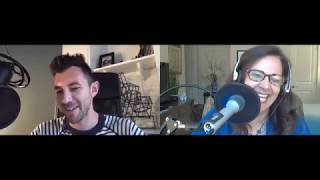
Nick Sonnenberg, who moved from high-frequency trading to entrepreneurship, shares how to build efficient teams and scale businesses faster. He covers leveraging technology, optimizing processes, and the specific strategies that worked when he scaled his own company.
Chapters
Hello everybody. Kathy Caprino here. Welcome to Finding Brave. I gotta put my pop filter on everyone. There we go. How you doing? How's everything? How was your holiday weekend? If you celebrated, I hope Easter Passover. I hope it was good for you and you had brave moments with your family. Maybe that that needed to be brave. I hope it was fun. I am so excited to have our guest today, Nick Sonnenberg. Did I pronounce that right, Nick?
Yep. I'm happy to be here.
Thank you. You are jet setting all over the country, all over the world. So I'm glad I got a little piece of your time. I'm very grateful for that.
Of course. Anything for you.
Oh, thank you. And we are talking about how to rapidly build a more powerful and efficient team and business. Does that sound like a good topic for you, Nick? Sounds.
Sounds like something that I could be interested in.
Sounds like your wheelhouse. All right, everybody, I can't wait to tell you how I found out about Nick. But first let me give you his bio, which is impressive. And there's something in here, I don't even know what it is. And you're going to explain it. A serial entrepreneur with a passion for creating companies that disrupt the way people live. I like the sound of that. Nick is co founder of Leverage, which I want to talk about for a minute. Founder and CEO of Efficient Frontier Solutions Inc. Contributor and the co author of the book Idea to Execution. Before making the jump to the startup tech space, Nick spent more than eight years on Wall street as. Here it is. The thing I don't understand. High frequency algorithmic trader. What the heck is that? My head explodes when I even say that. His personal mission is to help busy entrepreneurs and executives optimize their lives in a meaningful way and help them go from idea to. To execution in just a few steps or as few as possible. Thank you, Nick. Thank you. Now let me tell you all how I heard of Nick. Can I?
Yeah.
So you know, there's lessons in this story. I had a friend, a colleague who just written, I think her third book, invite me to an author group on Google. And sometimes I'm going to be honest, this is transparent. I've got so much going on that when I get added to something and then I get 100 emails, I'm like.
Oh no, what have I done?
And so I got a little nervous and, you know, disappeared. But then I came back to the group and I saw that everyone was helping each other in amazing ways. So I put out there I am looking for a right Hand support manager, you know, and I explained it and a number of people, you know, anybody has suggestions, a number of people were amazing and said, do this, do that. And Robin Farman, Farmyan, who I just interviewed on this podcast, said, yeah, I know exactly who you should go to. And it was Leverage.
Oh, that's nice. I know Robin. I knew that's how you found out about leverage, that is.
So I hopped on it.
She's been a client forever.
What's that?
She's one of our original clients.
I didn't know that either. And you know, when you get that feeling, I hopped on it. Now I have Becca from Leverage and you know, five other resources, launching two courses, I hope. And then I got introduced to you, Nick, and my gosh, you're doing amazing things, amazing things. So I wanted to, I wanted to understand from you. Well, first of all, let's start from the beginning. You shared a little of this when we talked before, but I'd love to hear how you move from your high algorithmic trader function to this world serial entrepreneurship. Can you tell us?
Sure, sure. Let me just first explain a bit about leverage though, just in case people are wondering what it is that you, what Becca is doing for you. So leverage is, it's, it's basically an agile workforce that we give to entrepreneurs and business owners so that instead of having to hire full time people or spend a lot of time on interviewing freelancers on these outsourcing platforms, we give you this team of like 100 vetted people that we' trained all different skill sets so you instantly just get access to this high caliber team of 100 people that you can use at your disposal. And they can do basically anything from marketing to admin to operations. We could do editing, video and audio, building websites, designing logos, marketing, sales funnels, booking, travel, etc. So that's kind of what we're doing and we just make it really easy to hire people and to get work done without having to W2 people, pay for a desk, pay for health insurance, commit to big commitments, etc. So now backing up, to answer your.
Question, can I add something which is a plug for you all I've had for 13 years, I've had my own business and I've hired a lot of different people from a lot of different platforms. And what I love, honestly, this is not just promotion here folks. But I want to share. You make it so easy and you told me that you were looking at how to do this the way you would want to hire people. When I landed on you all, I'm like, this is how you want it to go. Number one, not pay a huge onboarding fee, when in fact you don't even know if the person's going to work out. Number two, an ability to vet a number of people, but you've already vetted them. Number three, I had my friend who I respected, you know, refer me in. You already have a comfort level, like everything is. And I love your toggle system of billing. The whole thing rocks.
Yeah. Well, I think that no matter what, what startup or company you're building, you always have to make sure you're passionate about it. And that's solving a problem that you have. And I had this problem because now backing up into kind of how I built leverage, right before leverage, I was running a startup called Calvin where I had to hire freelancers and I was using all those platforms like Fiverr, Odesk, Elance, Upwork, and it's super time consuming. You have no idea who's good, who's not good. There's hundreds of thousands of people. You inevitably always have to hire multiple people because you needed for my company, I needed a designer, a developer, a copywriter, someone for SEO, et cetera, et cetera. So you end up having to spend all this time hiring people. They're not a part of your team, they're individual. Each of them in themselves are individuals. So you end up having to project manage them. And if you're not happy with the quality, you're stuck with some random arguing with some random person somewhere else in.
The world, let alone you're letting them into the back end of your world.
Yeah. So I experienced the pain of that. And being an engineer by background, I'm always thinking about building solutions to my problem. So I decided, well, why don't I just build what I would like? I want something where it's just super easy to get anything done that I need done where you can trust it if you're not happy. There's just one central point of contact. And basically, essentially I want a team at my disposal that can coordinate with each other. And I just want and I just pay for what I need to use without a big commitment and without the headache of having to search through 100,000 people. So I decided to build it because it was a personal problem. But now stepping back, kind of going through my biography in reverse chronological order, just not very logical. But I started off all this. My background is in math. I did a master's in financial engineering at Berkeley, and from there I got into high frequency trading which is basically I was trading stocks at super high frequencies, like microseconds, all based purely on math and algorithms. I had no idea about the companies that I was trading or anything like that. It was purely automated, based on math. And in a lot of countries, you know, I would represent multiple percentage points sometimes in terms of volume of the market. So we were trading billions and billions of dollars, capturing fractions of a penny from statistical arbitrage opportunities. And I did that for about eight years and was just ready for a new challenge.
Did you find that rewarding?
I totally. I found it very rewarding for a long time. You know, you're working with some of the top mathematicians from the best schools in the world. So I was working with some very bright people. I always, just growing up, liked gambling. I was into poker. I liked strategy. I was into, you know, even in New York. I live in New York now. I play speed chess in Washington Square park with the hustlers. So I've always had kind of that about me. And I've always had. I've always been pretty good at math too. So that kind of touched on, you know, I was dealing with a lot of money. It was kind of like gambling, but with this massive edge. Like I would only lose maybe five, five days a year. And everything else was a positive. So it was like a straight line up. It was.
Is that because you were using an algorithm that someone else built or you. Or it was yours? Like no one else could replicate that.
So that's a good question. So the type of trading, the type of high frequency trading we were doing was something called index arbitrage, which I didn't develop like that strategy or that algorithm, but I would contribute to the algorithm or to the strategy. And I'm not going to go into the details of that because that's a whole. I could talk what index arbitrage is, but I did develop an algorithm from scratch which was basically the complete inverse of the strategy. So the strategy of index arbitrage is you're doing something called market making index futures. And when you're filled on a future, you send a basket of optimized subset of stocks to hedge your trade. So take like the S&P 500. You sell one future of the S&P 500, you buy instead of buying all 500 stocks, maybe you buy some optimized basket of 50 stocks based on the expected return of the stocks and the risk profile and other other factors. But the main strategy was to start by entering from a trade on the future. And hedging with stocks. So I created an algorithm to do it in reverse where I was starting from stocks and hedging with futures. And I found a tax loophole in the Hong Kong market. Basically no tax loophole, but you pay 11 basis points whenever you trade. So I helped build up what's called a dark pool internally at the bank. So that basically means that it never hits the market, it's trading off market, but all within the bank. So it avoided paying this stamp duty. And so I basically became a market maker for the bank and create an algorithm to market make internally. And that made a lot of money for the bank. So at a young age, I created that was making seven figures by 26. And I just found I was living in Hong Kong at the time. So I had like the stereotypical what everyone would want for a job. I'm living in the Four Seasons, making a lot of money. I have 16 computer screens. I mean, it was really just insane. But every night I was out drinking and partying and I didn't feel like I was building deep relationships. And so a bit of that, a bit of me just being cocky, I felt, you know, I could give this. I could give this up and hand it over to the next trader and go and figure something else out in New York and try the New York market out. So I moved back to New York, and over time, I just didn't feel like I was getting challenged as much. It was a more difficult market as well. And that in combination with having this idea for what was Calvin, my previous startup, I decided, you know, at that time I was like 30 years old, no kids, no family, had some savings. So I figured if I'm ever going to take the jump and take the risk, now is the time. So I decided to give it up and throw myself in the deep end to be an entrepreneur.
Oh, wow, what a story. I had no idea. And then. So you talk about leverage. I'm going to ask this at the end, but think about it, like, what's your biggest dream for what you want to do? You're young and you've done a lot. I don't know how old you are, but I'm guessing you're young. I'm pretty sure 34. Do you have a big dream even beyond serial entrepreneurship?
Well, so for me, I want freedom ultimately, and money is one aspect of freedom. But I want to be able to work on things that I'm intellectually stimulated by, work with people that I enjoy working with. So those are just kind of the things that I'M trying to achieve. Right. So yeah, I do have drive. I do think that what I'm doing with leverage does have legs to become a billion dollar company. But the ultimate goal for me, like it doesn't need to hit that kind of financial level so long as I'm building things that I'm intellectually interested in and working with people I like. So a lot of the same math that I did with high frequency trading is stuff that I'm is stuff that I'm using in leverage. So for instance, at leverage, we're a marketplace where we're getting all these tasks and projects that we need to fulfill. I'm kind of looking at it from the same lens as high frequency trading. So I'm trying to run this company like how I ran my high frequency trading books. So I'm trying to automate as much stuff as possible. I'm looking at this just like I'm trying to optimize a basket of stocks for me, I'm looking at this like I'm optimizing a basket of tasks. And at any given point we have a certain, we have clients that need work done and we have people that can do work and people have different levels of skill set, levels of bandwidth, different relationships with clients. So how do you maximize kind of the utility of this? If you look at it from this lens, which is kind of an interesting lens I feel, to look at it, how do you maximize the utility of this? Where you have these tasks that need to get done and this workforce that can do it. How do you make sure that the right person is doing the right thing? And someone might be. You might be 10 times better than me at development and slightly better than me at design. So you're better than me at both. But relatively you're better at development. So for the ecosystem, all things being equal, it would be best for you to take the development task and I take the design task. Right. Because that's kind of relative. But you know, depending on bandwidth, depending on, you know, various things with the client and previous experiences with the client, like maybe that's not right. And my undergrad background was in game theory. So I'm trying to gamify this marketplace. I'm trying to use game theory with the same math I used as a high frequency trader, so that I'm not forcing anyone to take a task, but I kind of optimize this basket of tasks, then put optimal delays on the freelancers for what they see as available in the marketplace based on the result of the optimization. So that's something that I'm really interested, just from an academic point of view.
To build that's kind of within the system. That's an algorithm kind of within the system.
Yeah, yeah, exactly. So it's basically. Basically like it's a mechanism for a marketplace that I haven't seen done before. And I'm really interested in this use case of kind of combining a few different fields of math to optimize a basket of tasks and kind of define, like a new way of having a marketplace operate with having optimal delays. So I'm not everyone's a 1099. I can't force them to do work. But what I can do is I can control who sees what. So I can skew things to how the math tells me that's happening.
They do. Now.
This is on the horizon. One thing that I heard from one of our advisors, his name is Aaron Schiff, was you have to earn the right to work on interesting stuff as an entrepreneur. So you don't have the luxury of working on the coolest, most interesting projects out of the gate. You have to, you know, build your foundation, earn profits and stuff. So this is something that you say kind of, what. What am I trying, you know, what am I hoping to get to? I hope that I earn the right to work on that project, because I think that that's a super interesting one. I've always thought that down the road I would probably be a professor. I always thought that that would be cool. I love playing chess. So when I do retire, studying chess and, you know, trying to get better at that is something that I would, you know, most likely get into.
Oh, you're fascinating. Oh, my God. All right, now, what I want to do, I got a lot of lessons from that whole description, lessons that answer these questions, which are, you know, I want this to be teachable for people, people who are entrepreneurs, who are starting small businesses. What holds them? And I can't wait to hear your answers, because I think I've lived through all of them. What holds you back from scaling, from delegating, from creating business models that work like, give us. Give us the top three things, if you would. But before you do that, am I right in saying, I mean, one thing you've illustrated is, which is what I say in every career coaching call I have. How do you use what you're uniquely gifted at? That comes incredibly easy to you? Kind of just what you're talking about. You're going to. You're going to a lot. What's the word this person does Design so well, they're going to get more design work. Use the talents that you're born with that are so natural, that you love to use for outcomes that are interesting to you and look what you're doing in your businesses. Would you agree with that?
Well, that's pretty much our tagline. It's, you know, comes from Dan Sullivan, who runs a company called Strategic Coach. But he has this concept of unique ability and how people should really focus on their unique ability and figure out ways to kind of get rid of everything else.
Yes.
I mean, the caveat I have to. That is I think you should focus on things that are in your unique ability or give you joy. You know, if you. I think Mark Cuban has the famous, famous example where he still does his laundry because he gets joy, clearly, is about doing laundry.
So we also have to have it. If you want to make money, it has to be a need that is out there. You know, I work, I have a lot of creatives around me, musicians, I'm a singer. A lot of people with creative ability think I'm born with this and you should just pay me to play. Yeah. Well, there's got to be an interest, a need, I think. All right, good. I'm glad I'm getting it a little bit. What do you see that small businesses like me, I bet you can see it in two seconds flat. Everything I'm not doing right. Let's not use me as an example. My ego will be hurt.
Yeah. Just in general, there's some stuff that a lot of businesses. I found a pattern so I have leverage, which is all about getting things off your plate, getting freelancers to do work for you that don't tap into your unique ability. Or instead of you hiring someone, they could do the work for you. I've also in the last year and a half, created a business efficiency consulting company which helps companies optimize and automate their internal processes and get technology set up in the right way. Because nowadays there's all this new technology out there for internal communication, for project management, for cloud storage, automation tools, et cetera. And startups. Some of them know about some of these tools like Slack or et cetera. But even if you know about the tool, most people don't know best practices. Fundamental as when should you use that tool or how do you think about that tool conceptually, or how do you. What are best practices for setting up that tool? And what I found is what we did at Leverage, which was really good, was we had the constraint of not raising money and we Also had the constraint of being remote. So it forced us to kind of learn and create a roadmap for other people in terms of how do you use technology in the right way? And I wrote a book about it. My first book was Idea to Execution which is all about how we bootstrapped the company because we used these off the shelf tools in proper ways. And I had over the last couple years people just start reaching out, asking me to consult them. So I built a consulting company. I don't have a website or advertise for it and I've worked with people from two person gas and water leak companies to vet hospitals up to Tony Robbins and Ethereum. And everyone has the same issues and including leverage, we had these issues too. So everything that I'm consulting is from experience. And I found that all companies struggle in three kind of key areas which is communication, planning and what I call resource. So what I do with companies and I have a book coming out called Come up for Air as well as a video course about this. But I help people. One, I teach them what is a communication tool versus a project management tool versus documenting knowledge. And then we go deeper into as far as when should you use internal communication tools versus external communication tools? When should you use a project management software, how should you optimize it? How do you get the communication tools to be speaking with the project management tools? And then something that most people don't actually know, companies I've ever worked with do a good job of is documenting knowledge and process. And it's one of the most companies are sitting on this massive risk that people are walking around and only one person knows how to do payroll. And then like what happens if that person just leaves suddenly tomorrow? I've lived through having a co founder suddenly leave with no notice. And had I not documented everything, we would have been in bad shape. So to answer, the long winded version of this is you using the right tools in the right ways is one thing. And then the whole unique ability concept. You know Joe Polish, who is a partner of mine, he runs a company called Genius Network, he has this concept called your not to do list. And everyone talks about to do lists, but actually your not to do list is way more important than your to do list. So what you choose not to do because anything you say yes to, you're saying no to an infinite number of other things. So being very clear on what you're not going to do is really important. And then back to Dan Sullivan, he has this concept called who not how. So when you're trying to figure out how to do something. You don't need to figure out how. You just need to know the who to figure out the how. Right. And that's kind of another way of thinking about what we try to achieve with leverage is we try to be your who. So you don't need to figure out how to do it.
I love it. Now I gotta interrupt you and ask this question because it's. Oh, it's been my biggest problem. So let's see if you can solve it. I think I'm getting there. I remember reading Michael Gerber's book, the E. Myth Revisited. Do you know Michael's work? And I threw it across the room. I didn't like it. But to me, his key point was the fatal assumption small businesses who fail make is that loving to do a technical skill. Baking, coaching, design is the same thing as running a business that offers that. And they're not at all the same, as we all know. And he talks about, think of your business as a franchise, if you were to franchise. And I was like, I don't want a franchise. But what has been my hardest problem is to even get to the point of scaling where you're going to need all these tools is I'm really good in the one on one. I'm really good in the one to several because it's transformation, like it's career therapy in a lot of ways, although I don't do therapy anymore. So the problem has been how do I scale those talents that I have that happen in the one on one? How do I scale that? And that can come to a lot of different questions. How do you take the content and make it passive income? How do you stop being the one doing all the work? So I'm sure you see this a lot, right?
Yeah. So there's a couple things. So one, you got. One of the biggest mistakes I made at Leverage was premature scaling. We grew too quickly, and we didn't have our internal processes and operations well dialed in. We didn't have our product, you know, perfected. So enjoy being small as long as possible and use that time to build a solid foundation. Document all of your processes, make sure that the systems are set up well, that the offerings are really, really solid, that your NPS score is really high. Because once you scale and then you have hundreds of customers, then you have to deal with complaints and refunds and stuff that takes up all of your time. And then it's really hard to find time to go back and build that foundation. So enjoy first thing is enjoy being small as long as possible and use that time wisely and identify all the opportunities that you can to.
You know.
Focus on your unique ability. So automate as much stuff as possible. Make sure that you're reducing all the internal frictions that you have in the company. And documenting processes will be really big because it's easier to use a company like Leverage if you have things documented, because then you could just hand over the documented process and you know, it's well documented if someone could just follow it without you having to do a call to explain it to them. So use this time to document your processes. Leverage can help you. We recommend a tool called Process Street. We could, even if you don't know how to use that tool, you could give us a word doc that's written out, we could put it in there. But documenting your processes, integrating that with Zapier, automating various things, is what I would focus on while you're small because you won't have the time to set that up once you have to be fulfilling a ton of customers. But then to scale that type of business, you know, coaching, video courses, group, group kind of things like, that's the way to scale it.
I love it. And you know, I want to say this. I'm aware of our time. We have a few more minutes to see what you think. If I when someone asks me what might be the biggest mistake you've made in 13 years of having your own business, I think the answer would be that I waited too long to change what was clearly not working. Whether it's a person working for me, whether it's a business model, I waited too darn long. Do you have any thoughts for people who are listening, who are ready to scale? How do you know? And I know why I stayed too long in a career, a corporate career, I hated. Why? Because you work hard and you've invested a lot. You want the thing to work out. You don't want to have to, in your mind, start over or pivot to a new direction or create something that is different from what you spent hundred hours creating. What do you say? How do you tell people?
I have a lot of thoughts on this. So, one, I just assume everything I'm doing is wrong. Two.
What does that mean? You mean you're questioning everything?
Like, I'm obsessed about efficiency and automation. I'm trying to find a second efficiency gain in things, right? Like if I can automate something and save a second, like I'm celebrating it because I know that over time and with my team, that adds up to a lot. So I'm just always looking at things from the lens that there's a better way of doing something and that it's going to be. It's. It is an. It's a living organism itself. The company that's going to evolve and mature and, you know, I'll have an impact to it, but I haven't. That it's never going to be finished and that there's always going to be a better way of doing things. Also, defining success up front I think is really important. So, you know, whatever that is. But kind of upfront, writing out this company is successful. If I achieve this by this date, then it's successful. If it doesn't and I fall below by this much, then it means something's not working. But lastly, I think that having mentors and coaches is super important. So I think that everyone can benefit from having a mentor system and a coach. I belong to a bunch of masterminds and have mentors and coaches that I can call up and get honest feedback from. And I think that that's just really important. It's really lonely being an entrepreneur, and it's so critical to have that kind of support system.
I love every word you're saying, and I think even look what happened with me and Robin, I think it points to something you're saying sometimes. And I think this is a spiritual concept. There isn't a readiness to grow. You don't have the readiness, whether internally, externally, in your tools. But wow, when you are ready and you're open and you're connected to people who can help you, I mean, look, Robin sent that. I acted on it that minute, hired Becca the next day, and all of a sudden I got two courses going. Maybe the title of my book is changing. Don't you find that there's a curve like it's chug, chug, chug, chug, dip, chug. Then do you find that.
Well, we've turned off marketing the last 18 months. My strategy was kind of.
Wait, I was talking over you. You've turned off marketing for leverage? You mean people are flowing in so fast?
No, I was trying to shrink leverage because we had too many people and it was too hard to rebuild the foundation and improve the quality when you so big. So I turned off marketing and focused.
Too many people trying to hire your people, not too many. Leverage.
Yeah, there's too many. There was too many. Too many people on both sides. We got too big within the first year. We had, I don't know 4 or 500 clients and 150 people on the team fully remote. I mean it was, it was really hard to maintain when you, when you grew that fast. So I've been trying to, to my strategy was if I can get the quality of the service is super high, you know, you seem to be getting a lot of value, then that's the best marketing that I could do is just referral organic. And so I wanted to focus on building the best product possible and growing organically off of that. And then once kind of your retention is high, there's, there's certain metrics. The problem with, with a lot of this stuff is people like to brag about, you could argue vanity metrics like I have an Inc article coming out. Is revenue a vanity metric? But people like, people like to followers.
Oh my gosh.
People like to brag about things like revenue or size of team. And it can be distracting. And it was a distraction for us and it ultimately hurt us to celebrate those numbers. And better numbers to celebrate would be like what's your retention? Or what's your NPS score?
I don't know what that stands for.
Net promoter score. So there's tools like ask nicely and other ones where you can survey customers and they say like 0 to 10 how they like the service. And basically it's like if it's an 8 or above it's considered a 1 and if it's like a 6, 7, 8, it's a 0 and anything else is a minus 1 kind of. I think that's typically how it works. But anyways it's a way to score client satisfaction. So things like that aren't as sexy as saying hey, we're growing 10% month over month or 20% month over month or we have 150 people. But that's how you really know that you have a foundation. And you really shouldn't be thinking about marketing and selling until, until you've hit product market fit. And you'll know that you've hit product market fit based on your churn, your retention, your NPS score, etc.
Oh gosh. I mean to me, in simple layman's terms, are you a service in the world and revenue doesn't necessarily reflect that, I think. Are you of top level quality service to people? Is that it?
The revenue will come if the, if the quality is so high that people can't live without us and our retention is super high, the revenue is naturally going to come.
That's right.
Focus on that versus focusing. Look, I could be 10 times the size right now. But I'd break up a ton of stuff, cut a lot of corners. It wouldn't be, it wouldn't long term be sustainable.
So I wish, I'm gonna end this with I wish every single person who wants to be a coach online will listen to this. I'm personally so sick of I want to make a million. That's the first thing they lead with. I want to make a million and be a coach. Well, what about what you're doing? Yeah, I have a bugaboo about that.
Nick, you should focus on providing the highest quality product or service possible, measured in some way. NPS, retention, etc. That should be the overall goal of all businesses, is that. And then once you've hit a certain mark, start scaling. But as you scale naturally, it's going to impact your retention and quality because things will break. So you have to keep, you have to be managing the pace that you're scaling so that your retention and your NPS scores and things like that don't go too, too far in the wrong direction.
So much helpful information. I can't thank you enough. So where do people, where do you want to send people who are listening and all excited? Where should we send them?
Well, if you are looking for your who's to your hows and want to extend your team, leverage could be helpful for you. So that is getleverage.com I also have a podcast, the Leverage Podcast. I have a book idea to execution and then I have a new book that's going to come out in the next few months called Come up for Air. How your team can leverage systems and tools to stop drowning in work.
Oh, can't wait. And of course you're going to be in my Forbes blog soon and we're going to link to all of those things below. And maybe is this okay? If you have this wonderful kind of application process and you say, where did you hear of us? Can they say Finding Brave?
Yeah, that'd be great.
That'd be good. All right, everybody. Can't thank you enough, Nick. I can't see what. I can't wait to see what you're going to do next. Oh, and you also have a wonderful workshop coming up. Is that sold out?
Pretty much, yeah. I have a workshop with Lee Brower, who, if you don't know Lee, he was in the movie the Secret. One of the most, most incredible humans I've ever met. He's coming. People like Jay Abraham, they're coming as guests. Like, it's a really, really solid lineup that's in Park City, May 20th to the 22nd. And I think we have two spots left out of the 20. If this one is sold out, we probably are looking like we will do a second one.
Maybe we'll have the link and if you have a waitlist, people can sign up for the wait list maybe.
Yeah, that's sign up for the wait list. My email is nicketleveraged.com so you can email me if you have questions.
Oh, my gosh, you're going to get inundated. I can't thank you enough. Come back again.
Thank you for having me. Looking forward to the Forge article.
Oh, I can't wait. All right, everybody, if that didn't make you a little braver and at least understanding a little bit more about maybe the next step to take or even it's okay to be small. Isn't that a beautiful takeaway? It's okay as long as you're making use of that time. Thank you, everyone, and have a wonderful week and we'll see you again soon. Next. Bye.
More from Kathy


Elevate Yourself, Elevate Others, and Amplify Good | Chris Cooper | Finding Brave Ep. 334

Finding Brave Epis #333: How Leaders Can Harness AI Without Losing Their Humanity, w/Bennett Borden

Finding Brave Epis 332- How to Stay Brave, Valuable and Visible in the Age of AI, with Raman Rai

Finding Brave Epis 331 - The Power of Positive Disruption, with Dr. Patrick Leddin


Finding Brave Epis 330 - Being 40: Letting Go and Embracing Who You Are, with Stacey Lindsay

Disrupt Career Reinvention with Kathy Caprino - via The Disruption Lab Podcast w/Patrick Leddin

Creating Neurodiversity-Friendly Work Cultures: Simple Workplace Adjustments Matter

Finding Brave Epis 329 - How To Create a Neurodiversity-Friendly Workplace, with Kristen Pressner

Finding Brave Epis. 328: Reclaiming the Power to Trust Your Own Voice, with Dr. Cindy McGovern