Finding Brave Epis 317 - How to Attract Great Investors For Your Products and Business
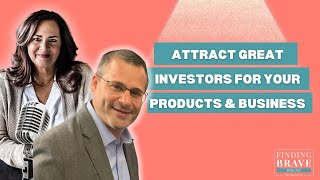
IP attorney David Postalski explains what investors actually want to see before they write a check: secured patents and trademarks, clean ownership paperwork, a solid team, and proof you've done your homework on who you're pitching. Most founders stumble on unsigned work-for-hire agreements and unclear IP rights.
Questions this video answers
Last Thursday of every month at 12pm Eastern.
Gearhart Law website — gearhart.com (Events page) and their YouTube/podcast channels.
About 60,000 patent attorneys.
October (the guest says 'This is coming to you in October').
Chapters
I say this facetiously, sarcastically, realistically and figuratively. Nobody has money right at the end of the day, spending money to attract money has to be a calculated business decision. 100%. Am I hiring this lawyer? Do I need this accountant? Do I need this? Do I need that?
Hello, everyone, this is Kathy Caprino, and welcome to my podcast, Finding Brave. I've created this show for everyone who longs to create something bold and brave in their life, to rise up, speak up, and stand up for who they are and to reach their highest and biggest visions. Each week, I'll be speaking with inspiring guests from all walks of business, leadership, entertainment, the creative arts, and the entrepreneurial world. And they'll be sharing their intimate stories of Finding Brave and offer their best strategies for building your most rewarding, joyful, and meaningful life, business and career.
Foreign.
Hello, everybody. Welcome to another episode of Finding Brave. How have you been? This is coming to you in October. I hope fall has been good for you so far. And I am so excited to have our amazing guest, David Postalski with us. David, who has been so helpful to me and to many people I know. I'm just thrilled to have you. Thank you. Coming from Israel. Thank you so much. So much for being here, David.
Thank you, Kathy. It's actually fun to be back. We did this a few years ago.
Yes, we did. And I'll link to that below. I'm not remembering that might have been three years ago.
I think it might have even been more. I think it might have been five or six years.
Oh, good grief. Well, we'll find out and we'll post that.
But yeah, we definitely have known each other for a long time. So, yes, it's.
It's super exciting, actually, because you helped me so much with Finding Brave.
That's right.
Trademarking this podcast name. And there was a bit of a drama all over that, which you remember. So that was. That was 2018.
Oh, thank you.
It's incredible. So we are talking about how to attract great investors for your products and business. Wow. There's so much to talk about, and it's. It's not easy for a lot of people, David, is it? I mean, we're not lawyers. We don't understand the ramifications, the implications. So thank you for breaking it down, you know, in a. In a digestible way. But let me tell you about David, everybody. And then we're going to dive in. David is a senior partner at Gearhart Law, a registered patent attorney in intellectual property ip. That's what we're going to call it, that's what it's called. Attorney David specializes in assisting inventors, creators, startups, entrepreneurs, early stage companies. My goodness. And emerging companies with their U S and international IP strategy, protection, enforcement and monetization. David is a frequent speaker and author on emerging IP issues and technologies. Raising capital, business formation. Good grief, you do it all. Licensing, equity based crowdfunding are his strengths. It goes on and on. You're a teacher, you're a professor, you do such amazing things and you can read the full bio below. But let's dive in. David, we have you for 30 minutes. So for people who might not even be aware of the full description of what IP is or even if they have it, could you just give us that to start and that'll be our launching pad?
Yeah, that's a great start. From my, in my world, working with investors as clients and working with all sorts of entities that need investment because nobody has no money at the end of the day. But at the end of the day, everybody's raising money. In my world, it is best to have at least one of the four forms of intellectual property. Intellectual property. The four forms are patents, trademarks, copyrights and trade secrets. These are federal rights. This is like I file a United States patent, a United States trademark, a United States copyright. I have trade secret protection, protection across the United States. This is what investors look for, knowing that you have created something, whether it's a product or a service business or a lifestyle brand, or a formulation or a new medical device, whatever, I don't care what it is. At the end of the day they want to know that they are investing in not just you as a person, but your registered form of intellectual property. They want to know that you went through a process and were awarded a federal right in patent, trademark or copyright. So that's, that's like their collateral, if you will. Like that's why, I mean, I'm going to give you money because I, I, I, I, I'm, I'm, I at least know that you have a great chance to do the things you want to do. The launch. To launch, the things you want to launch because you have gone through a process and been awarded a federal right of a patent, trademark or copyright. So those are the major forms of intellectual property. Not everybody can get a patent, not everybody can get a trademark, not everybody can get a copyright. Not everybody has a trade secret. But from an elementary level, if you will, a patent is something based in science. So if your product involves chemistry, physics, biomechanics, electrics, computer science, something like that then you can potentially get a patent on that technology or innovation.
Wow.
Trademark you. If you have a brand or a logo or a word or a color scheme or something that is, that is a representation of the good or the service that you are providing in the United States, then you can get a trademark and then copyright. If you have created something from a creative and artistic perspective that you want protection on, blogs, vlogs, how your website looks, all your marketing materials, audio, visual works, sound recordings, newsletters, anything kind of related to like the marketing of your product or business can be protected by copyright also. So having these protections means that you, they're yours, you get to control what happens to them and you get to sell it to the investors as a way to get money from them because it's collateral for the loan that they're going to give you at the end of the day. That's what it is. And so fascinating property is. Is important.
I'm really interested. This is a little bit of a digression. How did you get into this? I don't think I ever asked you that.
I don't think you have. I. I was fortunate. I knew I. I knew I always wanted to be a lawyer. Was very in. I loved LA law and if you.
Remember that, oh my goodness, I loved it too.
It was like that very kind of.
Sexy, cool, kind of like a little law thrown in. No.
Yeah.
Sounds dismissive. I don't mean it to be.
I just know it was like ingrained in me when I was like a teenager. Like, wow. I think I want to get into. I want to wear a suit. I want to like help people. I want to like sit around a conference table and everybody report on their different areas of law and stuff like that. And so I knew I always want to be a lawyer. That's the earliest memory I have. And I was fortunate when I was 18 to join as a law clerk a very, I don't know about prestigious but at the time, very popular kind of entertainment law firm. They represented rappers and artists and Broadway stars in the middle of Manhattan. And so like, did you grow up in Manhattan? I grew up in Brooklyn.
Brooklyn.
Grew up in Brooklyn, New York. But all my jobs were in Manhattan as early as I was 18.
How did you get this? Incredible.
So I just applied as a look like I knew I wanted to get into a firm. I knew that I had to start somewhere. I knew that I was in college and I didn't. Wasn't yet going to law school and so I just applied and I guess I charmed them into getting a job there. And I was there for about three or four years. They actually wrote my recommendation letters for law school and Entertainment Law is an offshoot of copyright and trademarks. It's all intellectual property at the end of the day. Wow. And so that. And so from there I just jumped from firm to firm to firm to firm, and I never looked back. I went to law school, became a lawyer. I got my science degrees because you have to be a. You have to have science backgrounds in order to be a patent attorney. So I've, I've.
You do?
I do. I have, I have, I have. I have a chemistry degree. I also have degrees in computer science. And so like, I, like, I was going to make the best of this and do as much as I possibly can to be. And to be an IP attorney. There's not many of us. Actually, there's millions of lawyers.
Right.
To date, there are only about 60,000 patent attorneys. And so I knew that if I was going to do this, not only was I going to do it for the love of it from a competitive perspective, I wanted to be that type of lawyer that not everyone was. That was important to me also at some point.
And eating.
Yeah, that's how I did it. That's how I got into it.
That's how you did it. All right, so now let's go back to. Tell me the typical client you have and the problems they come to you with. How about that? That's.
Yeah, that's a great question. That's a great question. It definitely ranges. We definitely have like the, what we call the independent inventor. Just some random person who comes up with a great idea, flash of genius, falls in the shower, whatever the story is, and comes up with a great product and doesn't know the first thing about not only protecting it, but how to launch it. Like, that's like, that's like. How do you, like, you have to like market and prototype and manufacture and produce and distribute and, and all that stuff. And so that's a very typical type of client of ours. You can label that person as a startup as well. Right. Because now all of a sudden they're like creating a company and they're starting up and trying to get. Get things going, but those companies, most of them fail. At the end of the day, the odds are against startups.
Can I ask you about this? So they're getting a patent. You know who comes to mind? Sarah Blakely, the founder of Spanx.
That's right. Of course.
That's a fascinating example. Fascinating story, and boy, did it go big for her. But she didn't know what she was doing in the beginning and got rejected 10 times, you know, 100%.
Or like. Or like Joy, like. Like the movie Joy, you know, like the woman who came up with that mop that squeezes the water out. I mean, those are the popular culture references that we have for patents, for sure. But, yeah, these people don't know anything. They know they have. They know they created something amazing, but they don't know anything else.
David Kent. Excuse me. Can they get a patent without knowing how they're going to manufacture it?
Yeah, of course. There's absolutely no requirement to build or make or sell the thing that you want to protect in patent. It's enough to just technically describe it through words, which is why you need a patent attorney who understands the mechanics and electrics and the science behind it, and also have physics, like pictures of it, like sketches or diagrams. You have to know somewhat how it's going to look. Even though you can't manufacture it yet or 3D printed or whatever, still kind of know how it's going to work. But the patent office doesn't say, oh, show it to me. Oh, is it on sale? They don't care. At the end of the day, they want to know that it's technically described in a way that they can allow it and examine it for you. Wow.
All right, so first issue is the person has the idea, gets the patent, but doesn't know and doesn't know how to bring it forward. And that is work that you help them with. Do you source manufacturing for them and all of that?
We do. I don't. I'll tell you that we don't charge for that type of thing at the firm. We're not like a typical law firm. We don't charge by the hour. Everything is fixed and flat. And we make it our business to know the business of innovation. That means knowing other people that can help my client market prototype manufacture. I need to have this done in China. Okay, we can set. We have somebody in China that can help you. I need to do this in Taiwan. You know, I need to get on Amazon. So we have Amazon consultants. Anything you can possibly think of from the time the person conceptualizes the idea to the time that they exit out of the company. Not everybody has to exit, but, you know, from concept to exit, as we call it, everything in between. Accountants, employment lawyers, immigration lawyers. Because, you know, you're. You have talent from around the world. Whatever it is, we make it our business. To help our clients and introduce them to people that are also startup and entrepreneurial friendly. Because it's, it's nasty out there. You can.
I've been on.
Right.
I've been on one of your podcasts, one of Gearhart's podcast. And you, you create such a nice community where people share their real life stories and really give support. When you say it's nasty out there, what's. What are some of the things people need to be aware of?
Yeah. Not, I mean, not knowing who you're working with, not not having been referred to someone that is, that's a danger.
As a lawyer, you mean as a.
Yeah, like somebody somebody trusted should be, you know, introducing you to other people that can help you on your journey. Because not, not all the time like googling and finding someone is gonna, that could be amazing. But like sometimes that doesn't work. Right. And so having, having someone that could be like having a trusted advisor, if you will call lawyer, your accountant. I don't care who it is you, Kathy. Right. Having someone to, to go to, to ask like I need help in this.
Yeah.
I need help with this stage. Who do you recommend? I'm a big believer of like, you know, referring business, like all that kind of stuff because everybody just want, especially to like minded people that really just give a. About the journey that someone's going on and that and they just want to help them. Yeah, they're going to charge you whatever but like they understand what you need. That's really good. I think that's a. So, so I find like the like the biggest mistake people make is that they kiss a lot of frogs out there for the things that they need and that could be very costly and painful and emotional and you know, it starts to chip away. Like, oh my God, do I really want to do this? Like, you know, so, you know, having the right people on your team is really important.
Do you know, so fascinating. Is there another problem? So a lot of people listening on this show, they're coaches, they're creators of some sort, they have programs, they want to make a bigger impact. Maybe they have a clone, a digital clone like I do. When you're talking about that, that arena, what are some of the other problems? You know, we talked in the last show that you did with me, I talked about the story of finding Brave, that I had originally called it Brave up.
Yeah.
And I, you know, I did not do a trademark search. I did a, just a Google search. And then someone said you need to look in the trademark database. You might have been you. And there it was. And someone just three months before had submitted the trademark application. So is another problem that you deal with a lot that people come to you. I can't believe it. The name that I created, the title is taken, or someone's trying to steal it. Is that a common problem?
That's a huge problem. Not just for small companies or, you know, solo entrepreneurs or whoever, for even the largest of companies that we represent as well. Because a lot of our companies grow and grow and grow and we're still with them.
Wow.
And so they're always. That is a big problem, not getting clearance, as we say. Like, I need to, like, I have a great idea for a name. Okay, let's get clearance on it. Let's make sure somebody else doesn't have it, because that's a more. And yes, it costs money to get clearance, but it costs more money not to get clearance and to proceed with the name and then potentially be sued for infringement or something like that.
So are a lot of these companies, including even the bigger ones, marching ahead, thinking it's okay to use the name.
But they didn't get a lot of the times either. They're. Yes, 100%. Because no matter how much education.
Wow.
I can do as, As a lawyer, I'm a big believer in education empowerment. You said, I'm a professor. I'm a, I love, I do that. I try to, you know, get there as early as I can, if you will like to get to the minds of an entrepreneur. As early as I can. But even with the ones that have gone through processes with me, even my own clients, you know, everybody thinks they can be their own lawyer too, at the end of the day. And so people chat.
GPT is.
And then, of course. Right.
Oh, no, you know, here's my, here's my contract. What do you think, David?
Oh, no, we get a lot of that. We see a lot of that for sure. But yeah, I think I, I think if, if, if everybody could just take a, a breath and maybe just get some sort of clearance on the things that they want to do, it might cause maybe me to less, maybe me to have less clients. Because a lot of times they're coming to us with the problem already. Like, help us. We didn't know. Help us. You know, we just got a cease and desist letter. What do we do? You know, like, we just. Someone is saying we took their images. What do we do? Like, someone took their name. What do we do? Well, didn't I tell you, like a long time Did I try to explain to you that before you do anything, you know, you should get some sort of clearance on, like, using something. And for all the, and for all your listeners, it's, it's kind like, we all want it. We. Everybody wants to believe that the things that they're creating are original, are unique to them. Are unique, and they are unique to them. But are they unique to the world? Was there somebody else that maybe beat you to it? Like, we just want to know. And it's not the end of the story. I always say that. Like, it wasn't the end of your story. Right. Like, you, you, you, you, you. You created Finding Brave after that, which.
I actually far prefer, you know.
Exactly.
It's really the right energy.
Exactly. It's the beginning of the story. It's, It's a, It's a slight pivot, which you're probably used to doing anyway. It's a slight adjustment, if you will, but.
Wow.
Yeah, that's a big one.
That's a big one. What else do we need to. What else do we need to be doing to make sure we're attracting investors that are going to be, you know, productive to work with? It's going to work out. They're not going to try to take stuff from us. What else do we need to know?
You know, I, I heard something amazing the other day. I, I work with a lot of investors. Like, they are my clients. They're looking. So they're coming to us saying, here's a company. Here's their intellectual property portfolio. Here's their finances. Can you look at it and let us. Can you do due diligence for us and let us know if there's any holes or anything like that? And so this. So, so I have a lot of, Have a lot of clients that are investors or in private equity or angels, whatever type of investor they are, we probably have them as a client. Probably have one or a few of them as clients. But I recently heard from, from, from, from. From a friend who's also an investor. Just a few days ago on, on our entrepreneurial strategy series that you were on, on that, on that, on that virtual presentation podcast, he said he was giving advice. The same, the same question. He was asked the same question, but I kind of want to use his answer because he is the investor, right? He said, please do not send me anything that I am remotely not interested in. Right. He's like, I expect you to, you know, speaking to the entrepreneurs in the audience and all the people that are looking for money and Attracting money and want to track and what? Like, I, he's like, as an example, I'm in food.
Yeah.
Please don't send me handbags. Like a handbag. Yeah, exactly. Like, please don't do that. Like, I, I, I'm, that's not my thing. Thing. He's like, I'm not even going to look at it. It's like, almost like I'm looking for, I'm looking for a lawyer, you know, at the firm and the market is so bad that I have bankers contacting me. Like, oh, but the ad said I'm looking for a lawyer. Like, what are you, were you trying to get a job through us? So, like, it's that same concept, right? Like, you know, like, you should be researching the investors that you want their attention.
What a great idea.
Cold. Call them, Call it for sure. Send them, Blow them up. Send them on LinkedIn. He welcomes that if it's the right match. He's like, I'm expecting you to understand who I am, right? So that I can understand who you are. Don't just throw, don't just throw at the wall and see if it sticks. Don't do that. He's like, don't send out like a thousand, you know, pitch decks to a thousand investors when, when all of us know that there's probably few of us who can help you, and so you're not going to get a response. I thought that was brilliant. I don't think a lot of, a lot of companies know that. I don't think they do enough of their own due diligence before they're expected to have due diligence done on them.
I agree with you. Wow. You know, there, there's a corollary to that that I want to share, David. When, when you're in the media, you know, so I am a Forbes contributor. You can't believe what you get in terms of pitches that are this exact same thing. You don't have to spend an hour to find out what Kathy writes about. It's at the top of my bio on LinkedIn. You know, it's career and leadership and people are sending me their new products and whatever.
Right.
And, you know, it's, it's not only a waste of your time, it's a waste of the person's time. Another way this shows up is, you know, I've written two books and I have an amazing literary agent. And the way they're solicited is unbelievable. You know, no one, no one is really vetting. What is this person even Fiction or nonfiction.
Right.
So, you know, being on the receiving end of those kinds of pitches, I really implore you all do that work. I mean, if you're not ready to do that work, I'm not sure you're ready to move forward.
Really? Yeah, yeah, yeah, yeah.
Okay.
You know, I also want to say that everybody, I would say even my largest of clients, I say this facetiously, sarcastically, realistically and figuratively. Nobody has money, right? At the end of the day, spending, spending money to attract money is, has to be a calculated business decision. 100% right? You have to, you have to, you know, am I hiring this lawyer? Do I need this accountant? Do I need this? Do I need that? You know, I have, I have nothing pennies in my pocket. What do I do? Like, how do I do this? There's no right or wrong answer. But my point is whatever money you do spend has to have some justification or roi. In the same way that you are going to ask an investor to invest in you and they want their roi. Yes, I put my sweat and I put the last pennies I have on an accountant to get my financial books in order. And now I'm asking for, you know, $5,000 to do something. Whatever the story is, doesn't matter. I can interchange all of that. But my point is, you know, you have to, that the money you have spent, your own money or investors money for more investor money has to be like, you know, accounted for and justified and has to give you a, has to give you a return on investment so that you can get your next investment.
You know, and the biggest mistake people make on that front is what they're spending a lot and it wasn't going to drive more interest from investors. What I think.
So I think, I think people spend maybe a lot on R and D without understanding the patent landscape. I think people spend a lot on marketing without having their trademark protected. You know, I think people spend a lot on hiring influencers and stuff like that when they're not protecting the stuff that are, that they're not protecting the, the creative content that they're using. I think people spent, I think people, people, you know, hire consultants and freelancers and not realize that the things that those people are doing for you are not, are not, are not papered in a way that benefits you as the company, meaning whatever the consultant created for you, you don't really own or whatever you think you got from the freelancer is not really yours. All of those types of situations, seen them all, unfortunately, is stuff that possibly could been avoided if they maybe spent a little bit, not even more, a little upfront, you know, with kind of doing that stuff. Right. You know.
You know, while you're talking, I am going to do a, a blatant plug for. Please Gearhart. And thank you. Because you do regular webinars on all of this, all of these aspects where you're really just being of service, teaching and training. And as everyone can hear, it's complicated and if you don't have any training in this, you might have training in, in, you know, your swim lane. Like, for me, I have a blog or a, you know, digital clone, but most of us don't have what you have a full understanding of how to protect the hard work we've done that's created. And are you seeing anything else in terms of what we need to be planning for if the end game is selling our work? Anything else that we're not doing?
Yeah, no, that's a good question. I often give an example. I had a client that the logo that they. Nothing, nothing patentable. Forget patents. Let's take science out of it. They had a lifestyle brand and the logo that represented their lifestyle brand and what was not actually owned by the company. It's actually done by a friend. A friend did it for them. And when.
Without a contract.
Without a contract. Correct, of course. Right at the end of the day, which happens a lot. Right. My friend did it. I have a great graphic designer. I know this person. Everybody knows, everybody knows great people. Awesome. But they created this logo that is now the, the, the, the, the, the main, you know, this is the lifestyle brand. They're living and dying by their brands, and this was the logo that they were living and dying by. And when the investor asked them who was, who's going to give them millions of dollars, said, who owns this logo? Where's the proof that. Right. Where's the, where's the trademark? Where's the copyright? Where's the proof? Where's the agreement? Forget the trademark and copyright. Where's the agreement that says that you own it? She had to say, well, it was my, it was actually my best friend's father's sister. Some sort of complicated, or maybe, maybe at first wasn't a complicated relationship that she had with the person that created it. And then he said, well, you need to secure this, or this is like your major asset of, of your company. So I need you to go back to that person and get them to sign an agreement that says that you own this logo.
So how'd that go?
Oh, hell, No, I. That was terrible. Apparently the person. It was actually, it was actually an in law, but now divorced. So now she had to go back to like her brother's wife or sister's husband or some one of those things and say, hey, I need I. Can you now sign this work made for hire? Why? Well, I'm, you know, faced with getting like a $5 million investment in the company. I need it. Like, what do you think that divorce from the family person is going to say to that one? Oh, yeah, sure. You know, it would have been so much easier. She had to pay that person off in order to get it, just FYI. But it would have been so much easier if at the time, you know, when she got her to do that altruistic favor for her, that she just got her to sign a simple agreement that says that, that this thing that you're creating for me, I own. As simple as that. So sometimes, you know, not spending money means you're going to spend triple later. That's a, that's what we're always trying to avoid, you know.
You know, a story comes up for me that a person, I was on his podcast and there was an agreement and I read it and I signed it. What I didn't quite understand some of the language. I find out later when some of my own content from that was made into a course that sold.
Oh my God, that's so popular in the co. That happens so much in the coaching.
I wanted to.
Coaching industry for sure. You know.
And what I wanted to say about that is, number one, from my perspective, be very careful what you are signing and if you don't understand the implication.
Yeah.
You know, it may sound like, okay, they'll be using it in their own. Like on my podcast now I have people sign this form that I have the rights to disseminate this in the way that I, I see fit. But if you, number one, if you're signing that and you don't understand what are they thinking? What, what might be some of these ways you're using it like a huge course on a huge platform. But I will say this, maybe this is just me. I'm interested in your thoughts, David. If you're on my show and I would like to use some of your content in teaching and it, it's not a bailiwick that I know it's right. Even if you've signed a form, I'm going to tell you that I'm going to be using this. Yeah, you're not going to see it in a Google Alert.
Right.
David is appearing in Blah blah blah, Kathy's to going course. What. Do you see this a lot? Are people actually, why do they do stuff like that? Is it that really they don't have a moral compass or.
I, I actually think I, I, I, I, I, I think they probably don't realize that what they're doing might actually be not just, you know, illegal. Well, you know, because this might be a contract, but possibly unethical. Right. Everybody's, you know, spectrum of morality and ethics is all over the place. And so I for one, like, go for it, take it, do it, disseminate, you know, it's, it's going to help me, it's going to help you. Great.
But, but I'm sure knowing our relationship, if you saw it, there it was and I published it and I hadn't even told you, how would you feel?
Yeah, I mean, I probably maybe just would want to like a quick text about, would have nice to know type of thing.
Well, you're being very generous. Yeah.
Wow.
I mean, I wanted to know a little more than, you know, it's done and it's up, you know.
Yeah, yeah, of course, of course you do. And, and you know, I think that that, that directly relates to the question, to the issue, question of like, how do we value the things that we bring to the table? You know, there's no shame like I, you know, charging for a service or, you know, thinking my value is worth something. That's, we want to teach our kids that from when they were young. What's the difference? It's the same concept. Self worth, self value. It's the same thing. So don't come down on me for charging a fee, you know, type of thing.
Right, right.
If so, you know, I think for, you know, from, from, from, from, from that perspective, you know, I think I do, I do think that people lack sometimes the ethical and moral.
Yeah.
What'S the word? Like the ethical and moral compass will say as it relates to how other people perceive their value to be, you know.
Oh, say that again.
That the, that I think people sometimes lack the ethical and moral compass as to how they think other people perceive their own value.
So do you mean they're stealing things because they actually don't think they have it inherently to create themselves?
There could be an element of that for sure. Yes.
I don't think that's what you meant, you know.
No, I, I think I, I think it could mean that. What, what I mean is like, I'm not gonna tell David that I'm using his information or even let him know because ah, he probably, you know, it, he doesn't value it anyway or something like, or, or, or, or you know, some sort of judgment on whether I should be told or, or, or, or whether I should value the thing that you're going to be using or not or whether I do or don't value the thing that you're going to be using or not. I think people don't think though. I think people don't think those steps ahead a little bit.
You know, I get it. I have one corollary and then I want to ask one final question of you. When I was, you know, had just burst on the scene on LinkedIn where they had very few people writing on their new platform. Now it's, you know, I think 10 years old, something of mine went very viral and I saw one guy actually verbatim publish it under his name.
So that's like the, that's on the low totem polyethyle.
That is so crazy. So anyone listen, I love my Finding Brave community. I'm. I'm really sure that none of you who are in this community are doing that, but maybe, you know, someone who is. That is just so wrong and bad vibes and on every possible level agreed to think you could pick up something verbatim and put your name on it. So, you know, I did tell him cease and desist and he took it down. But I don't think I have to remind anybody here of that. But sometimes I think we. One thing happened that I just want to share. Someone who had been following my work a long time ago and I had sent out a newsletter, wrote a post that had the same wording but not verbatim. And I said, wow, you know, this is awkward, but I think, you know, this is really close. Look, and in this case I don't think she was actually that aware that that happened probably.
No.
Sometimes we internalize content and it becomes our own and we love the message and not everyone is, is really trying to steal, but either way, if this happens to you, people don't shy away from reaching out, you know.
Yeah, agreed.
Maybe give the benefit of the doubt but say I would ask you to take.
That's a good, that's good advice.
Thank you for bringing that up. Any other big things that those of us not in the legal profession wouldn't know in terms of trying to get great investors? Anything.
I think. What else can I say about investors?
How about a state of readiness in your business?
Yeah.
Is that, is that something you speak to, to a lot of people.
I was going to say that, you know, you often hear, and I often see investors want to invest in people, right? The end of the day, like first people, then the idea, you know, the first people, then the patent or trademark, really. And, and so. But they also want to see that you can't do it all, right? You can't be the CMO and you can't be the CEO and you can't be the CTR and you can't do it all. You can. We get it. We get that you can.
And then you probably have been, but that's not why we're buying or investing in you.
But there are probably other people that could do it a little bit better for you and make you look even better, you know, that type of thing. And that's good. That's why teams are important. Right? And so, and by the way, in, you know, for, for your viewers and, and for. And for your listeners. Yes, I get like you, you're like an individual brand. I get it. But at the end of the day, you have probably people surrounding you, right? You have like your literary agent, you have, you're not shopping books on your own, you know, that type of thing. Because people do that, right? You know, you have maybe someone helping you with marketing. Can't, can't, you know, be doing TikTok videos all day, stuff like that. And so like, so, so it, it can mean the team, can mean a lot of people. Doesn't have to be a C suite of people, right? Just means people are supporting you. And good. That's very attractive to investors. Knowing that you, like, you know, don't have this ego where you like, you know, have to do everything yourself, you know, like, I'm giving up a little bit so that I can get something back, you know, that's great.
I love that. Love it. Oh, where do we soak up everything that you have to offer and, and be a part of your community and, and the webinars and the trainings that are so great. Where do we go, David?
So we have the Entrepreneurial Strategy series is the last Thursday of every month at 12pm Eastern. And we advertise an eventbrite. But on our website, if you go to gearhole.com you click on events, you can see all the past ones, you can see all the future ones. They're planned until next year. And we, we have a YouTube site where. And you can download it. It's a podcast. Just do all of that. We're pretty public and out there. I think if you really want to join a community of other innovators, inventors, creators, come, come to that. We have a networking session in the first half hour. I think you'll get a lot out of it. I think it'll be.
And it's super fun, super fantastic. Thank you for all this advice. You know, for a lot of people, they're thinking, why didn't I hear this two years ago when I, you know, never too late, never too late. I can attest. And sometimes the things we, we miss, they're meant to be missed and that their breakdown leads to breakthrough. So thank you, David. Thank you so much. Come back again soon.
Definitely. Thank you so much. I appreciate it. Thanks for the time.
So great. All right, everyone, I'm sure you have questions. I say this every time. Wherever you see this posted, just, you know, make a comment. We'll do our best to, to point you in the right direction. And I hope this inspires you and protects you a little bit that what you have to offer is very valuable. Don't feel, forget it. But sometimes it takes a little extra effort and a little extra investment to protect it the way we need to. I hope it was helpful and have a wonderful two Finding Brave weeks, my friends. See you next time. Bye.
Thanks so much for joining us today. And please don't forget to check out finding brave.org for more programs, resources, and tips. And tune in next time for your weekly dose of Finding Brave.
More from Kathy


Elevate Yourself, Elevate Others, and Amplify Good | Chris Cooper | Finding Brave Ep. 334

Finding Brave Epis #333: How Leaders Can Harness AI Without Losing Their Humanity, w/Bennett Borden

Finding Brave Epis 332- How to Stay Brave, Valuable and Visible in the Age of AI, with Raman Rai

Finding Brave Epis 331 - The Power of Positive Disruption, with Dr. Patrick Leddin


Finding Brave Epis 330 - Being 40: Letting Go and Embracing Who You Are, with Stacey Lindsay

Disrupt Career Reinvention with Kathy Caprino - via The Disruption Lab Podcast w/Patrick Leddin

Creating Neurodiversity-Friendly Work Cultures: Simple Workplace Adjustments Matter

Finding Brave Epis 329 - How To Create a Neurodiversity-Friendly Workplace, with Kristen Pressner

Finding Brave Epis. 328: Reclaiming the Power to Trust Your Own Voice, with Dr. Cindy McGovern