How to Brave Up to break through to your happiest life!
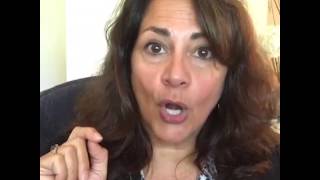
Kathy Caprino left a VP-level corporate job after hitting crises at 40, retrained as a therapist and coach, and now helps professionals brave up: speak up and stand up for themselves. She offers a career assessment tool, the concept of closing your power gaps (areas of shame holding you back), and a 16-week course to help you find work that fits.
Chapters
Me here, share your questions, share your comments, tell me what you're really interested in learning about and the challenges, the specific challenges that you have and the ways you're really hoping to brave up and breakthrough to your happiest life and career. So welcome again. Let me for oh dear. I've got lots of little things happening. Let me explain a little bit about who I am. A lot of you who followed my work or read my Forbes post know this story. But I'd love to tell you a little bit about the background of who I am and what I do and why I care so passionately about this work. And I want to tell you also what I'm hoping for this weekly series, Tuesdays at noon Eastern time. So here's a little bit and I'm pausing because I'm checking here on what's going on on the screen. All right. So again, for those of you who have heard this in my talks or webinars or courses, thanks for bearing with me, but I do want to share it with everybody. So the deal for me is I had an 18 year corporate career. Oh, and by the way, this is my home office in Connecticut. Thanks for being here with me. 18 year corporate career. And on the outside it was successful. I managed 30 million dollar budgets. I was a vice president. You know, I managed sometimes very big staffs, global initiatives, big, big clients. But on the inside it was not successful. It was bumpy almost from day one. Almost from not almost. Absolutely from day one, from age 22 to 40, it was bumpy, bumpy, bumpy. And then when I hit 40 and I'm 56 now, those bumps turned into full blown crises, full out crises. So what do I mean by that? I faced discrimination, I faced sexual harassment. I had chronic illness, something called tracheitis of all things, an infection of the trachea. For four years, every three to four months, I'd get really pretty violently ill. I couldn't speak. Imagine, you know, here I am a speaker, I'm a singer on the side. And my kids were little, I wouldn't be able to say anything and it would burn. And any of you who study energy healing know what this means. We'll talk about that later. But when, when you've got an infection of the throat, it's very, very telling. So I also had zero work life balance. I worked and lived in two different states. I was not in the fabric of my little kids lives. It was pretty much a mess. But worse than all of that honestly put together was waking up every day saying is this what I'm going to be spending my life working on. To me now, to other people it was, you know, positive and they liked their jobs at this place. To me it was meaningless. There was no contributive value. And I felt like I'm actually wasting my life here. So, you know, lesson one of 10,000 is you can be very rewarded and fulfilled in one dimension of your life. And I was as a mom, but as a contributive professional, it was a mess and I. I didn't understand what was going on. So for all of those years, 18 years, I didn't get it. And I knew I needed help. I did, I did get that. And so I saw a therapist. Why am I always so unhappy at work? I saw a career counselor. I took a thousand dollars of career assessments. None of it moved me forward out of that job. None of it. And I know why that is now, because I was paralyzed. I made great money, my family needed the money. And I couldn't understand, number one, what would I really want to do if I had the choice? I couldn't figure it out. And I couldn't figure out, even if I could figure it out, what would be the practical transition plan? How would this work? And nothing helped me and I didn't help myself. So instead of taking action, and I even got a great job offer right in the middle of this crisis. And I didn't take it because it was less money. So there was mistake upon mistake upon mistake. And you'll hear I don't really believe in mistakes, but there were missteps because I didn't honor my authentic self. So I did nothing and instead moved to a more affluent area, bigger home, more financial burden, responsibility. And one month after moving to that house was 9, 11. And I was then one month later laid off in a. In a brutal way that really brought me to my knees, stripped me of all my self esteem. It was just so hard. So I was in my therapist's office a week after and I'm weeping, literally. And he said to me, kathy, I know from where you sit this is the worst crisis you've ever faced in your adult life. But from where I sit, it's the first moment you can choose who you want to be in the world. Now who do you want to be? And through my tears I said, I don't know. I want to be you. And he said, great coaching question. What does that mean to you? And I said, want to help people, not hurt people and be hurt. And from that amazingly fateful conversation, I Became a therapist, got a master's in marriage and family therapy, launched a therapy practice, did therapeutic work, got trained as a coach. And you know, what we're going to talk about in this series is there are right ways to change your career and there are wrong ways. And I made some really big mistakes in this. The therapy training was unbelievably life changing. And I use every minute, I use every skill and everything I learned every minute of the day now. But the identity of being a therapist wasn't right for me. And I remember one client calling me up on the phone and saying, gonna kill myself right now. I'm gonna wrap my car around a tree right now. And I remember in one split second, you know, when you're kind of, your mind splits open and you go in like a hundred different directions? I. The first reaction was, I don't want this in my life. But thankfully, I snapped out of it and we got her help, and she's much better now. Much, much better. So I made the decision then. This is not the final destination. I have to keep looking and going. And at the same time, I was giving talks to women around Connecticut about how do we thrive through change. And I was talking about all the crises that I faced in the workplace and how I was on my way to understanding them, dimensionalizing them and overcoming them. And this was before this. These issues were in the national conversation. Sheryl Sandberg hadn't written her book. Anne Marie Slaughter hadn't written the Atlantic Monthly article. It wasn't in the media, and you wouldn't believe how different it was 10 years ago. And women would line up after these talks and some would be shaking, some would be crying, and they would say, it's like you're in my head. I've never heard anybody talk about these challenges. And you are so right. And I don't know what to do about them. And all of a sudden, the light went off for me and I felt like, I get it. This is what I really want to do. I want to understand what these challenges are about, why these challenges hit women differently from men, how women are not men in skirts. I want to understand that, and I want to understand how we overcome these and never even have them in the first place. And I want to bring new solutions to the table. And I want this to be in the national conversation, and I want to be a part of it. So that was the calling. So I went from 18 years of is this really what I'm going to be doing for a living? To what I would Call like a burning calling. So 11 years later now I've worked with over 10,000 people in every walk of life you can imagine, every industry, every field, every level, every socio economic level about how do we break through? And that is one of my favorite words in the English language. I wrote my book Breakdown Breakthrough after a year long research study with over a hundred women about how they broke through their challenges. And the second thing I want to talk about and hit hard about in this series is the second piece of my work right now is how do we brave up? And that means to me, and you can find a lot of this on my Forbes blog. I find, I feel that there are 10 essential ways that we need to brave up, which is rise up, speak up and stand up for ourselves boldly. And when we do, it'll change everything. So that's it. That's my world. I feel like if I can help one person a day, but ideally a thousand a day to brave up and do what's required to rise up, speak up and stand up for ourselves. It's a good day. So that's that. All right, so let's talk a bit about and then I want to take your questions the very first way we can brave up. The very first way we need to brave up. And I'm going to be talking a lot about this in an upcoming TEDx talk. I'm so excited. In Atlanta, TEDx Centennial Park Women October 28th. You can find all this on my Facebook page. The very first way I feel the most foundationally important, essential way we need to brave up if we're gonna have a happy life, a fulfilled career, if we're gonna feel like we're doing what we want to as people, as individuals and as contributive professionals. So that's my world. People that want a rich, robust, beautiful personal life, but they also want to make a difference in the workplace and in their work and impact their sphere. That's really my sweet spot and my audience. The very first way we have to do it is to brave up in the way we see. So this could be, you know, whole hour webinar, which in fact I'm developing for 2017. But let's do this in about five minutes. I am able to see I have kind of a lens into a special window into what is going on with professionals today. And why is that? Well, first of all, I'm on Forbes and and that block has 21 million views. And I'm also writing on LinkedIn and Huffington Post. So all told, and on My own blog, Kathy Caprino.com my blog there. All told, I have about 25 million views. And when you have that amount of viewership, which I'm so humbled and blessed and grateful for, you hear from a lot of people. So I hear from literally thousands of people a month. Many people wanting free help, needing free help, many people who want to join my courses or join my free webinars. So number one, I have my finger on the pulse there. I think of what are the challenges people are facing men and women in their work. But secondly, I have this thing called a career path assessment and I want everyone to take this career path assessment. It's on my website at Kathy Caprino. And here it is. Kathy Caprino.com free assessment. This is 11 pages of questions I wish someone had asked me 30 years ago. And if I had answered them, I would not have made the mistakes I made. These are questions that no professional should avoid answering and no professionals should make one move without answering these questions. And you'll see what I mean when you download it. It takes a few hours at least to complete, but it asks everything from what's every job you've ever had, what you loved, what you hated, what you learned, what you never want to do again, and what you want to bring forward when you're 90. Looking back, what do you want to say you have done specifically? What are the values that you have? What are your non negotiables? It goes on and on. Who are the people that you admire and what do you admire about them? And all of these questions will actually start revealing the dots of your life, the themes that you want to connect. But here's the deal. So over 70,000 people have taken this thing, have downloaded it, and I've reviewed so many of them, every client, every course member, I look at their career path assessment. So here's what I see when I ask what makes you special? What makes you stand out? I can't tell you how many people have no idea. They leave it blank or they say, I don't know. Well, you can't have the happy, amazing life that you want if you don't know how you're special. You can't have it. You have to be able to see how you're unique, how you're amazing, how you're brilliant, how you're beautiful, how you stand out. You have to be able to see it. And a lot of people will say, okay, I understand, it's important. I don't, I can't. Well, there are steps to that There are ways you need to. So that's asking people who love you, what makes. What. What do you love about me? What do you like about me? What do you like? Why do you like spending time with me? It's Getting testimonials on LinkedIn. And all of you should be on LinkedIn. Join my Career Breakthrough Network group on LinkedIn. Follow me on LinkedIn. I adore LinkedIn. You'll hear all about that. They came and did a video here of my work, which you can see on my website, too. LinkedIn has changed my life. 250,000 followers there. Again, I'm so grateful for that and it allows me to have impact for these breakthrough ideas. You know, we can start discussions there and it's rich, it's beautiful. And I connect with people and hear from people who inspire me so much that I'm so grateful that they're in my world. We all need to be on LinkedIn. 400 million people are on LinkedIn, and you should be too, really actively using it in every way. But what's the point? Ah, I can see even when I. When I go and read someone's LinkedIn profile, you know, how you do LinkedIn is how you do your work, how you live. Truly, it is. It's a metaphor for how you show up in the world. And so many people do not know how to speak about themselves. They don't know how to identify their gifts and their talents and their magnificence. That's where I was going with LinkedIn. Ask for endorsements, give endorsements. And I don't mean the little check mark. Kathy's good at social media. I mean, do that too. But write endorsements of people that you love who've made a difference in your Life. Write them LinkedIn and send them, you know, send them to your colleagues who you adore and ask for a testimonial for you. You won't believe it. When you read what other people say, you'll start to be able to embrace how you're amazing, and you need to do that. The second way we need to brave up is. There we go. Sorry. Getting phone calls is also look at where you have power gaps. So we're looking at two sides of the coin, where we're magnificent, where we're empowered, where we're able to uplift ourselves and others. But I want you also to look at really authentically, where you feel a little broken down, where you have a power gap or more than one power gaps. So let me explain, and you can read all of this on my website Search power gap Kathy Caprino. And you're going to find some blog posts and videos. Every single person has at least one. An area where they feel less than they feel ashamed. They feel they have a dirty little secret. They feel if somebody knew that about me, they would cast me out of their life. Everybody has it. And you know how I know that? Because I interview some of the most illustrious, celebrated individuals in the world. You know, I've interviewed for my Forbes blog, Pulitzer Prize winner, Tony Robbins, millionaires, billionaires, Sarah Blakely. Everybody has power gaps. I can see it when I talk to them. I can feel it. So you're not alone. And in fact, the more you can be authentic about to yourself and then to others about where you feel a little broken down. And I'm going to use that word, it sounds like a therapeutic word. But yeah, there are areas we're broken down where we feel trauma, where we feel less than where we don't feel whole. Those are the areas that if you can close your power gap quickly, effectively, bravely, you'll start to soar. So I wrote a post yesterday on Forbes. It's called this. Let's face it, we're deathly afraid of authenticity. I want you to read that and comment here or in the Forbes post under the comment section. I really feel like we all say we want to be authentic, but we're scared to death of it. We're scared to be authentic. We're scared to let the world see who we really are. We are scared when other people are authentic. We're scared. We're scared. We're scared. We are not trained to deal with it. And you know, that's why the therapeutic training has been life changing. And I talk about this. The one thing that therapy training gave me of all else that was the most life changing was, you know, I was a very sheltered kid. I grew up in Schenectady, New York. Very sheltered. I, you know, it was all good. I didn't see challenge, I didn't see crisis. I didn't see hardship. Although I had my challenges in my, in my life growing up, don't get me wrong. Yeah, I'm going to talk about those too. But I didn't really see the raw challenges that so many people face today. So when I became a therapist at 40 and started training, I had to learn to sit with rape, pedophilia, drug addiction, suicidal suicidality, depression, anxiety. I even had a client who went to jail during the time we were working together for attempted murder. I had a Client who watched his stepfather murder his mother. I mean, these are the darkest underbelly of human experience, the darkest forms of human experience. And these people, I just loved every one of them because they were working on, how do I overcome this? How do I see the light? It still makes me tear up. But I want to be really honest with you. Sitting with this, sitting with a pedophile, sitting with a man, another man who abused his daughter and said to me, she deserved it. And in order to be effective in someone's life as a therapist or a helper, you cannot judge them, you cannot hate them, because then you can't help them. So you have to find love in your heart. I don't mean you forgive them. I don't mean you turn a blind eye. I mean you have to find a way to connect with your spirit and your heart to this individual, because they're suffering. They're in a dark place. And if you heap your dark projections and judgments and hatred on them, they'll never get better. They'll never feel better, they'll never move into the light. So having sat there with that and learning how to be. And don't get me wrong, I'm not a saint. I have my issues. I have my problems. There are people that make me nuts. But it helped me. It helped me learn to be more authentic and learn to embrace and be empathic, compassionate for the dark and the light. So I would love to ask you, as this first step, to brave up, take my career path assessment. Fill it out. Somebody said to me years ago, you know, do I get a score? No, you don't get a score. It's for you to understand yourself a thousand times better than you do now. And your life will change when you do that. If you want some help, I'm here. Of course you can go to Kathy Caprino.com coaching services here I am to help you. But do that, and I want you to start, if you could, seeing the themes that make you the amazing, special person that you are, because every person on the planet is. But you can't let that light out if you don't know about it. Okay? So take that career path assessment. And then I also want you to look at what you think might be your dirty little secret. You know, I have a lot of them. And as you join me, you're going to hear them, because I'm committed to being open about them. And if I'm going to talk about you being authentic, I've got to be authentic. And it's not easy to Be vulnerable, especially when you're a bit in the public eye. So join me every Tuesday and we will talk honestly and you can share what makes you feel vulnerable, what makes you feel like, I can't do this, I just can't do this. And read my book if that feels like you. I just can't do this. I can't break through. I can't have the life and work that I dream of. Read my book Breakdown Breakthrough. As a start, it's got 14amazing real life stories and case studies of women who had a breakdown moment and overcame it. And they're doing such amazing things and I hear from so many of them still and they're continuing to rock it and do amazing things. So start there for some inspiration. I do want to say that right this minute I am at the end of the enrollment for my course, the amazing career project which I give two times a year. It's a 16 week online course which is life changing for many, many, many of the members. Check it out. Amazingcareerproject.com you can see the video testimonials of members, what they got, what they didn't expect to get, the online community, the expectations they came in and what they came out with. And I hope you'll join me in that course. It starts the 26th, so that's that. Is there anybody there who wants to leave, wants to ask a question? Anybody at all? Anybody want to write a question that I can answer live? This is what I love to do. I'm a career coach, trained therapist, writer, speaker, leadership trainer. This is my world. I would love it. You got a question? Anybody? All right then, so what I'd love you to do is be actively involved on this page, Elliot Communications on my Facebook page, and also in my LinkedIn group, which I just reinvigorated. So now there's 150 people in it. It's my career Breakthrough network. Join that and follow me if you'd like on Twitter and Facebook and LinkedIn and Pinterest. And let's do this together. Let's learn the 10 ways to brave up, to rise up, speak up, and stand up for ourselves and change everything. Let's do it together. I would love to help you. All right, my friends, thank you so much. Share what you think of this, give me your feedback. What are your challenges? What would you like me to talk about that would would specifically address your challenges? I would so love to hear from you. And here is to your amazing career bliss. And I'll see you next Tuesday at noon. All right, everybody. Love you. Thank you. Bye. Bye.
More from Kathy


Elevate Yourself, Elevate Others, and Amplify Good | Chris Cooper | Finding Brave Ep. 334

Finding Brave Epis #333: How Leaders Can Harness AI Without Losing Their Humanity, w/Bennett Borden

Finding Brave Epis 332- How to Stay Brave, Valuable and Visible in the Age of AI, with Raman Rai

Finding Brave Epis 331 - The Power of Positive Disruption, with Dr. Patrick Leddin


Finding Brave Epis 330 - Being 40: Letting Go and Embracing Who You Are, with Stacey Lindsay

Disrupt Career Reinvention with Kathy Caprino - via The Disruption Lab Podcast w/Patrick Leddin

Creating Neurodiversity-Friendly Work Cultures: Simple Workplace Adjustments Matter

Finding Brave Epis 329 - How To Create a Neurodiversity-Friendly Workplace, with Kristen Pressner

Finding Brave Epis. 328: Reclaiming the Power to Trust Your Own Voice, with Dr. Cindy McGovern