Time to Brave Up | Kathy Caprino | TEDxCentennialParkWomen
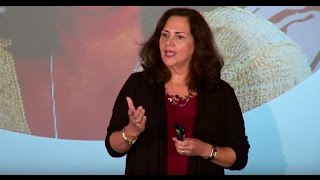
Kathy Caprino delivers a TEDx talk describing her shift from an 18-year, externally successful but internally painful corporate career to becoming a therapist and career coach after a brutal layoff around 9/11. Drawing on a year-long study and her work with over 11,000 women, she diagnoses a "hidden epidemic" where girls go "underground" at puberty and many women later experience professional crises (silencing, chronic illness, mistreatment, unfulfilling work). She prescribes a three-part approach—See bravely, Speak bravely, Shine bravely—plus concrete exercises (a white-pad inventory and a 20-fact list) to reclaim purpose and leverage innate talents.
Questions this video answers
18 years.
November 18, 2016.
Breakdown Breakthrough.
Over 11,000 women.
25 million views.
Chapters
I had an 18 year corporate career and on the outside it was very successful. I was a vice president, made a lot of money, managed 30 million dollar budgets. On the inside it was not successful. It was bumpy, bumpy, bumpy. I guess I needed a career coach back then, but when I hit 40, those bumps turned into full blown crises. I face things you hear about, but you think they're never going to happen to you. I face discrimination, I face sexual harassment. I had zero work life balance. Anybody, nod your head if you've ever had any of this, right? When your children are little and you're not in the fabric of their lives. I had something called tracheitis. Who's heard of it? An infection of the trachea. For four years, every three months I would get violently ill here. Anybody know what that means when you get sick in the throat? Well, we'll find out in a minute, right? You lost your voice. And I had the most toxic bosses. Narcissistic. Before I knew what narcissism was. Toxic bosses. But worse than all of that put together was waking up every day saying, is this what I'm going to be doing for a living? Is this felt so. It was marketing, but it felt so meaningless, so lacking in contributive value, so purposeless to me. And I said, is this what I really worked so hard to do? So I knew I needed help. And I saw a therapist, a career coach, took $1,000 of assessment tests and I knew I was in trouble when the counselor came out and said, well, great news, the research shows you're in the right field. And I'm like, oh wow, that was the worst $1,000 I've ever spent. Okay, woo hoo. All right. So I did nothing. I didn't pivot, I didn't reinvent, I didn't transform. But I bought a bigger house, that's what I did. And one month after moving into that house was 9 11. And one month later, I was laid off in the most brutal way possible. So I want to say this. Anybody been laid off? Even if you hate your job, doesn't it feel like the biggest kick to the curb? Right? It really destroyed me. It was the breakdown moment. I lost my sense of self, I lost my self esteem, my self confidence. And I'm sitting in my therapist's office crying. And he said something I'll never forget. He said, I know from where you sit this is the worst crisis you've ever faced. But from where I sit, it's the first moment you can choose who you Want to be in the world? Who do you want to be? And I remember crying. My eyes got big, and I said, I want to be you. And he laughed and he said, okay, wow, what does that mean? And I said, I want to help people, not hurt people and be hurt. And he said to me, you know, Kathy, I've known you quite a while. I think you'd make an amazing therapist. And in that moment, everything changed. That pivotal moment where I suddenly saw opportunity and chance and experience how I could actually marry up everything that I've ever been. So. So when I think about who I was as a child, even when I was 16, boys and girls would come and say, can I ask you a question about their lives, about relationships? And I'd say to my mother, why are they asking me? I'm 16 too. But even back then I had kind of a therapeutic ear, right? So I researched it. I said, I'm going to do it. I became a therapist, earned a master's degree, became a career coach, and I started giving talks to women around how do we thrive through change? And I talked about the crises I faced. And they would. Now, this is before it was in the national conversation, they would line up after these talks and some would be crying and some would be shaking, and they said, no one is speaking about women's crises like this. I feel like you're inside my mind and reading my mind, and I don't feel so alone. But they said, I don't know what to do. I don't know what to do. So from that moment, instead of being so disengaged and so lost in my corporate career, something lit up in me and I said, I have got to understand what is going on. Why is this a hidden epidemic for women? What is going on with these challenges? How do women get there? How do we overcome them? And I had to bring new solutions to the table. So I did a year long research study with women overcoming professional crisis, wrote a book, Breakdown Breakthrough. And it has been 11 years now. And I have worked with over 11,000 women as a coach, as a speaker, trainer, and I write, I'm now a writer and I have a blog on Forbes and my own blog and four blogs. And those blogs have achieved 25 million views. And when you reach that number of people, you're hearing from a lot of people and I am hearing from thousands of women sharing what is the raw material of their lives and what their challenges are. So this year I said, I want to step back and look at if I had to say what Is the one thing that's missing for these women? What is the one thing that's keeping us grounded in challenge where we don't understand our potential? I would have to say this. We are not brave enough yet. We have not learned how to muster the courage, the confidence, the. The commitment, the passion to rise up, speak up and stand up for ourselves yet. So why not? What's going on? What's going on with bravery? When you think about it, remember when you were little, tiny, you were brave every moment of the day because every minute was the first time you did anything right. Remember the first time you left home, the first time you rode a bus, the first time you met a little friend? Remember how scared you were? The first time you played tennis? The first time you sang a song in public or drew a tree? You were brave and you knew what that felt like. And also, you had people in your life encouraging you. Come on, honey. You can do it. You can go do that. Problem is this research study after research study shows that girls, when they are 13 or hitting puberty, they start to go underground. Underground. They start to use their voice less. They start to be less confident, less assertive. They start even to not believe that they can be a leader like they used to. And they become preoccupied with their body and their body image. So what happens when we go underground? When a person can't say and be who they want to be, what do you think happens? This happens. Crisis. Not just a little bit of a bumpy time, full blown crises. And you know, women are powerful, women are survivors. So they don't understand its crisis. They keep thinking, let me power through it. But it's crisis. So I'm going to share a few of those top crises. I would love you to just raise your hand if they sound familiar to you. The first is I can't speak up. I can't say to my boss, to my family what I really want to say. Right? Anybody. I can't get out of this crushing competition from everything from how big my house is to how well she's doing, to all of the competition you feel every day. How many feel like I can't get right? How about I can't break this cycle of mistreatment, you know, quickly. I'm working with now adult children of narcissists. I know a lot about the narcissistic world. Wow. When you've grown up, I'm going to just say this. When you've grown up with a narcissist, you can't even help it. You hook into narcissistic relationships. You don't even know it till you're in it. Does anybody know what I'm talking about? Right. Another crisis. I can't heal my chronic illness. Four years, chronic tracheitis. Nobody could figure out what was going on. And finally, I can't do work that I love. This is what happens when we go underground. What do we do? Here's what we do, folks. I have found in working with so many women and doing this myself, there are three critical things we have to do to live a happier, healthier, more impactful life. See bravely, speak bravely, and shine bravely. So can I tell you about that? Yes. Okay. This blew me away. I have something called a career path assessment. How are you special? What are your amazing talents and gifts that make you different? 90% of the people who fill this out, and I've seen hundreds of these, can't answer the question. They'll give something vague like, I don't know. I'm kind of nice, I'm organized, I'm kind of funny. Right? I give good parties. Wow. No, no, no, I'm not talking about that. I'm talking about how are you precious and valuable and important in this world? And most of us don't know it. So I'm going to give you a task, and I'm a coach. So I want you to email me that you've done this task this weekend. Not next week, not 2017, this weekend. I'm going to ask you to sit with yourself with a white pad of paper, distraction free, all alone. And I want you to write down everything that makes you who you are. Everything from your cultural training, your family upbringing, your ancestral history, your triumphs, your tribulations, your terrible downfalls, the pivotal moments that have changed everything for you. The relationships that crushed you, the relationships that healed you, everything that makes you who you are, your passions. All right? I want you to write it down and I want you to start looking at it so that you can leverage it. Because if you don't understand it, you can't make use of it. Okay? The second task of that is this. In our society, we have this very broken myth that it's got to be hard. We gotta struggle. If you're not struggling, if you're not working hard, something's. You're not successful. It's so wrong. Right? Do we know what I'm talking about here? Why is that? I posit this. It's the talents that come easily to you. Those are the ones you're supposed to be Using not the ones that are hard. Right. And I want to tell you this. I didn't realize this. You can be really good at something you hate to do, right? I manage big P&L's and budgets. Why do I hate this so much? Why? Because I love ideas. I love words. I don't love numbers. So I want you to think about. Are you leveraging the talents that actually become, that are easy for you? I bet you're not. So I just need to read this. The talents that come easy to you are just what the world needs. Nothing else. All right? So on this white piece of paper, this pad, write down, hey, wait a minute. I'm going to look back as a child, what came easily to me. What did people say? My gosh, you should be on stage. My goodness, you are so good with people. All right, Will you do that? It'll start to change your life, I promise you. Now, let's talk about. Speak bravely. Oh, wow. I bet I'm going to see a lot of nodding heads. Research study after research study has shown this. Women are viewed more negatively than men when they are perceived as forceful, especially when it looks like they've lost their temperature. Society doesn't like that. Don't we know what we're talking about here? Take a look at the political arena. Right? Enough said. So especially if they have lost control. Well, what happens to women then? What do you think happens if you can't be forceful? Right. You are desperately afraid to appear boastful and be forceful. So let's talk about this. I want to change this. Everybody in the room. I want to be changed. I want this to be a breakthrough moment for you. I can't tell you how many people tell me, women, not men, women say, I can't really say that about myself because it sounds like I'm bragging. I have a client who literally, in the work that she did, changed the airline industry. And I didn't know about it until five sessions into working with her. I said, how come I don't know this? She said, well, I didn't want to sound like I was bragging, all right? I want this changed. And here's how she. Sharing is not bragging. Sharing about how you're gifted. What you've done, that's moved a needle. That's not bragging. That's sharing the brilliance of you. So here's a tip. On this white pad that you're going to do this weekend, that you're going to write on, I want you to come up with 20 facts of who you are and what you have done. Irrefutable, validatable facts. I want you to think of the 20 facts of what you have done and. And why. It's important. And I'll tell you why this is essential, because when you share those facts, either people are going to resonate with them or they're not going to. So it's a way to attract people who need you. Share the powerful facts of you will you. All right. The second thing is this. You know, we talk about forceful women. I'm going to say this. I don't want to be forceful because that implies I'm taking your will away. I want to be inspiring, compelling, engaging. That's what I want. Do you want that, too? Yeah. So there's two ways to do it. You know, women say to me, I have been called the B word when I'm doing just what he's doing and he's getting a raise. How many people know what the. Thank you for smiling. The men in the room. I appreciate that. That was me. My boss called me a buzzsaw. You know, buzzsaw. This is. I'm a leader. I don't want to be a buzzsaw. So they say, I'm backing off. I backing off. No, my gosh, please don't back off. Why? The world needs millions and millions more examples of powerful, confident, passionate women. That's how the world will change if you don't do it. If I don't do it, who's going to do it? So don't back down. But there's two ways to do it to mitigate the backlash. Number one, I interviewed two wonderful guys, the behavioral science guys, David Maxfield, Joseph Grenny, and they did a gender bias study. And they looked at. When you're about to say something forceful, that's going to shake people up. If you frame it, add a framing statement that shows it's grounded in a value of yours, you lessen the negative impact. So let me give you an example. If you're sitting at a table with senior people and they're presenting where they want the company to go and you do not agree, and that's going to get people mad, you can say something like, I really believe in honesty and integrity. And so it's important to me to be honest about this. I'm not on board with this direction. I think it's forceful. I think it's saying what it is. But you've given them a way to hear it without feeling condemned. Without feeling. That's a stupid idea, right? They understand. Oh, okay. She's really being honest. So you can help them listen to your idea and embrace it. The second piece is this. If we think about the most inspiring speakers ever. Orators, leaders, Martin Luther King, Gandhi, Lincoln. They were dealing with incredibly difficult challenges, but they never condemned, they never tore down. Their language was so uplifting. So what I ask you to do is when you're going to be forceful, don't condemn. Understand all ideas have value. Respect all ideas, and I promise you, you will not have the negative backlash. The third thing I want to leave you with here is shining bravely. So what am I talking about here? A lot of people say to me, I'm an engineer, I hate it, but I can't have the ideal life that I want. I can't have the ideal career. I'd have to start over. I'd go broke. I'm going to tell you this. You can have the ideal life, but you have to do this. You have to take one step, and let me tell you what that looks like. Maria Nemeth is an author I adore. In her book, the Energy of Money, she says this. We are all happiest when we're demonstrating in physical reality what we know to be true about ourselves. When we're giving form to our life intentions in ways that contribute to others, no truer words have ever been spoken. When you know who you are and the brilliance of who you are, and you're demonstrating it. And when you're giving form to your life intentions, those life goals, when you're 90, looking back, what you want to have done, do you know what those are? Write those down on your white piece of paper this weekend. What? When you're 90, looking back, what do you want to have stood for and done and given? When you are doing that in a way that contributes to others, you will have an amazing life. Thank you. It.
More from Kathy


Elevate Yourself, Elevate Others, and Amplify Good | Chris Cooper | Finding Brave Ep. 334

Finding Brave Epis #333: How Leaders Can Harness AI Without Losing Their Humanity, w/Bennett Borden

Finding Brave Epis 332- How to Stay Brave, Valuable and Visible in the Age of AI, with Raman Rai

Finding Brave Epis 331 - The Power of Positive Disruption, with Dr. Patrick Leddin


Finding Brave Epis 330 - Being 40: Letting Go and Embracing Who You Are, with Stacey Lindsay

Disrupt Career Reinvention with Kathy Caprino - via The Disruption Lab Podcast w/Patrick Leddin

Creating Neurodiversity-Friendly Work Cultures: Simple Workplace Adjustments Matter

Finding Brave Epis 329 - How To Create a Neurodiversity-Friendly Workplace, with Kristen Pressner

Finding Brave Epis. 328: Reclaiming the Power to Trust Your Own Voice, with Dr. Cindy McGovern