How Exactly Do We Onboard the Right Way with Meagan Suckling
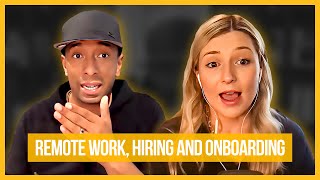
Meagan Suckling on building sales teams that actually stick. Dedicated onboarding managers cut ramp time, blended training of shadowing plus role-play builds skills, and a three-month quota ramp (0%, 50%, 100%) with ~30 calls a day measures what works. Hiring scorecard prioritizes curiosity and coachability over pedigree.
Questions this video answers
No quota in month 1; 50% quota in month 2; 100% quota in month 3.
About 30 calls per day (example target).
A presentation exercise and a live cold-call.
Chapters
I would love to have a dedicated person that can really be with the SDRs throughout their entire onboarding program. I have amazing managers on my team.
So like my SDRs, they get their boot camp, they succeed in their role, they go back in to an AE boot camp. Hiring influences onboarding significantly in so many ways. Especially too if you make a bad hire into an onboarding class.
You know, I'm not an expert at hiring in France, let's say, and so we might want to loop in somebody from the French team or communicate well with that sales group. But that's, that's our hiring process.
Yeah.
So we have an incredible team. We have a lot of people that have different specialties on our teams too. So we've really leaned into that. You know, if there's one person who's a total rockstar copywriter, we'll have them actually schedule a one hour session to walk through how they approach copywriting emails and do some sort of practice with their new hires. And it's also a great opportunity too for people who are interested in leadership to start to get a little bit more mentorship under their belt and work more directly with some of the new hires. So that's been a huge focus. We also do some group training sessions. So for example, bring a cold call to the group, actually listen to that cold call first. We'll do sort of a roundtable of feedback so everybody gives, you know, maybe what's one thing that was great about that call and one thing that where we think we could improve a little bit and then we'll actually reenact that call and do sort of that more role play with everybody in the room. So not just the new hire, not just putting them on the spot, but getting everybody to practice so that they really feel like they're a part of the team. So a combination of one on one job shadowing, but then also creating those sort of group settings for learning for everybody. Because as much as even if you've been in the role for a year, there's still room for you to brush up on your cold call chops and improve a little bit as well.
What would you say is one of the bigger changes you'd like to make to your program? Right. If you had unlimited resources or we're rebuilding again from scratch, what would be like a cool idea you wanted to implement but haven't been able to yet?
I would love to have a dedicated person that can really be with the SDRs throughout their entire onboarding program. It's. I have amazing managers on My team, but I feel for them. Sometimes it's really hard to balance running your business, running that machine, while also giving somebody the amount of support they need in order to effectively learn and ramp up as quickly as possible. So I think there could be a lot that could potentially come from, you know, having somebody be that. That dedicated person in that specific role. That would be one area. And then, yeah, probably a little bit of what I mentioned before, like, really just extending the program. I think creating more opportunities for frequent repetition. It's all just like practice makes perfect. So just creating more space for that over time would be really key. And then, honestly, I really do miss hanging out in person. So, you know, I hope that, you know, I believe the future is remote, and I believe. I think we'll. We'll probably be in some sort of a hybrid model, you know, overall out there. But meeting your teammates, I think is so important. Building that emotional connection, celebrating having fun together. If you can have even just a day to hang out together, going to be so much more likely to reach out to that person with a question or a concern or a frustration. And I really want to create that culture where everybody feels connected and like, they can help each other out.
I love it. I love it. And talk to me when you get that dedicated person, because I've been able to do that twice now, and it is a game changer. It helps in. So I have an SDR onboarding manager, and I have an AE onboarding manager. And the AE onboarding manager is responsible for the SDRs getting promoted and into the AE role. So, like my SDR, as they get their boot camp, they succeed in their role, they go back into an AE bootcamp before they step into the AE role. And I have a dedicated person for each of those roles. So hit me up when, when you get that because it is worth it. It works really, really well. And if you need someone to nudge someone over there, just tell them, point of my way, I'll nudge them. I'm like, yo, you need to do this. You absolutely need to do this.
That's huge. I'm very jealous.
It is worth it. And generally speaking, it's actually relatively easy to justify because you can say, like, if we can get ramp from this to this, if we can get productivity from this to this, it's paying for itself in sometimes less than three months. It's already covering. Right. And so how do you measure your onboarding program? Like, how do you know if it's succeeding or not?
Yeah, hitting ramp target pretty simply so we do have anybody who joins us depending on when they join in the month. They don't really have a quota for the first month because it's really all about learning. They are on a 50% quota for their second month and then 100% quota for their third. So if they're able to hit those benchmarks and actually attain their quota within the first three months, that's our biggest indicator of success. Of course, there's other little things around that behavioral wins that we see if we give them a call. Target of say, making 30 calls a day. Are they actually doing that? If they're not doing that, it probably just means that they're not comfortable, that they're not ready, and we need to do a better job supporting them in learning how to do that so that they can. So a few other things around that. But ultimately outputs. Are they able to hit their quota or not?
I like it. So what do you do if someone's not. What if you get someone in and it's in week two and they're already like, oh boy. Like they're not. It's not seem to stick, or they're not seeming to get it, or we're already seeing some of the behavioral issues. Right. They're not putting in some of the actions. Like, what do you do if that starts to develop in onboarding?
Yeah, it's tricky when that happens. I will say we have a pretty awesome hiring framework that we've been using consistently. And for. Fortunately, I really haven't run into that at least in quite a few years. But I can't imagine if I were finding myself in that situation that it would just really be an open conversation with that person to see if maybe they're having the same doubts that I am. If this isn't quite the role that they expected and they're just really struggling getting into it. I would hope that through really being intentional with creating space for them to be authentic in those first couple of weeks, that they might feel comfortable having that conversation with me even early on. And maybe that means we dig in even harder and, you know, I give it my all to work with them to try and build them up. Or maybe it means we, you know, just part ways because it wasn't the right fit to begin with. But yeah, I fortunately haven't had to deal with that.
Now you've opened up Pandora's box here. Right? Because I'm glad that we got to this point eventually because I do think hiring influences onboarding significantly so many ways. Especially too, if you Make a bad hire into an onboarding class, and they have, like, a negative attitude, it can spoil, like, the whole group. Right. And so you talk about this hiring framework. Are you able to share some of these hiring frameworks of, like, how to vet out before they get in? Because I know a lot of people struggle with this. And truthfully, I was very similar to your response pre pandemic remotely. We've struggled with this more. We never struggled with it before. But going remote, these things started to bubble up a little bit more. So, like, walk us through, I guess, what you're looking for in hiring to get ahead of some of these things.
Interesting. Yeah, definitely. I read a book when I first started my sales development leadership career about five years ago called the Sales Acceleration Formula by Mark Roberg. It was. It kind of influenced me to build a scorecard for how I'm measuring interviews and measuring candidates. One of the. I think I've already mentioned, like, one of the biggest focuses for me is creating a diverse workplace. It's just really core to who I am as a woman in sales. You know, being able to see other women around me is really important. But also people coming from different ethnic backgrounds as well, or socioeconomic. I just think creating a space for everyone to thrive in sales is really key. And so part of being able to do that is being able to hire a bit more scientifically rather than with that feeling, those feelings that happen that sometimes make us make decisions based off of biases, whether conscious or unconscious, that we want to stay away from as much as possible. So I look for pretty standard things that probably a lot of sales development leaders look for. Curiosity. Coachability are definitely two of the top ones that I look for. For curiosity, I just think is one of those things that you really can't teach. It has to be there or it's not. So it's really, really key that we look for that early on. I look for history of excellence. That doesn't mean necessarily in a sales role. That could just be, you know, were you a star scholar in your college or university program? Have you set a goal for yourself and, you know, hit specific milestones working towards that goal and eventually achieve that goal? Little things like that. We also look for work ethic, intelligence, and then they need to have a really strong, compelling reason why they want to be in sales? That's a really, really important one, important one that we never look over. I don't hire people onto my team who are unsure about whether or not they want to pursue a career in sales. I just find it so much harder to motivate them and get them to execute on the tasks that are needed in order to deliver. So those are a few of the key things that we look for. And our hiring process is pretty standard. There's sort of an initial screen with a direct hiring manager, which is a bit of a historical review. So, you know, digging into their resume, asking questions, a lot of them why? Based to get a better sense of who they are. And then moving into more of a performance based interview where we actually have them do a presentation exercise and also do a live cold call, which is my favorite part. And then we make a decision pretty quickly or not, sometimes depending on if we're hiring in a specific region. Obviously there's, you know, I'm not an expert at hiring in France, let's say. So we might want to loop in somebody from the French team to, you know, give their perspective as well, whether or not they're going to be able to really understand the market or communicate well with that sales group. But that's our hiring process.
More from Kevin











#shorts THE POWER OF RECOGNITION: How Do You Empower People with Zoe Hartsfield