How to Apply Personality Science to Sales with William Ballance
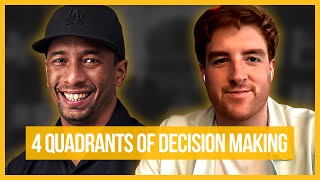
Interview (YouTube) with William Ballance and Kevin Dorsey about applying personality science to B2B sales and marketing. Ballance explains the HBDI (four decision quadrants: action, vision, people, data), connects it to personality frameworks (Big Five/OCEAN and DISC), and describes practical ways to assess prospects (role signals, assessments, Lavender product) and craft messaging or sales processes tailored to buyer personas.
Chapters
I'll start by defining it in the terms of the Herman Brain dominance in particular or HBDI for short. So moving forward I'll just say hbdi. It basically says people think through their decisions in four quadrants. They look at the action, the vision, the people and the data of that decision. So it's normally used to structure leadership teams, but we started applying that same framework on how people make their buying decisions both in marketing and in sales.
What are some of those different types of decision making? It's called modalities or patterns. What are some of those main buckets?
Yeah, totally. So I'll start by defining it in the terms of the Hermann Brain dominance in particular or HBDI for short. So moving forward I'll just say hbdi. It basically says people think through their decisions in four quadrants. They look at the action, the vision, the people and the data of that decision. So what's that mean? The action is like the process or the steps to actually enact this decision and make it happen. The vision is like the big picture. If I do this decision, what are all the things that are going to happen, either positive or negative as a result of me making this decision? The people are who's involved in this decision, so other stakeholders. Who's it going to impact, is it going to affect and what's the result of that? Of that impact? And then lastly the data. So what is the supporting data behind this decision? What are the facts and what are the figures? And everyone goes into all four of these quadrants when they make their decision. But depending on who you are, how you think and your personality, you go into them in different orders and different magnitudes. So you have some people that are like the really visionary founder who wants to just operate off of their instinct and their gut and they'll probably go by that domain name or start doing sales or something without having done full market research or got all the data about their idea. And you have other people who spend so much time doing the research, getting the data that they never get started. And it's really important when you're thinking about not just in sales, but in the core use of the Herman Brain Dominus instrument, structuring a team that you have someone on your team that's going to be that vision focused person, someone's going to be that action oriented driver getting it done. Some people will think about the people involved and someone else is really going to research the data. And so it's normally used to structure leadership teams, but we started applying that Same framework on how people make their buying decisions both in marketing and in sales.
And so how do you find that out about somebody right in marketing and sales? Like is that something you can, like are there questions you can ask? Do they have to like fill out a survey?
Like how do you kind of find.
Out these preferences so you can lean into them? Or is it like you, you don't know. You just gotta make sure you're checking all these boxes.
So there's a couple of ways to look at this. I think a lot of people that work in B2B have heard of DISC, which is a personality assessment personality framework. And it looks at two factors of what's known as the ocean or the five factor big five model of personality psychology. And this will all tie back into what you should look for next. But I think it's a pillar to understand the personality psychology before thinking about the decision making science. So personality is comprised of five factors and it's called the five factor model or ocean. DISC incorporates a couple of them, not all of them. So we'll focus on ocean for this. The five factors are openness, so your openness to new experiences, Conscientiousness, which is like your task orient orientation, your dutifulness, like how, how good you are getting things done on time, things like that, your diligence, then extroversion, so how you respond to people. Or your introversion is the opposite of that. Your agreeableness, so how likely you are to go with the flow versus pushing back against decisions. And then neuroticism is the, is the in in this acronym. Neuroticism is like your proneness to, to emotional swings when exposed to stress. So depending on where you fall across this, these five factors, openness, conscientiousness, extraversion, agreeableness and neuroticism. It's your personality and you can learn that through doing an assessment. We have one that we have at lavender@officialpersonalitytest.com which gives you the score. You can also look for things at other people. For someone who's working at a really early stage startup, for example, they're probably more open to new experiences or if they're traveling around the world and they're working remotely, they're probably going to score high on openness. Someone who is working in engineering and they're really detail oriented and they're programming all day, they're going to probably be larger or higher on conscientiousness, for example, someone who is an executive who's like hard driving, really getting things done all the Time might score lower on agreeableness because they've got to drive their ideas forward. So it kind of depends. And someone may be working in human resources or something like that might be really high on people. So you can look at it from the role that they're in. You can use a tool like our product Lavender, which in addition to helping you with their emails and optimizing emails, it also gives you this assessment on your prospect. It'll give you their personality assessment and what part of the brain they likely make their decision in. But if you don't have that, if you have no idea, you've never talked to this person before and you can't take any insights off of their LinkedIn bio or their job history, you can structure your outbound or your messaging to hit on all four of those things. So we call like the whole brain way of thinking. So part of your, your messaging would, would target the action involved or the vision or the big picture, the aspirational side of the sale, the people that's going to impact in the data behind it. And that could all be in one pitch or it could be in different steps. So like different touches, could target each thing until you find that it's kind of like a lock and a key. Find the match for that buyer.
No, I really, I really like that. And so, you know, because I do think if you have the tool, you have something that helps you, but taking that time even to think through it. Like, honestly, not everyone in engineering is the same or not everyone in styles is the same. But there are definitely patterns that then can lead to get a better feel for someone. So let's keep going down this path.
Right.
So then how do you apply it? Right. So, and like, let's pick up our song. Let's go like VP of Sales. Right. So let's assume they're a VP of sales at like an early stage, so they're probably a little bit more open. You know, those salespeople not the most.
Conscientious with their tasks.
Right.
Like, they kind of tend to wing.
Things a little bit more, maybe high on extroversion. Okay. And agreeableness, like, how do you start to craft messaging that is aligned with that?
That's a great question. So if you think about the four quadrants, the action, vision, people and data, and you're right, there are going to be patterns. Not everyone's going to align perfectly, but there are a lot of trends and you can be pretty certain that you're going to hit on a lot of these things with A certain Persona, at least what we've seen. So when you're going after someone who's action oriented, which in a lot of cases could be that salesperson or that VP of sales or other types of executives, you want to drive them to the decision and remove any sort of friction from that buying decision. Like for example, myself, I went through a procurement of a tool that we use and I knew I wanted to buy the product. I already done my own research, I was ready to buy, but they made me go through a discovery call, then go through a demo as a secondary call. Like this whole process, it was so frustrating. And if I wasn't certain that I wanted that product, I would have dropped off way earlier. And that for someone like me, that is a bad experience as a buyer. But someone who's more data driven and needs more handholding or more details or maybe even more people oriented, that could have been really helpful for them because they were trying to fill in all these gaps. I didn't need to know every single thing that product did. I just needed to get the deal done and move on with my day. So if you're going after someone who's action oriented, you want to drive them to that decision and remove any sort of friction in that decision. For someone who is more vision oriented, they are the big picture thinkers. They're very high on openness. You want to inspire them in that decision making. You can see this a lot with like Nike commercials. Just do it. Like you look at those commercials and you're like, I can do anything. I can be an excellent athlete. I said to buy some Nikes. And it's really aspirational in their marketing that's targeting that vision quadrant of the brain. If I buy this product then or service, I'm going to have all these things. So if I'm selling like lavender, if you buy our product, you're going to get way more replies. Your team's going to crush it. They're all going to make president's club. Like, you're going to crush your all of your goals and you're going to be a hero. And the people start thinking about, well, if this product works, all these great things are going to happen to me. Now for someone who's people oriented, maybe I take a step back. For people who are people or data oriented, they favor what are known as stability traits in the brain. That's the brain's resistance to change. But the ones that are action or vision oriented, they favor what are known as plasticity traits. And that's when the brain wants change. So you can see this for people that are action and vision oriented, they're far more likely to make their decisions with limited information and they're far more likely to be early adopters. Now when you cross that over, now we're looking at people and data oriented buyers. They need different things. So the ones that are people oriented, they need more support. They're going to be really facing favoring testimonials, case studies, how has this impacted other people? Or if I buy this, how will it impact the people around me? They might want more buy in from their peers. Where someone who's action oriented might make that decision unilaterally, just give it to their team. Where people oriented buyers are going to say, well let me have Jeff look at this and Melissa and bring them in and get their opinions and have a more democratic vote on this buying decision. And then people who are data driven, they're going to ask questions. You need to inform them. They're going to ask questions of like, can I see a white paper? Can you send me some data, some statistics? How does this work for so and so? They're going to need a lot more handholding in that buying process and they're not going to use send them an anecdotal testimonial from someone. That's not enough. They're going to look for, I see an analyst report or an industry report, I'm going to need some hard stocks and figures, not just your sales copy. That's buttering up the story. So as you're looking at each of these buyer Personas, how you deliver the message and the things they need to kind of unlock, how they think through, this buying decision will be a little bit different. And if you don't know, then add a little bit of each of that. Each of those things.
More from Kevin











#shorts THE POWER OF RECOGNITION: How Do You Empower People with Zoe Hartsfield