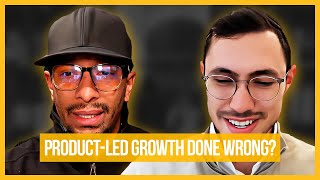
Episode of Better Sell Better (host Kevin 'KD' Dorsey) interviewing Yaakov Carno on product-led growth (PLG). Carno defines PLG as using the product experience to drive acquisition, retention, and expansion; emphasizes minimizing time-to-value, addressing 'value gaps' between perceived and experienced product value, and implementing a 'zero to value' onboarding flow that guides users from signup to solving their first problem. Also discusses personalizing signup/onboarding and designing workflow-focused product experiences rather than feature tours.
Chapters
One of the hottest topics in SaaS right now, besides layoffs, unfortunately, which is product led growth. But I don't believe a lot of people are actually doing it right.
Everyone's experiencing product led growth so differently and I think this is something that people need to educate themselves on because they're going to want to harness the power, kind of having those questions through the way they navigate the product and seeing what features they're looking at and using the data there to. To personalize what they get sent.
What up, everybody? Welcome to another episode of the live Better Sell Better podcast. This is your host, Kevin Dorsey, AKA kd. And today we are talking about one of the hottest topics in SaaS right now, besides layoffs, unfortunately, which is product led growth. It seems to be coming up more and more as a strategy. You are seeing it more on LinkedIn. You're hearing it more from CEOs of we need to have a product led growth approach. But I don't believe a lot of people are actually doing it right. What is product led growth? Is it just a free trial? Does that mean you don't have a sales team anymore? Can you do it in the enterprise? Like, there's so many things that go into a solid product led growth strategy. And that is why I'm so excited to have Yakov Karno on the show with me today. He's the founder over at valuable, advising SaaS companies on how to do product led growth the right way. So we're gonna dive in on what he's seen, what the best strategies are and see if product, product led growth makes sense for you. So, Yakov, my man, welcome to the show.
It is great to be here, Kevin. Thank you for having me. Yeah, this is something that I'm super passionate about. I've been working with a range of different teams and I've learned so much from each one in such a different way. Everyone's experiencing product led growth so differently and I think this is something that people need to educate themselves on because they're going to want to harness the.
Power that when I was looking for, actually I was never even looking for it. When I was determining if I'd step back into a leadership role, a PLG focused company was mandatory for me. So, like stepping back into bench, they have a strong PLG direction. So I was like, okay, we're on this. So when we say plg, let's just start with defining it for people maybe that aren't familiar or what you believe the definition of product LED growth is. What does that mean? If someone is focused on product led growth.
So yeah, that's definitely the starting point. And I'd say I'd start with the basic definition to not complicate things. I'd say that product led growth is a model, a strategy that focuses on leveraging the product experience itself to be the primary driver of acquisition, retention and expansion. Leveraging the product value as the value proposition that fuels these motions, rather than being dependent on marketing and sales to fire them up.
And you used a word there that I think most people skip, which I really, really like, which is the product experience, right? Not just letting people get into your product, but what are they experiencing when they do? So go a little bit deeper on that, right? So if I'm looking to craft a solid, you know, product growth strategy, like, what should that experience be for the prospect or customer? Like, how do I craft an amazing product experience that then guides them to actually becoming a customer?
So I think it starts with really a deep understanding of why they there, why are they coming to your product and what, what's the problem they're trying to solve Then in terms of, from our perspective of building our product, we want to understand the value gap. So this is a term that we're going to have to deep dive into. And it's when the perceived value of the product doesn't align with the experience value of the product. This is something that product led motions, tries to overcome, tries to lower the time to value so that when users are looking for a problem, they're trying to solve something and they see a solution, they want to be able to tap into that solution as quick as possible. They want to see, hey, this product can solve my problem. And the second they land in the product, it should intuitively guide them to the experience of how they're going to solve that rather than just telling them, hey, we can do this, we can do this, and all talk, no show. The complete opposite is that, hey, let's prove to you that we can do this, try it out, you know, solve your problem, and then they're hooked already because they have experienced the value and the product experience is now the value proposition rather than whatever you're saying on a sales call.
And so let's keep going deeper on value gaps because funny enough, I think that's a problem in all sales motions, whether it's PLG or sales LED or whatever else where it's like there's this gap between what the customer actually wants and how we sell it and how we put it into play. So go a little Bit deeper on that.
Right?
Like how do you. Because this is where sales starts to get a little bit, you know, up in arms is well, how can we do that if we don't talk to them? Like how do we actually help them achieve these gaps if we didn't get to talk to them and they just went into the products? Let's go deeper on that value gaps of like perceived versus actual and how you either find those things out or do those things.
So that is exactly where product led. Growth shifts our way of thinking and what I mentioned of time to value. This is a process that I go through with companies. I call it zero to value. And it's really trying to systemize how we see getting the user from their first steps in the product to experiencing the value that they're looking for. So this means, as I said before, really understanding what are they trying to solve and, and packaging our product in a way that's based around actual workflows that go through the a realistic process of how they would do things rather than showcasing our product. So again, the shift is focusing on them experiencing the value, them solving a problem, rather than us getting the light to finally show off our product. A lot of people get this wrong in product tours, for example, where they have this huge feature walkthrough, but they didn't come out of the product having done anything. And so they're back to square one where okay, they know what you can do again, but they haven't done it. So it's getting the bigger picture of seeing how we're going to create exactly the steps we need to get them from signing up to solving their first problem.
And do you think, are you seeing companies change that flow based off things that were like filled out in the form or whatever else? Right. Because I would assume, right, people have different values that they're trying to hit. So like, is that called, like best class is somewhere in that sign up flow we're identifying a certain problem, we're identifying what's top of mind. So their flow is different than just the standard.
Definitely. There's two ways that this can be done. Either by straight up asking them. You know, I always say don't assume anything, just ask them. Sometimes people really appreciate it when you ask why are you here? And giving them an experience that you're asking them because you want to guide them quicker to value rather than you just want to get more data from them. So this is a tricky thing to get right because it could come across as we're just asking you as many questions as we can, and then the signup process just feels dragged out and unnecessary. But if it's done correct and the questions are phrased in a way where the user knows that this is going to get him quicker to what he's looking for, then it's actually exciting. Like one of my favorite examples is Canva here. And Canva is a PLG leader in every sense. And they ask such a simple question of why are you here? Or what are you going to be using Canva for? And they give you six examples by using it for small business for personal design. And based on that, and I've tested this because I've had fun trying different onboarding flows. When you click on one, it shifts the templates that they show you completely and they really think for you. They get in your head and they know exactly what's going to what you want to see. And so that's a great question to ask. If you're going to ask for their phone number and business name and all these other questions, that's not something that's going to affect the workflow. So those are things that I would leave out of the personalization. But in terms of just asking them why they're here and exploring their use case, definitely there's also other ways that you can do that within leveraging the product itself, kind of having those questions through the way they navigate the product and seeing what features they're looking at and using the data there to to personalize what they get sent next, whether that be in a messaging sequence or just the features that are naturally progressed towards. Sam.