The Human Brain and the Sales Process with Alex Schlinsky
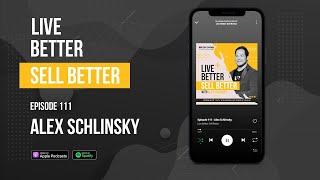
A recorded live interview (Better Sell Better podcast) where host Kevin 'KD' Dorsey speaks with Alex Schlinsky (founder, Prospecting on Demand) about applying social and decision psychology to sales. Topics include priming and heuristics, limiting offers to one option, confidently telling prospects to buy, unpacking and diagnosing objections (especially "I need to think about it"), refundable deposits as a decision aid, one-call closes, tonality/conviction, and broader life advice (anti-hustle, intentional living).
Chapters
Foreign. Welcome to the live Better Sell Better podcast with your host, Kevin Dorsey of Inside Sales Excellence, the number one Patreon group and YouTube channel for tech sellers and tech sales leaders, where we dive in deep for tactical advice on how to book more meetings, close more deals faster, and lead sales teams to success. But we don't stop there. We also focus on the person in salesperson. We talk about mindset goals, time management, and so much more. So thank you for listening and if you're interested, head on over to patreon.com InsideSalesExcellence now with that, grab a notepad, get ready, and let's dive into the good stuff. What up, everybody? Welcome to another episode of the live Better Sell Better podcast. This is your host, Kevin Dorsey, AKA kd. And today we are diving into two of my favorite things when it comes to sales, psychology and objections. There is so much psychology that goes into selling, but for most teams and most companies, they never talk about it. They never teach it, they never explain why a script is what it is, or why they should say certain things or how to handle Objection. But again, why the why behind it? Human psychology is actually how you drive the results you want in prospecting, sales, and objection handling. And that is why I'm so pumped to have Alex Schlinsky on the call with me today. He's the founder of Prospecting on Demand and this guy gets it. He understands how to prospect, how to persuade, how to use psychology. How do you know objections, but also how to build systems to allow you to do it at scale. There are a lot of salespeople out there that have kind of been that way since birth. They just seem to get it. But it sounds like you were someone who got it but then found out the reasons behind it, like why the things that you did work. So bring me back. Like when did you start getting into actual psychology? Like what, what triggered it? How did you start to learn more about this?
So, yeah, I actually started psychology. I was very intrigued, intrigued by it during high school when I was learning about social psychology for the first time. And then I went to college and I wanted to become a clinical psychologist because I thought just understanding the human brain was very fascinating. And, and I frankly wasn't smart enough to do biology or chemistry. So I thought psychology would be a lot easier, which it did. It did end up being. So I went to undergrad for it at ucf, graduated magna cum laude. No one cares except my mom. And it didn't do anything for my business. But I'm still proud to Say it. And basically going through school and just trying, basically every psychology class there was, just made me really more interested in understanding how human beings work and how our brains work in particular. I think back then, which was around, like, 2010 to 2014, mental health conversation was really not very clear in the industry, whether as like, entrepreneurs or college students or human beings in general. And now, over the last decade or so, it's become a lot more prominent. And I think if people just understood, like, basic human psychology, like Abraham Maslow's hierarchy of needs, in fact, I think you have a lot more people that are more understanding, more caring, more empathetic, and just the world in general would be a lot better. So that's why I got into psychology in general. I was always bleeding heart, really cared about other people. Like, I'd be that guy watching like a Vine clip back in the day, for example, or like a YouTube video where I never met this person ever in the world. I have no idea who they are, but, like, they're colorblind, and they put on those special colorblind glasses and they're crying. And now I'm crying, like, that's like my brother. And that's just the type of human being I am. And I'm interested to understand, like, why are some people empaths like that? And why are some people. Who cares about this guy? Like, I don't care about it. And it's just very interesting how that all works out.
I love it. It's funny, man. Like, I majored in kinesiology, which, like, was mistake. It is what it is, but it into psychology. And I actually, funny enough, I would have majored in psychology if at the University of Wisconsin. It was not a bell curve grading system, so it was a pure L curve, meaning I got a 98 on a test once and got a C because enough people got a 99 and 100. And I could. I couldn't mentally deal with that. I was like, a 98. Like, what else am I supposed to do? And got a certificate.
We're not doing no bell curves here, okay?
It was pure bell curves that drove me nuts. I was like, all right, I can't handle this. So let's keep going down this path because very, very interesting background to start in, you know, psychology and make the transition to sales. So break that down for me, right? You bleeding heart. You want to understand how the human brain works. You major in clinical psychology, and then you become a sales guy.
How did that happen?
How did we get you?
Yeah. So it all started Right before college, I didn't have a lot of money going into college, which I think is a pretty common thing for most people. My parents did their absolute best to support me, which I'm still grateful for to this day. But I needed to make some additional cash in order to pay for school and pay for the things I wanted at school and just enjoyed the college experience overall. Before I went to college, I actually wanted to become an attorney. And one of my ways of becoming an attorney was thinking, understanding human psychology and like how to convince people, influence people, which was all about Cialdini. Robert Cialdini. Great book, Influence. If you haven't read that, I strongly recommend it. It's a great book for sales and for psychology. It's kind of a boring read to be honest. It's very textbooky, but it's very good if you've been in any social psychology book. It's very common. So anyways, when I went before college, I went to an internship with my next door neighbor who is a personal injury attorney. And I was very interested in becoming a criminal defense attorney. And when I did internship with him, his first day of communicating with me was I want to make sure you never become an attorney because this is the worst job in the world. I hate myself, I hate my life, I hate what I do. Which was really shocking for I think I was 18 years old at that time. To hear like an adult be so transparent about that because transparency in that way is unfounded most of the time. It's not really that common unless you're like very close with them. And I was just a stranger basically to this person. It was my next door neighbor, but like an adult, you know, he's like 50, whatever, and I'm 18 years old and he's telling me don't go down this career path. And as soon as that happened, I started considering other options. And Facebook had just launched Business Pages then in 2010 and he was among the first people. I was like, I think this is going to become a big deal. I want you to post me every single day on here and send emails on constant contact. And he paid me a thousand dollars a month to do that every single day for like five years before unfortunately he passed away. But in that time, what ended up happening was when I went to school, I ended up asking him if he knew other attorneys in Orlando, where UCF is. He not only sent me someone in Orlando, he sent me like 20 attorneys in the United States that he went to law school with that almost all of them became Clients. And I was running essentially a 10 to $12,000 a month agency without even knowing what an agency was. I knew nothing about Facebook. Um, I didn't know anything about social media at all. And there was no convincing really needed. It was just me being like, this is what I do for Lloyd. He pays me a thousand. Do you want this? And they're like, Lloyd does it.
Sure.
And a thousand dollars. And that's what I thought sales was like. Person recommends you, you do no sales, you get paid. And that's, you know, a really eye opening experience as soon as I had real sales conversations to realize that it's nothing like that at all. But as soon as that happened, I really quickly realized what was available to me. I just was convinced that psychology was the right term and method moving forward. So instead of focusing on the agency from there, I just kind of did it as a side business for four years until I graduated and realized, crap, now I'm just going to go full force with the agency. Might as well do that. So that's kind of how the transition happened from maybe this legal thing to then psychology to how I was doing sales. It was kind of gifted to me on a silver platter. And I know that that sometimes is unfair to people listening to podcasts because they don't get that opportunity. I think the biggest thing is whatever opportunities you get, when the door comes knocking, break down the door. There's this idea of this book, the Secret, which a lot of people know about. Big thing about like vision boarding and manifesting. And then people will like just manifest and think and meditate and do that, but take no action. And then they expect the Lamborghini to be outside. It's like, that's not what the book is trying to explain and that's not what psychology is trying to do. What? Or ethereal psychology, right? Like metaphysical psychology, like what crystals do or stuff which you can believe in or not, like whether you're astrology major or not, it doesn't matter. The thing is you can manifest something, but if you don't take the action on it, you won't get anything. So if I didn't ask Lloyd to, hey, can you connect me with someone else? I would have never gotten the referrals. Well, yes, I do still believe that it was by happenstance and luck. In many ways. I still made it happen by asking for it. So that's the format of how I ended up kind of getting into sales and then building my agency.
I love it. What a lot of people don't Know is they wrote a follow up book to the Secret called the Answer and it didn't sell nearly as many copies as the Secret did. And you know why? It was about putting in the work. You actually had to map out your plan. So anyone listening, go for it. Go look up the answer. Right? The secret's got 30,000 some reviews. The answer's got like 800. Right? No one liked the follow up of like, oh wait, I actually have to put in the work to do this. I'd rather just manifest it. So now let's keep going down this path. Right? So now let's make this bridge. What are the things that you learned, you know, in psychology that you now leverage in the sales process? Like what are some of the things that you've learned about how we make decisions and why we do what we do that have made you a better salesperson?
It's such a great question. There's so many that I can, that I can use. If we're Talking about the 8020 principle of sales and psychology, I'll break down two kind of psychological principles and then explain what I think is the single most important thing that you can do in sales moving forward. That's very contrary to popular opinion, especially like the Sandler method and like standard sales processes that you see, it's understanding how humans make decisions. So there's two things to understand. One is priming, which is, priming is like a very common psychological technique. Most people understand this. It's just the idea of getting someone to get one step closer to saying the response that you want, prepping them or priming them to have that answer. So the more times you can have seed planting, yes, I want this. Yes, I want to work together. Yes, I think this is valuable. Yes, I want results like this person, the closer they'll get to saying yes. Priming is not any sort of like factual, you know, scientific based method. It's simply just a psychological element of how human beings decide upon things. And this is now the next step, which is called a heuristic. So the idea behind a heuristic is basically a mental shortcut to getting to your brain working faster. A great example would be if someone asks you, what's your favorite color? If you have been primed that day that you've seen blue way more than you've seen any other color, and you don't have a very strong answer right off the bat, you're more than likely going to say blue. Is that the case every time? Of course not. But this is what we call A representative heuristic, like the available, it's what is representative of what you have seen today is the answer that you're going to have. Right? There's also this idea of biases, right? Like the idea of what's available to you on a heuristic. And also like your decision making bias, your self fulfilling prophecy. All of those things we can get into at a different time, but those things are really important as well in terms of urgency, but which we can dive into if you like. But specifically on the heuristics side, the reason why I like focusing on heuristics and priming is because heuristics are a mental shortcut that allow people to solve problems and make decisions efficiently. The human brain has so many things firing at all at once. And especially in the day and age we live right now, where essentially you have an entire computer in your pocket and you're in the information age, where you can find anything at any time to be distracted for any amount of time. Whether it's YouTube short video that's 25 seconds long or a two and a half hour lecture from a Harvard professor, you can literally find anything to disrupt your day at any point. And so making decisions has become significantly more challenging in our day and age, which is already a proven challenge for human beings because of the availability of so many options. Right? So what you want to do to simplify your sales process is a few things. Number one, make one offer, not multiple offers. This is contrary to popular belief where there's like, you can have the gold package or the silver package or the bronze package. Every offer that you make ends up allowing someone to have three potential responses. Now, the most common response in sales is maybe. Now, maybe doesn't just mean they say maybe. It's like, hey Katie, I like this. I just need to talk to my partner about it. Hey Katie, I need to move money around and we'll chat about this. Hey kd, I really like this. I just need to think a little bit more about it. Anything that's not a yes or a no is a maybe. Most common response in sales is maybe the most uncommon response in sales is no, not yes. Most people don't have the audacity to say no because they like KD or they like Alex or they like the person they're speaking to. So instead they're like, it's a lot easier to say maybe, even though I know I want to say no. And then I'll just ghost them after the fact because that's simpler and easier. Unfortunately, that is true. I have done this myself. So I don't want to put myself on a pedestal and say I've never done it. I. I definitely have. I've spoken to someone that I really like, and I'm like, I don't want to say no. And then eventually I'll let them down by messaging them, because it's easier to do that than saying it face to face. Just don't ghost your salespeople is my thing. Anyways. Point being, understanding this framework is how you can simplify your sales process. When you get to a position of saying, we have this package, do you want it? It's a yes or no decision. And of course, maybe is available. When you say, do you want this package? Or this package? What ends up happening is you're giving them six decisions to make. They could say yes, nor maybe to package one, yes, no, maybe to package two. And most commonly, you'll see three packages offered, right? You'll be like, this is the best deal. And then there's these other two packages. Now they have nine potential decisions. And you wonder why they don't make decisions. Because there's so many options available to them to consider, plus the unspoken options, which is someone that runs an exactly similar company to you that has a completely different offer with a different price that they need to go consider now. So what we want to do is use heuristics and priming to our advantage. And using heuristics, ultimately is how you can ethically help people make decisions and do one call closes. And the biggest thing that you can do, besides for limiting your options to just one option, is telling them they should buy from you. Not asking so many people, Katie, end calls being like, so, Kevin, like, do you want to do this? Like, are you. Are you ready to go? Like, is this a good fit for you? What do you think? Like, they'll ask a question instead of directly selling. And I think it comes to the place of, like, being concerned about being too aggressive or. Or maybe they want, like, a question so I can be directly answered instead of a statement. But the reality is, sales is all about convincing through confidence, right? Ethical convincing through confidence. By, hey, you have a problem, I have a solution. I can help you bridge that gap if you let me. By offering them a question of what they think at the end of the call, you're providing them an option to say no, when really you already know the answer, which is, if you're an ethical salesperson, you'd only get to this position if. If there was only One solid answer they should have, which is yes. So at the end of the call when you say, hey, Kevin, this is a no brainer decision. It's why you got on this call. It's $3,500 to achieve this result. This is exactly why you're here. You need to do this. And then you stop talking. It gives them the reality of saying, I've just been sold. Now you sold them. Now you did your job by shortcutting them on a priming scenario where now their brain is thinking, yes, yes, yes, yes, yes. And instead of having to overanalyze, when you give them the option of saying, what do you think, Kevin? Now they have to think, well, what do I think? Right? It's very rare for most people to be like, yes, right off the rip, because most people are not like that for decision making. It's why every human being resonates with this comment, right? It's like, okay, hey, babe, what do you want to do for dinner tonight? I don't know. What do you want to do for dinner? Why does every human being laugh at that? It's because everyone has that conversation. And then there's that one exception to the rule. Like when you're in a group of 10 people with which makes decisions way harder, like, what do you guys want to do for dinner? And one person's like, let's go get sushi. Half the people hate sushi. But they all go because they're like, someone made a decision. It's great. This is the crazy thing about psychology and human beings in general. People want the freedom of choice, right? They, and it's really important, especially in the United States, like patriots and like the, you know, the amendments. And it's really important, like, people want the freedom of choice. They want the right to choose. The crazy thing is, though, they don't want the burden of choice. Think about what I just said. They want freedom of choice, but not the burden of choice. They will still have freedom of choice if you tell them to work with you because they still have the freedom to say no. But by giving them the burden of choice, you're doing them and yourself a disservice because now you're basically asking them, hey, babe, where you want to go to dinner? And they're like, I don't know, where do you want to go to dinner? Why did you tell me where you want to go? So telling someone to work with you is infinitely more impactful. And there's no script or, or method that you're supposed to do that's. Like some Harry Potter abracadabra magic that's going to force them to pay you on your credit card. The real thing is being convicted, like, really believing in your product. And last thing I'll say in this, that I think is key because it's specific to understanding, like, how human psychology works is the reason why a lot of people, when I say this, they'll listen to me, Kevin. They'll listen to me, kd they'll listen to the idea of saying we should, like, tell the prospect to do this.
And.
And then on the very next call, they do the same thing they've always done, which is, okay, Michelle, like, what do you think? And they know it. They hear me in their head, and they still don't do it. And the reason why is because they're uncomfortable. They're afraid that if they go to the point of saying, you should do this with conviction, that they're going to come off too aggressive. And what ends up happening is you've created, like, this weird machination in your mind that sales is a bad word, that telling someone to do something with conviction is a bad thing. It's like, that's the end. The antithesis of sales, right? You want to believe your product so much that you tell them what to do because it's beneficial for them. And this is why it's so key. Now, a couple bad apples, like charlatans that sell snake oil, have made a bad experience for people that don't sell snake oil. But when you try to think in your mind that you have control of the perception of the other person, you're misreading and misunderstanding how human beings think. Why is politics so incredibly divisive if one person speaks right? If the president United States does a speech, okay, the State of the Union, it's not edited. It's not changed in any way. There's an entire group of people that say, that was an amazing speech. And there's another entire group of people that say, this guy is the worst person in the world. The speech is not edited. There's no differences. It's the same exact speech. The reality is, because you don't control the perception of how someone took it. So while you're towing the battle in your mind of like, am I coming off too aggressive or am I coming off too cocky, or am I coming off arrogant or am I coming off confident, right? The only thing you're doing is seeding doubt in your mind, which comes from the inflection in your voice, the confident in which you express it and then ends up happening is like. Doubt is like blood in the water to a shark. Your prospect can sense that you're doubtful. They can see it, they can feel it because you're not convicted. So instead of worrying about whether you're coming off as confident or cocky, just simply be confident with your intention. If someone says that you were coming off cocky or. Or. Or arrogant, that's on them. That's not on you. You can listen back to recording and see if there's something you can edit a little bit. But ultimately, that's the number one thing I try to teach people. With sales psychology. Telling people to do it and limiting to one offer, It's.
That's gold. It's absolutely gold because it is so true at the end. The way I've described with my teams is like, we ask them to close themselves and that puts too much pressure. It's the burden of decision of, like, now I have to be the one that says, can I buy? Or I have to be the one that says, well, how do we get started? And all of that pressure comes inward now. And that's what's going to make me push away versus let's get you started. Let's get you started and making it a statement. So I love that no one said that on this call, on this show yet. And so I love that call out there because it's true. We have to make buying easy to make it easy for them to do the moment. We have to start to think it's going to go the wrong direction. Let's keep going down this. Right. If we talk about the psychology of objections. Right. So same idea, handling objections. How can we leverage human psychology to better handle the objections that we're getting on the calls?
Yeah. I think the first thing is for your own psychology, the salesperson psychology, don't equate an objection to a no. I think that's a very common thing that we see, and it has a lot to do with what I just said about the aggressiveness thing. So I'm not going to repeat that. But it's similar to that where it's like, oh, like, like someone gave me an objection. That means they said no. Those are two very different things. Right.
That.
That's definitely not the scenario. The biggest thing in sales psychology related to objection handling is just getting to the core root of what the objection is. Again, the more transparent you can be on calls, the better. Right. So I'll explain a few of these angles here in a second. But the biggest way that you can Understand it is first accepting, like, understanding what this objection actually is and making sure you have a core root of that objection for in a linear format of which one matters the most. Right. So if someone's like, you know, man, like, I just really. I just got to think about it a little bit, like, hey, I totally respect that. Just for clarity, right? What you're saying is I do want to work with you. You just want to have more time to consider this. Is that correct? Right. Is there anything else on top of your mind before we talk about the thinking about it consideration that would withhold you from making this investment? Oh, well, the money, et cetera. And now they're actually talking out with you and you're working through it, right? It's an example. I can actually handle the objection in a second, but I just want to talk about the theories behind these. An example would be, I need to talk to my wife about it. Okay, well, if you need to talk to your wife about it, there's some things that we need to get to the core root of.
Right.
If you were the only decision maker, would you be making this decision? Yes, I would. Okay, cool. So you do want to work with the. With me. You just want to confirm it with your wife. Those are two different things, Right? Okay, you want to confirm it with your wife. What happens if they say no? Now you're asking them a consideration they didn't even consider? Well, yeah, I would still do it anyways. Okay. Deposit frame. You have to break down the objections by first understanding. Is this the only objection? If we overcome this objection, we'll work together. Okay, let's overcome the objection. Is this the only objection? If I overcome this objection, we'll work together. And now let's work the objection. The problem is too many people are willing to accept objections as no.
Or.
Or they'll just try to work the objection right away instead of really understanding what that objection is. Especially for ones that are more ethereal than they are, like, very specific. Like, there's some very specific objections that are easier to deal with where it's like, hey, I, you know, have $1,500 coming in in two days. We can start on Wednesday. Can we jump on the call then? That's completely different than. I need to think about it. I need to think about it for. Could be asked a hundred times on a sales conversation by a hundred different prospects, and all of them could be thinking about it in a different way. I like to make my decisions by consulting my mentor, my rabbi, my priest. I like to do meditation. I like to go to a sauna. I like to think about it. With 17 more calls that I have to do. I like to talk to my wife, my dog, my parrot, my partner. There's a thousand different answers to that. So we have to identify really and clearly what it is. Just because I've teased it a little bit on the. I need to think about it. This. This is how you handle that? I need to think about it. Objection. In three, two, one. Okay, so, Katie, just to confirm, right, what you're saying is I do want to work with you. I want this implemented. It's just a matter of I need a little bit more time to consider this. Is that right?
Yeah, yeah, yeah. That's pretty accurate. Cool.
Okay. Totally fair. Let me ask you something. Okay. Do you know exactly what you want to think about? Like, are you clear on what you want to think about?
Well, I just want to make sure I'm making the right decision. I don't like to rush into purchases.
Sure. Totally respect that. Completely understand. I believe you told me earlier in this call that this was the third of four meetings that you have for this specific offer. Do you feel like you were rushed in either of the prior two meetings?
No, they, they all, you know, they said that they'd follow up. I told them I was going to take these, these calls and then everyone's going to follow up afterwards when I make my decision.
Absolutely. I totally respect that. Let me, let me clarify something for you. We've been chatting for about 30 minutes or so. Um, we put out about 45 minutes for this call. What I want to make sure you have clarity on is I'm not trying to rush you or close the door. You mentioned that you want to make the right decision. The onus is on us to help you with the burden of decision of what the right decision is to make. I would never make an offer to any prospect that I didn't believe 100% would work for you. And I really do believe that. I understand that. That's easy for me to say on this side of the screen than it is for you to say. I trust you. Let's go.
So.
So don't stress on that. I completely respect it. I, I'm just asking. Human, human, please understand that is truly my intention. Here's what I'll say though. If you need to think about it, this is my concern. If I say, hey, no worries, let's schedule a follow up call for Tuesday, blah, blah, blah, blah, blah, and you hang up, what ends up happening? You Go to your email right away. You go pick up your kid from school. You watched, you know, your movie tonight with your daughter and your and your wife. You end up hanging out in bed reading a book, and you never had any time to think about it. Right now is an amazing opportunity to really consider it. What I'll do is I'll turn my video off, I'll turn my mute on. You can do the exact same thing. You have 15 minutes here of undisturbed time. Think about the last time you had five minutes of undisturbed time, let alone 15, right? Pretty long time ago, I'm sure. So why don't you just give yourself an opportunity to really think it through now, because if you do, maybe you come up with a couple questions, concerns, things that excite you, things that don't, and we could hash it out here together. And by the way, by the end of 15 minutes, if you're like, I still need more time, I will happily give that to you. But then this way you can have the ability to really think it through fresh in your mind versus going to jump on 15 other things. Are you open to that now? What ends up happening, Katie, when you do that? Right? When you handle this type of objection, a lot of people will be like, yeah, you know, like, that's interesting. And they'll turn their video off and then like 45 seconds later, they'll jump back on with three or four questions because they actually had a chance to think about it. You handle those questions and they're like, okay, I'm ready. Or I need to think about it more when they do. I just need to think about it a little bit more. Say this, okay. Do you feel more confident in working with me than you did a few minutes ago when you asked the first time that you need to think about it? And they say, yeah, I think so. Okay, totally fine. You're still kind of uncertain, but you just want to make sure that you make the right decision.
Is that fair? Cool.
What if I gave you a break glass in case of emergency clause? Are you open to hearing this? Cool. So here's how it was going to work. Okay? Pretty simple. What I'm going to ask you to do is put down a $500 completely refundable deposit. Okay? Now what this deposit is going to do is it's going to lock you into this product and this service, and we're not going to work with anyone else in your area. You're going to be exclusive to this. Okay? What we'll do is we'll get everything started so that we can press launch when you pay the rest of the investment on our kickoff call, which we'll schedule right now, that will give you two days to think this through to make sure you're really confident with this offer. So at the front end of the call, you could say, I love this. Here's the payment. Or, hey, I have this question. Alex, please answer it for me. Here's the answer. Pay it or break glass in case of emergency. This isn't right for me. Please refund me and go from there. Are you open to that? Now? Some people, Katie, will be like, well, why do I do a deposit, et cetera. This is important to understand human psychology and, like, seeing how someone reacts. Like, you can see, do they recoil a little bit? Are they quizzical on their face? Most people aren't good poker players. So they give you, like, an answer on their face of why they think that's the case. If it's on the phone, it's a little bit different, but still. And if you're like, hey, can I explain to you why we do the deposit? Like, okay, yeah, absolutely. Well, keep this in mind. The deposit, obviously, for you is because we want to. Or for us, rather, is because we're going to lock you in. You're going to end up working with us, and we're not going to work with anyone else. So it's exclusive for you. For you, it's more than just having exclusivity. It's actually to help with decision making. What we found is people are really bad at decision making. That doesn't mean you inherently, but I think most people are. Then you could use the spiel about the babe dinner thing. Everyone lands with. It always works. And be like, now that you understand the dinner situation, right? It's very similar in here. It's like, I know this is right for you, but you are not yet ready to say this is right for you. Totally respectful. I totally understand that. That makes a lot of sense. So here's what we do. What we find is when people don't make a deposit, your brain has, like, minions in its head that are fighting you, right? You get off the call, and as soon as you get off the call, it's like, don't do it, don't do it. Don't do. Here's all the reasons why you shouldn't do it. And that's how most people's human decision making is. But as soon as the financial investment's made, because that's, like, the biggest fear for Most people like, oh, my God, my credit card. Oh, my God, my money. Oh, my God. How's this going to work, right? As soon as that's made, your brain shifts, the minions go from fighting you to aiding you. And they're like, here's why you should make the rest of the investment. Here's all the reasons you should do this. I know it sounds absolutely crazy, but the stats back it up. I've taken 100 deposits this year. So far, I've refunded three. 97% of people continue because they knew that they wanted this. They just wanted to have a break glass in case of emergency. Trust me, trust yourself. Let the decision making process work. Put down the deposit, completely refundable, and you'll see in a few days you're going to be like, wow, that was amazing. I'm going to do this. Here's the rest, y'. All.
I want you all to play back the next, like, the last, like seven, eight minutes of this and really listen to the masterclass that was just put on in terms of one staying in control. Like, staying in control of the situation to his tonality. Listen to how he said what he was saying. Because if you do it right, it sounds like you're actually trying to help them. If you do the tone wrong, that same language could push anybody and everybody away. Because it's the conviction that he has, you know, what you have is what's best for them, right? And if you think about it this way, the family member or a child or a best friend was like, what should I do here? You wouldn't be like, well, maybe I don't. You say no. Like, this, this is what you need to do and this is going to help you. I've done this before. I know, it's good. Like, that has to come across in your belief system there, and that should come across in your tone. I also want you to play it back and listen to the layer after layer of layer of the objection. He's not just stopping at the first, he's unpacking the second and the third and the fourth and just slowly whittling those things down to the point where it gets to a place of, like, all that's left is to say yes. All that's left is to say yes. Because you've handled all of those other objections. And so that was great, man. Like, that was really, really good. And the breakdown around it. And I knew, like, man, we're already at 30 minutes. I knew we were going to run out of time on this one. There's so much more we can unpack here. I do try to keep them within a certain, like, frame here, so I'm going to flip it as we wrap this up, man, because that was phenomenal. The name of this podcast is Live Better Sell Better, because I also have this weird idea, right, that if we took better care of ourselves, if we had more enthusiasm, more joy, more fulfillment, more energy, all those things, the sales would improve as well. What would your live better advice be for people listening?
Oh, man, I could go on a soapbox on this for a long time. I'll do this very quickly to keep the time appropriate. One fun fact you might not know about me or the audience is that I'm 30 years old. I had open heart surgery when I was 29 years old to fix my aortic valve, which is now replaced by basically, like, Iron Man's heart. I'm just not as cool as Robert Downey Jr. But still, having heart surgery is crappy. I don't recommend it. And also, my wife was five months pregnant with our first child, which I wanted to be a dad pretty much more than anything in my whole life. And. And having that almost ripped away from me was devastating, to say the least. The biggest thing that I preach outside of sales coaching is the anti hustle model. I'm very much against the hustle model and what has been created in the space. It ended up becoming this bro culture term of, like, if you're not working harder than the next person, or waking up earlier than your competition, or fighting your competition by slandering them online or not, like, sacrificing literally everything for your business, you are failing. And I just think that's such a dangerous thing. It ends up creating this model of, like, running on a treadmill. You run a lot, but you don't get anywhere. And that's the same thing in life and business. It's like, without clear, definable goals and milestones, there's nowhere to actually go. Because there's always a bigger fish. There's always a bigger mountain to climb. Always. So everyone that is in the hustle culture mindset gets stuck in this frame of always at arm's reach of success. They never determined or defined what success was to them. So it's never good enough, right? Like, there was a big UFC fight on this past weekend. Five rounds, bloody war. And the first question from the interviewer is, like, who do you want to fight next? It's like, dude, I'm bleeding out of my eye and my cheek is blown up. Over my face. Like, can't I just chill here for a second on the summit? And that's what hustle culture is. It's like you just climbed 20,000ft. Congrats. Ready to do it again? To me, the model is specifically the way that I live better by being very clear of what I want in my life and being more intentional so I can spend time with the people that I care about and do the things I want. So anti hustle isn't not hustling. It's working smarter, not harder, by having clear, definable goals and then action steps to achieve those goals. That's specifically my live better advice, and I'll just end with this. I do not preach it perfectly. I am definitely not perfect at practicing what I preach. I. I still do find myself lost sometimes on hustling because of, you know, bad habits. But ultimately, like, my biggest advice on this, transparently and sincerely, if you're still listening, is you don't have to wait till you have to have, God forbid, heart surgery or a loved one passes away, because that's when a lot of people, like, start really considering this. Like, just think about it right now. Just, like, literally right now, recognize, am I doing things that are withholding me from enjoying the life I want because I'm making excuses why I should work more? And I don't think that's ever a healthy thing.
So that.
That's mine.
No, I love it, man. It's such a great call. I can't remember who said it, but they also said it along the lines of, like, also, if you're hustling for someone else, you're not really hustling. And I always love that where it's like, if you're killing yourself for someone else's company, for someone else's job, for someone else's promotion, like, you've got this hustle thing backwards. Whereas, like, do do your job. But if you're going to hustle, make sure you're building something for yourself that will last and give you what you want out of life versus just giving someone else what they want out of life. So, Alex, my man, like, this was phenomenal, first of all. And second, people need more of what you're putting out there. Where can they find you? Where are you putting out content? Like, this was only 35 minutes, and I know you could have gone for a few more hours on this.
Yeah, easy.
Where can people get more of, like, your content and what you're putting out?
Yeah, I mean, if you search my name, pretty much anywhere on the Internet you'll find me. I'm probably most active on Facebook which makes me kind of feel like a dinosaur sometimes. But I'm also on instagram and on TikTok. Easiest place to find me would be prospecting on demand dot com. That's the simplest way because I'll give you money if you can know how to spell Schlinsky without looking at the call notes. I bet. Bet you can't. But yeah, prospecting on demand.com has all of our socials and you can find me online that way.
Hell yeah, my man. Well, we will include those links in the show notes so people don't even.
Have to try to spell it.
But you know now that you're not going to own some people money because they just looked it up, right? But I appreciate you man. Your energy, your insights today were phenomenal.
Thank you so much, man. Absolutely. My pleasure. Thanks for having me.
More from Kevin











#shorts THE POWER OF RECOGNITION: How Do You Empower People with Zoe Hartsfield