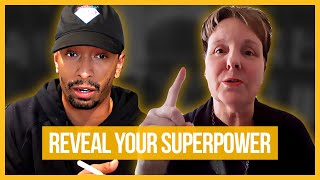
Interview between Kevin "KD" Dorsey and Heidi Solomon-Orlick about women in sales. Heidi emphasizes women's natural strengths—storytelling, empathy, listening, descriptive language—and coaches women to lean into their authentic selves by unpacking pivotal life moments and leveraging personality strengths. She also addresses outreach to younger females via education (Girls Who Sell academy) to dispel myths about sales and uses tools like a personality-archetype quiz to show diverse personalities can succeed in sales.
Chapters
When you talk about, you know, emotion, I think that's another thing that I didn't mention, but I think women are very naturally good at is storytelling. For women who are already in sales, I really coach them to try to get in touch with their authentic self. And so I have to go through an education process to show them that is not the truth and start breaking down some of those myths that are barriers of why women don't go into sale.
I also then want to flip it to the flip side of like for, you know, male led teams and male leaders in the industry, what they can and should be doing to better support women in the industry. Because I agree, and I am on record saying this, that women are better at sales than men for a lot of the reasons that you've listed tend to be better listeners tend to be more empathetic. My personal favorite is they also tend to use more descriptive language. Truth, emotion. We all know this is hilarious, right? We know people make decisions emotionally. Descriptive language triggers emotion better. Right? Whereas males tend to be more a like 01 versus like descriptive language. Getting into the emotion behind the sales, I also think is very important. So let's go down the path of like, you know, to the women that are in sales right now or considering how do they lean in? Like how, how do they lean into some of these things? The listening, the empathy, the understanding, like how they lean into that more and really own that versus trying to evolve into something that they are not and should not be.
Yeah, I, I love, love that those are great questions. And when you talk about, you know, emotion, I think that's another thing that I didn't mention, but I think women are very naturally good at is storytelling. Right. And so, you know, I think when you're, when you, when you base your approach on telling stories, it does trigger that emotion and that, that, that results in a much stronger connection. Right? And, and listen, at the end of the day, we're in the people business and we're about connecting. So that is really important. You know, I'll take it into two routes because girls, so there's women who are already in sales, right? And then there are women who are not even aware that sales is a viable career option for them. So let me tackle the first, first thing first. You know, for women who are already in sales, I really, when I mentor them, I really coach them to try to get in touch with their authentic self. So what, what is it? That is their, that is their superpower and an exercise that I take women through a lot as I'm coaching them or mentoring them is to begin unpacking or taking a look at some of the pivotal, pivotal moments in your life. And they can be big, massive, big decision moments of, you know, do I keep dating the guy that I'm dating or do I break up with him and marry this other person or whatever, right? Like big moments or a death in the family or, you know, like there's big things that happen and those transformational moments and crossroads in your life, you make decisions, right? And then there's micro moments along the way, right, that happen, have an impact and beginning to take a look at what decisions that you made at those moments and how do you leverage that as your superpower. So, you know, I'll, I'll give you an example, right. For me, when I was 12, so I grew up in a, in a family where, you know, we didn't talk about our emotions very much, right? And it was a time, think about the 19, early, late 1950s, early 1960s, when I was, you know, 12 years old. And moms and dads didn't argue in front of their children, right? They argued behind closed doors. And this was an evening where my mother and father were. Gotten a huge bite and I, it woke me up and I was sitting in front of their bedroom doors listening to them argue. And my dad subsequently walked out of the door and looked at me and said, I just can't take it anymore. I am out of here, right? I am out. Goodbye. And left. And my mom looked at me and said, you know, Heidi, I just want to tell you, if you learn one thing, never rely 100% on a man and always have your own money. And she went in and slammed her door. Now I'm 12, right?
That's heavy.
What do I do with this? So it's probably no surprise that I entered into a career where I could have financial independence. It's probably no surprise that I married a man that ended up being a stay at home dad and I was the primary breadwinner. And it's probably no surprise that I now run a company that teaches women how to have financial independence, right? So that's an example of pivotal moments. But how did that serve me, right? Because some of these things, you know, and maybe I went down into a completely different rabbit hole and didn't answer your questions. But when I, when I was talking, when I talk to women, I try to have them get in touch with some of these moments and what is serving them well and, and what is not serving them well? Because sometimes Your superpower can also be your biggest detriment. Right. You know, I'm really good at process, but sometimes I'm too process oriented and I don't have the ability to think out of the box. That's an example. So it's like it's your superpower. And then how do you, how do you utilize that and leverage that as a part of the sales process so that you can be successful? So those are some of the things that, you know, I help coach women with. And whenever I hear, you know, I feel like I have to be more like a man or, you know, I see women making those decisions. I really try to guide them and lead them down, getting in touch with their femininity and their innate skills as a female. So that sort of answered the question one. Then there's, you know, okay, working with like at girls who sell, we work with mostly college age young women now, but also also high school women and we've even started getting younger KD. So even positioning sales, you know, with 10 year olds and 12 year olds, you know, because they, they're not even aware that sales is a viable career alternative for them. And what I, what I hear a lot from these young women is one, sales is awful. It's icky. You know, you have to, you, all you do is spend your time, you know, selling people things that they don't need. And so I have to go through an education process to show them that that is not the truth and start breaking down some of those myths. And that are barriers of why women don't go into sales. Right? So that's the first thing. But then the second thing I hear is, okay, well maybe sales is cool, but I don't have the personality for it. And so I asked them, what does that look like for you? Like, what does that mean? What personality do you think you need to have in sales to be successful? And then I take them through. You know, we have a personality archetype quiz in our Girls who Sell academy that helps them frame that. And to turn it, they're like, well, I'm shy or I'm introverted or I'm, I'm, you know, I'm analytic. And I'm like, yes, you are. And guess what? That is your superpower. That is exactly why you're going to be successful in sales. And there are so many different directions that you can take your sales career and leverage that and you know, to be, to be successful.