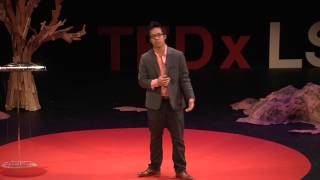
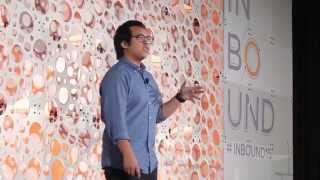
In this TEDx talk, Kenny Nguyen explores the power of the word “no” as a protective tool rather than merely a rejection. He begins with childhood memories of hearing “no” from parents and how those denials, though frustrating, kept him safe. A vivid anecdote about running barefoot against his father’s rule illustrates how “no” can prevent harm. Nguyen then reframes “no” as a shield that balances the “swords” of yes, arguing that most people over‑use yes and under‑use no, which can lead to short‑term gratification at the expense of long‑term growth. He cites historical figures like Nelson Mandela, Martin Luther King, and Steve Jobs to show that successful people also practice selective refusal. The centerpiece of the talk is his own startup experience: an invitation to appear on Shark Tank. Despite excitement, his gut repeatedly whispered “no.” After consulting a mentor, he realized the opportunity conflicted with his company’s core values, so he declined. This decision taught him that listening to intuition and saying no at the right moments protects future opportunities. Nguyen concludes by urging the audience to view each “no” as a choice between closing a door and opening a better one, encouraging them to develop their gut feeling and use the shield of no wisely.
Chapters
Kenny Nguyen. So when you're young, you always want to do the craziest things. You just wanted to have fun. But when you're young, there's a word that literally ruins your day. It's a word that you never wanted to hear, and it's a word that meant doom, destruction in the mind of a toddler, and it's only two letters. And it's only two letters, yet so powerful. And that word is the word "no." "Can I have some more candy?" "No." "Can I go out and hang out with my friends on a school night?" "No." "Can I go to school dressed as Batman?" "No." And you remember growing up, and you associate the word "no" with rejection and denial, and you got so mad at your parents. You went right upstairs, got 2 toys, 2 bags, packed it up and said, "You know what? I'm moving out. I know what I want to do. This is what I'm gonna do. You don't know what's fun." Here's the thing, though. You're young, and you're unaware. And while you're young and unaware, your parents actually act as your conscience. Why can't you have candy? Because it's going to make your stomach hurt. Why can't you go hang out with your friends on school night? Because you have to study. And now, why can't you wear your Batman costume to school? Because being a superhero is a full-time job. And the thing is though, as you grow up, you start to understand what the word "no" means. You learn that the word "no" means "to reject." But my argument today isn't about rejection. It's about utilizing the power of the word "no" to grow. Because it's not only as important to know how to say "no," but to understand when and why to say no, to pave the way for future opportunities in the long term, in terms of the short term. Now, when you're young, having fun is about 90% on your agenda. So it normally takes very specific and harsh instances where you learn that maybe no was the better choice. When I was 5 years old, my father used to tell me all the time, "Never go outside without your shoes." And it was such a weird thing because I see all my friends go running outside, playing, doing all their little things without their shoes on, and they're having so much fun. I'm thinking to myself, "Why can't I go have fun like that? Why am I sitting in the house with sandals on? I want to go out and have fun." And so being the rebellious young person that I was, I thought to myself, "You know what? I'm going to go out without my shoes on." And so I waited for a Saturday morning. And my dad was sleeping, and I got out of bed, tiptoed straight out, looked around, and just dashed without my shoes. And I ran for 10 minutes through mud, through everything you can imagine, like on the sidewalk, and I felt the air go between my toes. It was so liberating. And I was thinking to myself, "Wow, my dad does not want me to have fun. I'm totally fine. Like, I can't wait to go back." and tell him, "You know what, Dad? You are so wrong. I am having the time of my life." But as I was running back, I stepped on a rock, right into my foot. Blood's gushing out. I'm thinking to myself, "Oh crap. Not only am I in pain, I'm going to be even in more pain when my dad finds out. So I'm probably going to have to do something and hide this." And so, getting back to the house, I tiptoed right back. As my luck would have it, right when I opened the door, my dad is standing right there, looking right down at me. And I'm like, oh my God. And he looks very calm. He looks straight down. Doesn't look at my face. Looks straight at my feet and said— and he knows the answer— son, did you go outside without your shoes on? And I looked at him and said, no. And he said to me, go in the other room and get all the pieces of paper you possibly can. I was like, why? He's like, go and get all the pieces you possibly can. And so I went in the other room, got all the pieces of paper I possibly could, and brought it in. And he said, now get a pen. I was like, oh, God. I think I know what's about to happen. He said, get a pen. So I got the pen. He said, write down 200 times that I will not go outside without my shoes on. And keep in mind, I'm having a bloody foot right now. And he looked at me and actually said, "How's your foot?" I'm like, "It hurts, but it's gonna be fine." He's like, "Good, now start riding." So that's how I spent my Saturday morning, in pain and realizing in retrospect, maybe no was the much better option. And I've had so many instances in my life now where whether in hindsight or in the beginning, no was meant to protect me. And I realized that later. And because the word no is essentially a way to combat the dangers of the word yes. And today, I want you to think of something very differently when it comes to the word "no." I want you to think of the word "no" as a protective shield in compliments to the swords of "yes." And here's the thing though, there are so many of those who wield the swords of "yes," but so few wield the shield of "no." Because no one wants to wield the shield of "no" if they have to think they have to reject someone because the word literally means "no." to reject. No one wants to reject a loved one, a friend, or even be rejected themselves. Yet, for some reason, there are so many yes-men out there. Yet, you think to yourself, are the world's most successful people yes-men? Do you think public figures like Nelson Mandela, Martin Luther King, and Steve Jobs said yes to every opportunity thrown their way? Steve Jobs actually said, "I'm just as proud of the things that I haven't done as the things I have done." And at Big Fish Presentations, we faced a very similar situation where months ago, we got an amazing offer to be on a show called Shark Tank. And for those of y'all that don't know the show Shark Tank, it's a reality TV show where you go on the show and pitch to a panel of celebrity investors and The marketing itself is worth hundreds of thousands of dollars. But in return for pitching to investors, they potentially can give you X amount of dollars for X amount of your company. And it was literally one of the coolest things you can imagine being even asked on the show, considering we're a young startup. And I remember being so stoked. But something in my heart said, don't do it. But, you know, I'm like, whatever, you know. I'm not gonna listen to it. And so we went through the first round. Of interviews. Second batch of interviews came around, and the noise started coming from my heart even louder and said, "No, Kenny Nguyen Nguyen Nguyen, don't do it." But once again, I was thinking about the money, and so I didn't listen to the voice. And altogether, the voice stopped. And so, with the third and final round of revisions coming around, that's when the voice didn't appear, and I was so excited because I remember taking my team out that day to lunch, knowing that later that day we'll have a phone conversation with the executive producers on accepting our bid to go to Los Angeles to film the show. And we were having so much fun. And we're just chatting, saying what we're going to do in LA, what are we going to do with all the money we're going to get, what are we going to do with publicity, how's it feel like to be a celebrity entrepreneur? It was literally so exhilarating. But then I got a call while at lunch. That changed my life. I stepped outside, took the call, and it was one of my mentors. She said, "Kenny, what does your heart tell you to do?" Because she could tell in my voice I wasn't confident in my decision. Something started ringing in me. I didn't say anything back, and she asked again, "Kenny, what does your heart tell you to do?" And that's when I realized something. My heart was screaming out for me, and I didn't listen to it. I sacrificed my ethics as an entrepreneur of rather building the company rather than chasing the money, and that's not what I built our company on. And you can imagine how I felt to walk back in. I know several members of my team members are here today. They remember how grim my face was as I walked in and said, "Guys, we're not gonna go on the show." But yet, while you might think that's a loss, there is a method to the madness. And there was a lesson taught to me that money can never buy. And that lesson was following your gut feeling. And here's the thing. So many times do we take the swords of yes, slashing right through the opportunities of life, crushing right through. That we sometimes realize some obstacles we just can't cut. When do you use your shield to protect you? And that's the trick. When to use your sword versus your shield. And you can learn and develop that by developing your gut feeling. And you learn to develop your gut feeling by turning down big opportunities in the short term for even bigger opportunities in the long term. Because for so long, it's a sword of yes being globalized. Everyone loves saying yes. But here's the thing, the shield of no, no one gives it due credit. Yet if you think about it, how many times have you said no to the right things where you evolved as a person, where you grew yourself as a person? Probably lots and lots of times. And so, my challenge to you today is this: the next time you say "no," think about, "Am I closing the door on something, or am I opening the door for some new opportunities?" Thank you very much.