Episode 31: Kevin Hartz - General Partner at A* Capital
Kevin Hartz, cofounder of Eventbrite and now general partner at A Capital, talks about his path from a personal crisis after Oxford into product management, founding Eventbrite with his then-fiancée Julia, and his investment approach focused on founder talent over sector. He credits mentors like Roelof Botha and his Stanford network tied to Peter Thiel and Reid Hoffman.
Chapters
This week on Generating Alpha, I'm joined none other than Kevin Hart, co founder of Eventbrite, co founder of Zoom and general partner at astar. An entrepreneur and early stage investor, Kevin has backed category defining companies like Airbnb, Pinterest and uber while building two startups from idea to IPO. His career spans the early PayPal days, pioneering digital remittances with Zoom and transforming live events with Eventbrite. Over the last two decades, Kevin has navigated nearly every stage of the startup journey from IDEA to ipo, from seed checks to billion dollar valuations. He's worked alongside some of Silicon Valley's most influential figures, learned from legendary mentors, and built a reputation for spotting brick out founders before the rest of the world catches on. In our conversation, we cover how early political contrast shaped his contrarian streak and his time at Stanford, building an early social networking platform while connecting him with future PayPal leaders. We discussed lessons from his mentors, the personal crisis that redirected his career founding Zoom and Eventbrite, and his investment philosophy at a star. I really enjoyed making this episode and I hope you guys enjoy listening. If you haven't already, I'd urge you to follow the podcast on Spotify and subscribe to the channel on YouTube. Thank you. Thanks Kevin for coming on. I really appreciate it.
My pleasure. Thank you. Amir.
I'd like to start where I always begin. Let's talk a little bit about your childhood and kind of your upbringing. So if I understand correctly, you grew up in a small town around the Bay Area and then you also spent some time in Miami in your childhood. So give me a little bit of background. What was your childhood like? What was your upbringing like?
Yeah, ideal childhood, very lucky, very fortunate to be kind of born in upper middle class, waspy neighborhood in Orinda, California, which is in the East Bay of the Bay Area, the South Bay being the famous Silicon Valley. I was kind of peripheral to that for, for just four or five years. Family went off, my dad took a job with a bank in Miami. My father's a retired attorney. He was general counsel for this bank for, for a few years. Great place to be a kid at, you know, first grade through fourth, fifth grade, it's sunny all the time, warm weather, the beach and, and we came back and you know, eventually I went to college but didn't go very far. Went to the South Bay to Stanford. So that proximity, I, I'd say, you know, how there, that, you know, maybe there's, there's some luck and fortune in everything. Is that going to Stanford grew up, right, Or I went to university. Right. In kind of ground zero of all this exciting innovation that was happening.
And if I understand correctly, Orinda was a very Republican town during your kind of childhood and you guys were the only Democrats, right?
Yeah, it was, it was a good research there, Amir. We, you know, we kind of call it like Orange, inland Orange county of sorts, after Orange county in Southern California. Like, it was, it was very Republican. And we were, you know, we joked about being the token Democrats, you know, out in town. The irony is that I was out visiting just somewhat recently and there was a Trump protest. And now apparently most rituals are Democrats and it's sort of flipped. So I don't know it, you know, I, I guess maybe we were early adopters or something.
Do you think kind of growing up in that environment helped you kind of adopt a contrarian mindset or was it just, you know.
Yeah, you know, I think like while Arunda had these like, very kind of wonderful, like institutions, they were also very, you know, kind of very traditional. And so it, it made it easy for me to kind of rebel against that. And I don't know, my friends used to say I was kind of a rebel without a cause, like in a tongue in cheek way. But I think that's. That's right. But I mean, I'm full of contradictions. On the one hand, I was an Eagle Scout. I, you know, went through and did these things and crossed old ladies across the street and things of that nature. But on the other hand, wanted to kind of shake up a lot of things.
Do you see those contradictions in your investing today?
You know, very, very much so. I mean it. What immediately comes to mind, of course, is, is defense tech. You know, we're building weapons. And, you know, that's, that's a pretty heavy burden, something to be mindful of and something, you know, I could talk at, at length about. And, you know, maybe that really contradicts more of a pacifist mentality I have. But, but we could go on and on.
So you said you love school, you go off to Stanford and there you build kind of an early Facebook like platform. Just tell me about your experience there being in Stanford. If I understand you met a lot of these incredible people and the student government there's. And what were the core lessons or principles you took away from that experience?
Right. So Stanford at that time in the late 80s, early 90s, was this sort of hotbed. It was really this sort of murmur before, like the storm of this day, before the kind of Massive storm of DEI and, and don't get me wrong, I mean, I think I should just point out I've grown far more conservative today over these years and especially with how the country has, has transformed. You know, I, I think there's a well known quote attributed to a Prime Minister of England that, you know, if my child was 18 and conservative, I'd call him heartless, but if he were 50 and not conservative, I'd call them brainless. And the notion there is, you kind of see the pragmatism of life and what, and how things are done. And I've certainly moved that way. But where I'm going with this is there's been a lot of like sort of radicalization of, of liberal ideals. You know, you would say, you would say, for example, you know, the, the treatment of Israel by the far left as, you know, imperial colonists, you know, is, is, is one of these. And there's been action, you know, in the current administration to try to shake this out of, of, of the, of universities. That's what they're trying to, to get at. Whether the right direction or not. A lot of these like kind of liberal ideals have kind of gone too far. This all kind of began in the late 80s, early 90s where it was the beginning of affirmative action. And Peter Thiel came to campus in the late 80s and created the Stanford Review to speak out against this, speak out against the attempted changes against the Western civilization track at Stanford that was, there was pressure to overhaul that and it really was a reflection, it was like a warm up or duress rehearsal. What came, you know, just over the last five, you know, five to 10 years was like a radical changes in things that we have, you know, went through there. That's where I first met Peter. Reid Hoffman was there, Keith Ravois and many other David Sachs and many others.
So Peter Thiel, Keith Ravoise, David Sacks, Reid Hoffman. How important would you say that peer group was to kind of your, in shaping your ambitions and overall your career trajectory?
Well, it turned out to be incredibly important, you know, in, in that when I tended to get involved or engaged with projects around, you know, this, this group. And, and Peter, you know, amazing things happened and you know, I don't think anyone would have realized the massive historical impact that that group, you know, really has had on technology, on society, on, on thinking. And so, you know, I think like when, if there's any lesson about this, when you see these really extraordinary people kind of sitting close to them and learning from them and being a part of that is is a really good idea. I'll say. I was fortunate to get involved in PayPal as an angel and then started a company building on the PayPal API. The first developer on the PayPal API. That company went public and was acquired by PayPal and started Eventbrite, also at the time on the PayPal API. So those were my attempts to kind of stay close to these talented people.
And alongside of Peter Thiel, you've cited Pierre Le Monde and Roloff Botha as kind of your key mentors. What are each of them like, how would you describe each of them and what type of advice or guidance do you go to each of them for?
Well, Piers extraordinary. He's in his late 90s, still sharp as a attack and he was, he was the co founder of National Semiconductor, he's a physicist and you know, chip specialist. And then turned Sequoia partner with Don Valentine, longtime Sequoia partner. And you know, Pierre's just whip smart and then has a lot of kind of understanding of how the businesses work. So he just intuitively, you know, can tell you from experience which door number to go to. You know, as a, as a CEO, he would always have me make my own recommendation and then challenge that, you know, with different options. But you know, the pattern recognition in PR is just extraordinary.
And what would you say about Peter and Roloff?
Roloff, you know, Roloff was on both the boards of Zoom, the money remittance business and Eventbrite, you know, for almost two decades. And Roelof is just somebody who can solve a problem in a very creative manner. I mean, of course he's like a calculator. He was an actuary originally out of university, but, but yeah, his creative problem solving and then seeing his investing is, is like second to none. But he was always somebody that I could have a conversation with and help me find a solution to a very, to very, very hard problems.
So you go to Stanford and then if I understand correctly, you go off to school in England and then after that you describe yourself as going through a personal crisis of meaning. What do you think triggered that crisis and how did you kind of work through an emergement?
Well, I think I, you know, in like at Stanford and Oxford just took things that were of interest to me, not that would have a bearing directly on, you know, like my trade or what I'd be doing the rest of my life. So I came out of Oxford with a master's in history and figured well, maybe I should just apply to law school, take the LSATs and go that direction or I also had interned in a neuro lab and was considering the med school route, but I was basically like kind of at a crossroads and not sure the right direction what to do. And then again, maybe you call it dumb luck, but this was right as the first Internet boom was happening. And right in the midst of that, I was looking for something that would challenge me, that would have a high degree of intellectual rigor that I could learn every day from. And you know, very, in a very fortunate manner that teased tech technology right up to me. So I went to Silicon Graphics and became a product manager.
And your first major entrepreneurial endeavor was Zoom. What was kind of the initial insight that led to it and how did it eventually take shape or the early days like.
Yeah, great question. It was, it was something Mike Moore said. I had been meeting with him the day that PayPal went public and he said that, you know, first PayPal is only in like the second or third inning and then second that a great company will create industries upon industries. Now it looks like Stripe is that one doing that. That's the massive fintech winner. And so I went to work with my partner Alan Braverman to launch, to launch the remittance business. We actually were experimenting around like much what you see today is that here we had a payments API that we're building different payment apps on top of today. You know, you build different apps on top of, of open AI. Not, not very different at all. It's the same context.
How do you think that kind of experience not only shaped your development as a founder, but what's also one thing you understand now that you wish you understood then?
Well, I think it's always perseverance. You know, perhaps we, we should have kept Zoom independent. It was a great exit. But you know, a lot of the small players in the market at the time that were far behind us, you know, are now doing multi billions in net revenue. I mean it's staggering how big the remittance market has, has grown to. And you know, persevering and just keeping going is, is always hard year in and year out. So that's, that's certainly one that's like universal lesson here. Look for a big market and steer towards it.
So your second major entrepreneurial endeavor was Eventbrite and you co founded it while engaged to your wife. And starting a company with your partner is very unusual. I can't think of anyone else I know who's, who's done that. What made you confident you could grow A business together?
Well, we, we kind of tested it out. We, you know, just went upon building the business and day in and day out would, would kind of stop and check in and see, you know, is there friction? Is there conflict? Is something awry? And you know, we just said, no, you know, things are working great. Let's keep keep moving along. And it was, it's, it was like maybe the most rewarding experience of, of my career and lifetime in general. I think it was so fun building and going through that early stage, rapid growth phase with Julia.
I want to shift a little bit to talk about your current endeavor, which is a star, and talk a little bit about the investment philosophy. What lessons from Zoom Eventbrite. But then also you were a partner at Founders Fund for some time, kind of shaped your investment philosophy right now. And how would you describe it?
Yeah, there's, there's lots of different methodologies around investing and you know, a star is really an amalgamation of all the things I've learned from the Sequoias, the Founders Funds and just from meeting and getting to be, to work with so many great founders over the years. So I would say in the case of Astar, we're very talent focused. We are. It's immaterial, practically immaterial what category of business it is. It could be almost any business if you're an extraordinary founder. You know, we want to be in that, that seat and the notion there is the brightest people, find the biggest opportunities and, and capitalize on them and, and they usually are opportunities that are overlooked and kind of cast aside and give that founder some time to build in kind of solitude in a sense, you know, and that's just like a lesson, you know, that's, that's held true. We backed ABHI is this kid out of Yale and he's building General Biological. It's an industrial biotech business that is incredibly out of favor with the investment community. And there was a kind of first generation of these that, that the majority of them didn't make it. We see why the why now matters and works now and then. His ability and resourcefulness is extraordinary. So we found ourselves in this market not because we wanted that narrative or we thought it sounded sexy or it was good for the environment, but because these extraordinary.
I want to shift back to PayPal for a minute because kind of talking about people and talent, you weren't necessarily at PayPal or part of the pearl mafia, but you were kind of alongside it, which I think is a very interesting perspective. So from your vantage point, what made not only PayPal but the people inside of it. So successful.
People special is that Peter had a special opportunity to recruit far in advance of, of, you know, the creation and recruiting of PayPal itself. While at Stanford. He found all these brilliant misfits and put them through the ringer Keith and David, and then read on the more liberal side, but was able to see all these and understand all these contrarian thinkers. And so when he founded PayPal with Max Levchin, and that was the other key piece is finding a relentlessly driven Max. Max is phenomenal from uiuc. At the time it was the top school for CS and so associated with the Internet and Mozilla and so on. They really shouldn't have been not so nice to Mark Andreessen. That hurt them quite a bit. But that combo was amazing. And then Peter's.
Let'S say you're talking to me right now and I'm a founder and you're looking to back me per se. What are the kind of common questions you ask or what are some unique questions you ask when speaking with the founder and what are the general things you look for out of those questions?
You know, I like to say it's not an employment interviewed, and so you're not restricted by law in California to questions. And so I can ask about your family. I can ask, I want to find out, you know, what made you. You like, you know, you're in, in high school and you're spending your time like doing this on the side and learning. So, like, where did this from? Where did this desire come from? Like, what are your parents, professions? Do you have siblings? Like, what are your siblings doing? And you can often look for these signs, you know, of like, competitiveness, of drive, grit, and those are the things that we're all trying to figure out. You have to make and very short amount of time for many millions of dollars.
You've worked in partnerships. Both of your kind of bigger entrepreneurial endeavors were partnerships, and you've worked in partnerships throughout your career. Do you prefer to back companies with co founders?
I do. I'm not as strict about it as, you know, say yc and I would imagine yc, I meant to ask Harge the other day, I wonder if they're, they're going to move away from it. This, you know, we don't back single founders. It is hard to do this on your own. And I think very important to have a partner and somebody that's got your back and somebody that's going to help balance you out and get you through the hard times. So, you know, we prefer it, but it's, you know, it's not a rule. Like, Ethan Thornton, the founder of Mock Industries, is a solo founder and he's incredible. And yeah, I back him 100 times over, like, and he's doing it entirely on his own. He started at age 19, dropped out freshman year from MIT to, to build this defense tech business. And you know, I, he, he's relentless.
When meeting with a person. And you kind of mentioned you like to learn about, not necessarily the company, but first kind of the person learning about their background, their family, all that kind of stuff. How fast do you generally know if this is someone you want to back or not?
Oh, gosh, I'd say before 10 minutes in. Yeah, it just really shines through kind of out the gates. So it's not to say there's like the quieter, like softer spoken super talent. You know, I put Ben Silverman there as like a quieter force that's not banging his fist or super energized, but an absolute brilliant product person.
And I have one more question about kind of venture before we go into some, a little bit of perspective and some advice. What do you think is the most overrated trait investors look for in founders and what's the most underrated.
Overrated trait in founders? What would be that? What would be an overrated trade? I don't know if I have a good answer for that. That's so interesting. I don't want to, I mean, I, you know, I'm, You know what? I, I think I would, I would say, like, it is a great benefit to be, to have an engineering background, you know, but some investors still only require it. And some of the best founders of our time don't have engineering backgrounds or in tech. In the olden days, that was much more set in stone. You had to be, you know, an engineer to be, to set foot in the room for it.
What's the most underrated?
I mean, I, you know, I think underrated wise. I, I don't, I don't see investors talking as much about how a relentless founder who keeps going and keeps pushing forward, pushing forward really has the, the right, you know, effect here. I'm not in perplexity, but I just, just reading the Wall Street Journal before this, and he's trying to buy Chrome for 34.7 billion, 34.5 billion. And he is just like a, he's relentless, you know, and is. And he's in a competitive space, a very competitive space with some big players and, and he's, he's a relentless example.
And actually how I heard your name, an example of a relentless founder is my friend Patrick o'. Shaughness. He owns the podcast and Best, like the Best and Ram, Tim Naimi was on there and he seems like a relentless person. And he, I mean, went bankrupt I think at 26 and now he, he runs Abstract and he mentioned you as one of his kind of mentors, someone that's guided him along the way. So I think it's an example. I want to move on to a little bit of a perspective question before going into a little bit of advice, but what. It's a very broad question and you can break this down how you want, but which industries or technologies do you think will have the biggest impact on the world in the next decade?
I generally try not to make predictions. I like, tend to follow the evidence because it always surprises us. You know, like I, I don't think anyone except for Elon saw like what was going to happen with space and in, in that direction or, or even electric cars. You know, I hope it's around energy. I, I hope it's around fusion, you know, that we find inexpensive, plentiful source. So that's really where there's more investments in a lot of bright people out there. We're small investors in a company called Fuse and that's where our bet is. But we hope that big problem gets solved. It's almost critical for humanity.
What impact do you ultimately hope to have on the world?
Well, I, I want to keep building and helping founders build great businesses that, and those businesses can have a really terrific impact on, on lives. You know, I was a little disillusioned. You know, I came out of Stanford excited around politics and I mean we all see what happens. Things go one way, then they flip back the other and they, you know, you sometimes just make no forward progress. But when you can build and improve the lives of others. In the case of Zoom, the money remittance business, it was an industry that was really backward. It was run by two kind of oligopolies, Western Union money grant and they were policing immigrants. And we changed that and the market's very different today where we are.
This is one last question. I like to have every single guest. So I'm 15. If you to give one piece of advice to a 15 year old today, what would it be?
One piece of advice would be keep looking for what, where you find the most intellectual curiosity and passion and just keep following towards that. And then I'm going to say two. Here's the second one is to find your own Peter Thiel. Like, you know, where. Where are those. You know, where are those folks out there?
Well, it's been a pleasure, Kevin. Thank you for coming on. I really appreciate it. I hope you enjoyed it.
Thanks, Amir. Great to meet you. Great.
More from Kevin

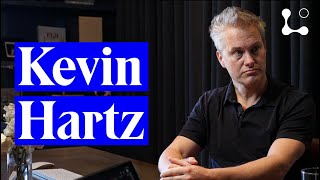
Kevin Hartz, Co-Founder of Eventbrite, scaling online ticketing & new autonomous security at Sauron!
Kevin Hartz: "How I Lost Airbnb at Seed Because of an Exploding Term Sheet" | E1180
Kevin Hartz: "How I Lost Airbnb at Seed Because of an Exploding Term Sheet" | E1180