Kevin Hartz, Co-Founder of Eventbrite, scaling online ticketing & new autonomous security at Sauron!
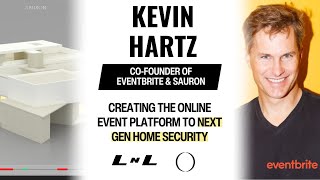
This content was created by Kevin Hartz. This content was uploaded by Kevin Hartz. This is a YouTube interview titled "Kevin Hartz, Co-Founder of Eventbrite, scaling online ticketing & new autonomous security at Sauron!" (posted March 29, 2025). It's a conversational interview hosted by Ben with Kevin Hartz as the guest. The discussion traces Hartz's career—from early work enabling hotel Internet access, seed investing in PayPal, founding remittance and payment services, and co-founding Eventbrite (product, marketplace dynamics, discovery and revenue model)—to his current startup Sauron, which builds a sensor-based, autonomous home-security platform (perimeter sensors, deterrence pods, computer vision, lidar, integration with law enforcement, and a strong stance on using facial recognition/private-property data). The conversation also touches on co‑founders (Julia, Renaud), angel/seed investing (including early Airbnb), product/market fit, go‑to‑market strategy (starting high-end then scaling), and technical inspirations from self‑driving/robotics.
Chapters
Okay, so we have a new episode of Legends and Leaders and today it's great to have Kevin here. Kevin, you're somebody that's been behind, I mean, so many different incredible businesses. I mean Eventbrite is one a lot of people talk about, but you were one of the main influence, main people behind establishing how payments work internationally today with the company that was bought by PayPal. You even early on were helping with hotels get high speed Internet access. I mean that was like early in the Internet era and today now you're looking at the way homes are and securing them and building on a platform there. So always been on the cutting edge and I'm excited to have you here and to get into your story.
Thanks Ben. Great to be here. I'm excited to talk about it.
Awesome. So let's just go back to the beginning. Like how did your passion for entrepreneurship, building businesses, your interest in doing that kind of around technology, how did that start?
It really started. I was thinking about, I came out of graduate school and had no idea what to do. I was so I sort of lost. And I was working in a research lab considering medical school and the research lab happened to be a Unix lab. We had Unix systems in there. And you know, it was the time of the first rise of, you know, the initial rise of the Internet in the mid late 90s. And you know, how could you not be just swept off your feet?
So that was just really interesting. You're like, I got to build something in this area.
Yeah. I think when you kind of see and imagine the possibilities, it's exciting. It's just like today of thinking about generative AI and what you can do building on top of OpenAI or anthropic. The platform there was then was the World Wide Web and Netscape or Mosaic prior to it, then Netscape, the browser that Mark Andreessen created.
So one of your earlier businesses was this, you know, focusing on high speed Internet access for hotels. You also were involved, I think as a product manager in a different company beforehand. So why was the, why was this kind of an area of like Internet access that you were focused on initially entirely?
Because some friends from Stanford had, were starting this business and invited me on as a co founder and I made the jump. They had a relationship with a Hyatt general manager and owner down the peninsula. And you know, this is still in the days where there was no Internet access in hotels at all. And we were outfitting rooms, you know, kind of very inexpensively and kind of creatively with high speed Internet access. I don't talk about that a lot because it's just, you know, if you add up all the things I've done, it, you know, it's like I'm, you know, 75 years old or something.
So you were, you mean, like you said, creatively giving Internet access? What does that really mean?
Well, you know, these hotels primarily have sort of antiquated infrastructure, telecom infrastructure. And so we were trying to pass, you know, high speed access over standard phone lines and using high pass, low pass filters and other techniques to, you know, to retrofit these, these kind of these rooms like that. That was the infrastructure back then. It was like copper. Wow.
Very different.
Yes. I should tell some story about, you know, using a sewing machine as well, but yeah, really did.
So that lasted for, for a bit. You eventually decided to go into the remittance space and just overall, like the international payments area. What drew you to that?
When brilliant people suggest something to you that's, you know, kind of profoundly big, it's a good idea to listen. Like, I've made enough mistakes of not doing that so many times, but I was involved in PayPal, like the, the high speed Internet access business was acquired. It was, it was acquired by a company called lodgenet, which is a public company. And it wasn't anything for us to retire on, but it was enough to get me excited and give me some financial freedom in my 20s to actually, you know, keep at it. And Peter came back out to the valley from he was trading derivatives and met up with Max levin and started PayPal. And I was a seed investor in PayPal. And as PayPal was growing, it was a hundred percent, you know, of course, merchant processing and 100% on eBay. So they had this ebay concentration problem, which is, you know, great, like starting a small market to get to a big market. They were doing all the processing on ebay, but they had such a crazy reliance. And my business partner Alan and I went in to sit down with Peter and Roloff and ask and talk to them about how we could help in a kind of mutually beneficial way, wean them off, get them in new areas of payment processing. And Peter suggested remittance roll off, chimed in, very excited. And as we dug into the market, it's a massive market that had been primarily dominated by Western Union. Western Union is this usurious, horrible monopoly that fleeces poor immigrants. You know, in some quarters you're paying 20% fees, so think about that. You send, you know, a $200 transaction to your, to your family back in the Philippines or in the Dominican Republic. And you're paying, you know, on that 200, you're paying $40. So we. This is what the Internet and this is what disruption brings. And we built. We launched Zoom X O M. And between the time that Peter and Roelof told us about that or had talked about us getting into the remittance business, eBay ended up buying PayPal. And Peter and Roloff are right out there. Roloff went to Sequoia, Peter went and started investing off. Investing off his own balance sheet. And Peter was our seed investor in Zoom and Ruloff now at Sequoia, along with the senior partner, Pierre Le Monde. We're our partners at Sequoia for our Series A.
How did you guys build this technology? Because was there anything even like it at the time to do this over the Internet?
Well, you know, like, a lot of this is. You look for kind of like things happening elsewhere and apply it there. So in the case of PayPal, they had a major fraud problem, which Max was in his team were brilliant at battling. That was merchant processing fraud. Very different from remittance fraud. And so, you know, we went to work and kind of modeled it somewhat on PayPal, of how, you know, you have fraud. You have the fraud engineering team or analytic team that that kind of creates the algorithms and tests the algorithms and screens transactions, and you have the fraud ops team that goes through and. And determines if it's fraud or not fraud. You know, so that structure is there, but you have to come up with your own way of solving it for your own business. And that. That makes it just very fun. And, you know, the other side was very inspirational, was that PayPal popped so quickly into profitability, like at a pace you just normally don't see. I think they had something like negative gross margins, you know, a few quarters before, then popped into really high gross margins because they were able to have users do this instant transfer product that didn't require the credit card Rails, and we replicated a version of that for remittance. And so all of a sudden we could send, you know, we could send money via ACH and have it delivered immediately and not use the credit card Rails, which is costly. And then what that meant is Zoom gave consumers a great choice. Faster, better, better, far better rates. And we were able to make great money and still be able to be much, much lower in cost than the monopolists, the former monopolists, they took a beating.
So when you were building this, I mean, you got to a point Where, I mean, there was a great amount of skill here, of course. Did you meet Julie already at that point and were you thinking about Eventbrite already?
We, yes and yes. Like, I met Julia at a wedding in Santa Barbara and she was, she's the one. And we, you know, she came up, we got engaged while I was still working at, at Zoom. But as I, we brought in a kind of professional CEO, which is something they used to do in the olden days. And I stepped up or moved to the board and Julia was in television entertainment. She was at MTV Networks in, you know, series, like developing series and including Jackass. It's like, how could you not fall in love with somebody who works on Jackass and is as lovely and wonderful as Julia? And you know, I said like, hey, I'm, I don't have a job right now and you're looking to try to get into television and there's not much of this going on here in Northern California. Let's like work on something together. And you know what we had done when, when Alan and I had started Zoom, we had built a, like, I, I think it was just over like a couple weeks. We built a bunch of raw kind of prototype payment apps and we were, we prototyped something that was like an event creation tool. And you know, that's done very often like this is very important actually because, you know, if you're working with a business partner, working on your own business experiment, play if you don't yet have product market fit, try a bunch of things because I can't tell you how many great companies I've met where they, they said like, why created five different products and this one took off. And you know, in the first case it was really the remittance business that took off and it was like the most non obvious except that Peter and Roloff knew I guess so go figure. But you know, so there was something raw there. And so we started working on that aspect of it along with Renaud Visage, who is our third co founder based in Paris, France. And so we were kind of og, you know, kind of virtual company. We were working in a windowless phone closet for, with, you know, not having to pay rent with this awesome landlord who brought in all these like refugee startups that were in the, you know, survived the wake of the dot com crash. And Renault worked from just next to Notre Dame in Paris.
So you were thinking at the time that like, were you thinking events needed to be streamlined much more in terms of people finding them, accessing them and even Just the ticketing aspect of it, just offering tickets for events was that kind of like we need to build something to streamline this. There really isn't a solution for the Internet for tickets.
Absolutely. It was, you know, it's just, it was such an archaic thing. You know, you would, somebody would like, you would have like a red ticket, generic and someone rip it, you know, and just like, is this, this is not a commerce product? You know, like what's going on here? And we looked at the market and those, those wonderful monopolists at Live Nation, Ticketmaster had really tied up the top of the pyramid. So if you think about the ticket market, it's a pyramid and at the very top of the pyramid is the biggest events. You know, it's like the NFL or like the big concerts and so on and all the, you know, festivals and so on. We saw that locked up by the Live Nation, Ticketmaster, monopoly. So we went after everything below that because that's what the Internet is great at, is like this long tail kind of phenomenon is like whether you're, whether three people come to your event or 30,000 come to your event, it's the same product and it's no incremental costs. You know, whether you're three people or 30,000.
Yeah, I mean, I've been a big Eventbrite user. I think what it's done is it's enabled a lot of people to even just create events because they're confident that they can have a way to get the people in that they want to have in to have an easy to use ticketing service. And it's also like, you guys have done a great job with discovery. I mean, I go on, I search for events and I find all different types of things I never would have found without Eventbrite. When did like the Discovery piece become so important to the platform?
Well, the discovery piece happened because we just pushed so hard to make such a great experience for creators. So marketplaces form a lot of different ways. Like you spoke to the Doordash co founder and you know, and, and Doordash came about in a certain way. You know, is it supply driven or demand driven? In the case of Eventbrite, it was demand driven. We focused on getting creators on board. And when you would get to a certain critical mass in cities, you know, in a certain city you've got theater events and if you got, you know, DJ events and stuff for kids to do and just all these things you could never imagine, you all of a sudden had this like beautiful directory of like Very cool things to do. And we would spend an inordinate amount of time we would on, you know, on growth, but growth, not just like the hacking to get more users, but really just the, you know, like discovery side of it. Like, you know, making some of these events more visible, you know, given their interesting nature or so on.
Did you have to spend a lot of time, Kevin, like getting people to put events on the platform? Was it just. You spent some time on some initial ones and then there was this domino effect. A lot more people put them on and it kept growing.
Crazy domino effect. It's like, it's such a rush, you know, I like it almost like goosebumps thinking about when you start to see things move. You have your logs, admin logs, and this is a while back, so it was rudimentary. It was like papyrus and it's exciting to go to sleep and the next morning you open up, you look at the admin and you see all the transactions and events created and so on. So we spent a lot of time. The company operated as just three people for about two years and we were really bootstrapping. And so we just focused on this perfect kind of teamwork of Julia and I designing product and going out there and working on growth and coming up with product specs pre figma and then sending them over the transom to Renault, who then would, when he wakes up in. In Paris and, you know, cranks all this code out and pushes it out and then we're there, you know, to file bugs and iterate and rinse, wash and repeat. And, you know, those are like the good old days. Like, that's the fun, like, exciting part of a startup where it's just cranking and then you have customers that need this and that and end up upset and this is broken. And, you know, that's the fun part of the very exciting part of the startup.
Definitely sounds like it. But is today, like still the big revenue model? Like a piece of the ticket sales? Is that like the biggest thing or is it also like promoting events? Is how important is promoting events really? Or it's like, what is. What is the revenue model?
Great question. You know, it's. It's historically, it's always been ticket fees. We. I've always liked the model where you only take a transaction fee for a service provided. And I think that's lost in a lot of ways. And we've experimented with different things, but we keep coming back to this transaction fees, however, the promotional fees and so on, we do inordinate amount of promotion. We're one of the top sites on the Internet for SEO, for example, and we do all sorts of other techniques to ensure that your events are incredibly well displayed. However, there are additional things we can do. We can do paid ads in, in different mediums and so on for you. And so what we've. And that came not, you know, our. As our idea, but because our creators came to us and said, we want more. You know, let's get more, let's get more sales. And so it's a great thing that, you know, we're paid and we help promote. And then more tickets are sold, more transaction fees, and again, there's another virtuous cycle.
And all this time you're also investing in founders through a fund that you have. How are you managing both these two things?
Well, there were a few different. I mean, I was primarily an angel. There was a time, a few years, where Javad Karim, the co founder of YouTube and formerly at PayPal, Keith Robois, formerly a PayPal and friend from college, even though he looks so much older than me, and I had created an LLC and just invested off our own balance sheets and split everything three ways. That's how we invested in companies like Milo Jack Abraham's company that was acquired by ebay or Airbnb. We were part of the seed round. It was Sequoia and ourselves in that seed round. I think we were the only two investors. Besides, of course, YC was the first. That valuation was a 1.6 million pre, by the way. I have to pull a Jason Calcanis and like, kind of just throw that out there. Flex.
It's impressive.
Yeah, that's like, you know, it's hard to grok that because it's a 1.6 million pre. And then you think like, so they raised 1.6. No, that's the pre money valuation. That was the like valuations at the time. And one might think like, oh, it's so obvious. Why did that happen? But at the time it was ludicrous. Like it was, you know, this, this area had not matured. You did not see this type of commerce action and so on. So it's funny how things like Uber and Airbnb, you know, all seem very obvious in hindsight. Well, they weren't or everyone would have been in.
It was a couple guys with a nice air mattress and you're betting on them.
Yeah. Brian Joe, or still a force. Really incredible people.
So you've recently announced, Kevin, that you're working on something that I think is really exciting. You Want to build this like platform for the home that makes it really secure. It's like an operating system. It sounds futuristic. So if you had to like break down, Kevin, what this is, what is it from like an overall standpoint, like how will it also be implemented? Because I see you guys have like a white glove service to do that.
Well, I, you know, I, I'm like kind of an, I'm like a kind of wannabe superhero. But because I'm a nerd, I don't have any physical capabilities to fight crime. So I have to fight it with technology and build a business around it. That's how we kind of do things like that. I can't leave tall buildings with a single bound. Maybe. Yeah. So instead look, I mean look at the home security space. It's the saddest segment. It's the saddest, most obvious segment that nobody's done anything in for a decade plus. And the stuff that's in there are cheap little toys. You know, there are these companies that you buy on the shelf of Blockbuster or sorry, not Blockbuster, Freudian Slip, Best Buy still. And you know they're used for like, they're used so you can watch people steal your mail, but you would never have that protect your family. You look at all these vendors, like the, the biggest, the Highest penetration is ADT. They have 19% market share and they have a negative net promoter score. So 19%, so fragmented market, negative net promoter score. It's like duh, just do something there. What we're doing is we step back. We've been thinking about this for a very, very long time. We got lucky in through a friend at Waymo. We were introduced to Vasu, my co founder and she has been in robotics and self driving for a long time. She did her PhD and was a postdoc at Caltech and appreciated that all this. In the last 15 years we've probably sent $100 billion on self driving cars. And that technology is very valuable and we're taking a lot of the learnings from that and applying it here. And this is an old playbook. You know, you remember those like stories about how like the military invented nylon and then now you know, Nike benefits and it's used in peacetime or the military invented gps and we all know how great that is. Snap Maps and Google Maps and so on. So it's just like wow, you know, like this is so obvious. This is like another obvious piece and you see how this business is being conceived, you know, from, from all these different things like Fragmented Market, massive market. Home security, never going away. You know, it's, it's not something that's like seasonal or you kind of need to, you, you always want to protect your family. And then negative net promoter scores and then taking technology that's innovative in one area and applying it and removing the technology risk in this area.
Yeah, I mean if you think about it like the ring doorbell is the one I think biggest thing people will think of when they think of home security. There was a great exit of course there that happened. It gives you a lot of insights and knowledge but you're seem to be focusing on like almost that and the typical alarm companies and building something that's at the intersection of both. What does that really look like?
It's, we're, we're building sensor pods. We're building a platform that really creates a perimeter around any structure. We're focusing of course on consumers. But you create a perimeter, you first have to understand who or what is in that perimeter. So if you have a couple little cameras poked here and there, that's not going to cut it. So everyone keeps asking me, when are you releasing the drones? I'm like we got to get the perimeter perfect at first. And you know, then we have a deterrence pod and that does exactly what it says it has. You know, in our initial incarnation. You can see it on our video sizzle reel that we released. Thank you Kevin Wolf. We released this and, and you can see the deterrence pod having a spotlight and a talk down speaker with microphone and that's the start of where we are.
I think one of the coolest things is you guys can recognize who are people within your inner circle. You know who they are, you know that they're fine to go through and then you can identify who isn't. So it's like you've got this like a whole nother layer of security that you know, even if, I mean I'm not sure how else that would be done today unless you have somebody else that is doing your security for you. But now you have a more affordable way to bring it out.
That's very insightful. I mean we think of like Sauron home as you feel perfectly safe, but then you also have this convenience and understanding of everything happening in the home. You know, the kids left at 8:10 and 8:17 and the, and Amazon delivered a package at 8:45. The gardeners came and they only stayed 45 minutes. They were supposed to be there, you know, two hours. So you have this log of the home with all this Data that we're collecting and observing and analyzing. It's fun. It's really fun. And computer vision is somehow become the redheaded stepchild of AI. Like everyone's, you know, talking LLMs. And there is so much happening on the computer vision side. The GPUs continue to increase in density in compute, and there'll be a kind of chatgpt moment in the computer vision side. It'll be exciting to see where that happens.
It sounds to be pretty exciting. So you have this the way the system is overall, I think, I think there's a lot of smart aspects to it, but I mean, it's really borderline on potentially replacing the alarm system. And a lot of people have alarms today. You know, like the sensor piece overlaps, but they have alarm state just because if someone comes in, it calls the police, you know, automatically. Is that something you're thinking about here is like, we could really be become an alarm company and replace the traditional alarm system, which I'm not sure has changed in quite a long time.
Oh, Ben. At 6:00am I think about it every day because I wake up and our housekeeper comes in and the alarm goes off. And, you know, we all run to turn it off. And we know, like, why, you know, like why doesn't the system know that this is the, you know, the housekeeper coming in? And, you know, so I feel the pain every day and I'm like stunned with the, like, how sad. Like the this is perpetuated. And we go and talk to local law enforcement in different jurisdictions, and they can't do anything with that action because it's all noise, it's all false positives. So when, if and when, as will we have the relation with law enforcement, if we were to dispatch first responders, they know and they will, will come, we will have the shortest times because there's no doubt of any false positive. Right.
I mean, there's so many interesting things you could do. I mean, you could probably have a big database of all the most wanted people in certain areas and then train it to recognize them and make sure that if that happens, you can find and probably even track them better to where they are. It makes a lot of sense to have a smarter alarm system, you know, because that system just hasn't changed.
Yeah, Ben, like Garrett at Flock, is an angel in, in our company, and we're excited to feed LPR data to him. LPR license plate reader license plates to the Flock system. The Flock network in the United States solves 10% of all crime in the United States. These days it catches so many people through this Internet worked array in. There's almost zero awareness that that's the case. And they're just getting started. We're excited with Flock is doing. We just spoke to Axon earlier today. Axon is also an innovator in the law enforcement side and they too are building different networked environmental data collection that they can use and help keep us all safe. And you know, like there's these sometimes well meaning, you know, civil liberties sort of thing about like, oh well, you know, we need to protect the criminals. I'm taking a stand to fight that like wholeheartedly. We're going to be very aggressive with facial recognition. We're going to be very aggressive with all this information because this information collected on private property is absolutely the right of the owner of that property and we're going to make a stink about it.
That's an interesting stance because once they're on private property, it's there, that info is there so they can do whatever they want.
I agree.
So just the last question I have, Kevin, you know, what's kind of your big picture vision at this point? Because to me this seems like a nice, it's an interesting jump for you, a different space. You know, where do you see yourself five to ten years from now? What's kind of like your big, big vision overall?
You know, I think like a very disciplined founder would only speak publicly at this point about the security side of things. You know that there's this utter and complete focus on security. But I'm kind of a spaz. So I'm going to talk about like it's, it's such an exciting arena because you know, we're, we're entering, we're going to enter the high end of the market just because we're using a lot of sensors in components that, that you know, raise the cost of the bill of material. So it's like the first Tesla Roadster, you know, which was half the cost of the bill of materials was the lithium ion battery. And so that, that Elon guy put out a car that was 120 grand and was positioned as luxury brand and you know, Leonardo DiCaprio bought one and so on. So we're going to position it as, you know, this love brand and start at the very high end. And then as we develop, we're not doing that because for snobs or anything else, we're doing that because that's a great place to start. And then as we, you know, as we ride down the cost curve of technology. Lidar has dropped enormously in cost. You just plot it, you know where it's going to be. In a few years we'll be able to roll something out for the entire broad market. But we have optionality. But wait, there's more. You know, we also can move horizontally. We can move into other areas of the home, into audio, visual, into the thermostat, into just the system and control of the home. This so called smart home that's been talked about for eons and that's what I just love about this business is being, you know, really at the center and being able to move and expand in so many different areas.
Well, I'm definitely excited to see what comes of it. I mean, Kevin, you've had a lot of positive impact on our world in a lot of different areas. I mean with Eventbrite huge, a lot more people are connected today because of what you guys have built over there. And I'm sure over here a lot more people are going to become safer and be able to have better quality of lives because of what you're building in the security space. So definitely look forward to what's to come.
And thanks for coming on and doing this, Ben. Thank you so much.
More from Kevin
Kevin Hartz: "How I Lost Airbnb at Seed Because of an Exploding Term Sheet" | E1180
Kevin Hartz: "How I Lost Airbnb at Seed Because of an Exploding Term Sheet" | E1180