Eventbrite Co-Founder Kevin Hartz Reveals How to ACTUALLY Choose Your Friends
Kevin Hartz, who co-founded Eventbrite, talks about building startups on platforms, hiring talent, and why you should ignore the herd. He sold Zoom, a payments business, before co-founding Eventbrite for event ticketing, and says surrounding yourself with smart people matters more than most founders think.
Questions this video answers
Around $500 million (stated in intro).
Acquired by PayPal in 2015 for $1 billion (stated in intro).
Went public at a $200 million valuation (stated in intro).
Nemotu Lefts (Nomotu Lefs) in Fiji off the island of Motu (stated in rapid-fire).
The All-In podcast (recommended in rapid-fire).
Chapters
We just spend too much time following the herd. Finding, listening, and thinking about alternative directions and ideas is really where everything comes from.
What advice would you give to someone who's looking to find great friends, great mentors, truly surround themselves with what you said, great people.
It is not just.
Welcome back to 30 Years in 30 minutes. I'm your host, Michael Oved, and we've got a great episode for you today. With that, it is my pleasure to introduce to you today's guest. Kevin Hart is the co founder and former CEO of Zoom, an electronic funds transfer and remittance provider which went public at a $500 million valuation in 2013 and was acquired by PayPal in 2015 for $1 billion. Kevin then co founded and served as CEO of Eventbrite, an event management and ticketing website, which went public at a $200 million valuation and now has a market cap close to $1 billion. Now Kevin is the co founder and general partner in Astar, a venture capital firm that has invested in companies like Airbnb, DoorDash, Dropbox, Getter, OpenDoor, Reddit, PayPal, SpaceX, Uber, and Pinterest. He's also the chairman of the board of Eventbrite. Kevin, thank you again for joining us today.
Thank you, Michael.
So you grew up close to Silicon Valley as it was becoming the entrepreneurship and tech hub that we all know and love today. Did your proximity to the valley influence your interests in becoming a tech entrepreneur in the tech space?
Well, I think you. Anyone living in this vicinity has some influence from it, but I grew up in Orinda, which is a sleepy little suburban town in the other side of the Celtic Tunnel of the East Bay hills of Berkeley. And it was very sleepy in terms of entrepreneurship at that period as well. It was primarily kind of working professionals, real estate. It was lawyers and doctors and the like, and in not a lot of startups. So, yes, to a certain extent, you know, was more around just growing up in, you know, a Commodore 64 originally.
And so what do you think really drove you most towards entrepreneurship?
I really do think I was the original unemployable person, you know, had, you know, kind of no other option. My, my first job was at Silicon Graphics, which at the time was kind of leading growth business. It was in, you know, the. The Googleplex in Mountain View. You know, the company had very high gross margins, was selling graphics workstations and selling it into film, you know, Pixar, oil and gas and so on. And so it was, it was really a playground of amazing tech. And so you also Also had your own SGI machine on your desk. So if you had a $80,000 workstation on your desk, you were looking kind of years ahead into the future. So we got to see a lot of things in terms of streaming media or virtual reality or so on far ahead of that. And I think that really was this fascination. And then it was also like a kind of research like environment where you got to tinker and learn from some very bright people. But also with. With all the things happening around us in the Valley.
Is there anything that you did in college that you think drove you towards entrepreneurship?
I actually started, and you know, this kind of gives away my age. I started a physical Facebook. It was called Faces in the Crowd at Stanford University and sold advertising, physical ads into the book itself and then took every, all the students photos and sold the book. So it was the original Facebook pre Zuck. He was probably just, you know, like a toddler at that point. So I would claim, you know, my frustration of world domination, of not having world domination drove that.
And is there anything that you think college age students can do now to best prepare them to be entrepreneurs?
You know, I think, like, to answer your question, maybe more seriously. Although, look, the Facebook was an entrepreneurial measure, but it was really in student politics that I interacted with Peter Thiel and Keith Robois and that whole group. And they were, you know, in our free thinkers. And so I would just emphasize that, that we just spend too much time kind of following the herd and, you know, kind of finding, listening and thinking about, you know, kind of alternative directions and ideas is really where everything comes from. And so it's not the crowd that all wants to run to start a company. It's the crowd that is, and it's those, those individuals, I guess, not a crowd by nature, by fact, that are thinking about the world in a different way and pursuing things in a different way that these new revolutions come from.
And I think you touched on a very important notion, the importance of surrounding yourself with great people, especially when you're young. And I think throughout your career, you've done that better than a lot of people. With your close friends. Being someone like Peter Thiel, what advice would you give to someone who's looking to find great friends, great mentors, and to truly surround themselves with what you said. Great people.
Yeah. It is not just raw intelligence. There are so many. When you're at Stanford or Harvard or MIT or other, there are so many incredibly brilliant people. There are so many driven people. That third sort of vector of seeing the World with a different lens that is so much more of a rarity. And it's just, it just makes life a lot more fun and interesting to be around those types of people.
So if I can dig into that a bit more, is there anything that you think you did particularly well or anything that you think people in general can do if they're looking to surround themselves with a high caliber group?
Yeah, I mean it sounds a little trite, but you know, like it's, it's just kind of challenging the kind of institutions or the, the status quo, you know, in so many different methods because again, we just kind of accept these things as is or, or want to follow along a certain track. And when you see something or something's being done the wrong way, thinking about how to really change it. I think that was the thesis very much at Zoom Xom, the money remittance business. We had the, like, I had the kind of inside knowledge or asymmetric information that the team at PayPal that Peter and Alon and Reed and David Sachs and Keith and everyone Roloff had built something very special. And, and so we, I pushed on David Sachs to open up an API, which he did, and we built Zoom, the money remittance platform. And, and really the difference there was that, you know, like this is in the wake of 9, 11, you know, money transferred was already starting to be regulated and then went into kind of hyperspeed after, after that. And I think on top of that is like the kind of conventional existing solutions of MoneyGram in Western Union were, were usurious. They were usurious to the remit, the people sending money back to their families charging, you know, exorbitant prices and so on. And, and we had a big impact in changing that by a very novel mechanism. And that was the Internet at that time and place.
So is it really just a matter of having a disruptive mindset and everything else will kind of follow through in terms of making sure that you hang around the right people?
Well, it's, it's surrounding yourself with talent. It's a posture towards action and it is kind of rethinking around things, you know, very different from the status quo.
And so you spoke a bit about Zoom, but before Zoom you founded another company. Can you tell us the story about how you founded and later sold your first company?
Yeah, well, that kind of coming out of Silicon Graphics as that business was really disrupted itself by, at the time it was the Windows Intel Wintel platform. It was like a, you know, it was Microsoft and Intel at that time. Today maybe it is still Microsoft, but. But now Nvidia, that platform really commoditized Silicon Graphics and kind of left there in defeat and, but reconnected with some friends from Stanford and we started a company called Connect Group which is putting high speed Internet access into hotels at a time that actually wasn't there. And you know, that was like a kind of lesson in kind of speed where we had really only launched in, in one hotel down in San Jose, incorporated the company in April and by October this public company had made us a modest acquisition which we accepted and, and so had kind of a taste of things in like 1998, you know, and was kind of ready to do more.
So what are some of the most important lessons that you learned from your experience with Connect Group?
Choosing the right partners and trust. I think it was so short that, you know, it was almost more of just, you know, a nice way to have a little bit of some padding to the balance sheet. But you know, really I think the hard lessons came, you know, with Zoom and Eventbrite.
Following that, would you recommend that people start companies when they're younger like you did, or do you think, do you sometimes look back and say, damn, I wish I had a bit more experience when I then started Zoom and Eventbrite.
Just the opposite. If anything, I started too late. And you know, this is kind of a Peter Thiel point of like, I think there's a sense like, oh, I need to be a product manager, I need to write code or do something before I start a company. When in fact if there is a need in your pull towards something, do it right then. There's no need to wait. You learn much more in the process and so much more in the seed of building versus waiting around inside of a large company like a Google or Microsoft or Amazon or other.
So you successfully exited from Connect Group and then you founded Zoom. How did you come up with the idea for that? Because really it is a genius idea and it was, I think, well, way before its time.
Our thesis, my business partner, Alan Braverman, who came out of UIUC and Alan Wallet University of Illinois, he worked on the original Mosaic browser in Mark Andreessen's team and so on, but didn't join Netscape. And you know, Alan and I were watching the growth of PayPal. I had used some of my gains from the Connect Group acquisition to invest in angel invest in PayPal and so was watching that grow in the wake of all the first dot com crash. And I really saw that payments online was going to be very big. And when you say things like that this many years later, almost a. Or a quarter of a century later, you know, it seems very, very obvious. But at the time, the, the world had turned away from the Internet, you know, Amazon in, in the early 2000s had, you know, fallen in value. All the, the, the entire Internet landscape was left for dead. Most of the companies, the vast majority of companies went out of business. And you know, and, and we were, however, seen PayPal growing and we had that perspective as I was an investor in the company and so spoke with, with different folks. I actually met with Peter in Roloff and they suggested to look at, you know, Western Union as they were really fleecing immigrants. And maybe Peter Roelof's comment was, you know, this is a market we would go after if this merchant processing stuff, it wasn't so big and time consuming. And so, you know, they, David Sachs again helped us open up the API and become the very first developers on PayPal. And we were actually, we built a, we kind of rapid prototyped a bunch of different applications and then interestingly, the remittance side just started to work. And so we. You kind of dug in.
I mean, just to go back to the idea and the creation of the idea of Zoom, like I said, it really was and is a wonderful idea and a very novel idea. How can aspiring entrepreneurs also think of novel ideas for their startup? Because I think oftentimes it's easier said than done. You know, looking back, thinking about the way that you came up with the idea for Zoom, it's, you know, and you're saying as if it's nothing, but really you created something that change the course of the way that payments operate. And so if aspiring entrepreneurs want to become disruptors and want to come up with ideas like that, what can they do?
You know, I think one of the hardest things to do is try to like, devise an idea. It almost has to come somewhat naturally, come out of passion. You know, I maybe think of like, you know, the dawn of the crypto era where, you know, those involved kind of drank the Kool Aid and I mentioned, you know, like crypto and Bitcoin and so on because, like, the fervor around it is so incredibly strong or, you know, the fervor of, you know, the team around OpenAI and the Transformers innovation that then, you know, spurred that, that it was almost like a religion. And so kind of finding these areas where you become indoctrinated in, you know, what you see as this great new way of doing things or way of changing things comes kind of naturally versus this kind of exhaustive listing of ideas and cycling through different new platforms. I could answer the kind of academic way would be to go and look at new platforms. So at, you know, I would argue that Zoom and then later Eventbrite, we just built on top of a payments platform. It's a playbook. You know, in the 80s and 90s and 90s, you know, there was Windows and Bill Gates had an API and people built apps and software on top of it like Adobe and so on. And those companies became very big. And then, you know, PayPal and. And now Stripe, you know, built payment platforms. And you can imagine all the businesses came off that, certainly Steve Jobs and the iPhone. You have Uber and Airbnb. So there's a playbook around looking for platforms. Now it's OpenAI and Anthropic. And you, what can you build on top of these? We have a now trillion dollar industry from that. So that, that is, is a way to do it. It's just that there's an authenticity to, you know, this against kind of religious fervor of a movement that, you know, again is. I overly quote Peter, you know, what do you know that others don't, that like belief in indoctrination into like the religion of AI or crypto or whatever else.
You were telling me about the fact that Zoom had to go through a bunch of different iterations and a bunch of different trials and errors. How can one best prepare themselves to go through the tumultuousness that's inherent really, to being an entrepreneur?
Well, Michael, the early days of Zoom was actually the company, the kind of like placeholder name was called mollyguard. And it's this terrible name. And we chose it. It was kind of a shout out to Alan, my business partner's favorite computer science professor at University of Illinois. He created something called a mollyguard because his daughter, as a toddler, would be walking around his lab and shut off a mainframe and it would take six hours to reboot in the 1980s or something. And so we weren't sure we were going to test all these different payment apps. So we used that name as a placeholder. And that part of that aspect of it's a lot of fun because you're experimenting with. We built an email subscription system to have paid email newsletters. We built a mechanism to put up paywalls via FTP. Kind of worked on a rudimentary early version of what became Eventbrite. You know, all this was, was Kind of done in that kind of fun, creative period of just sort of building and hacking and so on. But later on it's, you know, as the company's scaling up and certainly in this like early fintech era where you didn't have all the tools to be able to build all this and we had to do everything by hand, stopping fraud, dealing with heavy handed regulators. That's kind of the wherewithal.
Zoom later went public for around $500 million and then it was sold to PayPal for over a billion dollars. Do you regret leaving your CEO position in 2005 before its IPO and sale?
Yeah, I mean I do, but I also went on and started Eventbrite with Renault and Julia. And so it was really a silver lining of sorts. And we brought in John Koons, who's an amazingly wonderful operator and CEO that I learned so much from over the years that, you know, couldn't have been happier on that side. But, you know, certainly do miss it and, or I did, you know, miss a lot of the chapters of the Zoom book. Yeah, I think the environment's a lot different today. At that period of time there was like more pressure to say, oh, let's bring in a, you know, an operating CEO, a professional CEO. And that playbook has substantially changed since then.
So when can an entrepreneur know, when did you know if it's time to leave their own company?
You know, one is, I think it's much more of the decision of the founder CEO than I would say it's been historically. Over time, you know, the world has changed. You know, at the time of Zoom, that was kind of the pre, the Mark Zuckerberg pre Steve Jobs comeback and you know, Founders Fund was kind of formed in the mid 2000s out of that like kind of recognition that the founder CEO is the best to build kind of that long term value. So I think, I think things have changed substantially. But you know, certainly if, if one is not engaged like with the business, lost that passion, that's, you know, one part. But yeah, it's like it's a different perspective now.
So how important is that passion really to developing a successful company? Because a lot of people tend to go into entrepreneurship whether or not they're successful or not because they want to make money. Do you think that rationale, that reasoning for starting a company is a lasting one?
I haven't seen it as, you know, I think you can have a very sales oriented or maybe a drive towards money, but day in and day out to spend, you know, insanely long hours in labor and fight and hire the right people and have great people around you and continue to, you know, stand back up when you're knocked down. It would seem that it would be very difficult to do unless you were kind of passionately indoctrinated into what you were doing yourself. So, you know, I think, you know, that that would be much more difficult, I would find.
Was it ultimately that passion that inspired you to leave Zoom and found Eventbrite really in pretty much a totally different industry?
Certain degree, you know, I was kind of at or there was a little more of a push than a pull is what I'll say.
Okay, so can you tell us a bit of the story of the founding of Eventbrite?
We were in the early days of E commerce and Amazon and ebay and so on, were growing substantially selling physical goods. But there's the notion of the live experience. And the live experience is something that has been really indelible. It's carried through people gathering together and learning and running races or holding conferences or anything of this source. And so it was, it's kind of a non standard kind of e commerce. Good is a live event. And selling tickets for that was still in kind of the stone ages of that era. And we liked all the attributes of that. It was, we called a perishable good a ticket in the sense that usually when you think of perishable goods, you think of croissants or fish or something that can go really bad after a certain period of time. But in the case of a concert or a conference, you know, one day, you know, OpenAI conference could be worth $2,000 ticket, and then once it passes, it's worth zero. So there's high urgency for a creator event host to sell that ticket. And you know, that's an interesting notion behind it. And then the second is that everything was much more in the kind of Shopify model of, you know, is driven by the creator and not by the demand of the consumer. You know, that the event discovery of finding what's happening in your city and around the country and so on had really not matured at all. And so we went after tackling that discovery problem.
And what are the most important lessons? We spoke a bit about the lessons that you learned from founding Zoom. I'm sure Eventbrite is very similar ups and downs, similar to any other entrepreneurial endeavor. But what do you think is the most important lesson that you learned while founding Eventbrite that you now hold with you and you probably will always hold with you?
Hiring persistence. So Ensuring that you find just the best people really makes a difference in a market and then you know the wherewithal to keep going day in day out and persist for the long term as markets grow and grow and expand.
How do you find the best people?
Yeah, that's like a very broad question. I think that I like to think about it as in terms of how people think about competitive advantages. Maybe like Meta has a network effect for Instagram or so on or Amazon has a logistics fulfillment. It is in recruiting where do you find pockets of talent that you can draw from that others either don't realize or you know, maybe yeah, can't reach as well. And tapping into those pockets is important to find scaling. So the kind of age old example is Microsoft really started the on campus recruiting at a time when IBM would hire, you know, 35, 40 year olds.
I guess beyond the team, I think with Eventbrite you also demonstrated your skill with fundraising especially that you had to fundraise through the Great Recession and you had to really build a company during that challenging time. How did you do it really is.
Not a skill of raising money, it's a skill of driving results, of focusing on building a great product that people love. And you know, with that growth, you know, it becomes rather simple measure of like collecting checks.
What do you think is the biggest piece of advice you would give entrepreneurs who are approaching the process of raising capital for their companies?
I would say the biggest advice in fundraising is to understand, you know, what type of investors you want to have involved if you're going to fundraise. Like on the one hand it can be just pure capital and you know there's some companies that have done and founders that were just great with they just need the money and on the other end do you want help and assistance and insights and perspectives from an investor and you know those are two very different courses. If it's just to raise money, price maximize, try to get the highest price you can.
Thing is is that a lot of times people have issues identifying their problems. You can point to everyone else's problems but you can't point to your own problems. What can, what can entrepreneurs and what can aspiring entrepreneurs do to help them properly identify the flaws within themselves and then seek out the help necessary to fix them?
Self awareness is usually a good trait. And yeah, I mean I think it's like if you have trust and build trust amongst the team and have openness of discussion, you'll hear the kind of feedback you need and the results of the business. The numbers will reflect the weaknesses of the business and it's a matter of being observational about it. In a lot of ways, your startup CEO is a researcher that runs experiments and looks for results and you want to optimize towards the best results and minimize those that aren't working. So I think by default that awareness has to be there. And thinking about how to attack the biggest problems first is always the kind of fundamental lesson. A mentor of mine, Pierre LeMond, who joined Don Valentine at Sequoia in 1981, he was previously the founder of National Semiconductor, has just an amazing background. He kind of talked to me, he was a semiconductor maker, designer, chip designer, and talked about Pareto optimization, which in chip design is kind of going after the biggest problems first and correcting them and then kind of retesting everything and then attacking that next big problem. And you know, if you spend all your time in a startup just doing that, you'll have a very big business by the end of it.
Keeping yourself focused, keeping your eye on the prize, and being self aware of everything that's going on.
You could say that on the same.
Note of important traits that's necessary for entrepreneurs to have, beyond your entrepreneurial feats, you've also been a very successful investor. You started your own venture capital fund and as we mentioned before, you've invested early in companies like PayPal, Airbnb and Pinterest. What are the most important traits that you look for in an entrepreneur?
You know, we, we talked at the beginning about like, you know, there's those kind of three qualities of like insanely hard work ethic, raw intelligence, but then that kind of third curveball of like kind of seeing the world in a different way. You know, that's, that's really it. And there's just, you know, a very small number of very special founders that come out of each generation that fill that.
So do you think it's less so something that can be worked on and more so an innate trait that certain people have?
Yeah, I think there's like the innate side is what's going to be, you know, the very, very few. I think that these markets in tech are so large that yeah, I think effort and persistence will get a founder very far along as long as they're very observational, as long as they're learning from their mistakes.
And so as a young entrepreneur, and whether or not that's someone in college or someone who's working somewhat of a full time job, or someone who is working a full time job, how can they develop that effort that tenacity that willingness to succeed.
Well, if somebody, you know, say you're one is working at a full time job and has pondered the entrepreneurial route, it's like finding, you know, passion and drive and interest in another area. You know, like I didn't, I had a few, I have a few hobbies, but you know, my hobby is building companies in a sense and a passion. But you find an area and kind of pull on that thread and learn and master that and that's a large part of the battle.
So based on all of your successes, all of your failures, all your experience in a similar vein, if you were speaking to someone who's in high school or college right now, what do you think they need to do to best prepare them to be a successful entrepreneur?
Yeah, I don't know if it's preparing. If they really want to take that route, then, you know, it's, it's really the exploration of what they want to build or what you problem they want to solve because it's only upon that path. It's not like kind of running your marathon where you can just like do a certain amount of miles and ramp up and then, you know, get in great shape and then run in the race. The starter person doesn't start until they, you know, found something. In the meantime, if there's like a passion around that, it's, or it's finding, you know, what their passion is.
And how does one find what their passion is?
Experimentation, Trying a lot of different things.
It's just trial and error. Trial and error. Trial and error, yes. And so would you give the same advice to somebody who's working a full time job who also has aspirations to become an entrepreneur?
Sure, I, you know, working a full time job, but like, you know, maybe instead of like Netflix or Twitch, you know, it's exploration of like what needs to be built in the world.
Because for people who are working a full time job, it's oftentimes a bit more difficult to dedicate as much time to trial and error, to pursuing one's passion. And so if they were to do something right now to best prepare them to be a successful entrepreneur, what could they do?
Well, I mean, traditionally like a lot of founders came from, you know, positions where they had some insights, you know, on the world that they learned through the position they were in, but their parent company didn't want to pursue that. You know, say Google pulled the rug out on a new initiative or otherwise, you know, so that, that's been kind of the age old process of things. But Again like, you know, those founders are kind of naturally drawn towards areas of interest or passion or so on. And yeah, I think that's part of the fun is figuring out how to moonlight and to build something and to make something and to get it in motion and to see it grow with very, with immensely constrained resources.
Yeah. And to do that in a similar vein, if you're working a full time job, I think the most important thing is just to keep your eyes open. Keep your eyes open and look for a problem within the industry that you're doing or in other things.
Absolutely. Great point.
So we're just going to go to the rapid fire question. I know you're a big surfer, what's your favorite place to surf?
My favorite place to surf worldwide is it's called Nemotu Lefs in Fiji off the island of Motu. It's a left hand point break off a reef and a lot of fun. Great weather, beautiful paradise.
Is that where the best waves are?
I. Well, one would argue that just five minute boat right away is cloud break. Cloud breaks A little bit outside of my, above my pay grade. I, I would say it's a kind of really heavy wave, really fast, beautiful wave. And, and Nomotu maybe is just a little bit more of a chill version of that.
If you can boil your entire career down to one life lesson, the most important thing you've learned along the way, what would that be?
Probably causing trouble.
Just be a disruptor and cause trouble.
Right. I guess there's cause trouble good and cause trouble bad pro, you know, maybe unfortunately or not, there was little cause trouble bad, but mostly cause trouble in a good way, I guess.
In a similar vein, what do you think has been the key to your success?
Not following the crowd and branching off, following the kind of path not as well taken, skiing out of bounds of sorts.
What is your biggest regret?
Persistence. Maybe not sticking with a few things longer.
And so the last question then is what book do you recommend?
I'm going to recommend the all in podcast. Not a book, but a podcast.
That's a good one. Kevin, thank you again for joining us today. It's been a tremendous pleasure and honor to speak with you. Thank you for listening to 30 Years in 30 Minutes. Don't forget to like and subscribe and let us know in the comments if there's anyone else you want to hear from.
More from Kevin
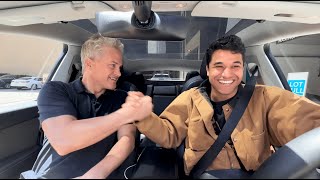
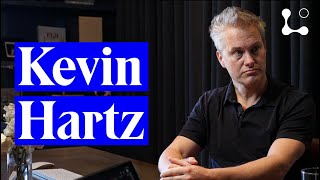
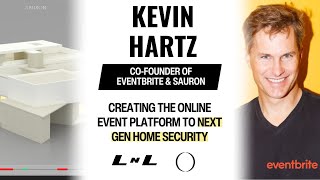
Kevin Hartz, Co-Founder of Eventbrite, scaling online ticketing & new autonomous security at Sauron!
Kevin Hartz: "How I Lost Airbnb at Seed Because of an Exploding Term Sheet" | E1180
Kevin Hartz: "How I Lost Airbnb at Seed Because of an Exploding Term Sheet" | E1180