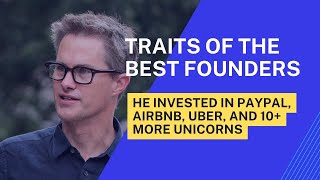
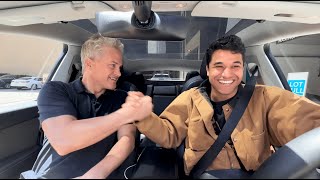
Kevin Hartz riding shotgun with Marwan
Kevin Hartz talks about his home security startup Sauron, which uses computer vision and self-driving perception tech. He reflects on lessons from PayPal and Eventbrite, his seed-stage investing approach with checks around $250k, and Bay Area problems like fentanyl and homelessness.
Questions this video answers
Four daughters; ages range from 17 down to four months (two youngest: nine months and four months).
Sauron.
"Probably spent what like $100 billion over the last decade in self driving."
One IPO in 2013 and the other in 2018.
Checks down to about $250,000 (and sometimes lower).
Chapters
Every member of the original PayPal like exec team had built a bomb when they were kids. Ah.
You know, the fact that I'm from Egypt means that would not be a good approach for me. But I will leave that to the PayPal mafia.
Is this Uber available?
It is available.
All right, let's do this. Seatbelts.
Let's do definitely seat belts. I do not want to catch a ticket. So yeah, let's head to the Golden Gate Bridge point to century San Francisco and a beautiful drive. Most importantly, don't have to worry about traffic. How's your past week been? Have you been going into any in person stuff that's been interesting?
I mean every day it's like the new gold rush out here. Except I will say it's harrowing. With all the traffic right now to try to. I'm like nervous for you driving and narrating, it's, it's insane.
Agreed. So funny story about that. Usually I can use full self driving and I was trying to block the fact that it can sense my awareness and doing that got my full self driving blocked for weeks.
Oh no.
So I'm not a good driver. I just got my license and we don't have full stop driving. Just thought I'd let you know now.
That you've already committed to this penalized. You're in, you're in the box, the penalty box for a week. I, I haven't heard that before. A week. I guess you're not fully banned.
Yeah, I'm only banned for. We've tried calling support to, to get them to resolve it and they're like nope, nope, don't do that. I think they were on to me this, the AI is getting better and better. Speaking of cameras and AI is getting better and better. You just so happen to be working on a company that is kind of working on that space. What are some of the things you're most excited by with respect to computer vision and different ways in which AI can help security?
Yeah, well, I'm working on a business called Sauron. It's a home security business and you know like our lessons and our insights and all the innovation has really come from the self driving car kind of industry. So you know a lot of the team, our co founder Vasu, she comes out of this industry. You know, we've probably spent what like $100 billion over the last decade in self driving and you know what's come out of that is like you know, Waymo and Tesla's fsd. But a lot of great work in perception and computer vision and so on. And so we're effectively repurposing that. You know, we see that quite a bit in tech where you take innovation in one area, you know, like Velcro was developed up in. For the space shuttle and you bring it down and it becomes a great way to fasten your shoes. And you know, so we're taking a lot of that development and using it in home security and developing just what you would say think is like the ultimate in home security. A system that. That understands everything happening around you.
I think that's very much needed. And actually earlier last year I lost almost everything due to a home break in. That was pretty painful.
Where was that?
This was in la. And funny story about that is my girlfriend's brother's ashes. We had put an airtag on because we know those are obviously very. It's. It's. Has huge sentimental value. And when they were stolen, the only reason we were able to get them back is because there was an air tag on them. And the crazy thing is the person ended up at an ICU with it in their pocket, the air tag in there. And they had overdosed on trying to snort it.
Oh my God.
Which was absolutely insane. And I think, wow, it was.
What were they. Do you know their diagnosis?
I. I'm unsure, but maybe like there's like formaldehyde or something in there.
It's not some chemical. That's probably not great.
It was in a little vial that looked like.
Like it was.
Yeah.
Something that you should. Should snore. Not that one. Not that I do. If I see a vial of something that looks snortable, I don't do that. But considerably. If you steal someone's. If you steal something, you're. Yeah. You might end up snorting it. Well, that's an incredible story.
Yeah. And it's really cool that you're building technology to actually be able to prevent some of this stuff. Monitor it increasingly. I think a lot of the systems that we depend on for safety are not really serving us the way that they promised. Where do you think there's room for companies to potentially be able to tackle some of these problems?
You know what we've seen, like we've seen in other segments, really great progress there. Garrett over at Flock Security, if you're familiar with them, out based in Atlanta, Georgia, are going after the kind of local government market with their license plate readers and have done an incredible job really building this network around the country and taking advantage of computer vision and LPRs. License plate reader that's a TLA by the way, a three letter acronym.
Ah, gotcha.
You gotta get your TLAs down. But an LPR license plate reader, you know, has solves. It solves if the statistic is up to like 10% of all crime in the United States is now solved by this block safety, you know, like platform really that's in place. So they've done a great job at with cities and municipalities. You know I think of we were first inspired to build this by my time at Founders Fund. Trey Stevens was just starting andural and their first product was a border sentry product. And we always would say, wow, I really want this enduro thing for my home, you know, because this thing could spot, you know like the smallest animal like five miles out, you know, in different on borders and in forward operating bases and so on. So lots of great inspiration for this in lots of areas. But you know, we're applying it to home security. Just hasn't been much that's happened there in the last 10 years. I mean, you know, ring was a lot of fun and really exciting when it came out. And then it just, you know, I. We haven't seen that next act and we want to be that.
Agreed. And there's definitely been huge technological innovations since that came out. Huge advancements in computer vision as you've mentioned, through a lot of the investment for self driving vehicles. And I think one of the things we forget is when we make huge investments in one company or one area, oftentimes there's other areas we're indirectly investing in maybe without even knowing it. AI is obviously one example of this right now. But what do you think are other areas where huge investment is going for a primary purpose but that might have interesting sort of externalities?
That's a great, great question. Wow. Yes. I mean AI is like the ubiquitous example because it's such a platform that applies in so many areas and that's what our job is as builders or investors or so on is like find those next platforms. You know in the 90s this Internet thing came and Mark Andreessen built Mozilla. He then commercialized Netscape and that was the platform. The Internet was the platform for so many great businesses and so much innovation. And then we had, I don't know, you know like Steve Jobs and iOS came out and we had the mobile revolution happen. And then, you know, now it's Sam Altman has kicked things off with OpenAI and it's just incredible. You know, I got the pitch today from somebody working on insurance related AI Business. And so just the breadth of things is so, so wide. And that's exciting. And of course now we're in traffic because of all the tech innovation. It's RSA conference, so we're like right in the heart of like rsa.
I forget how many conferences there are in San Francisco and maybe it's because sometimes I feel like real San Francisco almost doesn't go to conferences. Not to, not to.
We just try to avoid conferences.
Yeah. So I'm curious, like, what do you do as someone that doesn't live here? If you want to get the true Bay Area experience, I guess, Silicon Valley experience, How do you, how do you crack in?
You know, like, ask Sam Altman. You create OpenAI and revolutionize computing again and. No, I. Yeah, how do you, how do you crack in? Like every day there's, you know, like this is a gold rush town. So it's so exciting because every day I was telling you about the insurance AI business. That was an Oxford student from Denmark. And we get these people in kind of flying in from all around the world. And it's exciting because there's so much talent coming in right now. It's a pretty great time. And then we have Mayor Lurie who's cleaning up the town. He's doing a great job. Oh, but we're not supposed to talk.
We're not supposed to speak about politics. But if anyone out there wants to make San Francisco cleaner, better, safer, that's not really politics. That's not politics, that's just good. Yeah. I do think there's something to be said for like yes, there's politics and then there's just stuff that like we can all agree on is good safety, keeping the town clean, making sure people are taken care of, making sure people are healthy. As someone that's not from the U.S. i think Paul's very sensitive here.
I thought these guys were doing something very important up here. They're just having lunch.
I realized it sure looks like three.
Police officers that you need a front camera kind of view as well.
Yeah, it looks, I mean it looks.
Like they were like huddling.
This will eventually slowly build up to a multi cam view.
Yes, yes.
Actually, funny enough, I'm shooting this is a little bit on the down low, but shooting the first one of these in a self driving car with someone who's working on a self driving car.
Love it.
Company so that's exciting.
I, I would be a little more comfortable with Waymo, to be honest. Is that political? No, that's not. I'm Just kidding. I take Waymo every day. I love it. It's, it's like one of the best innovations of the last few years. I agree.
It's awesome.
It's such a great experience. It's like an, it's like your first iPhone experience kind of thing.
The one thing I will say though is it's kind of crazy how quickly it normalizes that you're in a self driving car that's kind of, you're just like, oh yeah, like I'm just in a self driving car now going about my day and it gets just as boring as anything else it has.
But we will continue to marvel at the engineering feat achieved there.
So. Question. You are always doing so many things and at the same time succeeding at multiple things at the same time. I think there is this Silicon Valley mantra of, you know, radical focus being the way to achieve things. How are you able to build a company and build a venture fund and support founders and effectively incubate small funds? Are you able to find the time to do all that?
I, I think it's very in vogue to try to do too many things at once. It's probably not great for your health or something but you know, been very popularized by Elon, you know, and, and building multi center billion dollar companies. And so, you know, I, I guess I always found like when I was building, building I always felt like I was more in tune when I was angel investing at the same time. So it was like angel investing while you're building and just kind of made me feel like, or first gave me kind of a bond with another CEO because I invest in somebody else's company and I get to learn their style, learn, you know, how they grow their business, all different things. So it's kind of a, it's a great way just to get some insights on things and then yeah, so there's, it's kind of, it's a well coordinated effort.
I guess this makes, this makes sense to be able to learn from a bunch of other people while having a little bit of skin in the game. Not necessarily for the financial purpose of it, but just that feeling of being involved I think is really special. What are things that you are involved in outside the technology industry that you think are pretty impactful on you?
What am I involved in outside of the. Well, I mean I have four daughters. So those are four people and they age, their ages range from 17 down to four months. So you know, and we actually have two young daughters, nine months and four months and just try to figure out how do you do that?
How do you.
That's. That's science, by the way. We did that with science.
Yeah, I was. I. I did. I quickly ran that. I was like, interesting. Cool that you're able to do that with science. How are you able to create, like, cohesiveness in the family with such a wide age range of your daughters?
It's probably Julia, my wife Julia. Same mom for all of them. Probably is like the cohesive element to all that, you know, so maybe having a great partner is the answer there.
Famously, your partner is not just your romantic partner, but you've also built a pretty amazing business with her. Was there ever a time where you felt like that was pushed back on? Or did you ever feel that feeling of, are people going to look at this a certain way? Because this is someone I'm romantically involved with.
You know, we. We kind of started it together and with Renault Visage, our third co founder, but we started it together. And so it was. That was just always, like, how it was, and all that mattered were the results. And so as we just started to show more and more results, I mean, in fact, we spent the first two years of the company really bootstrapping the business along. And, you know, before we really took outside capital. And in doing that, you know, we just, you know, it always felt like ours. And it was like, kind of never in question. Certainly there's investors that always said, like, oh, can you do this? But it was the best. It was such a great experience. She's like the best partner one could have, both on the business and on the home side.
That's super amazing. Really, really inspiring as well. I think one of the things I've struggled with a bit is wondering whether romantic relationships would potentially hold me back. I think this is something a lot of founders feel, which is maybe I shouldn't date. I think I should be fully focused. What would be your advice on that front? I'm 25, right. I. Oh, my Lord.
Oh, it's a. It stopped. Waymo.
Oh, no way. That's so crazy.
The outdoor cam right now. Let's.
Yeah, we definitely need one.
Yeah. So 25. I. You know, I'm in. In an era of. Of balance, I guess. Like, in my 20s, I just, like, worked all the time, but also.
You.
Know, kind of 20s and 30s, like, you know, relationship really helped kind of balance things out. So, you know, like, it. It's maybe makes you more productive if. Because you learn to kind of cordon your time better. So I'm in the pro relationship Side. Cool.
I love that. Do you think you're adhd?
You know, I don't know. It's like, very in vogue to be adhd, but I, you know, I would. I would say maybe not, but, you know, certainly all the things I'm involved in and a little bit of impulsiveness might indicate that, yes, I. It could be there, but I'm. I don't worry about it. I think any kind of these things that have been characterized as character defects, ADHD, or, you know, on the spectrum or whatever else are actually, you know, bipolar to. Or actually gifts in a sense, I.
Would agree with that.
So. And, you know, the best thing to do is learn, whatever, how to kind of how to use those, your traits to the benefit and to your advantage.
Do you think you have any traits where you feel like you don't necessarily fit in the conventional Silicon Valley culture.
As a result of those? Well, I guess, like, the conventional Silicon Valley culture is, like, being unconventional. And so it's like, we welcome all shapes and sizes. You know, it's a. It's like a great thing to be a kind of misfit and so on. Yeah, it was, you know, got all these, like, interesting early lessons, especially on misfits on, you know, PayPal mafia. I was involved some angel investor in PayPal when it was getting started and got to see that, like, really amazing group.
It's interesting that that ended up resulting in value for the core thing you were working on. So was there anything that happened as a result of you angel investing that caused you to later on continue working with PayPal?
Well, I mean, just that, like, PayPal took off. The rest of the Internet economy had gone through this terrible crash. You know, it was a period where everything required very heavy infrastructure. You know, we hadn't developed all this to, you know, you had to build out your own server systems. And so building a company was very, very expensive. And when things teetered, they, like, collapsed hard. And it was a big crash, except for, you know, a handful of companies like Amazon and Netflix and PayPal and so on. And I was in kind of like the front row seat watching this extraordinary team build this business. And I saw this payments thing taking off and spoke to Peter and Roelof Botha, who was CFO at the time at PayPal, now at Sequoia. And we talked about, you know, what would you build to kind of augment or build on top if PayPal opened an API. And we all came up with remittance. And so I launched a remittance business with my business partner, Alan Braverman, and we started a company called Zoom X O M. And you know, we had seen the example of Western Union. Western Union was charging all these really high fees, you know, sometimes basically usury to, especially to new immigrants that, you know, weren't like, well moneyed or anything. And we built this business, it started to work and, and you know, kind of took it from there. So we, you know, in Eventbrite, I'm, I, I always say I'm kind of a one trick pony. Eventbrite's effectively a payments company. Instead of, you know, e commerce or remittance, it's ticketing. And you know, it was originally built on top of PayPal as well and runs billions of dollars in payment volume today.
That's fascinating because I think when people talk about the PayPal mafia, they talk about the people that spun out of the company. But thinking of it as like the platform and knowledge that ended up impacting other companies is actually really interesting because you, having built your next company on the same platform that you sort of had, your initial kind of alumni cohort of talented people is actually really cool.
Well, I was more, I mean, I wasn't, I wasn't an employee of PayPal, so I was, I would say I was more of a PayPal mafia groupie and, but a very observant groupie and, you know, watched a lot of these team, the team members there and learn a lot from them. But it served me extremely well with Zoom and Eventbrite. We took both companies public, one in 2013, the other in 2018.
Is there anyone from PayPal that you deeply admire that you don't think is as like, discussed in sort of Silicon Valley conversations?
That's a great question. You know, I think, look, both that like, is behind the scenes and isn't like scrutinized and covered and whatever, but he's orchestrating the venture funds at Sequoia. You know, he's definitely in that canon, but doesn't get the same coverage as, you know, like a David Sacks who's brilliant. Just saw him in D.C. last week and is now, you know, this big personality with his like all Star pod, or, you know, Reid Hoffman who's out there, or certainly Elon.
Do you think it's important to necessarily be a big personality? What if you just want to kind of do your thing and focus? There's this culture right now and we're contributing to it as we speak of constantly making things, shooting things, posting. Do you think there's a world where you could Just not do that and.
Still do well, well, I mean big personalities like I, you know, in many ways can't help it. My friends all tell me I have a little personality, like a very little personality.
But maybe you need to change your friends.
Yeah, yeah, they're terrible. But no, I, I think that you know, they're just very interesting people. You know, I ended up going to college with a lot of them. Keith Roboys, Reed, we were all at Stanford at the same time.
It's interesting that you say you have a little personality because I have heard of you from like a bunch of my friends who've been involved with helping Coco Zoo with his venture fund. You've been involved with Z Fellows and it seems like you now have a big brand around. Being a little personality I guess, which is kind of interesting. I don't know if I agree with the little personality verbiage, but definitely less grandiose and more precise.
Look, I, I just want to, I, I don't know, maybe that's why I was like giving the shout out to Rule office because he's really more behind the scenes helping his founders, you know, like really do great things. And you know, my goal is like it's time to kind of pay it forward. And that's what like Corey Levy does incredibly well with Z Fellows. And he identified early on as like you know, where the, the next great founders are coming out of. Ethan Thornton dropping out of MIT as a freshman at 19 years old and founding Mock or Stephen Schwartz, you know like trading sneakers at age 14, you know, with it with his, with Cameron his best friend and starting lop now over a billion and growing rapidly in gmv. Like these are the, the future leaders like in the making as we speak today.
You actually invested in aru if I'm not, I'm mistaken. And they sort of have that, that similar energy. Seems like despite being a serial entrepreneur, you like to back first time founders. What, why is that?
You know like first time founders are kind of like, you know, like young marines in combat. They like run right into the battle. They just kind of go for it and they also kind of see the world. Mike Moritz used to always say this. They see the world like in a way that like I can't, you know, now see it. They see how change is happening long, long before it. They see it around corners and you know, and, and that's where you find the kind of like Brian Chesky's with a B or Ben Silverman was, you know with, with Pinterest or you know the, the Ramp team, like they know where the world is going. And, and that's what I see in Stephen Schwartz at WAP and Ethan Thornton at Mock.
What type of founder do you think might exist as a new archetype that isn't super common currently.
Might exist. I mean, what I'd like to see more of, and I'm starting to see little, little occurrences of it, is somebody that didn't have to go to MIT or Harvard or iit, but you know, it's maybe from like way out in India or Asia where they're self taught and, you know, can kind of break in and use the power of the Internet that like, can democratize so much and, and be a substitute for, you know, these elite institutions that, you know, we still rely so much on.
What do you think Silicon Valley as an industry, especially VCs, need to do to actually tap into that global talent?
I wish I had the answer for that. I, you know who was working on that was. Daniel Gross was with Pioneer.
Yeah.
And then this darn AI thing got in the way, so he had to like jump into that revolution. But yeah, Pioneer I thought was like a clever approach, you know, that showed some early kind of signal.
These hills are insane.
Well, we're going to make it to the bridge. I thought we were going to be stuck in traffic the whole time. And my blood pressure has gone down astoundingly since we got out of that RSA traffic.
That traffic was pretty bad also, surprisingly, just rogue. No logic to how it's working.
No logic.
Pretty chaotic. All right, so we lost the camera for a second there due to overheating. So small technical difficulty that we will resolve at some point. But when the camera was out, we started talking about the Walt Disney Museum, which is right around the corner and it's in the Presidio.
Straight ahead. Yeah, into the Presidio. That's federal land. And the Disney family decided to build this. Not in Los Angeles. Build it away, you know, kind of out of the way because it's not. It's intended to be this like, kind of place for kids to go and have fun. It's actually all about Walt's life. And I love to go there. It's inspirational for me. It's structured in kind of chronological order of all the things, you know, his whole life and what he achieved in each stage of it. But I love bringing startup teams there and founders there. It's very inspirational. You get the kind of goosebumps when, you know, you see just in each era how he reinvented himself in the company. Just truly, you know, on that. In that, you know, kind of genre of Steve Jobs or Elon Musk or so on.
Is there a specific part of it that really resonated with you without giving spoilers?
I won't give the spoilers. I'll just say, you know, from a structural. It just moved from, like, component to component.
I'm gonna take.
We're going on the bridge. I don't see. Oh, yeah, there is a no U turn. That'd be great to get ticketed.
I know you have, you have. You have a meeting to run too, so want to make sure to drop you off. Get that five stars.
But I. So go see the Walt Disney Museum in the. In the Presidio. And. Yeah, it's really the transition from each era and seeing how he built upon his expertise and how he found all this creative talent to do these amazing things.
Was there a Kevin era that you think not a lot of people know about in which you were a very different person than you are today? Very.
You know, I'm like one of these, like, type of people that doesn't like talking about myself that much. So I, you know, like, I'm going to, like.
That's an increasingly rare, rare trait.
Yeah. Yeah. You'll have to interview Julia, my wife. Yeah.
Actually would love that. That would be super fun to do. It's interesting that you really like to talk about other people and their journeys and draw inspiration from them and not really talk about yourself. Those types of people tend to be the most interesting when they do talk about theirselves. So I'm gonna push back here and make you talk about yourself.
Okay.
Yeah. I'm just curious to learn more about the evolution of.
I was suspended my senior year in high school for five days because myself and a friend, we sent out a letter to all the. To the whole school that said school was closed. They had found asbestos. And that was my, like, kind of senior prank. Thought it was a good one, but.
That is pretty good.
We were almost. We used. Yeah, we actually sent a physical letter and we had. We were on kind of student leadership. So we ended up with the kind of non profit, non, you know, stamps. And so by doing what we did was a federal offense because we committed bail fraud.
Oh, God.
So we had to go talk to the Postmaster General and we were lectured, you know, that it's a felony and all this sort of stuff. But it's. It's not the worst thing to get suspended your second semester of your senior year in High school.
But I do love that. I mean, I think some of the most brilliant founders are a little bit mischievous and in ways that aren't necessarily hyper overt. It's rarely stories of, like, outright violence or, you know, massive in your face, sort of troublemaking. It's usually kind of more sneaky hacking, like, maneuvers.
Clever, right?
Yeah, that's cool.
I mean, a little more overt. Was that. Well, there was that counter lawsuit that talked about rippling CEO, the D. Yes. You know, and that's. I mean, he's. He's brilliant, but he had this, like, interesting, like, academic back, you know, like, what was he on the. He was like the editor of the Harvard Crimson, but then almost got kicked out of school. And that's like a perfect founder in my view.
Yeah. It's completely off the record, of course. We're. We're keeping that on the record. That's it.
On the record.
Off the record, Yeah. I think it's cool that company building is kind of this Game of Thrones like thing now where we have all these tribes and these teams and corporate espionage and all this drama. I find it really fun and I really loved watching the show Silicon Valley. One of the things I think a lot of people that don't live here get to see is sort of that, like, inside scoop and the drama and the stuff that happens with. Without naming names, give us some. Give us some tea. Give us something that happened that was kind of dramatic and interesting. I love that stuff.
I, you know, like, I'll go back to the previous point, which was like, I think that, like, every member of the original PayPal, like, exec team had built a bomb when they were kids. Ah.
You know, the fact that I'm from Egypt means that would not be a good approach for me, but I will leave that to the fare mafia.
Like that. Yeah. This, you know, was all pre 9 11. Like, that's what you did when you were a kid. It's like you blew things up. You like? Yeah, but it's an interesting pattern. I'm just saying.
So when you, when you guys do it, it's mischievous and cool.
Yeah, when we do it. Such a double standard, huh?
That's so funny. My dad used to actually diffuse like, or work with, like, explosives on oil rigs. And when 911 happened, you can imagine it wasn't necessarily the nicest sort of role to have having, you know, an Egyptian man operating essentially explosives on US Oil rigs.
Wow. Was this in Texas?
This was in Louisiana.
Louisiana, yeah. Yeah.
My brother was born There. I was actually born in Egypt and moved. Moved to the US when I was 17.
Yeah. That's amazing. How's your facility of Egyptian?
It's actually. So the other day someone asked me, can you say butterfly in two in a different language? My first language was French and then Arabic and then I learned English and I couldn't remember the word for butterfly in, in Arabic or in French. And I was like, whoa, this is crazy. My mind has started to think more in English and interestingly, I think my language is very like Silicon Valley.
Right.
Coded. But this has been the place that's like, felt most like home for me. And so I, I wouldn't really say I, I often feel homesick.
Yeah. That's interesting. Like, because you came over here when you were 17.
I came over here when I was 17, but I was often sort of playing video games and building, like, Minecraft servers, and so a lot of my friends were already on US servers. Yeah.
And can you get citizenship if you have US Servers?
We should. That should be the case.
Residing on a US Definitely should be the case.
Like, I need to just petition USCIS and be like, look, guys, I know I was in Egypt, but technically was spending all my time in Ohio in a server farm, so let me in, please. That's so funny. Do you play any video, Video games?
I, I, you know, I, I don't, like, I'm not a big gamer.
Do you.
Way back when, Quake and, you know, like, used to play, like, early games, but that's been a long time. Do I make any art? Like, I don't know if I have as many creative outflows at the moment. What about yourself?
I love making music.
And what's your instrument choice?
I sing. I also play piano and guitar, but I mostly like to sing and I've been learning a little bit of production.
Amazing.
So that's been fun.
What applications do you use?
Mostly logic, in terms of a doll, but it's technical, man. Like, I, I, I obviously like, I, I like to code. I like technical pursuits, but with music specifically, I think I enjoy the creative aspect more than the technical components.
So you're just like, playing?
Yeah, just love to, love to sing, Record it. Actually, I have like a mic in the, in the, in the front there and I'll sometimes just park the car and record here.
Amazing.
It's been pretty fun. Yeah. In a lot of ways, though, I think company building can be a creative pursuit to a very large extent. There's so many creative challenges involved with it. What's one like, small creative thing that not a lot of people know about at Eventbrite that you did that you're pretty kind of secretly proud of.
Well, you know, Eventbrite was like, growth was all about like, you know, a viral loop. Like, events aren't what you would say. They're, you know, like, they're not. It's not as viral as, like, Instagram, where every creator is also. Every consumer is also a creator. You know, there it's a little more lopsided towards creators, but nonetheless, you know, like, a lot of when you're crafting the product, you're finding ways that incentivize, you know, users to. To share and publish free events for free and just try to drive this flywheel because there's like, you know, like something magical about, you know, if, like everyone on the planet just disappeared, if I guess people wouldn't publish events then. But the idea is that, you know, could you almost like, run this with like, no one on the team that it would just. People keep publishing and creating and growing the platform. So, you know, it was a lot of the work around that and during the different eras of the social networks that have, like, come and grown, you know, how you use each one of those to drive the growth of it. And, you know, Eventbrite today has to keep doing that. It's, you know, has a lot of work ahead of us.
I love seeing the transitions of talented entrepreneurs from one industry to one that's completely different from an events platform to home security. How does that happen?
And I. I mean, I think it's just, you know, like a interest in. You want to do you want to, like, exercise a new area of the brain and go after a whole new, you know, challenge. And in the case of home security, it's fun trying to fight the bag, bad guys, solving crimes, solving this problem. And then we're doing a lot of unique things. We're. Because we have this, like, dense and rich set of sensors out around a home we can actually render for the consumer and for our team, we actually have a team in Nevada 24 7, monitoring the homes with people. So we have, you know, computers monitoring computer vision. Then we have. It escalates to people and you can see how that grows over time. But we have what we call the dollhouse. And that's. We take this like, kind of virtual representation of the consumer's home and render all the activity happening around the home. Because if, you know, if we have 40 or 60 different sensors, visual lidar and so on, like, you can't possibly as a human, like see and understand and take in all that information. So we render it as this like kind of game view, which, you know, I probably should be a gamer, I should pick it up late in life because, you know, we. We effectively are trying to display an immense amount of information in a gaming format.
Interesting. I love this idea of simulating the world to actually make the world better again. And while games may seem trivial, it is kind of the cutting edge of simulation software and rendering of environments. And if we can have these like perfectly rendered environments in a virtual space, then maybe we can change those virtual environments and potentially download a better world for ourselves. Is there any simulation software or game engines that you think are going to allow us to build things in the world that we couldn't have in the past?
I mean, there's like really two rendering engines out there. There's unreal and there's the one that we use that I just forgot the name of that Sequoia backed many moons ago. Oh. Oh my God. How could I just forget the name? Yeah, I'm Xenop.
I. I know. I also know what you're talking about.
But it's funny because I, I remembered Unreal, which we don't use. Unreal is better for like realistic, you know, great texture mapping things. Unity. Thank you. David Helsgar is the founder of that. I made him. I won't tell this story.
Yeah, Now I'm curious to hear it off camera. Whenever someone says I won't hear, I won't tell this.
No, I. I loaned him money when he was starting the company and I should have like just taken shares. He's a great guy. He's in Denmark. Back in. Is it Denmark? Doing kind of clean tech investing.
Cool.
I'm going to be late. Wait, no, it's 1:14. No, we're not going to be late.
Yeah, we'll get there at one point.
Yeah. Awesome.
Perfect.
You nailed it. That's incredible.
Some components needed a little bit of enhancement, but glad we're getting you there on time. As long as I don't mess up a turn or something, which no guarantees on that front.
Kukari, great restaurant. Have you been to Kokari?
No, I haven't.
At some point you should.
Okay, I will.
Its sister restaurant is Evia in Palo Alto. That it's like a popular place for the whole venture startup.
I'll definitely check it out. Have you been to Catania?
I love Katonia.
It's so good.
Yeah.
Have you tried? Okay. If you're ever there on Saturday Try their carbonara pizza. They only do it on Saturday. It is so good. Best pizza I've ever had.
Absolutely incredible. Here we are in Jackson Square. There's a battery. This is Venture central.
Do you feel a sense of patriotism to San Francisco as a city?
Yeah, I went through, like, a lot of emotions of, you know, like, as it went, like, as it really got bad, but I do. Yeah. I don't know, like, is the term patriotism. It's just a sort of. You feel a sense of obligation to being. To helping be a steward of the city. And so Julia and I have just gotten involved in a number of different things over the years. But, you know, then we kind of had to especially help out on this kind of restoring the city when it hit rock bottom a couple years ago.
I think city pride is a lot. It's.
It's.
It's a. It's. It's a. I think it's a way where you can create impact quicker and more tangibly. That's not to say I don't think people should have national pride or pride to pride of belonging to larger groups, but I do think there's something special about caring about a very small thing a whole lot.
Yeah. Like, I never quite. I had always kind of transcended the city a lot thinking, you know, I want to change the world, like, I want to build these great companies. But then when we saw our backyard kind of fall apart, that had to be the thing that changed my perspective. We were all, like, considered. I forgot what. There's some kind of phenomenon where if you're like, you know, it's like the boiling frog. Like, things went really bad and we just stood around and happened right in front of us. It was crazy. Two people dying every day on average from drug overdoses. It was crazy. Just, you know, the filth in the streets and so on. Yeah. But you see a very different mindset than I would say pre covered.
It hit me pretty hard on Market Street. This guy passed, like, was on the floor, like, frothing on the mouth and had to. I did like, CPR and like, mouth to mouth on him.
And it was.
It was actually pretty gruesome.
You did?
Yeah. And the.
It's good. You're trained in it. Everyone should be trained.
Yeah, I was trained in it and hadn't used it really until.
Wow.
Until that. That one moment. It was for. Because I used to lifeguard.
I used to lifeguard.
Oh, cool.
Yeah.
You grew up in Northern California.
In Northern California.
But not. Not the bay.
No, in the bay in a town called Orinda. It's in the Berkeley hills.
Okay.
Through the Caldica Tunnel. So I, you know, worked at a pool at summers and lifeguarded. One save, pulled a toddler out of the pool.
Heroic.
But you. Yeah, good for you for that. I hope, I hope you got some kind of shot. After.
I was scared. I was a little bit scared because I didn't have, you know, like, personal protective equipment.
Yeah. Who. How are you? Did. Did it. How long did it take before ambulance came?
It was the, the ambulance was pretty quick. It was like right, right downtown. So that, that was fortunate, but I could tell they were a little bit annoyed and had this kind of feeling of like, like another overdose.
And.
I carried like Narcans since then.
Yeah, that's a good point. But it was. So that's what it was. It was, yeah. Fentanyl overdose.
Yeah, some.
Some overdose.
That was. That was pretty, pretty sad and honestly is something that every once in a while just like flashes into my mind as a negative event.
Yeah.
But, yeah, definitely something that I think we should, we should care about. Not just because it impacts like our direct quality of life, but I think people look at San Francisco with a sense of resentment a little bit that we're able to create these like, massive, massive companies but aren't able to solve basic problem. Not basic, but like, you know, core problems that define success, which is. Are people healthy and. Well, so I do think that matters.
I. I don't know. The fentanyl path is interesting because, you know, you had this evolution of like, you know, opium, opioids have always been a challenge, like hundreds of years, if not more back. And then you had, you know, this use in pharma of like over prescribing them, and you started to have those overdoses. Then you had this synthetic, like, powerful, you know, fentanyl, carfentanyl, kind of supercharged. It. It was like almost like a, like dystopian, like tech innovation that then just. The deaths like, skyrocketed.
I think we forget that these small molecules are a form of technology.
Right.
And.
And usually, you know, send it through the mail.
Yeah.
All these ways that.
Highly portable, highly destructive. Yeah. Are you interested at all in biotech or investments in, in computational biology?
I am, but I found that, like, you know, what I love the most is just, you know, growth, like an impact. It's, you know, on the like, drug discovery side or so on, you know, it's a, it's a challenging kind of difficult path that you're Often not the, you know, kind of like steward of your own kind of destiny that you. And so I. Yeah, unfortunately, you know, years back, I think we thought that we would like, see more on the biopharma side. But when you talk about computational biology, what, what are you referring to?
Personally, where I would say I'm most interested is in genetic engineering. It's a good application for large language models given like genes are text based, but it's not just a problem that is like a bio problem. I think there's. There's also almost like a level of like product design thinking that goes into creating new therapies. So one interesting experience I had was I was like living in this lab with this company I invested in that's doing really cool work in hormone monitoring. And they created a genetic ink that glows fluorescent red or fluorescent green based on your hormone levels. And I was like the first man to have that injected. And it was a really cool experience where I was like, this is new.
What do you do when it's glowing red?
So it glows more red as my estrogen levels increase. And so for now, it's just essentially a hormone monitoring tool. And there were periods in my life where my like, testosterone levels were pretty low and it was impacting me negatively in a few ways and ended up fixing that, perhaps overcorrecting. And then it impacted me negatively in completely different ways. And now I think I'm at a level where I feel like I have the right amount of sort of classically testosterone, like drive, ambition, quote unquote, like masculinity, but not too much where it makes me antisocial.
Got it. Got it.
I don't know if that was politically incorrect, but it's fine. I think if you're in, if you're doing stuff for long enough, you're eventually going to accidentally do something that makes people very upset and you don't even know that you're doing it.
Absolutely. That's not good enough. That anything that one does that has an impact on the world is. There's going to be a lot of opponents to it. It's just inevitable. Does that sound cynical?
It sounds true. I think we should still try to do good things. But the idea that no matter what you do, there's going to be pushback isn't really fun.
Yeah. And I mean, as we see, there's certain people that when they do things, no matter what they do, they'll be happ. It'll be heavily criticized.
True. Do you think there's also the inverse of that where people might be doing bad things, but they kind of have this moral force.
Oh, that's a really good framework for getting away with evil deeds. Yeah. It's like you don't need to be this person with the like shaved head inside of a volcano, you know, trying to destroy the world. Like now you do it under the guise of like Mother Teresa or something.
I think we've seen that happen a couple times.
Yeah.
And it is scary.
I wish I bet we could look up how many Waymos are on the street. Can't we? There must be some filing. There should public record of.
I swear a third of the cars are Waymos now.
I'm so happy.
It's, it's.
I want it to be all like. I honestly, I would be great to get rid of all cars because it would, it would eliminate all traffic because the Waymo should theoretically be able to drive us without, you know, any kind of gridlocking or traffic.
Yeah. Also the fact that they don't need to park massively eases the city.
You don't need nearly as many cars.
They also are very respectful. Like whenever I'm trying to cut into traffic and it's a Waymo, I'm like, okay, cool. Like, they're usually nicer to me than the person who's gonna honk at me super hard.
Unfortunately, they're too respectful. And so the playbook now, I think it's maybe the conspiracy is it's Uber drivers will like cut in front. You know, like if you're, if you're somebody turning left into oncoming traffic and there's a Waymo there, you can just go. Because the Waymo will stop.
Yeah.
There's not going to be an accident or a careless error. So that happened. I was in the Waymo and I mean I almost like got thrown into the front seat and stopped so fast.
Interesting car. Overly ultra technology is kind of interesting.
It was an overt, like very clearly intentional.
I'm sure they have a parameter. Probably it's multiple parameters that determine the aggressiveness of the driving. Um, I'm curious how they make these trade offs. Are they like. Well, if we dial it up 10%, things are going to be far more efficient, but there's like slightly more risk. Like who are the people in charge of these decisions and how do they, how do they weigh it? It's a, it's a fascinating ethics problem.
It's probably multidisciplinary. You know, there's like a weather team. You know, there are different teams. But no, I Don't pretend to know exactly. It would seem like you would want it universally overseas but it is what statistically like far, far lower than now that millions and millions of miles have been driven far lower incidents of, of accidents.
So as I drop you off to this next meeting.
Yeah.
Remind a reminder that you are running a venture fund. A star that invests.
Did you precede?
You do precedence and seed and then we precede.
We do. I mean checks you know all the way down to 250k or sometimes even lower but you know like 2, 3, 4, 5 million dollars and pre seed seeds and we occasionally do a B and beyond but our focus is really around the seed side and we're generalists so we look at just we're focused on finding the next great founder and that could be in any category. Could be AI it could be in defense it could be we're in a company called General Biological which is a synthetic biotech company. So they're producing industrial chemicals using fermentation and doing this at lower cost than extracting it from the ground.
Very cool. I, I think they were spoken about in a yc how to build a deep tech company video. If I'm not, if I'm not mistaken I could be wrong. But super cool that you're investing in like synthetic biology and being a generalist makes sense for you. You've done a lot of different things and I think being a generalist is actually like pretty authentic to your career path.
We also don't know where the world is always going and so you really rely on the brightest people that see where the future is to, to take you there. And you know I like we're, we're, we don't want to be cordoned off into one certain area and we're excited about. There's so much innovation happening in so many different areas these days. So it's, it's been great.
I'm excited to see what you back Coco Zoo speaks really highly of the support you've given him having backed his firm.
Cocos is super talented. He's great. So I think this is a one way street right Second or is it no. Oh yeah. It's the right way. Cool. You would think the street I'm on I would know if it's oh we're going right back to where we started. This is perfect.
I'm excited to, to see what you oh let me cross Excited to see what you do on the, on the investing side. Fresh, fresh capital. Really interesting time to be investing and I do want to try Sauron once. I have a home. That will be a useful product to use for sure.
We'll be ready for you.
I will illegally kind of stop here.
Perfect. All right.
Thank you. Pleasure.
That was amazing.
That was super fun.
All right, I better skedaddle. It's 130.
More from Kevin
Kevin Hartz, Co-Founder of Eventbrite, scaling online ticketing & new autonomous security at Sauron!
Kevin Hartz: "How I Lost Airbnb at Seed Because of an Exploding Term Sheet" | E1180
Kevin Hartz: "How I Lost Airbnb at Seed Because of an Exploding Term Sheet" | E1180