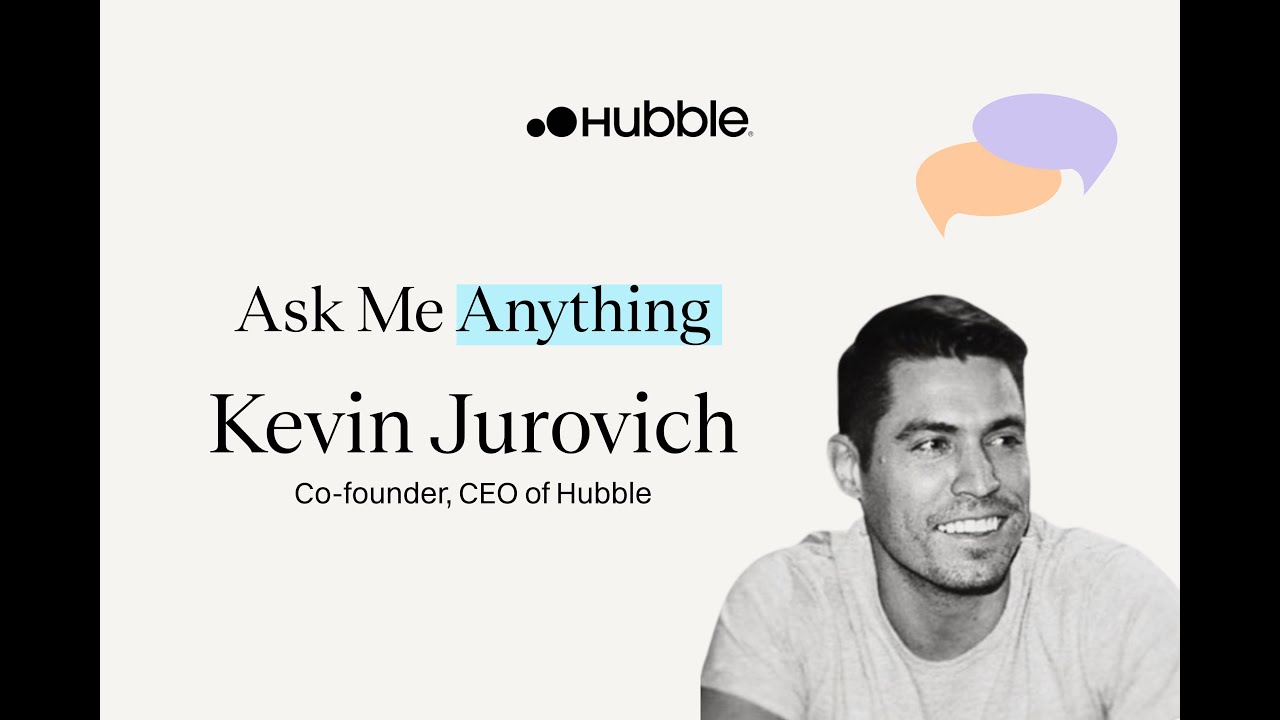
“Expert Economy” is on the raise! Unicorn Breakdown with Kevin Yurovich, hubble.

In this 45‑minute interview, host Leon Eisen talks with Kevin Jurovich, founder and CEO of Hubble, an expert‑marketplace platform that connects founders, investors, and other professionals with domain experts for short, paid mentorship calls. Kevin recounts his personal journey from a professional athlete to a wealth‑management advisor for tech founders, and how that experience sparked the idea for Hubble. He explains the core product – 15‑minute expert calls that serve as a gateway to higher‑ticket advisory plans – and details the go‑to‑market engine built around expert cohorts that leverage each expert’s existing social following, creating organic, zero‑ad‑spend growth. The conversation covers pricing strategy (minimum $10, typical $35‑$75, occasional $250+ calls), the decision to avoid a freemium model, and the platform’s 10% take rate using Stripe. Kevin contrasts Hubble with competitors like Intro, highlighting missing features such as desktop‑based calls, AI‑generated notes, and richer collaboration tools. He shares key metrics: over 350 active experts, 3,000+ sign‑up applications, month‑over‑month GMV growth of 35% and approaching $100k in GMV after 4.5 months, mirroring early eBay growth patterns. Funding status is pre‑seed ($900k led by Uber’s first investor) with a seed round forthcoming. Kevin also emphasizes the strategic value of the community built around Hubble – high‑profile members (e.g., Sean Ellis, Alexa founder, Uber’s first investor) and deal‑flow anecdotes – and offers advice to founders about seeking mentors, reading "The Trillion Dollar Coach," and operating lean with financial buffers. The interview ends with a vision of Hubble as infrastructure for the emerging expert economy, a repeat‑value flywheel, and a call for continued growth.
Chapters
This is way harder than I thought. It's one thing to launch a product. Anyone can launch a product. It's another thing to launch a successful product and business. That's a completely different thing.
When you're growing from zero, always in the beginning happens like this because first users, then they come to the chasm and this is where all the magic happens. Do you derive or not?
I think it starts with the conviction. So in my case, it was after a 15-minute call with somebody. I knew every single time that person left with either a clear new path, a pivot, or conviction in a current path that they were going down. And either way, it was worth it.
Freemium. I just always against freemium because it's a big difference when people pay at least $5, $1, it doesn't matter, and get it for free.
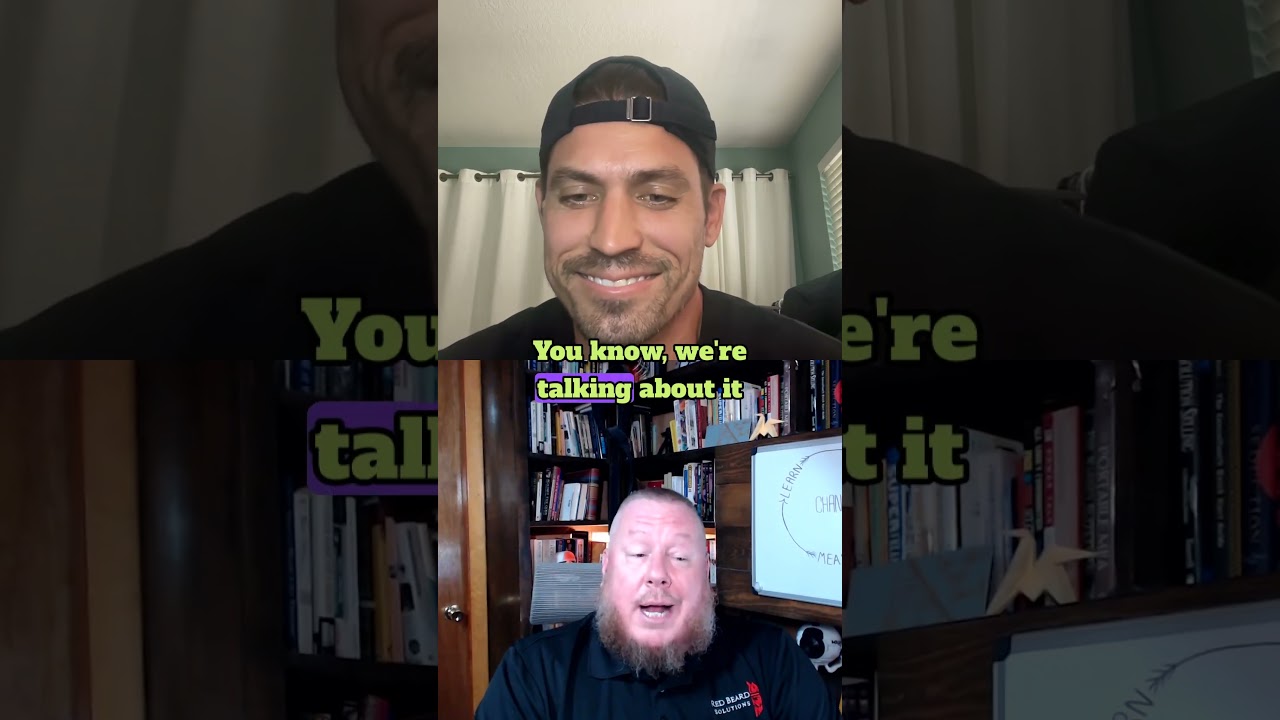
You know, the interesting thing about our go-to-market strategy is it utilizes each expert's following, right? So they announce as part of onboarding, and you know, you went through this, you go into a cohort, everybody meets each other, and then on your announcement day on your cohort, you announce, hey, I'm taking these mentorship calls on Hubbell. That goes out to all of your following on social media. So essentially each cohort launch, each expert brings their network of thousands of people On to Hubble.
Hello, my friends. Today I'm opening a new chapter of my Venture Growth with Leon Eisen podcast. It's a signature episode and this chapter is called Unicorn Breakdown. So in this channel, we will meet with very fast-growing companies, their CEO, we will break down bold ideas, And talk to people who created something unique and something new. And I can tell you that the fastest entrepreneurs are not waiting for a newsletter. They are booking time with the people who have built what they are building now. Today, Founder is betting on the new category, the expert economy. And the expert of all experts We meet today Kevin Jurovich. He created Hubble Social, and by the way, I'm part of this Hubble Social, and I also participate in mentoring of the young entrepreneurs. So meet Kevin. Kevin, hello, good to see you on my podcast, and this is the first podcast in this format. So we will argue with each other, we will talk about how to move your company forward. I would love to hear your story and let's start from who are you and what you are doing.
Yeah, thank you so much. That was a very nice introduction. Hopefully we don't argue too much and if we do argue, hopefully we keep the volume down. It's friendly.
Yes. As you said, brain larceny. Yeah, that's good.
As you said, I'm the founder and the CEO of Hubbl. It's an expert marketplace. The idea behind it is if you're building, anybody out there, whatever you're building, if you want to talk to somebody who's done what you're trying to do, this gives you a platform to skip some of the cold emails, cold DMs, and just book a call right away with any number of founders, investors, You are an expert on the platform. Your listeners know what you bring to the table. The interesting thing and the cool thing is we all have our domain expertise. We all have our life experience. And by collecting as many of these people as possible, the odds that you can talk to someone that you should talk to just increase with each new cohort that gets launched. So we just launched 5 months ago. Off to a tremendous start and it feels good. It feels good to be helping people. We raised a pre-seed $900K led by Uber's first investor. We're onboarding just, not just domain experts, but people that care to give back, people that want to give back, people that want to help the next generation of founder or person that maybe reminds them of themselves 15 years ago. And yeah, today excited to talk to you, excited to break down this new podcast format and see what happens.
Yeah, that's amazing. So how did you come to this idea? I know you are a former sportsman and now you are in the Expert Platform, or manage and CEO of Expert Platform. How did you make this transformation?
Yeah, it's a great question. Like life, As we get older, we realize most of the plans that we have, they don't go as planned. I like to say—
Oh, tell me. Yeah.
If you looked at the top of the mountain, it doesn't mean that you're not going to get to the top, but the pathway in which you get there is almost never the pathway that you put in your mind.
Yeah.
So after sports, I basically got into wealth management. Because, you know, as a, as a sports athlete and professionally, you get paid a decent amount of money. And when you're in college, you get nothing. So you basically go from nothing, like minimum wage, to all of a sudden making a ton of money. $10,000 a week was what I was making. Then when you're done playing, you realize this is very important that people know what an asset is, what a liability is. Everybody and all my friends that I was associated with were buying way more liabilities than assets because they're more fun to purchase. So I said, great, I'm going to be a financial advisor to NFL players. I'm born and raised in Silicon Valley. After 4 and a half years in that business, you know, who do you think were my highest earning clients? They were all tech founders. I'm in Silicon Valley, I'm working in Palo Alto, I'm working in Mountain View. Where Google's located, where Facebook or Meta is located. And this really started or kicked off my interest in founding a tech company because prior to this, all the founders that I would read about were like Jeff Bezos, Elon Musk, Bill Gates, these, I would call them geniuses in their own right, but these untouchable figures. The more that I got around regular We'll call them regular founders or the majority of founders. I realized I can do this. This is not out of touch. I see the impact these people are having on the world. I don't want to be wearing a suit every day, managing other people's money in other people's affairs. I want to create something that's impactful myself with my team. So that was, uh, 5, it was about 7 years, 6, Almost 7 years ago now, I packed up all my stuff. I moved to San Francisco and I started a company. I had no idea what I wanted to start then. I just figured, hey, you move to San Francisco, you start a company, and everything is all downhill from there.
Yeah, you should agree with you. I'm an entrepreneur. I'm a founder. It doesn't matter what kind of company. I'm a founder.
It was a, it was a long, it was exactly, this was my idea. It was a long Lesson. We can call it a school of hard knocks, but I don't have a PhD. I learned it the hard way. And how did Hubble come about? It was 5 years. I call this my time in the desert. It was 5 years of launching products, failing, pivoting, learning how to build products, learning how to raise capital, learning how to hire.
Nothing unique. Nothing unique here.
Yeah, nothing unique. I thought I had all this stuff under control, but it was only slapped me across the face after 5 years. I realized. This is way harder than I thought. It's one thing to launch a product. Anyone can launch a product. It's another thing to launch a successful product and business. That's a completely different thing. It took me a long time and along the way, and this is the genesis of Hubbell, along the way, when I started writing on LinkedIn, I started writing because I realized how hard this was and I just wanted to help people. So as like any founder out there that's chasing a dream, I'm gonna post on LinkedIn and I just wanna encourage and inspire them. This was my mindset. This is 2 and a half years ago. My following starts growing like crazy. I start getting tons of founders DMing me saying, hey, I'm struggling with product market fit. I'm struggling with go-to-market. I'm struggling with how to price my business. And I just started helping all these people for free. I did this for 14 months and then had an epiphany one day. And we can get into this actual story, but one of my early investors for this previous company says, hey, how's this booking link thing? I put this booking link in my bio, right? Where you could book time with me. And I tell him it's great. He goes, look what I designed. And he— I opened up my laptop and I saw this design and instantly I just knew it in my heart. I'm like, we are gonna pivot to this. We're going to create this expert learning platform where people can book calls with each other because I'm just one expert, you're an expert, there's millions of people out there that people need to talk to. That was 5 months ago and we launched and we've been off to the races.
Yeah, that's very interesting because, you know, it looks like you found some treasure because it's a huge trend, rise of expert economy. People crave Personalized advice, not generic content. They're not interested in generic content anymore and I think you are in the center of this, but, you know, how are you going to cope with your competitors like Intro, which is doing very good, it looks like, at least for now, and a lot of interesting people there. I know you have your opinion about how to How to compete with such companies, but you are competing in their growing, exponentially growing market now, and this market just in the beginning. So how, what is your plan to somehow outperform your competitors?
I don't want to get into all the secrets of what we're about to do because I think they would listen to this and like some of them, but I'll say I'll say this, I'll say this. I was an expert on intro. You know, the part that I left out of that story is I was an expert on intro for 5 months and with zero intention on launching Humble. I had no intention on even ever doing this. I just set up an intro because I was getting so many messages. I needed a way to talk and handle them, right? It was only in, and anyone who's listening to this, If you care about a space and you care about a specific type of product, you are going to see stuff that the normal person doesn't see. This was what was happening when I would log into Intro. I'm like, why do they have the same 7 celebrities on the top of their marketplace every single time? This is the equivalent of logging into Airbnb, and every time that you look for a house, they only show you 7 mansions that are 15,000 square feet.
Right?
Then it was like, why do they make you take calls on your mobile phone? If you're paying $100 for 15 minutes, I don't want to talk to you on FaceTime. I want to sit in front of a computer like this and actually share potentially a PDF or a Figma file. Then it was like, why is there no AI note taker? So I'm supposed to remember every single thing that I just talked about for 45 minutes and all the follow-up, right? So those are just like a couple of things off the top of my head. That gave me confidence that our team that truly cares about this space— Intro's been around for 5 years. If you don't have those things right after 5 years, you are in trouble as a business long-term.
Yeah.
Of course, you're not even worried about the important low-hanging fruits, right? Those are— you're completely blind to them. But again, I was just— just to get back in, I was doing some research The other day about IBM, right? And Apple, right? And you remember when IBM came out with their personal computer and all of a sudden it became the gold standard, right? Because it was safer. It was safer than Apple at the time. And some of their operating systems were more compatible. So all these big companies, right? They started just buying these IBMs. Apple didn't fight it. You know, I remember they took out that ad. It said, you know, welcome seriously, right? IBM, we've been waiting for you. Some— something like this. And what ended up happening is they—
Still, they stole something.
So they stole something, but they made the personal computer, they made the personal computer a thing. Before this, it was very novel. Not everybody had a personal computer. It was almost looked at as an accessory or an extra. And once it became a thing, Over time, now a ton of people have Macs, a ton of people have MacBooks.
Yeah.
And without some of that competition and without some of even intro making this whole space more commonplace, it would be harder for us to grow. It would be harder for us to break into it.
Exactly. Competition, competition makes the market. Without competition, there is no market, actually. Yeah. And here, you know, I heard about your first freemium position and then you started to charge for this. How this transformation happened? What your clients— so have you some drop of DMs or what, how could your clients and entrepreneurs accept such a transformation? That's important because many companies start from freemium. And it's very difficult then to prove your value. People get used to just get something for free and it's very difficult to—
Yeah, I think it starts with, and I've never actually thought about this question, this is interesting. I think it starts with the conviction. So in my case, it was after a 15-minute call with somebody, I knew every single time that person left with either a clear new path, a pivot, or conviction in a current path that they were going down. And either way, it was worth it. It was worth a $50 price tag or whatever I decided to put on it.
As was what this guy is thinking, is it worth it or not?
So I didn't even care what they thought because I knew it was, right? I knew it was. And it's the same kind of thing with products. You got to feel, and you have to be objective about this. You have to know for certain This is worth it, right? Of course, the market is going to tell you if nobody's paying for it, it's not worth it, but you got to get to a place, even if it's freemium, look at the product usage. Are people coming back? Are there repeat users? Do they stay a long time on your product? Do they, or do they abandon it? Is your, you know, is your retention less than 10%? You'll know if you look at these numbers that the product is serving a purpose. And I knew it. I knew it after doing thousands of these free calls that I could easily charge for these. Maybe I'd have a little less volume, but do you think I wanted to be doing 30-minute calls for free with over 1,000 founders over 14 months? Started to feel very lopsided. And there's a lot of people out there that have products that are giving them away for free, and you guys need revenue and you girls need revenue.
Yeah, I, I think this is not a business. I do never consider, I am a serial entrepreneur and I never consider startup like a business. Business is something that is profitable. If it's not profitable, it's not a business. It could be university, it could be some scientific lab where you build some new business model or something like this, but it's definitely not a business, but it's questionable. And freemium, I just always against freemium. Because it's a big difference when people pay at least $5, $1, it doesn't matter, and get it for free. That's a big difference. And I think, and what I like expert and mentor, what I teach founders, start, never do freemium, start from some little money at least. But do it. Okay. That's where—
I would like to say something really quick though, because we're supposed to argue. What about though, a product like Slack, right? Where let's get people using it and maybe you, it's free for the first 3 people, right? But they know, hey, startup teams are not just 3 people. They're 4, 5, 6. So if it's over 3 users, Bang! Now—
So this is freemium. If freemium that tells you, you cannot cope with this freemium. So your freemium, you just get your time for free or some other company give the full product for free. It's different from when I start something, I see I'm so much limited, I cannot use it anymore if I don't buy something. This is different type of— I would say manipulation with customer. Okay, very interesting conversation so far. So how many experts you have today on your platform?
Uh, I will ballpark this and I'm gonna say 350. I'm off by like 5 or 10, but, but here's the cool thing already. We have over 3,000 that have submitted on our website. via either mobile or on their laptops to become an expert. So that's the MA audit. We have a lot of work to do.
That's amazing. And what's the range of expert ask for their expertise for 15 minutes, for example? What's the range between $5 to $500 or what approximately?
The minimum for 15-minute call is $10. That's the minimum price that we allow. Most experts are anywhere between $35 for 15 minutes and $75 for 15 minutes. That's about the average. We had a person get booked this morning, $250 for 15 minutes. So it does kind of run the gamut, but overall I think around $50 for 15 minutes is—
So this is the most, this is the most, uh, Interesting range between $50 to $75 and, uh, widely accepted. So the most people get, uh, booked usually within this range, right?
That's correct. And of course, the lower your price is, you're gonna get more volume, right? And some of that, some of that is by design. Not everybody wants to be on 5 calls a day.
Okay. So actually, Uh, are you going to somehow to change your business model and separate, uh, uh, some premium experts from, uh, conventional experts, some luxury experts or something like this? So are you going to change this a little bit?
This part is a little challenging and when everyone goes on onboardings, one thing I would say is we manually onboard every single person. There's no, hey, onboard yourself. I think onboarding— one of the companies I looked up to most and still do is Superhuman. They just sold. They still, even when they just sold, and I don't know what they sold for, but I think it's in the billions, they still onboarded every single person manually on a Zoom call just like this, right? And this is a—
Yeah.
This is a, this is a huge thing that a lot of companies miss out on. Part of the onboarding is getting people connected to your ethos, your company, your purpose, getting them aligned with that, right? And then getting back to the pricing question, everybody, it's everyone else, it's your time, right? It's everyone else's time. We are never the person to dictate what your time is worth. We're just here to help facilitate the transactions, which is why some people, we had a person 2 weeks ago for 45 minutes, they charged $1,250. I told this person on the onboarding, hey, we'll support your cost. This is your time. You can put whatever you want. I don't think you're gonna get booked. I told him this and he said, okay, let's give this 2 months. If I don't get booked in 2 months, we can change. He got booked on the dot, 60 days later for $1,200.
Yeah, I get booked for $125.
Yeah.
This is for 15 minutes. This is what I offering. Usually before I had a On my calendar list and I charge about $1,000 per hour. So I decided somehow to make market penetration, to lower the cost. So I got booked there. It works amazingly. It really, I like it very much. And let's talk about business model. I'd like to hear your Your process, how much your fees and how you're going to grow, how fast, what's your expectations?
So one thing we haven't covered, and I'm glad that you're having some success, is that 15-minute call. I call this, and we'll just use you as the example, this is the gateway to Leon, to Dr. Leon, right? This is the gateway. A lot of people think they're coming into a call and they think they have one question they want to ask you. Then they ask you and you're like, wait a second, what about these other 4 things? And they're like, what do you mean these other 4 things? Now all of a sudden their eyes have been opened to potential more possibilities. So when we talk about business models, this is the gateway. The 15-minute call is not the endgame. The endgame or the deeper connection piece is the advisory plans.
Oh, very interesting. Let's talk about it. Yeah.
So you can offer monthly, people can subscribe. I don't know if you have this turned on. I can look your profile, but people, you know, after a 15-minute call, there's a button called advisory plans. I don't know what price you put, but I'll just guess and say, I don't know, $2,500 maybe. Does that sound right?
No, no, usually less than I take. Usually I take only 5 companies on advisory. I don't have—
Is it $5,000?
More. Yeah.
No, no.
Yeah. Free, free, $3,500. But usually I take $5,000, but because I'm going to bring people through this Huddle platform and To promote Hubble, I did some discount for people who come to me from the Hubble.
Yeah. So the point is, right, whether it's $35K, $25K, $5K, all these are popular, good averages. Everyone's different, but that ultimately becomes obviously a more deeper connection, a higher ticket item, and something that long-term gives the business more viability and sustainability. Then the one-off call. The one-off call is just the gateway to kind of get people in.
Okay, amazing. So what do you think, how long time will it take for you to get to, I don't know, $10 million in revenue? How long time? You know, let me just think that you cannot, definitely you cannot just onboard 3,000 experts because they, you know, like in the train, or they will be like in the train. So because Hubble from marketing point of view is not ready to cope with this number of experts because its marketing is ready. So it should be, you know, like I call it quantum grow. You fill up some layer, then you jump to another layer, jump to another level. Not layer, level. So what do you think with your growth figure, how long time will it take for you to get to $10 million in revenue?
I love that you're asking me this question and after this interview I'm gonna have—
Yes, sir, I always ask this question.
I'm gonna have to actually spend some time and think about that. Currently we're looking at GMV every single month. Um, our, our take rate, just so everybody knows, and if I say take rate, this is just the, the amount of money that our business makes off of a transaction.
Yeah.
In marketplaces, we call this take rate. You could just call it like a commission or a charge that we make. Our take rate is 10%. So if there's a $100 call, we make $10 off of that. We use Stripe for payments. So if anyone has a payments-related business that you're launching, Stripe is very easy to implement, allows you to accept payments from all different kinds of countries minus a couple.
Yeah.
The, the thing that we're tracking currently based on, hey, we're pre-seed, eventually we're gonna, here pretty soon, we're gonna announce a seed raise. Investors wanna see, uh, obviously a path to more demand, right? So more bookings. They want to see our current GMV, which is just the total amount of transactions that are, that are taking place on Hubble. They want to see the amount of people that are coming back and how often do they rebook, right? Repeat usage. And the nice thing about all that stuff for us is all of these things are month over month growing at 35+%. We're about to cross $100,000 in GMV. We've been in operation for only 4 and a half months. Just for some history buffs out there, and because I did a little recon, this is the same trajectory as eBay, at least money-wise now. Now, I'm not saying that we are eBay, and 30 years ago was different than today, so you have to take into consideration inflation, but—
That's interesting. Yeah, but yeah, when you're growing from zero, always in the beginning happens like this because first users, then they come to the chasm. And this is where all the magic happens. Do you do it for life or not?
You know, the interesting thing about our go-to-market strategy is it utilizes each expert's following, right? So they announce as part of onboarding, and you know, you went through this, you go into a cohort, everybody meets each other, and then on your announcement day on your cohort, you announce, hey, I'm taking these mentorship calls on Hubbell. That goes out to all of your following on social media.
Right?
So essentially each cohort launch, each expert brings their network of thousands of people onto Hubl. So it's a very interesting kind of way for us to grow. We have not spent $1 on marketing, zero. And we don't even plan to start spending money on marketing anytime soon. There's this organic growth that happens because your following You've built trust with them. They know you, right? So when you announce to them, it's coming from you. It's not coming from us. They trust you more than they trust us. And so just built into the product, there's this growth engine of each new cohort we launch. We see a spike in bookings for the next 5 days.
Yeah. Amazing. And as I understand it, you have very much valuable byproduct. You know what I'm talking about?
You said a valuable byproduct?
Yeah, you have very valuable byproduct.
What do you mean exactly?
You created community of high-level educated and experienced people. How are you going to piggyback on that?
It's a good question.
I will leverage, leverage this. It's amazing byproduct.
Yeah. How awesome is it that this is one of the coolest things of my job? Meeting you was incredible. I get to meet incredible people.
Oh, thank you. Thank you.
Just, just so you know, right? So Sean Ellis, just met him last, last week. He's the person who coined the product market fit framework, the one that we all use. Just also onboarded the founder of Amazon Alexa, the person who created that product, right? So there's all these incredible folks. First investor in Uber, onboarded him on our first cohort. We all put them in a group on LinkedIn where they all communicate. They get to know one each other, one another. There's founders, there's investors. Even on Hubble 2 weeks ago, a founder booked a call with one of these VCs and the guy wrote him a hun— a million dollar check. 5 days later, he told us that. So there's all this cool stuff that's happening and we're basically just the friend or the middleman that made some of this stuff happen. So yeah, we're very uniquely positioned, I think, to grow this community.
You have to charge fees for this, you know?
Yeah. As we grow, we're going to try our best to figure out ways to keep people more on platform, but we're not trying to control the whole relationship. We're just here to Be the introduction friend and whatever happens is a bonus.
Yeah. Wow. Amazing. So first of all, we are going to the end of our interview, podcast, conversation, you name it. What is your recommendation to founders with respect to how to engage with experts?
Are we talking about from the standpoint of founders that are trying to launch a successful product, or are we just talking about like on Hubble, if they were to book a call, how should founders who have money to book good experts on Hubble or intention to have money? Yeah. I'll say this about this, this whole idea. For whatever reason in tech, everybody thinks that they shouldn't have a teacher or a mentor or a coach. Go read The Trillion Dollar Coach. I would encourage everyone to go read this book. His name is Bill Campbell. All the Silicon Valley top CEOs, Fortune 500, Google, Uber, Sundar Pichai. I mean, all these people, Larry Page, Sergey Brin. This person, yeah, this person was, was, was their coach, right? And I came from athletics. You know how many coaches I had every single year? I had a position coach, an offensive coordinator coach, a head coach, a strength coach. in season and out of season. So the reason I'm bringing this up, any founder out there that is successful or not, you need somebody that's a little bit ahead of you, that's seen some of the stuff you're about to see, that's maybe raised that round of funding you're trying to raise, that's scaled to the amount of users that you're trying to scale. So spend some time, anyone out there, Stop trying to do it all by yourself. Spend some time either on our marketplace or another one and see if there's somebody on there that just speaks to you as you read their profile as someone who's done exactly what you're trying to do and book 15 minutes with them.
You know what really bothers me is that people spend, founders, they spend millions to build the product and They have burn rate, I don't know, $100,000 monthly. So every month they burn $100,000. If they hire a coach, not only help sell this product because now this product somehow on the shelf, nobody knows about it because founder doesn't know how to make marketing. And if they want to raise very quickly, they can Also find mentor to help make company fundable.
Yeah.
I built fundable operation system, specifically the system that helps and they still don't do it. So they burn every month, they do everything by themselves, they lose runway and they died. And this happens all the time. They think that if they build the product, product should sell by itself. Doesn't happen. So I think education and building awareness among founders just to calculate something, that's very important. Yeah.
I agree. This is part of our mission. We need to beat the drum that this is the prudent way to go about stuff. This is not the weak way. This is not the, oh, this is the wise way to grow. This is the wise way to lead. If you're a CEO founder, go tap on someone's shoulder who's literally done what you're trying to do. I'll give you one prime example of this. I just had a call last week with somebody who is my mentor. And, you know, when we announced this, this raise coming up for our next round, he gave me some, some really pointed advice that I never really thought about. He said, okay, hypothetically, let's say we raise, let's just throw out a random number and say $4 million. We're going to operate as a business like we've only raised $2 million. We're going to take half of that money. We're going to put it in some high-yield savings account, some treasury account. That are 4 or 5%, and we're gonna do our best to not even think about it. And I just kind of walked away. Just, there was like a 15-minute call. I'm like, that's such good advice, right? Like, we're gonna operate as a business super lean. We're gonna have this safety buffer in case we run out of money. There it is. But we're just gonna operate with half of the money that we've raised. Then when we go raise our Series A, you don't think that that's a good signal to those investors that we haven't even touched half of the last round? That's a prudent founder, right? That's a founder that has things under control. That came from a mentor, that came from like a coach.
Yeah, definitely. A SoftBank guy doesn't like it. He likes to spend all the money immediately.
Are you talking about, you're talking about Masayoshi Son?
Yes, exactly.
Yeah.
He give you money to spend immediately. So yeah. Very interesting conversation. Thank you very much for coming. And I think if Hubble keeps the flywheel turning, experts bring in founders, founders convert, and calls create repeat value. So your company and your platform, it's not just a product actually. This is some kind of new economy infrastructure. So I wish you a lot of success on your journey and I hope we will grow together, your platform in general and I'm on your platform. Thank you very much. And we had amazing conversation with the founder and CEO of Hubble. Platform where founder can meet the expert. Thank you, Kevin Jurovich. Jurovich, how? No, Jurovich.
You did, you did fantastic. Thank you for having me.
Okay, thank you very much. Thank you.
More from Kevin

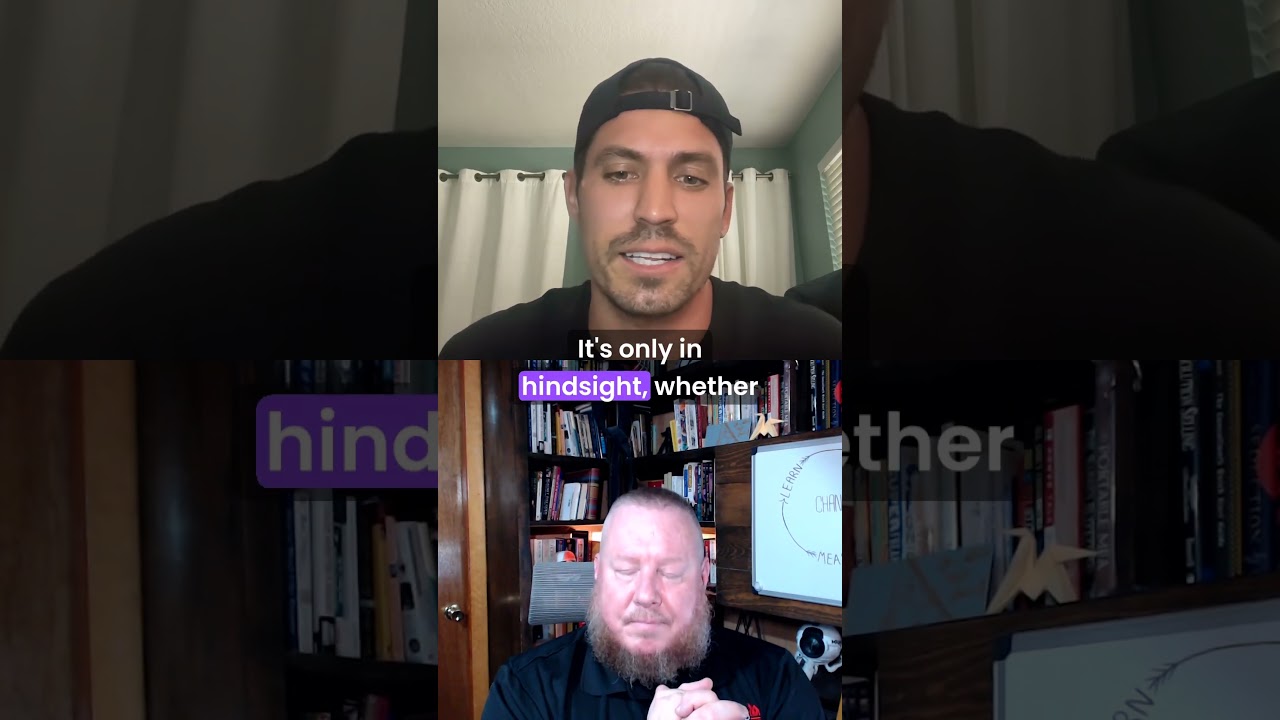
Kevin Jurovich, former NFL Player, on dealing with the unexpected in business!