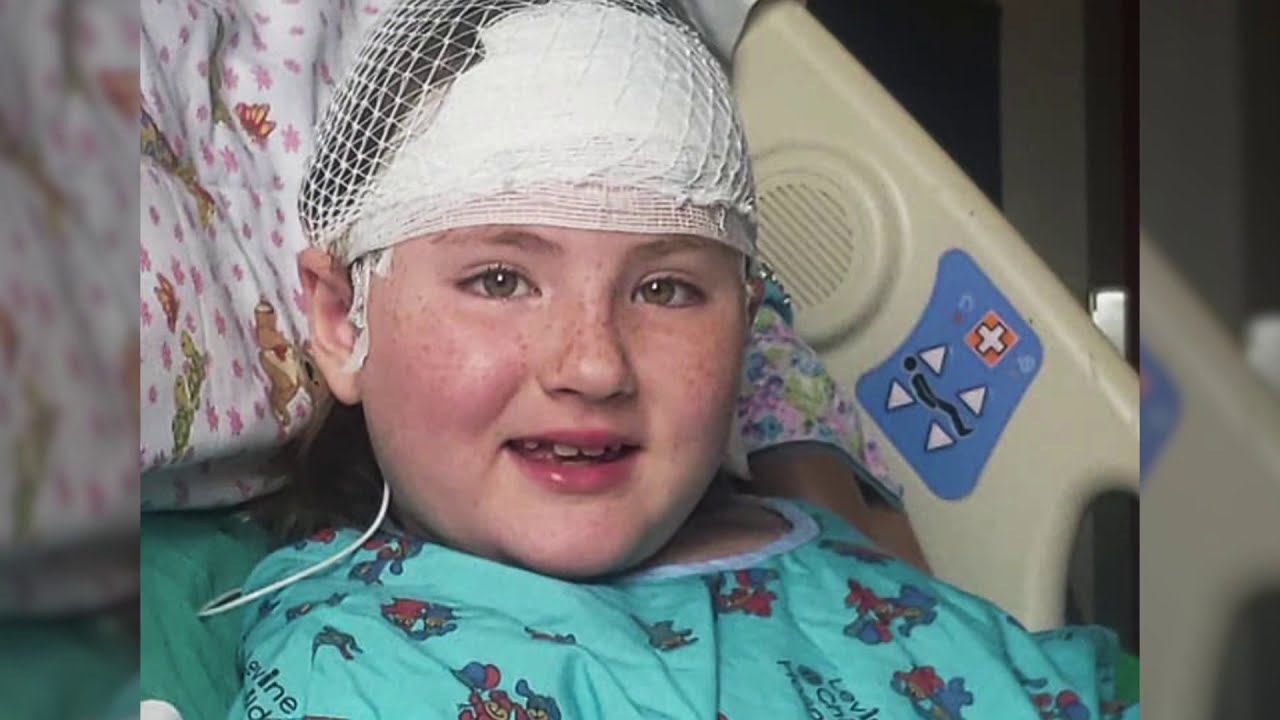
The video is a mission‑style documentary produced for the American Cancer Society (ACS) that weaves together personal testimonies, organizational messages, and a research appeal. It opens with brief, informal exchanges before introducing Addison, an 8‑year‑old child diagnosed with juvenile pilocytic astrocytoma, who describes her family and her brain tumor. A parent recounts receiving a diagnosis of intraductal carcinoma, emphasizing the sudden impact of cancer. Another adult survivor shares her experience of being diagnosed at 36 with triple‑negative, BRCA‑positive breast cancer, describing her treatment plan (chemotherapy, double mastectomy, preventative hysterectomy) and her gratitude for being alive. ACS representatives explain the Society’s role in funding research, supporting patients, and encouraging donations in honor of loved ones. A researcher from Levine Cancer Institute outlines a proposed ACS‑funded project investigating genetic pathways that metabolize cancer and pain‑control drugs. Throughout, speakers stress the importance of community support, research funding, and collaborative effort to advance cures, concluding with a call for donations and hope that combined efforts will eventually save lives.
Chapters
Come on!
So I have 3 small kids. I have an 8-year-old, Mamie. She's my firstborn. Lulu is my 5-year-old, and then Topper is my 3-year-old. So it's just mass chaos.
Have a good day!
My name is Addison. I am 8 years old. I have a mom. Her name is Christy. I have a dad. His name is Roland. I have a sister. Her name is Liliana. And I have a brother that is named Oakley. And I have a dog named Valentina.
The nurse called and I immediately knew. She said, you have intraductal carcinoma.
I have juvenile pilocytic astrocytoma. It is a brain tumor.
Cancer was not on my radar before. Sorry. It could happen to anyone. We had a completely normal life before, but now things are different. We have a different normal. Addison's been on 2 different trials now, and they always tell me this may not be her answer, and I get that. It may not be hers, but she could help Provide the information for the next person.
Come swing it, Tammy!
I go and I work out, and I'm grateful every morning that I have the energy and that I'm alive to be able to go work out. I was actually 36 when I got diagnosed. My mother had breast cancer at 30. Her mother had ovarian cancer and passed away at 37. I had what was called triple negative, BRCA positive. We knew that we would give it as much chemo as we could, have the double mastectomy, have the preventative hysterectomy, and I would never have to worry about it again. It would be a rough year, but I get to live for the rest of my life.
You know, one of the wonderful things that the American Cancer Society has done over the years is support research and support researchers. Without the monies coming in, there's no money to give out. So really, it's, it's what we do as individuals, and when the American Cancer Society comes calling, it's important to recognize that.
At Levine Cancer Institute, we're hoping to get some funding from the ACS for a really exciting project, which we think is pretty innovative. We're looking at the genes within the body that are responsible for metabolizing new drugs, both cancer drugs and with pain-controlling drugs.
All of us have been touched by cancer, either personally or in our family, our loved ones. And so the concept of making a donation to the American Cancer Society in honor of those we've lost or those who have survived their cancer is very important. And I would urge everybody to make sure they support the work of the American Cancer Society.
Any kind of new research that comes up, It could save my baby. No one person can cure it all, and it does take money, but I think if you have a good team of people working together, we'll get there one day.