Breakfast with the Relatives
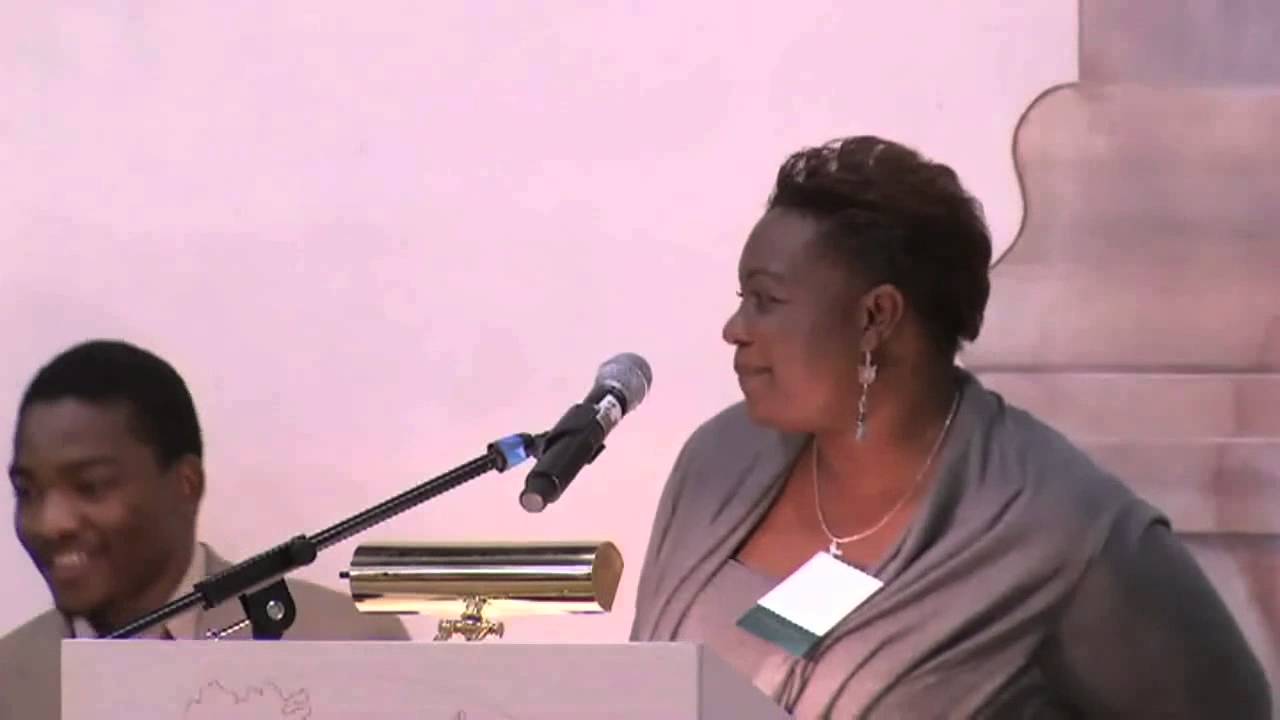
The Relatives, a nonprofit serving homeless and at-risk youth in Mecklenburg County, held a fundraising breakfast on May 4, 2013. The organization runs a 9-bed crisis shelter, a 9-to-18-month independent living program for former foster youth, and OnRamp Resource Center. Board members shared that the group served 3,000 people and made 2,400 shelter stays, and introduced giving circles starting at $1,000 per year.
Chapters
Welcome to Breakfast with the Relatives. My name is Ann Sanders, and I serve as chair of the board of directors at the Relatives. Welcome. This morning you will hear about our work through the families we serve. What I hope you take away from my 3 minutes is simple. Our work meets critical needs in our community, and our work is unduplicated. Thank you, Ann. No one else does what we do. The Relatives has 3 programs that you will hear about this morning. First, our crisis center. Since 1974, we have operated a 9-bed shelter free of charge for children and teens who are homeless, who have run away from home, or who are in a crisis situation at home. This is the only emergency shelter for children and teens in our county. Our second program, Journey Place. Journey Place is a 9 to 18 month residence for 6 young men ages 18 to 21 who are leaving foster care and entering adulthood. Journey Place is the only independent living residential program for former foster males in this county. This residence is possible through the generosity of Providence United Methodist Church, and we are most grateful. And our third program, OnRamp Resource Center, for young people who need help transitioning to adulthood. Our world expects an 18-year-old to function as an independent adult. This is a tall order for even our most healthy and well-cared-for 18-year-olds. So imagine the challenges for our at-risk young people. Young adults are 13% of the county population, and yet they account for 38% of the arrests made in Mecklenburg County. This population needs help. OnRamp is also free. It's open to any and all 16- to 24-year-olds in our county. This event would not be possible without a lot of help, and I would like to thank our sponsors at this time: Wells Fargo, Steri-Tek, Alston& Bird, Cardinal Partners, and Harris Teeter. Thank you to Designer Glass Mosaics for the lovely centerpieces, which were made by the children and youth at our crisis shelter, and to Phase 2 Productions for video production assistance. As you join us for breakfast this morning in the comfortable setting of this church, please be aware that many children and young people don't have a safe place to wake up to in the morning. They live on the street, they live in unsafe or abusive homes, or they reside in a homeless shelter, no place for any young person. For many young people, the reality is simple and despairing. They are on their own at their 18th birthday, starting with where they lay their head down to sleep that night. The Relatives' goal is to make young people independent as well as interdependent, helping them to develop the community and the safety net that we all need in our own lives. It is these young people that The Relatives serves, providing a safe place with our crisis shelter, for children and teens, with OnRamp Resource Center for young adults, and with Journey Place Independent Living Residence for former foster youth. So thank you for coming, thank you for listening, and thank you for supporting our mission. At this time, I'd like to ask Reverend Father Michael Zvarva-Ellis here at Holy Trinity Greek Orthodox Cathedral to bless the food. Thank you very much to Holy Trinity for hosting this event this morning. Thank you also to John Schumas, our safe place partner at Chick-fil-A South End, for the chicken biscuits. Thank you to Starbucks for the coffee and for Neat Sweets for the pastries.
Let us bow as we pray. Eternal God, our Father, We do thank you for this day and for all the many blessings you've bestowed upon us. And as we gather this morning, we thank you, dear God, for this facility who's hosting this breakfast. And now we ask thy blessings upon the food that we are about to receive, and we do thank you for it. In Jesus' name we do pray.
Amen.
Good morning, everyone. What an honor it is for me to stand before you to speak about an organization whose mission and work are not only critical to this community, but make a lasting impact on the lives of our youth. I'm proud to have the honor to serve as the Executive Director of The Relatives. I'm proud to say that I help young people every day find a safe place when they have nowhere else to turn. I'm proud to say that I help young people who have been left to fend for themselves find a safe path in their lives. These 7 years that I've been with the relatives have been truly life-changing for me. I've seen young people experience situations that most adults would never, ever be able to handle, and situations that many young kids should never, ever have to face. Situations like Aaron, a young man who was adopted at the age of 14 only to be given back like a package marked return to sender, and then to be bounced around from foster home to foster home, and then they wonder why he keeps running away. Or Robin, who against all that she firmly believed, traded her body to strangers just to have a warm place to sleep at night. When I think of those situations and then realize that there are literally hundreds more just like that right here in our community, I shudder at the fact that we are a community right in the middle of a crisis, a life-and-death crisis, and we just don't realize it. At The Relatives, our mission is to keep kids safe, families together, and help young people become successful adults. It's a very simple mission, but one that carries a great responsibility. For the past 38 years, our organization has continued to work to meet that responsibility head-on. In the past year, we opened our doors to more than 3,000 people, providing shelter and crisis services to more than 2,400 youth and families, assisting nearly 400 people in our On-Ramp program, helping those emerging adults find housing, necessary job skills, and work towards education goals. And housing former foster youth, helping them not only catch up, but get ahead in their life's journey. See, sometimes matters of life and death seem less obvious. If there's no gun, knife, vehicle, or speeding vehicle, or an ambulance, or news coverage, we really aren't very aware. Even for us who work in this arena every day, we sometimes don't realize how massive this crisis really is. But every year, the need for our services gets greater and greater. When we opened the Honorant program, we knew that there was a tremendous need for a service to help youth transition to be successful adults. But I continue to be amazed by the sheer number of homeless, disconnected, unprepared youth in this community, many of whom face the daily challenge of basic survival. I'm not sure you all heard me earlier. But OnRamp, a program that started nearly 3 years ago to serve 12 youth, 12 youth a year, helped nearly 400 last year. When that many kids in our community need help, it really screams crisis. When more than one-third of the kids who sought help at OnRamp had to find housing at the Salvation Army or the men's shelter, or when more than 60% of those kids have already been arrested, when more than 47% of the kids we serve, male and female, have disclosed that they have had to trade sex for a place to sleep or for food to eat? That screams crisis, life-and-death crisis. See, we often look at these kids hanging out around the transit center or in the streets and say, oh, there's trouble, or, why should we care? They don't. But when our young people who already don't have stable families or support systems to fall back on, and not at all prepared to be on their own, and often have to make the choice to steal or go hungry, Or have to fight to keep someone from stealing the garbage bag filled with all of their clothes, and they honestly believe that this is all that the world has for them, it's a life-or-death crisis. It really is. Labor reports state that the unemployment rate for young people of 16 to 24 years old is 17.1%, twice that of Americans over 25. But for kids like Darryl, whose number one priority is hoping that the men's shelter has space tonight, Or Jordan, who's praying that she'll be able to stay a few more days in her foster home after she turns 18. Employment is a distant dream. Kids like Amanda, a 15-year-old whose mother put her out on the street to survive on her own, you know, they're behind the mark, but the expectation is that she becomes successful. Think of Maslow's hierarchy. Until the basic need of safety is addressed, nothing else even matters. So many of our kids are in real danger today. National reports state that there are 1.8 million homeless youth in America. 1.8 million. Nearly 40% of those have been in foster care within the past 3 years. Reports say that 1 in 4 foster youth will be incarcerated within the first 2 years of aging out. Now, let's look at that. The cost of incarcerating a person in North Carolina is $28,214 per person per year. We put more resources, significantly more resources into jailing our kids rather than preparing them for success. We literally spend fortunes to punish for criminal violations that could likely be prevented with providing support and helping young people prepare for their success. Nearly $30,000 per year for jail, $750 per person last year for OnRamp, plus enrollment in education programs, increases in employment and job skills, safe housing, and the development of critical support systems, all of which are shown to reduce criminal activity, and all of which will establish promising futures, as opposed to the absolute zero outcomes you get from jail. We have to continue to provide our youth with true options that will help them succeed, help them be productive citizens. When I think of what we do at OnRamp, and all of our programs at The Relatives, and how important they are to the community, I think of a young lady named Patrice. Patrice had lived in 5 foster homes since she was 12, and then at 18, she had nowhere else to go. She and her father— excuse me, she and her foster mother didn't get along, and of course, Patrice wasn't necessarily the perfect angel, so everyone was pretty excited about her aging out. But after turning 18, she packed her clothes in a black garbage bag, tucked a few bus passes in her pocket, and rode around on a bus all day until she landed at the transit center. And she was wondering how she was going to make it. See, for young ladies like Patrisse— alone, desperate, scared, broke— you don't stay on the street alone for very long. And sure enough, less than one week later, she met a friend, and he agreed to take care of her. 3 weeks later, she was arrested for prostitution. After a couple of years of trying to make it on her own, a friend told her about OnRamp. She came to the resource center very guarded and skeptical, but desperate to make it on her own, desperate to be successful, desperate to change her life. She and staff structured a plan for her future, and we worked with community partners to help her find a safe place to stay. And then we continued working with teaching and guiding and supporting her. She participated in our workshops and actually became a leader among her peers. Our staff supported her through every step of implementing her futures plan. And now, she needed a job. But because of her criminal background, it was very, very difficult for her to have one. So staff stepped in and advocated for her with potential employers. And finally, she was able to find a good job. It wasn't easy, but she did it. And after saving enough money, she secretly got an apartment on her own. and then came to the resource center to show off the keys to her new home. It's been a year now, and Patrice is still employed, and she's hoping to turn her job into a career. She still has her apartment, and she's hoping to upgrade to a 2-bedroom. See, with a little support, she has pushed those closed doors open to see a lasting and bright future. So, who's going to stand up for these kids? Who's going to reopen the doors that have long since been closed? When you hear about the number of young homeless people in the community, and the number of arrests, and the increasing numbers of youth who've been killed, you'll see that most of these aren't all new faces. These are some of the same kids who've been cycled through the systems most of their lives. In my 17 years of doing this work, I've seen many of them grow up. For years, our systems have been doing the same things and blindly ignoring the fact that we are failing many of our kids. They're destined to. Be homeless, or be in prison, exploited, or even death. At The Relatives, we've made a decision to stand against the status quo. Nobody else in this community is doing the work that we do for these kids. And through innovative programs and best practice approaches like OnRamp and Journey Place, The Relatives is committed to ending that cycle. We believe there can be an end to youth homelessness. We believe that young people can grow up prepared and with the optimism that prepares them to be successful. When so many doors have been closed for too many young people in this community, I'm relieved to know that with your help, the relatives will be here during those moments of need to open doors to lasting success and to promising futures. Thank you all for being here. Thank you.
Thank you. I'm 16 years old, and I'm here because me and my mom had situations in the house where we would be yelling, fussing, and fighting, and arguing. And she told me I wasn't— I wouldn't be able to stay there anymore.
You made the wrong decision.
My mom's trying to, you know, find me a place to lay my head at night. She went into a shelter and I just came in here because they wasn't accepting people, you know, like teens like myself. Y'all hungry?
Yeah.
One of the things that really hits me is when You see young people who've been sleeping on the streets. They're homeless, have nowhere to go, so they're stealing food, or they're arrested for trespassing, or, you know, stealing clothes, but what they have is torn and dirty and they have nothing.
Our mission is to keep kids safe and families together, so every single day kids come in and they're going through some kind of crisis, and we love on them and take care of them and try to help, you know, put their family back together.
They treat you like you're their own child. If you need to talk to somebody here, they are willing to sit down with you one-on-one and talk to you so that you can Stay calm, stay safe.
So many people are complaining about not having stuff or different things when they have so much, and these kids are going through so much and they're still so strong.
ARMWRAP has helped me with interviews. We did an interview, kind of practiced an interview yesterday. I think I did pretty well.
It helps me with school.
It helps me stay on track with school.
So, manager, huh? Manager trainee? Yes.
Oh, I woke up at 4:50 this morning and had to be at work at 6. I just started at McDonald's and they offered me to take the management classes actually in December. It's a second family. That's how I look at it. It's a second family.
There's only one thing every child needs in their life, and that's They just need one person to be crazy about them. And the wonderful thing is that the relatives, there are so many of us who are crazy about so many kids. And so if they just feel part of that, I think that will make a big difference in their life and give them the confidence they need to go out into the world. We are taking care of kids We're working with really young adults who, they wouldn't have another option out there. Nobody else is providing these resources or these services.
Without OnRamp, I'd be probably struggling, trying to find a better job. I probably wouldn't even be in school right now.
I'm Allen White. This is Journey Place, my house.
It's an independent living program. It's made for younger— young adults or young teenage guys from ages 18 to 21. It's basically to help manage money, independent living, how to cook, be on your own.
I'm in school. I was put into foster care at a very, very young age. I bounced from foster home to foster home.
I was almost adopted at one time.
That didn't go too well. And after I turned 18, I had nowhere else to go. Like, we have always had great support here. I got into foster care at the age, I think, of 3.
7 or 8, because my parents, they were on drugs at the time. But now, this is like where I'm at now, it's a lot better than being in foster home, I think, because it's more, I guess, you have more independence, I guess.
These kids a lot of times just don't have a chance, and I'm just so happy that we're here to help at least provide that opportunity, open the door for them, show them that there is a possibility for a bright future.
What happened to me, I would be in either a facility such as a detention center or a jail, or I would be out in the street.
It's hope when you really need it.
Hold up, hold up. Yeah. Good morning.
Good morning.
My name is Dustin Young.
Okay.
Okay. Well, this is my story. When I was like 17 years old, my mother put us on a train. To come up here to Charlotte because she had got accepted into a cooking school. So we came up here, you know, thought we were prepared. And we got off the train, got on a cab, and went to go to our hotel room. We had the wrong— the cab driver took us to the wrong hotel room, and we didn't know where our hotel room was. So we ended up staying at the hotel room we were at, and our money got lost. So we had to stay at that hotel room for about 2 weeks. And we were hungry. We couldn't pay for it anymore. So the front— the lady at the front desk told us about— The lady at the front desk told us about the homeless shelter. So we packed up and moved to the homeless shelter. When we got there, I was informed that I could not stay there because I was too old. So they sent me to the relatives. They gave me a ticket, put me on a bus, and sent me to the relatives. Unfortunately, I'm directionally challenged. So, you know, I got lost and I was lost till about like 12, 1 o'clock till I finally called the police and they took me to the relatives. And when I got there, it was like 1:30 in the morning. They checked me in, they asked me if I was hungry, and they gave me a bed. I went to sleep. And when I woke up the next morning, you know, I went downstairs and I just kind of— it kind of just fell into place after that. I interacted.
I'm sorry.
I got to do a whole bunch of things. I didn't have to worry about whether, you know, I was going to sleep at, whether my mother was okay. And I stayed at the relatives' for about—
2 months.
2 months.
2 months.
Stayed at the relatives' 2 months. During that time, they helped me with everything I needed help with, whether it was school, getting clothes, doing work, getting a tutor, and all that. After that, I aged out, had a birthday party, aged out, and I stayed in a hotel room for the night. 'Cause once again, it was either a chance of going to the men's shelter or finding somewhere to stay. So I decided, you know, we called my brother and he came and got me. And I stayed with him for a month or two, but I had to come back so we could sign the lease for the house. So when I came back, I went to the men's shelter, or jail, you know, I prefer jail. But yeah, it was like jail, seriously. But I went to the men's shelter and— What was your name? It was not fit to be lived in at all. It was like living with a whole bunch of animals, basically. It was horrible. The bathrooms were dirty. The men, they did not care. And you took a shower in an open place with like 6 other people. Oh, my God. It was not something you want to go through, not something you want to experience, not something I would wish on anybody. I don't care how much I don't like you. It's not something you should do, but I did it. I went in there every day, focused, schoolwork, found my little corner in there and, you know, did my thing. Didn't pay no attention to nobody. Met a couple friends, met a couple older guys that Talk to me, you know, help me get through it. And I did it. I had to. There was no other choice. Because I went— I was 18. I'm not going to cry to my mom about it. I'm just going to go do it and get it over with. So I did it. But during the whole thing, I was going to OnRamp looking for a job. I was going to the relatives. They would let me come over there, you know, eat, take a shower, rest, whatever I needed to do. They helped me through the whole thing. And sooner or later, we got a house. You know, we made it. We did it. We did the thing. We made it. And we know it was over with. It was done. So, you know, even now, even though I'm done and out of there, they still help me. They still call and check on me. I know if I need somebody to talk to, I can call and talk to them. So, you know, I'm happy they're here. I would not have made it without them. So I thank them a lot because they helped me a lot in my life. And now I got— A month or two before I graduate from school and go off to the armed services.
Thank you.
Good morning.
I am Justin's mother, and I'm here because the relatives not only helped my son, they helped my family. Justin tells the story, and he tells it pretty correctly. We came to Charlotte to change our lives, to do something better. I wanted my children to have a better outlook on life. I didn't want them involved in the criminal justice system. I'm Justin's mother. Which it was kind of looking like they may be if we didn't change something quickly. And we made plans to come to Charlotte, but like all best-laid plans, didn't work out. When we got here, things kind of got confused and mixed up, and we ran out of money before we thought we would. And I went to pay for our hotel room one day, and I was by that time paying day by day. We'd been there about a month. And the lady said, why don't you guys go to the shelter?
Oh, no.
And I'm thinking, what? The shelter? Really? I've never been homeless, never had to go to the shelter. I've never known anybody that was homeless or lived in a shelter. Well, I thought about it. I prayed about it. I stayed up all night and prayed about it. And I think the next day I called the shelter and talked to them. And I called the relatives and I talked to them. And what did they say? And they told me that my teenagers could come to the relative, and I could, of course, take the small ones. We came here 4 people: me, 2 teens, 18 and 17, and 2 small kids, 9 and 4. So, half of us could go to one shelter and the other half could go to another shelter. And we'd never been separated. We were really close. We always lived together in one house, and they said that we would have to separate and go to 2 different shelters. So I talked to the 2 oldest ones. Of course, I cried and I cried and I cried. And they said, hey, whatever we have to do, that's what we do. We're gonna make it. Don't worry. God is good and we're gonna make it. So we went to the shelter. We got on the bus with our last little money and we went to the Salvation Army shelter. And when we got there, they said that my oldest daughter, who was 18 at the time, could stay there because she was too old to stay at the relative. But Justin would have to go to the relative's alone. And we cried some more. And he got on the bus to leave at about 7, and he got there at 2 o'clock in the morning. And I worried, because we were in a new city and we didn't know anybody, and I had no clue where he was or who to call to find him. But the people at the relative's assured me that he would get there, and as soon as he got there, they would let And he made it. And I went to the relative the next day to sign him in. And by now I am embarrassed because I'm homeless and I have to send my son somewhere alone. And I'm wondering what these people are going to think of me. What kind of parent am I? And I got there and they were so nice to me. They made me feel like a person. When I was feeling like a 9 person. They assured me that they were going to take care of my son for me, not to worry, he would be fine. Justin stayed at the relative about 4 months. He'd stay 14 days and he would stay with us overnight and he would go back. In those 4 months, I looked for a job and I worked, got up every morning, went looking for a job. My kids were in school and We did what we had to do. We prayed until things got better. But I never had to worry about him. I knew every day that he was safe and he was taken care of and somebody cared about him. They cared about him like I cared about him. And not just Justin. I have a daughter, 18, Trinay. And she was a little rough around the edges. That's making it— saying it— taking it lightly. And— but she started going to OnRamp. We just happened to go there one day with the girl on the video, Miranda, and she said, maybe you should go here. And she went to OnRamp. And she started going to OnRamp every day like it was a job. She'd get up in the morning, she'd get dressed, and she'd go to OnRamp. And she'd look for a job all day. Or she'd go to a workshop. Or she'd work on a resume or do interview skills. She got kicked out of school at 14. She'd gone to Job Corps and quit. She'd quit everything she'd ever started. She went to OnRamp every day and she got her GED. She completed something. She went to OnRamp every day and studied for the ASVAB and she joined the military. And she graduates basic training in 10 days.
So—
So we came here in February and we were in a situation and we met these people who changed our lives. In September, we got our own place and our life is pretty much back to normal. Everybody's working. I'm working, in school. Justin graduates.
I'm working.
He's graduating in 8 weeks, and he goes to the military. My oldest child is graduating in 10 days. My 2 younger ones are in school, and they're happy. We're stable. The relatives did that for us. These people have been a godsend to us. They have been a blessing beyond anything I could ever ask for. They are the best. Group of people. They care about not just your children. They cared about my family. They called me, asked me about jobs. They talked to their friends about job openings. They helped me find a place. They put me in touch with a housing authority. They called and asked if we need anything. And this happens still today. They call and they say, How are you doing? Is everything going okay? Is there anything I can do for you? I've had OnRamp— people from OnRamp help me put groceries in my new refrigerator, take me to the grocery store, bring me blankets. You know, somebody bought us a TV and they won't tell us who, but we thank them for it. But if it wasn't for them, I don't think we would have made it. I think we probably would have given up and we would have gone back home and we would have— I would have worried about my children. But because of them, we made it. And we made it not barely, we put it in there. We went over the top. And it's because of people like Tabitha and Courtney and James who never give up on you.
Never.
Even when I had like, okay, that's it, I'm done, they were still like, no, no, there's something we could do, there's something else we could do, there's something else we could try. They never stopped. They never stopped. Sometimes I was like, that's enough. And they were like, no, there is something, there is somewhere, there is somebody that can help you. And it's because of them that we made it. And I would just like to I just want to say thank you so much. You guys are the greatest.
Good morning. My name is John Wickham, and I have the pleasure and honor of serving as Vice Chair of the Board of Directors of the Relatives. So today you heard a remarkable story. Sharon and Justin, thank you so much for Thank you for sharing your story. It's just incredible, and we're proud of you and excited for you. Yeah, they were fortunate enough to find out about the relatives, but what about all those kids in our community that don't know about the relatives? Where do they turn? How can we reach out to the hundreds of children in our community who run away from home every year? And the countless others who are considering running away? How do we reach all those kids who are afraid at home but don't know where to go? How do we serve the nearly 5,000 kids in the CMS system that have no place to call home? How do we support our young adults and keep them off the street so they can have the resources to be successful? These are very tough questions about some of our very real and difficult challenges. And for each individual, what does it mean to be homeless, to feel unsafe, to not know where to turn for help? These questions are, for most of us, incredibly difficult to process and to comprehend. And we're adults. Remember, these are children and youth that are trying to figure this out. What can we do to help? Well, we have to work even harder. There's so much to do to reach the youth who are struggling and make sure they learn about the amazing work that's being done by the relatives. We have to be committed year in and year out. year out, giving the children and young adults support that they can count on. And simply, we have to give and give generously. I think one of Dr. Seuss's greatest characters, the Lorax, may have said it best: Unless someone like you cares a whole awful lot, nothing is going to get better. It's not. I know you care. On a cold, rainy, early morning meeting, you're here, and that means you care. I also want you to know that the Board of Directors cares. We're fortunate to have a talented, energetic, and engaged board that has worked incredibly hard on behalf of the relatives. In addition to their time and their prior financial commitments to the relatives, I'm pleased to announce that the board is making a $50,000 leadership gift to kick off this year's breakfast campaign. What a fantastic start to the morning. But the need is large, the time is now, and your support is greatly needed. I'd like to take this time and ask the table captains to please distribute the pledge forms. Okay, so starting at the top of the card, I'd like you to please consider joining the Circle of Giving Society by giving a multi-year pledge. As we've heard, sustainability and commitment are critical to the long-term success of our programs. And multi-year pledges obviously play a vital role in achieving those outcomes. We have 3 categories of multi-year giving: Circle of Hope, Circle of Dreams, and Circle of Life. The Circle of Hope is a pledge for $1,000 per year for 5 years. So for about $83 a month, you provide the gift of hope for the children of the relatives by providing support for programs such as our parenting classes, which teach parents key skills to help them better support their children. If you can do that, please check the FIRST box. The Circle of Dreams is our next giving level and is a commitment of $5,000 a year for 5 years. A gift at this level allows the relatives to invest in keeping kids and families Together long-term by offering support programs such as our aftercare program. So if you would consider a gift at this level, please check this box. Excuse me. The Circle of Life is our next giving level and is a commitment of $10,000 a year for 5 years. A gift at this level allows the relatives to open a door of hope and opportunity to the kids who age out of foster care each day through the OnRamp program. The OnRamp provides support to young people aging out who otherwise have no place to go except jail, homeless shelters, and hospitals to access services. If you would consider a gift at this level, please check this box. If you're joining me today as a member of our Multi-Year Giving Society, our collective thanks for your generous support. If you are already a member of our multi-year giving societies, we truly appreciate your commitment to the Relatives. We would also appreciate any additional consideration or additional years to your already generous commitment. If you're willing to make that additional gift, please do so. We know and respect that you may prefer to give at a different level. And if so, please indicate how much you would like to give and for how many years. All participation, really all participation, is truly and greatly appreciated. Thank you for whatever level of support you can provide. And as you can see on the pledge form, we have several payment options including credit card, check, or securities. And lastly, if you have some great ideas Or you would like some information about volunteering, please check the box asking that we contact you. I'll now give you some time to finish filling out your cards, and when you're finished, please pass your envelopes back to your table captain.
Thank you.
Whatever gift you have chosen to make today, whether you've become a member of our multi-year giving society, made a gift at a different level, or have ideas that you want to share with us later, we sincerely thank each and every one of you on behalf of the children and the families we serve. We appreciate that you took time out of your busy lives to be with us this morning. There's an ancient Chinese proverb that says, If you want happiness for an hour, take a nap. If you want happiness for a day, go fishing. If you want happiness for a year, inherit a fortune. If you want happiness for a lifetime, help someone else. So in this season of Thanksgiving, how about you and we together make sure that something is going to get better. Let's help these children. Now we'll turn our program to Rick McDermott, past chair of the Board of Directors, for some final thoughts.
Good morning. Well, I know we all promised you in advance that we'd be done by 8:30, so I've got my 1 minute to go. On behalf of the Board of Directors, All the volunteers, the staff, and the family and children of the relatives, I want to personally thank all of you for being here this morning. I know it's a— as John said, it's a cold, rainy morning out there, and I'm sure the option of staying in bed was probably one that sounded really good when your alarm went off, so I appreciate y'all being here this morning. I also want to thank Holy Trinity Greek Orthodox Church for their continued support. This is a great facility for us to have the breakfast in, so I appreciate their letting us use the facility. I also want to thank our sponsors again, especially Wells Fargo, Steri-Tek, Alston& Bird, Cardinal Partners, Starbucks— I'm sure you all enjoyed that this morning— Harris Teeter, Chick-fil-A, Neat Sweets, and Designer Glass Mosaics. Finally, let me thank our volunteers who were instrumental in bringing this event to fruition this morning. Thanks to the other speakers, Anne and Brennan and John, and particularly Sharon and Justin. Thank you so much for sharing your story this morning. You've really made this a meaningful hour for all of us. To our table captains, thanks to each of you for being ambassadors for the relatives and for inviting friends to learn more about our programs. Each of you should know that your being here has opened doors of hope to so many. For those of you who are interested in learning more, feel free to visit the Crisis Center. For those of you who don't know, it's literally right down the street on East Boulevard at 1100. Our staff is available to give tours, answer questions about any of our programs and services that you heard about today. So thanks again for coming. Be safe on your way to work or wherever you're headed, and thank you again.
Thank you.










