Breakfast with The Relatives | Kim Brattain Media
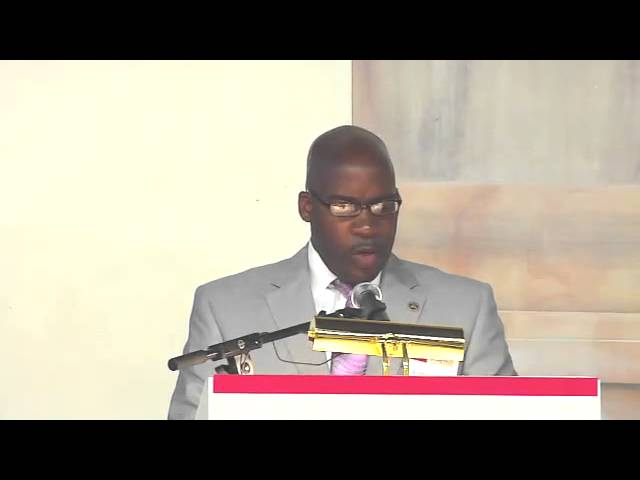
The video records the 7th annual "Breakfast with the Relatives," held to mark the organization’s 40th anniversary. Board Chair John Wickham opens with a prayer, thanks to founding director Dr. Russ Montfort, and acknowledgments of sponsors and local contributors. He frames the Relatives as a long‑standing advocate for homeless and at‑risk youth, emphasizing its role as a safe haven and a pathway to stability. Executive Director Brennan Graham then outlines the mission in three pillars—providing safety, stability, and future pathways—while sharing striking impact statistics: nearly 4,000 young adults served, 3,400 receiving shelter/crisis services, 600 achieving housing or job/education goals, and demographic data showing high rates of prior incarceration, low education, homelessness, and foster‑care background. Graham stresses systemic change, cost comparisons, and the need for more staff and housing options. The event features two powerful personal testimonies. Felicia Austin recounts her daughter Teresa’s runaway episode, the police’s limited help, and how the Relatives rescued her, leading to Teresa’s eventual GED, motherhood, and ongoing support. Lateef Johnson describes his trajectory from a troubled childhood, gang involvement, incarceration, and eventual turnaround through the Relatives’ On‑Ramp program and counselor Ms. Courtney, culminating in employment, college, military service, and family stability. Board member Lori Collins reflects on her 15‑year involvement, the emotional weight of youth aging out of foster care, and a call to “reach out” to support these young people. The gathering closes with a collective invitation for community members to keep doors open, support staffing, and fund the organization’s mission to break cycles of homelessness, dependency, and incarceration.
Chapters
So welcome to the Breakfast with the Relatives. I would like to thank Dr. Russ Montfort, who founded the Relatives and was the first board chairman, to bless this gathering and the food which we are about to receive.
Let us pray. Great Father, Mother God, You have called into being this gathered group of men and women who call themselves the relatives. They are the volunteered relatives of children and adolescents who have lost their way, whose ties to their birth families may be perilously frayed. For some of them, the place called home is a place of terror, of insults and put-downs, a place of neglect and stony silences. Stony silences sometimes, at other times shouted obscenities. This gathering, these people, are the self-designated relatives. Of any confused, frightened, and uncertain kid who summons the courage to ring the bell at their relative's house or take their phone in hand and punch in the numbers and say, help. God bless them, these relatives. God bless them, these children. God bless the frightened parents who call in the reserves, their relatives. Bind them all in love. Now accept our thanks for this lovely gathering and for this food.
Amen. My name is John Wickham, and I have the privilege to serve as the chair of the board of directors for the relatives. It has meant a lot to me. This is an important organization and a wonderful group. I'd like to start by thanking our sponsors: QuikTrip, Wells Fargo, Austin and Bird, Cardinal Partners, FCA Partners, Strothmore Capital Advisors, and Harris Teeter.
Thank you.
I'd also like to say thank you to Designer Glass Mosaic for the beautiful centerpieces, which were made by kids at the relatives. And a special thanks to John Sumas at our Safe Place location, Chick-fil-A South End, for providing the chicken biscuits, and the Scone Shop for the delicious scones. This year marks the 40th anniversary of the Relatives, and this is our 7th annual breakfast. Dr. Montfort and those who helped him start this amazing effort must feel very proud of the initiative they began 40 years ago. The Relatives continues to be an advocate and a voice for those who have no voice. It serves as a place of support, The faces have changed at the relatives over the years, but the commitment to youth has not. And here's a room full of adults united in the effort to give these youth in need a chance, a chance to not only survive but to succeed. As we share this time together, we hope to give you some insight.
I'm Kim Brattain.
The relative exists to support youth that have had to leave their homes, youth that are now homeless, youth that are in a crisis situation, those that need help and resources during that challenging and demanding transition into adulthood. Those who come here are incredible human beings with so much potential. But they need our help. We have an inspiring program for you today. I hope you will hear the message of the relatives and hear the voices of these bright young people who have experienced so much in their lives already. They deserve and indeed appreciate our support. Brendan Graham, our executive director, I think says it best. We offer the kids a safe place And a fighting chance to make it. For someone who may not have a place to live, who may need some support, direction, or guidance, for them staying safe and working for success is like climbing a mountain, a steep mountain with no gear, and indeed with no safety ropes. They can do it, but it helps to have help.
It is hard.
It is every day. It is one step at a time. It is a full-time tough job. But there is hope and there is help at the relatives. And as noted by Carl Bard, though no one can go back and make a brand new start, anyone can start from now and break— make a brand new ending. That is what we are doing. helping these youth and young adults make a brand new ending. It is an achievable goal. Please come and join us. The door is always, always open.
Good morning. My name is Brennan Graham, and for nearly 10 years, I've had the honor of serving as the Executive Director of The Relatives. I've had the honor of leading a wonderful staff who opens doors every day because we believe that every child deserves a safe place to sleep and a fighting chance to make it. That message has been a part of my life for as long as I can remember, even when I didn't realize it. As a child, we weren't rich. My family didn't have a lot of money. We didn't have— well, I didn't have a lot of some of the extras that many of my friends had, but I did have a lot of love, and that love spilled out all over the place. There was love for our friends, love for our family, and especially love for others. I can remember my parents opening the doors to our home to several young people who really had no other place to go. Back then, I had no clue what was going on. I just knew somebody else was living with us. But now I'm at the relatives, opening the doors myself to young people who really don't have any other place to go. After one of our past breakfast events, my father and I were talking about the work that I do, and the look in his eyes was just so proud as he said to me, son, it's just in your blood. Hearing him say that to me made me so proud, and now I am honored to be a part of this 40-year legacy of keeping kids safe and families together. The mission of the Relatives is achieved in 3 very simple ways: providing safety for those youth like Jeremy, who lived in fear after his mother died because his father would regularly get drunk and beat him just because he looked like her; providing stability to young people like Kathy, who was brought to us by police after being attacked by her live-in boyfriend less than a week after running away from home. Now she's safely back with her family, receiving support through our aftercare services. And providing paths to successful futures for kids like Mary, who went from sleeping in parking decks to having full-time employment, her own apartment, with a dog, in just 9 months. In this past year, thanks to our Giving Society and other loyal donors, our work has supported nearly 4,000 young adults in this community, providing shelter and crisis services to 3,400 youth and families, empowering nearly 600 young adults to find safe housing, obtain necessary job skills, or work towards education goals. We've developed and continue to develop critical partnerships with other caring organizations in this community to address gaps and fill those gaps as they're identified for our kids. Because as all of us know, you really just can't do it alone. But for our community, this is only a ripple in the ocean of need. And for the relatives, this is only the beginning. We're committed to breaking these cycles of homelessness, dependency, and jail that plague the youth in our community, a commitment that will ensure that our youth will be a part of our community rather than just a problem in it. Many kids have so many cards stacked against them. Of the nearly 130 young people that we served at our crisis center last year who were 16 to 17 years old, we're confident that only a handful of them truly had the foundation of education, Support, knowledge, and preparation to survive after they turn 18. 65% of the young adults seeking help at our OnRamp Resource Center already had extensive criminal records. 40% had not completed farther than 9th grade. More than half were or had been homeless. Many of them sleep outside our office door every night. And amazingly, but not surprisingly, Nearly 90% of them had been in foster care or one of our public systems. I dream of a day when every young person has a safe place to call home that has the love and support that everyone needs to be successful. A day when we can break that cycle of homelessness for our young people. I dream of a day when our kids who have aged out of our systems age out to college or career readiness instead of to the streets. The shelters and jail. I dream of the day when the cost of preparing young people to be truly successful is not the primary barrier to making this a reality. For the relatives, that cost is about $1,100 per child. It's a mere drop in the bucket compared to the nearly $28,000 per inmate we spend each year. In order to make these dreams happen, we need systemic change. Much of that starts with awareness. We need folks to understand that the face of homelessness and crisis is not just an adult face. Our young people are growing up in our systems and in our community headed to jail or to live on the streets, becoming prostitutes, stealing, and getting arrested just so they can eat or have a place to sleep. We need to add more feet on the ground to actually reach out to those young people on the streets so they can know that there's support out there for them. We know that one additional staff member in our services can impact the lives of more than 100 young people through our direct services and case management. We need to identify safe housing options that support the unique needs of our young people, so— whose backgrounds and lack of family support and unpreparedness keep them rotating through those cycles of homelessness and dependency. But if we don't make those changes, well, shame on us. We will have turned our backs on some of our community's most vulnerable citizens. Kids who were raised being beaten down every step of the way. Kids who were raised and witnessed and lived so many things that are just so horrific that I know I'm not strong enough to even survive. Kids who have never been taught that better is possible and survival should not be the ultimate goal. Kids who have had every door closed in their faces and sometimes are really just even afraid to knock. Kids who have become adults and age out with a mountain of debt or bad credit because someone has used their Social Security number all of their lives. These kids deserve at least a little crack in the door so a glimmer of light can shine through. So I want to ask each of you in this room today to join the relatives in pushing more doors open for our young people, because together we will make sure that every young person has a safe place to sleep and a fighting chance to make it.
Good morning. My name is Felicia Austin. We learned about the Relatives through my husband's job. We thought it would be a great place to get involved. Little did we know we'd need their help. We have moved 4 times in the last 5 years For work, and each time my youngest daughter Teresa seemed to adjust very well. But this time it was different. She started skipping school, leaving for days at a time, and it seemed like all we did was argue when she was home. Then she was gone for 3 days.
3 days?
I was terrified. Oh my God, where is she? It seemed— is she safe? Is she alive? I'm praying the whole entire time, just keep her safe. Just keep her safe. We went to the police. They were very little help. We didn't find any true assistance until we called Curtis at the relatives. Curtis said, when she comes home, just bring her. Just bring her and don't worry about anything. And that's what we did. It was very hard. It was hard for me to leave her. But I knew it was the best thing for her. I knew that this would probably save her life. I knew that if she could go somewhere where she could be heard, somewhere where she could say what was on her mind and have someone to listen to her, she would feel as though things would get better. I understood that as a mom, when you have a teenager, you're like the enemy. And I blamed myself. Maybe she would've been okay if we didn't move. Maybe I should've listened to her more. What could I have done that was different? Did I listen enough? What was she trying to tell me, but I couldn't hear? That was definitely hard for me because that's my daughter. She's our baby, and that was very difficult. I didn't really have anyone I could confide in and talk to because I was ashamed as her mom. When she came— when she was at the relatives', I knew that she would have someone to talk to. I knew that she would be helped. I felt like Theresa had— if she had someone to talk to, she would for sure feel helped. When she came home from the relatives, it was still a struggle for her. Theresa was pregnant. Then she came home to me one day and she told me that she was in trouble. And she needed some help, and she wanted to return to the relatives. During her second stay at the relatives, Teresa made it clear that she did not want to come home. That was hard too. Although it broke my heart, I feel very grateful to the staff at the relatives for helping her. She was safe. She has done very well so far. She's working to get her GED, and she has a beautiful little boy, my grandson. I can't even think what I would have done without the relatives. They were wonderful, and they still are.
Thank you.
Because I still talk to Shakila. And Teresa is a mom now, and I think she's growing up and maturing a lot. We talk on a regular basis, and our relationship is the best that it has been in a long time. I am very, very grateful for the relatives for giving us our daughter back.
Thank you.
Thank you.
Good morning, everyone.
Good morning.
My name is Lateef Johnson. As a 9-year-old boy, I loved school. My mom was young as a kid when she had me and messed up a lot, so my Aunt Ida was my real mom. She made me fall in love with school, particularly math. She always told me I can achieve anything I put my mind to. When I was 9, though, unfortunately, my Aunt Ida passed away. That's when I got mixed up in gangs. I started stealing cars, selling drugs, and just so me and my sister can eat. I had my first shootout when I was 10. I got my first tattoo when I was 12. My mom told me the only reason she let me get my name tattooed on me was so that the police can identify me. She didn't think I would make it past 16. She said I was probably going to end up in jail for the rest of my life or dead. Me and my mom didn't have a good relationship. I was kind of on my own. My mom would tell me I can come home, but then she'd pick and choose when she wanted to kick me out. My dad didn't claim me either, or his other 16 children he fathered. My life was a mess. I ended up in Stonewall Jackson Correctional Facility for 16 months. That's where I decided I did not want to be in jail. When I got home, someone from the Big Brothers brought me to the Relatives On-Ramp Program. Ms. Courtney was my counselor. She's awesome. Kudos. Ms. Courtney is probably the best counselor at the Relatives. She will keep you moving forward. She will keep you going forward the whole way, but she will not tolerate slack. You have to show her that you want to do it. She stayed persistent with me. She kept pushing me to get my applications for jobs, and she gave me some more resources to help me build my resume. At 17, I got my first job, started college, and saved up money to get my own apartment. I used to come and talk to Ms. Courtney about my past, And when I was talking to her, she would ask me, are you still hanging out with your gang? And I'd tell her, yeah. She would say, you know that's not the only option, right? She would call me and say, hey, the YMCA has an opening. You want to come play ball? And me, I was big into sports, so— until I tore my ligament, of course. Couldn't get my scholarship. Sorry. So once I got busy going to rec centers, it pretty much kept me out of trouble and kept me on the straight and narrow path. She would even bring me to the relatives when I got my stuff done, and after I did get done, she would ask me, hey, won't you help out some of the other kids? She tried to keep me so busy that I wouldn't focus on being back in the streets. The relatives caught me before I was about to slip and fall. Like, right when I was on the verge of giving up, Miss Courtney was like, hey, there are people out here who actually care about you. She was like, as long as I keep trying, even if she had to stay up late, She would never give up on me. The relatives will push you forward and help you, but you have to want to help yourself first. They will not let off of you. They will help you change your life around because that's what they did for me. When I turned 18, Ms. Courtney talked to me about the military, and I joined the Army Reserves. Ms. Courtney herself, the day that I was supposed to enlist, drove me all the way down just for me to go to basic training. Which is very far because I had basic training in Columbia. Just to let some of y'all know. I'm from Charlotte. At the end of my basic training, well, before I actually left, she told me, hey, when you graduate, send me a letter. I'll be there. We couldn't have our phones, so at the end of my basic training, I was walking across stage going to meet my family, and out the blue, you just seen this face. Hey, Latif, I'm here. I told you I was going to make it. So, um, yeah, they kept a smile on my face. In January, I'll go on active duty orders to Iraq as an E-4. I'm so lucky today. I got a beautiful wife, Miss Morrow, right here hiding. She's Air Force, by the way. Not better than the Army, but— I have a beautiful baby girl who's I have a daughter who's not here. She's in daycare right now. 1 and a half years old, and I promise you, the best ball of joy y'all can ever meet. I'm serving my country, and eventually me and my wife have a dream to have our own house built from the ground up. Basically the American dream. White picket fence, you know, nice house. But that's what we're working to, about 2 to 3 acres, hopefully. A home of my own. that I feel worthy of, thanks to the home that I had with the Relatives. Thank you, guys.
Thank you, Felicia and Lateef, for sharing your remarkable stories. You remind us all of the power of the work of the Relatives organization. Hello to all of you. I'm Lori Collins. I've been involved with The Relatives for 15 years, the last 2 years as a board member. I've known about The Relatives even longer as a Dilworth resident. What drew me to The Relatives a few years ago was hearing about the work they do with youth aging out of foster care. Kids riding around on a city bus, on their 18th birthday because they have nowhere else to go. How lonely and frightening that must feel. And I pictured my 17-year-old niece in that situation. Sometimes I feel overwhelmed by all the needs in the community, and I think, what can I do? What can I really do that makes any difference? Last summer, I read a quote that helped me see what I can do and inspired me. The poet Mary Oliver wrote, there are things you can't reach, but you can reach out to them, and all day long. And then I understood We can stand with them. We can stand with the youth, with the kids in crisis. We can stand with the young adults trying to make an independent life. We can't fix all the root causes or reach every single kid in crisis. But we can reach out to them all day long and show them a community that cares.
Thank you.










