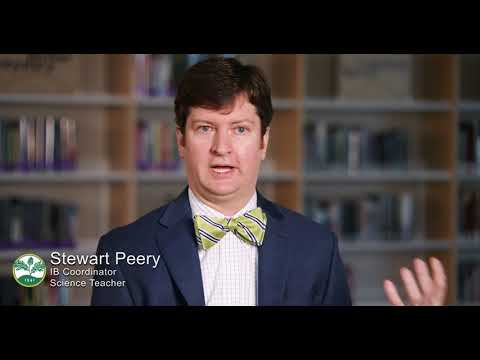
CCDS students and teachers explain the International Baccalaureate program, which builds self-confidence, organizational skills, and critical thinking through collaborative projects. The curriculum combines subjects like biology and history, while CAS connects creative work to community service and the Extended Essay lets students pursue their own research interests.
Chapters
There's not really a stereotypical IB student. We have students that end up being Division I athletes. We have students that are heavily involved in the arts. We have students that, you know, are going to go to be econ and business majors and are very internationally minded. There's all sorts that can come to it.
From the IB program, I think the very first thing that they gain is the self-confidence that they could learn anything. Then they gain a strong sense of organization, except cleaning their bedroom. Then they gained the courage to fall and get back up. They also gained a lot of very strong academic knowledge that they needed in TOK stands for Theory of Knowledge.
It's really a critical thinking skills class for students in the IB program where they study their knowledge. They study what they know and how they know it. One of the things that I love about IB is that it's really a collaborative experience. It's not students versus the teacher for the grade. It's really the students and the teacher together working to accomplish projects.
I think just the critical thinking and how well-rounded the program is in general really prepared me for college. I know I was able to take my love for biology and for the sciences and also pair that with, you know, my interest in history and then eventually government. I was able to do both and from, you know, teachers that really cared about me and really cared about both aspects.
I think CAS was a really big part of my IB experience. CAS stands for Creativity, Activity, and Service, and so it's a requirement to get the IB diploma. So CAS was kind of like the way that I was able to have an excuse to go out with my camera and take pictures. It really just gave me the opportunity to take a break from my studies in a productive way.
I think the extended essay is, at least for me, it's a passion project because you get to find that topic that you're really excited about. And you spend several months researching it and working with a supervisor, and if it's a topic that excites you that much, it doesn't really feel like work. So the research process has been really exciting.
You have to be engaged. I think that's a big word for IB students. Are you engaged in the learning process? Are you willing to accept feedback? Do you like to participate in your classes? Do you like to work with your peers and the faculty? You have to have— be somebody that, you know, likes school. That's a big part of it for sure. Part of it is also just resources. It takes real resources to run the IB program. If we talk about something like all those chemistry students doing their individual lab from start to finish, the low student-teacher ratio, plus just the resources of the facilities that we have here and the financial resources to support the program, it does mean that we're able to execute IB at a very high level here. I fully believe that IB is worth it because you graduate with the skills and the knowledge to be successful at the next level and really honestly major in anything and take on anything you want to at the next level.
You really have this, like, amazing support system of, like, teachers and peers and friends who are all doing it together, and it's, like, really fun.