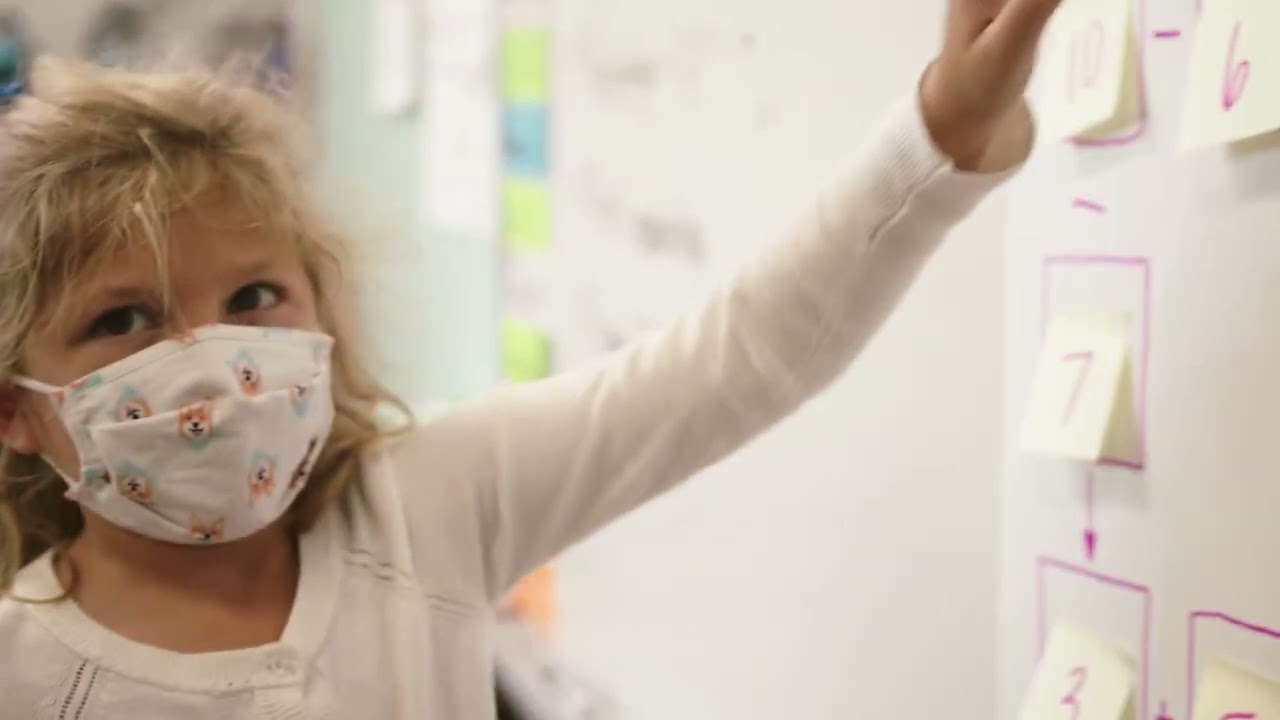
In this brand video, Erin Dudley, a first‑grade lead teacher and lower‑school math department chair at Charlotte Country Day School, explains how the school’s Math in Focus curriculum—modeled on Singapore‑style mathematics—uses a concrete‑pictorial‑abstract (CPA) progression to develop deep number sense. Lessons begin with hands‑on activities that invite students to manipulate physical objects, then shift to a pictorial phase where children draw representations such as tens frames, number bonds, and later bar models. Finally, students transition to abstract symbolic equations. Dudley emphasizes that this approach lets learners visualize problems, explore multiple solution strategies, and build lasting confidence to tackle any future math challenge.
Chapters
I'm Erin Dudley, and I am a 1st grade lead teacher, and here in the lower school I also serve as the lower school department chair in math. What makes Country Day different is that we are able to really gear our instruction towards the needs of the learners. We really want children in the lower school to have a good understanding of numbers, and that foundation in understanding understanding numbers, being able to visualize the problem, see the numbers, and come up with multiple strategies or methods in order to manipulate numbers.
How can we apply this? So this is our problem of the lesson. Let's work on this together for a minute.
Our math program that we use, the curriculum is Math in Focus, and it's a Singapore-style math curriculum. They believe in concrete, pictorial, abstract method, and so in our math lessons, each lesson starts off with a hands-on approach to learning. So we're sending out an invitation to the kids to play, and then we shift them into the pictorial phase where they are asked to draw what they see. So they're drawing a math picture with— whether it be a tens frame or a number bond. In the lower grades, we use those models, but as it develops into the upper grades, we transition them into using bar models. And then we learn the abstract, which is the equations.
Is the same as 3,000, and I'm going to count this just to be sure.
Our mathematicians leave the lower school with the confidence That they are able to tackle any math problem that comes their way, that whatever math class they're sitting in in the future, that they have the confidence to be able to succeed and to know that with hard work and effort, they're able to overcome any challenge that comes their way.