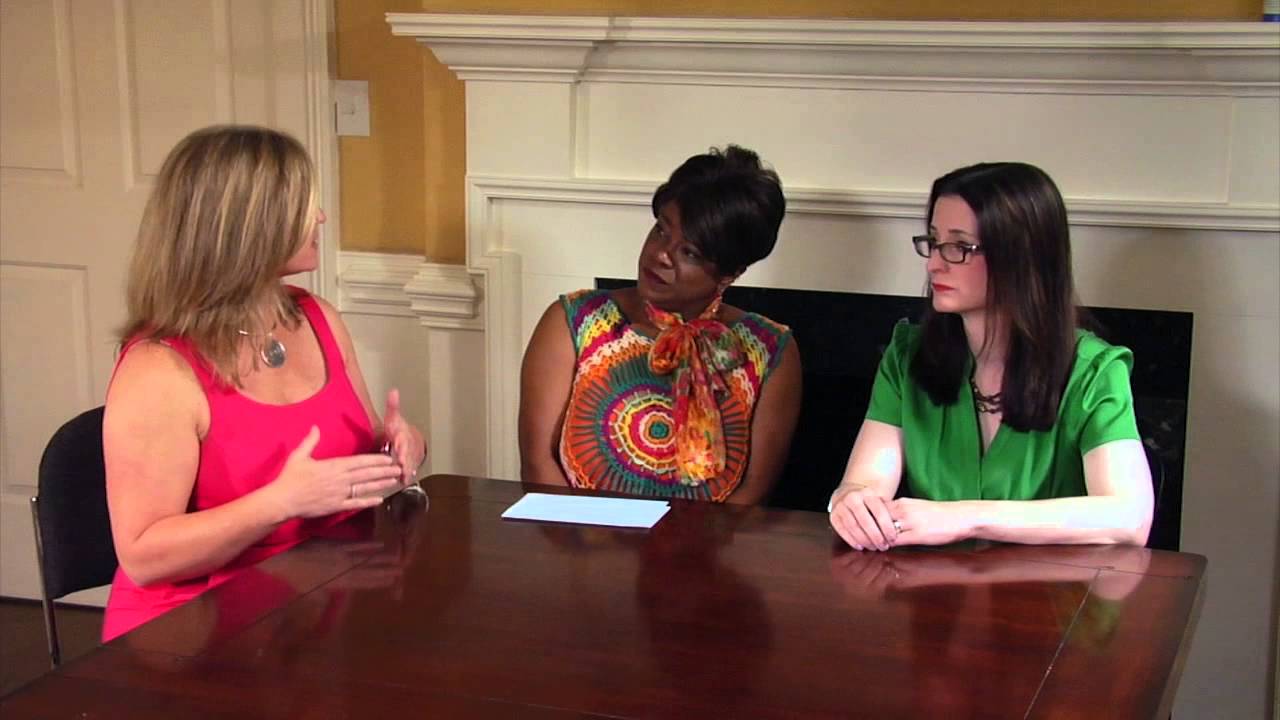
In this interview, Francina Hallerud speaks with Carla and Erin, co‑founders of Lily Pad Haven, a nonprofit that operates two undisclosed safe‑house locations for survivors of sex trafficking in the United States. The organization grew out of a church‑based missions ministry in 2011, welcomed its first guest in June 2012, and to date has housed 15 survivors, providing over 700 nights of safety. The conversation covers the mental‑health profile of the residents—primarily post‑traumatic stress disorder (PTSD) manifesting as dissociation and distrust—and the intensive counseling needed before healing can begin. Lily Pad Haven measures success by the number of safe nights delivered, emphasizing that each night keeps a survivor out of streets, hotels, or basements. Referral sources include government agencies, NGOs, and partner nonprofits; the homes are kept confidential with untraceable phones and no internet to protect residents. The interview also details typical trafficking pathways: ads promising modeling or book‑selling jobs, bus travel, ID confiscation, and the rapid relocation of victims across cities. Statistics cited include an average entry age of 12‑13, a $32 billion industry size, and the prevalence of vulnerable backgrounds (homelessness, abusive homes, parental substance abuse). The hosts stress that rescue is only the first step—Lily Pad Haven’s focus is on long‑term healing, rebuilding trust, and helping survivors move from merely surviving to thriving.
Chapters
Lily Pad Haven was formed out of a missions ministry at a local congregation back in 2011. We actually had our first guest in June of 2012, and since that time have had 15 guests and have provided over 700 nights of a safe place for our guests to stay.
Give us some examples of the condition, the mental condition, Of your population that you serve?
The most common characteristic that we find is that they all suffer from post-traumatic stress disorder. So they, depending on how recent the removal from the trafficking situation has been, kind of helps determine how much of that stress that they're having to undergo. And a lot of times the stress disorder itself is something that we have to work with very closely because of the fact that the The girl, the survivor, the victim transitioning into a survivor, can't begin that healing process until she has the counseling she needs to really get that post-traumatic stress disorder under control. And what that looks like often is a girl who seems like she's in a zone. She seems like her eyes— the deer-in-the-headlight look. You hear that a lot.
Right.
And that's exactly what it looks like, where she's somewhere else, and you actually have to talk her down from and back to reality. Where are you? Let's breathe for a minute. Let's think about where you are. You are in a safe place. And for a lot of these girls, that's the hardest part, is knowing that they have been so fearful, they don't have trust relationships. Everybody in their life has let them down or told them something that wasn't true.
Have you been able to measure benchmark successes?
I'll answer that. Lily Pad Haven is a relatively new nonprofit organization. We have 2 homes, and we've been in existence and operating those homes since 2012. With the 15 guests we've seen, our benchmarks for success, given our short tenure, have been how many nights of safety have we provided survivors. And we have provided over 700 nights of safety. 700 nights where these women were not on the streets, in hotel rooms, Locked up in basements. That's been our measure for success.
Measure for success is that you're able to give them safety, comfort, nurture them back to health.
Absolutely.
One more question I have. Where do they come from? And how do they get into this?
Most of our referrals are from government as well as non-government organizations. And sometimes other nonprofit organizations that are actually working with human trafficking survivors. They know of us. They know of the care that we give. And we have also worked very hard within the first 2 years of our organization to form very reputable relationships with our partners because we wanted them to feel like they trusted us and trusted the care that they were— our guests were going to receive because they were turning over a victim to us that was very fragile. And we wanted them to feel like they knew that we were going to be able to provide the services and care and safety and confidentiality because the homes are safe. We don't advertise the locations. We have special phones that can't be traced. We don't have internet service. Those homes are safe homes, and that's one of the biggest, most important things for even the girls to understand, is that they are in a safe environment where they're going to receive all the protection that they need to not feel fearful of where they're going to be staying that night.
Well, that reminds me, you know, we've just had a recent incident with girls over in Africa. And, which is troubling to me, but it certainly lends itself to the subject today, and what you guys are doing is providing a solution. Now, even though that's in another country, we have it right here.
And we could see some of those girls, because there's nothing that says that those girls won't end up on U.S. soil.
Exactly.
And then be trafficked here, and remember that trafficking, they don't keep the girls most of the time in any one location. So what might start as somebody being trafficked in Orlando, they might get sold to somebody in Atlanta, and then Charlotte, and then D.C., and Chicago— or D.C., and then New York City, over to Chicago. So they're gonna move them around. They don't want the girls to get used to their environment. They don't want the girls to get used to any relationships that might form there.
How do they get into it? Do you hear the stories?
I heard the stories.
Is it parents?
And, you know, I have to tell you, the stories that Karla told me are the reason that Lily Pad Haven is so dear to my heart. Carla told me a story about one of the initial calls that we got. 2 young women responded to an ad here in North Carolina that said, sell books and Bibles. And they called the number, and they got on a bus, and when they got off the bus, their IDs were taken away from them, and that night they were put in a hotel— in a hotel room and trafficked. Mm-hmm.
I see.
So I have 2 young daughters. I know that the average age for entry into human trafficking is between 12 and 13.
And that is the average age nationwide.
And I would say some commonalities are that victims are preyed upon by the traffickers, victims who are in a vulnerable position, victims who may be homeless or have an abusive Situation at home, substance abuse problems by their parents at home. There are a lot of ways— runaways.
It's a $32 billion industry.
Industry.
And I think that's important for people to remember as well. You can sell a drug one time, you can sell a girl over and over again, and that is a huge factor of why human trafficking is such a huge business right here in the United States.
The victims that we're talking about, a 12 or 13-year-old girl, who responds to an ad to become a model and who ends up chained in a basement for weeks, I believe the term slavery really does apply to that person.
So we've gotta find ways to bring them out of this. We've gotta find a way to bring them into a future. It's one thing to survive, it's another thing to thrive.
Absolutely.
That's our focus.
Our focus is on survivors. Very good.
Very good. And bringing them back to a place of healing and health.
It's post-traumatic stress disorder. They cannot function right now in life.
Lily Pad Haven is certainly a bright light in this darkness, and I certainly encourage you ladies to continue doing what you're doing. Thank you so much, Erin and Carla, for sharing with us today and your insights and your compassion. For more information, visit with them at lilypadhaven.org. And I'm Francina Hallerud.