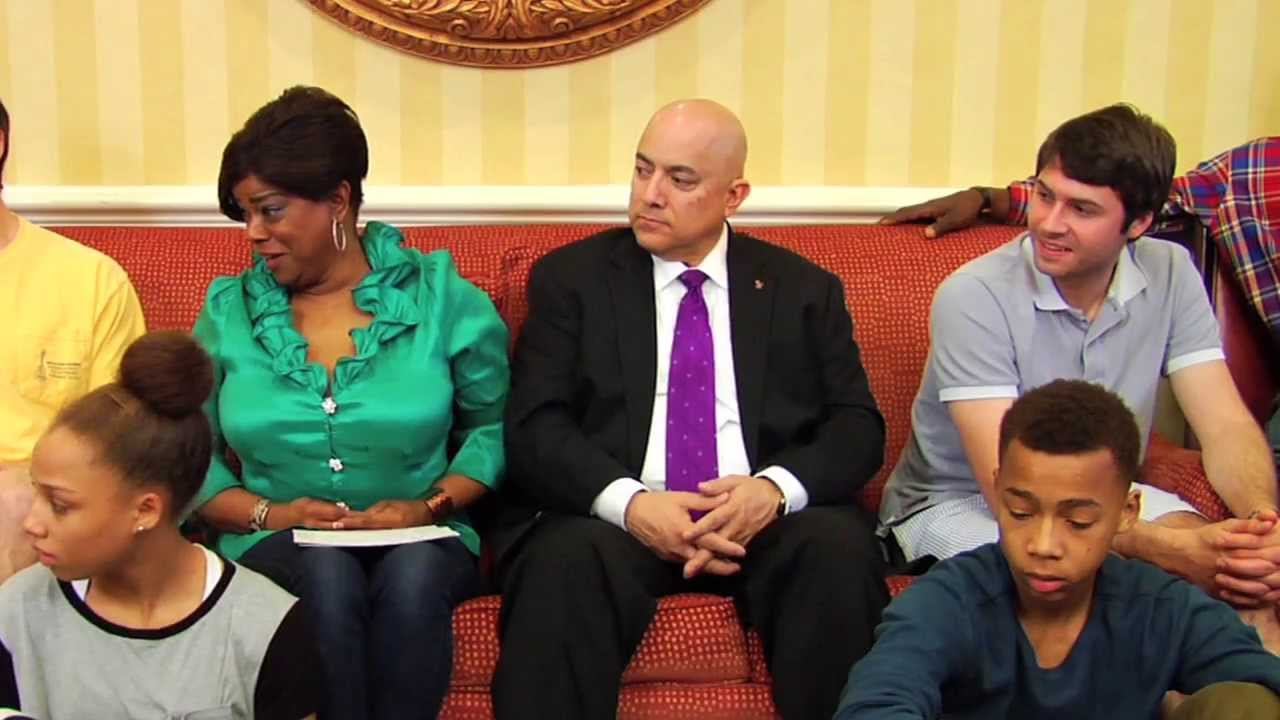
In this community‑style discussion, participants examine the prevalence of active‑shooter incidents in the United States, noting that every case examined post‑incident shows identifiable precursor warning signs and that the U.S. far exceeds other nations (over 130 incidents versus Canada’s three). The conversation shifts to the debated role of violent video games and other media, with speakers acknowledging that while games are not the sole cause of violence, they may amplify aggressive tendencies in already‑at‑risk individuals. Participants stress the importance of parental involvement—monitoring media consumption, enforcing age‑rating restrictions, and providing emotional support—to mitigate potential triggers. The dialogue also touches on broader societal stressors such as social media, school pressure, and general exposure to violent content in movies and television. The group concludes with a call for continued conversation and practical strategies for families.
Chapters
Good afternoon. Hi, everybody. Thanks for coming. Welcome. I'd like for everyone to take a look at this. So if you look at the Sandy Hook situation, that young man had diagnosed issues. It wasn't just he was playing video games. There was some form of mental illness in that young man. It was documented that he had trouble growing up. His mother was aware of his issues, and also she She had weapons that he could get his hands on. The post-investigation, post-incident investigation of every single active shooter incident in the United States, there have been precursor warning signs that have been out there. People didn't realize until after. We do not have a single active shooter incident in the United States— excuse me, in the world— that hasn't had precursor signs there once people look into it after the fact. Folks, as parents, as children, the signs are there. The signs are there among your schoolmates. The signs are there among our society. Absolutely. And you really have to look at the near epidemic level that active shooting has become here in the United States. We have now had, to date, over 130— over 130 active shooter incidents in the United States. Now, let's look at the rest of the world. What is the next country in line for the number of active shooter situations that have occurred in their country? It's the country of Canada. They have had 3. And every other country that has experienced an active shooter incident has only had 1 or 2. Over 130 in the United States. The next runner-up for active shooters is 3. Sad. What's going on? Games aren't the only thing that, I guess, triggers us to act violent. It's also the thought of, like, social media and school and stress and everything that builds upon that. And once you get to that state of mind where you're like, oh my gosh, I can't take this anymore, that's where I feel like the people that are kind of crazy, they just go out and do what they feel like they need to do. I think that the bad people are out there and that they are operating independently whether or not they engage in violent video games or not. I do not think that video games are the reason why people are going out and committing more crimes. I just think that statistically, if you are a bad person, you are going to go commit crimes, there's a chance that you play violent video games. After watching my son play military video games for hours on end, I don't know if it promotes the crime necessarily, but I do believe strongly that it brings out aggressive behavior. The language alone, the physicalness— I mean, you can't even be in the house when he's playing without hearing it from every corner of the home, the language and the I don't know if it's so much video games as just society in general. I mean, you look at television or movies and they're all showing killing and there's foul language in that too. Right. I don't know that it's necessarily a part of video games because people should be able to, I guess, distance themselves from the video games and be like, this isn't real life. This is not what people should be doing. And this— they shouldn't translate that to like real-life situations to be like, well, I'm mad at him, I should go. Shoot him or say something inappropriate. Let me ask a question. What role do you think parents play? I think it's crucial. I don't care for the video games, the imagery, the flashing lights. They enter the subconscious as well as the conscious. So a parent needs to, of course, express lots of love and safety in a household. So they see the contrary lifestyle compared to the game itself. It's a multimillion-dollar industry. There's a lot of deep pockets involved in these games. There's a lot of money. It's an uphill battle, I think, to try to fight it, but it's worth it. Yeah. It's violent imagery entering the subconscious and conscious of a child's pliable mind. Well, I think that brings up an issue to light about what the age restrictions on these video games are. And they are restricted, and there is a rating board that goes into and rates each game. And it is the parent's job to restrict their children to age-appropriate media content. Any videos or video games or TV shows that they see, this is all violent media, and it is the parent's job to keep keep that restricted and appropriate for the child. But I can't help feel that the video gaming, the violent video gaming, the hours and hours of playing can't help fuel an already aggressive behavior. If someone is dead set on doing something harmful to somebody, on doing a school shooting, on trying to be— get your 15 minutes of fame, That violence is gonna feed that individual's intentions, I believe. It was said that the shooter of the Washington State shooting, he played 19 hours straight. As everything else, there's gotta be a balance somewhere. Do we tell our children they're never to watch a violent movie? I have 4 of my own, and I don't— they're not allowed to use video games during the course of the week. But as a tool, as a gift, as a manipulating tool as a parent sometimes that you have to use as a negotiating tool, I do allow them to play. Do I let them watch or play for hours on end? Mm-mm. I can tell you, I have a cousin by the name of Jordan, and he like Plays video games pretty much 24/7, and lately he's been like really, really like engaged with the games. Like if I was to like go up to him and say, oh Jordan, you want to go outside? He'll yell at me and then he'll throw his controller. So it's more of the person. It's— yeah, it's more of the person than like how they are than the video games. I really don't find the video games as a problem at all. I think it also has to do with the people that you're playing with. I was thinking that thoughts are things, whatever you put in your mind, you think about all the time. Now if you're a violent kid and you watch violent games, it's going to trigger something. It's going to kind of give you a strategic plan to do what you're going to do if you have something altered in your mind. So it can control your mind. I look at it as we can't control our kids, but yet we can put some stuff in their mind to to not want to be running the streets late at night. What, for real, what is out there in the streets late at night? Nothing but trouble. I mean, for real. I always, if my kids tell me they're bored, what I tell them, I give them the 3 Rs: read a book, write a letter, or take a nap. I always like to leave these sessions with, talk about the problems, let's get them out, let's know what they are, but also let's come with some solutions. But I think we all have to put everything in perspective, and that's what I'm saying here. And so, in conclusion, we'll continue this discussion next month. Bye.