Memory Center Charlotte serves Alzheimer's patients and their caregivers with two-hour family assessments, neuropsychological testing, and counseling. Founded by Dr. Charles Edwards after his parents developed Alzheimer's, the center operates at a loss on each patient and relies on grants and donations to cover half its budget.
Chapters
Memory Center Charlotte is a nonprofit for patients with Alzheimer's and related dementias, while also supplying education, support, and resources for their caregivers. And that caregiver support makes all the difference.
I met Jackie on a stairwell at a telephone company, and boy, it was love at first sight.
Ted and Jackie married and had children, And their romance continued until Jackie's stroke changed everything.
We came home and the first thing she did was kick me out of bed because I was not her husband. She had lost me somehow when she had that stroke.
That's when Ted turned to Memory Center Charlotte and medical director and founder, Dr. Charles Edwards. whose own parents had suffered from Alzheimer's. The center is his passion, his calling.
The minute that this diagnosis is made in a family, that family is changed irrevocably forever.
And it's that family focus that makes Memory Center Charlotte special. Initial appointments are 2 hours. Patients get an in-depth assessment, neuropsychological testing, and a thorough evaluation of their medical history.
You can't do this in 10 minutes. You can do it in 2 hours to get to know the family, get to know the patient and who they were. It's led us to a place where we can't even think about not being here and helping these people.
And that time and attention model is what attracted renowned neurologist Aris Chaconis to the practice.
This condition requires a lot of time, time that the staff gives to families and patients to be sure we understand exactly what symptoms a patient has and what burden the caregivers are working under. Hey guys, hey Jim, I'm Kelly.
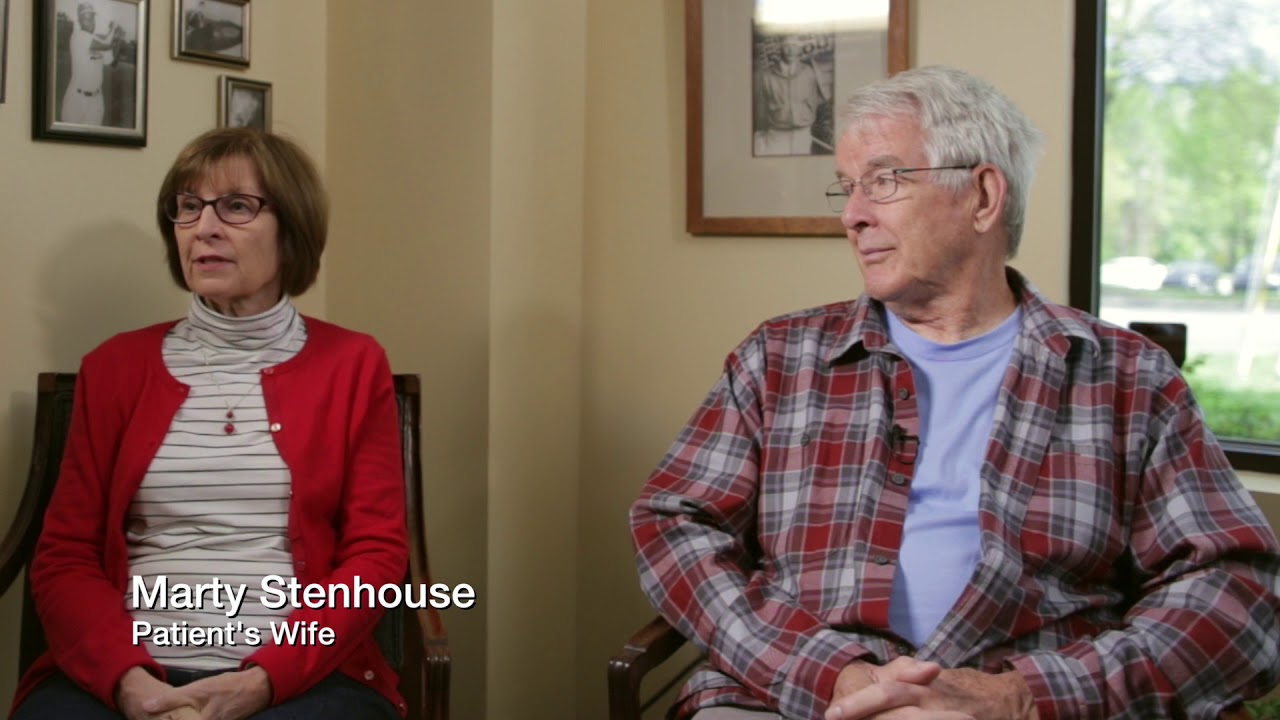
Marty Stinhouse says the Memory Center has helped her and her husband Jim find joy again in their lives.
When I first came, because I thought that possibly Jim was declining, I started doing everything for him. I started following him around and really over-managing him. So how have things been going at home lately?
Things have been doing reasonably well.
I'm glad to hear it.
Yeah, I'm doing well.
He can still do a lot of the things he's always enjoyed. I was able to see that we were not going to be as limited as I thought we were going to be.
You can keep doing what you've been doing and keep getting what you want to You can either keep doing what you've been getting or you can learn a new way. And that's what I'm in here for, to learn how— what my capabilities are and what my limitations are.
For John Clifford, Dr. Edwards and Memory Center Charlotte were his last hope when his father started to decline.
He was not cooperative and often would discharge the people right after I'd hired them. And when we left after, I think, a 2-plus hour meeting to, to leave feeling there was a game plan, a better understanding of what was going on with my dad and what we could do to assist him as well as assist ourselves, to comfort ourselves.
When Dr. Edwards told his wife Mary that instead of retiring after a successful career as a cardiac surgeon, he wanted to open the center, she was hesitant. But her attitude quickly changed.
I saw these families come out from their appointments, and I saw the smiles on their faces, and I saw the, the sigh of relief and the feeling that someone really cared about them and was listening and was really going to help them and share this burden and walk this long journey with them. I just fell in love with the practice.
I'm going to put this on your wrist.
How does Memory Center Charlotte provide this multidimensional care, ranging from medical diagnosis and treatment to family counsel and support?
We do not make money. We lose money. We lose money on every patient.
Only 50% of Memory Center's operating budget is raised through insurance, Medicare, Medicaid, and caregiver fees. The rest is raised through grants and private donations.
Unfortunately, the growing need in the community and the increased numbers of people with dementia requires that we always raise more money, write more grants.
I had no idea about the demands and the needs of the caregivers and how immersed we would become in their lives. We actually Adopt these people.
This whole staff was so wonderful to us. They treated us just, just really well, and they made us feel like they really cared.
After Ted's wife Jackie fell and was hospitalized, he was called to her bedside.
I leaned over and she said, I'm sorry for all the trouble I've caused you. And she— I said, do you know who I am? And she says, yes, you're the man I married at St. Pat's Church. And why not? She says, I love you. And I just started bawling. Things changed a lot when she recognized me again. It became a love affair again.
How many years have you been married?
It'll be 70 years this May 3rd.
70 years! What a love story.
These are just more or less— this is when she was 90. And this is my favorite picture of her, really. So we appreciate the time we had with Dr. Edwards, and he's just been good to us, and I love him, really.
To find out more about Memory Center Charlotte for you, someone you love, or to offer financial support, visit our website, memorycentercharlotte.org.