Red Line
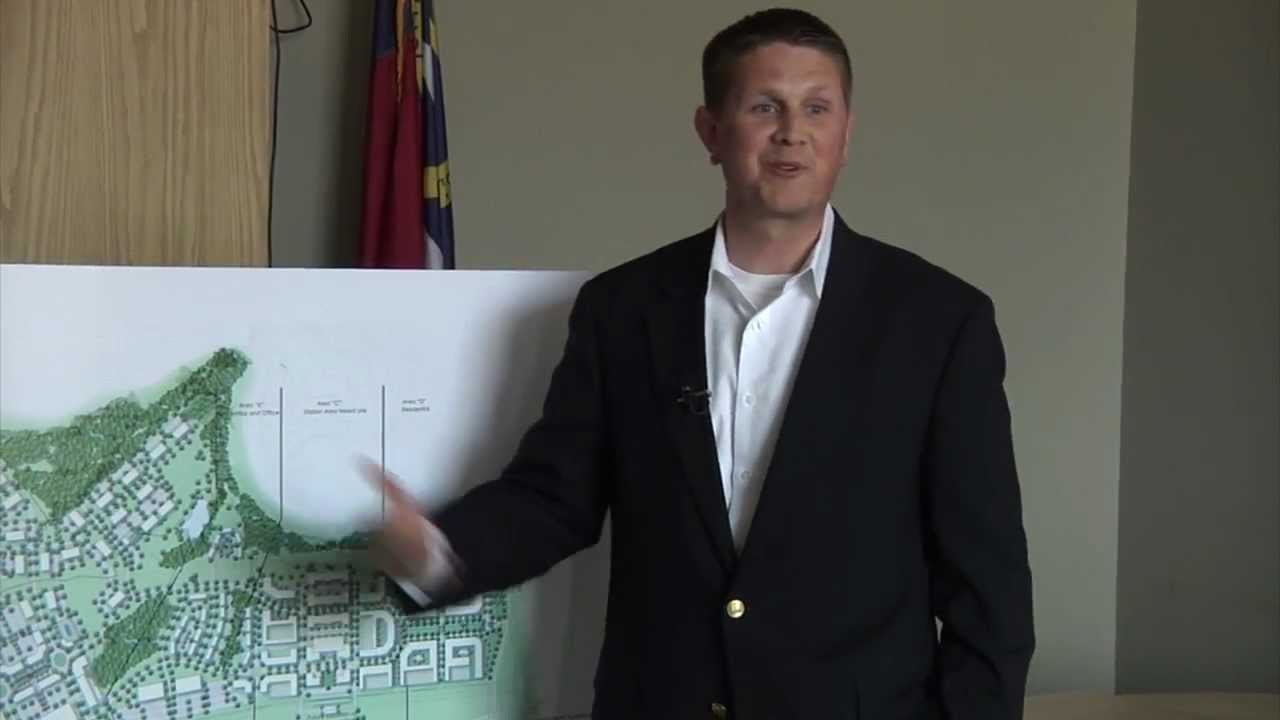
Three major developments anchored by Charlotte's Red Line will transform 665 acres into mixed-use neighborhoods. Eastfield Station expands from 975 to 2,890 residential units plus 285,000 sq ft of retail and over 1 million sq ft of office, generating $840 million in value and 12,000 jobs. Twin Lakes and New Camp Station add another $1 billion in development across office, retail, and housing.
Chapters
My name is Matt Gallagher with Gandy Development, presenting the Eastfield Station TOD site in North Charlotte. It's the last stop on the Red Line inside Charlotte, or for those that are coming south, it'll be the first stop. And we've kind of introduced it as the gateway into Charlotte. Kind of the opening and opportunity for business in the north corridor to make a home that has not only— if we can zoom in on the aerial, this is where 485 comes in now and the current last stop on 485's exit, which is Old Statesville, already in existence. Come down to the train station right here in the middle. This is our 200 acres right here. So it presents a unique opportunity for economic development. Which takes both opportunities of 485, an exit there, and a rail station to develop an economic benefit that's really unprecedented. Nothing else in Charlotte has something similar. In 2006, we— and this was before Charlotte identified this Eastfield station as a definite stop— we actually went through the zoning process And came up with a compromise plan, unfortunately. The city wanted us to be very TOD-focused, but at the time, without the stop being identified, we were trying to appease the surrounding homeowners who wanted just single-family homes. And so we came up with a— unfortunately, a compromise plan which has an absolute total of 975 residential units across the acreage. and only 35,000 square feet of retail. In 2008, City Council passed the Northlake Area Plan, which has an interesting note in there that said, if this development doesn't take place because of whatever reason— economic, the market conditions, or we change our mind— the City Council actually pushed us to scratch this plan Because it isn't the highest and best use for the property, and instead come up with something a little bit more TOD-friendly. So the economy played into our favor in that case, and we came back and revisited and said, as the train comes, this is what can be. This is really the highest and best use when talking about a TOD. And this is moving it into a whole 'nother realm of economic development. This plan, which has the opportunity for 2,890 residential units, 285,000 square feet of retail, and over 1 million square feet of office, has an economic driver of $840 million, and compared to only $232 million without the train. So just in Charlotte future revenues alone, we're almost a fourfold of an improvement because of the rail line than without. When we look at just residential numbers, the National Association of Home Builders has a jobs number that they attach for each new construction start for housing. And every time that a house is started, 3 new people, 3 jobs are created. And the fact of the matter is that construction is a trickle-down employer. When somebody goes and says, I'm gonna start this job, they're buying not only supplies and material, but they're putting people to work, which in turn are buying machinery, which in turn are supplying— and as you see, it goes down. So with the old plan, we were hopeful to employ maybe over the life of the project— oh gosh, maybe 3,000 people. With this new plan and the opportunity to have Not only construction jobs of up to 9,000 people going to work through the life of this project, but also the permanent jobs that take place in the retail and the commercial. We're another fourfold increase in permanent jobs at our site alone. So from an economic driver, almost $1 billion in economic development, almost 12,000 permanent jobs, Over this 200 acres, makes the most sense to include this in the Big Ideas plan, because this is doing exactly what Charlotte wants— improving corridors, investing in neighborhoods, and increasing connectivity. TOD is an acronym for Transit Oriented Development, which places transit as a focal point within the community. So in our case, This right here is the future location of Eastfield Station, a dual-track, dual-platform, having the opportunity out here for a large park-and-ride to accommodate the 50,000 people that live just east of the property who would like to ride to Charlotte. But also this side having a platform to accommodate the people that already live in the neighborhood. The neighborhood becomes, in this portion, very train-centric. as its transit component. With 485 to the north, the opportunity that Eastfield has is that it's auto-centric and train-centric, bringing both transit methods to play and giving us other opportunities for business to call Eastfield Station home over the long run. We know that often when businesses come to town, they're looking to downtown or uptown— depends on where you're from and what uptown or downtown means— and then, or to Ballantyne. We think, and Si and Norman will probably speak to this as well, that we have a unique situation to offer because we have 45 and the train that businesses can call here home, which may even mean that my numbers are a little bit short on economic development and jobs.
Hi, my name is Norman Walters with Walters Commercial Real Estate Services, and I'm here to talk about Twin Lakes Business Park and its impact on the North Mecklenburg area known as Eastfield Station. Twin Lakes Business Park was started back in the year 1990. It's a 365-acre development at I-77 and Harris Boulevard. After the park was developed, Interstate 485 was built and bisects the park, cutting it in half. This is known as Exit 19A on I-77 North, but the park— 365 acres of the park has been developed. It's approximately— there are 21 buildings, 2 million square— over 2 million square feet of space, and over 2,000 employees currently working at the park. It's zoned BP Business Park, and that was always the plan, to continue the development as a traditional industrial and business park. When the Red Line was announced, the planning for the remaining land available at Twin Lakes changed. And a large portion of the property has now been designated as TOD zoning, transit-oriented development. Before, up until now, what's developed without the prospect of rail, again, the 20 industrial buildings happened, but then once rail was announced, we suddenly started seeing more commercial activity at the park. Northlake Auto Mall is currently under construction, will be completed in May of this year. There's a BMW dealership, a Lexus dealership, and a Mercedes dealership opening with between 400 and 500 employees scheduled to work there. So that's a, a big increase in employment to this general area. Walmart Supercenter is going in across the street, and we also have about a $35 million commercial project planned at the northeast corner of Alexander Anna Road and 115. With that said, the southern portion of Twin Lakes is where the radical change is going to occur. Because of the TOD zoning, planning asks us to step away from our traditional zoning or from our traditional development model of industrial with a percentage of office involved in each building. And the TOD zoning requires high-density multifamily, high-density housing, and office uses. So now on the 120 acres that is adjacent to the Eastfield Station where the Gandy development is on the eastern side, the Twin Lakes development is on the western side of 115. We have approximately a— let's see, right at 1 million square feet of office is planned, around 120,000 square feet of retail, and about 650 multifamily units. And that will represent a total development value of approximately $500 million. So the complexity of the park is radically changing with the advent of rail to the site. And as Matt Gallagher mentioned earlier, the Eastfield Station, the Twin Lakes development, the Gandy development were all in a node that Todd Noel mentioned when he was doing a study for CATS back in 2004, that this is the— will be the most significant transportation node in Mecklenburg County. Because what we have is the intersection of 3 modes of transportation. We have interstate highway, we have a 65-mile outer loop, and mass transit rail. There's no other place in Mecklenburg County you'll find that, and very few places in the rest of the country. So with all the development occurring surrounding the Eastfield Station, you have well over $1 billion in projected development. You can live there, you can work there, and you can play there.
So it—
It's a wonderful piece of property or a wonderful area to create a new town center that is extremely accessible. One of the most significant changes that the advent of the rail has brought to Twin Lakes is the site located at the corner of Vance Davis Drive and Old Statesville Road. It's a 12-acre site. We had originally planned to continue the development of traditional industrial buildings with another one there on the corner. But now the Planning Commission has asked us to include this along with the other 120 acres south of that as part of the TOD zoning. The effect of that is instead of a traditional office building, we now have planned 250,000 square feet of office space. As you can see here on the site plan, 2 buildings of 125,000 square feet each, which may look something like this, but the architecture may change when we get into the development and actually start working with the tenant that chooses to go there. So because of its close proximity to The Eastfield Station, which is right here. It's virtually across the street from the station. People can ride from Mooresville or from Charlotte, get off at the Eastfield Station, have breakfast, walk over to their office building and go to work. And then if they'd like, if they don't want to ride the train, they can just walk next door to one of the apartment complexes and live there and then get up in the morning and drive or take the train into town to work.
Hi, my name is Tony Coon. I'm with Vision Ventures Real Estate Services. I'm going to talk to you today about New Camp Station. Or NC Station. This is the site just north of downtown on the old Charlotte Area Missile Plant site. So this site has a very rich history, has a very close connection to all of Charlotte, in particular downtown. But in 1921, or even a little before '21, Henry Ford built a Model T facility at this location. And they distributed all of the first Ford Model Ts off of the assembly line. for this region on this missile plant site. After they produced the Model Ts for a couple decades, Ford Motor Company sold it to the U.S. government and it became a quartermaster's depot in World War II. We've even heard stories that in World War II, this entire wedge piece, 100-acre wedge piece, was barbed off, barbed wired off, and had German POWs housed at the site. So after that, in the Cold War, This site was used for the missile plant where it's got its current name. It produced the Nike and Hercules missiles at the site. They actually didn't arm the missiles there, but they produced the casings for those missiles. After it was owned by the Department of Defense, it was sold off to a real estate developer in the, I believe, the late '70s, who parceled off and subdivided the location into 5 or 6 separate owners. Over the last 4 or 5 years, our company, along with Mount Vernon Asset Management, has worked to reassemble the Charlotte Amos Missile Plant and come up with a new vision for this historic site for the City of Charlotte. Currently it is a lot of blighted industrial, underserved industrial, a little bit functionally obsolete as far as ceiling heights and location. Well, not location, but certainly ceiling heights.
Right.
The way things are relating to one another is a little bit functionally obsolete for what people currently use industrial storage for in this market. So our, our vision for this plant, or for this site, New Camp Station, NC Station, is to create a transit-oriented, office-centric development about a mile and a half from the center of downtown Charlotte and give the city a 100-acre swath for future growth of office in this district, which is also consistent with the Charlotte 2020 Vision Plan. and really becomes the site, the geography for what we're calling, or what the city is calling, the Applied Innovation Corridor. So this becomes the property, the home, the address for the Applied Innovation Corridor centered around a transit stop. So, and a lot of that, the idea and the kind of the vision for this has stemmed from its history. So we'll use the original Ford Model T plant that was designed by Albert Kahn and use that as an adaptive reuse building. Here in this site plan, it'll be the large kind of iconic building in the center of the site plan. It's 250,000 square feet, currently industrial, but it's beautiful brickwork and, you know, something similar to what you think about when you think of the Design Center in South End. So this really gives the whole, whole development its feel and its history and its reason for being here. Surrounded by that will be new more modern facilities, typically office-centric, to really focus in on the Applied Innovation Corridor. So the overall plan for New Camp Station, breathing life into the old Charlotte Area Missile Plant, is to create this, this district where people can have a critical mass of different businesses that can exchange ideas, very close to Uptown Charlotte, and ultimately built out to, you know, up to 2 million square feet of office space and about 200,000 square feet of retail development. All that translates into about $500 million over an 8 to 10 year build-out. And some things that have already given this development some kind of tailwind is that the City of Charlotte has purchased 15 acres at the front of this 100-acre wedge to build the Charlotte Fire Department headquarters building at the corner of Dalton and Statesville. And directly behind that, they are proposing to build the communications call center, which is a $64 million office building on, you know, in this location as well. So a lot of this NC Station, or a portion of the front wedge, has already been started with an institutional use of the city.
Okay.
Okay, so the perimeter of NC Station, or New Camp Station, is from the corner of Dalton, Statesville, and Graham Runs down Graham Street and is bordered on the north from Woodward and then around to Statesville. So it's really a triangular piece that points directly towards Uptown Charlotte. And this, this wedge combined is right at 100 acres. Now this is the actual red line here, the line that the commuter will be coming through, and so the stop is right basically in the center of that. So on this site plan, it's right here. Mm-hmm. I'll talk a little bit about BrightWalk also, which is an adjacent development from the Housing Partnership, which is really just on this corner piece of the NC Station and a neighbor to NC Station. BrightWalk is a mixed-income sustainable community that was a partnership of Land Design, the City of Charlotte, and the Charlotte Housing Partnership. And here they've done a lot of new multifamily residential, and now they're doing market-rate single-family homes on a 100-acre Double Oaks property. On this one, it is just off of this area on this corner, this corner of the Hercules site. I believe this is now called Brightwalk Avenue or Double Oaks Avenue, which would also be right here as the entrance to the development. So it's a 100-acre mixed-income, mixed-use development.
A project of this magnitude really is an unprecedented opportunity for Charlotte to have a North Corridor economic driver like they've never seen before. Over $3 billion worth of economic development, which means Charlotte revenues, permanent jobs in excess of 10,000, and construction jobs that we estimate can be 25,000 to 30,000 people going to work for at least the next 10 to 15 years on these projects. There is nothing that offers the opportunity like this rail line will to Charlotte.










