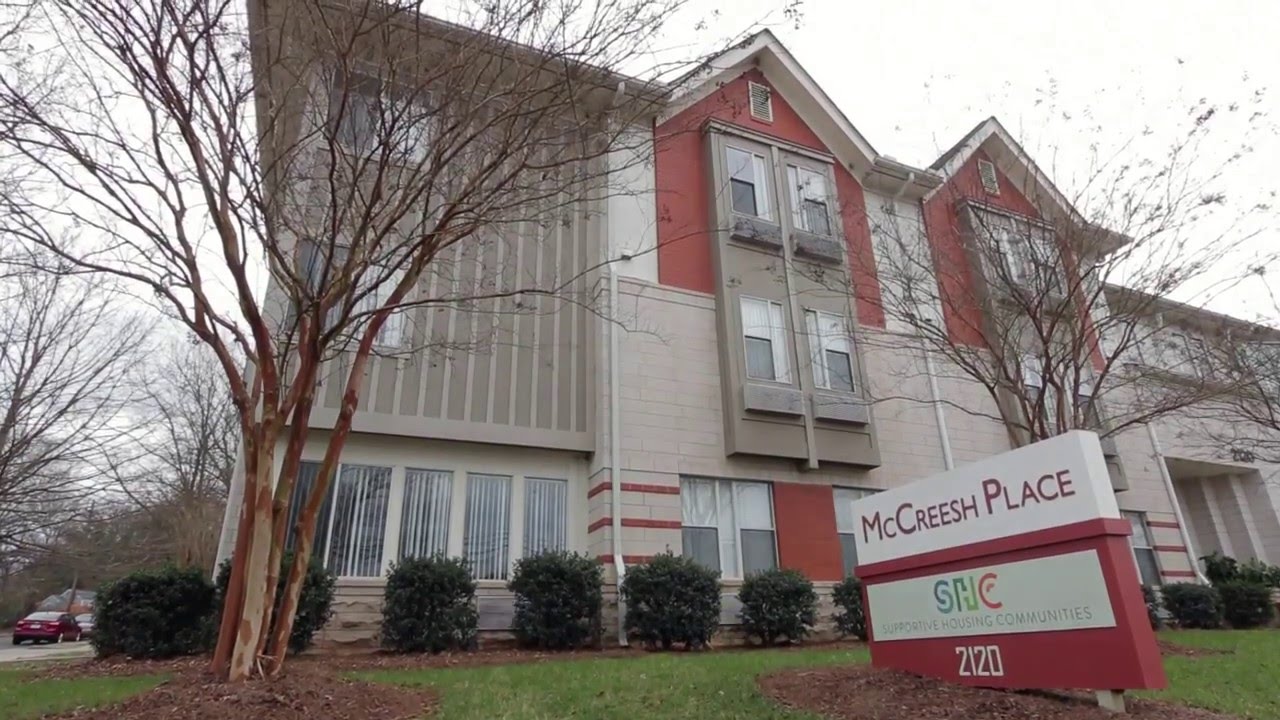
The video presents the testimonial of Charles Joyner, a formerly homeless man who spent much of his life in foster care, struggled with a 25‑year alcohol addiction, and now lives with dementia at McCreesh Place Apartments, a supportive‑housing community operated by Supportive Housing Communities. Charles describes his past jobs, the challenges of navigating daily life, and the pivotal role of staff member Anita who provides constant support. The program’s model requires residents to pay 30% of their income (when they have any) and boasts a 98% success rate in keeping formerly homeless individuals housed. Since moving into McCreesh Place, Charles has not needed emergency‑room services, illustrating the model’s health benefits and its cost‑saving impact—saving taxpayers hundreds of thousands of dollars by reducing emergency calls. Charles expresses renewed hope, humor, and a desire to remain sober, highlighting the personal transformation enabled by stable housing and community support.
Chapters
Mr. Charles, tomorrow before you go to treatment, make sure you come by the office tonight and get your bus passes. Don't forget, 'cause I'll come and find you.
Yeah, yeah, I know that. My new life is, like I said, it's being able to deal with life on its terms, to be able to speak to people, to go to the store, And sometimes somebody has to go with me or I'll get lost. I don't know where I'm at.
After being homeless almost all his life and now suffering from dementia, Charles Joyner lives at McCreesh Place Apartments, a supportive housing communities apartment for formerly homeless men. His goal is to remain sober after being an alcoholic for 25 years.
I've worked in restaurants, I've been a cab driver, I've been a lumber mill worker, I've been a fry cook. I spent most of my young life in foster homes because of abuse in my family. Alcoholism is no fun. It's a disease that will kill you. So anyway, I'm thankful today that I'm not in that state in my life anymore. I'm really happy about that. I'm not the same Charles now. Not no way, no how. I'm an outgoing personality, a sense of humor. I love to laugh. I love to bring a grin to someone else's mug.
Supportive Housing Communities has a 98% success rate keeping people like Charles and other formerly homeless men, women, and families in housing. It works largely because of staffers like Anita.
She's always there for me. She's always there for me. Always.
Residents pay 30% of their income, if they have income.
Okay, I got some canned.
But the supportive housing communities model literally saves taxpayers hundreds of thousands of dollars in emergency services.
Often homeless people utilize the emergency room or call 911 for medic to come so that they could be in a safe place for the evening and get a meal for the night. When we received his application, they stated that he would go at least 2 to 3 times a week.
Charles has not gone to the emergency room once since he moved to McCreesh Place.
Best thing about it? Well, it gives me hope in my day-to-day life as far as joy and my hope for tomorrow for better things.
Charlotteans have a big heart, and it shows when you look around a place like this and you see what's happening and you see the transformed lives.
I love McCreesh Place. There's some wonderful people in here. They understand the human character, and their knowledge is impeccable. I believe in my heart When it comes to loving people, caring about people, taking care of people, taking care of the situations, no matter what the situation might be. They're very, very wonderful, very wonderful people indeed. Love is the key word. Love, that's the key here.