Empowering the Entire Chiropractic Office Team- Featuring Kim Klapp

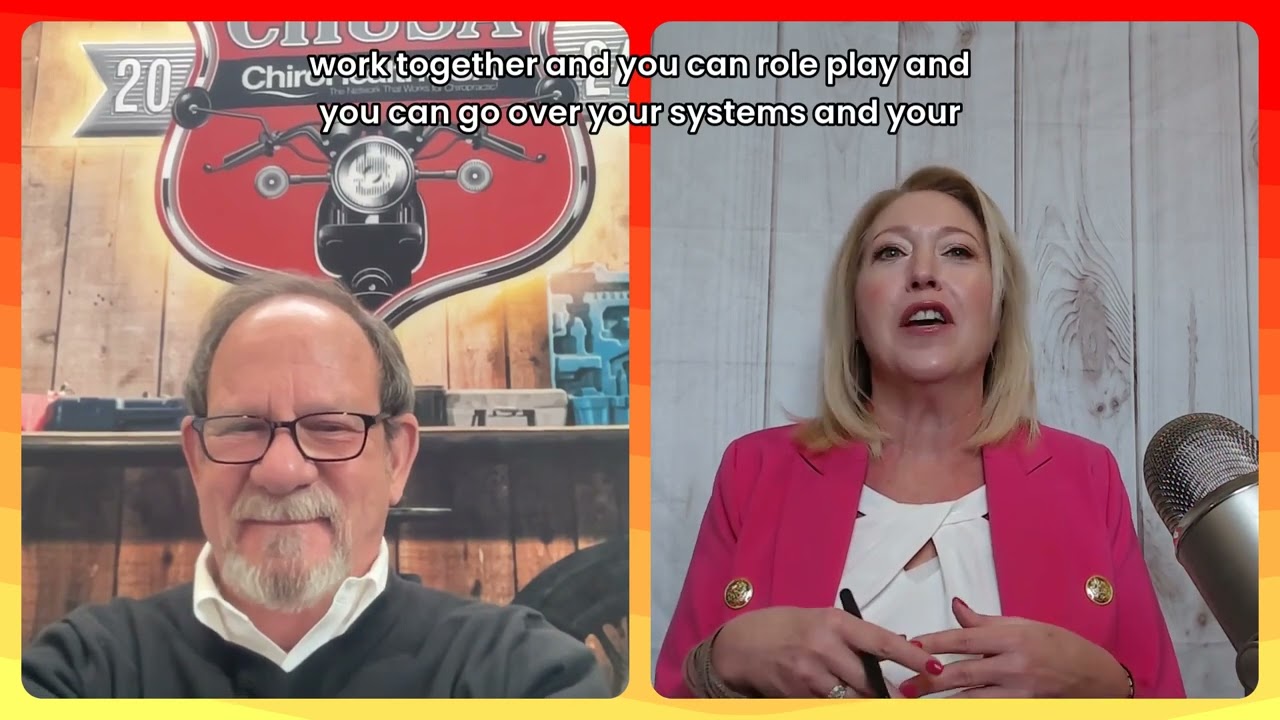
In this season‑2 episode of the Thriving Chiropractors podcast, host Dr. Austin Cohen interviews Kim Klapp, a longtime non‑clinician leader in the chiropractic field. Kim shares how she entered the profession after being hired to run the Michigan Chiropractic Association despite knowing nothing about chiropractic, later transitioning to run her husband Dr. Tom Klapp’s practice as a practice facilitator. She explains the terminology she prefers—practice facilitator and chiropractic assistant—over traditional titles like office manager. Kim outlines her hiring philosophy: start at the lowest level, use an 11‑week structured training program, and promote from within, emphasizing the importance of clear career paths. She founded Assistants for Chiropractic Excellence (ACE) in 2000 to fill the training gap for chiropractic assistants, evolving the program from phone seminars to full‑online video courses. Retention strategies discussed include regular appreciation surveys, personalized gifts tied to work‑anniversaries, and a culture of recognition. Kim describes her team‑building tactics such as scavenger hunts, themed dress‑up days, and celebrating “Founders Day” (Lumbar Jack Day). Leadership insights focus on delegating, listening before implementing changes, and asking better questions. She advises her younger self to prioritize “done over perfect,” hire smarter people, and involve the team in decision‑making. The conversation closes with book recommendations, her love of libraries, and a plug for her website chiropracticassistants.com, which offers resources for chiropractic assistants.
Chapters
This is Thriving Chiropractors, where chiropractors supporting chiropractors and talking to chiropractors that are thriving beyond the 4 walls of their practice. This is Dr. Austin Cohen with Thriving Chiro, which is sponsored by the Life Alumni Association. And thank you so much to everyone for listening to season 1. We are just so grateful for all the comments that we got. the feedback we got from people for some topics they would love to hear about for season 2, 3, 4, 5, and as we go forward. And I'm excited because this season, for season 2, we are live from LVE. And so yeah, we've been having just like some, all these great people come in who don't live in Atlanta, which is awesome, actually being on our show as some, as guests. And I'm excited for today. We have someone who's been around the profession for a while now and not a chiropractor. Actually, you were our first non-chiropractor. Yes.
Wow! That is awesome!
This is Kim Klapp, for those of you that know, and we are just so grateful. Hey, thanks for being here, by the way, and doing this. I gave Kim very short notice on this, and she was like, absolutely, let's do it, and didn't even look at the questions. So raw, authentic, and I love those kind of conversations. So you're not a chiropractor?
I am not, nor going to be one on TV.
What got you to like— like, how did you get into this profession?
So I graduated University of Michigan. Go Blue! Still reside in Ann Arbor. And my first interview after school was actually hosted by Dr. Tom Klapp. He was at the time the chairman of the board of the Michigan Chiropractic, then Council, now Chiropractic Association. And I was hired to run the association. We had an interview, one interview, and by the time I got home, I had a message that I was hired. So I was I had no idea what chiropractic was. That was the first time I stepped foot in an office, a chiropractic office, was to interview for this position because he was actually running it out of a side of his office. And I was so ignorant that I actually thought it was chiropractics, that there was an S on the end like physics. That's how pathetic it was. I knew nothing. So it was just so cool though, then getting indoctrinated into finding out what chiropractic really was. It made sense. And that's what I love about it. is it's so logical and it makes so much sense once people find out about it. So that's why I too am passionate about sharing chiropractic. So instead of having one employer as a CA, I ended up with, because I was running the association, like 650 chiropractors who all wanted to tell me what chiropractic was. So it was like baptism by fire. And then going to DE 4 times a year and going to ICA conventions. And it was just, I fell in love with it. So I actually call myself I'm a self-proclaimed chirophile, lover of all things chiropractic.
Oh, I love it.
Yep, I'm a chirophile. And especially, obviously, one in particular, Dr. Tom. And I got married a year after that first interview. And he decided at that point that it would be better to take my organization management skills out of helping the profession and instead to line his pockets better, just teasing, but actually up the profitability and streamline the office.
So he fired you from the front?
Fired— he fired me from running the Chiropractic Association and then hired me to run the office instead.
Which, good for him. He was smart. Yeah, he was like testing you out at the association to see if like it would be a good fit for the practice.
No, it was really, it was really, uh, it helped us, you know, as far as being able to take time off and travel together.
How was working with your husband?
Well, like I said, we were married one month shy of 26 years before he passed away. And for those of you who have worked with yourself before, it's basically like double. So, and I say we're basically married 52 years. There was a time even that we would just like drive to the office together and leave together and it was just a lot of hands-on time. So luckily 99% of the time it was awesome and amazing and I loved it. But that 1% of the time it was worse than you can imagine. So.
How did you guys, I mean, there's a lot of people that work with their spouses. How do you, do you separate it or they're not allowed to be conversations about work at dinner? Like how does it—
I'm sorry, you're a chiropractor? When do those chiropractic conversations stop?
Ever.
Yeah, I mean, never. It's always— everything is chiropractic, and that's what's so awesome about it. I mean, it is a lifestyle and it is all-encompassing. So we actually treated it that way. We never said— let— now, there were times where we didn't talk about if there was an issue at the office.
That's what I mean.
Yeah, if it was a negative issue at the office, we wouldn't discuss that over dinner or on date nights. But anything else was fair game.
Like, I just see you being at dinner table, I mean, like, oh, that patient Susie Smith, why didn't she call you? I care.
Yeah, no. No, never looked up. You keep in mind, Tom, he had 2 associate doctors. He was really very geared towards— his focus was on unifying the profession, on being one of the founders of One Chiropractic, had a lot of vision going on, creating the strategic plan for the profession, sitting on the Board of Life, and a million other things. So he was really only seeing 10% of our practice volume. And I was running the office. But because of all the systems that we put in place, that was what gave us the freedom to do everything else.
So you worked at the Michigan Chiropractic Association for a year, then you worked in the practice, basically all in the practice. You still do?
Yep. Monday, Wednesday, Friday. I run the office Tuesday, Thursday. I do ACE.
Oh my, you want to move to Atlanta? I'll pay you whatever you want.
And I love it. I still love it. Again, what's amazing is I'm still finding cool things. I'm like, oh my gosh, we never thought of this. Look, it'd be so much easier if we just did this. And I'm sorry, I get all geeked about it.
So who's running the practice now? Me? Who's the chiropractor? I mean, sorry.
Oh, I have 2 associate— I have 2 and a half associate doctors.
So it's your practice. Oh my gosh, this is amazing. Thank you. Go. Yeah, no, I think it's like so cool.
I mean, it's fun. No, I love it. I love chiropractic, so I love having a practice. Um, I was running the practice. I mean, Tom was awesome, but he had me running the practice the whole time, so, uh, there was nothing that really changed.
What's ACE?
Oh, thank you. Um, Assistants for Chiropractic Excellence. It was a— it's a company I founded in the year 2000. Back then it was teleseminars over the phone. Then I switched to webinars. Now everything's all online, full video courses that are really awesome. But I started it back in 2000 when I was at a conference and realized there was a dearth of training for chiropractic assistants. I mean, really, basically how to answer the phone, and that was about it. I'm like, it's so far beyond that. So at the urging of Dr. Tom and some other chiropractors who spoke, they said, we really don't have anything amazing for chiropractic assistants. And so create something. Because at that time I really kind of assumed that everybody's office ran like a well-oiled machine. And I found out that's just not the case. And so I, I, it's been so rewarding to be able to help so many other offices, you know, just do a better job and help more people that way. All right.
I wanna hear, I wanna get your thoughts on this. Okay. Like the vernacular around this. So some places they call 'em office managers. Some people call them front desk staff. Some people use chiropractic assistants. Some people say chiropractic assistants are actually assistants that are actually helping with like the clinical aspect of care. So maybe they're doing, whether they have therapies in their office or whether they're doing new patient exams or re-exams, but the front desk person or the office manager or whatever they call it is the one who's actually handling the business development side. Like, how's your— what's your vernacular?
Okay, so that's a great question. My position is not office manager. My position is practice facilitator because it is my goal to make everything easier. So I'm all about making everything easier for the practice, making everything easier for our team. So I'm the practice facilitator. On my team, I either have doctors of chiropractic, massage therapists, or chiropractic assistants. All of my team members that are laypeople and not hands-on are chiropractic assistants, because to me, you're always assisting the patients, the doctors, your team members. You're a chiropractic assistant. It's about chiropractic. We don't have a front desk receptionist. It's a chiropractic assistant. Plus everybody's cross-trained in our practice as well.
Do you think somebody, when they're, let's say, let's say I'm a chiropractor and I graduate from chiropractic school and now I've got my practice and it's starting to do well and it's time for me to bring on a person. Do you think they should bring on a practice facilitator first or they should go chiropractic assistant first?
No, you, you, I, I really love the question. I hate when anybody hires somebody over someone. So first of all, when you're saying brand new out, Start them here, start them at the very lowest level, and then train them and see how they fit and see what their skill set are. Because some people are not geared to running things and other people are. So, but start and see how they do. Why would you hire somebody in at a higher level and a higher pay grade than you need to? So start at the bottom. It's just like, you know, if you work— if you work in the restaurant industry, you know, you would— if you're buying a franchise, you need to learn how to do all the jobs first before you get to You know, run, run it. So we like to make sure that everybody knows how to do everything. And, you know, in our office, in my own office, I use an 11-week training timeline that goes through exactly what we do on day 1, you know, week 1, day 1, you know, week 1, day 2, all the way through 11 weeks of— to make sure that everything gets handled.
What— so this is actually great. So we've never actually had these conversations before because everyone we interviewed was a chiropractor. So to actually like go now like behind the curtain, this is awesome, by the way. So I love this. What would you say?
So— Oh, and I should back up. Yeah, I didn't finish that thought. That's like me all the time, squirrel.
But you must be a chiropractor, actually.
Exactly. Yeah, you think my writing would be— but, and then I was gonna say, as far as hiring an office manager, same thing, you know. So if you've already got your team, the last thing you want to do is bring somebody else in a position where they're paid more and no less. It's crazy. But people come to me all the time and say, I need to hire an office manager. Like, no, you need to promote from within. And if you don't have the right people who can run your office, you probably don't have the right chiropractic systems in the first place on your team.
Yeah. So we actually do. So our company, we do, we start, there's an office manager role and then they can move up to a clinic director. But then there's the person who does like the clinical work where we call them like the, I think they're like the tech person. That's, we never decided to use a term like CA.
Exactly.
But they're like the, they do a lot of the new patient exams, re-exams. They help with some of the like exercises that we have in the office. So here's a question I have for you that I think every chiropractor wants to know, and hopefully you can help with this one. So what I hear in the profession is, and yeah, I've started 20 clinics in my time, so I hear a lot from like stories of like people that leave and come and go. And one of the common things I hear from chiropractic assistants or office managers or facility, the ones that leave, the reason I say they leave is because they don't feel like there was a path for them to grow. So I don't know if you've heard that before, but it's like, how do chiropractors ensure that they can promote within? I mean, how can they keep people maybe for longer, or is that just not the path for some people to stay long? Like, what is your thought?
That's interesting. I have only had in my— like I said, I've been running our office since 1995, and I've only had one CA leave because of no upward mobility.
Wow.
Because I do have an assistant team leader. I'm the practice leader. I have an assistant team leader. But I give a lot of roles. I try to delegate a lot in the office. I mean, hey, I realized that early on that either as a control freak or as a recovering control freak, I have to either do everything or systemize and delegate. And since I love travel more than I like being a control freak, I learned to systemize and delegate. So, the point is I don't think that's an issue for most people.
Yeah.
Especially if you're continuing to help them grow. You know, always, I'm always learning new things. I'm always evolving. You know, that's one of the things we do at our team meetings, because in our practice, we like to teach our clients. So we encourage them to come up with a simple step to, you know, their health constantly. We always ask, you know, what is your simple step that you're working on this month? Because we're always evolving personally and health-wise and practice-wise. And at our team meetings, that's one of the things we go through is, okay, how are you? What is your personal simple step to better health? Because we're all trying to be healthier. What's your personal step? What's your simple step to evolving yourself as a person? And tell me how you're evolving the practice. So we focus on 3 things and we cover those every team meeting. Wow.
So what are some reasons you see, like, 'cause I'm trying to help, I want chiropractors to get help right now. Like this is a huge opportunity for them to understand like how can they keep their staff longer?
That's, yeah, that's a good question. Right?
So like what are some things you could see them doing that might help encourage like retention?
And, and I will say, you know, the reason people stay is because they feel appreciated and acknowledged and that they're making a difference. You know, it doesn't— when Dr. Tom and I used to do our old seminars back that oriented long-term chiropractic, that's what we started out doing in '96. We realized when you ask chiropractors why they're a chiropractor, or you ask the CA why they're a CA, you get the same answers. The first answer is everybody wants to make a difference. Everybody wants to help people. So once you explain that, hey, what a huge difference you make and how you're able to fulfill your vision and mission, help us fulfill our vision and mission of helping more people in this community and why. and people feel empowered by that and you give them the tools and the training and the communication skills where they feel like they can go out and make a bigger difference in the practice and outside in the community, I think that's huge. And they feel acknowledged and appreciated for that as well. I mean, obviously you have to pay properly.
For sure.
Or you're not going to, you know, you have to do everything right. But honestly, I think the biggest issue, especially old school chiropractors, so this does not apply to you, but there was a lot of people.
Yes.
There was a lot of people. I mean, when I got into chiropractic, I remember one of the first seminars I went to, they were talking about CAs as cheese stuffers. And I understand the mentality was talking about, oh, they're easily replaceable. But if you believe that your team is easily replaceable, that's going to come across instead of, hey, you're so worthwhile. And of course, everybody's replaceable except for the owner. And yet, guess what? They are still replaceable. So the point is how you value people, how you speak to them, how you respect them. It's kind of like, you know, saying, well, I pay them, they get a paycheck. Well, that's not enough.
Yeah.
That is not enough for someone to get a paycheck. Just like it's not to say, well, of course I love you. You know that. I'm married to you. No, that's not enough. So, it's constantly making a show of appreciation. And I like to pride myself on that in our office. I think my team knows how much I love and appreciate them and how awesome they are because I constantly try to tell them. I constantly try to show them. My assistant team leader has been with me for over 20 years. My account director has been with me for Over ten years, so I really have an amazing team, and that's in a very transient area with you know college students and yeah.
So wow, that's great. So what are there any other tactical things you could share of like things y'all do? I mean, obviously, like positive like feedback and telling like what are some tactical things y'all do that help?
Great question. Team builders. First of all, I'm a huge team builder freak.
I love what kind of activities you build it.
Oh well, sometimes starting sometimes are just fun.
Yeah.
Sometimes just go out now. Sometimes I I do their favorite one. that I've done is a scavenger hunt.
Awesome.
That was fun. We did that, you know, in an artwork where it was just fun and they had to split up into teams and they had to be in the pic. Everybody had to be in the picture and I gave them clues and I text out the clues and when they got it, then they get the next clue. I loved doing stuff like that and they were all fun, fun. I just like puzzles and games. So luckily, I like puzzles, they all love games, we all love games, they all like dressing up. So every Monday is Monday Fun Day. So we all wear a team-themed attire every single week. In December, it's Spirit Month, and we have a different holiday theme every single day for attire. It's crazy.
Wow.
I mean, Halloween's coming up. We're all excited. I think we're gonna do our Thoracic Park theme.
Inferno Bell.
Yeah.
It's great.
Our Founders Day is always Lumbar Jack Day every year.
Oh, that's great.
So, you know, we just try to make every day fun. We don't celebrate— of course we celebrate birthdays, but we make a bigger deal out of team anniversaries. So we do, you know, gifts and gifts and celebratory. And I just posted Marissa's with us for just— she's in her first year at our office, so she had her first year workiversary yesterday. So we're all excited about that.
Y'all do anything like reward-wise for 1 year, 3 years, 5 years?
Like every, every year there's a— you— I have a— okay, first of all, I have appreciation surveys. Um, we give our brand new CAs a CA appreciation team appreciation survey, so I know what they like. Some people don't like chocolate. Kind of crazy, but some people don't. So, you know, it's like we want to know what kind— do you like shopping? Do you like spas? Do you like, you know, what do you like? What are your favorites within those categories? So I find that out ahead of time so we can make it very individualized when I want to appreciate somebody. And then when the annual, uh, their annual Workiversary rolls around, I have them fill out a new one because I want to know, okay, what is your favorite right now? And so every year they get an, what I call it, either an edible or disposable gift, you know, so either flowers or fruit basket or goodie tray or charcuterie, whatever their favorite is, along with a gift card. And the gift card is based on how many years of tenure.
So one of my favorite questions I ask, so we do surveys as well when somebody joins our team and we just tell them, hey, we like to reward you for your time at our company. Please go ahead and fill out this like 8-question survey. One of the questions, by the way, this is my favorite question of all time, is if I gave you $10 right now to go to a grocery store, what would be something you would walk out with? That would be like fulfilling your sweet tooth or like maybe a vice. The answers are great, by the way, we get. Some people are like, I get, I would get 2 Cherry Cola Olipop or I would get a Hu Kitchen chocolate bar.
I love that.
And so for us, we know exactly like what to, to use.
Chocolate down. That's gonna be my, I'll, I'm gonna add that question.
It, it, it's great, but it's like, it's funny. I mean, It's, I, I, one thing I talked about on my Instagram recently was like culture beats compensation, right? Like there's so many people that come work for our company and the reason why they're leaving though, the company, they say, I just didn't feel appreciated. Exactly what you're saying. And everyone thinks it's about money.
Yeah, it's not, but it's not. And I have to say, I, I don't know of anybody. I mean, you should see, I show this in my presentations. I have like the, I get the best Boston gift baskets. Like you would not believe. They're amazing. My team is incredible. They handmake cards that are so cool and fun. They— I've had 2 CAs leave, move out of state. You know, I mean, things that they did not— they did not hate me, but they actually left and have written really pretty thank you cards, gave me gift cards, gave me wine, gave me chocolate. And it's crazy. They were so sweet and loving because they know how much I appreciate them.
Wow.
So it's different.
One of the questions we usually ask as we wrap up is we ask, you know, we ask people to say, If the 2024 version of yourself was standing on the other side of the graduating stage from when you walked across the stage in chiropractic school, like what would the advice that person would give you? So I can't ask you that question, but what I can ask you is, what, you know, if let's say the 2000, you know, version or even the 1995, whatever version we want to say, like what advice would the 2024 version give to your younger self?
Done is better than perfect. Number one, that's always a struggle. Surround yourself with people who are smarter than yourself. You know, when I first got— when I first started running the office, I did not have a great team because I was hiring people I think that fit my idea of they do it my way. And I, you know, it was very You know, probably ego issue at the time, you know, wanting to be able to control everything and everyone. And now, I mean, and then I realized, wait, these are not the kind of people that I want in the office. I want people who are critical thinkers, who are brilliant. And so now I hire people who are way more intelligent than I am, and it makes life so much easier. We change things all the time in the office, like I said, we're always evolving. But one of the things I've also learned is to talk to my team before I make a change. And I use them as a sounding board and I get their feedback because they— it's the whole mastermind concept, but not to utilize my team when we're all trying to move in the same direction is crazy. So I don't know that very many doctors actually incorporate that. You know, they go to a seminar, it's like, okay, we're going to do this. They come home and it's like, hey, Monday we're changing everything. I used to call— I used to tell Dr. Tom, I said, you've got this undomino effect because everything would be perfectly running and he'd go, Well, let's just take— what if we just change this? It's like, well, you can't just change that one thing. We have to change this and this and this and this. Give me 2 weeks and all the changes will be done. But please, let's not do it on Monday morning.
Well, it's interesting you say that because I actually have a technology that we have for chiropractors. And one of the things with all my clients that will happen is the office managers will always say to me, like, Dr. Joe is going to a seminar this weekend. He's going to have so many ideas that we have to do on Monday. Another seminar to learn new things that we have to do on Monday. I'm like, And so, but one thing we do talk about is leadership. And to me, like, that's a testament probably to your leadership and development as you as a person. 'Cause anybody who talks about scalability, I mean, you have to be able to work with anybody no matter, I mean, whatever side of the coin they, but it doesn't really matter. Like, you gotta be able to just like work with any human being if that's, if your goal is like just really rise, like build a certain level of a business. And I mean, your level of leadership to be able to listen to people more and not just like rush to do this and be able to delegate better.
Well, I'm still impatient. I'm still impatient. Yeah. Yeah. Patience would be great, but no, no, that's great. Yeah. Honestly, it's, I think it's, Learning that the quality of the questions you ask determine your results. So just learning to ask better questions and listening to the answers.
What books are you listening to right now, or reading or listening to right now?
What book do I have? Design to Heal. Okay. Or Heal by Design. That was sort of what it is. And then some really chick lit, because I always— I have an English degree. So I really love reading. What's the other? I've got like 4 on my nightstand. One is a brain one. You would think that I would remember it because it's a brain and a ship. Obviously, I haven't finished the brain one.
Otherwise, you would know exactly what it was.
Yeah, they're all really good. Honestly, I have stacks. I still— I'm a library girl. I go online.
You go to a library?
I go online. I request— like today when I was listening, I went online from my seminar seat, requested the books. I'll get an email. They'll be labeled on the whole shelf for me.
Not from Amazon?
Not for me, son.
No, your your county library.
I am. I am a yep Ann Arbor Library fan.
Authentic right here. I love it.
I'm a paper book girl.
Yep. This is great. Thank you so much for doing this day on such short notice and everything else. Yeah. And so this is Kim Clap. By the way, if people want to learn more about you, where could they go? How could they hear more about you?
The best website ever: chiropracticassistants.com. A N T S at the end. Didn't realize it was a homophone when I named it.
So At chiropracticassistantsandts.com.
Awesome.
And we'll put that on the show notes, by the way, if that's okay with you. Awesome. This is season 2, live from LVE with Kim Klapp. Thank you so much. Yeah, thank you.
More from Kim


Train Chiropractic Assistants with Excellence with Kim Klapp- Chiro Hustle Podcast 604