Ep 01: Kim Klapp
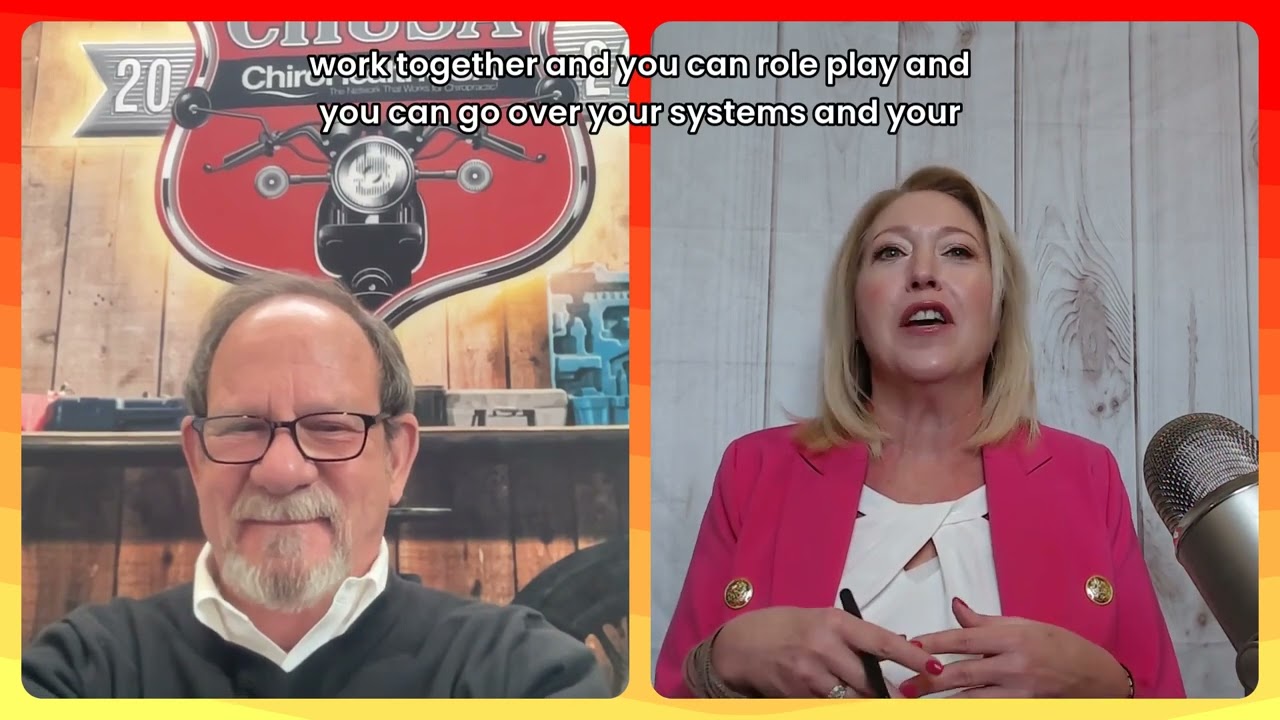
Kim Klapp, founder of Assistance for Chiropractic Excellence, built a training system for chiropractic assistants after running First Choice Chiropractic since 1995. She created ACE in 2000 because most doctors skip CA training entirely, treating them as replaceable rather than strategic assets. Her systems for hiring, onboarding, and written SOPs let practices run smoothly even when she's away.
Chapters
Welcome to ChiroSphere, where we talk about all things chiropractic and some things, well, not so chiropractic. I'm Dr. Ray Foxworth, your host for ChiroSphere and CEO of ChiroHealth USA, the network that works for chiropractic. Our guest today is Kim Klapp. She has managed First Choice Chiropractic since 1995 and has spoken for many chiropractic universities, colleges, companies, and associations. She founded Assistance for Chiropractic Excellence, ACE, in 2000 and provides quality CA coaching and training by way of monthly online courses. Kim teaches chiropractic teams the most up-to-date techniques and communication strategies for generating more referrals, collections and patient compliance. And God knows who doesn't want that in their practice. Kim, thanks for joining us today.
Absolutely my pleasure. And thanks so much for hosting this and for all you do for the profession. So appreciated. You have no idea.
Well, thank you so much, Kim. So let's jump right in. While many people may know what you do, I'm big on people's why. So why did you decide to start Assistance for Chiropractic Excellence?
Great question. Yeah, I'm a big fan of why myself. And Really, let me give you a little bit of background. I think if you understood who I am, you'd understand why I do what I do. When I was going to University of Michigan, Go Blue, I was manager of a clothing store. And that clothing store had 14 different locations. And I was in charge on my little store of hiring and training the people I needed in the store. We had no hiring systems. We had no training systems. I'm like, this is crazy. Back then, a million years ago, I developed hiring and training systems for that company. And then once I graduated, my first job out of school was to run the Michigan Association. Back then it was the Michigan Chiropractic Council. That was in '94. I didn't know that. I was the sole employee. I had over 600 doctor members, but I was in charge of everything. They had one employee from programs, conventions, communications, member services, you name it. One girl. That was me. So then I started running the practice in '95 because a year later, Dr. Tom's like, hey, You know what? All this organization and systems you've got going, really profitable for our office. So in '95, I started running the practice. So because of that, then what I realized is I just assumed that every chiropractic practice had all the systems and organization and communication strategies, et cetera. Obviously that wasn't the case in the We constantly kept hearing things like, your offices run like a well-oiled machine, and stuff that would just crack me up. And then when I started speaking in '97, because Dr. Tom urged me to, we realized that it was a huge need in the profession. There was a dearth of CA training then. It was pretty much relegated to, well, we're having a chiropractic seminar here in the big room, and then we'll put the spouses or the other CAs into a little room and basically teach them how to use the phone. And really, that's all they need are some phone skills. Just smile before you dial and everything is going to be great. Dr. Tom convinced me in 2000, you know, hey, he's like, you need to start helping other offices because we got ours, you know, like an absolute, you know, flowing really well, but let's start helping other practices. And so he convinced me to do that because we really thought it was a need at the time that no one was filling.
You know, it really is still a need. I can't tell you how many times I've had calls from doctors saying, I wish there was somewhere I could just send my CAs for a month to get trained and then, you know, and then have them come back.
I'm happy to train any CA for a month in my office.
So there you go.
Start that.
So, from your perspective, you clearly understand the importance of training and having processes in place. Why do you think so many doctors struggle with that? Why do they not understand that it is absolutely essential?
You know, since I've only been doing this for 24 years, if I could figure that out, I would have, you know, limitless clients. It is sad. Obviously, you. a successful business owner and practice owner prior to that, you understand the role that your team plays and how important it is. And it just makes sense when you stop and think, okay, this CA is going to have so many more interactions with every single client and potential client and community member than a single doctor's going to have. So every single interaction, whether it's on the phone, texting, emailing, front desk, out in the community, in therapy, whatever the case might be, every single opportunity is either going to be for practice growth or a potential pitfall.
Right.
So, you know, you put a CA at the front desk and it's up to them on whether they're going to do things that are actually going to educate patients and, you know, get more referrals and get more reviews and increase your retention and collections, or they're not because they're just not trained how to do that. You know, and I get it. Doctors don't have the time, the systems, the detail orientation, the tools. to, you know, train CAs. You weren't taught how to do that in school. I get that. And, you know, there's a lot of other business acumen that you're missing in school as well. You know, but to me, yeah, it should be a no-brainer on how valuable a CA is because they really can be, you know, a practice's biggest asset. But for some reason they're just not.
True.
And, you know, what I find is that doctors understand how important it is to train a new CA. They get that. Um, but then what happens once they finally know how to do their job? You know?
I'll tell you something I've observed over the years in my practice and, and many others is we will spend the time to train and then we never spend time following up to make sure that what we trained them on is actually being done.
Right.
You put processes in place and the next thing you know, it's like, okay, who's doing the recalls today?
Yeah.
Wait, wait.
I, I know, I know like a couple months ago we had a team meeting and we talked about how important it was for everybody to do X. But obviously we're not doing that. So yeah, it's the constant retraining and it's not just because people don't know how to do something. Knowing how to do something is great, but doing it every time and the best way possible. And, you know, with the right intention and the right focus, it's way different. You know, even my own team who obviously knows how to do everything I teach and then some, they can probably have, and I know they make puppets of me, but you know, when we focus on, hey, let's focus on referrals this month.
Mm-hmm.
It's amazing. All of a sudden we get a jillion referrals because now we are refocused on it. It's not that they didn't know how to do it before, but as a CA, there's, you know, a jillion duties. You can't focus on every task every day all at once, and you certainly don't have the time to create new systems.
It's that old saying, what you think about, you bring about. And if they're not thinking about it— Exactly.
The energy goes or the attention flows. You know it.
So why do you think so many doctors look at their teams as just an expense rather than an investment in their most significant asset and How do we change that mindset?
I would love to change that mindset. I think it's just helping them become conscious. It's the same reason that they don't have, you know, for example, regular team meetings. I don't have regular team meetings because it's an expense. You know, I, I, that's what I hear. You know, I look around and I've got 1, 2 people and, or 3 or 5 or 10. Oh my goodness, I've got this big team and I'm paying them all X dollars per hour to sit and have a team meeting. I'm thinking, yes, wow, that is awesome. So you can all work together and you can role play and you can go over your systems your strategies, and you can work together to make sure that everyone's on the same page and build the practice together. How fabulous. What a great return on investment that a positive team meeting is, but it just isn't seen that way. No, it's not. I don't think that they understand the difference that CAs can make if they're empowered and they have the right systems and the right strategies for communication and patient education and collections and marketing. Not to mention always, like we have to do, make sure our why is in our forefront and make sure we've got that attitude and energy levels and the environment, just making sure everything is in alignment that we need in our practice for it to succeed. And I would love to know why doctors are so short-sighted when it comes to the role that their CAs play.
It is perplexing at a minimum. You know, I can remember conversations with doctors in the past who almost, you know, at association events almost brag about, oh, I hired a CA for You know, minimum wage. I don't ever pay them more than minimum wage. Or I had to fire 3 CAs last month. And I'm going, what an idiot. And I'll tell them, that's the most stupid thing I've ever heard. You're either hiring the wrong people or you're not spending the time to train them. You know, they just don't understand the chaos that that kind of turnover really creates in a practice. It's just— well, as I've lately started saying, there are a lot of doctors that are in practice But they're not in business. They just don't understand the essentials. So going back, had no idea you ran the association or were involved in retail. Who would you say is your hero in life? Who started— well, who motivated you to do what you do today?
It would have to be Tom Klapp. He really did. But I will say that before, you know, with him involved, the people I can really say made the biggest difference, 2 people in chiropractic. Number one, Dr. John Hoffman. He was one of the founders of Life University, and he was Dr. Tom's field doctor. The reason that Dr. Tom became a chiropractor, he actually married Dr. Tom's cousin. So because of that, I was blessed to have dinner with him twice a week for many years. I always said, wow, I've got the best free coaching program until I started thinking about how much were we spending on those free dinners or on those dinners, the 3-hour dinners twice a week. But they were amazing. And always having somebody who would answer my all my questions and banter with me and, you know, basically let me see what's possible. You know, having, you know, he saw thousands of patient visits a week and just being able to talk to somebody like that one-on-one and he was so open and awesome about always serving and wanting to help people. That was my number one go-to in chiropractic and I miss him dearly. The second one is probably Dr. Stu Hoffman, not related, one F versus two Fs, from Parasecure. And that's because way back in the day when I first started in chiropractic, Dr. Tom would take me to DE 4 times a year. And regardless of what was going on in the meeting room, in the hallway, I'd sit and talk to Dr. Stu about running a practice. And he had numerous practices at the time and he was fabulous. He was such a huge mentor, always took the time. He was amazing to just sit down with me and answer all my questions. And it's kind of like if you remember the movie City Slickers where he's like the one thing. I always got my one thing from Stu Hoffman. So I appreciate that. And honestly, when Dr. Tom passed away, he was my rock. He was still the one. He's still the one I go to anytime I have a big question. He's my go-to. And I will say, besides those 2, I should mention that I'm super blessed to have a huge chiropractic family thanks to Dr. Tom. And I always like to say that aside from our daughter Tori, that chiropractic family is the legacy he left me that I'm the most grateful for. A lot of people, I'm just So many people in my life that made a huge difference.
Yeah. Yeah. Dr. Stu is certainly a kind soul and I'm fortunate to call him a friend as well.
Yeah. He's awesome.
I really didn't get to know Dr. Klapp until when we met during the summit. And of course, you know, when he passed away, the thing that hit me the most was, wow, I really wish I had had more time to get to know him better.
You guys would have gotten along really well, actually, both big vision people, both givers.
He just, he was so focused on, on something that's important to me, which is unity within the profession. And I know he had a history of being able to bring that about in Michigan and in other states. And so I really feel like I missed out in some ways. He was much appreciated. And then, you know, that's one of the reasons that, you know, we decided a few years ago to name our Foxworth Family Scholarship after him. And again, I Just like you, I'm sure. Just wish I had more, more time with him. We had a lot of good conversations over drinks and just, we were in some ways kindred souls, I feel like.
Absolutely. Absolutely. You guys, like I said, managed to achieve, you know, starting off that strategic plan like no one else has been able to. So good job.
Yeah, it was a labor of love for sure. And it's doing great. For those that don't know, the chiropractic strategic plan was started in the summit and also through the ChiroCongress and And really look forward to great things coming out of that. And Tom was certainly an integral part of that. With you mentioning Tom, there was something else I wanted to talk with you about just briefly, if you'd share with us. Over the years, I've had a number of chiropractic spouses call me when the doctor passes and they're in a panic. They're in the middle of a crisis. Well, it's one crisis to lose someone else. It's worse to have a crisis At the same time, you're having another crisis, which is the reality of, oh crap, I don't know what's going on in this business. Your situation was different because you were an integral part of the practice, but what were some of the challenges that you had and what do you think the surviving spouse, if you will, really needs to be thinking about and know about should they find themselves in that situation?
Yeah, well, first of all, thank you. I hope no one ever does. I know it does. But it's a fact of life or death. We were very fortunate, like you mentioned, in that I've been the, our practice facilitator for since 1995. And I like to say practice facilitator instead of an office manager, because it really is my job to make sure that everything is easier. So, you know, put the right systems in place to make it easy for my team to succeed, put the right team in place. So between the systems that we had in place and the amazing team members we had in place, I will say it actually, I mean, it was hellish, but we didn't even miss— this sounds awful— our office didn't close even for an hour. Yeah. So we, we just kept rocking it because, you know, what's the why? Everybody's gonna just keep— I mean, I, I showed up the next day. Payroll had to get taken care of. So, um, just keep, just keep swimming, right? Um, however people cope. But it's all about really, like I said, making sure that you have the systems in place. Um, I was really lucky because Dr. Tom was super well organized. So, you know, electronic data vault we had synced between both of our phones and both computers. So, you know, I had every password that I needed. He had every, every account information, every, everything I could get into it. I think I told numerous companies that he died for 3 years because it was just easier to be taking care of everything as him. So sorry, it's probably identity theft. Let's not, let's not maybe with it. Okay. But no, really, I will say, you know, in tying that back into what we were talking about earlier, I don't know how chiropractors think that they can take care of patients and take care of the practice as one person. Because doing what I do, there's no way I could also see patients at the same time. I certainly couldn't. But like I said, putting the systems in place, making sure you have that kind of communication. You know, we already had all the legal and the estate planning taken care of when our daughter was born. So nothing recent, obviously, you know, way back. If you're going to have a child especially, or if you own a business, it's something really short-sighted if you don't make those plans. So because he was so organized and so responsible, it made things a lot easier. That being said, like I said, that's where my chiro family and my family came into place, is that everybody was so awesome about letting me call anytime, day or night. And, you know, actually, Tom's cousin, who is another chiropractor, actually Dr. John Hoffman's daughter, Dr. Wendy Rapolo. I was out to dinner with them within 2 weeks after Dr. Tom passed, and I was down in Florida, and she stopped at the store and picked me up a little tiny notepad, a little steno pad, and she said, here, every time you have something that's stressing you out or something you realize you have to do, write it on a different piece of paper and then flip. And I will tell you, I still have that and it has just one thing left on that, on that notepad. 'Cause as soon as you do something, then you, you tear it off and throw it away. And so she was really instrumental in getting me to just stop the hamster wheel from freaking out that goes on when you realize, oh my goodness, my whole life is upside down. So, Wow. You know, just having people there who can just help you out. And, you know, she had no idea, I don't think, that, that, you know, 49-cent steno notebook brought me peace of mind. For years, just, I'm like, oh, yep, got it all done. Not a problem.
That's awesome.
Yeah.
Everybody, if you will, if you'll hang tight, we're going to take about a 30-second break to hear from our sponsors and we'll be back with Kim shortly. So welcome back, everyone. We're having a conversation today with Kim Klapp. I hope you're enjoying it and we'll kind of pick up where we left off. We were talking about Dr. Tom Klapp passing and Some of the challenges that people face when that occurs in the family. And I really appreciate you opening up about that. Maybe difficult to talk about, but so many doctors, I think, and their spouses need to have a crisis plan, you know, a short-term crisis plan and then a long-term plan. Just recently, I had a doc call and— or a spouse call, and the doctor had passed away. Unfortunately, his wife wasn't on the checking accounts. They weren't set up as payable on death, you know, didn't know the passwords and all of those things. And, you know, those aren't things we think about on a day-to-day basis. You clearly have been in practice and in business. And so you didn't have the crisis within a crisis like a lot of people experience, but was there anything that you or Tom hadn't thought about? That you wish you had in retrospect?
You know, I really can't think of anything. He was pretty amazing, I guess, because we hadn't had the conversations. That was probably it. We hadn't had—I mean, we had had had some—and you know how we thought the practice would continue. You know, well, we'll just you know sell it to a family member, kind of you know whatever. That never came to fruition. I did have numerous chiropractic. Friends step up and say, hey, if you need me to, you know, we'll, I'll help you out, you know, with whatever. So that was great. Um, but like I said, because we had the people in place, and I should back up and say we had a tragedy in our practice, oh, years and years and years before, about 20 years before, where our insurance account director unexpectedly passed away. And so having had gone through that before and not having the systems in place for what to do when, yeah, it was probably And it was in the '90s. So that is one of the reasons that I devoted a lot of what I do to making sure that we do have systems that aren't just oral tradition, but that it's written down in the office exactly how to do everything. So my first Office Systems Reference Guide, um, took me 4 years to put together. And right now it's over 300 and some pages of excruciatingly detailed information, but it makes training a breeze and it makes it when someone's on vacation.
Yeah.
You know, I, I'm a big fan of freedom. I like vacations. Um, I want not only me to have vacations, but my team members too. And it makes it a lot simpler when you have those systems in place where if I had to, I don't do the billing anymore, but I can go in and do the billing because I have it all written down.
Yeah. You truly have an operating system for the practice. That's, I think, imperative if you're gonna run a successful practice. So we've both worked in chiropractic for a few decades. Where do you see the profession heading in the next, say, 5 to 10 years? Um, what challenges or opportunities do you think are out there for us?
Well, I am so hopeful. I'm very excited. I think, you know, I'm always looking in business myself as, you know, there's always a better way of doing something. And I like the direction the profession's going a lot. I'm so excited about the strategic plan that, you know, you're spearheading. Um, I am so glad that there's finally, you know, that people were able to put aside, not you of course, but the people that were problematic in the past about being on the same page, that they were able to put aside the individual personal gain and the egos, because I know there's a A lot of successful people in this profession.
Really? Chiropractic? Are you kidding me?
I know. Well, I, something that I probably just knew one or two of them. But it's ironic how challenging I think it's been historically for chiropractors to get the big idea when it comes to unity. So I think I'm so excited about that. I'm excited about the technology evolution. I'm excited about the evolution with chiropractic research. I mean, I just was in Nebraska this weekend and Dr. Heidi Havoc was there as well. You know, what she does is amazing. Stephanie Sullivan, what she's doing is amazing. So I get really excited about the direction of the chiropractic research. And like I said, with the strategic plan and just expanding access to chiropractic care, I think that is just huge. So whether we expand access, you know, on one level with the profession, you know, on this higher level, you know, whether it's, you know, with trying to get equitable third-party coverage, you know, parity. And inclusion of chiropractic benefits, that's awesome. And I definitely worthwhile. On the other level is here grassroots, you know, empowering your team and your patients to invite more people in for care, you know, to experience the benefits that chiropractic offers so they can feel better, function better, and live better. So it's on all spectrums. And I'm excited to be part of wherever I can fit in to help people get that message out there.
Well, just for clarity, I don't spearhead the strategic plan. Certainly, I was involved. In my head, you do. You just rockstar it. Well, I was very passionate about it and glad to see that the CHIRO Congress picked up the challenge. We did make some donations early on to try to help get it started. And, you know, I've observed the same thing you have. There have been so many doctors from different walks of life, if you will, within the profession, That have come together and really begun to focus on what's in the best interest of the patients and the profession rather than what's in my best interest or my association's best interest. And, you know, I'm a firm believer that if you're just focused on what's in it for me, you lose a lot of opportunities and it becomes self-serving.
Right.
And unfortunately, I think historically, There's been a good bit of that. And to get people to, like you said, get the big idea and realize that we can increase, we can improve unity, we can increase utilization of chiropractic, we can get paid better. And God bless the ACA and ICA for all they do. But what frustrates me and many others I've talked to is less than about 25% of the profession actually belong to either one, and less than about 50% of the profession actually belongs to their state associations.
Right.
And quite frankly, it kind of pisses me off. They sit there and bitch and complain and whine about why nothing changes. And they don't, you know, they don't put any time, effort, or energy into it. So it's one of those things you kind of get out of it what you put into it, I think. So.
Right. So trying to convince the chiropractor that why they should support their profession among their state association and national associations that are trying to serve them and make their life easier, better, more profitable, you name it. Kind of trying to explain why they need to train their CAs to do the same thing.
Yeah. Well, I'm sure you dealt with a lot of that when you ran the association. So, I got some fun questions.
Yay!
What's your superpower?
My superpower. Let's see. Well, for the last few years, it's probably—
I do notice that you said powers because you don't just have one.
Yeah. Let's see. I'm really good at translating snark and eye roll to English since my daughter's 20. I've gotten really good at that. No, I will say simplification and communication. Taking what does not have to be a complex topic of chiropractic. I know there's a lot that goes into it, but trying to make it easy for people to understand. And I will say that's a challenge. Most chiropractors go and ask their CAs to explain what chiropractic is. I think you'd be shocked. I do this at every seminar I teach, and it's a safe space of just CAs. No doctors, no one can hear them, there's no mistakes, it's secure. And when I ask that question, honestly, 99% of CAs can't answer that, can't answer what chiropractic is. So I think one of my superpowers is, you know, trying to make things, trying to simplify things so that, you know, we can all not only understand it, but also communicate it.
That is so critical, I can't tell you. I was big on having scripts and making sure that staff understood how to do a mini consult when the patient's called in and that type of thing. And I can't tell you how many Well, we've done this blindly, but you call a clinic and you'll hear a recording of a CA and the patient asks, well, how does Dr. So-and-so treat headaches? He said, well, he uses this little clicker thing. And it's like, really? I don't have that anywhere in my script. But that and the financial report of findings. I can remember when I first started looking at financial report of findings and how to do that and be more effective at it and improve the collections. It's like, You know, we recorded a couple of those and Kim, I wanted to crawl under the desk. It was just unbelievable. So maybe that's something we challenge doctors to do, not to get your team in trouble, but to understand what they are saying and make sure that they are delivering the proper message in a way that patients can really understand. I want to— So what do you think you'd be doing today if you weren't doing what you're doing?
Oh goodness gracious. Um, probably just being bossy and sarcastic somewhere else. I, I don't know. I will say, yeah, the other— I think my other superpower, because you did say plural, um, now I'm thinking about, is I'm really good at learning from my mistakes. God knows I make a ton of them. You can ask my team, you can ask my daughter, you can ask anybody who knows me. I like trying new things. I'm always— because, because I do believe there's always a better way, and I'm always looking for ways to tweak our practice procedures or tweak our communication or just make it a little bit easier for my team to succeed. I think learning from my mistakes is big. So really, I would be out there doing anything that involves chiropractic because since I found out about what it was, I became an immediate chiropraphile. I'm the lover of all things chiropractic, one in particular, but he's gone. So I do just love the profession. I'm so blessed to be able to serve in it. And if I wasn't doing what I'm doing, Now I would find some other way to serve the profession because there's too many people out there that don't know. They still don't know. I'm amazed when I find out, you know, someone had some organ removed, you know, whether it's their thyroid or their bladder, and I'm out there talking to them and they did not even try chiropractic first. No one even suggested they try chiropractic first.
That's unfortunate. No doubt.
So, so to me, I'd be out, you know, just trying to help people.
So what's your spirit animal?
Great question. What is my spirit animal? Actually, I do believe it was a turkey.
I did not expect that.
And the reason I say that is they always— they show up all the time. I mean, they actually came to my door. I had a whole flock on my— when I say on my door, on my front walk and on my porch on Thanksgiving. I'm thinking, you know, you're not the smartest birds. This is really not your day to be here. But it's not just that. When I was doing— I did an Inner Winner seminar. And right before doing a firewalk, you know, I'm taking my walk through nature again, flock of turkeys. So for some reason I keep looking it up too, and it's, and it's about change. So I guess I just need to be more flexible and open to change, but that, that seems to be what appears anytime I'm asking the right questions to the universe.
Well, the next time I see you, if there's a turkey following you, I'll, I'll know why. So one last question. What talent do you have that most people don't know about?
What talent? Well, I am super organized. People know that. I'm checklist queen. My— I can rock Thanksgiving like there's no tomorrow. I do have a color-coded spreadsheet that's organized like crazy. So little Type A when it comes to Thanksgiving and entertaining. Napkin folding, awesome. Can't fold a fitted sheet though to save my life unless I happen to be watching a video at the same time. Can't do that. So Really, other than that, I'd say love cooking and entertaining, but most people who know me know that.
So what's the best way for people to learn more about Assistance for Chiropractic Excellence program if they want to reach out to you?
Oh, well, thank you. Since the program has been around so long, it's got just the best website ever, chiropracticassistance.com. And that's assistance, A-N-T-S plural, dot com.
Got it. Well, thanks for spending some time with us today, Kim, and thank everyone for listening to our ChiroSphere podcast. Please share the podcast with your friends and let us know who you'd like to hear from in the future and any topics that might be of interest to you. And we'll do our best to get all of those requests. Until then, give us a call if you're interested in joining ChiroHealth USA, the network that works for chiropractic and you. Thanks, Kim.
Appreciate you. Thanks.
More from Kim


Train Chiropractic Assistants with Excellence with Kim Klapp- Chiro Hustle Podcast 604