MENTORSHIP EP 05 Practice Specialist Interviews

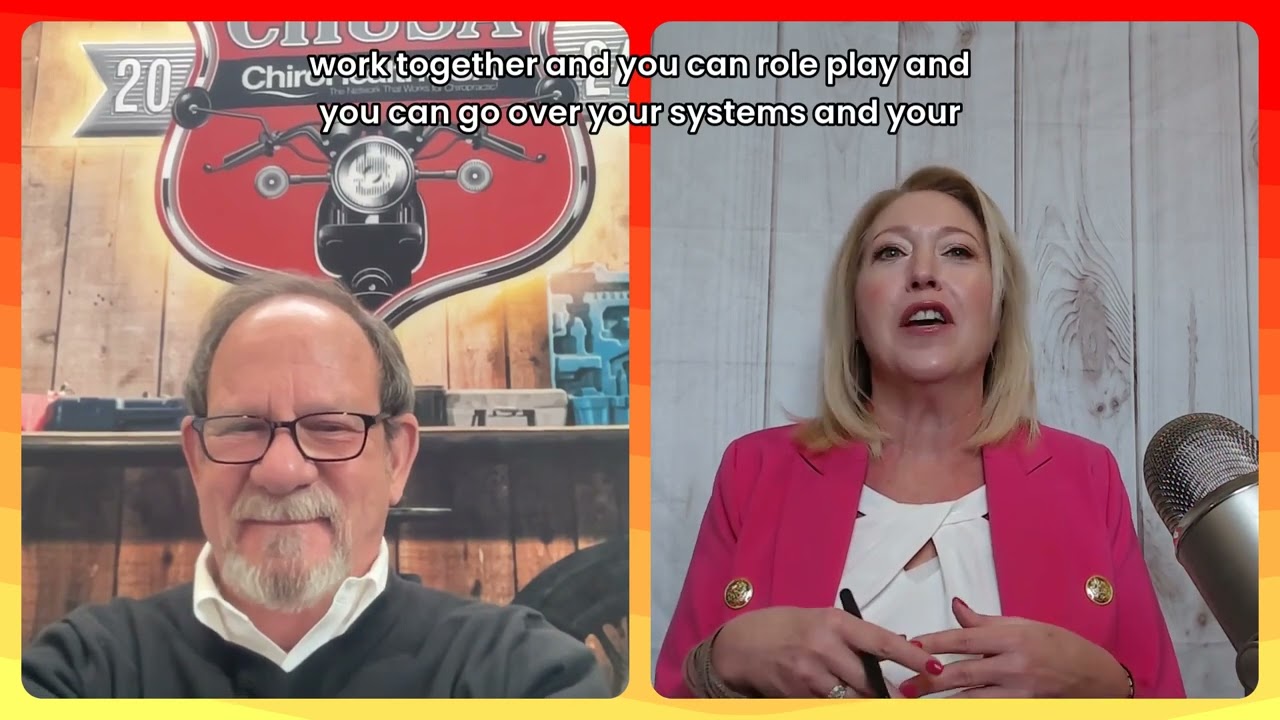
In this mentorship episode, Abe interviews Kim Klapp, founder of Assistance for Chiropractic Excellence (ACE), to share her proven system for recruiting, onboarding, and training chiropractic assistants (CAs). Kim emphasizes the strategic value of CAs as "mission control" and outlines a step‑by‑step hiring workflow: clarifying the ideal CA profile (40 core characteristics such as detail‑orientation, communication, coachability, honesty), crafting ads that use chiropractic‑specific language, and running group interviews paired with an on‑site clerical test that filters for detail‑orientation and written communication. Candidates who score 100% on the test are invited to an individual interview; others are politely declined. Once hired, Kim details a comprehensive onboarding package that includes an expectation‑management email, an appreciation‑survey, I‑9 and tax forms, and a 12‑week training timeline broken down day‑by‑day. Training relies heavily on video‑recorded policy walkthroughs (personnel, HIPAA, computer use), a daily 3‑minute team huddle that reinforces mission statements, goals, and gratitude, and role‑playing of "PAT" (patient‑answer‑team) scripted responses. She also provides an extensive Office Systems Reference Guide (300+ pages) and a template for the training timeline. Kim stresses the importance of hiring for characteristics rather than skills, using positive language in ads (e.g., "fast‑paced" instead of "busy"), and maintaining a culture of appreciation and continuous improvement. The conversation closes with inspirational patient‑outcome stories that illustrate the transformative power of chiropractic care and the impact a well‑trained CA can have on practice growth and patient health.
Chapters
All right guys, this is Kim Clap, um, and, um, I met Kim. She, first of all, she runs a company called Assistance for Chiropractic Excellence. And Kim, I kind of wrote this down, the go-to of chiropractic assistant training. You guys, thank you. You're welcome already because when you get in your future to be chiropractors and you go to higher CAs, Kim is the best reference out there. She speaks at conventions. Kim, you always— another Michigander, so she's always at the Michigan Association of Chiropractors. She is the wife of a foundational Michigan chiropractor who is now not with us, which is very sad. But we've had some amazing— Kim, as you know, some amazing Michigan chiropractors. And your husband was one of them. You guys, she is truly someone who understands. Um, there's a lot of, um, companies out there that do this, but Kim is the go-to. So you are welcome for bringing Kim to you already. Um, I gotta go on a little bit. Just, Kim, I don't know if I've ever told you this, but like when I first— so we were using the BOLT program, Kim, back in the day. Let me just— you're gonna be included in the introduction.
That's like, that's like '96, maybe.
'96, '97. So I joined my mentor.
Yeah.
Just to give a little props out. So in Michigan, we had some foundational chiropractors, Henry Cusno, Joe Lupo, Dick Hereford, Chuck Ribley, my mentor, Paul Rump. So I was working for Paul in 19— I started in 1995, '96 when I graduated. And so Kim, my— one of our associates, there's 3 associates, went to a Bolt seminar and Dr. Kitchell brought it back to the office. And literally, the BOLT Program was the foundation of my personal foundation for converting patients to a lifetime of chiropractic care. It was the foundation of my teaching patients, having a process to put in front of patients. We know chiropractic, the benefits and how people should be lifelong, but your husband gave me the tools I needed to And so, Tom—
That's awesome.
Tom and Corey, I kind of think of as they're like the next generation. They're a little bit younger than all those other guys, but those guys and you guys, I think there's a certain power. And Kim, you can kind of speak to this. Michigan chiropractors are just amazing, and it's because of people like your husband. And I could go on, so I'm not— but can you back me in this? Don't you think that— don't you get— Being around Michigan chiropractors, there's something about it.
Hey, Michigan is the center of the chiropractic universe, baby. Absolutely. Absolutely. We have been blessed beyond measure with amazing, legendary chiropractors.
And your husband being one of them. And so I thank you from the bottom of my heart for what he was. There's some foundational things you do in your existence of a chiropractor, and I got a chance to thank him at one of the conventions, so I'm glad I did. So there, there's your introduction. So this is where we're with. Since you do— your focus is you're amazing at chiropractic assistant training, let's kind of just go through a little bit. Let's give these students some gems. We don't have all the time in the world, but let's start with— let's kind of go through, start with the hiring, initial training that like we do in our office and managing. So let's start with hiring first. Reaching out, advertising, interviews, what you're looking for, verbal components. Do you do any type of written thing? Do any, any process? Um, ideal candidates after the interview. So it's your floor, hit it. Can't wait. You guys are already welcome. Go ahead, Kim.
All right, well, thank you, Abe, first of all. Um, and it's great. I love, I love stories, um, from helping people from, yeah, back in '96. I actually started running our office in '95, so '96, '97, we already had everything rocking. It was quite amazing, but the practice has been around since 1980. Anyway, that being said, by the way, BOLT was our acronym for Benefit-Oriented Long-Term Chiropractic, and it still is important today. Once you understand the benefits of chiropractic, you can communicate those, and you're thinking long-term, everything flows. So, thinking about that, you know, before we delve into what we put in an ad and how to get there, It's, we all too often skip the critical step of getting clear.
Yes.
Getting clear, you know, getting your head on straight, you know, figuring out first of all the type of person you're looking for. And one of the things you'll, we find over and over and over, and I've been hiring CAs since '95 and training them since '95. So in this, and I'm in my practice Monday, Wednesday, Friday, and I do ACE consulting Tuesdays and Thursdays. So this is not something that used to work. This is what works today.
Yeah.
Still works. We're always tweaking, we're always evolving. But what we find is that you first off need to start by valuing the role of a chiropractic assistant in your office. You know, once you realize that if you have the right person with the right training in your practice, that he or she is going to be your most valuable practice asset by far, just by far, hands down. You know, everything from affecting the way patients healing, your referrals, your retention, your collections. Everything. I mean, we're talking your front desk CA is like, you know, mission control and increases whether you keep patients in or out, money in or out. It makes your life stress in or out, you name it. So, first of all, you have to understand and value the role that they play in your office. All too often we just jump into, let me throw an ad in. But if you need to start out, you need to create that culture of appreciation and gratitude, um, because your life is going to be so much easier if you build that relationship. You know, we talk about building a rich relationship, having a rich foundation to relationships when it comes to our patients. That's an acronym that I created. It's respect, integrity, caring, and honesty, but it also applies to your team. So, if you want to build that team, you have to start out with a great rich foundation.
And with the students, I call it— with the students, I call it— I do the 6 A's, and it's authenticity, knowing who you are first before you basically can can teach your patients or your insurance company or your staff also. So you guys, Kim, thank you. This is exactly— and you're the expert on this. Go ahead. I didn't mean to interrupt. This is what we call authenticity.
No, that's fine. Jump in, jump, jump in. I'm just, just prattling on. So, you know, you also want to get clear on your vision of that chiropractic system. What do you want that to look like? So what I've done with Dr. Tom's help, we developed a list of 40 characteristics, 40 that we want in a team member. So, I mean, and then we added on 2 extras for an associate doctor, but for the most part, everybody in our office, we want them to have these 40 characteristics.
So give me a couple of the top ones. Give me some good ones.
Well, you know, respectful, honest, trustworthy, good communicator. Yeah, I mean, it's, it's anyway, um, there's 40 of them. Um, we tack on good at public speaking for the doctors.
And yeah, yes. Yes.
Yes. Um, anyway, but you want to get clear on that vision because, you know, it's one of those— truly, if you build it, they will come. But when, when people call me and complain about their team, you know, number one is, do you have the right person on your team? Because you're going to always be butting your head against the wall. So you want to get super clear on that. And then when you put together your ad, you want to remember, you want to hire for characteristics, you can train on skills. Hire for characteristics. You can train on skills. You're not going to typically find a perfect chiropractic assistant already trained out there for your practice. Actually, I think one of the worst hires I ever did was somebody who— a chiropractor, I called on a reference. This person had been a CA, and they said, oh, she's great. Well, she was great in their office that didn't take care of a lot of people, but in an office in a fast-paced office environment, Not so great. So, again, I kind of come from the aspect that I'd rather— sometimes it's easier to build a new house than to remodel an old one. So I like, I like to start from scratch.
You want to be moldable and really learn from them, even from a chiropractic standpoint. Go on, Kim. Go ahead.
Definitely being coachable. Huge, huge. Because, and again, we're constantly evolving. We are tweaking things in our practice every single day because there's always room for growth. There's always a better way, easier way of doing things. And that's That's what I'm all about is just, you know, keeping things simple and exponential growth. So, uh, the 5 characteristics that we use, um, let's see if I can rattle these off the top of my head. We're looking for somebody who is, hey, is detail-oriented because, you know, that's something you cannot train on. Someone's either detail-oriented or they're not. And this person who is getting, you know, verifying insurance data and inputting information into your patient software and dealing with a million different things, detail orientation is huge. Um, I'm detail-oriented. Dr. Tom was a visionary. Not detail-oriented at all. There was no freaking way I could help him overcome that. I mean, he's fabulous, but could not do details. So anyway, you've got to start with somebody who's detail-oriented. Good communicator. They have to be a great verbal communicator. AI will help them written and texting and emails. We don't care about that so much. But honestly, if they're not a good verbal communicator, how are they going to handle the phone? How are they going to handle your front desk? How are they going to handle financial consultations? It's just not going to work.
Your initial reference.
So you want somebody who's—
Yep, yep.
Exactly, exactly. Um, so detail-oriented, good communicator, um, bright, energetic. Those are just ones we use. Um, so think about the characteristics you're looking for. Um, when we explain about the office, we, we always mention chiropractic because if somebody is anti-chiropractic, you know, we don't want to do a bait and switch. It's like, no, if you don't want to be in a chiropractic office, this is not going to work for you. So we don't say natural healthcare. We say, screw it, we're a chiropractic office because that's what we do. Um, and we'll attract somebody who wants to be in a chiropractic office. We don't use the term busy. We use the term fast-paced because that's a— no one wants to be busy. That's, that's negative. So you want to be fast-paced instead. So that's something positive. So just, you know, some little nuances. Yeah, just some little nuances. I find also, you know, we post— obviously you want to post these online. We still, you know, believe it or not, we'll— we just do, you know, Facebook, obviously Craigslist, LinkedIn, Indeed. Honestly, experience.com, I think our best are always referrals from our existing CAs. Obviously, as a new doc, you're going to need to start from somewhere else, but I will say our team members, I'm very blessed with amazing team members. My senior CA just celebrated her 24th workiversary with me this week. I've got some amazing team members.
Okay.
I got just a beautiful basket from Boss's Day. I promise you the stuff I teach actually works. So that's, um, as far as hiring goes, that's, you know, kind of what to think about when you're crafting your ad and putting it out there.
Kim, thank you for the gems. That was amazing. Now let's do this.
Yeah, you know, here's the other thing you would— before you interview, this is super important, um, make sure that you are having them fill out, um, the— we have them come in. So this is a little secret we do. We do group interviews, of course, because You want to systemize everything, you know, save yourself time. You're gonna— there's no point repeating yourself 12 times. So we have, um, 12 people come to at maximum we schedule for a group interview. I think I can do a group interview in under 45 minutes with 12 people. Um, and I go through— I think there's like 10 steps to doing that. But the point is, what we do is if we want to have our group interview, say at 10 AM, OK. we contact people who have applied for the job and we tell them the interview is actually going to be at 9:30 because they're going to do an A clerical test first. So, super critical point. Have them do— complete a clerical test, schedule them for that. So you've got a bunch of people in your reception room that are doing a clerical test. They have to do it on site because you don't want cheating. There will be cheating if you email it to them. So there's no way. This way they're doing it on site, on paper with a clipboard, so we can see what's going on. If they're smart, they're going to utilize their phone because again, that we want someone who's resourceful.
Good.
If we're asking open-ended questions about what chiropractic is and they give us a stupid answer, it's like, look around the office, you know, use what's there, look on your phone, figure something out. But anyway, the clerical test is going to gauge their detail orientation skills. There's some number transposition, there's some alphabetical order, even though you really, you know, there's no more filing. But honestly, there is alphabetical order still necessary in your practice, I promise you. But we want to gauge that, and then we ask them some open-ended questions because we do want to check and see how their written communication is, you know, how well they can string thoughts together. So we gauge that.
Oh, good.
I was gonna say, we make sure then we screen those really quickly. We've got it. We've got an answer key, and then anybody who doesn't get 100% does not get interviewed.
Good.
Awesome. So we immediately just— we say, hey, you know what, thanks so much. We don't want to waste your time. We appreciate, you know, you appreciate coming in, but based on your test, we can't interview you.
So it's good. We do this too. We do it. And we, as a matter of fact, since we have our staff do patient testimonials, it's great for us to kind of— we say, all right, here's a patient. We show them one, and then we watch them actually type it out. And Kim, what you're saying, basic, even addition or subtraction, the way they organize their thoughts. We had patients that used to come in and interview great. And as soon as we ask them, Hey, so here's an example of a testimonial. I'm gonna give you some information. You go off in the room, write one, and some of the stuff has come back. It immediately goes, nope, you cannot hire this person because so much shows up in that. And again, you guys, these are little tools, gems. Group interviews, we do group interviews. You have to do something technically to see. And like you said, alphabetically, that will tell you a lot too. All right, that's the initial interview process. Now, Let's just get into some basic training. Um, so why don't you give me— do you guys— how do you guys structure your training or meetings? And maybe even speak—
So we will skip everything else about hiring. Um, but really super important, I do have a video on 15 ways to— 15 red flags to screen out a mismatch for your office. So again, you've got my QR code, contact me, just ask for that because I— okay, you know, the wrong hire is incredibly expensive. It's such a stressor. So I want to make sure you get the right person in your office. And so I do put together all the tools to make sure of that. So once you have that right person in your office, um, how do you train them? First of all, a lot of it starts with expectation management. And expectation management is just letting somebody know upfront what to expect and then following through. And if you want to do that with everybody in your life, do that with your personal relationships, do that with your team relationships, do that with your patients. Everybody. It's kind of like, you know, when you are driving, you know, when you're going to change lanes, you use the turn signal, letting someone know, hey, this is what's going to happen. But that way people feel comfortable and confident. And the best way to do it, of course, is to under-promise and over-deliver. That way you're going to get those happy, satisfied clients and team members. So we utilize expectation management a lot when it comes to training. We let the CA know, hey, you know, before they leave, you know, once we've hired them, because after the group interview they have an an individual interview. And once they're hired, you know, we then say, here's what time you're going to show up. You know, we write it down. If you have any questions, here's my cell number. You know, here's what to wear. Here's where to park. Here's where to come in. Here's what we're going to start with. And then we send them an email that goes through everything, all the details again, because we want it to be a great experience. And besides all of those details that I just kind of mentioned, there's some other ones in there. It also has a link to our appreciation survey. So, from the very first hiring, they're going to go, oh, there's an appreciation survey so that we know how we can customize any tokens of appreciation to fit that individual person. Because there are some people who don't like wine and chocolate, I hear. So, we want to make sure that—
They don't exist.
I know, it's crazy.
Don't hire them, Kim.
I know, I know. It's like, how can you be on my team, for God's sake? Anyway. Yeah, if you'd have seen my boss's day gift basket yesterday, it was filled with wine and chocolate. Thank you. So I know I hire intentionally for that reason anyway. So, you know, that's, that's one point about is expectation management. And then to hone that in when they come into our office, I have put together a 12-week training timeline that goes everything through, you know, day 1. Week 1, day 1, week 1, day 2, week 1, day 3. You know, make sure that we get the onboarding process right. That email also has links to their I-9 form to prove citizenship as well as their tax form. We want to make sure we handle all that. They can do all that before they come in, but that shows that they're invested already before their first day. So there's just a lot of, you know, little nuances that we do for a reason. I mean, we have all of their personnel policies all pre-printed out. And so, in our office, like I said, everything is extremely well organized. We have training systems in place where we've actually videoed. I've gone through and videoed, created videos for going through our personnel policy. So I have to do this more than once. So this is really important is, you know, the first time you go to train a chiropractic assistant, video it, because that way it will decrease your training time in the future. Keep in mind, most times that you're training somebody, you're either short, you're pretty much short-staffed at all times. And so to get then somebody else to find time to train, you really want to cut down your training time. I find video— providing videos works great. So even going through the personnel policy, our computer use policy, our key policy, HIPAA, all of that is videoed so that we reduce our hands-on training time. Of course, we do an office tour. Of course, when they come in, we make sure that they feel part of the team. Now, one of the great things is when we start somebody, You know, we have them come in at quarter, you know, 15 minutes before we open, just like the rest of our team does. We have one opening person, but everybody else comes in at quarter till. And at that time, we do— at 10 till, we do our team huddle.
Okay.
And so their very first impression of our office, you know, once they learn how to check in in our TimeFlax system, our software, and show where— here's where to put your personal effects. After that, you know, within 5 minutes, it's let's do our team huddle. And so it's like baptism by fire. All of a sudden, you know, they get to hear our mission statement and our CA mission statement, and they get to understand how grounded we are. And then, you know, we pull an affirmation and we share that for the day and we go over, hey, here's how many people we have scheduled right now to help. And, you know, our goal is this. So let's work on attracting that. And hey, we have this many new patients scheduled. Um, are we at our goal? Yes or no? Well, then let's attract this many more. Um, and we visualize that for a moment, what we want to see for the day in the practice. And we always make sure to express appreciation. So we've got a whole team huddle. It lasts about 3 minutes for the agenda. And honestly, I have ACE members who say that all they did was implement that 3-minute team huddle and their practice volume increased by 10%.
Yeah.
So it's something so important to do. Again, streamlining your training, so important to do because what happens is CAs who often, when you give them a bunch of stuff, It's chaotic. You want to be organized because you don't want to put them into overwhelm mode. You don't want it to be like, you know, they're being hazed at a sorority or fraternity. Unfortunately, that happens all too often.
Yeah.
So that can be one of the big, big issues with training. Another big negative that happens too often with training is you get somebody like quasi-trained, like they're okay, they're kind of functional here, they can do this and this and this, and let's kind of forget about them now. And that doesn't help either. So you really need to invest a lot of time and effort into training systems. So those are just a couple of the tools that we use. We do use a bunch of training tools. We're always checking back to see, you know, what did you learn? How, you know, we've— so we've got a lot of checks and balances systems with our training as well. I have different people in our team because I have a larger team trained on different things. And it works out like that. We have quizzes, we have all kinds of fun things, we have games. Um, my job when I train on, for example, insurance, my job, we have a little game that we play and my goal is to lose. I want them to win. I, I don't do— I want them to be the best at it, way better than me. So it's, again, we just kind of make it fun.
Kim, I can't thank you enough. You guys, please utilize, um, Kim, the amount of work you've put into just years of practice and the tools you've created. Thank you. I mean, what you're already talking about is there and unique. So, I mean, she's already saved you guys so much time. You don't even understand how many years.
I do share— I do share the training timeline also. So all you have to do is contact me and just say, hey, I want the training timeline, and I'd be happy to send it out to you.
Oh my gosh.
Thank you.
That's— you guys, like I said, you're welcome for having Kim Klapp on. Let's talk about Yeah, why don't you speak to a little bit?
I will say, you know, having a systems guide also, you want to have everything that all of your procedures in writing and everything scripted. That's super important. And do role-playing. So, like I said, we touched on training systems, but there's a lot to it. There really is a lot to it. I don't want to minimize that because, you know, you are setting the stage for someone's success. So think about that. You know, most people do not like role-playing because there's somebody else's scripts and they don't like making mistakes. but it's really important that you become comfortable as a team making the mistakes on each other and building that culture that it's okay to screw up here. Here's our safe space, not out there. And it's really important that you take that time to role-play so that everyone's got, you know, you have those tools. You know, have— we have 4 pages of questions and answers we call PAT responses, those commonly asked questions that either prospective new patients ask or new patients ask. And we want to make sure that no matter who on our team get asked that question, that they get a very clear best answer that they possibly can get, and that it's going to be a, you know, consistent answer no matter who they ask on our team. So we train on pat responses where, you know, no one knows— no one's allowed to answer the phone or have any unsupervised time with a client until they've memorized those. So that's just one other tool we use. Like I said, our— we have everything documented in our office systems reference guide so that we're not relying on some you know, oral tradition of training, because that causes all kinds of problems. And where we update that, and honestly, it took me 4 years to put my first one together. So that's something you might want to start with, with, with my template, because it makes it a lot easier.
And specifically, what's that template, that one called?
Oh, Office Systems Reference Guide.
Okay.
Yeah, you guys, again, mine's, mine's over 300 pages of excruciatingly detailed information of exactly how we do everything. But that way, you know, when we're training again, so it'll say, for example, day 4, you're gonna, you know, watch this video and look at this. We're gonna give you these pages of the training of the systems guide. So it's just all coordinated together. It really, it really does.
A lot of upfront time that goes into, but saving time in the future, which is how it does.
It is. It's a return on investment, and you'll, and it does help you also get clear on your procedures as well and figure out, okay, well, What's the best way of doing something? And there's, there's some tricks and tools to putting that together to make it easier too. So if you have questions on that, just ask. That's what I'm here for.
I was gonna say, tell us about your ACE program, but you've done more than that. We're gonna close out here and give us Kim Klapp's, not only from a training CA's perspective, give us an experience in your office that can get these kids excited about the potentials that they get to do. Maybe, and how important chiropractic philosophy is in the office. Give us a great gem story that you can really pass on to these guys that is like, look what you guys get to do. This is the best profession in the world. Go ahead.
It is. I mean, we're incredibly— I'm incredibly blessed. I always say I'm not a chiropractor, I'm a chirophile. I'm a lover of all things chiropractic, especially one in particular, at least was. But it is— it's amazing what The— and, you know, once you grasp, you know, that doctor does not mean healer, doctor means teacher. And so, okay, you later are really, are really teaching assistants. And so, one— and, and that, you know, a missed appointment is a missed opportunity for a miracle. It really is, because we have seen so many miracles. Again, our practice has been around since January of 1980. So, you know, we've had 3 Harvey Lillards in our practice, and we've had so many people who, you know, were able to conceive children. And we, I mean, you know, it just, it, some of the, some of our testimonials I love, they want to make me cry because they're so simple. Um, Steve in our office, his, he was just so happy. He had frozen shoulder. He's like, I can finally put my arm around my wife again at the movies.
Yeah.
It's like, oh, that was awesome. You know, we've had 90-year-olds who can now salsa dance again. You know, we've had a, you know, 6-year-old little asthmatic girl, Brittany. She was another one of my favorites who, you know, she was so asthmatic that she was sedentary, had a very sedentary life because she couldn't run or play or whatever. She was sitting in recess. She couldn't pet animals. She had to use her inhaler, had attacks every single day. And of course, she got under chiropractic care. Within a week, she was able to get rid of her inhaler. So once you realize the life-changing— but you can't do that if they don't understand chiropractic, if they don't get it. So, simple, clarify your message, get super clear on what chiropractic is, get that big picture, make it super simple to communicate. Um, you know, the idea is when, if you want to be successful and you want your team to be successful, really takes 3 things: getting clear, getting your mindset clear, getting on purpose, learning how to use positive communication strategies so you can take that information and share it with somebody else, and then Creating systems in your practice so that everything runs smoothly, and that way you magnify your success.
Kim, thank you. Thank you for what you've done, you and your husband have done for our profession. Um, you are a true gem to this profession. I can't thank you enough for being on this great source. Um, I'm already sitting here going, why don't I have my QR code on my background here? You're teaching me stuff without even saying anything, Kim. So thank you for the time. And I appreciate it. You couldn't have left at a better time.
Thank you so much for all you do for the profession. I appreciate it. I know you're making a huge difference in these students' lives. And again, anybody who needs anything, call me, contact me. That's what I'm here for.
Awesome. Awesome. Thanks, Kim.
More from Kim


Train Chiropractic Assistants with Excellence with Kim Klapp- Chiro Hustle Podcast 604