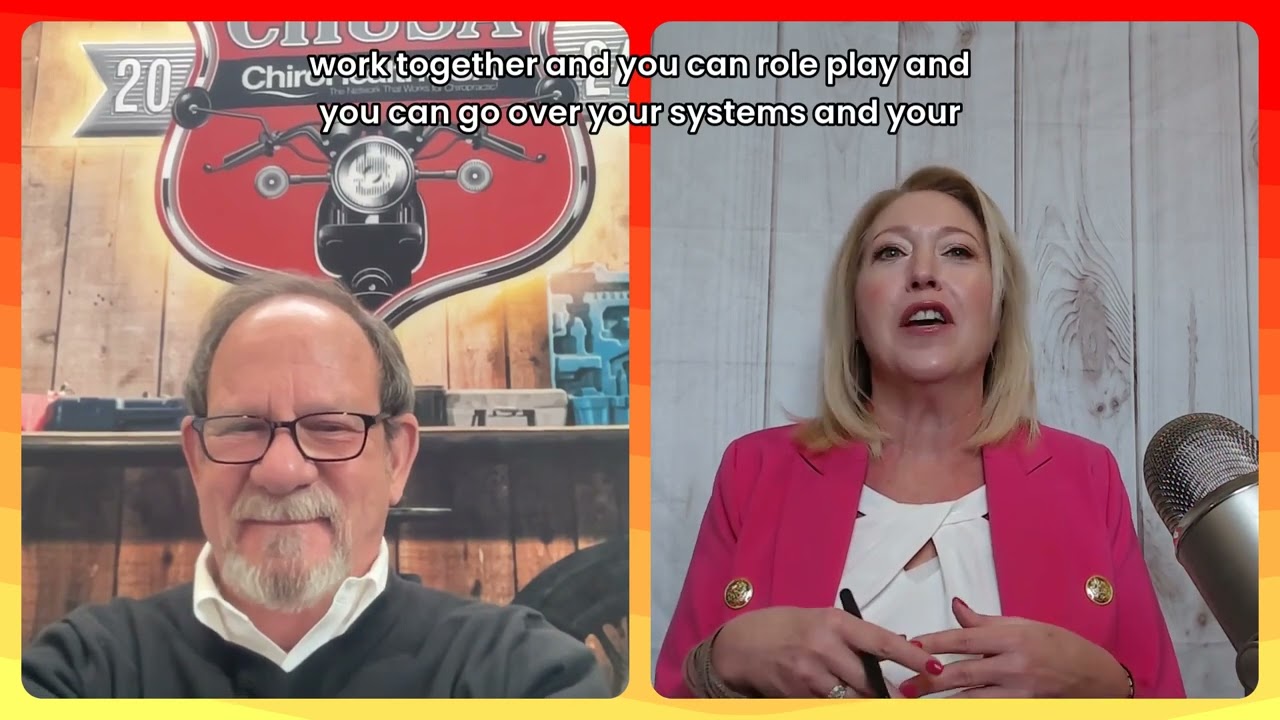
Train Chiropractic Assistants with Excellence with Kim Klapp- Chiro Hustle Podcast 604

Kim Klapp, who built a high-volume practice in Ann Arbor over 30 years, shares her system for hiring and training chiropractic assistants. She looks for five core character traits, runs a 12-week training program, and uses daily huddles and clear mission statements to keep staff. She calls assistants the chiropractic angels who shape how patients experience care.
Chapters
You made it to Chiro Hustle. Sit back and learn from the greatest influencers in the profession on the world's number one chiropractic podcast. Before we dive into this powerful episode, please remember to subscribe to our channels and give us a 5-star rating on iTunes to continue hustling. This episode is brought to you by Chiro HD, Evo Creative Media, 100% Chiropractic, Chiro Health USA, Imaging Services, Chiro Moguls, New Patients in a Box, Pure Chiro Notes, Titronics, Sherman College of Chiropractic, Life Chiropractic College West, Pro Hockey Chiros, Pro Baseball Chiros, and the IFCO. You can benefit from our full list of sponsors by visiting our sponsor page at chirohustle.com/sponsors. Links in the description. Now let's hustle. Hey guys, welcome to episode 604 of the Chiro Hustle Podcast. I'm your producer, Luke Pellett, and here's your host, James Chester. So today we're at the opportunity of interviewing Kim Klapp. If you want to hear about how to train chiropractic assistants with excellence, stay tuned. Welcome back. This is another episode of the Chiro Hustle Podcast. It's episode 604, and I have Kim Klapp coming in today from Ann Arbor, Michigan. Really excited. Neither one of us are chiropractors, but we both live and breathe the profession. Um, before we get into her episode, I'm gonna let you know our big why. Why do we do what we do? First things first is freedom of speech. Everybody has to have this as a core, like value principle, and it's something that's very important to the medical world. I think that we've been marginalized with the truth, and now people want chiropractic more than ever, and they want medical freedom. They want family health freedom, and that's what chiropractic represents to the world at large. They just don't know it's called chiropractic. We do protect the sacred trust. They're BJ Palmer's last words. If you want to know more about that, check out our show notes. And they will be with this episode 604 with Kim Clapp. We also support subluxation-centered chiropractic. Some people call it subluxation-based chiropractic. I know I shouldn't have to say that, but I do because the schools are taking that language out of the universities. So they're not chiropractic colleges anymore; they're universities of health sciences, which are saying we don't need to talk about things that are. philosophical in this profession. So we do. So we fill that gap. Um, and we do believe in innate intelligence and universal intelligence. We believe that when man, the woman, is adjusted, the physical, it connects them to man or woman, the spiritual. With that being said, Kim Klapp.
Awesome. Thank you so much for having me. I love it, even if it's 6.
Oh, your mic just went off.
Nothing changed, absolutely nothing.
But okay, back on, back on, back on. They knew, they knew you're gonna say so much good stuff.
That's what it was like. We're censoring over it. We're gonna pre-censor her.
Well, they do. The world censors like our show. Like we used to have, when we'd go live, upwards of 60 to 100 people joining our live broadcasts. Now Facebook will possibly have 5 to 7 people join us. Yeah, so I mean, I didn't do that. If I could do it, I'd have 5,000 people join the live. So, uh, the, the people that run these platforms definitely don't like the truth of healthcare.
I appreciate you for sharing the truth. That's awesome.
So your chiropractic story, you train CAs. I'm excited for you to talk about this, but like You said you've been a part of this whole thing for around 30 years.
Last week was my 30th chiropractic anniversary. It started— I had just graduated University of Michigan, I think 2 days before. Go Blue! Good job on the net. There you go. So I knew absolutely nothing about chiropractic. So like I said, I thought there was an S on the end. Obviously there wasn't. Kind of like physics. So I had a great foray into chiropractic with 650 different chiropractors teaching me about what chiropractic was, about subluxation, and about what health was. So that was pretty incredible. I, 6 months later, became engaged to Dr. Tom Klapp. He's the one who did the interview. He was chairman of the board at the time. And after we got married, he decided that, you know what, your organizational skills and systems and everything are so good at running an association, wouldn't it be better used in my own personal practice? So, um, he co-opted me. Uh, we found somebody else to run the association and I've been running an office since January of 1995 and have been loving it.
I love it. Uh, a little bit of that cut out, but I did hear the funny joke there. Chiropractics.
Yeah, I really, I mean, I was just that, that clue-free. So if I can come from that clue-free to, you know, it was great though. My, my dipping was then, you know, 4 times a year going to DE, going to ICA conventions. Breaking bread with, you know, the amazing Dr. Fred Barge and so many other awesome people in the profession, getting to hear firsthand about chiropractic from legends. I've been just super blessed about that. So that's been incredible. And along the way, started teaching other offices because there was back then a dearth of any kind of decent tools or systems or coaching for CAs. So I decided to fill that gap and in 2000 created Assistants for Chiropractic Excellence. Hoping to help other offices streamline their practices as much as, you know, the— we get amazing 5-star reviews. I don't think we've had anything less than a 5-star review for the last couple years. Um, and it's just incredible to me what a difference that makes. So if I can help other offices to, you know, run as smoothly as possible, make a bigger difference, that's what I would like to do.
Well, I'm really curious. Um, growth, like, I think that that's something that a lot of chiropractors desire and And we were talking about this off camera. They just don't have a system in place to do that. What have been some of the ways that you've helped the offices that you work with, with the CAs get growth to make sure that, um, their businesses are, you know, super fun and productive?
Yeah, well, great question. First of all, you know, it seems so obvious, but just to stop and remember that, you know, CAs, as you know, have way more opportunity for interaction with patients than the doctor does. Because they're, you know, on the phone with them, they're texting, they're emailing, they're seeing them at the front desk, possibly before and after the adjustment. You know, they're maybe helping out with scans, doing whatever in the practice. So there's so much more opportunity. And so for somebody who has that much interaction availability, for you not to have the most amazing communication systems and scripting and patient education platforms, etc., in place is just really silly because you're really missing the opportunity. Those CAs are going to affect that patient experience One way or the other. And if you just leave it to chance, probably they're going to say something wrong. Not all the time, not, you know, mostly unintentional. No one's intent, you know, trying to sabotage a doctor's practice. But just by not being clear how important a positive mindset is and not being clear, hey, this is an opportunity for a review or a testimonial or referral, you know, just missed opportunities are what cause practices to be stagnant. And that's completely unnecessary.
So what you're saying is it's not just the chiropractic assistant's job to answer phones, schedule people, and collect money?
I, again, as we said, CA stands for chiropractic angel, and really that's what they are. They can be the practice's greatest asset if they have the training and they're empowered and they have the tools, you know. And so my goal is to make it basically effortless for CAs to succeed. I want to give them every— but everything to make it so easy for them. I mean, I Struggled. I didn't have the systems in place. We had an awesome office. Dr. Tom was seeing over 500 patient visits a week before I walked in, so it's not like I built his practice. I'd love to take credit for that as the Michigan Wim, but I can't. So even though he was amazingly successful already, I attribute it to his charm and dimples. But really, things were done very haphazardly. There weren't the systems in place, you know, so things, you know, sometimes based on mood or chance, that's how things were getting done.
Yeah.
I systemized everything. So yes, we went from 500 to over 700 patient visits a week, but more importantly, it smoothed out. There was no stress. Everything got done all the time. People were getting, you know, our reviews are getting more positive and more positive. You know, patients were getting amazing results. That's really all that matters. But the point is, we want to make it easy. I had to— it took me 4 years to put together my first office systems reference guide because I had no template. So if I can, you know, make it so I can hand someone a template and say, here you go, just cut and paste, I would love to do that. You know, make it easy for people. My personal quote is that if you make it easy, you can take it easy. And that's what I want. I want it to be so much fun because what we get to do as CAs, you know, we get to help make miracles happen. You know, we get to really— that's what a CA is, is, you know, we get to be a teaching assistant in the practice since As, as we all know, doctor does not mean healer, it means teacher. That means CAs are actually teaching assistants. So we can then put that hat on instead of the, oh, I just answer phones and, you know, bill insurance and greet people and collect money at the front desk.
Well, I think, you know, a lot of people that watch our show, they know that I worked in a clinic for the first 6 years of me working in chiropractic. So I had like day-to-day patient interaction too. And I think that it's really important for people to know that like the doc's life is really important, but the people working in that office is equally important. And making sure that people are all on the same page is like so valuable because somebody that's not on the same page, I'm sure you've seen this before, one person can like poison the whole effect of a positive office. And if somebody, one person isn't like doing what they're supposed to and they're not happy or fulfilled, Um, like, that's a bad thing. So I think, you know, moving into the, the next, like, transition of idea and question with you is, if people are looking for, like, uh, help finding this perfect chiropractic angel, is that something that you help with?
It is. You know, that is, that is the smallest thing that I do, but it is, it's, you know, finding the right chiropractic assistant. If you don't have the right person on your team, obviously nothing else matters. It's like you You have to start with the right person. I cannot sing at all, so putting me in a choir is not going to give you a good choir. So you do need to have basic skills. And hiring— what we find when we hire— I don't hire for chiropractic assistant experience. Well, of course, because I've been training CAs for so many years, but I never did. The point is you hire for characteristics. So that's what we put in our ads. We list the 5 characteristics that are important. that I cannot train someone on. And then we make sure that they have decent skills for computer, etc., communication. And then we bring them in and train them. And I've got a 12-week training timeline that works super well in our office to make sure that everything's done, keep them in, you know, training on a good even keel where they're not going into overwhelm or boredom mode. But really attracting the right person with the right characteristics, I think, is Number one, but then your training system is number two. Most people stop with training in UCA, not realizing again that it's the continual reaching higher levels of excellence. You know, that's what we strive for in in my company, Assistance for Chiropractic Excellence, because there's always room for growth. There's always a better way of doing something. Hopefully, we're always evolving, and I think that by focusing on you know one core aspect of your practice each month. You know, it really does make a huge difference because whatever you focus on expands.
Well, I love that idea because training and the right aptitude is really important. Where have you found that the greatest crossover is for people coming into becoming great CAs? Like, they come from banks, are they coming from grocery stores, are they coming from salons? Like, where are the greatest people? Teachers?
I will tell you, no, the best ones I've had, um, that I have, my, my CA, my longest-term CA with me right now has been with me for 22 years. Um, and she and numerous other of my CAs have come from a service background. Um, bartenders, waitstaff, seriously, you know, they've got that service. They understand, you know, the serving of it, to love, to give, to serve out of abundance. So I love servers. Um, they are rock stars when it comes to being great chiropractic assistants. You know, they care, they pay attention, they listen, they smile, they get it.
So instead of tips, they get bonuses?
They do. And they also know how to, you know, they know the little tricks about how to, you know, evoke larger tips.
Yeah. So, so you said long-term, 20-plus years. Yeah. Um, how, what are the systems that you employ What do you put in place to secure people long-term to work at their jobs?
That is a great question. So going back to your first, your last question about hiring, yes, I do teach that. I actually have a How to Hire, Train, and Keep Great CAs package. If you can do nothing else, hire, train, and keeping great CAs, it'll make your life just a piece of cake. So much easier, right? But what I find is besides all the things I teach in that, you know, Making people feel appreciated—that's huge. You know, having the right culture, because I noticed that in offices you either—you know—those offices that have the high turnover—it's because it's stressful being in that environment. You know, they haven't—they don't have the systems in place to make it easy for CAs to succeed. They don't understand necessarily. There's a lot of, for example, archaic offices that think, well. The CA gets a paycheck, that should be enough. Well, no one wants, you know, that's like saying, well, I'm married to you, you should know how much I care about you. You know, that's, it's like the same thing. It's like, wait a second, these are people who are choosing, choosing to, you know, be on your page to, you know, help you achieve your vision and your mission for your practice. And you're just going to take that as, well, they get a paycheck? So obviously helping, making sure your CAs understand what a difference they make. And I hope to goodness, I mean, I've got such an amazing team, I can't rave about them enough. I mean, our every review we get, every testimonial that comes into our office, every feedback form, you know, raves about our team, and they usually mention them by name. And by the way, a little hint, anytime somebody is mentioned by name, they always get a gift from me. So, but our CAs, you know, you want to make sure that your CAs feel like they make a difference, that they're empowered to make a difference. You know, they're compensated for making a difference. They're appreciated for making a difference. So really giving them, like I said, all of that. Creating the right culture, and then giving them the tools and systems to make it just so easy for them to succeed rather than having to reinvent the wheel. You know, when I see these CAs go on Facebook groups and ask, hey, you know, does anybody have something you could share with me? It's like, well, yeah, what are we doing for X? It's like, how do you not have the systems in place to do this already in your office? And why is your doctor too cheap to invest in your training? It's Crazy. It's way too important.
You made it to Chiro Hustle. Sit back and learn from the greatest influencers in the profession on the world's number one chiropractic podcast. This episode is brought to you by Chiro HD, Evo Creative Media, 100% Chiropractic, Chiro Health USA Imaging Services, Chiro Moguls, New Patients in a Box, Pure Chiro Notes, Titronics, Sherman College of Chiropractic, Life Chiropractic College West, Pro Hockey Chiro's, Pro Baseball Chiro's, and the IFCO. You can benefit from our full list of sponsors by visiting our sponsor page at chirohustle.com/sponsors. Links in the description. Now let's hustle. Yeah, and you know, as you're talking about these interactions and this appreciation and this value this value add into the people that like actually like run your business for you. Because that's a part that most of the chiropractors don't see too, is the, the chiropractic assistant, the chiropractic angel, the, the people that are there at that front desk position. They're the ones that are actually running your business for you, and you want them to have the best quality of life like you would want for yourself. And I think that that's a crossover to wanting to make sure that they have quality of life to raise their families to where they do want to stay. And then they do want to, you know, get people to reschedule, and they do want to get people to book their next appointment or pay for their care plan up front or whatever it is. Like, you have to like have them on the same page with you and actually like make them feel like they're part of something bigger than themselves. Because if you want them to get them to stay, pay, and refer, well, you want the the, the chiropractic, you know, team to feel that vibe too. And you want them to feel empowered to, to create a better future for everyone around there, not just themselves, but the doc and the patients. So it is really true, like, you know, we want to create those chiropractic families, but it starts with your team too.
Yeah. And, you know, and I love how you start, uh, your podcast off with your why, which is so important. You know, that's what we do in our with our training, you know, and with our everyday going in. You know, we always start, we do our team huddles every morning with our, you know, vision for our practice and our mission and our CA mission, because we wanna bring them on board. And we talk about, you know, at our every team meeting, you know, what is our number one goal? What is our number one duty? What's our number one priority? What is our number one? So that everybody is crystal clear. And having that clarity makes such a big difference on getting everybody on the same page. And in our practice, it's always the patient experience is our number one priority. But then after that, for me, and we don't talk about this a lot, but then it's really, what's the experience of my team? You know, are they enjoying themselves? Are they having fun? Because the more enjoyable it is to, you know, do what you do, the better it is, you know. So if you've got, you know, a computer or whatever that's causing issues and it's stressful, well, get it out, you know. Get out that whatever it is that's causing an issue, causing a problem, causing friction, if you will. Just remove it so that, you know, you can make every— everything just hum along. We want We actually get testimonials, online reviews saying your office is run like a well-oiled machine, and I love that. It's exactly what we're trying to do. We want we want to provide such an amazing experience for people. The last two reviews we've had actually were just I couldn't have written better reviews for our practice, and I thought I had those, but I don't have many more handy. So sorry. One of them actually said that was the best healthcare experience I've had in the last ten years, including large hospitals. I'm like, well, of course. Of course, including large hospitals.
But so we've been spending a lot of time talking about the intersegment of a chiropractic office. Um, now let's talk about the outer segment. You talked about reviews. Um, so we're on digital format, we're in person. Um, what are some strategies that you teach the offices that you work with to get connected to their local communities?
As far Well, you know, as far as connecting to local communities, honestly, events, internal marketing events. We host one every month in our office, and about 2 to 4 times a year we do it on with a community event. So, for example, it might be a food bank, or it might be Humane Society. We've done it with foster children, etc., but some sort of giving way to give back and working with getting your team involved. and your— than your practice members involved in a community event. That really makes a big difference.
I think it's really important because the community aspect of a practice, like, those are the people you're taking care of. You know, I've, I've heard some people like sponsor teams. Um, some chiropractors will go out there and take care of like the, the like local football team, or they'll go out there and take care of like the cheerleading squad or whatever it is. But whatever they're like zone as things usually from their background, they want to go and work with that type of group or that type of community too.
Yeah, you know, it's interesting. We get a lot of feedback, positive feedback and testimonials about the giving events that we do. So I know that they hit home and we get a lot of suggestions about, hey, next time you do one, can you— what about considering to do this one? And so we're actually creating a survey for next September for our next holiday giving on where people want us to give to, because we do want to make the biggest impact in our community that we can. with the areas that we give to. So that is definitely important to us.
And I think—
One of the things we do in our office, we, you know, a bajillion years ago, we did a Kids' Day, and it was, you know, an annual event. And I'm thinking, this is a lot of effort. Great as it was, I thought, you know what, let's do a Kids' Day every month. So that's one of the things that we've incorporated in the last 10 years is the first Friday of every month is our Kids' Day. So that's another example of ways that we give back to the community.
Well, it's been said for a long time, people don't care how much you know until they know how much you care. And philanthropy goes a long way. And, you know, giving back to your community goes a long way. And I know that a lot of chiropractors just want to give more, uh, to their patients. And I think it's really cool for people to get that, right, that, that connection with their community, to know that like, these are really good people too. They're not just great, great healers and great practitioners, but they really care about like where they live and the people that are a part of the community. That's, that's one of the reasons I like to focus on that part of the, the conversation.
Um, one moment. Oh sure. Yeah, unless we want the battery to go on my laptop. Things never got plugged in. Go ahead.
I know how that goes.
You know, it's funny, which—
Now the audio jumped off again.
There we go. Sorry about that. One of my favorites, you know, I always say with chiropractic, if we can just get people to understand that, you know, their body, you know, when it's a computer or a printer or an appliance, You know, you go to the troubleshooting manual, something's not working right, the first, the first step is always what? Check to make sure it's connected to its power source, right? When people understand, hey, when something's not working in your body right, check to make sure that you're connected to your healing source. Won't that be an awesome day in chiropractic?
Amen. So 20 years from now, you've been working in this profession for 30 years. Where do you see chiropractic heading?
Well, I will tell you that I am more excited about the future of chiropractic than I've ever been. And I think a lot of it has to do definitely with the strategic plan for the profession. So chiropracticfuture.org, I don't know if you're a big fan of that, but I am. One of the reasons is because my late husband, Dr. Tom Klapp, was one of the founders of that. So I'm super proud of him and his legacy with that. We've been trying to get together, and many people in the profession have been trying, you know, for many many years to get some unity in the profession, but I really like that this one seemed to actually take hold. So I'm very proud about that. I am a supporter of it. Their concept is include— it's all about inclusion, you know, unity without uniformity. So I just, I love it. I'm excited about the direction that we're going since it looks like we've actually got some groups working together. That another great example, One Chiropractic. Dr. Tom was also a founder, one of the founders of that, but takes some amazing people with some vision and great leadership to come together, and I think we're seeing a lot of that now.
Well, I also really appreciate the Chiropractic Futures Group. I think that, um, just similar to what we've done here with Chiro Hustle, is we've broken down all the barriers between techniques and colleges and associations, and we've brought great people together to be passionate about one thing, and that's chiropractic. And I've been a part of that group for the past year and a half also, and I see that they are bringing people together with a major mission to protect the sacred trust and to do the right thing for the profession. So, um, I would like to see 20 years from now, um, that being one of the fundamental things to protect this profession from the outside-looking interest of drugs and surgery that has been on the doorstep of the profession for a long time. So I would always like to see chiropractic remain chiropractic for the principle of chiropractic. And, um, I really believe that the ChiroFuture Group is doing that.
Absolutely. Yeah.
Yeah. And, and speaking of that, you mentioned, uh, your late husband. You mentioned, um, the— some of the, the reason why you work and you support this profession. Who are some of the other people that along this journey that have helped form you into who you are today?
Well, um, like I said, I got— I was very lucky in my indoctrination into chiropractic to, um, hang out, really break bread with a lot of the greats. I got to, uh, at ICA conventions have dinner with Dr. Fred Barge, you know, the libatatarian of the ICA, um, who was just incredible. Just amazing chiropractor, top-notch. Definitely, that's my favorite. Dr. Jerry Klum, I would say the most brilliant chiropractor I've ever met in my entire life. I was very blessed to break bread with him many times. Dr. John Hoffman, super close friend. He was Dr. Tom's mentor and in his family, actually. And I was lucky enough to have to mentor with him over dinners and beverages at least probably twice a week for Over 20 years, Dr. Chuck Ribley, another amazing great. One of Dr. John, Dr. Hoffman, and Dr. Ribley, two of the founders of Life University. So, and of course, Dr. Tom. Now, all of those unfortunately have transitioned, but each of them were what I consider to be heroes in the profession, and obviously all of them will be missed. But luckily, I'm super blessed. I'm so grateful for my chiropractic family. I've It's incredible the amount of people that I get to come in contact with through the profession, you know, at different events, online today. But so many people filled with that whole desire to give, to love, to do, to serve out of a sense of abundance. It's amazing how everybody is, you know, focusing on the same vision, you know. And my small part of that is, you know, ask your CAs, you know, How do we explain chiropractic? See what they say. You might not be too happy with that answer. And then help empower them so that they can— each CA, imagine what this world would be like if each CA could go out into their communities and explain chiropractic a little bit better. Take advantage of all those opportunities.
Well, there's another saying that one of my mentors tells me is that the words that you use become the house that you live in. And if we don't use the right words with our team, we're not creating the house that we want to live in. If we're not teaching them the right words to use, then we're not creating the chiropractic house we want to live in, right? And there's so many words that people can use when it comes to explaining what chiropractic does or what it means. Like, everybody should have like a, a a Friday huddle where you should just go around and talk to the team and say, hey, how have you seen chiropractic impacting the people that come to our clinic?
Right, absolutely.
How, how has it impacted your life by being a part of this team? You know, and I think that then you start to get to the fundamentals of, wow, I do love working here. Wow, we do change a lot of people's lives. And, you know, I think that when you bring it back to the chiropractic assistant, the team is really the most important part of any business. You know, there's 5 people that help run Chiro Hustle, and I praise them constantly. And I, and I, I always think about how can I make their lives better by being a part of what we do to promote this profession.
Right.
And each one of them just feels enthusiastic about what we're doing with our podcast. And it might be a small thing, But just like sending them a text message and say, hey, thanks for showing up to the team call today, or something small like, hey, let's go get a lunch next time I'm in town. Something so simple.
So simple.
Or, you know, just showing appreciation on a small level to your team really matters. And then I guarantee everybody on my team, if you ask them what chiropractic is, they would definitely be able to tell you why chiropractors do what they do and who they do it for. So we do create the house that we live in by the words that we use. And I'm really thankful for everything that you've done to support this profession and the legends that you had access to. I never got a chance to meet most of them. So I think it's really awesome that there are so many different facets of leadership and people that are protecting the sacred trust and telling the story and promoting the big idea. And you know, I I see that there's so much clarity that we can all get to if we support the profession. Don't take from it, but add to it. And I think that that's a really good place to like you know end up with chiropractic is give to it more. Don't take from it more. You know, I think RFK no RFK Jr. said don't ask yourself what you can do for your country. What your country can do for you, but what you can do for your country. And I think that when you think about, like, don't ask chiropractic what it can provide to you, ask yourself what you can provide, provide to the profession. I think a lot of things would really be a, a, be a, a more of an amazing profession in the next 20 years for us. And I do think there's so much value in all the people that you've had a chance to be mentored with and spend time with and That's why we do this show, is for your story. And I, I'm really thankful that you came on with us today. But helping run an office, I'm sure you've seen miracle stories.
Absolutely.
Um, let's close out today's show with a miracle story that, that you'd like to share with our audience.
Oh, one miracle story, hard to say. I mean, we've had 3 Harvey Lillards in our practice, so I'm very happy about those. Those are awesome. Um, obviously we have more people forget their walkers on the way out of the office, just like every other practice who's been around. I mean, our practice has been around for 44 years next week. So, you know, there's a lot we've seen, but sometimes they're the big ones. You know, the 6-year-old Brittany, who was so asthmatic that, you know, she couldn't— had to have a sedentary life. She couldn't play at recess. She couldn't do anything. Anytime she got a cold or a flu, her immune system was so defunct that she'd have to be hospitalized. She couldn't even pet dogs. So, She was overweight because she couldn't run around. She used her inhaler every day. She had attacks every day. She got under care. What a surprise, she got to throw her inhaler away after her first week of care. And her— the change it made not only to her and her life, but her parents' life. I mean, not having to worry like that anymore, I just can't imagine. So sometimes it's big ones like that. And other times, my other favorite is Steve, who just— wanted to be able to put his arm around his wife again without shoulder pain so he could go to the movie and enjoy it. So to me, it's incredible, you know, and that's why it tells you, as any, you know, any missed appointment is a missed opportunity for a miracle. So, you know, always keeping the bigger picture in mind of the why we do what we do, that's how we make the biggest difference. And so I appreciate you and the why is so strong for what you do with what you do. Thank you.
Yeah, it's a real blessing to be able to hold space for these chiropractic conversations and to know that we've been doing this for 6 and a half years and I've interviewed over 1,300 people and this is our 604th episode. I feel like building the cultural conversation around this profession was something that was much needed. And, um, hearing these miracle stories, you know, one person that doesn't deal with something That a chiropractor can help with changes the whole family. And I believe that everybody should at least go get their spine checked and their nervous system assessed and, uh, an assessment from a chiropractor to see how it can improve their quality of life. And it's not about pain, it's about the brain, but it's also about the relationships that improve because of the adjustment. And it's not just the chiropractic adjustment that's going to change one person's life, it changes the The whole family's life. Like a baby with colic that gets adjusted, like it changes the quality of life for those parents to sleep again. Or that walker that gets left, now that self-esteem improves and somebody's like, oh wow, I, I'm not dependent upon this thing. So there are so many miracle stories that are out there, and every chiropractor sees one every day, I guarantee you. Um, at this juncture, Kim, is there anything I didn't ask you that you want to share with our audience today?
We could spend hours. We could spend hours. I mean, really, I, you know, that's the whole thing. I focus on 13 different topics for an hour each. So, um, you know, pick a question, any question. But no, I think, I think just realizing that you don't need to overhaul everything you do in your office. Um, I think that's really important for people to understand that, you know, just small steps, incremental growth, you know, the principle of kaizen, just always continual improvement. You know, that's what we strive for. move in the direction of your goals and celebrate all your accomplishments. You know, improve your communication wherever you can because that is 95% of your success. And if I can help in any way, I'm here.
And you can find Kim at chiropracticassistance.com. That's www.chiropracticassistance.com if you guys are looking for anything when it comes to her office systems reference guide, hiring and training tools. practice solutions, and more, reach out to Kim and allow her to be your trusted resource for all things chiropractic assistant. Um, well, Kim, thanks for being episode 604 of the Chiro Hustle podcast today.
I loved it. Thanks so much.
Well, I'll close out like I always do, and I'll tell everybody, you guys are just one story away. Keep hustling. I'll see you guys on the next episode. Bye for now. Thanks for listening to Chiro Hustle. Don't forget to subscribe and check back next See you next week. To continue hustling.