Deliver the perfect blend of efficient operations & optimal borrower journey
Kevin Perono from PRMG, Joe Willow from Total Expert, and Kirill Klokov from Tru discuss how mortgage lenders can balance smooth operations with better borrower experience. Tru announced approval from Freddie Mac, and the panel covers technology solutions and industry challenges.
Welcome everybody. We're going to get started with today's webinar. I'm Allison Laforgia, the managing editor of the content studio at HousingWire today. Our topic is Deliver the perfect blend of efficient operations and optimal borrower journey. Today's webinar is hosted by True A few Housekeeping items. Before we dive into today's content, we will be having a Q and A towards the end of the webinar. You can drop questions for the panelists at any time by clicking on the Q and A icon at the bottom of your screen. Housing Wire is recording today's webinar. We will be sending the recording to everybody who's registered in the next week. With that, I'm going to pass things over to our moderator. Richard Greaser is the Vice president of marketing at truv. Richard, the floor is yours to introduce the rest of our panel today.
Awesome. Thanks a lot, Allison. And thanks everybody for joining. I'm the moderate moderator. We have an expert panel. Incredible panel. I'm really excited, excited to introduce them. We have a very engaging session today and a lot to get through. So I'm going to be driving this to make sure that we get through all the content that we put together. All right, let's jump into the panel here. First and foremost, Kevin Perono is our guest of honor and Chief Lending officer at P prmg. I say he's one of the most well rounded and knowledgeable leaders in the mortgage industry that I've met. There's a lot of fantastic leaders. KP is right up there with them, very active on LinkedIn. I recommend everybody go and follow and, and like follow and, and become friends with KP because he gives regular market updates that I personally find super valuable. So. Hey K. K.P. thanks so much for joining us.
Thank you. I love it, man. You guys asked me to, to be on this and I, I couldn't wait. What a great group here.
Awesome. And KP will have his camera. Oh, there you are. Hi. All right, and after kp, we've got Joe Willow. He's the CEO and founder of Total Expert. Joe, you've been on so many stages. Honestly, I, I'm not going to go through your, your, your history. It's amazing and I think you need very little introduction. So Joe, thank you so much for joining us.
Thank you, bud. Pleasure.
And Kirill Klokoff is our final panelist. He is the CEO and co founder of tru. Kirill's been building really highly successful technology products for his entire career. And before I give it to K. I'm going to let everybody know that with Tru, K has a huge announcement that he is just shaking to share with you. That just dropped today. You're hearing it live for the first time today on this webinar. Not by accident. K wanting to say, hey, you're happy to be here and tell us about this announcement.
Richard, that was quite a buildup. Really grateful for everybody joining. Good to have you all here. Without further ado, let's just move to the announcement. Truth is an income and employment verification solution. And today is we were approved by Freddie Mac.
Let's go.
Congratulations.
So if you got the little and I don't know if you follow me on LinkedIn if you do, I make funny posts about the work number and how they're burning through your bottom line. So here we are. We can solve that problem with 70, 80% discounts and incredible ROI. I don't want to take any more time, but this is really an exciting time to be a Truth. Thanks, Freddie Mac, for the partnership. And let's keep rolling. Richard, back to you.
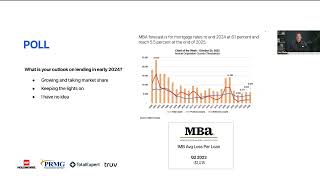
All right, we got our first poll. We're going to kick this session off for. So Allison, if you don't mind running the poll right now. The poll is what is your outlook on lending in early 2024? So everybody who's who's joining us as an attendee, I'd really appreciate it if you could participate and give us your how you're feeling options are growing and taking market share. Keeping the lights on or I have no idea. So kp, while, while people are answering, why don't you let us know your.
Thoughts on this man growing market share, I tried to press it, but I couldn't participate in the poll because I'm a panelist. You know, literally as we're speaking, the Fed is leaving the interest rate unchanged, so they did not raise and the 10 year treasury yield is, you know, just dropping like a rock. That's great for interest rates and you know, not to, not to make, not to make, you know, light and, and simplify our industry. But rates go up, business goes down, rates go down, business goes up. So rates are trending down and that's a good thing. I don't know how far they'll go down today, but the trend is down and so we're looking for more business next year and getting all of our systems in place of these last couple years. We think we're ready to take advantage of it and grow market share.
What do you think about that chart on the top Right. And where NBA is predicting rates are going to go, they're saying it's looking like it'll end of 2024, get down to 6.1%. How do you feel about that?
I mean, you know what, why not, right? I mean, if the, if the trend is, it passes prologue, you know, you've got the 10 year treasury continues to fall. If the Fed is done raising rates, the next step is, okay, well how long do they keep it high? Now we know it was a lie. It's not higher. They didn't raise since they said higher for longer, they're keeping it steady. So, you know, so how high and how long? How we know how high now. How long? Right. So that's the thing. If there's weakening in the job market, we're in election year, you think there's not gonna be a lot of pressure on the board and the consensus for the governors to cut rates and spur economic activity. What's the first industry that spurs economic activity? When rates go up or down and it has the highest impact, it's us. And so I think next year is going to be good. You know what, maybe second half of the year we get a little uptick in refinance activity, but we're still going to have a healthy dose of purchase activity in the spring purchase season here, tons of people want to get into houses. So I would just say I don't disagree with this. I mean, economic forecasts are just that. They're just forecasts. Good news is you don't have to go on every day like a weather person. Right. So you can be wrong daily, or here you can be wrong like once a quarter.
Allison, why don't you do us a favor and share those results with us? If you can share them with the participants. So it looks like we're at the majority, definitely growing and taking market share. They're right there with you, kp. Hey, that's why you're here, man. You're speaking to your peers.
You know, I hope I didn't, I hope I didn't influence the poll, but then I kind of do, right? It's like my whole M.O. and being on social media and doing all these things is like, let's get everybody fired up. We have a great community, we all work together and let's grow and take market share next year.
I love it. Joe, you surprised by any of these results?
You know, no. I mean, obviously KP know him well and I always love his commentary. Truly has a growth mindset from the position of how he runs the company and certainly when he communicates. So I always love hearing his, his, his thought process on next year and I, I, it's not surprising to me at all. I mean we've, we've lived in this environment now for the better part of the last two years. That has, has been really, really challenging and you've got pent up demand. We know that. We know there's a lot of people that want to get into homes. We also know that there was a tremendous amount of tightening if you look at it on a historical basis, how much rates went up in how short of a time. And it just has taken some time for that to have the impact into the economy and the metrics that sort of matter when it comes to dictating policy. And so we're starting to see this optimism about next year and I think it's absolutely the right approach and the organizations and the practitioners that are anticipating growth next year and are more importantly preparing for growth next year are going to be rewarded on, on the backside of the cycle for sure.
Well, I, I would say definitely not to be ignored. Fully a quarter of the people are just keeping the lights on in our poll results. So I think that's definitely worth worth noting too. Right. We are in a tough time. So Karel, do you have anything that you're hearing from lenders?
I know that obviously if the, with the rates, everything, if rates go down, the business goes up and the other way around. I think if you look at the bottom line, a few challenging things are happening. One is like the increases from rating agencies and overall just increases from also the fico. It's been quite a bit of a ramp last year. I think they keep doing this this year. So I think in a economic environment where it's already challenging to operate and as you said, quarter of folks here are trying to just keep the lights on. You have to also somehow handle the price increases from vendors. That creates just additional pressure to be more efficient and operationally just more effective as a business. So hopefully that kind of also, hopefully it's not going to have as much of a fact and if it does on your business, I mean as a business, we can help you as well.
Yep. Let's, let's jump into the next question. Thank you. Kirill. Let's jump into the first, first official question. Kp, where does the borrower experience stand from your perspective today?
Well, it's better than it's ever been and it's, it's nice to see our, what was once an archaic industry really invest in technology, the bar experience. And you know, I heard something, gosh, I was at some, I was at some kind of panel somewhere, somewhere on the road actually. It might have been Housing Wire annual in, in Phoenix last year. And someone got on stage and they said, today's consumer, let's say, let's say millennials, for example, let's just pick out a demographic, the largest first time home buyer demographic that's out there. To them, speed is the equivalent of showing that you care. So getting things done faster is a way to show that you care about that consumer. That's kind of interesting, right? So the old adage was cheaper, better, faster. Pick two. You can only do two, right? You gotta, you gotta sacrifice one if you focus on two. Well, I think what Amazon has tried to build an experience is cheaper, better and faster, all three. So I like to flip that around. Something I've been, you know, having a talking point for the last several years at PRMG and abroad is I put better first. And I've noticed some really big lenders copy this and I love it. So use it. Better, faster, cheaper, cheaper can't be your, your one and sole and only reason. It's great. But better is obviously you know, the most important part of the experience. And so you can do all three. You can focus on having a better experience. And like I said, I, I mean this was like a paper written fax for those in California, Transbox people even older with a 12, 13, 15% punch cards, whatever. Like the experience has been horrendous and it just keeps getting better. And why not our business? Why not our industry? Why not focus and put some real technology chops, you know, like Kirill's team or Joe's team or any other team that's out there. Put like true technology companies to focus on our industry. It's the biggest purchase we make in our life. It's literally the American dream. So I'm noticing that the bar experience just continues to get better and it's a great focus. It's. You don't always see like roi, like right in that second, but some text you do, some text you don't. But if you get repeat business and referral business, you know, maybe like the, like the time horizon to get ROI on an experience thing that you spend money on. Maybe it's the next two, three, five or 10 transactions on a referral basis.
That's great. KP and I love the, I love the, you know, carrying the flag for the industry. I love it, man. Joe, you have anything you want to add on to that.
Yeah, you know, we've just seen the companies and organizations, I would say I agree with KP for the most part, but I would add that I don't necessarily think it's distributed evenly across the industry. I think there are organizations that are leading in really moving the ball and improving incrementally and pretty consistently. And then I think there are organizations that are still a little bit stuck in the mud on getting to the level that consumers expect today. And we've seen a lot of innovation on the front end the application process. And we've seen a group of lenders that have now really taken that another level deeper and really are optimizing and not just from a transactional lens, but where I really think it matters. From a, hey, how do we go in and win this customer and have all of our communication, all of our engagement be high enough quality that we earn the rights to have a lifelong partnership with that consumer? And we're seeing a lot of companies now investing even deeper in data and looking at the lens of not just the experience as it relates to the transaction itself, but before they even become a customer and then after they become a customer. And so we're just seeing a lot of organizations going really deep there and trying to raise the bar continuously, a really exciting time. And they're in spite of a challenging macro, there are a lot of advancements happening from our lens.
Love it. Hey Kirill, do you have anything you want to add on?
Yeah, I think, Richard, the, the way the market is going to probably evolve in mortgage as it has evolved in Alto and consumer lending, where the borrower experience becomes, it just becomes a big baseline. Everybody has to have an amazing borrower experience. If you don't have one, then you're really just out of, out of question. You're not going to be participating in the marketplace and the speed to making a decision. I think this statistic in consumer lending, personal lending, say, is that whoever gives the first reasonable offer and reasonable is usually a range, wins the deal. So really the borrower experience, the first company who can underwrite you and give you a decent offer is probably going to have disproportionate amount of deals won. So moving faster through this BOR experience for Boris is really important. And I don't know where an average BoR experience stands today, but I can tell you if we work with multiple lenders from different industries, personal lending experience is much more usually smoother and faster. So I think mortgage industry has something to learn from other industries where the Decision is much more fast, and.
I.
Guess we could accelerate it as an industry. We should probably be thinking about how do I get to decisions faster.
Awesome. And we are jumping into our next poll. But I do have to throw out a huge compliment to Joe that everybody. Someone loves your studio. I gave you a compliment on that. People are very jealous, man. All right, so, Alison, let's kick off our next poll. The poll is what are you most focused on in terms of improving your borrower experience? We are focusing on borrower experience right now. What's your focus? And I know it's hard to pick just one. Just pick just one for now. Drop into the comments right now if you've got something more that you'd like to say. We'll address it right now live on the webinar kp. How about you? What are you most focused on?
Well, obviously the speed. I just, I just tease that up a little bit. So ease the process, you know, is nice. Let's see here. Response times to questions is an interesting one because, you know, the parts of the process that can be automated or commoditized. What that does is it gives your, your people at your company as a lender, more time to focus on the exception processing, the tough stuff, the hard questions to ask. You know, okay, I can't automate a manual underwrite on a government loan because there's a lot of problems and hair on this file. I need to talk to someone. So. So that piece obviously is harder to automate, but you can still make it fast, right? So. So if I can free up time of people working in our company and then have them be there to answer more questions, questions, you know, over the phone or even set something up. I mean, you know, we use. There's a, a common tech platform partner out there capacity. They have like a chatbot that we use. And we've been on it for, you know, three and a half years. And so it automates answers to questions for us. And so, so now I'm literally answering questions with like a 92% success rate in a millisecond 24 7. And so that. That is huge. And so then they're are the things that you can't answer and can't find. You know, like, think about how most companies are set up right now. You're like, you got to go to a website, go to a dropdown box, find the right thing, then pull up a PDF, then hit control F, type the word condo and scroll through it 14 times to get the set of guidelines. The one you want to get. That's brutal, right? And that's if you know exactly where to look, that's your best case scenario, what I just outlined. So, you know, just. There are lots of things out there that are getting even the exception questions, the, the human capital, the human touch part of the file, getting that done faster. And that's huge for the bar experience. And, and that's. We spent a lot of time focusing on that as well.
Hey, Alison, let's take a look. Let's see what the results are. Our survey says, well, it looks like Ease of the Process is coming in at the top. Interesting. Interesting. Ease of the process. Now you had said response time is the questions. That's in the running. It's probably like, what do you think? Four. The fourth? I would say the fourth ease of the process. Does that surprise you, kp, what do you think?
No, I don't, I don't think it. It's not, it's not too surprising. I would. I mean, I, I think, you know, it's such a. It's a kind of a catch. All right, so let me make sure my. You guys can hear me, okay? Yeah, I think it's kind of a catch. All right. Like, the whole thing's a process and kind of each one of those other things in there gets very specific to, like, education or just time to approval. So I feel like that's going to be something people want to answer most because it's like, hey, it's everything. It's not just the one thing. It's the whole damn thing, like, which really is what bar experience is all about. So I don't.
It doesn't surprise me if anybody listening picked Ease of the Process. I'd love to see you type in the chat kind of what you were thinking about when you did pick Ease of the Process. Joe, you have anything that you want to share here just about, in general, about the borrower experience and these.
Yeah, I think, you know, ultimately we've, we've covered a lot of. When people say ease of the process, I think that's a pretty big umbrella, which makes sense, right? I mean, ultimately, how do you remove friction? And Kirill is talking, in my opinion, how do you remove friction from the business, but at the same time improve, you know, operational efficiencies as a, as an organization and hopefully that leads to your ability to serve consumer at a higher level. And we're seeing a lot of, a lot of initiatives, a lot of success, quite frankly, on improving incrementally those, those processes from you know, the start of somebody at the education phase all the way through, once they start engaging and asking questions and seeking advice to going through the actual transaction itself. And so I think people are approaching each of those parts of the customer journey differently. And it's really about combining technology plus the human element, having that human in the loop and enhancing their ability to serve the consumer and help the consumer with technology ultimately impacts that. That process in general and from a consumer lens removes a lot of friction if it's done correctly.
I love the word friction. I use that. Yeah, I have, I have a saying that technology allows us to, to compress time, reduce friction, and scale your business. And I mean, the word friction is can't. Can't use it enough. Remember how data is the new oil and got overused? I don't think you can use friction enough and ruin it.
Yeah.
And I, and I think some of the. What KP was talking on and how they're approaching the enablement not just for the consumer, but for their people. Like, how do you, how do you enhance and really supercharge your internal team's ability to help the customer? And that ultimately leads to that better process, better experience, better outcome for the consumer. If you're focused on not just the application and the things that are. That make sense, but also how do I supercharge my. My people, my humans that take care of the consumers, how do I help them remove friction and add value along the way? And technology is certainly impacting that.
And look, we're getting awesome comments right now in the chat. You know, I just want to say thank you to Ken and Marcus. You know, Ken is saying make it easy for both customer and referral source, especially in today's market with new construction being the market leader, a market maker. Excuse me. And Mark is saying ease of process from. From our sales team moving from overlays to investor guidelines. And he's got more to say after that. So. Yeah. You guys have anything that you want to respond on that, kp? I mean, is that what you're seeing too, in terms of. Ken was saying make it easy for both customer and the referral source, especially with relation to new construction.
Yeah, new construction is interesting. I mean, you know, it's. It's a growing market share. I think I saw as high as 34 or 35% last week. I was on a podcast with Zonda and they do great data for new construction and builders. And it's a. I think 35% of all homes sold in new construction. It's typically like around 10%. So it's a pretty massive market share. A little bit of a sign that higher rates are keeping people locked in, you know, who have a mortgage, you know, under 5%, certainly under 4%. So yeah, new construction's long process. It's wonky. I know I fix and flip houses with a buddy of mine I went to University of Texas with. You get delays and overruns and the windows cost too much and labor and this and that. Anyway, took us two years to build some monster. Culver said he think, God, we scratched out a little profit. So I get it, you know, how do you stay in touch with the consumer during that long process? I like the, I like the one about the sales team for overlays. You know, I, I come from a sales background. I started in the industry in 01 as a wholesale account executive for First Magnus in Austin, Texas. And two years later I moved to Tampa and trained up a bunch of AES. And then six months later to Fort Lauderdale, down there in Kirill's neck of the woods. I was there for 13 years before moving here in California. I've been a go to person to answer questions. Right. And so how do you navigate the overlays of guidelines? You know, there's raw guidelines, there's all regs, and then there's, you know, maybe this investor doesn't want to take one year self employed tax turns. So maybe this investor doesn't want to take, you know, the self employed, you know, wonky guideline. You know, so we have to navigate overlays. So then you have your own guidelines for a lender that says this is how we navigate it. Right. And so then, then again, we set up a chatbot that allows you to just get the answers right away. And so, you know, document validation is totally different animal. There's a lot of touch points there. You're relying on borrowers to give you information. Yes, you have to leave. You have to give us the last page of the bank statement that's left intentionally blank. You know, it's our joke in the industry. And then I love that he says, Ken says tech can cause a lot of friction. Yeah, I agree. I mean, if you don't use it properly and, but that's, you know, that's where you test it and play and make stuff, make stuff happen. And of course, I love the last one there, Satish, talking about a couple out there running to you and asset verification, all that's part of the process. You know, we've, you know, to Carol's point, you Know, every lender out here hates our work number, Bill. We hate it. We hate it, hate it, hate it. It's an absolute monopoly now. We hate FICO when we hate the credit bureaus and they're raising credit costs and you literally, like, we're paying money to do loans right now. We're losing money hand over fist, and they freaking raise the prices. Like, that's not a partner. And we're going to remember that. So just so you know. So anyway, but, I mean, I think.
That tees up Kirill perfectly also, by the way.
Well, yeah, well, let me get to it. I mean, you know, he's made it an easy way for us to create a waterfall to go into verifying employment without having to pay those big every time. I got to run it on multiple borrowers multiple times throughout the process if I go with another vendor. But, you know, Carol is a team at Truve has a true source of data, a single source of truth, and they're able to pull that in a frictionless experience. And it's quick. And so for us, we implement that into our, you know, cascade waterfall of how we verify employment, because it's a better bar expense experience and it costs us less money. Like, do we have to lose money more because of the only vendor that we are able to use in the past that's not good for borrowers either because now my rates are higher or I have to let go of someone because, you know, we're not making as much money. That's how we run our business. And so when I see these out there and some of these businesses that are making literally, like billions of dollars and we're losing our ass, it's nice to see a new player like Truv come in and help us.
Kirill, do you have anything that you want to add to that? I mean, that was pretty freaking amazing.
This was amazing. Keep you. Thank you. Thanks for being a customer. Thank you to that. I think, Richard, we have a slide. We do more than just what you describe with, like, income and employment verification. We're building a tech company that will solve 100 of your verifications for anything mortgage. But I think we'll talk about it later. Kp, this is the best. The best customer. Thanks for being a customer.
Yeah. So let's jump into our question here. What are some technologies that have made a huge improvement on your borrower experience? I'd say you just named True. And I'll just say thank you so much, kp, that was very nice of you. And by the way, that was totally unsolicited. KP is just a super nice guy. But, but KP name drop some technologies right now you don't even have to name drop the logo. You can talk about the type of technology that's making a huge improvement on your borrower experience. I leave it to you.
Well, you know what, I, I'm going to say something that's probably a little unconventional and it really, I just thought of it just you know, Fannie Mae and Freddie Mac, you know they are, you know, for, they are who securitizes our loans. They are the ones that facilitate mortgage backed securities and the entire market. You know what our business is. We buy and sell money. So we buy and sell money and the home and that, you know, borrower making that payment is the collateral backing up a mortgage backed security. So, so people don't want to hear about it, you know, when you're on the other side of it. But for us, we're dealing with the secondary market. It is cold, heartless and unforgiving. There are no breaks. There are no breaks to early payoff. There are no breaks when you mess up. There are no breaks when you lose money. You just lose money. You know the market moves, you lose money on pair off market rates go up, rates go down. I mean it is, it is a very tough business to be a lender. I'm going to show you that right now. I feel that we've navigated it pretty well. We're very experienced leadership at our company and there's a lot of great companies out there. I'm not trying to make this about us. There's a lot of great companies out there navigating this. But Fannie and Freddie are the gateway on conforming loans and they're also the tech gateway. Think about day one Certainty for DU or AIM for Freddie Max lp. You know, these are tech gateways that allow you to create this digital borrower experience. If they didn't open that gateway for us, we wouldn't be able to have automated verification of employment, an automated bank asset, a borrower experience. I've got soft pull credit for almost two years now using Blend as our port of point of sale. That allows us to have no trigger leads. I mean think about that like I go to our retail team and I say you have no trigger leads. You have no trigger leads. Every single deal you do here, there are no trigger. Think about the power to be able to say that to your own retail channel. Because we use Blend which uses the try soft pool running through DU and lp. And I have an audit trail for that. So, so. And I also happen to think that that's the best bar experience. And I know a lot of people like to give, you know, blend crap. They just prepaid an 85 million dollar line of credit. Like you know, they're doing just fine. I just really guys like half the apps in this industry are, are on them and I think it's great. It also allows us to have no trigger leads which is super powerful. So soft pools, you know, are a cheaper version of a hard pull credit. Well now you know, the FICO and the bureau's, they all raised the prices again to try and get us. So now we got to come up with another way to, to not lose money on you know, 80% of the deals we pre qualify and pull credit that don't actually. Yeah, trust me, I know Marcus, trust me, I know. So now we gotta, you know, so who loses here are the borrowers, right? So now the borrowers have to bear this tax. Okay. So when FICO and the credit bureaus raise costs, now the borrower has to pay just like a gasoline tax or cigarette tax or an alcohol tax. It all ends up going to consumer. And you know, I had a face to face meeting with director Sandra Thompson set up by the NBA and I told her as such, in a closed door meeting I'm like, look, the borrower is going to pay more for credit. This is, you know, we don't run a charity. We're losing money. So, so we have to run a business that's profitable so we can serve the underserved, literally independent mortgage bankers. We're the ones doing the tough, grimy, hard, hairy credit, low credit profile deals. And so you know, we have to find tech partners to help us achieve that and serve that underserved. And so can't do it if my credit costs keep going up and everything else. And so love Total Expert. That's our enterprise CRM. They're fantastic. I mentioned a couple other ones. I love social Coach. You know we're in this market where social selling is going to be so key. Like literally when the Fed cuts the rates, loans will be falling out of the sky. And you think I'm kidding. I'm not kidding. We saw it in 2020 and 2021. Again it may not be to that level but when there's a refi uptick, loans fall out of the sky. So social selling is how you grab that, how you have a bigger bucket. Do you have something that helps you, you know, catch that, you know People like social media because it's free. Well, you know what, you get what you pay for, and you pay 50 bucks a month. You get something like social coach, where, oh, you know, I didn't feel like posting today because I was picking up, you know, my four kids from elementary school. True story. But if I post ahead of time and I schedule it and I set something up within an app like a social coach, then I can get my social media out there. I can touch. I can be the first bubble that shows up on the top of everyone's Instagram feedback. And I'm constantly at top of mind, and I'm there to pull things into my loan application, to my system, and then have a frictionless experience where I'm verifying all the data points and I'm rolling out super quick. And I'll add one more thing. I love Wisp. Wisp is a QR code that I'm a part of. We've been pushing it for about a year and a half. Actually met them at Joe's Total Expert Accelerate in Nashville. If you scan the link, it pulls a cell phone number. I mean, Richard, every marketer wants everyone's cell phone number. Every time they look their eyeballs on the collateral, like eyeballs on collateral, I press a link, Boom. I'm texting with that vendor, and then they have my cell phone number, and now their sales team can get back to me. Those are the things that we're working on to grow and take market share next year.
I love it. That is a really good answer. And you teed up Joe. You said something really nice about Joe. And total Expert Joe, I know you've got a little bit that you've prepared. I want to keep this webinar going. And you're going to talk a little bit about turning data into actionable insights. I'm going to tee you up on this slide right now. Kp, thank you so much for that. That was really good dog track. And I'm sure the folks that you name drop really appreciate it, too.
Yeah. And I mean, first of all, I just want to acknowledge that so much of the innovation that happens in our industry is the result. And you're seeing it with Krill and kp. And we see it all the time, the collaboration and the partnerships that happen when the lenders come together with the tech providers and say, how do we. How do we work on these problems together and solve. And solve the bigger challenges? Right. And that's where we see just a lot of progress. And so what we do is only possible with, with great customers and partners. Our approach is ultimately working on what we believe are the most important things. And the most important thing in our opinion is, is having a lifelong relationship with every borrower, every customer that you have. And if you want to win those customers for life, you want to have those lifelong relationships. The most important thing generally is a deep understanding of that consumer. And so it's really taking all of the data that you have on a customer and instead of just having a moment in time where it's static and you got something from three years ago on a CSV file. We believe that organizations and lenders that are going to win in the future are using data to really drive business. Okay. And the approach should always be, how do I take my customers, my prospects, how do I enrich those records? With zero party data, first party data, third party data, of course, abiding by all the regulations. And then how do I extract insights from that data, both using AI and just regular machine learning, and then also just regular just analysis. How do I surface those insights that give me the moments that matter to my consumer and then automate your sales and marketing and engagement process with those insights? And if you do that, it ultimately unlocks a lot of value, a lot of deal flow, both from past customers, but also it improves your conversion rates. And so it's that combination of bringing insights from your, your customer records, your prospect records, and then not just sending a spreadsheet or an email to a salesperson, but actually fully enabling a sales and marketing process, an engagement strategy that is driven at enterprise level. And so when you do that, we have just seen organizations really meaningfully move the needle in terms of growth. I think we got one more slide here, buddy. Yeah. So definitely not a commercial for Total Expert, but just our approach to how we're partnering with organizations is we look at really these three buckets. You've got data, the insights from that data. And then where most people, practitioners and organizations fall down is unless you take action on those insights, unless you take action on what your data is telling you, you don't actually get value. Your customer doesn't get help, they don't get the advice they need, you're not able to make recommendations to them. We're going to be going into an environment where there's a whole bunch of consumers that did mortgages at above six and a half, above seven, that every 50 basis points, every 75 basis points of rate adjustment, you need to be able to, at scale, you need to be able to go and engage with those consumers and give them awareness and educate them on how you can help them based on where the market is moving and based on their particular situation. And so this is our, just our framework and an illustration of how we approach driving value from a data, insights and action standpoint.
Buddy, I just want to highlight something you said. 50 to 75 basis points of rate movement. Think about that. The adage used to be just a point. You're like, oh you know what, it's not worth it unless someone saves a point. Loan amounts are the largest they've ever been. Look at the conforming loan amount. I mean, what high balances like 1.15 million. I mean it's in, it's crazy. So, so it doesn't take much of a rate movement now for a net tangible benefit to take place. And so I love that you said 50 and 75 basis points. That needs to be highlighted. People need to put that in their mind and know that markets don't have to move that much for you to be able to sit and have that conversation. And by the way, all this tech that we have, nothing replaces the conversation. You know, like you don't like fire off a bunch of, you know, campaigns and stuff and expect, you know, stuff to come in. Same thing with social media. But it, it, if you have a way to drive it into like a phone like prioritization list and then, you know, you still, that's why Rocket Mortgage is so good.
I mean they still have the human, they still have the human in the loop, right? It's still consumers don't want business to business or business to consumer. They want human to human. And you know, what you're describing is you've got to be able to have the conversation, which I 100 agree with.
Well, well, who's having more conversations? I mean look at Rocket Mortgage. Rocket Mortgage is a very real, well run company. I mean they are just incredible. They have more people on the phones than most of us, right? So you know, a lot of us combine and it's just conversation, conversation, conversation, getting it going. So it's a very smart way. I read somewhere that you know, you know, even someone going through the push button get mortgage sequence, 90% of time they still talk to a person. And so, you know, there's nothing, nothing that replaces that phone conversation. And I'll add one more point, it kind of goes along the 50 to 75 basis points. Don't discredit the borrower out there that's locked in under 5%. Don't discredit someone at 3%. Let me tell you what's happening to those bars. They're gaining equity. And that level of equity just grows and grows and grows over time. At some point, that equity, they sell their house. 75% of sellers or buyers of a new house, they trade that equity. They don't care what the rate was on that equity. They want the new house, they want the roof, they want to be closer to the water, they want a bigger house. Deployment, gotta move. Doesn't matter what your rate is. Diamonds get married, gotta get out. Life events, the 70s, the 70s, deployment, diapers, diamonds, debt, divorce. I like to joke and say debt again after divorce, but then downsizing and death. 70s. Some people say diplomas and some people say degrees. And I've seen some other ones. No, no, not 8D, 7D's, but that stuff always happens. And you've got to get on the phone and they will trade that equity on a 3% rate to pay the price, to pay the rate to get the house that's better for them and their life situation, which by the way, your, you know, intelligent insights, the customer insights, they help you identify some of those 7Ds. And so anyway, just, just saying we would throw a pilot on Yalls intelligence had a call Dan, yesterday. I don't know if you knew that or not, but we're big fans of the insights that we're getting.
Okay, thank, thank you. I mean, just to underscore, I think what KP is saying is, and we're seeing this a lot as well, and I think this is important for the audience to understand is there's a whole bunch of consumers that have just kind of been holding their breath out there and. But by the way, their life hasn't been stopped because rates are high. Right? So their families, they're still creating families, they're still. People are still aging, their life is still changing. And if you follow the real estate industry, so much of the transactions are very much tied to where somebody is on their lifelong journey, their financial journey, for lack of a better term. And so as we see things just get a little bit better. It just becomes a little less painful for those consumers to go from a 3 or 4% to maybe a 6%. And you're going to see people come back into the market because it's life. Right? That's, that's what moves the housing industry.
The holding your breath is a great way to put it because the borrower psychology has changed. In February of 22, when rates were the best in the history of history, they Got rapidly worse going all the way through June. So everyone stepped back. 2H22, that was your last, best chance to get a low price on a home from June of 22 to November of 22. And then rates started to come down when inflation started coming down. So we saw a little uptick, right? Everyone was waiting, remember, everyone was running for rates to get better, better and home prices to come down. Home prices aren't coming down. Got news for everyone. Home prices are not coming down. They didn't come down. You were wrong. Anyone that read any article and didn't talk to a mortgage originator, a local expert, a local originator, you were fed BS from the media and you were wrong. And you lost. You lost five and a half percent of appreciation in a year again. And guess what? When rates go down, which they are, you not just today, but the last 45 days and next year there'll be even more people out looking for houses. And so this little spice. So people are the buyer. The buyer. Psychology has flip man. Rates went down real quick. I got to jump in. So they're not even looking for home prices to go up anymore. To go down because they're not. Home prices are not crashing. I just, I got. I know we're all in the business, so we all know it, but make sure your borrowers know they are not coming down. Are not coming down. You gotta, you can always, you can always lock in your price today and renegotiate the rate later. But the prices are going up. Especially if rates continue to come down. There'll be more demand.
I'm going to keep driving this one. KP and everybody here I am loving the talk track. Everybody jump in the chat if you're loving this right now. We got another poll coming for you. I want to make sure we get through the rest of our content. Where are the biggest opportunities for lenders to improve their operations towards greater efficiency? Improving operations. That's what we're talking about here. You've got a pick list. Customer acquisition, application, document collection, processing, identity document, document verification, underwriting, closing, post closing. Where are the opportunities?
I bet I know I. I bet I know the answer, but I'm not. I don't want to influence the poll. So. But I, I have a, I have a, A sneaking suspicion what the answer is going to be.
Oh man. We should be able to write this down and then show.
I'll just let you. I'll let you know. We're probably mostly answered by now.
Everybody, let's answer. Let's give it 10, 9, 8, 7, 6, 5, 4, 3, 2, 1. Answer. Let's see it. Allison.
Underwriting document collection.
Look at that.
Can we. You know what, we must have some originators on here, which is great because that's kind of what they're going through. They're actually dealing with a bar and going back and forth. For me, it's underwriting. It's the most expensive thing to run a lender. It is. And we do tough deals. I'm telling you, like we serve the underserved. This administration wants a mission. The banks aren't doing what we're doing. The banks, they have all the money. Yeah, great, great, great. They aren't doing the tough loans they have. Them don't even do FHA loans. They want to buy it from us. We're doing the hard low fico. And that's not all we do, but we do that and we do down payment assistance loans. And so for me, it's expensive to have an underwriter work through this manual process which includes document collection. Right on the document collection note. We are actually, we're very close to deciding this document ingestion route that we're going with to make that a lot more automated and easier. We've been on a software for about five, six years now. And we're either enhancing that or getting a replacement out there, but we're very close to deciding. So we agree internally the document collection is also important. But yeah, maybe I'm just a bitter lender that's lost too much money in the last year and a half, but underwriting is obviously a very lengthy and expensive process. Not for a paper. I mean, a paper loans like you just crank it out. That's no problem. I mean, knocking out deals and you know, you know, from start to finish, seven days, you know, I mean, that's the, that is the fastest the law will allow you in the Mortgage Disclosure Information Act. The bar has to like give you a three day waiver to not see their appraisal to go from 10 to 7. That's literally the fastest you could possibly do. I haven't seen anything less than a 10 day escrow on a sales contract. It's mostly 30. So we're under the belt every single time there. But for me, it's underwriting. But I like, I like that document collection one. That's. We get that too.
Well, I mean, Kirill, I think this one is a good one for you to comment on. I mean, do you hear that a lot from lenders that you're talking to?
I hear that everybody wants to have conversations with their potential customers and they want to have meaningful conversation instead of hey, can you send me your W2s and P steps and bank statements? Nobody loves that part of the conversation. And I think the document collection, if you could, in the best case, when you have the first conversation, you have everything already ready to go in the file and preferably pre approved by Freddie and Fannie. That's the ideal scenario when everything is already ready to go and the document collection by itself is just a tedious process for both parties and it requires a lot of back and forth. Nobody likes that. So I think, Richard, I can't remember if the next slide or somewhere there there's an overview of how we do it.
Yeah, yeah.
I think that kind of the document collection plus verification lives usually in pos, sometimes in LOS for reverification and at Truth, what we've done is we integrate with the majority of POS and LOS systems and you can see some of the logos down there. But also you are able to in one go in verify income and employment. And now we just launch assets. Last quarter we announced it at MBA annual. And then for when refi comes back, you can also do home insurance verification. And that all comes down in one platform that allows you to collect all the documents that come directly from the source. Consumer permission. So very affordable. You don't need to pay the middleman who went and aggregated the data from third parties like the work number. And as a result, by the time you have the first conversation, real conversation, you have all the data that you need for underwriting. And underwriting becomes also much cheaper because you don't need to worry about all this, the details, the fraud and kind of entering the data into your underwriting systems. Richard, what else do we have for today?
We have one final question before we open up the floor to audience questions. And so audience, I would really love it if people threw questions in there. Jordan. Jordan Wild is saying Joe Carill and KP agreed, innovate and then take action. Data is like garbage. You bet. I love that's why I'm reading it. You better know what you are going to do do with it before you collect it. That's Mark Twain. I love it. Great quote. Let's, let's keep going on this final question now. Everybody should know this. When we were writing the questions in the pre show for this webinar we had the question here is I'm going to ask AP is what are things you're looking at in the next 12 to 18 months. That will position you for success in three to five years. These numbers were bigger and KP brought them back and you brought them back for a reason. So kp, I'm going to tee it up to you here and you can tell everybody why you brought those numbers back and how you'd answer it.
Yeah, I think the original question said the next five to 10 years, I'm like, I'll probably be dead of a heart attack. Dead of a heart attack of my death. Like, geez, yeah, this business ages you like dog ears. Yeah, you know, I, I, I think the next 12 months will be, you know, from a business cycle standpoint, transitioning to more, more refinance business that's out there. And again, I think it doesn't take much of a net tangible benefit, you know, rate move to do that. 50 to 75 basis points like, like Joe mentioned. So, so there's a little bit of a pivot. What will be interesting is after this next little refi uptick, what will be interesting is how C level executives think. Like in this last year and a half is tough, right? You know, it's tough. You're grinding through it. We're all in obviously, but we've seen a lot of people close down their shops and sell and a lot of M and A activity. And so some people are hanging on for this next little refi uptick. Well, what if it's not as big as they thought it was going to be or it wasn't as good for that company as they thought it was going to be. And then we get back to kind of a grind it out, you know, let's hand to hand combat for a purchase business, you know, kind of market. Some of these owners may not have the heart for it. I'm 47. I'm not, I mean I'm gonna go anywhere. I got four kids, I got freaking college and cars. My oldest is 10. So I got, I got bills coming and I know it's gonna come yet. So I'll be here, I will be that guy working Tom. But there are a lot of other lenders out there where, you know, some of the ownership's aging out. And I, I think at the end of this next uptick, I think you're going to see some M and A activity. I don't think it's as easy for people to just jump start and get back in this business. We're seeing consolidation and we're seeing it consolidate to those that have invested in technology. So, you know, this is, you know, Even though it was a down year, I mean we tried out, you know, the, the insights with Total Expert. We onboarded. True. We switched to Poly as our pricing and product engine which was looked huge for us. You know, we're, we're changing our, our TPO portal. We have a new portal that we're putting out for our wholesale and correspondent channel. You know, we're a three channel lender, so we have to serve like our mantra is built by originators. For originators there are different originators. Right. So the smallest market channel is wholesale, it's 16.8% but we still serve wholesale brokers. There's correspondence, right. And then there's distributed retail. In retail there's even consumer direct. So we don't do consumer direct. We feel that's a conflict of interest with the local originator. But we serve originators how they ask to be served. Which means I have to invest. Our company has to invest in tech all the time. And so yeah, I mean I, I think tech, you know, the good news is not too late, right? If there's some of you here that are CIOs, CTOs, Experience Officers, C levels, you didn't miss the boat. You can still invest, you can still pick up some wins here and there. You know, it's hard because people have traditionally had to like kind of, we wouldn't be able to have automated verification of employment and automated bank asset. A borrower experience. I've got soft pull credit for almost two years now using Blend as our port of point of sale. That allows us to have no trigger leads. I mean think about that like I go to our retail team and I say you have no trigger leads. You have no trigger leads. Every single deal you do here, there are no trigger. Think about the power to be able to say that to your own retail channel. Because we use Blend which uses the tri soft pool running through Duke and LP and I have an audit trail for that. So, so. And I also happen to think that that's the best bar experience. And I know a lot of people like to give, you know, Blend crap. They just prepaid an 85 million dollar line of credit. Like you know, they're doing just fine. I just want you guys like half the apps in this industry are, are on them and I think it's great. It also allows us to have no trigger leads, which is super powerful. So soft pulls, you know, or a cheaper version of a hard pull credit. Well now, you know, the FICO and the Bureau's, they all raise the prices again to Try and get us. So now we got to come up with another way to, to not lose money on, you know, 80% of the deals we pre qualify and pull credit that don't actually. Yeah, trust me, I know Marcus, trust me, I know. So now we gotta, you know, so who loses here are the borrowers. Right. So now the borrowers have to bear this tax. Okay. So when FICO and the credit bureaus raise costs, now the bar has to pay just like a gasoline tax or cigarette tax or an alcohol tax. It all ends up going to consumer. And you know I had a face to face meeting with director Sandra Thompson set up by the NBA and I told her as such in a closed door meeting I'm like, look, the borrower is going to pay more for credit. This is, you know, we don't run a charity. We're losing money. So, so we have to run a business that's profitable so we can serve the underserved, literally independent mortgage bankers. We're the ones doing the tough, grimy, hard, hairy credit, low credit profile deals. And so you know, we have to find tech partners to help us achieve that and serve that underserved. And so can't do it if my credit costs keep going up and everything else. And so love Total Expert. That's our enterprise CRM. They're fantastic. I mentioned a couple other ones. I love Social Coach. You know we're in this market where social selling is going to be so key. Like literally when the Fed cuts the rates, loans will be falling out of the sky. And you think I'm kidding. I'm not kidding. We saw it in 2020 and 2021. Again it may not be to that level but when there's a refi uptick, loans fall out of the sky. So social selling is how you grab that, how you have a bigger bucket. Do you have something that helps you, you know, catch that? You know, multiple things. So now you can have a partner that has this part of the borrower experience or this part of sales like social media because it's free. Well, you know what you get what you pay for. Now you pay 50 bucks a month. You get something like Social Coach where. Oh, you know, I didn't feel like posting today because I. So I, I'm seeing more consolidation and more investment in tech, less lenders out there and you know, to, to the victor go the spoils.
Love it. I am going to give any closing thoughts before we jump into Q and A to do a quick. I'll let Joe go quick. Just give us Like a minute, if you want closing thoughts. And then. Kirill, I'll get. I'll give it to you.
Yeah. So, I mean, first of all, in. In these market cycles, and anytime you see a downturn and there's some chaos and dislocation in the market, there's. There's equal parts pain and equal parts opportunity. And I think you're going to see the organizations and the people start to go out and grab that opportunity into this next year. This is our strong belief. We're seeing a lot of signs of that. And I think it's always important to remember that this industry enables the American dream and the importance of that. And that's not going away. Even. Even though things are. Some of the days are darker, you know, this past year. So I think the future is. Is going to be bright. The next one to two to three, four months, not sure. But long term, we all know this is a fantastic industry, and there is a bright future for those that want to go out and grab it.
I love it, girl.
Let me just say, picking up, you.
Know, my four kids from elementary school, true story. But if I post ahead of time and I schedule it and I set something up within an app, like a social coach, then I can get my social media out there. I can touch. I can be the first bubble that shows up on the top of everyone's Instagram feedback. And I'm constantly at top of mind, and I'm there to pull things into my loan application, to my system, and then have a frictionless experience where I'm verifying all the data points and I'm rolling out super quick. And I'll add one more thing. I love Wisp. Wisp is a QR code that I'm a part of. We've been pushing it for about a year and a half. Actually met them at Joe's Total Expert Accelerate in Nashville. If you scan the link, it pulls a cell phone number. I mean, Richard, every marketer wants everyone's cell phone number. Every time they look their eyeballs on the collateral, like eyeballs on collateral, I press a link. Boom. I'm texting with that vendor, and then they have my cell phone number, and now their sales team can get back to me. Those are the things that we're working on to grow and take market share next year.
I love it. That is a really good answer. And you teed up Joe. You said something really nice about Joe. And total expert Joe. I know you've got a little bit that you've prepared. I want to keep this Webinar going, and you're going to talk a little bit about turning data into actionable insights. I'm going to tee you up on this slide right now. Kp, thank you so much for that. That was really good dog track. And I'm sure the folks that you name drop really appreciate it too.
Yeah. And I mean, first of all, I just want to acknowledge that so much of the innovation that happens in our industry is the result. And you're seeing it with Krill and kp. And we see it all the time, the collaboration and the partnerships that happen when the lenders come together with the tech providers and say, how do we, how do we work on these problems together and solve, and solve the bigger challenges? Right. And that's where we see just a lot of progress. And so what we do is only possible with, with great customers and partners. Our approach is ultimately working on what we believe are the most important things. And the most important thing in our opinion is, is having a lifelong relationship with every borrower, every customer that you have. And if you want to win those customers for life, you want to have those lifelong relationships. The most important thing generally is a deep understanding of that consumer. And so it's really taking all of the data that you have on a customer and instead of just having a moment in time where it's static and you got something from three years ago on a CSV file. We believe that organizations and lenders that are going to win in the future are using data to really drive business. Okay. And the approach should always be how do I take my customers, my prospects, how do I enrich those records with zero party data, first party data, third party data, of course, abiding by all the regulations. And then how do I extract insights from that data, both using AI and just regular machine learning, and then also just regular, just analysis. How do I surface those insights that give me the moments that matter to my consumer, and then automate your sales and marketing and engage that?
I'm not obviously as deep of an expert as KP and Joe in the mortgage industry, but I think what I learned since I've been in this year for the last three years is there's a lot of variable costs associated with production of a loan, manufacturing of a loan, and the more you can actually make your team productive, the less the industry goes up and down. Right. So in the next three to five years, we might see another cycle of rate cuts and then rate increases. And if in this process.
With those insights, and if you do that, it ultimately unlocks A lot of value, a lot of deal flow, both from past customers, but also it improves your conversion rates. And so it's that combination of bringing insights from your, your customer records, your prospect records, and then not just sending a spreadsheet or an email to a salesperson, but actually fully enabling a sales and marketing process, an engagement strategy that is driven at enterprise level. And so when you do that, we have just seen organizations really meaningfully move the needle in terms of growth. I think we got one more slide here, buddy. Yeah, so definitely not a commercial for Total Expert, but just our approach to how we're partnering with organizations. As we look at really these three buckets, you've got data, the insights from that data. And then where most people, practitioners and organizations fall down is unless you take action on those insights, unless you take action on what your data is telling you, you don't actually get value. Your customer doesn't get help, they don't get the advice they need. You're not able to make recommendations to them. We're going to be going into an environment where there's a whole bunch of consumers that did mortgages at above six and a half.
As you're as a lender, you can only optimize your process, make it more efficient so you can focus above 7.
That every 50 basis points, every 75 basis points of rate adjustment, you need to be able to at scale, you need to be able to go and engage with those consumers and give them awareness and educate them on how you can help them based on where the market is moving, more on selling and.
Less on the production. And you don't need to hire and then go through the sky or fire cycles. I think that would be something that you could probably invest now in the.
Next two and based on their particular situation. And so this is our, just our framework. And it was three to four months.
Where it's uncertain so that you're ready for the next growth cycle and growth spurt. And then if the rate increases come again, then you're ready for the downward cycle and you would stay profitable and efficient as a business.
Great points, love it. All right, well said illustration of how we approach driving value from a data insights and action standpoint.
Buddy, you, I just, I just want to highlight something you said. 50 to 75 basis points of rate movement. Think about that. The adage used to be just a point. You're like, oh, you know what it's not worth unless someone saves a point. Loan amounts are the largest they've ever been. Look at the conforming Loan amount. I mean what high balance is like 1.15 million. I mean it's, it in. It's crazy. So, so it doesn't take much of a rate movement now for a net tangible benefit to take place. And so I love you said 50 and 75 basis points that needs to be highlighted. People need to put that in their mind and know that markets don't have to move that much for you to be able to sit and have that conversation. And by the way all this tech that we have, nothing replaces the conversation. You know like let's jump to the Q A.
We got one question already and everybody who's, who's still on fire off a.
Bunch of you know campaigns and stuff and expect you know stuff to come in. Same thing with social media but it.
Right now we've got a good amount on. I would love it if people would put their questions in. The first question I've got is can you and this one really looks like it's a. I would say a total expert question for and it could be, this could be answered by KP or Joe. Can you recommend 1, 2 or even 3 consumer notes that NLO should be manually entering in the contacts in their total expert CRM during if you have.
A way to drive it into like a phone like prioritization list. And then you know you still. That's why Rocket Mortgage is so good.
I mean they still have the human. They still have the human in the loop. Right? It's still consumers don't want business to business or business to consumer. They want human to human. And you know what you're describing is you've got to be able to have the conversation which I 100 agree with.
Well, well who's having more conversations? I mean look at Rocket Mortgage. Rocket Mortgage is a very well run company. I mean they are just incredible. They have more people on the phones than most of us. Right. So you know a lot of us combined and it's just conversation, conversation, conversation getting it going. So it's a very smart way the.
Pre process phase so that an ello can later like hyper target a segment in their database. This sounds very much in the weeds but I think Joe, you can probably speak to this K.P. feel free.
Yeah. So I can, I can make an attempt at that. And what I think the ask is, what are the types? What's the type of information that the.
Original I read somewhere that you know, you know even someone going through the push button get mortgage sequence 90% of time they still talk to a person and so, you know, there's nothing, nothing that replaces that phone conversation. And I'll add one more point, it kind of goes along the 50 to 75 basis points. Don't discredit the borrower out there that's locked in under 5%. Don't discredit someone at 3%. Let me tell you what's happening to those bars. They're gaining equity.
Should be taking note of as they're having conversations early in the, any early in a lead stage so that they can better and more thoughtfully engage with that consumer. And so I think understanding what's important to your customer, being able to understand. Are they a millennial? Are they a first time home buyer? Are they a veteran and capturing that data, whether it's in our platform or another platform.
And that level of equity just grows and grows and grows over time. At some point that equity, they sell their house. 75% of sellers or buyers of a new house, they trade that equity. They don't care what the rate was on that equity. They want the new house, they want the roof. They want to be closer to the water, they want a bigger house. Deployment, gotta move. Doesn't matter what your rate is. Diamonds. Shit. Get married, gotta get out.
Life events happen.
The 70s, the 70s. Deployment, diapers, diamonds, debt, divorce. I like to joke and say debt again after divorce. But then downsizing and debt. 70s. Some people say diplomas and some people say degrees. And I've seen some other ones. No, no, not 80s, 70s. But that stuff always happens and you've got to get on the phone and they will trade that equity on a 3% rate to pay the price to pay the rate to get the house that's better for them and their life situation. Which by the way, your, you know, intelligent insights, the customer insights, they help you identify some of those 70s and.
So making sure that you segment, you have the proper segmentation in your database. You know, look, the, the database in, in our minds should be an appreciating asset, meaning you enrich it continuously and it will pay off for you over time. But that only happens if you're recording, capturing information both manual and automatically. And anything that you can learn about what your customer cares about, what's important to them and how they want to be served. Right. Is really valuable because then that allows you to really inform your engagement strategy uniquely for that individual person.
Yeah, I like that. Shopping has agent. Shopping, no agent.
Totally. Always have context. Context is king. Right? When you're trying to engage and drive maximum conversions. Having context always.
Yeah, credit Credit needs repair referred to cred evolve another, you know, vendor partner we use and just so many different things you can classify there and try and follow up on your, on your task and to do list.
I love it. Look, we don't have time to answer the other question, the other questions about video, which is kind of relevant, I think to the panel for sure, but we don't have time to go into the answer. What I would like to instead do is just say reach out to the total expert team. Reach out to the true team. If you want to learn more, we are willing to have a chat. Let's just talk about your business. You know, we, we put a lot into these, these webinars and we hope you got a lot out of it. And number one takeaway. Thank you so much. Kp. You just dropped so much knowledge on everybody that was here. Selfless. I know that you just love to do it. So thank you so much on behalf of everyone.
Well, thank you guys. Joe, Joe and Carol and you guys always get me fired up. And you guys know my pain points. You say you, you say things that get me going. So that a little dose of espresso. We're ready to rock.
Let's do it.
All right.
Thank you, guys.
Thank you, everyone.
Thank you all for joining us today.
Cheers.
All right, Richard. We didn't. Anyway, just, just saying we throw a pilot on Yalls Intelligence had a call Dan, yesterday. I don't know if you knew that or not, but we're big fans of the insights that we're getting.
Oh, thank. Thank you. I mean, just to underscore, I think what KP is saying is, and we're seeing this a lot as well, and I think this is important for the audience to understand is there's a whole bunch of consumers that have just kind of been holding their breath out there and. But by the way, their life hasn't been stopped stopped because rates are high. Right. So their families, they're still creating families. They're still. People are still aging. Their, their life is still changing. And if you follow the real estate industry, so much of the transactions are very much tied to where somebody is on their lifelong journey, their financial journey, for lack of a better term. And so as we see things just get a little bit better, it just becomes a little less painful for those consumers to go from a 3 or 4% to maybe a 6%. And you're going to see people come back into the market because it's life. Right? That's, that's what moves the housing industry.
The holding your breath is a great way to put it because the borrower psychology has changed. In February of 22 and rates were the best in the history of history. They got rapidly worse going all the way through June. So everyone stepped back. 2H22, that was your last best chance to get a low price on a home from June of 22 to November of 22. And then rates started to come down when inflation started coming down. So we saw a little uptick, right? Everyone was waiting, remember, everyone was ready for rates to get better and home prices to come down. Home prices aren't coming down. Got news for everyone. Home prices are not coming down. They didn't come down. You were wrong. Anyone that read any article and didn't talk to a mortgage originator, a local expert, a local originator, you were Fed BS from the media and you were wrong. And, and you lost. You lost five and a half percent of appreciation in a year again. And guess what? When rates go down, which they are not just today, but the last 45 days and next year there'll be even more people out looking for houses. And so that little spice. So people are the buyer, the buyer psychology has flip, man. Rates went down real quick. I got to jump in. So they're not even looking for home prices to go up anymore. To go down. Because they're not. Home prices are not crashing. I just, I got. I know we're all in the business so we all know it, but make sure your borrowers know they are not coming down. They are not coming down. You got it. You can always, you can always lock in your price today and renegotiate the rate later. But the prices are going up. Especially if rates continue to come down. There'll be more demand.
I'm going to keep driving this one KP and everybody here. I'm loving the talk track. Everybody jump in the chat if you're loving this. Right now, we got another poll coming for you. I want to make sure we get through the rest of our content. Where are the biggest opportunities for lenders to improve their operations towards greater efficiency? Improving operations. That's what we're talking about here. You've got a pick list. Customer acquisition, application, document collection, processing identity document, document verification, underwriting, closing, post closing. Where are the opportunities?
I bet I know I, I bet I know the answer, but I'm not, I don't want to influence the poll so. But I, I have a, I have a, a sneaking suspicion what the answer is going to be.
Oh man. We should be able to write this down and then show.
It. I'll, I'll, I'll just let you, I'll let you know. We're probably mostly answered by now.
Everybody, let's answer. Let's give it 10, 9, 8, 7, 6, 5, 4, 3, 2, 1. Answer. Let's see it. Allison Underwriting.
Document collection.
Look at that.
You know what, we must have some originators on here, which is great because that's kind of what they're going through. They're actually dealing with a bar and going back and forth. For me, it's underwriting. It's the most expensive thing to run a lender. It is. And, and we do tough deals, I'm telling you, like we serve the underserved. This administration wants a mission. The banks aren't doing what we're doing. The banks, they have all the money. Yeah, great, great, great. They aren't doing the tough loans they have. Them don't even do FHA loans. They want to buy it from us. We're doing the hard low fico. And that's not all we do, but we do that and we do down payment systems loans. And so for me, it's expensive to have an underwriter work through this manual process which includes document collection. Right. On the document collection note, we are actually, we're very close to deciding this document ingestion route that we're going with to make that a lot more automated and easier. We've been on a software for about five, six years now, and we're either enhancing that or getting a replacement out there, but we're very close to deciding. So we agree internally the document collection is also important. But yeah, maybe I'm just a bitter lender that's lost too much money the last year and a half, but underwriting is obviously a very lengthy and expensive process. Not for a paper. I mean, a paper loans, like you just crank it out. That's no problem. I mean, we're knocking out deals and you know, you know, from start to finish, seven days, you know, I mean, that's the, that is the fastest the law will allow you in the Mortgage Disclosure Information act. The bar has to like give you a three day waiver to not see their appraisal to go from.
More from Kirill







How CrossCountry Mortgage Saved $10 Million Annually with Truv's Verification Solutions



