Journey to the bleeding edge: from zero loan volume to 3,000 loans per month in 2 years
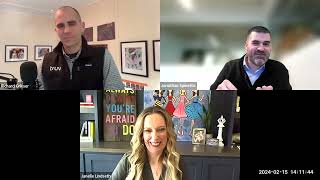
Jonathan, Richard, and Janelle built Nifty Door from zero to 3,000 loans per month in two years. They discuss the technology behind digital mortgage closing, remote online notarization, and how they integrated vendor systems to create a fully digital lending experience before the company was acquired.
All right.
Welcome, welcome everybody please jump in and join. We're going to give it a few minutes while we let folks jump in. Jonathan, Jonathan, I'm going to warm give you a warm up question here. Hot dog, Is it a sandwich? That's the question.
That's a good one. That's a good one. I don't know, I'm gonna have to say no on that one. Janelle, what do you say?
Yeah, throw it out there, you know, depends. Especially if they're from like Chicago.
Well, Richard, you can't ask that question and not answer yourself. So you have to know too. So what's your answer? I think for real estate agents across the United States, it's all about leveraging this tech right to really just empower the end user, whether that be a real estate agent, whether that be personal inside the business, you know, type person using that information and technology and making themselves more efficient or even for. Again now in the current iteration, you know, borrowers and their related, you know, loan officers, brokers, etc. So after kind of like a very, very long journey in the technology space, again more recently doing some real estate data and analytics, the company that was fortunate enough to be able to sell in October of 2021 then started working on Nifty Door with a co founder of mine, you know, with Mark, to be able to create a digital mortgage platform. And our goal was always to get to this initial closing. I want to tell you the story about here in a second because the, the path that we had seen, you know, kind of coming into the market in the, at the end of 21, into early 2022 was that the rates were starting to, you know, creep up a little bit, but there was massive equity in, in the market. So we said, all right, we know all these things about technology, we know we understand all these different components. How can we stitch things together to really have this, this, this clean, simple experience for borrowers to be able to originate a home equity loan. And what that led to was as a path and a journey to be able to create a platform from scratch quickly starting in the early part of 2022 to doing our first loan in August of 22 to this, to this, you know, this wonderful. He's a police officer in Fairfax County Police Department. I'll tell you about the closing here in a second. But what was great about that was we went from having nothing to integrating with folks like documentech and again other vendors and partners out there that enable us to be able to have that best in class technology but more importantly, we looked at the process end to end and we said, okay, well in home equity, this isn't an agency type origination, right? So you're not selling this loan to Fannie Mae, you're not selling this loan to Freddie Mac. This is a, you know, bespoke type product on the home equity side. So how do we start with a clean sheet design? Because I don't need a full 1003, I don't need all of these types of documents. Now of course we're going to be compliant, there's plenty of rules to be compliant towards and we're not going to skip any of those steps. But what can I do from end to end? So one of the things we looked at was being able to control and manage throughout the entire process from the moment that borrower comes in, signs documents, sees their offer, signs documents, go through the entire underwriting process all the way through to closing and receiving their money and they can do it all on their iPhone or Android. That right there was a reimagination of this process to say, well, we didn't have to bifurcate to say, okay, now we're done with the file and we're going to send it over to department B and then they're done with the file and they're going to send it to department G and then they're going to send it to, you know, good luck department if you're ever going to hear back.
Digital end to end solution, everything from initial disclosures to closing and then we can go even further than that, really supporting the digital mortgage, whether it's hybrid Ipen Ron, your E Notes, we have a proprietary evault that's integrated with mers. So really everything that you need to have a fully digital mortgage solution.
Awesome. And Jonathan, you're the chief operating officer and a co founder at Nifty Door. You've been through quite an adventure here. I'm going to ask you the same question. You know, in just a few minutes. You tell us about yourself, tell us about Nifty and maybe even post acquisition and you know, give us a little bit of a background. But if you can tell us about that first closing too. You told me the story about your first closing. It's a really fun story. So go ahead.
No, definitely, definitely get to that. So appreciate first off the, the invitation to be here and to talk amongst some great folks. And again, everybody who's joined this call today to, to hear us have a great conversation about, you know, mortgage platforms and mortgage technology and more importantly the Vendors that enable, even, you know, folks like myself, we don't build things, everything from scratch, right? There is, there's a path. There are people who do really good things in the industry, from employment verification to document generation. Big fan of not reinventing the wheel. And that comes from a very long history for myself personally, being in both the technology space and the real estate and the mortgage space, going back, you know, all the way in the early mid 2000s, working in the REO days with Fannie Freddie, build a lot of my own technology to work in that space and to be efficient in that space. And just really started embracing this concept of there's software out there to help you find efficiencies, right? And that's kind of like the theme that I've always kind of approached. You know, a business with, well, what can we do from a technology side to make us bigger than we are, to make us handle things? You know, that typically you need a lot of human bodies, you know, to do it, right? You need a lot of brain power. You need a lot of, you know, just hitting the keys and just clicking buttons and talking on telephones. And that really, again, just that that whole path was always framed with, okay, well, there's somebody else doing it the physical way, right? They're putting bodies on it, they're working hard, they're working 100 hours a week, right? I mean, and again, there's. There's always a place for that in certain journeys in life. But I said, all right, how can we use technology to, to find those efficiencies? And whether that was creating an REO platform, right, to handle foreclosures and work with those big agencies, whether that was creating like a platform for hard money lending, you know, and going end to end, and even more recently, a data analytics platform for real estate agents across the United States. It's all about leveraging this tech, right, to really just empower the end user, whether that be a real estate agent, whether that be a personal, inside the business, you know, type person using that information or technology and making themselves more efficient or even for again, now in the current iteration, you know, borrowers and their related, you know, loan officers, brokers, et cetera. So after kind of like a very, very long journey in the technology space, again, more recently doing some real estate data and analytics, the company that was fortunate enough to be able to sell in October of 2021, then started working on Nifty Door with a co founder of mine, you know, with Mark, to be able to create a digital mortgage platform and our goal was always to get to this initial closing. I want to tell you the story about here in a second because the, the path that we had seen, you know, kind of coming into the market in the, at the end of 21, into early 2022, was that the rates were starting to, you know, creep up a little bit, but there was massive equity in, in the market. So we said, all right, we know all these things about technology, we know we understand all these different components. How can we stitch things together to really have this clean, simple experience for borrowers to be able to originate a home equity loan. And what that led to was as a path and a journey to be able to create a platform from scratch quickly starting in the early part of 2022, to doing our first loan in August of 22, to this, to this, you know, this wonderful. He's a police officer in Fairfax County Police Department. And I'll tell you about the closing here in a second. But what was great about that was we went from having nothing to integrating with folks like Docutech and again other vendors and partners out there that enable us to be able to have that best in class technology. But more importantly, we looked at the process end to end and we said, okay, well in home equity, this isn't an agency type origination, right? So you're not selling this loan to Fannie Mae, you're not selling this loan to Freddie Mac. This is a, you know, bespoke type product on the home equity side. So how do we start with a clean sheet design? Because I don't need a full 1003, I don't need all of these types of documents. So of course we're going to be compliant. There's plenty of rules to be compliant towards and we're not going to skip any of those steps. But what can I do from end to end? So one of the things we looked at was being able to control and manage throughout the entire process, from the moment that borrower comes in, signs documents, sees their offer, signs documents, go through the entire underwriting process all the way through to closing and receiving their money and they can do it all on their iPhone or Android. That right there was a reimagination of this process to say, well, we didn't have to bifurcate to say, okay, now we're done with the file and we're going to send it over to department B and then they're done with the file and they're going to send it to department G and then they're going to send it to, you know, good luck department. If you're ever going to hear back from them and get an approval on your loan, you may never know. So that's a different department. We call them something else. And so, you know, I saw all that and I was just like, okay, well again, we're not, we're not having to deal with your typical agency side, but what can I say, take components here and make it a smooth process. And so that's what we've created with the nifty door platform, right? And with that we were able to, to start and improve. Like again, with our first loan, this gentleman applied on their phone, they went through all the questions, they connected everything that they needed to connect. So we could do validations that they had a job. We could do validations on their income.
Right?
We're not skipping anything here. They can do the consent to do their initial disclosures so we can do the, the hard pull on the credit, ingest all the credit data, analyze all their trade lines, then go through and have that loan completely underwritten, get information such as recordable legal, generate the closing documents, and then more importantly, go into a full digital closing. So now on that same iPhone that they applied on, within a matter of, you know, a couple of days, they were literally in their, their patrol car, on their lunch break, in their full uniform, on their iPhone, and they're looking at the camera and they're signing documents with their finger on the iPhone in the presence of a notary. And that, that, that process right there, I mean that, that's what we wanted to be able to do. And not just, again, not just with one case, but, you know, going, going out into additional cases. But that first closing right there, that really brought it home because it was hilarious. I was on the way to visit some family and I was going down, you know, Interstate 95. And so I, I brought the whole, the whole family was coming with me because we're going to visit other family members. And I was like, we gotta pull off at a Starbucks around like one o' clock because guess what, we close on Saturdays, right? You know, when you're doing digital closings, why would you just do Monday through Friday? So anyways, we're on, this is Saturday, pull over. I got to find a Starbucks. Love coffee. But I needed their, their Internet access because I was going to join the closing. You know, because you can pop into these and say hi and you know, less than seven minutes, we're done, we're done. Paperwork is signed, it's notarized, we Go into our rescission period. They've connected their bank account digitally and we use rtp, which is a real time payment. So that means as soon as their rescission period is up, that money is sent to their account and it's, you know, it's a posted immediate available. So it's, it's faster, it's cheaper, it's faster. It's basically if you think of like you know, Zell or Venmo, that's all rtp. Type, type payments.
Right.
And so here it is. We had that entire digital experience from the application all the way through the underwriting through the closing. We have a secure closing. We can see the borrower, we see their driver's license, we have it, a copy of it, we have the video we can use if we need to go back and check anything. We got an electronic recordable, you know, deed of trust and a HELOC agreement. Recorded it at the Fairfax County Courthouse without any issues, which is integrated into our system through Simplify to be able to do electronic recordings. It was done end to end. And that, and that was a real, you know, again, there was a lot of work leading up to, leading up to that particular particular stage. But being able to see that, you know, for our first closing, a police officer on his lunch break, you know, getting a home equity loan, which it was, it was a, it was a great start to, to this side of the journey on the, on the mortgage technology side.
That's awesome. I love that story. Quick question. I want to just kind of touch on a couple things. What was the date when you're for of your first closing? You just talked about right there, what was the date?
I want to say it was like 8-25-22. August 25, 2022. Yeah.
First one was August 25, 2022. And everybody's seeing that in the title. For this webinar, the topic that you're on track to go to 3,000 close 3,000 loans per month. So like you were acquired by home, right? You were acquired.
Yeah, yeah. So which makes it possible. Yeah, no, I mean, and to, and to be clear, I mean we started, we started with five licenses and we thought, oh, this is, this is amazing. Well, I think many people on this call, especially from the executive side, it's like if you're going to do volume, you, you can't be licensed in five states, which again, that's a, that's a rookie mistake and we're all going to make mistakes and I'm going to continue to do that. But with that being said, we had an amazing chance to get connected with the leadership over at Homebridge, based out of New Jersey. And so we started doing the home equity loans because we support a broker process or a wholesale process with our technology platform.
Right.
And so we started closing these loans for them and their team was just reporting back, you know, positive customer experience. Again, the digital nature of the application, the simplicity, you know, we offer again, optionality when it comes to many different aspects of the process, from valuation to other things. And so that made its way up to, to leadership and we were able to get connected with them and have a great, you know, kind of conversation about, well, let's, let's do, you know, two and two equals seven, right? So let's take the, the fintech that we built and you have, you know, 30 years of history, right? A positive, wonderful history. You have 50 state licenses. Let's get together and let's, you know, let's do this. And that really was the start of the journey. And we closed that in June of 2023 and then immediately refired up all of, you know, things that we needed to do to get to origination and lending in all 50 states. And so part of, part of what that, what that involved was not just the coding and technology, but regulatory compliance. I could tell you about rules that are at the county level, rules that are at very esoteric state levels. Just these things that got dusted off that, you know, didn't even, wasn't even processed my mind. But we, we worked with it and we focused again because we, our product is very specific.
Right.
On the home equity line of credit side. And so getting to be able to lend in all 50 states, like key states like Texas.
Right.
Which we'll talk about some details there in a second, and New York too. But part of what we had to do is again, work with our technology partners to say, all right, well we're, we're doing back to that original example, you know, that digital closing everything. We want to keep everything digital, but everybody on this call knows there are some states where you can't do that digital, right? So you can do everything digital. So the underwriting application, underwriting the review, all of it, but still the state or the local, local government office is going to say we gotta have that ink signature, right? Could be black pen, but generally they want the blue pen, they want the notary seal and the stamp and they want a lot of dead trees delivered to their, to their office to, to make sure that, you know, it all goes through and so like in Texas, for example, you know, you have to close at a, the office of the lender or an office of a settlement attorney.
Right.
So what we had to be able to do was to say, okay, well our preferred path is this digital simple path. It's cheaper, it's faster, it's easier. Like literally right now I could bring up a dashboard. I can see closings coming back and documents and just validations and everything. Just, it's, it's there, it's done with physical. There's obviously there's, there's an extra step in the process. But part of what we've been able to do is, is to bring that technology mindset, right, to say, okay, well now we, we know when a notary appointment is scheduled. We get a confirmation with that notary's name and phone number. We get a confirmation back of when that notary appointment is done and the documents are scanned back by the notary. You get a confirmation when the documents come back to the facility where they're all, they're all sent back to by the notary. So even though there's a lot of physical involved in that particular path, it's still a very digital managed.
Right.
Because without technology, I start shaking because I just. You just wouldn't be able to keep track of it all. You wouldn't be able to keep track of it all.
Yeah. So, so everybody understands. I got it wrong. It wasn't two years. It was actually one and a half years, 18 months. Just so we're clear, he said August 2022 and it is now February 2024. So we're talking about one and a half years, zero to 3,000 loans a month, which is pretty incredible. Now, I do want everybody to understand. John, John, Jonathan wears multiple hats, right? He is, his company is writing, is, is, is lending, right. Sending, selling loans, but at the same time is also the owner of a technology company. So he wears multiple hats, right. And he can speak from different perspectives. I definitely think that this is a lesson of going from bleeding edge to cutting edge. Right. I think most bigger develop, developed companies would not do what you've done, Jonathan, because they're, it's, it's an experiment actually, for a lot of it. Right. And. But you've now, you've now proven it and gone from bleeding edge to cutting edge. And cutting edge is already kind of what's just becoming acceptable, you know what I mean? And becoming mainstream. So, so let's dive into this a little bit about how did you actually start working with Docutech and true, if you don't mind, for anybody listening who doesn't know what true does. Income, employment, asset insurance verifications. People are saving 80% over the work number. It's a open, open platform, open finance platform, consumer permissioned verifications. Anyways, Jonathan, how did you start working with Truth and Docutech and how are you pushing us so much that it's just like no vendor has experienced before to actually like reinvent ourselves almost to work with you?
Oh yeah, that's a good one. I mean, I remember when we were we, you know, back to, you know, starting kind of with Docutech on that journey. I remember I reached out and I was like, okay, well, you know, have you done an integration to like, proprietary platform, right? You know, full API and, and so on and so forth. And they were like, oh yeah, we've done a, you know, done a couple of those. But again, most of the industry might use like a traditional off the shelf platform, which they're great. There's nothing wrong with that at all. Again, we're a very bespoke, kind of like, you know, focused product. And I was like, oh, yeah, so what, like 30 days or so, you know, a couple weeks we'll get the integration up and running. And they're like, we're like, not quite. Like, not, not quite. There's a, there's a little more to do on that. And you know, and again, we push them. They pushed us. Because also too, with any relationship, right, it's never just one person. Like, you have to. They'll ask us a question. So if we take three weeks to respond, then that delays at three weeks. So, you know, our response is we respond in three minutes, Right. Or as fast as possible or humanly possible.
Right.
So part of what we had to, to do is, is work with both the DocuTech team and Deep integration. And their tech team is great to work with because they made it as straightforward as possible for us. Because we had to do work, we had to build all this out, right? This is just massive amounts of information being transferred back and forth. But to build that out and to be ready where, you know, we wanted to be able to originate alone, build the packages and everything. So really, really pushed each other on both sides of that. I'm sure, I'm sure there's definitely. There were some days where I was like, guys, come on, we got to get this done. We got to get this done. We've got to get this done. One of the things when you think about too, and like, how we found true is not everything that we, from a partner perspective, when we look at, okay, who we start with versus who we end with, right? And one of the things that brought us to true was actually initially was their insurance product, right? Because we started moving around a little bit on our underwriting bench, as I call it, and started to say, okay, well, as volume is picking up, this insurance verification started becoming a bit of an issue because of just, it wasn't as structured as I like it to be able to say, okay, where can we find the problems and what can we do to fix that?
Right?
And so, and so basically what we did is we started to say, all right, let's do, let's do the truth. Let's, let's do this insurance thing first. And worked out great. Fast integration, especially for any of your tech teams out there, you know, on the, on the API side, brought that in, started getting all that insurance information, right? And then one of the things that we're able to, to do is we saw how that worked with the borrowers, with the experience and feedback was. And we said, all right, let's also start trying this now on the income side, right? So being able to connect into your payroll system, getting the full validation of active employment, getting all of the income information, you know, all of that there. So that was something that was, was really good to be able to get information back as fast as we were and as easy into our system. So it was definitely, it was a, it was again, pretty, pretty fun experience in building and still building because part of what. Part of what we do is just even more recently, you know, as in any relationship, right? Everybody on this call, you have technology vendors you work with today, just a given, you ask them to say, okay, what's next? Or what are you doing on. Or I have this problem. What are you doing to fix it?
Right?
And maybe not like a bug in the software, but more of like, hey, this is my workflow. Your software could help me out a lot if you did X, Y and Z. It's called customer feedback, right? You have to manage it. And so one of the things, you know, that we've worked to with docutech is like, there are parts of their platform that we weren't using six months ago. Now we're fully utilizing because part of what our platform has been expanding into is what we call our white label solution, where now our technology can work with any bank or any, any lender and originate in their name, not our name, and we're just fulfillment. It's our Platform and technology is fulfillment. So we bring everything that we bring to the equation. If we were the lender, but we do it with, with somebody else. Their colors, their branding, their animals.
Id, right?
So we had to start, you know, going deeper and deeper and deeper and saying, okay, what can you do here? What can we save time on here? How can we make this work?
Right?
And then also too on the true side, part of the insurance thing was, is my team was like, hey Jonathan, we love truth for the insurance. But, right? Because there's always a but. You can't, you can't just say it holistically. But they were like, if it doesn't work, right, like for some reason if, like they have a smaller insurance company which if you think about like in California and Florida where you start having these high cost of insurance, right? Some people are going to the state insurer or some people are going to more smaller companies. They're still great insurance companies, don't get me wrong, and totally good for mortgage lending, but they're not necessarily, maybe everybody that has a nice digital API which can link into etc. To pull that data down, even though they have great coverage already. So what would happen is, is that they would send us their insurance declaration page which is, it's still digital, but it's still, it's like this older school process. So reach out to the Truth team. Talk to Ilya over there, which I think he's cto, right?
Is he is co founder and cto.
Yeah. I said, you already give my borrowers an option to upload a W2 or a pay stub if something happens. Why can't you just give them an option to upload their insurance declarations if they can't connect to their insurance company? It was a great idea. 45 days later, it's live in production. We're using it today, right? So again, that type of conversation and that type of back and forth and again we've integrated that already into our system. Our system pulls down the documents. If it's uploaded, we know it's there. Our system can review it, our team can review it and go through and pull that information in. Because one of the things that we've, we found is that technology is great until it isn't, right? What I mean by that is that you can have this very digital experience and then all of a sudden you need to talk to somebody or somebody needs to review your file or somebody needs to dive in and say, well, what's, what's going on here, right? Because if you if you focus hard and fast on a digital approach that has zero human involvement, you're actually going to find that it's actually not a good borrower experience.
Right?
And that can sound a little bit different than what we're just talking about with like, you know, the smooth flows and everything. But is a critical. It's a critical component because at the end of the day, all of our borrowers are human. And, you know, they may have. They may have a question or they may need to produce a document or they may need to do something related to that fulfillment. Not like a question about, well, what's, you know, what's a heloc, Right? Not like that, but more of just about like, hey, what's this document? Or what, you know, what do you need that for? Or, you know, how can I. How can I answer your question?
Right?
So, yes, uh, quick, quickly, Jonathan. Someone had asked in the audience, Daniel had asked if what. What was the conversion for employment for the verifications? Employment and income verification. And I know what it is, but I don't want to share it unless you're okay with it. I'm totally fine with just sharing our averages too. So it's up to you, man.
Yeah, you know what we. So I always say, too, and definitely I love it. I love it to come from you because you guys, you guys know your number the best. You built it. But what I'll say is, because there were some other questions too Daniel was asking, which is, which is great when you talk about like a digital process, right? So one of the things that I also say is that we, because we're a digital platform, we attract generally loan officers or brokers who are inclined to a digital process, right? Even though we offer many, many different, you know, kind of, kind of options that, that digital process, you know, it's going to be. Think about it, right? Like, some people just want to go.
To the grocery store.
They like going to the grocery store. They like walking the grocery store. They like seeing the fruits and vegetables, right? Like, oh, I want to pick up that particular steak or that particular piece of food, right? Whatever. Whatever suits you. But others are like, I'm busy, I got kids, I got work, I got things to do, I want to come home and I want Instacart or ubereats or whatever service you prefer. Put the food on the front doorstep and I'll bring it in and then I'll cook it for my family, feed.
It to my family, right?
I don't have time to go to the grocery store. I will equate us to where that, where that Instacart, where that Uber eats, right. Is that we're not going to be a fit for everybody.
Right.
But what we're going to offer is we're going to offer that digital experience. And so Daniel's question is very good about what do you do when you have a borrower who's in Florida and they filed an affidavit to have their information redacted at a public records. Everyone would ever run into that. So we have, we have a process. So our system will actually say if it can't. If you put in your address and it says, hey, we can't find your address, you put in your own. You put in a manual address. So that might be an esoteric duplex or triplex or quadplex. It might be an address that's, you know, confidential information because of the nature of what you do for a living or something that's gone. Something that's gone on, you know, and you don't want that information out there. We're still going to be able to support you with a digital process. It's going to take a little bit longer. I'm not closing that in a matter of hours or, you know, a day. But I can support you because what we've done is we, we initially built things so rigid. And that's what I think Daniel's getting at, is that the rigidity of digital is like, oh, no, AVM hit, we're done. That's not a big experience, right? Couldn't find your property data, we're done. Well, that's not a very good experience. And you're not going to go and you're not going to integrate with any and every single vendor out there to get coverages across, you know, all angles and whatnot. But what we've done is we've learned that these, the partners and the vendors will definitely have the majority. But where it's that minority of property data, valuation data. So like, for example, in our system, and, and even on. And again, just like with valuation, you don't get that AVM hit. We can offer you a couple of different valuation options. Might be an appraisal, might be another different valuation product. It just depends on what you want to do as the borrower.
Right.
But it's never going to be a no, never a hardcore no. And same thing too, when you think about like, you know, that property data. And then even on the employment side, back to talking about, like with true, for example, you know, yes, the Digital integration for us is the best happy path because if you're W2, you could connect into your payroll provider and I get your, you know, your income, your pay stubs and I have your active employment. You're clear to close, same day, right. And if you're getting an evm, you're done, right? You're just moving on. There might be some disclosure period depending upon the state you're in, etc. But I can get that clear to close, done same day, if not even in just a couple hours. But even what's nice too about the pull through rate is that then if for some reason that connection doesn't work, the borrower can still upload their W2 and pay stubs and all that data is ingested into our system. And to be clear, when I say ingested, it doesn't mean that some human is looking at the pay stub and okay, 20 here, okay, two five, five here, you know, etc. It's all, it's all just in, it's in there, it's scanned in, it's clean, it's formatted and we're able to review it if we need to depending on certain, certain things that we're looking for.
I love that. I'll just, I'll just say that amongst our best customers, conversion rates can be in the high 60s and you know, for true. Once someone actually goes through and verifies their, you know, completes the verification, it takes a couple seconds. You just log into your payroll provider. Your pull through rate is very high when someone does that. If someone doesn't do that, you might be getting rate shopped if you're a loan officer. Right. Like that's the kind of thing it takes. You just have a lot of commitment from the borrower when they decide to verify through payroll. That was a great answer by the way, Jonathan. Much better than mine. Danielle, do you have anything that you want to add about, about Docutech and how you've been pushed by, by Jonathan? I know that in our calls leading up to this he was definitely asking a lot of you guys.
Yeah, absolutely. So one of the things that's different about Jonathan that's been fantastic is, you know, he, he's creative, a very innovative culture at Nifty. So his team is passionately, they're committed to being fully digital. All Ron from day one when he started with his doc integration with us and said he wanted to do remote online notarization for his first closing, we might have thought he was a little bit crazy, but it all worked out. It worked out. The police officer signed in their patrol car. Different about Jonathan that's been fantastic. Is, you know, he, he's creative a very. Everything worked out in the end and he hasn't wavered from that vision. And truly he, you know, many times especially fully digital innovative culture at Nifty. So his team is passionately. They're committed to being fully digital. All Ron from day one when he started with his doc integration with us and said he wanted to do remote online notarization for his first closing, we might have thought he was a little bit crazy with Ron is done when it's. When it's needed or as an exception kind of thing. And Jonathan just hasn't taken that approach. It is. That's how they do things all the time. That is the first path and that's the best bar. But it all worked out. It worked out. The police officer signed in there, their patrol car, everything worked out in the end. And, and he hasn't wavered from that vision. And, and truly he, you know, many times especially fully digital or experience from their perspective. So he's been really transparent about that's what he wants to do on every loan closing he's pushed us which has made us better. He's willing to try new things. He doesn't let a. With Ron is done when it's, when it's needed or as an exception kind of perfection get in the way of progress. Right. So if, if we're trying something out and something goes a little bit sideways, we just readjust and keep moving. And he's super, super supported and having a really collaborative partnership instead of just a transactional vendor relationship. And so the entire team has been fantastic. The other thing that I would say that really sets him apart and his team apart is Jonathan as a founder is so involved in, in every detail of what happens. He can, he can tell you at a 10,000, 30,000 million foot level, but he can also tell you what's happening for every blade of grass that goes through his shop. I guarantee it. And he's very good about providing product feedback to us. So tries new things, gives us feedback, pushes us. Like you mentioned, you know, with True V suggested that they could upload their insurance information if it doesn't work out. That's a prime example of a fantastic feedback that just makes us as vendors better.
100%. All right. So we touched on digital closing many times. Matter of fact, it's been the theme here. So what I am going to ask Jonathan to do is just define in your definition what a fully Digital closing is. And while Jonathan's answering that, I'm going to wake everyone up and do a very simple poll. Are you able to do a fully digital closing at your organization? So go ahead, Jonathan.
Yeah, no, for us, a full digital closing means that the entire process, there's not one physical document involved. Right. So, and that, dude, to add to that definition, the moment the borrower puts in their information into the system to start their application all the way, not just through the closing of their. In that, you know, remote online notary environment, right. Reviewing docs and signing in the presence of a notary, but then also too, they're getting their funds digitally. There are also that recording is occurring digitally. So end to end, there was not one sheet of paper that was ever printed or needed, right. To be, you know, sent to somebody. And part of what, part of what we've had to do is when you think about that from the mortgage world, you know, custodians, you know, banks, etc. So we've had to align our software and integrate with custodians out there that can receive these, these documents, both electronically manage the authoritative copy of these home equity line of credit agreements. Right. And then of course, being able to get the funding, transmit money, so we're transmitting the funds as well too, fully digitally in a secure manner. And then of course, getting it out to that courthouse because if it's not on record, never happened. And of course getting the receipt to managing that. Any issues? Those definitely, you know, for us it's got to go complete and the closing just can't be digital, which I know that's going to ruffle some feathers probably, but that's what my definition is.
I love it. All right, so you've heard the definition. We've got everybody's answers here. Let's end this poll and I'm going to share the results. Looks like I would like to know the folks who said no. It looks like 10% said no and, and like 90% said yes. So I, that is impressive. I wonder if that has. What do you think, Jonathan? You think the pandemic had an effect on getting organizations to kind of step up and figure that out?
No, I think so. I think so too. And I mean, I mean, Janelle, I'm sure you can share me. You know, when did docutech start even, you know, not even necessarily your first kind of digital closing, but even the conversations. Because as we all know, you just don't serve dinner at the dinner table. You have to go to the grocery store to buy the ingredients you have to plan. You have to plan it all. You have to cook it all so you don't just show up to the party. There was this whole event. So I mean, I mean, when did you guys at Docutech start even, you know, going for that?
Yeah, for sure. I mean we started talking about Ipen and Ron, you know, prior to Covid. Certainly that accelerated those conversations substantially. And really getting into the meetup, it, I would say in 2020, probably with our first closings in 2021 with Ron specifically, it definitely made a difference and it really made people realize how much more you can do and, and how this can work. The world just functions differently. Like you said, if you don't want to go to the grocery store, then don't go. You can still survive that way. And it's just changed everyone's perspective and there's a lot more opportunity for more digital clos.
Very cool.
Well, Jonathan, can you help us understand some of the efficiencies that doing a digital closing creates? I mean we had talked about that a lot in the prep and I. Yeah, I know you're familiar with it.
Yeah, no, I mean it's. When you think about the, the traditional kind of process from the mortgage origination standpoint, it's, you know, you have to track all of that physical collateral. Right. So it's not, it's not just the underwriting that's, that's occurring. That could occur too with you know, people bringing or taking other stuff to the, to their loan officer. Put that aside for a second.
Right.
But when you think about the size of these packages that even for like a home equity and a home equity package for me for one borrower, you know, in some areas this could be 60 pages.
Right.
And this is a home equity. Everybody's like, oh no, it's home equity. So it's a much shorter. No, no, no, there's still, we still, we still have the same things to comply towards. There's credit agreements or deed of trust or mortgages. There might be affidavits. Right. I mean the stuff is still, still has, that still has to happen so from us and also too because we support these states, you know, like a Georgia where for example, you have to do an attorney close etc. To be able to encumber the property. We already know that the A, the cost from the vendor is just that much higher to do a non digital closing then B, it's the tail.
Right.
So now there's a physical package shipped to headquarters that has to be Locked. So we have to do development work to track shipping numbers and tracking numbers of, you know, all of this. We actually had built a feature that where, where it was in digital, because if it's digital, they click a button and that goes to custodian. That's it. Click a button. It's really straightforward. But with, with the physical collateral, you got to check it, you got it, you got to check it in, you got to put it into a package, you got to attach cover letter, you got to put that create shipping label, you got to package it up, send it to the custodian, confirm the custodians received it. And this is just a custodian process.
Right.
And everybody on this call is like a thing.
And Jonathan just hasn't taken that approach. It is. That's how they do things all the time. That is the first path, and that's the best borrower experience from their perspective. So he's been really transparent about that's what he wants to do on every loan closing. He's pushed us, which has made us better. He's willing to try new things. He doesn't let perfection get in the way of progress. Right. So if, if we're trying something out and something goes a little bit sideways, we just readjust and keep moving. And he's super, super supported and having a really collaborative partnership instead of just a transactional vendor relationship. And so the entire team has been fantastic. The other thing that I would say that really sets him apart and his team apart is Jonathan, as a founder, is so involved in, in every detail of what happens. He can, he can tell you at a 10,000, 30,000 million foot level, but he can also tell you what's happening for every blade of grass that goes through his shop. I guarantee it. And he's very good about providing product feedback to us, so tries new things, gives us feedback, pushes us. Like you mentioned, you know, with True V suggested that they could upload their insurance information if it doesn't work out. That's a prime example of a fantastic feedback that just makes us as vendors better 100%.
All right, so we touched on digital closing many times. Matter of fact, it's been the theme here. So what I am going to ask Jonathan to do is just define in your definition what a fully digital closing is. And while Jonathan's answering that, I'm going to wake everyone up and do a very simple poll. Are you able to do a fully digital closing at your organization? So go ahead, Jonathan.
Yeah, no, for us, a full digital closing means that the Entire process, there's not one physical document involved, right. So they're just saying, well Jonathan, let's just call it mortgage lending. And I get that. But again when you think about like the. And that dude, to add to that definition, the moment the borrower puts in their information into the system to start their application all the way, not just through the closing of their, in that, you know, remote online notary environment, right. Reviewing deficiencies that, that digital does. So our system, we do the closing, we get back all the signed documents, we have the audit trail with the video, we have the driver's licenses. All that goes into a digital file. One click of a button that goes over to the custodian. And the only reason it doesn't go automatically to the custodian, it just depends on the investor. Just box and signing in the presence of a notary. But then also too they're getting their funds digitally. They're also that recording is occurring digitally. So end to end position that we're going to do on the file. So that's the only reason we don't even automate that because we could. There was not one sheet of paper that was ever printed or needed, right. So we let a click crawl there and then once it goes to the custodian at the same time that loan simultaneously, as soon as it closes, it goes to record, right. To be, you know, sent to somebody. And part of what, so part of again what we do is we have this, this multiple process. Part of what we've had to do is when you think about that from the mortgage world, you know, custodians, you know, banks, etc, so we've had to align our software and integrate with custodians out there that can receive these, these that allows us just have all these efficiencies from cheaper reporting cost, faster recording. Because on home equity lines of credit, generally unless your loan amount is over to 50, you're not getting title insurance, right? So we're not getting like a CPL or other things on loan amounts below 250. So we want to make sure documents both electronically manage the authoritative copy of these home equity lines that we are protecting our position. So generally we have that, that, that search credit agreements, right? And then of course being able to get the funding, transmit money, we go to closing because we get the reportable legal and other stuff. And then we're recording as soon as we're transmitting the funds as well too fully digitally in a secure manner. And then of course getting it out to that courthouse because if it's not on record, never happened. And of course getting the receipt to managing that any issues closing is done. And even if the rescission they want to, they want to, you know, back out, we'll remove it. That's fine. We take the risk on that. That's okay. But more what that, that manages for us is that protects our position there on that recordation. And digitally we can do that sometimes within the same day, if not within the same hour or two of closing, depending upon how those definitely, you know, for us it's got to go complete and the closing just can't be digital, which I know that's going to ask the county reporter offices and it's all managed now again, once you start going outside that.
Right.
Got a ship confirm. Gotta ship again when it comes to recordings for, for physical signed documents, ask for a third party vendor because there's 3200 counties here in the United States and I don't know if anybody on this call is from Iron County, Missouri, but it's going to take a little while to get your documents reported in Iron County, Missouri because they're not digital. So you got to walk it in and I'm not walking it in. I'm not getting on a flight to Iron County, Missouri to walk in the recording documents. So we have to rely on vendor partners. They can ruffle some feathers probably, but that's what my definition is.
I love it. All right, so you've heard the definition. We've got everybody's answers here. Let's end this poll and I'm going to share the results. Looks like I would like to know.
The walk it in, get the stamp, pay the taxes, get back to us.
Well, the folks who said no, it looks like 10% said no. And, and, and like 90% said yes. So I, that is impressive. I wonder if that has. What do you think, Jonathan? You think the pandemic. Let me ask you a question. A lot of what you talked about has time involved in between each of those steps in effect on getting organizations to kind of step up and figure that out. So the loan origination process, how important for your business is trying to make the process faster? I mean, what is, what, what is, what is the impact of speed?
I think so. I think so too. And I mean, I mean, Janelle, I'm sure you can share. I mean, you know, when did.
On the chances of the loan going through.
Right.
Or the borrower sticking with it to the end.
Yeah, I mean but again, for full, full transparency on, on this call, I mean we're not going to be your cheapest option if you're coming to us for a home equity line of credit. Again Accutex Start even you know, not even necessarily your first kind of digital closing, but even the conversations because as we all know you just don't serve dinner at the dinner table. You have to use that Instacart example. They tell you in the app the prices are higher and people go to the grocery store. You have to buy the ingredients, you have to plan them. You have to plan it all, you have to cook it all. So still use a lot of Instacart. I use Instacart. I'm sure every, people have used it at least once. Okay. But they tell you the price. You don't just show up to the party. There was this whole event. So I mean, I mean when did. You guys are higher. You're making a decision because you want simplicity, you want speed docky tech start even you know, going for that.
Yeah for sure.
You want to get it done. That's us right. If you're going to be more rate sensitive right on that side of the fence then there's other processes that go to the grocery store, walk the aisles, check the fruits and vegetables, take your time. You know, that's totally for you. So for us what we look at is to say okay on the happy path side of things, right back to.
I mean we started talking about Ipen and Ron, you know, prior to Covid.
Certainly you know, on Daniel's question, right when he's talking about that pull through rate.
Right.
Because you can have all sorts of things go, go wrong. I've seen some stuff. Right. But when you think about the happy path which is the majority of you know the, the housing stock and of the, of the country, right. It's not thousand acre farms and you know, rural areas. That's not what we. But we do home equity loans on right. But we, we could, you wanted to. But when you think about like the, the, the, the, the happy path, right. The borrower's coming in their, their credit is, is being run, the AVM is sitting, the property data is hitting right. All the digital hits are there and they're flowing right through and I mean they can come out on the other side of that and you know in minutes, I mean five, six minutes if again everything is hitting on there and so do we get it much faster than that? You know I think that's, I think we cut it down pretty, pretty, pretty tight. Pretty tight. But I do, but I do think where you Know, one of the things that we're always striving to be better for is making sure that we have a balance of that digital experience, that speed that you're talking about, Richard. But also, too, sometimes we need to have conversations, right? People want to talk or they want to ask a question, or they're like, hey, you know, I uploaded my income from my payroll company, right? And maybe they say, oh, well, they're not counting my bonus that I got, or I might. My income was just raised, right? These things happen, right? Because there can be a disconnect between that person knows versus what may be, you know, in a system. And that's where, you know, you might have to look at it. Or, hey, I don't like the value on that AVM because I, you know, I completed a finished basement. I added on, you know, this, and I didn't pull a permit. No comment. And so now, you know, that AVM is not going to reflect that. So we got to get an appraiser to go out. They need to measure, you know, take photos, but we give you, we give you that option.
I think it's a good time to throw a poll out there on speed and just see in the loan origination process, where are you focused in trying to get, you know, in terms of increasing speed? So I've just started that poll. Everybody, if you want to just quickly give it a, give it a, give a, give it a response. Take a second. You got to probably read it, man. Minutes, huh, Jonathan? Minutes. Not days, not months. You're talking about minutes. I don't think a lot of lenders are thinking about it in terms of minutes, but I could be wrong. Maybe different slices of the, of the process can be measured in minutes. Definitely during the application process, when someone's filling out, you know, an application for sure.
Yeah, I think you have to, you have to holistically look at it too, is like, what. What is the product you're selling and what are the guidelines around it? And even, even on the agency side, I mean, I think, correct me if I'm wrong, but I think. Rich.
We lost you for a second. Jonathan, you want to just say.
I was just saying. I was saying. Correct me if I'm wrong.
Yeah.
No, I'm just saying, didn't you just get approved by Freddy Mac on True side for, for doing the, the ass Income analyzer?
See, this is why I don't ever have to say anything about true because I, I've got great clients like you. Yeah, 100%. We got a, we were aim appro by Freddie Mac in December. And you know, we have Fannie following very soon. So a lot of good things happening over here. Appreciate you throwing that out there.
And I think that's, I think that's where again, because I think people have, people have said to me, it's like, oh, you guys do that home equity thing, so, you know, it's not going to apply to us. And I said, well, I said for sure. You know, I think there's certain things that we do do that, that don't necessarily apply to agency style type lending. But at the end of the day, I start to mitigate credit risk. I have to eliminate fraud.
Right.
I have to manage all of these things and I have to be able to say that my fast process is still going to be regulatory compliant. I'm not going to, you know, you know, create a fraudulent loan. I'm not going to have a loan that's going to have issues. So the themes are still consistent. It's just there may be some additional rules that for example, you have to use like a desktop underwriter or other tool sets right to be able to get their approval. But even the agency side, they're embracing that, that digital, that digital side. And that's really where it's going to be incumbent upon the leadership of the lender to say, okay, what components there can we relook at? Embrace that technology.
Oh, embrace that technology. Yeah, you stopped on embrace that technology. We're all hanging.
That accelerated those conversations substantially and really getting into the meat of it, I would say in 20, probably with our first closings in 2021 with Ron specifically, it definitely made a difference and it really made people realize how much more you can do and how this can work. The world just functions differently. Like you said, if you don't want to go to the grocery store, then don't go. You can still survive that way. And it's just changed everyone's perspective and there's a lot more opportunity for more digital closings that way.
Very cool.
Well, Jonathan, can you help us understand some of the efficiencies that doing a digital closing creates? I mean, we had talked about that a lot in the prep and I. Yeah, I know you're familiar with it.
Yeah, no, I mean, it's. When you think about the, the traditional kind of process from a mortgage origination standpoint, it's, you know, you have to track all of that physical collateral. Right. So it's not, it's not just the underwriting that's, that's occurring that could occur too with you know, people bringing or taking other stuff to the, to their loan officer. Put that aside for a second.
Right.
But when you think about the size of these packages that even for like a home equity and a home equity package for me for one borrower, you know, in some areas this could be 60 pages, right. And this is a home equity. Everybody's like oh no, it's home equity. So it's a much shorter. No, no, no. There's still, we still, we still have the same things to comply towards. There's credit agreements or deed of trust or mortgages. There might be affidavits. Right. I mean the stuff is still, still has, that still has to happen. So from us and also too because we support these states, you know, like a Georgia where for example you have to do an attorney close etc. To be able to encumber the property. We already know that the A the cost from the vendor is just that much higher to do a non digital closing then B it's the tail, right? So now there's a physical package shipped to headquarters that has to be logged. So we had to do development work to track shipping numbers and tracking numbers of. Of you know, all of this. We actually had built a feature that, where, where it wasn't digital. Because if it's digital they click a button and that goes to custodian. That's it. Click a button. It's really straightforward. But with, with the physical collateral you got to check it.
You got to get on your word.
Embrace that technology and bring it into your operations.
I love it. Well, I mean look Janelle, Jonathan, I would just stop the poll here and.
You can see that you got to check it in. You got to put it into a package. You got to attach cover letter. You got it.
The two right now the two kind of winners were document collection. I think true is definitely involved in that part and closing where the was the other one. So Janelle, where. Where do you think Docutex making the biggest impact for Jonathan and for other lenders?
You know, I think but that create a shipping label. You got to package it up, send it to the custodian, confirm the custodians received it. And this is just a custodian process.
Right.
And everybody on this call is like they're the same. Well Jonathan, let's just call it mortgage lending. And I get that. But again when you think about like the efficiencies that digital does. So our system we do the closing.
Closing and post closing is huge from a docutech Perspective. One of the biggest benefits, get back.
All the signed documents. We have the audit trail with the video, we have the driver's licenses with.
The digital closing is the accuracy. You don't have to worry about missed signatures or a notary forgetting to stamp something and having to chase that down.
All that goes into a digital file. One click of a button that goes.
Over to the custodian and get those documents re signed. So really there's a lot of, you know, like I said, docutech plays all throughout the loan life cycle.
But and the only reason it doesn't go automatically to the custodian, it just depends on the investor disposition that we're going to do on the file. So that's the only reason we don't even automate that because we could.
Right.
So we let a click occur there and then once it goes to custodian at the same time that loan simultaneously as soon as it closes, it goes.
To recording from that perspective and saving time. I think there's a lot of time to be saved with a fully digital mortgage.
So part of again what we do is we have this, this multiple process.
Yeah. Jonathan, you think I, I know your, your line of business with home equity might be different.
That allows us just have all these efficiencies from cheaper reporting costs faster, different.
From some of the other lenders that are on the call right now. But does this match kind of where you're trying to get more speed out of your loan origination process?
Yeah, I mean I think, I think we, we've gotten our process down pretty, pretty and we couldn't do that without a digital coordinating because on home equity lines of credit, generally unless your loan amount is over 250, you're not getting title insurance.
Right.
So we're not getting like a CPL or other things on loan amounts below 250. So we want to make sure that we are protecting our position. So generally we have that, that, that search. We go to closing because we get the reportable legal and other stuff and then we're recording as soon as that, you know, closing process. Right. We couldn't do that without a digital document collection. I mean, you know, we're even, you know, doing deeper things and to, to be able to just eliminate any type of friction that we see because we know where the friction point closing is done. And even if the rescission they want to, they want to, you know, back out moves are in the process, I mean they still exist.
Right.
Because again, not everybody is going to be in that happy path Right. And I think that's the one thing that we have to talk about and acknowledge as move it. That's fine. We take the risk on that, that's okay. But more what that that manages for us is that protects our position there on that recordation. And digitally we can do that sometimes within the same day, if not within the same hour or two of closing depending upon how fast the county reporter office is. And it's all managed now again once you start going outside, you know creators and product people is that it's never necessarily well your demo looks really good. But a. You're always going to demo the best case, right? They got perfect employment. They're great, they're great. They're a great profile person. Their audio visual works without any issue. No Internet delays as we've made that.
Right?
Gotta ship, confirm, gotta ship. Again when it comes to recordings for, for physical signed documents ask go to third party vendor because just see. But I mean at the same, but at the same time reality is just can be very different, right? And so the digital path and the happy path can, can be very tantalizing and it's, it's wonderful. But also too it's always about what are your partner is going to do to help you on the. The bumpier side of things, right? Like maybe there was a disconnection or some crazy thing or whatever it may be. And that's what we're spending a lot of time now is just saying okay well you know we not, we're not going back and you know redoing the integration and pull pull credit that's done. It's more of. There are I think 600 different error messages that could come back from the credit bureau for like what's going on right. Of somebody's, somebody's file. Like I've, I've seen Erica's I didn't know existed, right. And I'm just like what is going on here? And it's also too. It's like you think about it and it's like well wait a second. They have a first, they have a first margin. So why am I even seeing this right? So there's things like that where one of the things we want to focus on and we continue to is just say hey let's make sure that we consider these, these processes. So again like back to that whole like pull through question because I think that's critical when you talk about such a digital oriented process is that if you don't have that error handling, if you don't have that Ability to the unhappy path. Self service, if possible.
Right.
You know, you can, you can really have with some, some upset borrowers, for sure.
Yeah. I mean, even what we've learned from watching a lot of our great customers use our product 100, there's nuances that we never even thought of that we had to build for. Right. Like you, you brought one of them up in insurance. Nurses report income very differently than a lot of other employees. So, you know, we've learned a lot about how to best, you know, overcome some of those hurdles. You know, we've covered a lot of the questions. I mean, Jonathan, you were so good answering that. You kind of stole my thunder, our thunder on a lot of these questions that we had going, which is fantastic. But I do want to, I got one more question that I'm going to tee up to both Janelle and to Jonathan before we close. And I want to give everybody in the audience that now is your chance while they're answering this question. If you've got a question that you want answered towards the end, we don't have to wait till the Q and A. Just, you know, go ahead and write it at any time.
There's 3200 counties here in the United States, and I don't know if anybody on this call is from Iron County, Missouri, but it's going to take a little while to get your documents reported in Iron County, Missouri, because they're not digital. So you got to walk it in. And I'm not walking it in. I'm not getting on a flight to Iron County, Missouri to walk in the recording documents. So we have to rely on vendor partners that can walk it in, get the stamp, pay the taxes, get back to us.
Well, let me ask you a question. A lot of what you talked about has time involved in between each of those steps, and I'll make sure we get to it. But in our last question here, you know, where is lending heading here, Jonathan and Janelle, and you can speak to it from, you know, your, your perspectives because they're unique from everybody that's going to be on the call. Go ahead.
Who goes first? Right, you guys, it's a game of chicken. No, I think that, you know, lending is heading toward. I still think that fully digital mortgage really is the direction people are heading. A lot of people have dipped their toes in the water. They can do it, but they're not fully embracing it, fully adopting it. And I still think that there's just so much that can be achieved by, you know, reduction in errors, being able to sell your loans more quickly. There's so many benefits to having everything fully digital throughout process. I still think there's work to be done there and I think that's still an area that if, if people focus on that, they can gain so many efficiencies which is going to cut costs. Everybody's very concerned about cost per loan right now. And there's still a lot available there just by embracing the technology and actually using it. Not just say, yeah, I can do it or I could do it, do it if I had to, but actually embracing it and using it on a regular basis. And the only other thing I would say with that is, you know, keep an open mind and be innovative. One of the things that Jonathan's team is very good about is not forcing the technology to work in a traditional or a paper process, but think about the process from a completely new, innovative, technology driven direction and you'll see a lot of success and a lot of cost saves and efficiency. These.
Go ahead, Jonathan.
Jonathan.
Yeah, yeah. No, I mean, I think I said this on, on a call that the, the three of us had, you know, before, before the session, but I'll share it here with this group. And you know, the founder, the founder of Nvidia, you know, the chip manufacturer, well, graphics card, you know, maker, chip manufacturer, etc, A lot of the AI chips now these days are work through them. You know, he was quoted as saying if he had known how hard the journey was, you probably wouldn't have done it.
Right.
And, and that's where, you know, you have, you know, you have these kind of, these situations. Like Janelle was saying is like the, the ability to say, hey, this is what the process should look like.
Right.
Okay, now who can I partner with be in the confines of, of regulatory compliance, right. At all 50 states, in every county in the United States, right. In federal level. So I got to stay within compliance, I got to stay with them, what's, what's there. And then remember that you may have, you know, people on your tech team that say, oh, we can, we can build that. But always ask the question of, well, is anybody doing it for their business?
Right?
Because if somebody does it as their business, chances are there's very rare chance you are going to do that one particular part. So. Good, right, that, that, you know, it makes sense for you to build that from scratch. What we focus on and where I think this, the lending side is going is again, using what's available off the shelf, stitch it together, right. And make sure you're embracing that Digital side, make sure that you're, you're trying it out. That even if you don't use digital closings today, make a goal to use, you know, digital just even if you have to generate the documents and upload it to a remote online notary platform, you know, don't do the full blown integration yet if you don't want to, but just try one of these closings because again the, the, the E closings and the E notes, they're starting to be, they're accepted at such a larger and larger rate day by day. I think Janelle, you had a great, you know, great graphic of, it's just the E note side especially to give them your agency. I mean again, going back to the 80 side, it's just increasing and again embracing that digital is, is something that if you haven't done already, it's, it's not scary, it's compliant, it will save money. It's not going to happen overnight because you got to start thinking about it now. But just remember with that borrower experience, if they can close their loan right on their, on their phone and you have a compliant loan, I would you want to offer that?
Yep.
Yep.
Well, I'm going to take a stab at answering that because I'm going to ask myself that, that same question and I'll say, I'll just give everybody an analogy. I got identical twins. They are same DNA raised by the same parents. We love them equally and they learn totally differently and they're, they're totally different. And I think that lenders are the same way. To be honest. I think every one of them, it's hard to just say there's one size fits all for everybody. What I will say is that you should always be learning and challenging what you're using right now and trying to get better. I think that's just good in general. Always be learning and always trying to improve. And I think, I think that's kind of, I think most lenders futures and I think it's kind of what's going to drive the future of lending. That's just my, my two cents, everybody. Thank you so much. Jonathan, a special thanks. Janelle. Thank you very much, Jonathan. That was amazing. And everybody, I hope you learned a lot and thank you for coming.
Thank you. Thank you everybody.
Thank you for the opportunity. Have a great day, guys.
Take care.
Absolutely. Thank you.
More from Kirill







How CrossCountry Mortgage Saved $10 Million Annually with Truv's Verification Solutions



