Top Consumer VC Reveals the Most Overlooked Opportunity in 2025…
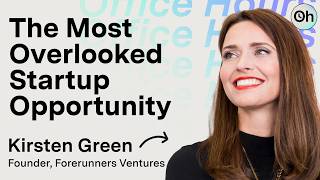
Kirsten Green of Forerunner Ventures argues that 2025 is a messy creative stage where consumer and business experiences are converging. She emphasizes that founders need passion plus curiosity, disciplined go-to-market tests, and focus on customer retention. Green's portfolio-centric approach prioritizes nimbleness, conviction, and building trust with users.
Questions this video answers
2010
About 1,100 attendees
About 30 years
June (month mentioned; year not specified in this chunk)
Chapters
Don't get caught up in the idea that everybody is growing faster. Particularly right now at 30 years of investing, this might be the most interesting time to be investing. This is a time for the courage of imagination, the consumer and the business person. Those lines have been blurring and they might be totally blurred right now. I just had a company and they were saying they're having a hard time hiring because people look at it and think it's a consumer business bull. What it takes to be successful in this market. Right now, I think as much as anything is being nimble, people are spinning things up left and right. That's almost the big risk today.
Are there things that you think should be really important to founders to do when they're in that pitch moment with investors or things that they should avoid.
Doing the best business leaders are thinking about?
Kirsten, your reputation precedes you. I mean, I think Forerunner was launched in 2010, has backed some of the most solid companies that we know in the consumer space. More also from the world of B2B too, honestly, because you power, I think the consumer experience, which requires just so much in terms of vertical depth. But I want to go back to sort of your beginning.
I read somewhere that your secret ambition was actually be an architect. Is that true back in the day?
That is true. You know, I don't, I don't know where in that journey that that sort of came on my radar, but I did, I really wanted to be an architect. And secretly, I. Not. Not even secretly, I still kind of.
Do in a way. Founders are kind of like they're trying to build the. They're really kind of building the dream most of the time. Do you find yourself. I'm curious how that early ambition or that career experience sort of shaped you as you think through this. As you've been working with a couple of those founders, do you find yourself giving design notes or do you sort of like to. As you. As you consult with these architects?
I mean, listen, I very carefully do because I'm not sure most people really want to get design notes from their investors. But if somebody gives me a little door, like, I'm so here for it.
But you know, I think that like being an art, you know, being an architect, being a founder, maybe being an investor, supporter of the, of a founder, like it really is such a left brain, right brain thing, at least for me. Like, for me, I feel almost safety in numbers, patterns, frameworks, formulas, things that I guess are math or principles in architecture or methods to build businesses. But the thing that's really exciting. And the area that feels a little bit scary, but in a good way is the creative side. And that's everything from the product, the experience or also just human relationships. So I think this is a dream job that covers both of those sides.
I love when you say that.
Yeah, let me jump in because it's interesting when you say that about human relationships, because this is a thing that you will see said about you in public by founders, is that you have this gift for understanding sort of the psychology of users, consumers, however you want to put it. So, you know, if founders are, you know, resistant to design notes in some cases, I don't know, it seems like an investor like that you might be more open to it. But I'm curious like sort of how you built that reputation. I mean this is something that's said about you almost everywhere. Is that like you, you have like a really deep appreciation for like user psychology. So I wonder like, how did you build that?
Well, thank you. I like that feedback. If that's what people think and say that that pleases me. I do. You know, I think the other thing is this is a people driven business in so many ways. And that's another big draw for it to me. I started out as a public market investor. I did that for 12 years. And there was a lot that I liked about that that aligned with some of the things we were talking about earlier, but it was missing the people, human connection about it. I think these things are all really inter, like.
Having a creative side, having an interest in learning in people, in behaviors, why people do things. That definitely underpins a lot of how I, and we as a team approach the markets with users being the inspiration for that, with behavior changes being sort of the tailwind that's guiding a lot of that. But then also coming that around to just thinking about relationships, thinking about a business trying to build a relationship with the user and how they engage in that and how they treat that. We talk about that as customer journeys or consumer journeys or product journeys, but that's what it's about. It's about building a relationship, building trust with your audience, with your user. And that's our role as investors too. You know, I think we kind of sometimes, you know, as an industry can get caught up on like, do I what, what are my legal rights? What are my board rights? It really doesn't matter. What really matters is your ability to build trust and, and, and, and mutual respect with the founder. And the thing, one of the things that I think is endlessly interesting or Challenging in our business is no two founders, just like no two businesses are alike. So every time there's a little bit of effort to figure out, like, who is this person, what do they need from me, what's my role here, how do I be productive and just kind of bring, bring all of that to the equation.
I want to ask about that very first sort of connection moment between you and founders when they're first reaching out and pitching you. Are there things that you think should be really important to founders to do when they're in that pitch moment with investors or things that they should avoid doing?
You know what? I do think that, like, this is a business that is not cookie cutter in any way, shape or form. I bet you if I meet a founder, you meet a founder, you meet a founder, we might all come to, we might all walk out of a half an hour meeting and be like, damn, I want to get on that person's team. But we might be tapping into different reasons for that, right? So it can be very, very specific. And I actually think that that's like a really, like, it's a good thing because it allows you to connect on a deeper level than just like the business idea and the numbers on the page. You're now responding to something that's like, about the person, about the leader, how they're going to run their company. And so things that really get me charged up.
I love people who are like, really passionate about what they're doing and really believe it needs to happen. And I think you're 80% convinced that you have the right idea and 20% curious about who knows something that you don't know that can make it better. And like, that's a pretty fun conversation because it leaves room for somebody else to be in the room and participate in the conversation, but it allows the founder to really shine and tell their story because. Because that's what needs to happen, at least in a first meeting. I'm not running the business. I don't want to. I mean, if I think I'm interested in something, but it's only better if I have some ideas like that. That's not what I'm after. So I do want to see like somebody who's like, really passionate, has a high level of conviction, but who's interested and curious about, like, I got a point of view, I've got an idea, I'm going to hit the market like this and then we're going to figure it out as we go. I mean, I always say, like, you know, the only Thing you know, it is an early stage startup is the plan that you're looking at. It's going to be different than that. Right? So like what is the level of openness to that? I think that's an interesting kind of path to explore too.
Let me, let me take the conversation a different way. You're one of the foremost experts in the world of consumer investing. A lot of folks recently, you know, there's obviously this large AI wave, but a lot of folks are saying that consumer investing is basically dead, right? That like, oh, there's not much happening in consumer, maybe there's no good distribution. I'm curious, where do you think are the opportunities in say consumer focused businesses or. We've, I think in the past I've talked to your firm about consumer infrastructure. That being a very interesting, interesting space. Curious kind of what trends you're kind of excited by and, and how you think about the future of consumer investing.
Right now I'm going to work to give you some specific ideas because that's probably most interesting. But I want to say at the outset, like at 30 years of investing, this might be the most interesting time to be investing. We have really new technology and we have a population that's, that's, that's here for it. And like I do think that we just put together our annual meeting slides. We have it next week with our investors. And the first and the last message is like, this is a time for, it's the courage of imagination, like really thinking differently about things. And that's a, that's a possibility. And when those kinds of moments arise, I don't want to take anything off the table. I don't want to take anything off the table. And I do think that like the big companies are formidable, they're smart, they got there because they flexed in all kinds of different ways. But nobody can do everything in every moment perfectly right. And if you look across the spectrum and I have a slide somewhere on this point in our meeting which is like all the big companies, you know, tried this version of that and this and that and like some of them competed well and some of them failed. But in almost all instances there's a challenger that came to market that was better. For sure, you know.
Yeah, for sure.
I love Google Docs, I use it all the time. But like notion is where it's like my go to for stuff. So like, you know, they came in and created a new architecture around it. I use Dropbox too. But we also still store everything on notion. So I do think that like, there are edges and there are ways to expand the value proposition that, that, that, you know, can, can, can give a company an opportunity to stand out and be different. I would also say that, like, a couple of things that are, that are on my mind that are supercharging, where I think there's opportunity in this moment, the consumer and the business person, those lines have been blurring and they might be totally blurred right now. You think about, like, yourself at work and yourself at home and the habits you have and how you communicate with your friends and how you communicate with people at work. And do you have a work phone number and a personal phone number? And I think that's really created a blending of, like, what people expect, their experiences and the products and the tools that they work with in both places. And so you've seen a series of companies that have played into this. I have friends who don't work but use notion, who use Slack, who use chatgpt, who use all of these things. And then, you know, everybody at work uses them too. They kind of come from both sides. So, like, at the end of the day, most of these businesses and the really big businesses that we know, they sell to the consumer and they sell to the enterprise. And if you look at like the top, whatever, I don't know, they're not fang anymore. What's it called, Mang now or something else, but like the top, you know, eight, 10 tech companies, they all have.
A consumer, I feel the Magnificent Seven. The Magnificent Seven.
Magnificent Seven. They all have a consumer offering. In fact, most of them started with a consumer offering. So I don't want to water down the consumer approach because I feel like in this moment I want to double down on owning the opportunity in the space. But I also think that, like, we, you know, as venture capitalists are here to think about, like, who is helping create the future and the future that we all want to live in. And I do believe that, like, oh, I don't. I believe it. I've seen it. Like, the market says bigger is better and that bigger gives you multiple advantages in lots of ways. So we can't ignore that. And so I do think about the, the, the person that's sitting in front of me, the idea that's the go to market. I also think about, like, the big, big vision. Like, if that's successful, like, what else might you want to do? What else could you do? You know, I just had a conversation the other day about, like, you know, the opportunities within health care, and we were talking about Oura Ring. There's been some news about it this week. And it's like, you know, is that, is that a ring company? No, that, that is like five and a half million people wearing an aura ring loving the that product, the data they get from it, the life advice they get from it. But more things keep getting pull of that. And what else, you know, what else can you do with that relationship you have? Like, you know, should it be a consumer offering? Can it be a medical offering? Is there a data play? Is there an extension of the, the insights that come from that technology? All those things. And I think that like, once you've got, like you're in business, you've got a relationship with an enterprise or a consumer. Like the best business leaders are thinking about what other ways in which I can expand this value proposition and make it ultimately better. Right. So in that way, like most things end up being consumer and business offerings.
Well, it's so funny you mentioned that because we used to say at our, you know, Marc Andreessen said this a long time ago. He said some of the best founders came out of consumer because the thing is they just have to make everything perfect. Right. Like a consumer has many different reasons to quit the thing that you want to do.
They vote every day. The way that you build a business that has a good business model, you think a lot about not that one transaction or that one interaction. You think about that relationship. This gets back to where we started this conversation in some way. You think about that, that relationship you're building and whatever the first overture was, that's us meeting today on this zoom and having a conversation. But maybe what's exciting is calling each other afterwards and saying, let's get together and have a talk about X, Y and Z. And then maybe we find a deal to work on. It's that journey you go on that's like really unlocking the big opportunities. And I think that's just, that's true for consumer. But you have to be like, they don't have, they're not signing a contract with you like an enterprise company.
So you're not locking them in. They're not legally obligated to be with you.
Right, right.
That's why, that's why dating is harder than relationships and dating are harder. But definitely people will tell you the very beginning of dating is very difficult, 100% right.
But I think if you take, if you take your marriage for granted and think you don't have to date in your marriage and grow, grow like you might not end up in the place you want to end up. That's right.
That's exactly right.
People want to build in consumer. So of course, yes. Before this whole that humans in the loop event that we did, you know how that started? That started. I have. No. I mean we've been doing this for 12 years as a firm. We've never hosted an event. This was a moment of frustration. I met two founders. If I didn't meet two, I met three founders who were like, I've got this idea, I really want to build it in consumer. But nobody consumer.
I just had a company the other day who I think is fabulous, has really strong founders and great traction. And they were saying they're having a hard time hiring because people look at it and think it's a consumer business. Oh, wow. Bullshit. And we have like. So I, I do think that like what do we do to like shake the world up to say that like get out of the either or. Like get out of the either or and go with what matters. Right. Real opportunity everywhere. And by the way, B2B companies, like how many like middling small middle market are there?
Yeah, I mean that might look easier and maybe it is easier to be mediocre or you know, our version of mediocre which is still outstanding in the, in whatever world.
Yeah, yeah, yeah. But come on, 70% of the s and P is like, is consumer companies. I mean all the most public market returns coming from consumer is if you.
Haven'T talked about the few that are having a hard time.
Well, and that's, and that's really concerning what you said about the hiring thing because then it becomes a self fulfilling prophecy.
100% does.
Yeah.
That's really worrisome, these stories when I'm out here, you know, I mean I, I sat in my office the other day when like we got the like the aura was giving some of their news out and I was like, yeah, you know, like eat your heart out people. That's consumer winning, right?
That is definitely consumer.
There was like, let's tweet it. And I'm like, no, like I don't tweet that stuff, you know, but like they put something out that was refined and it's like the first thing tweet that I've ever written that, that the market's ever cared about only because people were like, yeah, somebody's saying consumer works. Like we gotta just say it more, I think. Oh, and the humans in the loop event, like I was like frustrated. So I was like, let's get some people in the Room who believe in consumer and create like a cheer squad even for ourselves. And I was like, but if we just do it with 400 companies, it'll look like we're just pumping ourselves up. And we've already done that and we're all pumped up, so let's go get some other people's good company. And then we started calling some of our friends and firms. We called you guys by the way too, like the A16 things. Things that we didn't. But we did. You guys didn't answer us.
It wasn't our vertical. I'm sure I some other fund.
So.
So anyway, so then it was like, okay, everybody, like, you have a good. Do you have a good consumer AI company? Like if you have a good consumer AI company, you can be part of this conversation. We end up with like 2000 people on this list that wanted to come to this conference where it turned into a conference over time, I guess.
Yeah.
And like 1100 people that showed up the day of and we turned away and it was just because it was like people were like, oh yes, there's some energy here, there's some support here. So just need to encourage a little bit more. Yeah, can I come up to build in consumer? I'm happy to do it.
Well, first of all, you know, next time that you do humans loop, any other thing you have will be there. You have now have connections directly. We're going to get some folks to go ahead and represent, make sure for sure is definitely gonna be there. But, but I think the other thing honestly is that.
I think people are just afraid because you know how it is. Like it's always like, it's easier when it's like you can definitely see it in hindsight, but now it's taking real courage. It's like actually taking real courage when everybody else is going. Going the other way.
So I'm just, I agree with you. I guess the thing I'm, I'm curious then is if you're a, if you're an investor, let's say you're a ch. Investor during this period. You know, it's, it's hard to tell because you have, you're obviously thinking through the relationship that you have with a founder. You're trying to figure out the super cycle. At the same time, it feels like it's easy to either get caught up in the wave and do too much or also just to sit back and like let it kind of play out. How do you think about that as you know, is it is. Is there during these Times like every decision sort of matters. But how do you, how do you separate signal from noise? Especially when there's just so much that's happening.
Okay, there's a lot in that question. While you're going, yes, I know you're going through the first part of it. I was just thinking about like, in some ways, celebration, right? And there's like, I think you could get a group of portfolio managers together and probably have various takes on how they're going to manage their portfolio through this cycle. And I think for us it's like the market is on, the market is happening right now. There's important experimenting going on. There's important foundation laying and company building starting. And we're calling this because I love little taglines, the messy creative stage. And like, I want our team to be here for it. I want to get like, it's okay, let's get messy with it. Let's play with some things. Let's step back and think about big sector opportunities where we know that there is an appetite from the user base and for something new. And that honestly might be every sector right now, like healthcare, education.
Planning, my finances. In a world where like career paths have changed, you know, all of these things I think are like real change moments for us, for people. We've made a decision to be here for like this messy creative stage and like learn with our founders that we're working with. There are like.
When I started this business, like, like most people when they start things, one of your advantages, one of your, one of your challenges, but really your advantages, you're pretty naive. Like, I don't like I was here for like, I want to invest in new things. I love the energy of a founder. Like, I didn't have all the answers, but I had certainly all the passion and the desire and the humbleness to be like an active learner. And then we build a team. And you know, we go from like me having some ideas about what a good investment looks like to trying to bring a team along to making decisions about what a good investment looks like to have different people, like taking leadership positions on their investments. And we come up with a process, come up with a diligence process. We come up with some frameworks we look for. And a couple years ago I look back and I thought, I'm not sure right now that we're set up to be making the most exciting investments, the most out of the box, like kind of venture type investments. We've gotten ourselves into a place of diligencing things into no's because that's what happens when you diligence early no's. And so I was really encouraging myself to remember the power of being open minded and our team to remember that and to say, let's go back to the basics. Like, what is, like what is the big category that's open for opportunity? And when we meet a founder who's got a point of view about how to play in that market, how to change that market, how to own that market, like, and we're turned on by the idea and the person and can see ourselves as being good partners to them. Let's do it, let's do it. Let's not overcomplicate like, what, what it is. We know that like everything is changing in real time, right? And I think back in the last two years of investments I've made, there are people that are working on, you know, hard things. They're playing with new technology, it's changing. While they're playing with it, behavior is changing. New competitors are popping up. Like, what it takes to be successful in this market right now, I think as much as anything is being nimble is knowing like, how much do you lean into tests? Like, you know, you don't want to be all over the board. So like, how do you. And so I, I think that like, you know, a framework for investing in some ways for me has gotten a little more back to the basics of like, let's think about these two big pillars. Let's think about like the categories where we think there are like demand tailwinds because things are broken, because things have changed in that way. And then let's think about like this founder's, you know, particular point of view on where the opportunities are and vision for the future. But also like, what's the, what's the go to market? You know, what's the go to market today and what's the strategy for the next 12 months?
It's so interesting because it's almost as if you're also saying that there's, in a way it's back to basics. But it's like both sides, both investors and founders during the super cycle have to both get back to basics and be faster, right? Everyone's just got to get, I mean, true, it's a challenge for everybody.
It's a challenge for everybody. I want to use all my experience. You know, you say like, oh, you, I've been doing this for a long time now. It's like, what do you know, what playbooks do, you know? And I mean, there is obviously a Lot of advantage and experience, but a lot of advantage in experience. Looks like confidence and it looks like kind of the ability to be like, I'm okay navigating this messy stage. Like I'm not going to freak out when a founder hasn't figured out everything perfectly because I know that's like part of the journey, but like enough open mindedness around what it looks like when you're on the, you know, like the right path or not.
So just. So speaking about the founder journey, you know, all these podcasts or other things that people always go on, always talk about their like positive things and everything like that. I'm curious, you know, whether there was a company that was really struggling for a period of time. They had sort of like a Phoenix story that you were like, oh man, like didn't, didn't expect that to happen. Whether it was a company you passed on or it was a company within the portfolio, there was like, look, they really snatched it from the jaws of death. And it was kind of amazing how they did it. That's always something that's wonderful to hear.
People'S founders tell those stories, right?
People.
I mean, I tell founders often, like, don't, don't be afraid. Don't get caught up in the idea that everybody is growing faster. Particularly right now. Oh, right now if you listen to the narrative, you think people have 10 people in a room and they're doing 100 million of ARR. And it looks like good ARR. Like, come on, like, I don't know, maybe there's two or three stories. It's a favorite one right now because Chime went public in June and like, I'm really, I'm so proud of that team and grateful to be part of that journey. And I think they are going to be a hundred billion dollar plus company and a household name of people, you know, kind of engaging with their financial products for decades to come. But like, I thought I had about five other winners in my portfolio before I thought Chime was the winner. No, we started out like doing this and then, but those, those, those founders like listened. They didn't get dug. They had this balance between like, here's what we know, here's what we're going to hang our hat on. But like, we're, we're not going to be like, we're, we're not going to be dogmatic about that's the way it has to be. And we're going to, you know, and it's not like an overnight pivot into something. It's just that, like, list, like, watching what's working, listening what's working, make a bet on what the next dial to turn is or the next product extension is, and then recognizing, like, I got something good, like, let's lean into it, or that's not it yet. Like, let's not expend more resources in there. Like, that's the true art of all of this. And, like, I would say that, like, you know, I was like, let founders tell their stories. I don't want to tell their stories. But, you know, a very basic version of this is we launched with an offering that was interesting to some people, not enough people. We had to work really hard to start to get some metrics that we thought we could raise money against. You know, you then, like, meet the market at the right time or not. Like, it was hard. It was very, very hard. But at some point, they'd done enough of those kind of refinements, enough of that hanging in there, enough of that sort of.
Refinements, and things started to really work. And then they knew, like, this is what we lead into. That's working. Here's how we continue pushing that forward. And. And, you know, it looks like overnight it changed into something amazing. But it wasn't journey to get.
Yeah, you said it wasn't, like, one inflection point, but there was a period where it started to feel like it worked.
How long you started to feel. It was. It was almost like you started to feel it working, and then you. You. There was a moment where you look back and you're like, oh, my God, it's working.
How long does it take to realize that it's working?
I think to know if something's really working, it takes a little bit of time because, like, you can get. You can get caught. Like, there. There's.
The good news about building a business is it is not hard to find some people that are willing to try something new. Right, right, right. But, like, the difference between finding some people willing to try something new, finding customers that become obsessed with your product, finding more customers that are like another concentric circle outside, so you start to get a feel for the market being big enough like, that is a journey that you have to go on. And so, like, you can't answer that question in three months because you don't know. You certainly don't know if you're a habit in three months. And I think you have to make a call on being onto something before it's like, a true habit. But, like, what's the line in between that and it really has to do, I think with the, with the frequency of engaging engagement. And that is also tied to like what is the natural path of engagement frequency for a particular item. So like if you have an item that's your debit card that you're using on a regular basis, like you should be using that on a regular daily basis. If you have a, I have a subscription to a shampoo company, you can only do it so often because like you have to use the product up before it happens. So it's, it's, it's case by case. But there's some similarity in sort of understanding that like.
You know, you're, you're really like trying to get signal on whether somebody is like cares about that product enough that they'd be bummed if it wasn't there. And that sounds so cliche, but that is a good one. It's a good one. Right? Are they locked in enough where they're not going to just leave you because they got bored of it or because simply another good thing came along? That's almost the biggest risk today is people are spinning things up left and right. So what does lock in look like? How do you build that?
We're working with a lot of early stage founders who would love to work with an investor like you. What kind of founders are you looking for and how can founders reach you?
I'm looking for founders that are in it to win it, but mean that from their like own like passion, like this needs to happen, this is going to happen. Like, you know, and all the characteristics that we just talked about. And here's, here's one thing about Forerunner that's been really intentional and I, and I think is part of the magic is like it's a small team and we work really collaboratively. We don't have one partner who does this and one partner who does that. We have our own version of organized collaboration internally that I think has, enables us to make efficient decisions, good decisions, they don't have to be unanimous decisions. But we have a very portfolio centric approach where we're here to, you know, our job is to drive returns in our fund. And when we have a company that's struggling, like that's everybody's problem. And when we have a company that's winning, that's everybody's opportunity. And we really try to kind of like rise up to meet those moments. And the way to do that really requires some clarity around what those are, like what different companies need at one time. So I think that like I share that as a little bit of our ethos. But also to answer your question, which is anybody at Forerunner is a great way to get into Forerunner. Anybody who has.
A high conviction, belief that a consumer or business really needs this product, and they have a vision for how they're going to build trust and loyalty around that. You get my attention, and I'm interested to hear about it.
Also, shout out to your amazing colleagues, Yuri as well as Fouzi, and also Brian o'. Malley.
Yeah.
Who's more Merit. But I mean, all three are great people, and they've been diving into a number of our, our Speedrun companies, and we just look forward to future partnership with.
We do, too. We do, too. So, yeah. This was fun, you guys. Thank you.
More from Kirsten
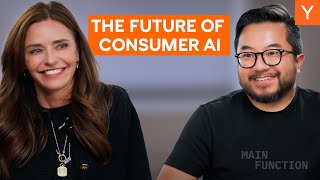
Rising Above the Noise in Consumer VC with Kirsten Green of Forerunner | E1961
Kirsten Green of Forerunner Ventures w/ Lisa & Paul Jauregui of BK Beauty | Operators Series: Ep 14