WELLNESS Is the New WEALTH | Kirsten Green ON TBPN April 4th
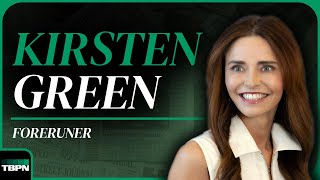
A recorded April 2025 YouTube interview with Kirsten Green (founder and managing partner, Forerunner Ventures) discussing Forerunner’s 2025 Consumer Trend Report and implications for founders and investors. Key themes: the resilience and shifting priorities of the American consumer, a major surge in health/wellness spending (wellness economy cited at $1.8 trillion), and practical frameworks for applying generative AI across consumer products (AI-led, AI-enabled, AI-boosted). The conversation also covers education technology, voice interfaces, and advice for founders navigating macro uncertainty (tariffs, inflation).
Fantastic. Next coming in, we got four Runner Ventures, Kirsten Green.
I'm excited for this one. We reached out actually, initially after she dropped her 2025 trend report, which is always fun to process. So I want to ask her about that and about a bunch of other stuff.
Yeah, the 2025 Consumer Trend Report is out. You can get it at4runnerventures.com A deep dive into where consumers stand today and how major shifts are shaping new needs and opportunities all across a ton of different. Ton of different sectors. It's a quick read. It's 200 slides. They really do their homework over there. And here she is to break it down for us. Give us the 30 minute condensed version of the 200 slide deck. Yeah, I mean, me and Jordi, we're basically live three hours a day. Not a lot of time for reading. So if we want to consume some.
We want to hear it from the source.
We want to hear from the source. So thanks for joining.
A quick rundown.
Yeah. How are you? How are you doing? I hope you're having a great Friday and going into a great weekend, but good to be here. Can you give a little background on you, your firm and the Trend Report?
Yeah, sure. First, thanks so much, you guys, for having me on. This is fun.
Yeah, that's excited.
And it's, you know, it's a, it's a, it's a crazy day with no shortage of action going on.
Oh, yeah, yeah, yeah.
So, yeah, I'm the founder and managing partner at Forerunner and we're a venture capital firm. We've been here in Silicon Valley for the last decade plus making investments. Investments across the board.
A decade plus of investments.
There we go.
We love investments here. Thank you.
And we largely focus on early stage investing. We have a diversified portfolio across sectors and spaces, but we do have a thematic approach and a framework that we have kind of applied consistently for the past decade. And that's really tracking what is going on with demand. So where are the tailwinds? And then we look for big technology shifts and business model changes and, and where business is not addressing that demand. And.
Yeah, can you talk a little bit about. I know you guys will do B2B as well, but it feels like you've always had a love for consumers specifically, and that's gone in and out of popularity. Obviously, when you started, I'm sure a lot of people said, well, why don't you focus on SaaS, look at the outcomes that we're seeing. You typically start your reports by reminding people just how much of I think it's not here on the.
The American consumer. Consumer is undefeated.
Yeah. The seventh slide. Consumers drive 2/3 of U.S. gDP. So I think that's probably like the anchor reason why it's been such a focus for the firm. But I would love to hear kind of your. Your take on it.
Well, Jordi, that's one take. It's true, you know, in the vein of tracking demand and demand being kind of the driver of all of business, that 2/3 of the economy and what's going on with the consumer is arguably the most meaningful force. But really more than that. Yes, it's true that SaaS companies have returned lots of money to their founders and their investors. It's been a steady contributor of opportunity and venture. But if you step back and you look at the last two decades, the biggest companies started with a consumer first approach. Yep. So, you know, I would argue that, like starting a business with the consumer first approach, if you are able to create that incredible gravitational pull and build a foundation from there, We've seen time and time again companies prove that they can take that foundation and leverage it into dynamic business models over time.
Can you talk a little bit about just the general health of the American consumer? It's been a couple crazy years. The last five years, things like, things were going really well, and then we had Covid and everyone was out of a job, and then everyone got their jobs back, and then inflation crops up, and now people are worried about the tariffs and what that means for the economy. We've been in sort of a kangaroo market, as they say, jumping up and down, not a bull or bear. How is the. The health of the American consumer right now?
Yeah, well, that is a big reason why we do this consumer trend report every year. So, you know, as venture capitalists at Forerunner, we spend the lion's share of our time thinking about the future and where things are going. But to understand or have a view on that, it is really important to step back and take stock of what's going on today at any given point in time. And so, you know, the exercise of getting out of our own bubble and sort of taking a pulse of the. Of the country, of the globe from the person, you know, the people on the ground. We feel like, you know, is. Is. Is illuminating. So you're right in saying that the last five years have been crazy, filled with uncertainty. So, you know, I think we're all trying to kind of process how we feel about the current ongoing tariff discussion right now.
Yeah.
And I think I feel like I did in March 2020.
Oh yeah.
What's happening? Like uncertainty rules the day. And here we are again. So, you know, I guess the good news coming out of that big period of COVID uncertainty is that we have all learned to have an incredible amount of resilience. We've been forced to do that. So, you know, I think when we check in with the consumer, we see a good deal of that. But we also definitely see some movement towards people feeling like they need to stand up for their own security and safety, that they can't count on the structures and the norms that maybe have been in place for a very long time. And this is a time period where having more agency over your own life and your own actions is something people are craving. So, you know, I think we do, you know, 200 page slide deck. There's a lot of government data in there and a lot of just kind of, you know, taking, taking stock of the actual data and then we go to interpret some trends and really we focus it. You know, I mean, I think I would say if we just look at 2024, we describe what we heard from people and this is a lot of survey work in addition to a lot of reading and a lot of kind of number crunching and processing. But it was kind of a middling year. You know, it kind of just lived in the middle from all measures, like from all the data metrics. But then also if you look at like the cultural norms, most of the movies were kind of follow on second generation movies, same with the music, et cetera. So, you know, the word of the year was like brain rot and something el. You know, so I, I think that you have a consumer that's quite fatigued from going, going through kind of the, the craziness of, of, of what the world has been. But at the same time in that agency and in that desire to do things, there is like, I'm gonna, you know, I'm gonna pick myself up, I'm gonna take some action and I'm going to, you know, look for having more control over my career, over my spending, over my healthcare. We, we went, we took a deep dive and we do this that we think are particularly important in the context of that demand equation and also in the context of investing because it is in service of sort of uncovering investment focus. And a couple of areas we looked at this past year were health security and of course Gen AI. So on the health front, this is perhaps the biggest trend in my nearly 30 years now of investing. I think the biggest trend that we've seen people are. There is a growing willingness to spend on health and themselves and outside of the system. So, you know, 60% of the people describe health as being their number one priority, even above friends and family. The wellness economy. So when, you know, when you think about health, it's not just the, I already have a problem. I'm at the doctor because of that problem. It's the effort of proactive health, which has really been a huge area of growth. The wellness economy, which includes that is a $1.8 trillion economy. And it's actually growing six times faster than the economy in general. So, you know, I think that the dollars are there. The scope of what people are willing to pay for is evolving. You're seeing people more engaged in supplements, more engaged in therapies, more engaged in their workouts, more engaged in doing things like MRIs or blood testing or biomarker testing. So this is, you know, this is a huge area of. It's a breakdown in the system as well as just more information and people realizing that they have some ability to, you know, shape the future of, for their own health.
Yeah.
Do you feel like you're seeing enough founders take the concept of wellness sort of like seriously in Silicon Valley? Like we. I take it very seriously. John and I have this funny dynamic where like John has this joke that like, if I had a single inorganic blueberry, like I would die. And John meanwhile, just like eats whatever's in front of him.
I could eat a, I could eat a credit card with a knife and fork.
Yeah, exactly. But I, but I feel like when you, when you just, when you just look at the data and understand how big the market is, how fast it's growing, you would think that 20% of new startups would be like targeting this opportunity, yet it doesn't necessarily feel.
Yeah, I want to talk about like the, like there's so much opportunity in health, but not everything's going to be venture scale. Even talking to our friend Justin Mares, he has kettle and fire bone broth company. It's not really this like hyper growth raising every 18 to 12 months. 12 to 18 months. He's done great with that business. Then True Med, it's more of like a fintech platform, has venture written all over it. And so how are you looking at the opportunity in health across the lifestyle business? That's just going to not really raise, grow, grow, grow. A private equity roll up, maybe buy all the gyms and aggregate them versus a true venture scale. Okay, this can be a public company. How do you assess that and where's the opportunity in health?
You know, I mean, obviously that's a really important point, right? There's a lot more businesses getting started every day that are not appropriate for venture scale. There's a very unique set of traits that you're looking for in venture. And I think that, you know, beyond addressing like a tailwind and having that opportunity to, to play into, you know, you really are looking for like, does this, is this a business that gets stronger as it gets bigger? What are the flywheels in the business? What are the frictions to getting it going and starting? How do you, how like, is the compounding effect a benefit to the business and does that give them like competitive advantages over time? Obviously one of the big things we're looking for is like what businesses have a chance to define categories and be real runaway categories, successes. So that is extraordinarily hard to do if you don't have like a real business model advantage at the root of what you're doing. And a lot of, you know, I think sometimes we have conversation. I often get asked about D2C companies and I kind of cringe a little bit because I think to myself like, you know, we were never here or we haven't actually made an investment in a product company per se. We've always been looking at like a business model shift and a behavior shift. So I think at this point like there's a lot of the business model shift from moving online or moving multidimensional or things that a lot of those, like those businesses that you described as lifestyle or products are playing into. You know, that the early wins in that have played out. We're now like what I think is really exciting today that really maps really well with a lot of opportunity in health is the power of gen AI and how that can actually make experiences personalized, more immersive and more productive.
Yeah. So on that note, I imagine there's companies like some of the opportunities that you get most excited about are like a company you invested in five years ago. Maybe they're focused on therapy and then now they realize they have this opportunity of hey, we can make therapy costs like 99% less through things like Gen AI and potentially deliver similar results. Right. We saw, I think it was earlier this week there was a study that came out that showed generative AI based therapy was, was, you know, delivering pretty dramatic results. So how excited do you get about, you know, basically companies in the portfolio that, you know, not even just new companies that are pitching you or you're.
Making investment Sam lesson called it AI is a cherry on top as opposed to trying to get into the foundation model or this like magical. Oh, we're going to redo the whole thing with AI. It's more like AI enabled businesses actually.
Yeah, we think about it, we sort of describe businesses as AI, AI led, AI enabled or AI boosted. Basically every company needs to find a way to be AI boosted and you can imagine there's like a lot of degrees of that. You can use AI in your HR department and your finance function or you can reimagine your product like you just suggested Jordi and like you know, make your, your therapy product even more efficient. And then the enabled businesses are ones that at least our look at it is like a product or a service that wasn't possible really without AI because it wasn't cost possible and actually you couldn't do it. So you would think about like the example of like if you had a network of therapists and you built them, you know, human kind of one to one and you were making that connection online. Now that is a unique case where you can actually add AI into your product and really kind of add a whole new dimension to your, your business from there. That's probably true for a number of businesses. Not most businesses though.
Yeah, that makes sense. Can you talk about, you know, the Studio Ghibli moment was amazing for me because it felt like there was one thing, one. It felt like we entered this sort of post slop era where like last year it was like, you know, AI generated content that was cool but not like it wasn't beautiful six fingers. It looked creepy times, but now you can get this sort of like hand drawn Japanese animation of a picture you took a second ago for free.
Joyful.
It's joyful. But the thing I get excited about is like the Ghibli ification of the rest of the economy and other consumer, other consumer experiences. Like you know, just going back to the therapy example, like it just feels like this concept of abundance and these sort of like incredible products that can be delivered to consumers for dramatically, dramatically less cost. Do you have any type of thoughts around, you know, it will take some time but my, my personal theory is that sort of same effect will happen in a bunch of other categories.
I mean 100% like I think this is a golden age opportunity to make, you know, much, much more incredible products and experiences. In fact, we're talking about it like you know, we were living in 2D and gen. AI is the power to take us to 4D and skip right over 3D. And you know, by that I mean like we've been talking about, for instance, you know, 20 years now we've been talking about personalization. It really hasn't happened. If you kind of look across, imagine you go to a website, you know, how personalized does it feel like it's pretty much a similar experience than if I went to the website, you went to the website. So I think personalization has not happened. It is now really possible in a really deep, immersive way with gen AI and you've just got a lot of more productivity that can happen. We haven't seen the whole agent thing play out, but it is definitely on its way. And I think that plus creativity, plus efficiency, imaginations open slow, so many more things are possible.
I want to talk about lessons from the COVID turmoil in relation to the current tariff chaos and turmoil I was thinking about. We talked to a few founders who were massive beneficiaries of the tariffs, honestly because their whole bet was made in America. And so when these tariffs came in, they're like our business is booming. But as we saw with the shift to work from home, we saw massive booms in peloton and fiscal fitness equipment that was, you know, any e commerce company did really well. And then there was kind of a, you know, back down to earth moment. What advice would you have for entrepreneurs who are maybe about to go on a generational run on the back of the nar of the tariffs narrative? How can they build their businesses more effectively? And what, what are you looking for in terms of durability on the investment side?
I don't know that I fully processed like what's going to happen with these terrorists in terms of the durability of business. But the way I am thinking about it right now is that I don't think anybody. I think we're all in this together. I think every business is all in this together. Right. So perhaps you make your products at home and perhaps the things that you use to make your products you get at home. Right. So you're really not going to have a cost change, but everything else around you is changing, including how much money people have to spend and how they're reorienting their dol. So I do think that everybody needs to think that much more carefully and closely about the value of their product, who needs it and why and what service are you delivering. Everything just got a bit more competitive in that context.
Yeah.
And I also do think like it's hard to. You've got to learn to be nimble and navigate these crazy strange times. Because almost like these crazy strange times aren't crazy strange times anymore. They're just sort of. There's, there's one after the other. But they do change and evolve. Right? And like you mentioned at the beginning of COVID like I think we all, you know, at first thought, wow, like, everyone's going to hunker down, no one's going to spend. It's going to be really scary. Business is over. And then you saw people at home thinking, you know, I deserve a nice thing, I deserve this. And shopping through the roof, right? And people came out of COVID and they went to travel and they shifted dollars Again, it's nimble. Being nimble is the key.
Sorry to shift back to generative AI, but it's a fascinating topic. I've been kind of obsessed with this idea of the GPT wrapper meme being maybe almost harmful to entrepreneurship. People aren't taking enough risk because they're hearing, if I build a wrapper, no one will take me seriously. It's low status, or maybe I won't get funding. But do you think that, I mean, we just talked to the founder of Honey. He built a Chrome plugin that sold for a billion dollars. It's incredible, right? And so I wonder. And at the same time, we've seen a lot of slowed innovation at the big consumer tech companies where pretty much everyone's asking like, hey, why isn't Siri better? And maybe I guess the question is something about is advice to founders like, shoot for the moon, you'll land amongst the stars. There will be acquisitions of wrapper products and if you just create customer delight that's beneficial in Gen AI. Or is it kind of just everything's changing so fast. Just get out there, make something cool, make something people want and then you'll figure it out. Or are you really trying to dig in and say we need to have a super concrete thesis about how this becomes a hyperscale business before we invest or really go and build.
What is your take a lot in that question? Yeah, I just thought about four different things I wanted to say. Please let me see. Hopefully I can get them all out. So this idea, like, I don't think all rappers are created equal. Right? So LLMs are foundational. That is like the backbone from which we can all build from. So I think anybody using that to their advantage in their business is just being smart. A business that is eager for the LLMs to keep getting better because it has the potential to make their product better. Like that's where you want to be building, right? Then you've got to think about all the things that I would say that we've always thought about, which is like, what's the value of your product or your service or your software? Like, who needs it and why? How do you keep innovating and growing? How do you build a business around that? Those things, I think, hold true always and are critically important. I think the idea of I'm just going to build something cool and fun and they will come and that will be interesting and that playing out to be a successful multibillion dollar company, I'm not sure there are many examples of that, but at the same time I want to back up and say that, like the way we're approaching the market right now, in particular with this new, like kind of the beginning of this new cycle, if you will, is most. We're holding two things kind of front and center. One is just the big, the idea of like a market tailwind that you're building into. Like there's a real demand, there's a real need, there's a real opportunity. And that kind of ties to where we started earlier in the conversation, which is just understanding where those pockets are, where business is missing the mark. And then it's about the founder. It's about the founder and their vision for the future and their idea about how a product, how a service can make it better. And I think all you really know at the very beginning is it's going to play out different than what it is, whatever pitch deck you're looking at. But I do think you can tell if somebody's got like a real pulse on where things are going, where they want to take things like the world they want to make and show and how nimbly and tactically they can play and execute with these new technologies.
Can we talk about education and learning briefly? Because I feel like we've seen the adoption of ChatGPT at every college campus and high schools and things like that. And maybe there's this early surge of usage that's not so great for kids that are trying to learn how to write and think and things like that. And, you know, we want people to actually, you know, learn how to communicate and reason through things, but at the same time that the potential of every single, you know, person in the world having a tutor in their pocket is just so, you know, couldn't, can't be sort of understated and maybe is not getting enough, enough almost like hype. Right. But I'm curious how you are. I know you've made a bunch of, you know, investments in the space over the years, and I'm sure those companies are thinking of.
I mean, I am really bullish on this opportunity, Jordy. Like, I think if you look at, like the foundational pillars of life, your healthcare, your finance, your career and your education, like, education is arguably behind them all in terms of transformation. I have kids in grade school and their school books look the same as Min minded 30, 40 years ago. It's unbelievable. We need to move the future forward. Sure, you can use ChatGPT to cheat, but actually we need to teach our kids how to use generative AI to their advantage. Because I think, like, for me, I'm having so much fun. I have a. I have a. I have a thing in my pocket. I can ask any question I ever wanted to.
Yeah.
And then I can follow the thought through. That's the best part. It's not just search and get an answer. It's like search. It's like pose a question, get an answer, and then play with it. Keep going down the rabbit hole. Or take your essay and say, I need to work on this point a little more. I'm struggling with this thing. How do I move this around? Like, that has a huge opportunity to continue to peak and drive curiosity, help us think deeper and kind of. And learn.
Yeah. And on that, honest.
To encourage kids how to use it, like, constructively.
Do you think that that's an area where voice specifically can, you know, get really, really meaningful adoption? Because the example you're talking about is like, I'm writing an essay and I'm struggling with something in particular. And theoretically somebody, you know, a child could have the experience of their teacher just sitting, you know, with them writing and being able to talk out loud. And I don't think we've seen voice adoption as an interface as much as some people would have thought 10 years ago. But it feels like maybe now is the moment. Right.
Voice is so exciting. I do think that when we're able to make voice a main mode of communication digitally, we're going to get so much more information. And it is the information that continues to power and tailor more personalized and engaging experiences. So the amount people share, if they have a voice, a speaking opportunity versus a typing opportunity is tenfold. So I do think. I do think that's a big unlock. And I think, you know, this is a good point because this is how this is going to unfold. Like, we're just in the early stages of seeing what's possible. And, you know, there is some very exciting voice technology out there. And, you know, everyone's been buzzing about the company Sesame. What they have is pretty amazing.
Yeah.
So, you know, it's, it's definitely on the horizon and the near term horizon.
Yeah. And maybe last question for me for now, and would love to have, you know, continue to have you on to kind of run these ideas down, but how do you think about AI adoption? Because it's hard to compare it to the Internet because it feels like everybody's used AI now and everybody. Probably not everybody. Right. Like, we had, we both had Ghibli posts go viral and we had people quoting it, not knowing how the images were being created. And like they seemingly didn't know what chat.
Oh, there must be a new filter app in the app store.
Yeah. They don't know what open is, Snapchat or whatever. So we haven't reached, you know, full adoption of some of these new tools, but it seems like everyone's using them in some capacity, even unintentionally. Like I Google search and I get an AI summary. So how do you think about AI adoption? Is it, is it just businesses, you know, fully taking advantage of the technology and that's what we need to look at?
Because I love this question, Jordi, I'm glad you asked it because this was one of the more interesting things that came away from our survey data. I, I think I should have this data point in front of me while we're speaking, but I don't. But it's like 60 or 60 plus of the people percent were like, actually had said they were using AI regularly.
Yeah.
Now what does that mean? That probably means chatgpt, Claude, you know those. But like, people are here for it. I mean, 500 million people was a number I read a week or two ago about ChatGPT. And then I heard a bigger one later. Like, that is a, that is, that is like kind of trial, let's call it trial at this point because we don't really know what adoption is going to look like. But I do think that it's, it's growing incredibly rapidly. And I do really believe that people, like, they're ready for it. We just have to build for it. You know, that's my call for like founders to build for it. Like people, you know, you build it, they will come. They are ready for it.
Yeah, it's certainly fast.
You know, we had a conversation, we had a conversation before this. It's like, you know, everybody wants to build AI infrastructure. We need more people to just build products. The AI, you know, the agents.
Right.
Build the hard stuff that maybe so much opportunity.
Just think about chat. GPT is to this generation what Google was to the last. And if you think about Google is like the place where you, you know, the front door, you go there, that's your big search. But if you want to like look for real estate, you go to Zillow. If you want to understand about a company, you go to Glassdoor. A job you go to. Indeed. We want to travel, you go to Kayak or Expedia. You want to go to open table for a restaurant. There are these big categories that have lots of nuances that really deserve and warrant unique experiences. Let's build them for AI. Where are they? Come pitch me.
I like it. Gopesh. Kirsten, this is fantastic.
Fantastic. Thanks so much for stopping by.
Yeah, thanks for coming on.
Yeah, this is great.
Thanks for having me.
Yeah. Have a great rest of your day. Have a great weekend. We'll talk to you soon.
Talk soon.
Bye.
Cheers.
More from Kirsten
Rising Above the Noise in Consumer VC with Kirsten Green of Forerunner | E1961
Kirsten Green of Forerunner Ventures w/ Lisa & Paul Jauregui of BK Beauty | Operators Series: Ep 14