I made $16,329 in one day once I learned how to lead my team

Kit Barber went from doing everything in his $47M business to leading his team through two systems: the Delegation Ladder, which forces team members to propose solutions before asking for help, and FAFR, a feedback loop for continuous improvement. His margins grew 7 percentage points and one client saw a 42% sales lift.
Chapters
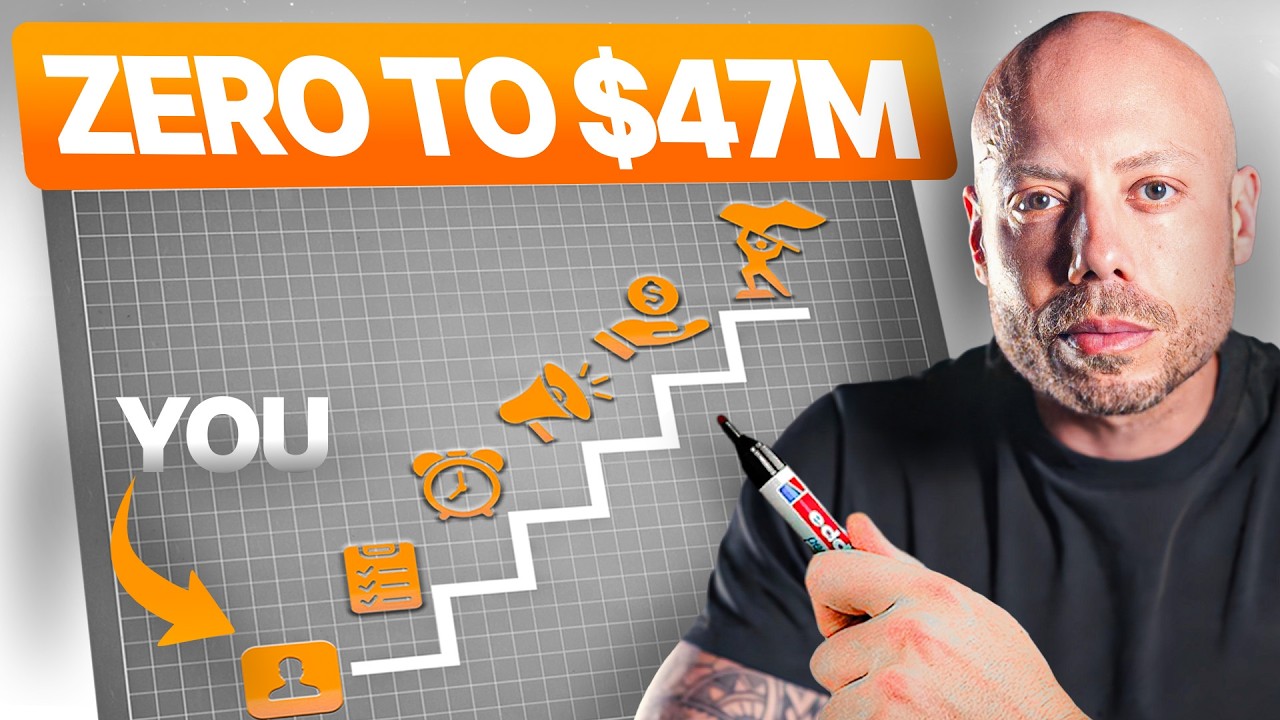
I need you to forget everything you think you know about leadership in business. My name's Kit Barber, and I built a $47 million business and helped multitudes of other leaders in the business space to get back their time, live the life they've always wanted, and make more money in the process. Today, I'm going to walk you through exactly how you can do the same in your business. Let me take you back to what my days used to look like. I was doing everyone's job. People came to me every few minutes with questions they should already have known the answer to, and I get frustrated and just do it for them anyway. I'd simply never put a framework in place that let them think for themselves. And that right there is the real lesson. The worst case should be that they came to me with the questions and a couple of ways they think they can deal with it, and then I coach them. Questions and solutions, not just flipping questions. Here's the change this video is about. Leadership isn't about doing everything for your team. It's about building a team that is capable and confident to do everything you need in your business. That gives you the time to focus on growth and the freedom that you crave. You're not a leader. You're the most expensive employee in the business. It's just like teaching a kid to ride a bike. You can run behind them with the hand on the saddle for as long as you like, and it feels like you're helping, but they never learn to balance, and the second you let go, well, they fall off. That was my business. Every time I stepped away, it wobbled a little bit because I'd never let go of the flipping saddle, and it was expensive. Every time I went on holiday, it cost me tens of thousands of dollars a week just by not being there. They're the most expensive holidays I've ever had, and they weren't even that posh. The revenue was disappearing, and people were calling and messaging me non-stop with questions they really should have been able to answer themselves, but I hadn't given them the power to. Being responsible for everything cost me my weekends, my evenings, my time, and my family. I loved the pressure, and I loved the stress of it, but looking back, it was completely stupid because I got no time for myself. If the business can't function with you in the room, you're not leading, you're operating it. Most owners think they've delegated. They haven't. They've handed over tasks and they've kept every decision. It's just like the flipping driving test. You wouldn't hand someone the keys on day one. They need to get taught, they need to show that they can actually do it, then they pass, and only then do they drive on their own. Most owners either never hand over the keys themselves, or they hand them over with no lesson and absolutely no test whatsoever. So I changed how I led. I put a framework in place that trained the team first and then confirmed the training after that. They showed me or their manager that they could do it, and then they got signed off. And I know that sounds like a lot of admin, but once the process is in place, it's really, really quick, and nobody keeps coming back to you when they get a little bit stuck. Then I set one rule, and I call it the delegation ladder. When someone's stuck, they come back with 1 or 3 things as a minimum. 1, they do it because it's an easy task, or 2, they do it and they tell me afterwards, I've done this thing and this is what I did. Or 3, they can't answer it, so they come back to me. This is the issue. This is my solution. What do you think? The first real authority I handed over was everything to a general manager. She ran the main business, which meant I had to let go of sales and the major operations, and it was absolutely flippin' terrifying. I was handing over my life and my revenue to someone who wasn't me, so it felt like I wasn't in control of my own destiny. But I absolutely was. I just had to make sure she ran it at least as well as I did. And sales, sales dipped. It was short-term, about 2 weeks, and then we matched our old performance. After that though, it went up because I wasn't involved in everything. She drove performance for the team and the sales, and I could finally go after the weaker parts of the business, either the leads or the delivery of the products. And I'd never been able to do that before. But I had to break habits. I had to break being the key supplier of all the answers. I just got used to saying, what do you think you should do? It got repetitive for the team, but they learned quickly that all they were going to get back was, what do you think you should do? Until they came to me with their solution first. Delegation hands over tasks, but leadership hands over decisions. If you step back in every time something goes wrong, your team learns to wait for you. It's like baking a cake. You put it in, you set the timer, and then you open the oven door every 5 minutes to check. And guess what? Every time you do, the heat drops and the cake sinks. You only checked because you cared, but you're the reason that it's ruined. And that was me with my team. I kept checking and I was the reason that it never came out right. First time a real problem actually landed and got solved, I wasn't the one who solved it. It was an absolute flipping revelation. It was the proof the team could do it without me. And that was a huge relief. It was proof of concept. And do I still want to step back in? Always. Across all my businesses, there are things that could be better, but I know that stepping in will cost me and the team in the long run. You absolutely have to get used to things being at 8 80% as good as you'd do them, not 100%. Sometimes they are 100%, and occasionally they're 110%, and the team does wonderful things without you. But a lot of the time it is suboptimal, and suboptimal without you involved is far better than you doing it. If you think about it, you can work at 100%, but if you put 2 people on it at 80%, that's 160% of you, a 60% increase in performance. I'll take that all day long. And that's before you count what you do with the time that you get back. Everyone I've coached, everyone I know who works like this, we all had to go from being the best person in the room, the one who could do absolutely everything, to saying, you know what, other people can do this better than me. And it hurts, your ego gets in the way of that, especially as a bloke. But once you get past it, you see the real advantages. And the best part for me is the flipping freedom. So remember, every time you open the oven door to check, you let the heat out. Most owners think stepping back will cost them money. Staying in it is what's costing them. Now I'm not operational in my main businesses, the thing that stood out is what the team have built themselves. The managers and directors are putting team challenges and gamification with points, a bit of fun, rewards to get the best out of people, and I'm absolutely rubbish at that. Don't tell them. I'm really good at praising people on the fly, but I'm not good at acknowledging greatness and then rewarding it, even with a scratch card or a chocolate bar or anything like that. And it goes an awfully long way for morale. The team have also taken over our observation. I call them obs for short. That's our quality control, making sure the experience, the products, the sales are all delivered properly and we're not losing conversion in the pipeline. You see, if I'm doing everything, I can't be perfect at one thing. The experts who focus on one thing at a time have optimized it far beyond what I ever did, so they know everyone's working to best practice at all times. And once I stopped being the veritable bottleneck, the biggest surprise was the profit My margin went up 7 percentage points in the first year, and it was simple. I wasn't in the day-to-day, so I could push the bigger picture, the growth, and I can fix the place in the business where we were wasting money. I never ever had the time to look at that before, and it's not just me. Johnny joined the business accelerator and got some of his time back, and he used it to look at his sales pipeline. He found his team were missing key questions when they were qualifying leads. He didn't fix that by doing the calls himself, though. He fixed it through obs by observing, giving feedback, and coaching the team. His diary team also started tracking call types and putting. Scheduled decision days in place. In a single month, his sales went up 42%. That's a huge difference for anyone, and the profit went with it. The business grows once you stop being the bottleneck. You didn't hire a team to be busy. You hired them to get your time back. It's just like an orchestra. A conductor doesn't play a single instrument. They're not the best violinist in the room or the best trumpeter, and they don't need to be. Whether it's a small ensemble of 12 or a full orchestra of 100, there's just one conductor, and the job is exactly the same. Get the best out of people who are better at their instrument than you are. The size doesn't change what leading is. It's the same job with 3 people or 600. So here's what to change in the next 30 days. Start using your team for what they're there for, which is a return on your investment. They were employed to scale your business and to give you the time and the freedom to focus on the bigger projects. In so many companies, that absolutely just gets forgotten. Set the delegation ladder in place, then get confident and comfortable at feedback using FAFR: feedback, action, follow-up, and repeat. Your feedback is direct, it's not about feelings or thoughts, it's specifically what was good or what wasn't so good. Then set 1 to 3 actions, set a date to follow up and check that it's been done or the project is actually finished, then repeat it weekly or daily if the team and the timescales need it until it's fixed. You want a couple of examples where it's been fixed without you being involved. And then guess what? You give the feedback again, but you give them some great praise this time, and then you let them fly. The biggest mistake owners make is holding back trust until they see the proof, and then forgetting to ask for the proof. Put frameworks in place that show the job is being done properly, not just skirted around to give you the number. Was the customer looked after? Was the product delivered correctly? And that's why we do obs, which is quality control. And I've seen this work everywhere. The smallest team I've seen this work with was a 2-man band that quickly scaled to 5. The owner brought in a team leader to deliver sales, but the salesperson hadn't been given clear targets. With no targets, they didn't know what they were aiming for, so they were just plugging through leads with no real training. So we put it all in place— the training, the obs, the delegation. The salesperson got up to speed quickly and then started overproducing far better than the owner had ever done. That brought in more cash, which let us bring in a second salesperson, then an admin, Then a team leader. The team's now running exceptionally well. Growth has hugely increased, and the owner who's in the business accelerator is moving on to the next level, which is scaling the business. And at the other end, the biggest business in the business accelerator so far has got over 600 team members across multiple locations around the world, and the same processes work in the same way. What you tend to find is that the bigger the company gets, the less efficient it becomes. So these things matter even more, and they need focus and coaching through the direct lines and the managers. And your business and your personal life will be dramatically different if you make these changes. As always, You have to be persistent, consistent, and resilient. There will be times when it feels like it's falling apart. When that happens, check in on yourself. What have you missed? Where are you not giving feedback? Where are you not doing obs? What does your delegation ladder look like? It's very rarely the capability of the team, as long as you've hired the right people and you haven't hired a complete donkey. So check those things first, and over 12 months, your revenue will go up, your profit will go up, and your time needed to be in the business is going to go Down. Then it self-perpetuates and it feeds itself because you've got more time for the growing and the big things that take your business to the next level, the things that you could never do before. Don't hard to get away from the work leads the work no longer needs you. So it's not about working harder; it's about leading in a way that gives you your time, your money, and your life back. If you're a business leader and you're still stuck in this cycle, hopefully this gave you a starting point to work from. If you want to learn more about how I personally run my businesses without burning out, watch this video next.