This System Made Me $47 Million
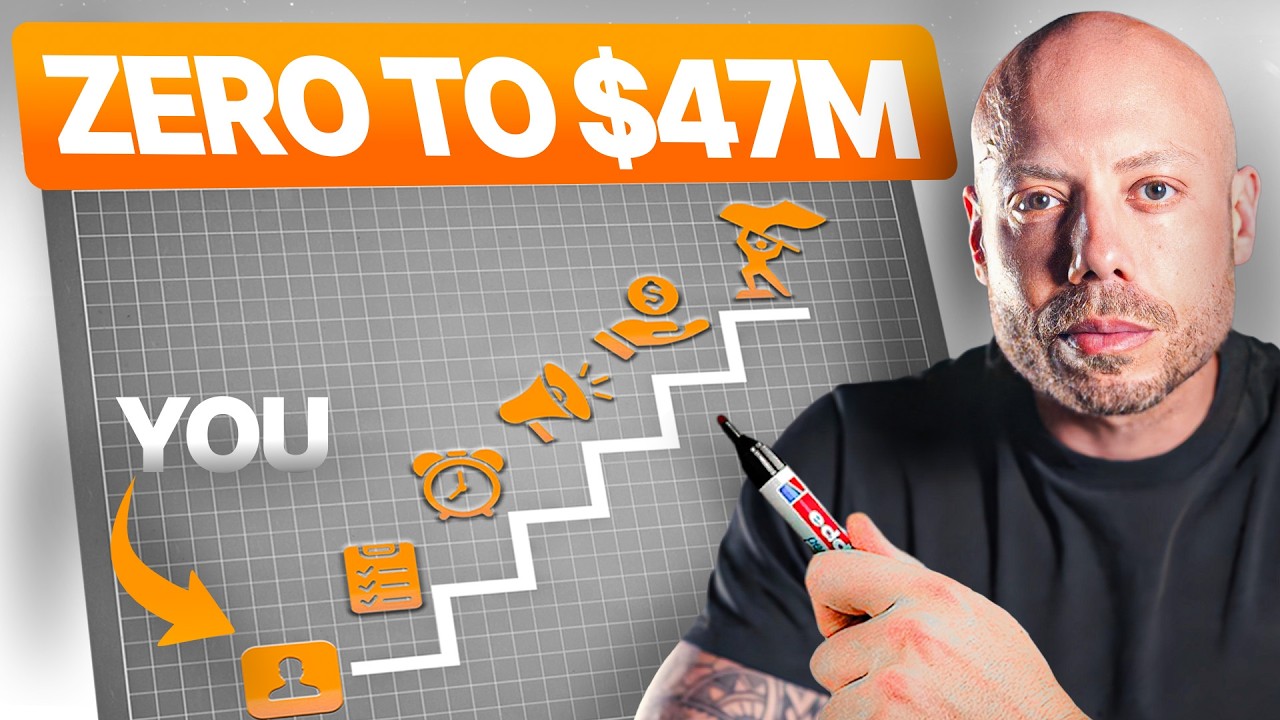
Kit Barber built a $47 million business by replacing himself with systems. His Snowball Method has three parts: Sell More, Lead Better, and Grow Faster. He shows how a construction owner went from closing every deal himself to running a team-driven sales system that added seven figures without cutting profit margins.
Chapters
What if I told you that building a better business had nothing to do with working harder? It's because of building better systems. I went from a 21-year-old entrepreneurial, open-to-risk kid to building a $47 million business, and I've learned there's a reason 99% of people stay stuck. Today I'm going to show you the system that I use to get unstuck and how you can too. A typical workday looked like this. I was first one in and I was last one out. My phone was never off. Every decision that anybody had to make, they brought to me. Nobody was cracking on without me. Nobody was making their own flipping calls, and I was getting increasingly blooming well exhausted. I did this for about 10 years longer than I really needed to. The real turning point came when my mum was terminally ill in hospital. She was dying of cancer, and at the same time I had a brand new baby at home. I was still working 60 or 70-hour weeks, and I couldn't visit her in the hospice and, well, be there for the newborn and keep that pace up all at the same time. Something had to give, and it was very clear to me what that something was. I spent months trying to train my sales team to do one of the biggest parts of my job— selling my products. I cross-trained with them, I role-played with them, I showed them exactly what I They sat in with me over and over again, took notes, they watched everything, but whatever I did, they just couldn't get anywhere near the same level of sales that I could. And it was driving me completely bonkers. Back then, I didn't know any better. I thought business success came from working your absolute socks off all the time and trading your hours directly for your results. That's not what I now know. Honestly, this was a real low point for me. I was physically and mentally drained, and I had to spend more time out of the business for obvious reasons. Every time I did, I lost thousands and thousands of dollars just from me not being there, questions not getting answered, customers not being serviced. Here's the thing though. One of the strongest traits I believe I've got, and the same one I see in every business owner that I coach, is persistency, consistency, and resilience. I never once thought about quitting and going back to a normal job because I'm highly unemployable. Apart from a couple of weekend jobs as a teenager, all I've ever done is run my own businesses. So my only real option was to adapt or carry on doing the same thing and expect a very different result, which never happens. Now bear in mind, podcasts were only just becoming a thing back then, so I went old school. I got hold of as many good books as I possibly could. I consumed everything about systems and software, business frameworks, and how the greats, the biggest names in the world— Steve Jobs, Richard Branson, Ray Kroc— run their businesses. How on earth they run multi-million and multi-billion dollar businesses without doing everything themselves. There was a process here, a framework, and I just had to get to grips with it. I am a simple person and I like to run a business as simply as possible, so I built simple systems. You know, the kind that your thickest mate, the one who can't work out on a door that says push and they keep on pulling it, could possibly use. And it's all about taking a process, stripping it right back to its core elements, and making it so trainable with such clear identifiable steps that you generally can't get it wrong. Then I added a little bit of flair, the right people, the right characters, and suddenly people were doing better than me. I became the worst best salesperson in my own business. I was still as good as I've always been. It's just everyone else was just better, and they never ever let me forget it. And don't tell them, but I'm more than happy with that. They were smashing it, and therefore so was I. So I had systems and frameworks in place now, but I needed to work out how to break it down so it covered the key elements of every business: the leads coming in, converting those leads into sales, and getting the team working. Exceptionally well is they can actually deliver the product, the service, the production, all of it with the right leadership in place behind them. Once that was sorted, I knew that I could grow the business and scale it to the level that I actually had a vision for. That's how the 3 core frameworks came about: Sell More, Lead Better, and Grow Faster. Overall, I call it the Snowball Method. What makes this different from every other framework out there is that it's easy to understand, it's easy to implement, and most importantly, it's simple enough that your team can actually learn it and they can start doing it for you Really quickly. Here's what I've noticed with a lot of the frameworks out there, the ones charging tens of thousands more than I do. They seem needlessly complicated. Maybe that's just me. Maybe I'm just a little bit thick. But if I can't understand it, I put money on plenty of your team not understanding it either. They use complicated frameworks and fancy names to make it sound posher. I like to keep things simple. I'm a simple bloke. I like a simple life. If someone had to implement just one part of the system first, I'd always say start with sell more. Sell more isn't about clever objection handling or hard sell tactics. Now, we do cover objection handling and how you tie emotions and people's actual goals into what you're selling. But it's really about the pipeline from the moment that a lead comes in to the moment it turns into a sale. Every stage in between, and crucially, where those gaps are in your training, your CRM, your systems, the gaps that mean you're literally pissing money away every single day. Instead of trying to fill those gaps with more marketing spend, you maximize what you've already got before you spend another penny. Most people who join the Business Accelerator haven't got that sales pipeline anywhere near optimal. So you start there. Now, if you genuinely nailed that already, then fair play to you. Start with lead better instead and get your team doing it properly. So this is a simple case of compounding. Once my first business started running itself exceptionally well, that created cash, that created growth and profit. And true to how I always work, I took all the chips, threw them straight back into the middle of the table, reinvested into the next business. Then I could compound on that and invest into the one after that and the one after that. Now, don't get me wrong, every time you stack in another business, another unit, another bigger team, you become less efficient most of the time. Until I figured out the final part of the growth process in my Grow Faster framework, my gross profit per business, so per unit, would actually go down. I want to be completely clear about that. But once that was fixed, I was making a hell of a lot more money overall, worth a lot more dollars per hour of my time. Tim is a great example. He runs a large construction business. Every single job that came in, he was quoting for it personally. If he wasn't in the room, the deal simply didn't happen. His team were capable people; they just didn't have the framework to work without him in every single conversation. So that's where we started. We mapped his entire customer journey out. We found out where the opportunities were falling through, and we built a sales system his team could actually run without him standing over every single deal. It took just under what three months to fully implement, but since then he's added significant seven figures in revenue, and his gross profit is held at the same percentage. The whole way through. Now his team closes everything except the big commercial quotes without him there at all, and he's got a pipeline he can actually see and he can actually manage. So there's an anomaly here worth flagging, because everybody assumes you've got to work your absolute bottom off to build something like this. The truth is, you do, right up until you've got the frameworks in place. There's a crossover point where you're still working just as hard, but now you're building the frameworks alongside the work, not instead of it. And very quickly, we're talking weeks here, not months or years, these simple processes get implemented. They might not be perfect yet, but suddenly you're left with a ton of time back and you're generating more cash and more profit than before. Once you've got those things in place, the joys of running the business goes up by approximately a million percent, and the money goes up too. But importantly, you're not involved in absolutely everything all the time. Your stress goes down, your time goes up, and even better, you earn more per hour. A lot more. The first system you should set up today is a proper, measurable, manageable pipeline. Now, it sounds boring as anything, I know, but it'll show you exactly where you're hemorrhaging cash because you're losing leads to inefficiency. Usually that's down to a lack of training and processes not being in place so your team knows what to say and you know what to say the moment a lead drops in. It's something as simple as how quickly you respond to someone. Fix that one thing and it makes a genuinely massive difference to your business. I've worked with companies that take days to respond to a lead when we should be taking minutes, not even hours, where practical, obviously. The biggest mistake people make with systems is thinking that they're building them too early or too complicated. Here is the clear distinction: you can never build a system too early, but you can absolutely make it far too complicated. You know it's time to build a new system when you feel the pain and the pressure, when you're working exceptionally hard and something is stealing your time. That is your signal that that's the indication that you need a framework in place, something that lets it run as systemized as possible. Just to be clear on what that actually means, systemisation is training and coaching your team to deliver the output themselves. Sometimes it really is as simple as that. I stick to my own framework: sell more, lead better, grow faster. If something's not working, if sales are dropping, I go straight back to the start of the customer journey. Where am I leaking? Have I got enough leads coming in? Are we being efficient with them? Are we converting them properly? Is the team doing what they should be doing? Are they motivated? Are they following the best practice that we know works? And if there's one key takeaway from this video, it's this: train your flipping team to do the job for you. That's what you're paying them for. So to recap, I didn't build a $47 million business by working harder than everyone else. I built a system that made my hard work unnecessary. If you're still grinding away without a system, you're not behind. You're just missing the proper framework. Thanks for watching. I'll see you in the next one.