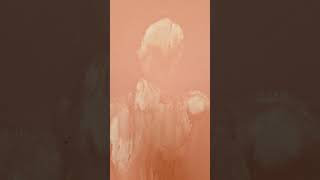
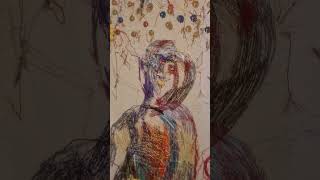
In this monologue the artist presents a new exhibition of his earliest series of "drip figures," paintings created roughly twenty years ago that will not be sold but are displayed for viewers to experience. He outlines the physical specifics—oil on canvas, each measuring 100 cm by 40 cm—and then traces his artistic journey. Growing up, he was steeped in figurative practice, attending life‑drawing classes and drawing inspiration from Picasso, Rembrandt’s etchings, Degas, and Rowland’s watercolors, though he eventually felt his work was derivative. A pivotal encounter with a Gerhard Richter show sparked a shift to "uncompromising" abstraction, leading to five years of process painting where the act of dripping, dragging, and layering oil dictated the image. Relocating to Dorset altered his sensibility, prompting him to apply the same material‑driven technique to the human figure, resulting in the drip‑figure series. He emphasizes that these works are non‑narrative: they arise from personal experience and the materiality of paint, offering an experiential, human‑centred encounter rather than a story. The talk concludes with an invitation to contemplate the paintings as pure experiences of humanity.
Chapters
Ah yeah, so I've just put up this new exhibition of my— these are my first series of drip figures that I made back— wow, it must be at least 20 years ago. So I'm not actually going to be selling these paintings, but it's nice to actually see them in the flesh. They're all 100cm by 40cm. Oil on canvas. And it's interesting because when I was growing up, I loved figurative painting. I used to go to life drawing classes every week, and then of course went to art college and did more life drawing. And it's a really important part of my practice. And when I went to London, I was originally a figurative painter And the only reason that I stopped at the time was that I— it just felt my style at the time was too derivative of, uh, like, you know, Picasso. And, um, you know, like, I was very inspired by Rembrandt's etchings and, um, by Degas, um, and, um Rowland's watercolors, and yeah, just all these amazing artists. And I was making work, but it wasn't really original and it wasn't really mine. And then I, um, I saw a Gerhard Richter exhibition and it just completely blew my mind. Because it was entirely abstract. And he, um, that— it's what I call uncompromising abstract painting, in that there was no attempt to sort of make a pretty painting. It was, it was just about paint and the experience of being with a painting, with an object. And, um, I went entirely abstract after that. So for 5 years I was— it's called process painting. So it's basically, you basically make the language of the painting is about the way that you make it. So I used to drip paint and drag it and layer it up, but you don't do it in a design manner. You do it in a more you let the process of the painting dictate the appearance of the painting, if you like. So when I moved down to Dorset, I couldn't paint abstract anymore because the city had kind of given an edginess to my paintings that I hadn't really appreciated. And But then I suddenly realized I could apply this technique to the figure. And so this is my first series of my drip figures. And appreciate that this came about after 5 years of playing with oil paint, just playing with what it can do on a canvas. And so by the time I made these, I just, I understood how paint moved and how you can use the materiality of paint to create kind of something. I don't know how to explain it really, but non-narrative, if you like. So I'd call these non-narrative paintings in that they are inspired by a person, an experience, and the material that you use is simply a medium to express how you feel. And there's no need for a narrative, there's no need for some kind of device to explain what you're doing. They are simply an experience of being human, and I guess appreciating the humanity of others. So yeah, let's just leave that there for now.