Interview with Nicole Purdie @printsbythebay and @kitglaisyer
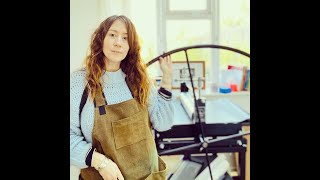
In this live interview, Kit Glaisyer chats with Bridport‑based artist and printmaker Nicole Purdie about her creative journey, printmaking practice, and the business side of running a small art studio. Nicole recounts her early work on murals and community projects, the shift to linocut printmaking during the COVID‑19 lockdown, and how she built a following of nearly 11,000 on Instagram. She explains the practicalities of using a phone‑first workflow, creating Reels, and maintaining a consistent brand voice, as well as the challenges of balancing three children, homeschooling, and a growing order volume. The conversation covers her move away from Etsy to a self‑hosted shop, packaging and shipping considerations, equipment upgrades (new press, drying rack needs), and collaborations with local designers and galleries. Nicole also discusses recent commissions (British Council, illustration work), participation in Dorset Art Week, and future plans for workshops and possibly a book. Throughout, both speakers reflect on the pressures of social media, the joy of selling art, and the importance of community support in a small town.
Chapters
Ah, right, right. Um, I think, I think, um, Nicole is— has to I have to— Nicole? It's the first time I've done one of these, so I think— does Nicole have to ask to join or something? Anyway, yeah, so I'm about to interview Nicole Purdy, Prince by the Bay. There we are, right. Go live. Is this happening?
Hello?
Hello? Hi!
Are you okay?
I'm good, you good?
Yeah, good, just setting up my— oh, I've got my little phone holder that I was telling you about.
Yeah, me too, me too.
How's it going?
Very good, thanks. Yeah, how are you?
Yes, brilliant. Yeah, just, um, I literally just finished doing a printing session about 5 minutes ago, so I'm still slightly covered in blue. I don't know if you can see my blue fingers.
Go on, let's have a look. Let's have a look.
Uh, oh yeah, yeah, it's like sort of like a nail varnish. It's quite nice, isn't it?
Brilliant. Right, I'm just trying to get, um, right, here we are. I think that should do it.
Yep, got a good spot, propped it up. It's difficult, isn't it? It's weird that you can't do it from a laptop on Instagram, you have to do everything from a phone. It's very app-based. So yeah, I've constantly got my phone on me these days.
Cool, great. And you can hear me okay? I can hear you.
Yep, it's all good. Yeah, we're good to go.
Okay.
You got your coffee? I've got a tea actually, a little Earl Grey tea. So yeah, nice little afternoon chat this is, isn't it?
Hopefully. Right, well, hello Nicole.
Hi.
We've known Nicole, what, about 6 years or something?
Yeah, it's gone so quick, hasn't it? It feels like not that long ago really. I was helping out with them, was it 20— you said it was 2015 in the thing you shared, is that right? I feel like it was 2014 because—
yeah, it might have been.
I don't know because I moved— I know that I moved into this house in 2015 and I don't know whether maybe I just— maybe we'd just done it and then I moved in here in the October because it was— wasn't it September time something like that happened?
Yeah, well it was, I met you at I think a private view at Rupert Art Centre Yeah, and you just done a big mural?
Yeah, oh yes, yes, yes, it's all ringing a bell now, back through the mists of time. Yeah, I did, um, did a really big mural. It was the whole length of the bottom bit of, um, of the art centre, which was quite an undertaking. But that's sort of what I was— that was the kind of art that I was doing back then, doing sort of lots of live kind of drawing for festivals and murals and sort of things on a big scale, so I was quite in the zone for doing that, and it was really fun, really fun project, kind of about the community of Bridport and the Arts Centre and all that kind of thing. So yeah, it was good.
Yeah, well, I was— because I directed Brip Open Studios for about 10 years, and we've now got Tash Loomis, and she's helped for about 5 years now, so that's great. We've got a bit of stability Stability.
Yeah, a good team.
Although I did step down last year, so—
How did you? Yeah, last year was a weird one though, wasn't it? It was weird, yeah. Did it happen?
No, it didn't happen. But yeah, so before I found Tash, I was always— every year I was looking for another assistant, so that's when Yeah, I stepped in. Yeah, it was great. So, and you've kind of, you've done quite a lot of, um, well, you've sort of been a PA and stuff as well, haven't you?
Yeah, I've done a whole mix since I— so since we last properly hung out doing Bripport Open Studios, I've done a real mixed bag of stuff. So kind of what you do really when you're an artist, but that's what you want to be, but you, you're doing other things, like you need to make money and you're a mum. So I did, I think I was still doing cleaning when I worked for you, like I think I was doing a bit of cleaning on the side, that was mainly what I was doing. So then, and then I worked as a PA, and then slowly kind of fell into doing some marketing, which I kind of, I was really, I really got into because it is sort of, it kind of can be quite creative, and I kind of taught myself, I kind of relearned all those kind of like graphic design programs like Photoshop, which I'd done a bit of at uni but I hadn't really used it because I'm more of a kind of handmade artist myself. So yeah, I kind of re-taught myself all that and got the Creative Cloud apps. I was doing lots of making posters and graphics and things, which was really, really good, and sort of did a few different roles working for different places doing various things within that. And that kind of really got my creative juices flowing again, and I was like, I actually really want to do art and make things. So that's— I just said, sorry, get back into it in my spare time doing drawing and stuff. And yeah, and then printmaking suddenly came after that. So yeah, it's been kind of a bit of a journey really of rediscovering my kind of artistic side.
But meanwhile, you've got how many children?
I've got 3 now, so 2 older ones who are sort of one in Colefax, one just about to go to Colefax, and then a little mini one who's preschool age. So quite busy on that front as well, kind of trying to balance all the things. And obviously they've all been at home the whole of last year and stuff, so doing homeschooling and kind of balancing all manner of things. So it's been quite chaotic, quite chaotic time.
I don't know how you do it really. During lockdown you've just got so much on your hands, haven't you?
Well, I did and I didn't. I'd just been recruited for ArtsReach over in Dorchester in the February, in the February just before before obviously coronavirus hit, and it was like a dream job, like just really, really excited about it. And then obviously it being kind of mainly theater-based, the pandemic just really hit it, and they didn't need or could afford a marketing person. So I was made redundant in August. Initially I was like, oh my God, what am I gonna do? It's the end. And managed to find some pub work, which was really, really good, really useful. And also had lots of time to suddenly do art at home, work with furlough and everything. So I was like, right, this is my chance, I'm just going to do it, you know, just getting started and doing it every day, kind of suddenly you get the ball rolling and you really get into it. It's now become a way of life and I can't ever imagine not doing it, which is just fantastic. So I kind of, I look at the pandemic with a kind of bittersweet— it's been so awful for so many people, um, everywhere. But then at the same time, I know lots of people that have really discovered their kind of creative side and really worked on things and businesses and stuff. So it's been really good in that respect.
No, I agree. I mean, like, well, like these interviews, I've been really enjoying some of the live interviews you get.
Yeah, really, it's really interesting, isn't it? You really get an insight into people's little, little worlds.
That's right. So I mean, obviously We can talk a bit more about Instagram because you're now up— you're almost 11,000 now, aren't you?
Yeah, yeah, I am. It's really incredible. It's like I still don't really believe it. I'm like, who are all these people? What are they doing? But it's love, it's amazing. It's like a dream come true, to be honest. So, and I did say to you when you asked me to do this interview that I don't in any way feel like an expert, but I do have like a few sort of tips and stuff to share because it is just such a, such a good tool for an artist in the 20— you know, sort of in 2021, because it's just so visual. It's such a visual platform, and you don't get all this— you tend not to do so much scrolling like you do on Facebook, and it's all just people's opinions. It's, you know, there's the art, there it is, and you can— it can become a gallery in itself. And it's just really— so it is really, really useful, and you can connect, potentially connect with people all over the world. So That's right. Yes, it's fantastic. It does mean— it does involve quite a bit of effort and input, so if you're prepared to do that, then you can, you can go quite far with it, really. It's the world's your oyster.
Well, I guess it's like any business, isn't it, where you have to be willing to put in the time and the work and the effort? And I imagine that you do. You put in a lot of time and effort.
Yeah, I— to the So sometimes to the detriment of my family getting a bit annoyed with me because I'm constantly on my phone, I feel like a teenager sometimes where I'm just like, oh, this will make a good— and you sort of start seeing the world and how you can Instagram it or something. So I suppose that's a negative. But the thing is, it's not like a 9-to-5 thing that people use. If you go like dig into the algorithms of it and you can look at the insights of your page people are on it and sort of reacting to things that are at different times. So it's really, you know, to try and get— maximize people seeing it and seeing your stuff, you have to kind of post at strategic times and things like that. So it's quite— there's quite a sort of art to it. And obviously it's kind of— you need to be kind of doing it every day, really, and sort of planning ahead. So it's— yeah, it's a bit of an undertaking, but you soon— if you, if you're into it and you kind of— once you've been doing it for a while, you really— it's just become second nature, kind of gathering the content that you want to share.
So yeah, you've just got, you've got lots of hats on, haven't you?
Yeah, I guess the marketing that you did, yeah, that was really, really helpful, definitely, for sort of getting into the mindset of what people want to see and just sort of knowing your audience and finding out, figuring out what works and, you know, all that sort of thing, and kind of branding as well. But it's very, very important to have a strong brand and a strong look. I know that there are some, you know, definitely not to like mix up. I've got a separate personal Instagram account which I share photos of, you know, my cats and my children and me and my partner and stuff. But this, this account is purely art-based and you won't see any other kind of photos like perhaps on stories sometimes if I'm out for a nice walk and it's something that's relevant like the sea or something like that. But definitely not on the grid, that's kind of like art stuff, the same sort of colors and that kind of thing. So yeah, to sort of do well at it, you kind of have to have lots of different hats, like you say. The marketing hat, if you're looking to sell stuff, that kind of thing, and then the photographer hat for making things look nice and arranging stuff, good composition for your photos, and yeah, and then kind of connecting with people as well, and that's the other side of it, because it is a social network. You kind of get most out of it if you find others that are kind of doing a similar thing and connect with them and Yeah, just make connections. That's what it's all about, really.
Yeah, and then you've also got your website and your Etsy.
Yeah, I'm actually trying to move away from Etsy now, just because they take quite a hefty cut of your takings, which is good when you're first starting out like I was, and kind of it was more of a hobby then, but as you start to sell more, it's kind of a bit shocking. When you get their bill through of how much they're taking. So, and I just wanted to, yeah, and also I wanted the autonomy of it being mine because Etsy owns all of the businesses on there. Etsy owns them and if they decide that you're not toeing the line, they can shut your shop down with no notice really, which is quite scary. So yeah, I'm literally about to launch a new shop that's just mine. It's being built. I think I'm aiming for Monday, which is really exciting. So yeah, yeah. Yeah, scary but exciting. Hopefully it'll do well.
Who's making that for you?
Do you know Lou Buchanan? She's a local lady. I think she's moved down relatively recently. I don't think she's been here that long, but she does lots of graphic design stuff. Really nice branding that she does, and she's working away on it in the background for me, which is fabulous. And she's made it look— because I have a bit of knowledge about the back ends of websites, just from the marketing I've done, but for a shop and all the kind of coding that it needs and getting it looking right, I was a bit like, oh, I need someone else to do this for me just to get it, make sure it's perfect, which is really good.
We should just explain that we're— Nicole and I are both in the same town.
Yeah.
Oh yeah, you're just down the street there. Yeah. And, um, in Bridport, in, yeah, southwest Dorset. And you've been here since the mid-'90s, haven't you?
I think, yeah. So we, me and my family, relocated here when I was, well, I think it was 1995. So how old does that make me? I can't do maths. Oh my God. Oh, I don't know, 11-ish. I was about 11. And then I've lived away for a little bit, obviously, when I went to uni and in my early 20s I was away, but it's drawn me back with its amazingness. It's just such a, such a wonderful place, Bridport. It's really, it's like a little gem, isn't it? And everyone, everyone wants to be here now. It's becoming really buzzy. I've got lots of friends that have moved down here, so they're all coming. It's just so arty and lovely and different, so I wouldn't be anywhere else, really.
That's right. And before COVID You were planning to do more art fairs and things like that, weren't you? And obviously, yeah, we don't know when that's going to start again.
Yes, well, yeah, it's difficult, isn't it? You can't really plan anything like that. I was hoping to do some, and then— but actually, the online thing is really— it's just so easy. You don't have to lug your stuff everywhere, and prints and cards are so difficult to set up if you're in an outside print fair as well. Like, in summer, the slight gust of wind, they'll come flying slapping down, and it's just really stressful, isn't it? You don't know how much stock to bring. So being able to send stuff online to people, to their homes, and I can write gift messages for people if they want, so you can get it sent to someone else for a present. It's just really easy and really good. So, um, but I am looking forward to seeing people in real life and having that actual face-to-face again. It'll just be really lovely. I don't know if they've are any planned for this summer? I haven't heard of any, not around here anyway.
No, no, I don't know. I think we're all still so cautious, aren't we?
Yeah, I think it's like more of a 2022 will be the year of the Print Fair, hopefully.
But it was funny because, you know, I now basically— I'm in my studio now, and then downstairs I've got my gallery. Have you seen my gallery yet?
I haven't been there, I haven't, but I've actually took a tour around that house because a friend of my partner's was looking to move down and buy it, and it's just such an amazing property that I can imagine a gallery looking fantastic in those. Is it in the first, as you come in off the street, the first two rooms?
Yeah, yeah, so the ground floor is like big, it's a Georgian, lovely old—
Yeah, lovely.
And it's just perfect for me because it's got the gallery on the ground floor, studio on the first floor, and then accommodation upstairs. Stairs.
Yeah, really nice, perfect.
And during COVID I've been— I basically, I've been— I've made about 50 stretches. So I construct them in the gallery, take them up to the attic where I stretch them, bring them back down to the gallery where I prime them, and then bring them back up to my box room where I store them.
That's like a workout, isn't it? A workout regime you've got going there, Kit. You need to go to for a run or whatever, I just do that, lugging up and down all the stairs. Oh wow, that sounds great.
So anyway, yeah, you'll have to pop in now that I'm allowed to open again. Yeah, I'll pop in.
Mainly Saturdays I open, so yeah, I'll come and have a look because I've been meaning to do it because we keep bumping into each other in town, don't we? And you're like, have you been to the gallery? And I'm like, no, I will. I've just been a bit of a hermit. I've literally All I do is work in my studio and make things and print, and it's been really lovely. It's like a real little bubble of just amazingness. But I've been quite antisocial. I mean, it's been good because you don't have to be social, do you? But now it's probably the time to start leaving the house and going and doing things.
I actually went up to Bath yesterday and saw an exhibition at Beaux-Arts Bath.
Oh, did you? Lovely.
And that was so good. And I realised how in Bridport I've just been in my own head, you know.
Yeah, it's so easy to be, isn't it?
Yeah, and just being in a different place was wonderful. Yeah, yeah.
Oh, I know I've got— I got contacted quite last minute by a gallery in Salisbury the other day just saying that they were doing a printmaking exhibition and they've had someone someone dropped out or something. It was planned for— obviously it was something that had been moved. It was planned for last year and then moved to this year, and then someone couldn't make it. Um, oh God, can you send some stuff? So I quickly just sent what I had. Um, and I'm like, oh, I just wish I could go over. And it's a bit far, isn't it, Salisbury? It's not like you can just pop in.
Yeah, a bit of a journey.
Yeah, yeah. Although it's on, it's on until May, so I might be able to get over one weekend. It'd be nice just to go get out of Bridport and do something else that's Yeah, you should, you should.
Yeah, it's, it's, um, I mean, we're lucky in this town because it's, it's like you say, it's so beautiful and yeah, community and everything. Yeah, it's, yeah, but I'm really, I'm looking forward to, you know, going a few places in the UK and yeah, having a little visit.
Yeah, yeah, definitely. It is, it's the time, isn't it? You don't, you don't really miss, realize how much you enjoy something until you can't, you're like not allowed to do it. Going off traveling about, visiting other places is always a nice thing.
So yeah, so it was funny though because I, I, yeah, I basically, I run my gallery and I've got a website, it's called, uh, Bridgeport Contemporary, and, and I've got Instagram and all that. And I, I sold a painting by a friend of mine a couple of weeks ago, or last week sometime, and, um, yeah, a guy came to pick it up and I'd hung it in the gallery, you know, so he could come into the gallery and look at it, you know. And he said to me, he said, you're so old school.
Oh yeah, I remember you mentioned this story.
And it's like, well, I am old school, you know. I'm, I kind of, yeah, I'm used to writing press releases, you know, and yeah, and yeah, doing private views and and, you know, selling people face to face and all that kind of stuff.
The connection.
What's that?
I said it's the connection, isn't it? The face-to-face thing.
And he's basically— he was an artist as well, based in Poole.
Okay.
And he's in, you know, he's got 200,000 followers.
Oh yes, I remember you mentioned him. Gosh, so he's like on the next level, isn't he? He's on the kind of famous tier. That's right.
And he's selling work all over the world. And it's funny though, because I think it's quite easy to be jealous of someone, you know, whether they have 10,000 followers or 100,000. But I think, you know, we all have to— I don't know, we have to find our comfort zone, don't we?
Where— oh, absolutely. It's, um, it's a weird one because I The whole followers thing, I mean, it's so— I think in some part it's the effort you put in, but also it's just luck as well. Yeah, if you— because I, I, for ages I was sort of just at a kind of like reasonable amount, and then something, I don't know what, what changed, but there was definitely like a turning point where suddenly I was just— I seemed to be being picked up by the Instagram algorithm and being shown in the hashtags that I was posting and stuff. And I noticed like there was a sudden like change in that. And I don't know why. I don't really know why, whether it was— I know that I've definitely tried to be more on brand. Like, every photo that I take now is usually quite styled, because I know that— I think I did that once and realized that it worked and it got more interest. Then I was like, aha, aha, light bulb! This is what works. And it's sort of— so I don't know. I don't know whether it's just luck of the draw, or I don't know what it is. I can't— I mean, if you, if you had the answer to that, then everyone would have close, wouldn't you? So I think it's just a combination of factors and just making sure that you maintain a kind of steady flow of stuff and work.
Yeah, because I think, I mean, I've been following you since you started, and I think last year, yeah, you were, yeah, like you were saying, you were quite sort of low, weren't you? Yeah, around my figure.
Yeah, I don't know, what is your, what's your number?
I don't know.
I don't know. Yeah, I can't remember. It was just, say it was sort of low-ish for a for a while, and then I think once you— when I got to 1,000, then it did pick up slightly.
Yeah, but yeah, but you were posting every day. You were—
you know what, actually, actually what really made— has made it take off is really maximizing the Reels function, which is the little— I don't know if you've seen any that I do— the little videos where you can like splice stuff together and put it with music, which— because I love music and Jack, my partner, is a musician and used to do lots of murals at festivals and things. So music's, like, really important to me. And I thought it was a fantastic function. Initially, I was a bit like, "Oh, why do we have to be filmmakers now as well, on top of everything?" As if there's not enough pressure. But when I tried my first one, I was hooked. And I was like, "This is brilliant." And you can sort of line things up and have a bit of fun with it. You can do all sorts with them. And they are really good because, unlike your sort of grid posts, they can get picked up. And there's, like, an Explore tab is what it's called. and they can just— the Reels can just stay in there for ages, and Instagram sort of picks them up and just shows them to people when they're scrolling through. And so they can just stay there garnering likes and reaching people for quite some time. They can continue on. So, um, that— when I started doing those properly and sort of kind of like utilizing my iPhone 11, I didn't realize that I was— I had my, my iPhone set to its lowest quality setting for videos, and I didn't realize for ages. And I was thinking about investing in a really expensive camera, and then Jack was just like, "You're on the lowest setting." And so I switched that over and suddenly it was in 4K and everything looked amazing. So they all just look a lot better now. So yeah, so that was a really— that's a really good tip for kind of getting— reaching a wider audience is definitely utilizing all those kind of things.
You do that revealing thing, don't you?
Yeah, I do a reveal, which is so nice. I think people love— people love those. They're so nice to watch, aren't they? Especially if you've done the lead-up with a bit of carving, a bit of printing, and then it's like right at the end, which is always— it's always really nice. That's one of my favourite bits of printmaking is the big reveal, because you could spend ages working. You have an idea of what the print's going to be like and you spent ages working on it and carving it, but you still don't really know because obviously it's the mirror image, isn't it? And you peel it back and it's just— yeah, it's a really nice feeling when it's all gone to plan, looks good. Sometimes, sometimes it's not so good and you're a bit disappointed.
I, well, I guess you do some tests before you do the final one, yeah?
Yeah, well, I actually, as my skills in carving have got better, um, I find that I don't need to make so many edits now. Before, I would do a test print and there'd be lots of areas I needed to tidy up. It depends how complicated the design is. If there's lots of little fiddly bits, then sometimes it needs quite a lot of tidying because you can't really— you kind of— your eyes go a bit funny looking at carving. But yeah, so yeah, usually a test print, maybe in a cheaper ink, and then use more expensive ones for editioning. So yeah. Yeah, Tespin.
Sorry, you've gone a bit quiet. Wait a minute. Oh no, it's my fault.
Somebody—
I got a call.
Oh no, there's no way of disabling that, is there, when you're live? You'd think it would sort of cancel it out. Can you hear me?
I can still hear you. Let me, let me just put an earbud in. There we are.
Ah, perfect. Is that better? Ta-da! Hello? Is that okay? Yeah? Yeah? Okay, cool. You look confused.
No, it's not happening.
Well, we could— do you wanna— we could hang up and then try again?
I can just about hear you. Let's keep going on. You can hear me okay, yeah?
Yeah, I can hear you fine. It's just whether you can hear what I'm saying.
Yeah, so my next question is, do you do all your editing in phone or— yeah, a laptop or something?
What, for my reels?
Well, for, you know, you often do a post where you've got like, you know, you're making the print and you're cutting it and then you're revealing it.
So yeah, so you can just— I, I just do that all within the app. So the Reels function is really useful. You can, you get your like little bit of video and you can work out which section you want to use and it just does it all within. I mean, I know people, sometimes people use TikTok and that kind of thing, but that's like a step too far for me. I have no idea about TikTok. It's just like, it's something that my daughter uses and she's 12. So, or you can use, I think some people use the iMovie app as well, but I tend to just do it within within Instagram because it's all really easy and it's like really easy to use and just all looks really nice. So ease of use is the best way, I think.
I guess that's what's great, isn't it, with the mobile phone? Yeah, everything is contained within it.
Yeah, it's one whole thing. My whole business is conducted from my phone, really. The other day I turned it off because it had gone a bit glitchy and I realised I hadn't turned it off for ages, so I turned it off and then it like took ages to turn back on. I was like, oh my God, my life, what am I going to do? It was like a scary moment, so I'm a bit like, I'm not going to turn you back off again, I don't think, just in case. I don't really trust it. But yeah, yeah, it's really useful. I've, um, yeah, I've sort of upgraded to the iPhone 11 back at the beginning of Beginning of last year, actually, and it's just so good. All the different features and the camera setting is amazing. You get really good quality stuff, and the screen's a bit bigger for doing Instagramming. Obviously, the bit that you write the text in is so small, it can be a bit of a pain, so it's useful to have as big a screen as possible, really.
So what about the, you know, you've got to write little blurbs underneath what you do? Are you good at that, just coming up with little ad-libs?
I think, yeah, I've always enjoyed writing, and that was quite a big part of the marketing as well that I was doing before, is knowing what to write and kind of like have sort of growing the voice of the brand, if you like. So I kind of have, I have quite a chatty sort of voice on my Instagram posts and sometimes quite a playful one as well. My reels can be quite funny. Trying to do like little silly things in there, not take it too seriously. So yeah, I've got into the— sometimes there are sometimes when I feel like I'm posting just for the sake of posting because I haven't done it that day, and those sometimes those blurbs are a bit difficult to write if you're a bit— so you have to try and find something to say maybe about not so much. But in general, I just really enjoy doing it, so that's— I think that's the main thing, and you can see that in I think people can see that, that I'm really into it and I like doing it and I like talking about my work and I like connecting with people. And yeah, there are lots of, lots of my followers are probably people at the start of their linocut journey, and I really enjoy connecting with them and helping them and sort of sharing my, my knowledge, if you like, about it. Um, yeah, and you know, just because I was that once. So yeah, and I sometimes I'd I remember sort of like commenting or asking questions to people who had lots of followers and I really admired and never getting replies back and being a bit like, oh. So I kind of want to be the opposite of that. I want to be really approachable and nice and sort of down to earth and share, share that because, like, you know, it could help them along a long way.
I think, I think I also might be a bit of a perfectionist.
Sometimes. Yeah.
And, and maybe it's good just to get into the habit of posting stuff, like you say.
Yeah.
Every day, and just going, this is what I'm doing today, or something. Or yeah, just be for a walk.
And yeah, you can mix, you can mix it up as well. I tend to— I like to do some posts about kind of— you can do like details of what you're working on, sort of close-up stuff. And then mixing up with like a, you know, a proper print that's done. And yeah, just things like that, bits of your studio, just different things. So it's not always the same kind of content, just so that it's more interesting as a viewer to kind of to look at.
It's funny talking to you actually, because I realized that, you know, you said that you're not an expert, but you actually do have a lot of really good knowledge, don't you?
I suppose it's funny because I suppose it just builds up after a time of doing it and you don't realize it's become kind of second nature. Like, for example, another good tip is that I've got this phone holder that the phone is currently attached to. I've got a couple of them, and I sometimes, when I'm just printing or doing whatever, I just have my phone filming just for the whole time, or just snippets, because then that gives you content that you can then— I might not use it that day, but I can turn it into into reels and, or something. And that's just a really good thing to do if you want to kind of grow. Well, if you want to have content, really, because I suppose that's what it is, isn't it? Having an Instagram account is being a content creator. Sometimes it's like, it's difficult, isn't it? Because it's, you want to be an artist, but if you also want to do well on Instagram, you have to kind of like sit in the middle and be like a content creator as well. Which some people might not want, not be into doing, and that's fine. But if you want to reach this wider audience and get your art out there and sort of connect with people, that's what you have to do. So it's quite useful to just have it on in the background and get those—
I mean, it's funny because earlier you were saying that it's kind of second nature now, isn't it?
Yeah.
But I imagine it's like, you know, you've got all of these things you're doing aren't you? You're filming yourself, so you've got like a tripod so you can film when you're doing stuff. You're making your time-lapse.
Yeah, yeah, I've got all these like bits of kit now that are just like— so there's a tripod, there's like a bendy arm camera to get like the sort of shots that are from lots of different angles and shots and things so that it's kind of just, it piques people's interest rather than the same sort of thing is what I've learned that people like. They like sort of—
But also it shows that you're taking it seriously, you know, and you're investing in the, you know, the technology, aren't you?
Yeah, yeah, I've really embraced it. I mean, there's a lot of bad stuff about, a lot of stuff I don't like about social media. In fact, I barely go on Facebook. These days, apart from just to share stuff about my artwork, which is probably maybe spamming people, I don't know. But because I just find it really depressing, and just, you can just get lost in scrolling through nonsense, can't you? And then lots of people's opinions and trolling, and I don't really like that side. But yeah, I really like the kind of— there's a really lovely art community on Instagram. It's just fantastic, and you can, you can ask people questions and get, get tips and knowledge. I've made like a whole load of like I consider them my printmaking friends, that are just— it's just really lovely. It was really nice during lockdown when you don't get to see so many people to have that kind of— even though it's not real, it kind of is. So it's like a little safety net of kind of comfort to have. It was a really nice experience.
Yeah, I agree. I mean, I love to connect with artists all over the world. Yeah. I bought some of the artist pledge pieces. I think you did that, didn't you? The artist pledge?
I don't think I did an artist pledge because at the time it was when I didn't— I just, I didn't think anyone— no one was buying my work back then, actually, I think. Because wasn't it— was it at the start of summer last year or something like that, or the start of lockdown?
Yeah, it was back in like May, June, I think.
Yes, I don't think I'd really made any sales until then, at that point. So I didn't have the confidence to sort of go, oh, here's an artist pledge, or who would want that? I don't know, I just didn't really sort of factor in as a thing. I was just sort of doing— I was just experimenting kind of as a hobby, really. So I didn't actually take part.
I think what I found interesting about it was that I bought a few pieces. I bought some drawings from a New York artist, and whose name I can't remember now. And, um, I— they arrived, you know, a month later in the post.
Yeah.
And beautiful thing. And of course, in real life, they were even better.
Yeah. Yeah, of course.
And I think that has really helped, um, the whole Instagram thing take off, I think, because You know, you're very seldom disappointed when you receive an original artwork. Yeah, you know, like with you, I'm sure people will love what they see. They go, oh, that's, you know, beautifully drawn. You've got like a lovely kind of, um, style.
Yeah.
But then when they actually— when the print arrives, you know, and it's—
yeah, that's— I mean, I've had— I've bought work from people that I admire online and when it's come, you're just like, oh wow, this is— yeah. And I've actually had— because on Etsy people can leave you feedback, which initially I was like, oh, is that a good thing? But it's been— I've got over like about 100 reviews now, which— and they're all just so lovely. And lots of people say that it's even better in real life, or better, you know, better than the picture, which is really— because I mean, it is difficult. Sometimes it's difficult to photograph the cut, like you need good lighting and It's good now that it's spring and the light's better, but sometimes trying to get a true sense of the colour or what the paper's like is really hard.
But again, this is what I mean. This is where you've made that— you're willing to put that attention into it, aren't you? You know, you've got to get the lighting.
Yeah, I am like— when you said you're a perfectionist earlier, I am now. Like there's, there's a level. I think when you find yourself at the kind of sort of the 10K around there, you might not realize it, but there's like a level of quality that people expect from a post or something from you. And I kind of now, there's, there's— I look back at when I first started it and I just would never ever post anything like, like that now. It's nice to see that journey and progression And it's all just through trial and error, I think, sort of seeing what people— you know, I guess there would be posts that I made that suddenly got more attention than other ones I've made up to that point, and then you sort of go, oh, that must have worked, let's try it again and do it even better. And it's just really nice. I just— I mean, as an artist, I mean, you know this however long you've been one for, every time someone buys your work is a joy, isn't it? Because you suddenly— it's like, oh, people do actually like what I do. That's because I feel like, I think most artists make work they like and they want to make, unless you're doing it as a commission, but even then you find an angle, don't you, that you make something that you like. But then to find other people like it as well and want to part with their money for it is just a really amazing, amazing feeling. It's better than anything that I felt before, actually. So it's really quite a joyful time.
So I imagine you've got the same attention to detail when you pack your print.
Yeah, oh yes, yeah, I try and— I've sort of— I was inspired actually by some prints that I'd ordered from someone else that arrived so beautifully, rolled in lovely tissue paper with little bits of prints on and tied in twine, and it was like, it was like a present, opening a beautiful present. I was like, oh okay, I need to step up my game for how I send things. So yeah, learned a few tips about that. And I just want to make sure that they arrive in good condition as well, because there's nothing worse than— I've had a couple of things where people have contacted me where generally with the smaller prints, which I send in like a really sturdy cardboard envelope, I send them flat because they're not quite so good for rolling up. And where the postman's just, even though it says please do not bend and it's a big cardboard envelope, they've just like bent it to put through the letterbox, which is just like, oh my god, what are you doing? So I've had to replace a couple of things because there's been a crease right down the middle of the print. It just seems so— oh, it's just really hard. But I suppose that's one of the kind of things with buying stuff online. You have to— sometimes this does happen, so you just have to be prepared for that, I guess. But yeah, try and package them as nicely as possible so it's a nice thing for people to open.
Um, yeah, but I mean I mean, sorry, you've gone quiet now.
Oh no, I can't hear you.
No, no, no, you're back right now.
I can hear you. Yeah, that was— oh, I wish I could stay on my calls.
What were you just saying?
Uh, oh, remind me, what was I saying?
I know when you came up to the phone just now.
Oh, I was just— I had, uh, I had, um, someone like a A spam call. A lurk. Yeah.
Yeah, you went quiet. It still worked though.
Yeah, it's weird. I got a call. It was from like a number, an 0800 number or something. It was probably telling me that I'd been in an accident or something like that.
So we should have both gone on airplane mode or something, or—
No, because then that disables all the internet, doesn't it? I don't know how to get around it. There must be a way. They're not very nice.
Very unprofessional.
I know, isn't it? It just shows they're very busy and important getting all these calls through.
But I think in a way what's interesting to me, Nicole, talking to you is just realizing how much attention you put into all of the, you know, both the marketing and the packaging, you're building a new website. Yeah, because I think part of the problem in a way with, you know, those of us with smaller followers is you sort of think, well, you know, what am I doing wrong kind of thing, you know, or, you know, why aren't, you know, more people following me? But you, you know, you've really kind of Yeah, you're taking care and attention, you know, you're, you're buying the equipment, you're putting in the time. Yeah, I imagine you're enjoying it.
Yeah, I'm really enjoying it, which is I think underpinning the whole thing. And I just— yeah, it's quite addictive as well. I've sort of— I just like, I like sharing it all. I like showing what I'm doing to others, getting feedback, connecting, seeing things online that other people are doing that I'm just like, wow, that's— it's just all really lovely. Um, it's been really inspiring, and I just want to make more. I just, I feel like on a real creative roll at the moment. And I mean, my journey to, to sort of being an artist has been a long one because I, I mean, that's what I always wanted to do when I was a kid. I like— my dad used to keep all my drawings from way back, as soon as I could hold a pen, and I'd always draw the same like these, like these little women doing stuff. So that's been my thing that I've drawn forever. But then I went and did it at art school, and I was determined to be an artist. But then, you know, life took a slightly different angle. I had my children quite young, and that's sort of really kind of— that's been what I've been doing for most of my 20s, was being a mum and sort of finding a bit of work here and there. So Yeah, to suddenly— and I kind of written off the whole being able to be an artist thing, and I thought, well, maybe I'll just do the odd doodle in my spare time. Um, I felt a bit sort of upset about it, but kind of, oh well, let's just get on. So it's so nice to suddenly that this is happening, finally happening, you know, at the age of nearly 40. It's my dream is coming true, and it's just, it's really fantastic. I'm so pleased and really grateful to all the people that are following along. Because I mean, they're what's made this happen really. Um, because, you know, it's just, yeah, it's just brilliant. So that's, that's why I'm putting so much time into it, is because this is what I've wanted forever. Um, so now's the time to strike while the iron's hot.
Are you, are you finding time as well to get inspired with your work?
Yeah, like the more I, the more I know that the age-old thing is the more you do, the more you do it, the more it happens kind of thing, isn't it? So just every time I've got, like, I've got such a long— it's like on my notes thing in my phone, an ever-growing list of ideas which I'm slowly picking my way through. So I don't ever, I don't ever feel like— at the moment, I don't feel like I'll get writer's block, whatever. I feel like I've got— I just keep getting new ideas for things. And I think it's, I think it's finding the linocut technique because Before then, I'd done drawings. I knew I liked being handmade rather than digital, but I'd never felt like a piece was finished. I was never fully pleased enough to show it to anyone or feel good about it, and I didn't know why. It just wasn't finished. And then when I sort of tried linocutting, A, I just love the process of it, the carving. It's really handmade and hands-on, which is brilliant. Therapeutic. But I just— it suddenly felt like, oh, you pull the print and there it is, that's— it's finished, that's the final piece. And it's— and I was— I'm generally pleased with about 90% of the work, probably more than that, actually 99%, I would say. There's rarely a print that I do that I'm like, that's— you know, there might be elements that maybe I want to change. And it's just really fantastic. And that— the technique combined, like, the medium kind of suits my work really well, and I can just— I sort of start thinking in the terms of the light and the dark. I mean, there's no— you can't really— you have to be really graphic and sort of illustrative with it because it doesn't— you can't do sort of shading like you would with painting. And so, yeah, so I've started sort of thinking in the terms of linocut, if that makes sense. So yeah, it's just— I'm just really enjoying it.
I guess it's a combination of the linocut And also the kind of, um, yeah, the sort of obligation of Instagram as well, isn't it?
Yeah, yeah. I mean, it is, it's sort of, there is a lot of going around, people are sharing other artists on Instagram, that it's sort of the algorithm of Instagram is you're a content creator over an artist, i.e., if you don't post every day then you'll start to show up less in the, in the kind of reach and the algorithm, which I suppose is true. So you do sort of feel pressured to post every day, but I don't really see that as new work every day. There's lots of things you can post about that are interesting, so I don't feel the pressure from that side of having to make new work. But then at the same time, I feel like I have been really prolific this year. I've got like, I went from having no worked at like over about 35 different designs that are constantly— I'm constantly making more. And so I feel like I have done lots, but not because I feel pressured to, just because I'm just really enjoying it and want to do it all the time. So, um, I mean, I know people, people do feel pressured, but I think it's more of a pressure for me.
So how much, how much time do you think is, is your creative process? You know, your your drawing, your, uh, researching, you're, um, cutting the linos. Is that— I mean, that's most of your time, is it? And then—
yeah, so, um, what do you mean in terms of how much is Instagramming, how much is doing the—
yeah, yeah, well, what I mean is you're also— you're documenting the process. Yeah, yeah. So it's all—
so at the moment I say it's There are times when it's more— there's more admin and kind of like the printing. Now I see the creative process for me is like the thinking up the idea, the sketching, the putting a piece together and the carving. That's the kind of like the making side of it, isn't it? And then the printing now for me is more— I've kind of lumped that in with more admin now because sometimes it's not— I don't enjoy it as much as the, um, the other side of it. But I'm getting— I tend to be getting quite a few orders through from various things, so I'm spending a lot of time printing, um, probably more than I— the balance is maybe slightly off, um, but I, but I try and, I try and do it sort of a split so that there's more creative. It's difficult, it's a difficult balance, isn't it? Um, so yeah, I don't know, I, I I need to get more organised with, especially when I open my shop, with having lots of stock in already. So maybe I need to set aside several days of just printing loads of everything so then I've got stuff and then I can spend time on the creative side rather than at the moment I'm kind of more of a print-to-order sort of person and it's getting a bit overwhelming sometimes if a lot comes through. So yeah, I think I haven't quite got that right. Just yet.
Yeah, well, like you say, you're learning. And, um, I mean, I'm sure that you could, you know, like create collections of work, couldn't you? Like, yeah, a dozen prints all together and things.
Yeah, that's— that is what I've been— because I am opening my new shop and so I wanted to be stocked up for it. So I have been sort of every 2 days printing a whole load of one design Obviously I'm a bit limited with space, how much I can hang up to dry, so I'm sort of a bit maxed out at the moment. So I have to do it in batches, but then I find that I'm like, ah yes, I'm all printed ready for my stock opening, and then some people will buy loads of one design, so then I'm back to having to do it again. I know Jack's like, maybe you should hire a printing assistant. I'm like, no, I don't, I'm just not, I don't feel like, I feel like that's a mass market kind of like, yeah, kind of stage. Although I do, I know that So, you know, some artists have helpers, don't they? Studio helpers and things, um, just to manage all the admin side of it, because it is a pain. You don't really want to be doing that. You want to be spending your time making new stuff, and that's where you're— that's where the split, the sort of balance of your time should go more towards the creation side rather than—
well, yeah, the artist who, um, you know, bought a painting from me last week, I think his partner helped him with his social media.
Yeah.
And his brother builds the boxes.
Oh, so it's like a family affair.
That's right.
Yeah. Yeah. Well, I have actually been using my mum quite a lot for helping with, like, I've run a couple of sales that I've been part of by various things on Instagram. And I had, like, I think it was one weekend where I had about 130 orders all come in over the weekend and I was like, wow, this is brilliant. And then the reality of that, of having to package all of those up just myself within a time frame that Etsy sets, like, oh, you have to dispatch everything in 3 days. And it's just like, oh my God, okay. I was a bit underprepared for that. But everyone's been very understanding, the customers, because it's an independent thing and I'm quite connected to my customers and I share lots of like updates and stories about where I am with the packing thing. And everyone's very, you know, it's a handmade piece, so they understand that it takes some time. It's not like Amazon where you have to get everything out straight the next day. So, yeah, it's a really nice customer base I've got that are really understanding and lovely and really supportive. So that's a really nice thing. And that's mainly from Instagram, that is, and the connections I was talking about. And sort of answering everyone's questions and keeping connected with them.
Yeah, no, it's— you're doing a great job. I was just thinking, um, your next investment would probably be a drying rack for your prints.
Yeah, I— yeah, I, I sort of— you know the kind of old-style clothes dryers that you used to get that you could then lift up? I kind of want one of those so I can get it, lower it down, put everything on, lift it up out of the way. But, um, I'm sort of, I'm in a kind of little, a little old, what is it, Magna, ex-Magna house, which we put a little extension on, but it's still, there's 5 of us in here and all the washing that needs drying and all my art stuff as well, and I've got a press, like a massive press that takes up most of the space, so it's sort of just trying to find extra places for prints to dry is quite difficult.
You have got a beautiful new printing press?
Yes, I do. Yeah, it's wonderful. Yeah, it's got an amazing wheel. It's by a real printmaking family from up in Ironbridge, and they've been— they're all printmakers, and they're so lovely. They've— I think that the father started out, he made the first press because he couldn't find a press that he wanted that was doing what he wanted, you know, because they used to be the old kind of ones that just used the weight of the weight to press, you know, to do the job, and he's made a gauged one, and it's just so wonderful. It's made a real difference to my political practice.
How long have you had that?
I bought it in— yeah, it got delivered and set up and made for me in situ in December, so yes, I've had it for a few months now. It took me a little while to get to grips with it because I'd First of all, I started off printing by hand, which is very, just real hard work and really sort of patchy kind of results. Like, you just put all this work into it and it just wasn't great really. I know some people do get good results with hand printing, but it wasn't for me. So then I saw something called an X-Cut Express, which originally is like a die cutting and embossing machine. But it was only A4, it could only print up to A4, so everything needed to be quite small. So I was printing on that for a while, but that was kind of all the gauge and the pressure was set for you, you just turned the knob to like setting 6 or whatever and it just did it for you. So then getting this piece of kit that is really about kind of, you do everything by feel, you know, they're like, they delivered it and they said, oh, you'll get to know, you have to just know by feel what the right pressure is and you'll get to know it and it'll be second nature. And it took me about, 3 weeks to actually really nail a perfect print. And I felt really— I was like, oh my God, I spent so much money on this. This is the most expensive thing I've ever bought, really, and I can't work it. I don't know how to work it. I felt like a bit of a sinking feeling. And then suddenly, I don't know what happened differently, but suddenly it was like, ah, okay, this is printing perfectly. And now it's every time, it's just beautiful. It's just a real joy. Yeah, it's a real joy to work with them, like pulling, pulling it through on the lovely massive wheel as well. I feel really Yeah, really lovely.
Can't beat it, can you?
Yeah, I know, it was just fantastic. Really good.
No, because I think— because we both went to Bournemouth College.
Oh yeah, yeah, it's the Arts University now. It's really—
that's right, very good, very good college and university.
Yeah, yeah, really good. I've missed my time there.
Did you do a foundation course as well?
Yeah, I did a foundation at Weymouth College. Oh yeah, where you do a bit of everything. Illustration at Bournemouth University. Yeah, it was Bournemouth Arts Institute back then when I went. It's had lots of different hats, hasn't it? And now it's like a proper, proper university.
That's right.
Yeah, that was fantastic. I loved that course. It was really— met some really lovely people. Yeah, just really, it was really nice because I hadn't really considered that illustration was a thing that I could do. I knew that I liked drawing and I knew I didn't want to be a painter. And I felt a bit at Weymouth College, they were sort of trying to push everyone their style. The tutor's style was very painterly and abstract and sort of claggy paintings, and they wanted— they were trying to push everyone to do that. And I think they're lovely, and I love when other people do them, but it just wasn't what I wanted to do. And I sort of found the illustration course on my own, off my own back really, and kind of just did my own thing. I mean, it was so nice to sort of meet a group of people that are all working in the same way that I like to work. So that was really, really lovely. And, you know, doing all the hand-drawn stuff and yeah, it was really good.
So I imagine that nowadays you're mainly doing your own work. You don't really have a lot of time for commissions.
I've actually— I've really enjoyed doing commissions and I've Done a few recently, like a mixed bag of stuff. A couple where it was just people contacting me wanting a one-off sort of print for a birthday gift, so quite a personalised thing for the person they were getting it for, and that was really nice. And then I've just finished a really exciting commission, which was for the British Council, which was just really— like, I couldn't believe that I won it, to be honest. I was like, wow, this is amazing. It was— there was sort of 12 of us around the world, different artists that the British— in the countries that British Council kind of like has, you know, does stuff in. And we were all to illustrate this academic paper all about— it was really like quite a sort of highbrow. I find it a bit difficult to understand initially, but yeah, it was about cultural economics and sort of creating more inclusive economies and that kind of thing. So we had to illustrate this this paper that was all academic to try and make it easier for people to understand. And that was just a fantastic job to be part of. I met some amazing— we had these regular Zoom meetups with the other artists. I've made connections, some real good friends from that that I would never have met otherwise. And I'm going to continue, you know, sort of connecting with them and their art. And so that was just— that was really wonderful, really wonderful commission to do. So I am busy with my own stuff, but also looking to the future, I would like to do more. I mean, having trained in illustration, I would actually like to get some more commissions, and I'm possibly looking into illustration agencies maybe, although I'm quite niche. So most illustrators, the commercial ones, have to have a quick turnaround, so perhaps carving something from lino and printing isn't the best way. But there's always, there's always someone out there who wants that kind of thing, so I am, yeah, I'm going to look into it.
Your style would work nicely with a book, wouldn't it?
Yeah, yeah, there's a few things where it would work really well, and it depends, you know, if it wasn't a 'they need it the next day' kind of thing, then it could work for lots of different things. So I am keen to pursue that as a thing for the future.
Do you know Paul Blow and Susannah Hubbard?
Not, not— I don't think I've ever met them before, but I definitely know Paul Blair. I follow him on Instagram. He's doing really well and I just love his work. It's just great. So, but I don't—
yeah, you should go and have a chat with them. Yeah, because they actually, they both used to teach it for me.
Oh, did they?
Yeah.
Okay.
And they were at my old studio before it burnt down. Oh, so, um, they're a lovely couple.
They could probably, you know, give you a few pointers. Yeah, I know that there's so many different agencies. It's all about finding the right one, isn't it? Perhaps ones that represent people that aren't so digital-based, because everyone's— I mean, I've got the Procreate app. I bought myself an iPad recently with the Procreate app, but I just use it mainly for— it's like a revelation of being able to lay out designs, so you can work all in layers and move different things around. But I know that, like, quite a lot of digital illustration has all gone down the Procreate way. You can sort of tell there's just loads and loads of stuff that all looks amazing, but it all looks very similar. So I'd need to find an agency that's willing to take a risk with a slightly different style, perhaps. I'm sure, I'm sure there's someone out there.
And then, you know, you're doing a this thing with Dorset Art Week, is that right?
Yeah, yes, that's— so this is really exciting, and we were meant to do it last year. Obviously, like, lots of things have been moved. Delphine Jones, lovely illustrator from Bridport, contacted me whenever it was, probably 2 years ago now. No, less than that, but before last year, and suggested doing— she wanted to do an illustration collective for Dorset Art Weeks. And I think originally it was like maybe 11 of us, but a few have dropped out since, you know, the pandemic and what have you. So now there's 8 of us and we're going to be exhibiting in the Lyric Theatre for the last weekend of Dorset Art Weeks, which is going to be just really lovely because there's such an array of different styles within the illustration kind of umbrella. So it's really nice to have us all together. We're actually going to check out the Lyric and sort of get our head around how it's going to work with where all our tables go and the lighting and all that kind of thing. So, yeah, that should be good, and everyone should come and see us and, yeah, buy things.
Or we can share links in there.
Yeah, because you're doing Dorset Art Week as well, aren't you?
Yeah, I'm doing it, yeah, at my gallery.
Lovely.
Yeah, looking forward to that. I guess that's going to be your first art fair of the year then, isn't it?
Yeah, it will be. Yeah, definitely. So that would be— it's— yeah, I don't know what— I haven't got my head around whether to do a little collection of stuff just for that. So it's because I know the thing, the thing about having such an online presence is that everyone's already seen everything that I've done already because it's— I share the making of it, I share the design, I share, like, you know, so everyone kind of knows and has seen it and you can see it online. So it might be quite nice to have like a secret— I was thinking of maybe doing like a little secret set that's just for Bridport Open Studios, that then people will draw them in to come and have a look. So this, you know, yeah, I'll just— I'll add it to my to-do list.
Indeed. Yeah, well, great. Well, nice one, Nicole.
Yeah, oh, thanks so much, Kit. It's been so lovely catching up with you. And I always find these lives really interesting as well because you don't really think too much about what you're doing, and then it's nice to then get it out. And so yeah, it's interesting for me.
Well, I think, I think you've actually got so much more knowledge than you realize, you know. I think, um, you know, you have to maybe think about Making a little book or a little—
Yeah, blogging. Blogging is apparently the latest thing to get into. Yeah, I might have to. Well, yeah, I mean, I am actually— just before we go, I was meant to be doing a workshop, a linocut workshop, which has been postponed at the Globe Collective, and I'm yet to come up with a date for it, but I am planning to do a series of workshops and things where I can sort of help people with stuff, so maybe I'll have to do an Instagram one, an Instagram 101 or something.
I think what I find interesting is how you're combining, you know, real-world arty stuff.
Yeah.
With commercial side, you know, presentation, internet.
Yeah, yeah.
So much going on, isn't there?
Yeah. I know, I mean, you're either into that or you're really not. I think there are lots of traditionalists out there that wouldn't be into it, but I mean, you just give it a try is my advice. Just sort of start it and do it, and if you build it, they will come, won't they? So yeah.
All right, well, lovely to talk to you. I'm gonna try and figure out how to save it after this.
Oh yeah, I think if you just— I think when you end it, I think you get a You get a link to save it, but I don't know because I've only ever been a guest. Hopefully it won't disappear into the ether.
Do I, do I end it? I mean, do you log off first? What happens?
I don't know, shall I try? Thanks so much, and thanks for all the lovely comments. I've noticed there's been some comments down below as well, and I saw that someone said they'd bought something, which is really nice. Thank you. I'm gonna press the little X button, and if I go, I'll see you in your gallery soon.
Okay. Lovely.
Thank you.
Bye-bye. Right. How do I end this? There? Yeah. Anyway, I hope you enjoyed that. I'm going to post this now, if I can save it. So thank you for watching.