In this monologue, artist Kit Glaisyer walks through a live oil‑painting session, detailing every step from mixing a palette of specific pigments (Scarlet Lake, Quinacridone variants, Orange Lake, Indian Orange, Cadmium Yellow Deep, Auroriline, Titanium White) to applying them on canvas. He explains how he adjusts tone and brightness by adding white, balances colors by testing them on the palette and then on the canvas, and uses gloves to keep the process tidy. Glaisyer prefers brushes over palette knives for quick color adaptation. He employs a mirror to view the work without bias, and discusses the iterative nature of layering in oil painting—each layer builds character and cannot be "wrong." Mid‑process, he decides to paint out a wood‑hill element that disrupts composition, re‑balances the sky, and plans a luminous light behind a tree, deliberately leaving that area untouched until the surrounding tones are settled. Throughout, he emphasizes experimentation, gradual refinement, and the joy of progressive painting.
Chapters
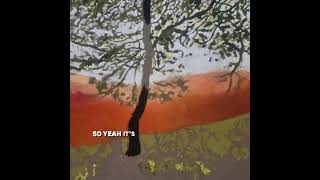
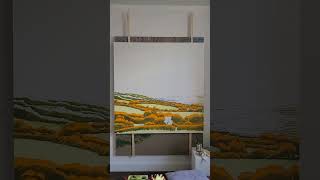
Right then, so I've just mixed up these lovely colors. Look at these, um, Scarlet Lake, Quinacridone Gold, Orange Lake, Indian Orange, Yellow Deep Lake, Cadmium Yellow Deep, Auroriline, um, that is, uh, like a lemon yellow, I think, and a titanium white. And I've labeled them all out because I need to see how they look on the canvas in a moment. So yeah, here's the canvas. So the idea is to be working on this red area and making it a bit more subtle. I started red because it needs to be a bit over the top to start, and then I get more subtle with it, basically. So now I'm going to mix a bit of color. So get a little bit of the paint medium onto the palette, and then just— yeah, let's have a look at some of these colors. Oh, look at that! Beautiful, beautiful colors. Yeah, I like— I like— do like this Quinacridone Crimson. Orange, or whatever it's called. I rather like that. So I think I might, I might, I might get a bit more into this. It seems to be darker. Yes, it's a lovely color. And they may be mixing— hmm, yeah, it's quite nice with that one, isn't it, with the Orange Lake. So So maybe it's— yeah, maybe it's mixing in the Orange Lake or a bit of the Indian Orange. Now what I noticed was that the tone of it was too dark to make much difference, so immediately went lighter and actually added some Titanium White to this just so that I can go lighter. And then I can begin to bring in some other colors. So maybe the Indian Nice. It needs to be a little bit, a little bit more orangey. That's rather nice. So that looks nice on the palette, but then what about on the canvas? How's it going to look on the canvas? Yeah, that's nice. Still a bit too bright, so then we need to actually find this mixture between the brightness and the slightly darker quinolone. Great, so here's the quinolone, or whatever it's called, and I've now got my gloves on because as I begin to paint, it tends to get more messy. So I need to basically now mix the— mix these two together. And so it's like, do I mix that into that or that into that? That's the question. So let's try this. That's quite interesting, isn't it? So now we've got this, we've gradation from light to mid to dark to very dark. So then I can now try this on the canvas. Ah, look at that! That's pretty damn good. So this is always the subtlety that I'm looking for in paint, and you can see it is, it is so subtle, but that is what you need. And so then once you've worked out what that is, then you, you have to mix more to try and match that particular color. Now I've gone a bit the wrong direction because I really need to mix it around here. So I need to match that over here. So probably picking up quite a lot of the Orange Lake, which is really nice, and then adding to that. Now a lot of people use palette knives for this. I've never really bonded with palette knives. I just prefer using paintbrush. It's quicker and I can quickly adapt the color as I'm working on it. So yeah, it's probably still a little bit light. Okay, so I can actually see this is actually pretty good. I like this color. So now it's really a matter of just beginning to Yeah, fill in, fill in some areas with this lighter touch. And yeah, getting a sense for whether it is the right tone. It doesn't really matter if it's the wrong tone, you know, painting is progressive. And it's really just moving it forwards all the time. And yeah, that's the joy of painting, you know, trying things out, trying new things. So I'm going to keep working on this for a little while. Right, so here is where I've got to so far, which is interesting. Now, one of the things that is very useful as a painter is actually a mirror. So a mirror can actually allow you to see things kind of without the prejudice of your presumptions about it. So that's in the mirror, and then I look at the original. I really like that. Now obviously This is going to need more work, but that gradation is, it's really nice. I like that. And what I love about oil painting as well is that every layer is just, it just builds on the character of the painting. So you can't really get it wrong. You just, you just keep layering it up and, and the painting develops. Okay, so now the next thing I want to do is to move over to this side So when I started this painting, this was going to be the wood into the hill, but basically I felt that it interfered with the composition. So I'm going to now paint this out, paint out the white sky and the gradation behind it, and that should balance the painting a bit more. There's actually also a little bit up in the top corner here which I'm also going to paint out. Yeah, so that's what I'm going to do next. Right, so I've been working on this painting a bit more now. You can see some of these gradations taking place, and they're, you know, it's not— again, it's not about being perfect, but it's about trying to get these ideas. So like over here, if it's I've been exploring how the trees go up the hill and then how that complements with this side. And then exploring the different tones and vibrancy and then how the light moves between the bleached-out areas and the foliage of the plants. And then also getting the right hue. So yeah, it's gradually coming together. So now the next thing I think I'm going to work on is this, the light behind the tree. I deliberately left this just as raw size canvas at the moment. I often do this. This is a, the part of the painting that I know is going to require a lot of attention, then I don't, I don't get in there too early because I know it's going to require just dedicated thought and experience and patience, and also to make sure that the tonality around it is correct. So now I have a sort of— I'm quite happy with the tonality that surrounds it. So now I can go in here and begin to explore how I'm going to create the luminous light on this tree. Right, so yeah, I've been working a bit more on this light now in the middle of the painting. So yeah, it's quite a pivotal moment in the painting. And like I said, I was glad that I did the preliminary work on the painting because this immediately changes the whole dynamics of the tones and the hues in it. It's not quite there yet, but, um, it's very interesting. It's, um, Yeah, it's just an exploratory process really, and I think I'm gonna just enjoy this now for a few hours and then probably get back to it later this evening.