Reimagine Podcast #8 - Jeff Ramsden
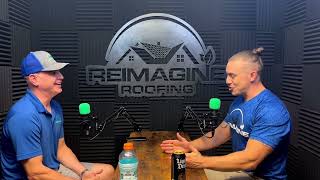
This is a YouTube video titled "Reimagine Podcast #8 - Jeff Ramsden" featuring a detailed interview with Jeff Ramsden, the VP of business development, discussing his extensive sales career journey from selling sneakers and door-to-door cable sales in New York to managing solar sales teams and transitioning into the construction and roofing industry. The conversation covers his mentorship experiences, sales strategies, mindset, challenges with insurance claims, and personal approaches to maintaining mental health and growth in sales. The content is a single-speaker interview format without the presence of Kody Landals.
All right, welcome back to episode number eight here at the Reimagine Roofing Podcast. Got a super awesome guest today. Jeff Ramsden, our VP of business development here. Really, really excited to kind of learn more about you, hear your backstory, and see everything you've done in the industry and what you're doing now. So let's kind of get started at the beginning. How did you, you know, how did you break into sales day one? And what was kind of your. Your experience with sales out of the gate? Was it door to door, you know, call center leads, or what were you doing in sales and what were you selling?
Oh, man, you could probably already imagine. I sold sneakers. That was the first thing that I actually sold. I just had a massive love for sneakers when I was a kid growing up, you know, Michael Jordan was a big thing, so I asked my mother if I can get a job at Champs.
Nice. Nice.
You know, I was gonna turn 16. I wanted a car. I needed to have, you know, proof of income for car loan. So, you know, I was just really into cars and shoes. So I was like, how do I buy a car? Maybe I should just sell shoes.
And were they paying you guys commission or was just an hour that was commissioned, too?
Yeah, for sure it was Commission. I was 15. I would get dropped off at work, and, you know, I just. I started loving, like, the adrenaline rush of making a sale. Yeah, just, you know, I. I was the top salesperson at 15.
Nice.
Once I did that, I was like, I think this might be, like, a good route for me, you know? So. Yeah, you know.
So what happened? So we had champs. How long were you at champs?
Two years.
Two years?
Yeah.
Did they pay you guys in shoes or, like, a lot of the bonuses, like, you know, like top sales, fresh pair of kicks or something?
For sure. Ye. To give us shoes, cool clothes, things like that. So it was pretty sweet job to work when you were going to school.
Okay. Awesome, awesome. So then you got what, you graduated high school or what came after Champs.
Graduated high school, went to a community college in New York in Poughkeepsie.
Is that where you're from? Yeah. You're from New York.
A little upstate, like an hour or so north of the city. So they had a good community college there. I got my business, you know, two year business degree there. Then I went off to South Carolina, got a different degree in sports and entertainment management and the hospitality program they had.
And what college was that at?
University of South Carolina.
Okay. Gamecocks.
Love the Gamecocks.
Awesome.
So, yeah, I went down there.
What made you pick South Carolina from New York? That seems like a big. Like a big shift.
I just spent, like, a lot of my childhood in South Carolina. We've had a house there, you know, since I was a young kid. I'd spend my whole summers in South Carolina. Just had a huge love for it. It was a second home. And then it was just a very natural progression. Like, you know, I'll just go down to Saturday. I have friends there, so.
Okay.
I just want to go to a bigger school, experience football, sec, things like that.
So, I mean, that was the same reason I. Yeah, I chose asu. You know, it was either ASU or Florida State, but I knew I had to go to some school, and it was at the time, they just had got. Had James Harden on the basketball side. So I was looking for a school that was good in football and basketball so I could experience both. So, yeah, definitely. Definitely understand that. So you went to South Carolina, got the degree in. In business and sports entertainment. Then what did you do with that? Did you. Were you like me where you kind of got the degree, but you're like, I don't even know what I'm going to do with it. And I'm just going to go figure out, you know, what's next?
Precisely. Actually, I went. I went back home to New York. I was super pumped. I'm like, I got this great education now, you know, this huge education bill I got to pay. And then I got a job offer at Madison Square Gardens, you know, dream job, huge Knicks fan, you know.
Sorry about that.
Great. Yeah, thank you. So, you know, I was. Went going for the interview, and I actually was getting the job. And they're like, all right, so, you know, we expect you to move in New York City. You're gonna make about 60 grand. And I was like, okay, like, where am I gonna live? And you know what I mean? Like, so unless you have a place in the basement for me to say here, it's not gonna work, you know, so I found out really quickly that I needed to make more money. So back to sales, you know, especially.
If you're gonna be in New York City. I mean, one thing, if that was like, in South Carolina or somewhere else, like, but that'd be crazy.
Yeah. Yeah, it's undoable. So back to upstate New York, ended up getting a job with one of my great friends. My friend Mike D. Got me a job, and it was knocking on doors, selling cable, you know, okay, so like.
Time Warner or something.
Cablevision. That's Actually, the company that owned the Knicks, so ironically, I ended up working for them.
Just a little different job.
Yeah. But definitely in a different capacity, so.
And talk a little about that breaking into it, because, I mean, door to door is not for the weak of heart, you know, or even you have to be physically and mentally tough. You know, it's. It's hard walking around one, but it's also hard getting, you know, just the door slammed in your face. So what was it like? How did you kind of work through that and what motivated you and. And what were some of your coping mechanisms to. To kind of get to where you are now from that point?
So, thankfully, I think aligning yourself with the right people is super important. You know, thankfully, I had a great mentor that got me the job. Like I was saying, my friend Mike, you know, he really taught me a lot about the mental toughness aspect of it, and just going out there and putting in the grind and the work. It's definitely not for everybody. It's a tough one. And then especially at New York, I mean, my first day out in the field with him, I mean, I. I went out in the middle of December, and it's like, we're in winter coats. It's sleeting, it's hailing. He actually, like, backed over someone's trash can on the way out of the driveway. Just, you know, it's crazy. But, um, I just. I really just didn't want to fail at it. I just wanted to be successful at it. I knew that there was a lot of money that you could make. Um, so I just. I always wanted to be just a top performer. And it's. It's a hard job, but what's easy to make money, you know, everything is going to require work and to. To develop your skill set and everything. So, thankfully, I had him to lean on to teach me the ropes. He had been doing it a long time before me, so I kind of just took what worked for him. And then as you develop your own experience, you take pieces that you learn from everybody and make your own style. And, you know, I did that for seven years, which is a ridiculous amount of time.
Yeah. And so just to clarify, you're just selling, like, hey, you know, you have DirecTV switch over to this as a cable, right?
Yeah. I mean, you would just basically get a sheet of paper. You'd get like, 300 sheets of paper at the beginning of the month, and they'd be like, you know what I mean? And you go. And you'd know it was like, Mrs. Robinson, and she disconnected cable service three years ago.
Okay, okay.
So then if you pull up to the house, you could see like, okay, she has a satellite dish or she has a Verizon box. And you could say like, hey, you know, you left us three years ago from Verizon or satellite. You know, I'm here to make an offer to try to win your business back. And it does not go over great sometimes because you're the cable person. They're bill went up and up. I called you guys. You didn't work with me.
And you know, it's a little intrusive too, like, for you to like, just show up. Middle of dinner.
Yeah, middle of dinner. It's dark out. You like, they're looking out, trying to figure out who you are. You still need to sell for the day. So it's like 7:30. It feels like it's midnight because it gets dark at 5. So there's just so many different challenges to that. So.
And did you all seven years in.
New York or what was all seven in New York? So very interesting too, because like I said, I'm from more upstate New York. So I went from upstate New York, like fish kill areas and Dutchess county down to Yonkers. So after being there for seven years, you're talking to the same people. Sometimes you get the same neighborhood, you're like, oh, damn, it's Robinson again. And you, you know, you're going back repeatedly talking to the same people. So it adds a whole nother element to it.
Definitely, Definitely. Awesome. So then what. What came after that?
After that? So during that time, I actually paid the. Paid it forward a little bit that Mike did for me, I did for others. When people would get hired, they would ask me to train them and take them out in the field with me, show them what my typical day looked like, what my conversations look like. And I did that for a gentleman that ended up becoming a good friend of mine. And he went out to California and got a manager role in Time Warner a couple years later. He kept getting promoted, getting promoted. He ended up finding himself in a director role. And he just would harass me constantly about quitting, knocking doors and coming out there and running an actual sales organization for him. So after like six months of him just, you know, hounding me, he flew me out to California. I saw San Diego, really liked it, and I was like, you know what? You know, he put together a great offer. So I ended up, you know, moving out to California, took my package to transfer, and I started actually running A sales organ. Just, he's like, I just need you to teach, like 50 people what you taught me.
Yep.
And we'll be doing great. So.
And what was, what was that company or what were you guys selling?
That was Time Warner.
Time Warner. Okay.
You almost had. You just put it right before the. Yeah. So I went. Ended up going to Time Warner and then they ended up getting bought out. I worked my way up there. You know, we got a. I got into a director role because that. My friend left, went on to do other things. I ended up taking his position, and then we got bought out by another company. And going through a merger is very tough, so they brought in a lot of their own people. They changed a lot of the things that they did. And then I actually got a. A friend of mine worked for Tesla.
Okay.
So that's how I bridged into solar, actually. So he recruited me for Tesla. I got a sales manager position there. So I did take a step down, but I felt like it was a big step forward because it was going towards an industry that I thought was more for the future. Cable is a dying breed, you know, I mean, everyone's just going to have the Internet. I don't even have cable anymore. I work for the company for.
Yeah, yeah.
I just, I thought it was the next. The next thing for me. So definitely went into the solar and.
Talk a little bit about what, you know, you. As you were training these, these 50 people, like, what was the message that you were passing on to them? What were some key things that. That you've now learned are universal? Because that's also something you're bringing to reimagine roofing. I mean, you've been here since you've been here. You're one of our, you know, that first bulk of hires. What is it now? 9, 10, maybe a year coming up soon? Yeah, yeah.
So.
And you've really grown into this role. Like when you first started off, you're doing a lot on your own, but as we've had more and more, you know, young people that needed to be mentored, you've really stepped into that, you know, naturally, and, and that's been a huge help. So what are some of the things that, you know, you would share with a day one salesperson, maybe someone listening to this that is just getting into solar, just getting into roofing, or just getting in anything in sales that are. That, you know, are some universal truths across the board.
So for me, I mean, I really enjoy the mentorship part of things and just passing along that knowledge and giving people the shortcuts that, you know, take so much time to learn. I definitely really take pride in that. And I love when, you know, you teach somebody something and they're able to go be successful with it. So I've always enjoyed that. So stepping into that role was a perfect fit for me because I had the knowledge of what it really took by being out there in the trenches for the seven years and be able to pass along those things. So one of the biggest things for me is that it's always about a time. It's the time that you're putting into anything. Right. So if you don't know cable, you don't know solar, you don't know roofs, whatever the case is, it's really up to you to educate yourself, to be the subject matter expert and to put the actual work in. And I mean, it's kind of like cliche, but it's, you know, like a Kobe Bryant actually said it. And it's. If you put. If everybody else is working eight hours a day and you work 12, then that's going to continue to compound over time and over the years. And if you're willing to put that extra time in, you're going to see yourself distance yourself from your other peers as you put those extra hours in. And I think I've always just kept that mindset and everything because if I work that through the whole month, I've actually worked five weeks in the month, not really four.
Yep.
So if I continue to apply that, and I think that goes for anything that you're doing, if you could constantly apply that kind of method of thinking, then you could be successful because everybody's going to have their own different methods of things, but it's all about putting the right time in.
And I think, you know, one thing to kind of really like pull out from that, that equation of 12 hours that's important is that the time you're putting in isn't just like menial labor. It's not just like repetitive things. You're putting in time to learn roofing, or you're putting in times to better yourself as a salesperson. I think that's what's missed a lot of times when people think, oh man, I worked a 10 hour, 10 hour or 12 hour day, how did you actually use that time? Did you have four hours, you know, sitting around? And do you spend those four hours bettering yourself? Because then if you're putting in 12 hours a day, you know, five days a week, and four of those is developing yourself, you Quickly move up in your skill set, your income, and just your overall impact. And I think that's one thing that you do really well, is that you're constantly, you know, putting in the time, like into the month coming up. I'm going to go grind out, I'm going to sign some deals. But also, every time we have a group call or every time we have a call, you know, there's. There's something there. There's a little nugget that we're unpacking. We're like, hey, I use this this time. This works so well. Next time I'm going to use this as well. And I think it's that constant growth and really treating your. Your profession as a craft, you know, as. As a basketball player, as a tennis player, you know, something that you're honing. That's what I think a lot of people miss, is that it's all about the grind and not enough about the growth. And I think that's something that, you know, you're speaking to right now, that you continue to get better and, and that made it so you could increase your income, right?
Absolutely. And I think it's like speaking to that, it's about getting that formula that works best for you. And when you get to certain points, it might change a little bit. Like when I first took on this role, it's more of, you know, a lot more education. And then once you start figuring it out and then you get busy, it's 100%, you know, to the wall of let's, let's put as much time in here, and then you're going to fill in those gaps. So, I mean, 70% of your time should be working on the actual task. Then that other 30 needs to be personal development, learning the craft, being the subject matter expert. And you have to. And most people just think that the 100% of their workday is just that 70% piece, and they forget about doing the other thing.
Devlin. And then do you have any sales leaders or mentors that you really connect with? I know, like, obviously Kobe Bryant on the sports side or any, any books that were really, you know, monumental to you? For, like, for me, it was, you know, Pitch Anything by Oren Clapp was one that always stood out to me, but really never split the difference. I forget the author's name now, but we're actually reading that right now as a sales team. Was there anything, any, you know, specific mentor, like that's maybe on YouTube or a book that really stood out to you?
Yeah, I mean, the Never split the difference book is great. That's definitely up there. Some of the, I mean, believe it or not, like, Art of War is a great one to read. Like some of those classic books like how to Win Friends, what's it called?
Yeah, yeah. And Influence people.
Yeah, yeah, there you go. Yep, that's a great one. How to be a Rainmaker is a great one, those things. But definitely the mentorship going back to it. I think I've been very lucky with that. You know, my sales background and my sales skills directly related to my friend Mike. He is, he was unbelievable and teaching that. My brother's been a great mentor. My brother's been great at aligning us both with very successful mentors. So, I mean, I've been to conferences and heard some of the best leaders speak. Like, Ed Mylett is one of my favorite ones that I've constantly listened to and still do.
Yep.
Love him. We've been around some really successful real estate professionals because, you know, we have done real estate transactions. So my brother's big into real estate. So I've been able to align myself with people that have run different types of businesses and get their expertise, go to these things that really cost a lot of money to join. These things are not cheap. These are like $10,000 memberships to these mentorship programs. And I've been blessed to be a part of that, you know, due to the fact that my brother always gets me involved and they are nice enough to include us both in the package.
Yeah.
So I've been able to benefit tremendously from those things. And like the boardroom meetings and masterminds and different things like that have really shaped how I think, because it's a, it's a totally different mindset and you're a complete epitome of this. So that's how you think. You're very big mindset guy. And it really trickles down to other factors in your life. It's. It's monumental. The power of your brain and the shifting of thinking and just how you look at different things has been huge in my growth.
Yeah. Yeah. And actually that was, you know, it was our training tip of the day today that you know, really jumped out to me and, you know, was talking about the four minute mile. You know, the, the guy that, you know, for the longest time, medical doctors, scientists, all said that if you ran a four minute mile, literally your heart would stop, like you'd run out of oxygen, you would die, you know, and everybody believed that. So Nobody ran a four minute mile. And then in 1954, when that four minute mile was broken, within a week, over a thousand people had also broke the four minute mile. Like literally just the act of believing that you could do it. Now, a thousand people could have done it before that. And it's just, you know, those kind of stories are things that just really blow my mind and just show how much, you know, mindset can affect everything. And, and we've seen it time and time again in the company, just across the board. Was there a moment when you kind of came into this and you, you like, said, wow, now I'm a roofer? Like, was there like a. Can you kind of look back and say one day that you were like, I don't know if I'm be able to make this happen. Like, I don't know really anything about roofing. And then, I mean, because now you're, you just crank these things out like.
Clockwork, you know, I think it's, it's funny, it kind of happened when other people started calling me for help. So then they would call me and they would ask me a question. I would actually know the answer. Yeah, yeah. Damn. Like, I'm actually, I know, like roofs. So that it kind of just kind of hit me in those little waves. And now, you know, I love being the subject matter expert on things. I love being the person that people can call and count on and get help. So I have definitely become that person in the last couple months for people. And I love that, you know, I like that I'm able to just give them the shortcuts that took me, you know, months to figure out.
Yep.
And as we bring people in and scale, that'll be very helpful for us to just be able to grow quicker and just have people more comfortable in their position and seat and then know that they always have somebody to go to and ask. So now I'm to a point where nine times out of 10, I should know the answer. If not, then I call Jeff Licomi.
Yeah. And that's, you know, and I always have said the best way to learn something is to teach it. Because there'll be times when I'm like teaching something in the middle of it. I'm like, wow, I actually don't know what I'm talking about.
Yeah. And I've had those moments many a times too, when you start diving into something and you're like, wow, that was a little janky.
Next.
Next one. I know how to go through that smoother, you know, so.
Yeah, yeah. So the big thing you're you're learning now is insurance, right?
Oh, Lord.
Yeah, yeah, yeah. So talk a little about the challenges with that, what you've done to try to learn it better, you know, maybe what resources that you've used, you know, in our network and, and just what has helped you learn insurance better?
So Benzeman for sure, because I mean, Adam Benzeman, Adam's a man. So I, I was just, I got kind of stuck with. I got thrown a lot of them at once. I got like five insurance jobs. All of a sudden out of nowhere, you know, I've never done one before. Then all of a sudden now I got all these things coming in, all these documents. This one goes here. So I had a lot of different struggles kind of getting organized with that. Like, who do I call for this? The adjuster. Then the adjuster doesn't answer. Then, you know, you're juggling those things back and forth.
And some of these are coming from our solar partners too. Right. It was like, hey, they were going to go solar, but now they want to go insurance. And so it's like now you're juggling, you know, an extra ball in the air of solar as you're trying to do with insurance.
Exactly. And then not even knowing how the insurance. So learning how to read a scope of loss, she. And you know, how to get supplements done, how you negotiate the supplements, who you call for what and just how to treat everything. And then every job is different, you know, so.
And you know the biggest thing when I learned insurance, just this, the shock factor to realize that this, it wasn't black and white, it was like I thought, I thought insurance, like I almost thought of it like as a government agency. Like, hey, if something's damaged, it's going to be covered and it costs $10,000. But then you see the exact same damage on two homes. And one, one carrier might give you five, another gives you 15. You realize, wait, hold on. This is all a giant game, right?
Yeah. I mean you could get a different estimate of the adjuster had a bad day, you know, that gets in a fight with his girlfriend. All of a sudden you're getting a three thousand dollar claim instead of a full re roof. And at that stage, kind of what has happened and I had to fight tooth and nail for one guy, that that's exactly what happened. The guy got a $3,000 claim.
Yep.
And we had to fight tooth and nail. Tooth and nail. And I just got it approved for 21,000 bucks. We actually just got our deposit today.
Awesome. Awesome. Yeah. I mean, and That's. I think that's something. If you haven't learned yet, you're in the process of learning that part of what goes into insurance, too, is that the loudest mouth gets fed or the, the most persistent, you know, squeaky wheel gets oiled. And having somebody like you that has that persistence and you're, you're not, you're never one to back down from anything and you're like, it almost. For me, it used to become like, I'm going to get this money. Like, I don't even.
It's like a competition at that point.
Exactly. Yeah. And so having an advocate like you, I mean, that's, that's huge for our homeowners. That's huge for our solo partners.
Yeah, absolutely. And I think getting it was actually kind of a blessing because getting that many deals at once really helped me just really lock in because I. It wasn't just one deal, like, all right, it's easy to kind of let one deal, like, all right, I'll kind of get you through. Yeah, yeah, exactly. But then when you get four or five at once, now it's like, I better really polish myself now because now there's a lot at stake. I need to close these all down. So that's one of those things that after work and, and I got those in. It's when my workday finished up and I finished my last call. You know, eight, nine o' clock at night, you eat dinner, then it's sit back down in front of the couch, pop up YouTube on the TV and let's watch some, some roof strategist videos.
You know what I mean?
So you spend a few hours doing that. And one of the great things about here is that you always give us the tools. So if you don't have the information or if you. Then it's really your own fault, you know? So I went back into the roof strategist. He has a lot of insurance stuff in there. So I just kind of re. Familiarized myself because that was something that I didn't really focus on when I went through it the first time.
Yep, yep.
Because I didn't do many insurance deals. And then all of a sudden they all came at me. But it was great because I knew, you know what, I have the resources here. Let's just lock in. Let's spend. Instead of trying to struggle through these and limp, let me take eight or nine hours and really educate myself, get the help I need. And then I'm going to dive back in and I'm going to close all four of these things.
And you're also going to save yourself a massive amount of time because you could limp through all of those at six hours at a time, you know, for a total of, let's say 24 hours. Or you can go spend eight hours, really learn it. And now all those rest of the claims become one hour jobs. And then you've cut your time in half by just putting in the work on the front end to pay yourself out on the back end, not to mention the commission, obviously, by closing the four of the roofs, you know.
Yeah, absolutely. And now when the next one comes in, I know here are the steps that I take. So now I can crank those things out, which is great because I just, I want to be able to, no matter what comes my way, just be able to crank it out very quickly with speed. One of the cornerstones of our company is speed. So just being able to attack everything that comes my way with speed. Whether it's, you know, a solar company or solar partner that needs a roof or if it's, you know, a shade structure or a ground mount or an insurance deal, I want to be able to know how to do every single thing. So that's what I've really dove in at and really leaned in to just be a subject matter expert on everything for the company, not just the roofs, but just really just be a person that people can depend on for information.
Definitely, definitely. Awesome. Awesome. Cool. So let's kind of back up. Let's say Tesla. We're back at Tesla. How long do you work there? You built some sales team there and you guys were selling solar door to door.
We were. So I actually was on the battery end at the time. I actually don't even remember. So many things changed there. It was like I got hired a sale under as in solar. Then we did the full merger happen with. It was funny. I went from one merger to another merger. I was like, sweet, you know, another one. Then they merged with SolarCity. We did do a lot of solar deals. I managed a solar team of about eight people. But then they shifted me into the batteries and heading up the battery division, which we sold a bunch of batteries and there was a battery shortage. So a lot of different things happened and a lot of people, like people that I came to work with got shipped out with the merger. So I just. It was really a tough place at the time.
Yeah, you kind of just lose all that momentum and that, you know, good feeling.
Yeah, they take the wind out of your sail a little bit. You don't really know if you have job security or not. And I just, I didn't really feel like it was, you know, so I ended up working for kind of like an independent broker for SunPower Sun Run. And I got a director of sales role and recruited a bunch of people that I knew that sold solar. After, you know, working with Tesla for 18, 19 months, I developed a little bit of a network, brought a lot of those solar reps in, trained them, got them out there and you know, we did well. I made some good money in there. But you know, as you know, sometimes solar companies could be a bit shady.
Yeah, yeah.
And the person that owned the company ended up dissolving the company and things like that, so.
Yeah. And so, you know, was part of the reason you left Tesla just kind of the, you know, sounds like it's a lot of the negative feeling with it. And what I've always found in sales is such an emotional profession. Like it's, it's probably the most, maybe the most emotional one out there that if you have your ups or your downs, like it's, it affects your, your sales so much. And that's why I think it's just so important that, you know, as sales teams or just sales people in general, that they control their, their mental well being and that, you know, you make sure you're doing the things that, that keep you in that good mental state. So what are the, some of the things that you do? Whether you know, working out, eating right or just maybe running. What, what are some things that you do that help keep you, you know, mentally healthy or possibly bring you back? If you have a week where, you know, you didn't hit the sales numbers or a month, what are some ways that you keep that emotional? The emotional stability required to be successful at sales.
It's, this is going to sound really funny, but I'm a big sports guy, so like I watch a couple different things that Peyton Manning did about not getting too high and not getting too low and keeping that even. Like just staying in there. No matter how great you're doing or how bad it is, just keep yourself in between those two levels. And that's really helped me. So that has been one of the things that I always focus on. Even when I have like a great week, it's like, pump the brakes a little bit. You still got next week, next week is going to come. So keeping that mindset is huge. I think just the mindset of it is really important. But then like you said, to have different outlets to blow off steam I play a lot of golf. I play on the weekends with my brother, so I love that as an outlet. Sometimes I come back more frustrated than I got to the course, but it's still a great outlet to just, you know, take two or four hours just out there to just clear your mind and not focus on things that are stressing you out and you're just playing a game of golf, you know. So, yeah, that's one of my biggest outlets, spending time with my dog, obviously, as you know. You know, I bring her to the office all the time.
So I brought her in today for the podcast.
I know I got yelled at that I did it. So, you know, but yeah, just things like that to blow off steam and just have those kind of hobbies are great. And then, you know, I'm a big family person, so that's why I ended up in Arizona. You know, my brother has a three year old. Love spending time with her. Love spending time with my brother. So doing all those things is kind of how I keep my mental sanity.
Yep. Yeah, definitely. Yeah. And so one thing, one strategy that I developed, you know, in line with that Peyton Manning concept is one thing that has really helped me is constantly extending the timeline. So if I had a one week goal of to sell, you know, a hundred dollars worth of stuff and I hit that, let's say I also have a month goal of $400. Well, I'm only a hundred dollars to my $400 goal. So I'm only one fourth of the way. Let's say I hit my month goal of $500. Well then. Or $400 maybe. Then I have a quarter goal of 1500. Well, now I'm only at $400 out of 1500. Let's say I hit my 1500, then I have a year goal of 6000, whatever that. And if you just keep extending your horizon, you're only ever halfway there or a quarter way there or, you know, a percentage of the way there. And that way you keep you, you celebrate your wins. And I used to do the same thing in fitness with my personal training clients. We would have weekly goals, monthly goals, quarterly goals of like weight and, and a lot of people have that, but they don't kind of think of it the way I used to think of it, as like a, you know, like a bar graph that you're filling up. Like, I'm only 25% of the way there, 30%. And it kind of keeps you focused. Like, dang, I'm only 30% to my goal. Like I haven't really done anything, you know, so. So just kind of.
That's.
That's a good idea for anybody out there that is looking at ways to think in numbers. Like, I think you think a lot, like in kind of the big ideas and like, milestones, whereas I'm like a super analytical. Like, I got to break everything up by numbers, or else it's just like, it could go on for years.
So what I do, one of the things that really helps me is let's say if I have a goal to hit, like, let's say if this month I want to do 200,000 in roofs, let's say. Right. And then let's say if I hit that, then I look, what's the next milestone that I might be able to get to?
Yep.
And then I'll push myself even harder to try to get to that. And it's usually in a. In a crunch, right. Like, it's towards the end of the month, and you got to put the pressure on yourself. And I. And I've always done well in that type of environment. So at the end, if I hit the 200 grand, it's not time for me to go relax. It's time, like, what's the next step that I could get to? Can I get to a quarter million Y? And then it's like, who could I call? Who could I call? And then you're. You're really trying to scrape that plate because you want to get to the next milestone.
And that emotion transfers out and sales is so emotional that now you're excited, now you're ready. And like, that's when you're. You're. You're, you know, hitting your stride. Like, you know, when you get that first sale, that second stuff, you know, you. It's real, the sales. Sales momentum, like, just like a hot. You know, you're on a hot streak, like a hot shooter. Same thing in sales. Like, you go six for six. You're like, oh, my gosh, I can close anybody on anything.
Just get into a rhythm and you can't miss. That's exactly how it is, 100%.
So. So after that, that solar company was coming back to that. After that solar company was dissolved, then what happened next? That when you joined us or was there.
No. So I was doing. I was just buying houses at that point. We had. The market was good for wholesale deals and fix and flips. So, you know, that's. I started working with my brother, started working with the wholesale business, and we did really well. We got a bunch of houses Bunch of projects. And then I really enjoyed that. So then I became a project manager for a fix and flip company, as I did that on this as well. Right. So because once me and my brother automated some of the processes and we didn't have to constantly be on the phone, I went and got a job doing something I really liked, which was the project manager thing. So I was just reconstructing houses. We would be doing roofs, windows, flooring, you know, so it really helped me kind of learn the construction business and, you know, help bridge the gap into roofing and things like that. So that was great. I really enjoyed doing that. And I had a lot of experience doing it from our own fix and flip projects that we've been doing for years, you know. Awesome. So that was a great role for me to step in. And then I realized I just. I liked the construction industry. You know what I mean? I just think that there's always going to be money in it. It's always something that you could learn. There's always a new innovative thing going on. So I just. I really like the industry.
Yeah. And I think my favorite part about the construction industry is it's all. It's always been here. It's always going to be here. It may change. Like, we were building stuff with sticks and stones, and now we're building stuff with 3D printers, but we're still building stuff. And like, you know, no matter what, I think we're always going to be in, you know, having to build stuff. And you're in that industry, you're evolving with it as opposed to being, being, you know, in something specific that then technology can, you know, out compete you or make you irrelevant. Other great things. It's really hard to swing a hammer. So the robots, hopefully we can keep them at bay for another 50 years and we might all still have jobs.
Yeah, you still gotta get them up on the roof, too. Yeah, someone's gotta hoist them up. Yeah.
They got bigger things to worry about right now, so. All right, so then you did that remodeling. How long did you do that for?
Probably like a year and a half, I want to say, for that guy. And then that's when I kind of transitioned out here and. And came to Arizona. Because then, you know, we had Covid and all that other stuff.
Okay.
So once that all kind of died.
Down, all the business.
Exactly. And then, you know, soon thereafter that once I needed to find a job, I could work from home. Right. You know, because Covid shut us down. So then I was like, how do I work from home in construction sales guy? I'm like, let me sell construction software.
Yeah.
I mean, so then I got that when Covid started hitting. And I work from home selling software to construction companies, all different facets, which was great because again, I got to learn so much about construction industry. Doing so many presentations with them. You really get to learn about their business and how they run it.
Yeah.
Which I loved. You know, I love soaking up the knowledge of that and everybody had something else to learn from. So selling them the software packages was great. You know, I made good money, but it just, it was very redundant, which wasn't for me. I don't like being the redundancy of just doing the same presentation every day. You follow the script, you're doing a presentation. It was brutal. You know, like, by the time I notice you're working from home, but by the end of your nine or ten hour shift, it's like you're exhausted because, you know, your back hurts. You've been in the chair the whole day. It's like I need to be able to at least move around or have some freedom. So it got old for me pretty quick.
And I feel like, especially on the mental aspect of being at home, I feel like that would be even worse in my mind because like now you're not like, you get to go relax, but now you're just still in the same, like, space.
Yeah.
And I. And I feel like it's one thing like working from home could be great if you enjoy your job, but I feel like it could also be like a jail sale if like you hated your job.
That's exactly how it felt, you know, and. And it's just, it's because you have to be in the same stationary thing. It's like at least if you're working from home, like, do it like for instance, now if I work from home, I'm on the phone, I can walk around. You know what I mean? Like, and we're having those normal conversations with people and it's exciting. The phone rings off the blue and now I have to pivot and you know, I like the action. Yeah, there's no action. It's just like, here's your calendar and you're just like waiting for the next one. And it just, it didn't. I'm too high energy of a guy for that. Like.
Yeah. And I think it's too. It was not dynamic enough as well. Because it seems like what you've always. Every time I talk to you, you're working on A metal project, a Spanish clay, a foam project. It's like learning 19 things at once. So I imagine doing the same podcast or same presentation every single time would be brutal.
Yeah, you know, I like getting into different stuff, so it's like just doing the same thing was absolutely vicious. So that's when, you know, the money was great, but I just wasn't that happy with it. So that's when, you know, I applied to reimagine.
And then how'd you find us?
I think it was like, indeed or something like that, you know, and I, and I saw like a VP of. I was VP of sales, VP of marketing, vp. You had like a bunch of, like, it was our first round of hiring that we were doing. So I'm like, these people are hiring. It's, you know, looks like an awesome company. And then I went in and met you and I'm like, you know what? This kind of just. I had like a good gut feeling, you know, when you just got like a great gut feeling. And then of course, I had to tell my family I'm leaving a six figure position. And I go in, they're like, well, tell me about the Internet. How'd it go? I'm like, I don't know. There's this young guy with a man bun. He was awesome. And, you know, I just, I liked what he said. And, you know, I might, I might quit. I think I'm gonna go over there and work and just see what happens, you know? Like, I just, I had a good gut feeling about it and I just, I figured I would enjoy this a lot more. And I mean, the gamble definitely paid off, which is, you know, you're a startup and a, in a, in a, in an industry that I'm not very well versed. Like, I have obvious, like, rehab experience, but I'm not a roofer.
Yeah.
You know what I mean? So that's the first thing my family said. Like, you're not what, like, you know, you're going to a roofing company. So it was very surprising to the people that were closest to me. But now, fast forward, you know, I was in South Carolina with my whole family not long ago, and they were like, this is awesome that you've literally found the perfect. Because the mix of my experience is kind of weird. And it's everything, literally that we do, construction work with, solar industry, sales. It's like all the stuff that I've, you know, spent a lot of time working on the last 25, 30 years is now, you know, able. I'm Able to kind of put it all into action, and I just found, like, the perfect position, perfect role. And at first, when I started, it was like, we didn't really know what I was going to be doing. You were just like, I don't know. Your VP is something. You know, we'll figure it out. And then, you know, as things kind of progressed and. And things move forward, it's. I did many different things and many different hats until finally you were just like, you got. We got all this business that should be ours, and it's just sitting there.
Yeah.
What can you do? And then I, like, blew through it and sold, like, a, you know, like, 280,000 bucks worth of stuff in my first mind. You were like, all right, this is. This is working. And then you didn't say anything since then, so I just been keeping doing it. So I, you know. Yeah, I. I love being in that role. I really found, like, the niche, the role. I. You know, I've sold 1.15 million so far. Yeah. So, yeah. I mean, I've only been in it for six and a half months. Really.
Yep.
Yep. So that's great progression. And. And I'm really looking forward to seeing what the future holds, because if I was doing that, not really, like, while. While spending so much time educating myself and learning these things, and now that I can spend more time focusing on helping other people, that I'm past that and helping grow my own business, getting more referrals, establishing myself as that brand, as, you know, I get more people that says, you got to call Jeff. He's gonna take care of your roof or if you need a shade structure. So I'm really excited to see where it goes, because it's gonna snowball down a hill the next couple years.
100%. Yeah. So talk a little about what it's been like being here. Like, on maybe the roller coaster aspect of it. Were there times that, you know, I think all of us have felt at one time or another like, oh, my gosh, is this really gonna work? And then other times, like, oh, my gosh, this is really gonna work, like. And so talk to me a little bit about maybe a high point, low point, or, like, times you're like, what did I get myself into? But then times, like, where it just clicked, and you're like, wow, this is like I'm on a rocket ship.
All right, So, I mean, perfect examples. Like, you know, when we were talking about, like, the blitz scaling thing. Right. And we're blitzscaling. That's it. Was a concept that was kind of crazy to me. Right? Because you're just like, let's just do stuff. And I know that stuff's not going to work. You know what I mean? And that's all right. So one of our ideas was like, it was like, what, November? And we're like, let's do Christmas lights, you know? And I was like, you know, let's. Let's do it, you know? So we put together a quick website, you know, did some leads, got some. And then I was like, all right, now we got to get to quoting. And then it was like, we can't find the lights. It was like we were going to go to Home Depot at one point. It just became a complete, you know, disaster.
We gotta get ready for this year.
Yeah, man. Hopefully we got somebody else on the payroll, but, yeah, so that was just, you know, a big challenge, and we were doing it in a way, short amount of time, but we still tried. And it was just one of those things that didn't work out. And, you know, I. It was just one of those things we had to write off, like, all right, you know what? We got next year to deal with that. Let's just get back to focusing on. So that was one of those things. I was like, oh, damn. I guess this is. This. Is this not good?
Yeah.
But then again, when you get into, like, a solar partnership, you set up a zoom call, and then they start sending you roofs, and you're like, all right, wow, this is working. Then you start seeing other people in the company doing the same thing. We start growing exponentially. Then you start doing other things as well, like our website, bringing in other leads. And then once, you know, things started coming into me, as in more of the sales type of role, and I saw how many sales I was making and just how busy I was and just how fast I was growing with just getting more and more calls. I thought I was busy. And then my phone would ring three or four times that day. I'd have four more jobs. I'm like, wow. Like, I did not plan for this. I'm gonna be working late, you know, but once when you have those days, that's when I started realizing, like, damn, this is really taken off. And like I said, I mean, I'm only in the role for what, like, six, seven months? And imagine in a year, two years from now, when, you know, I'd have to get a separate phone number. Is. It's. It's constant.
Yeah.
Yeah.
So, yeah, no, I. I kind of feel the same Way too. Like, my. My point that I really just knew that this was. This was like something magical is when I went to Solar Con back in April and I was walking around and I literally, I. I'll never. I had food poisoning the day before. I think I remember telling you.
Yeah, Yeah.
I was like, I'm super, super sick. I was like, I'm gonna go ahead and just meet Mike McCain, who's our GM out in Utah's like, I'm gonna go meet him at Solarcon, day one. I'm gonna try to limp through it for like an hour or two. I'm gonna talk to a couple people, and I'm going home. And I was there six hours. I didn't stop pitching or talking a single time. Like, I went from one booth, I was like, that's all I got, Mike. I'm leaving. And like, as soon as I took one step. Hey. Hey, Cody. Reimagine roofing.
Yeah.
And I see your YouTube video and I'm just like, wow, we are really that ingrained in the solar industry and we're really making that much of an impact. It just all kind of clicked for me. I was like, we're on to something truly special here, not just something that's going to be really good. So I love, like, always asking people in the company when, like, you had that one oh, my God moment, like, that other moment, like, wow, I'm here and I know. I remember when you told me that. That you had that first big month, and you were like, telling me, like, every day my phone's just ringing like crazy. And when you started your phone, we didn't have. I don't think we had a single lead.
Not. Yeah, exactly. I was like, oh, you know, one of those oh moments. And all of a sudden that quickly turned into like, oh, like, I'm going to be working 14 hours today, you know? Yeah. So a great problem to have. And I mean, that's just a testament to, you know, a lot of the work that you've put in that you laid and just this whole system that you figured out, because it really is, like, almost like a cheat code, you know, and. And the ideas and the, the structures that you've put into place here, as is. One of the reasons why I decided to come over is because when I spoke to you and you had those visions and everything that you were saying, I was like, this is like, this guy could be really solving a major problem for a huge industry, and I could be a part of that. And I know that with. With My experience, like, I don't know where I'm going to fit in, but I know that I'll work my ass off and I know that I'll fit in somewhere. So, you know, that was my whole view on it.
Yeah. Awesome, awesome. And so what does the future hold for you? What are some future goals? And, and also, you know, are they kind of total number roof sales, you know, sell a roof in 20 states or what? What is kind of what does your, your future look like, you know, in the short term and the long term?
So, you know, short term, obviously, just I, I'd love to close some of those bigger commercial deals, get some of those ones on my plate, because if I can do exactly what I'm doing on the retail side and with the, you know, cliffhangers helping our solar partners close their deals, I'd like to get some more commercial deals in there because I know that'll help my bottom line and the company, of course, as well. So getting some of those bigger jobs in. Okay. I've been spending a little bit more time working on that when I get free time.
So I got a, I got a goal for you next year. You should shoot for the one one one club. I just made it up, but we should make it a roofing thing. One million in commercial, one million in residential, retail, one million in insurance.
That's, that's a good one.
Yeah.
And I mean, I feel like that's all very feasible, you know, with where we're at. That's very doable because you did this.
Year, you said 1.15 so far. And a million of that at least is retail and maybe like 150,000, you know, insurance or so.
Yeah, probably. Yeah, that's exactly right.
So you're already, you're already hitting that retail, got insurance, rocking now and then. You're just telling your next goal is that commercial side. So I think in 2023 we go for the 3 million club. One, one one.
That'll be beautiful. Yeah. And a million dollars in commercial shouldn't be as hard as it is in residential. You know, I mean, you're getting bigger roofs, bigger projects, so all you need is five or six of them and you should get there. So definitely looking forward to that long term. You know, I think I really enjoy mentoring other people, people that come into the organization. So I definitely consider myself a sales leader. I've always been. So I think long term kind of spending more time doing that, which is really what the last few weeks have been for me as well. So I really enjoy doing that. So I think more of that is in the future. Love Arizona, but I want to also get back by my family too. I got my mother in South Carolina, so that was like one of the experiments when I went out there for last month was seeing how good I could do remote. And I had one of my best months ever, you know, So I kind of wanted to prove it to myself that that could work if I wanted to do that, because I want to continue to do what I'm doing. But I would also love to be by my mother, you know, she's out there, so I would like to be. My brother's trying to move out there too, so. Yep. I think that would be like a long term goal and then really trying to explode the east coast and really take all the knowledge that I've now acquired in Arizona at the core, you know, of the company, take all that stuff and try to really blow the east coast up for us. It's prime because, you know, we're crushing Arizona, crushing California. I'd love to be a part of really blowing up, reimagine, roofing the whole east coast, especially in the south there. Yep. But again, New York roots, you know, in South Carolina, I'd love to handle all that stuff in between. So that's my really long term vision.
Okay.
For what I would like to do.
What's your timeline on that? You're looking like six months a year. What do you kind of.
A year? I would say I'd like to put another year in, you know, before I really think I can be comfortable with my level of knowledge and expertise and all. Just the inner workings of the company. As we grow. Yeah. Because things change so fast, you know, as we grow so fast. So I think putting another year out here, getting, you know, in. Into the actual weeds of the company, I think that would put me in a better position to go out there and just really be able to, you know, kind of replicate what you've done and try to help kind of, you know, take a little bit off of your plate and replace some of your time with having to deal with that stuff.
Yeah, definitely. Definitely. Yeah. The only challenge I see would be the time zone. You're gonna have homeowners calling you at 8 o'. Clock. Arizona, it's gonna be 11 o'.
Clock. Yeah, I learned that last time I was out there, I was like, oh, man, it was like 11 o' clock at night. My phone's ringing for a customer trying to sign a document. You know, my mother's like, is it 11 o' clock at night right now? Not on the West Coast? Yeah, yeah, yeah. So, yeah, that is a challenge. But I actually enjoy working late. I don't. I don't mind working late.
Just shifting your schedule. Maybe you'd work like 12 to 12 or something.
Exactly. You know, maybe in the morning I go play golf instead of at 6 o' clock or go to the. You know what I mean? Or go to the gym, whatever I want to do. Then the mornings freed up. So it's just a schedule adjustment. I'm used to that because I've been going back and forth from South Carolina and to California. You know, I lived in San Diego for seven years or six years, and I would constantly be going back and forth and, you know, I always have a job to do. So it's just a time change for sure. But yeah.
Any other big personal goals on, you know, either fitness, health, any. Any financial goals, trying to buy a house, anything like that?
I want to buy a four Plex.
Okay.
I want to buy a four Plex in Charleston, South Carolina. So, like, that was one of the things, like in my transition out there, I would love to purchase a 4 Plex, live in one unit, take the breaks that you get, you know, and then establish that property, do some improvements, and then I have some cash flow coming in. I own a nice fourplex, and then I'll buy myself a house. So that's my tip of the day. Buy an investment property first and then buy the house you want and you could pay for it with the cash flow from the other.
Well, that sounds like an amazing tip and amazing thing to wrap this up on. So, again, we appreciate you guys chiming in. We got Jeff Rams in here. Really, really awesome story. I really thank you for all the impact you've made in the company and all the growth that you've had professionally and personally. And you're just a testament to what hard work and putting your nose down and grinding can really do. So we'll see you guys next week. Appreciate you guys tuning in.
Thanks for that.
More from Kody
From Startup to Success: Kody Landals on Scaling & Culture Building | RT3 Podcast
Launch Your Sales Career Today - 6 Figure Income - The Future of Roofing Sales Starts Here
Standing Seam vs Exposed Fastener vs Stone Coated Steel: Which Metal Roof Is Right for Me?
Class 3 vs Class 4 Shingles: Impact Rating Differences Explained By A Roofer | Roofing Guide 2025
Roof Insurance Claims Made Easy: Full Walkthrough for Homeowners | Reimagine Roofing Guide