A roofer explains high temperature ice and water underlayment, covering how it works, why it outperforms standard underlayment in high winds and heat, and what makes it resistant to hail damage.
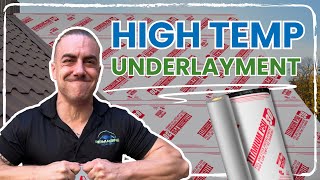
And the top of the line currently in underlayment technology is what's called high temp ice and water. So this is high temperature ice and water here, underlayment different than your standard ice and water. Well, it's in the name high temp. High temp underlayments have a temperature rating of up to 240 degrees Fahrenheit, a thermal stability of up to 240 degrees, which, which sounds like a temperature gun on there. There's many times that roofs are getting up to 150, 160, 180 degrees, especially if you're under metal or you're in a direct sunlight at the peak of the day. So this high temp self adhered underlayment is specifically designed for high wind areas as well as high temperature areas. And the reason for that is because what happens and this is also installed the same way. Take it off, slap it on there like so. And the reason it, it's so superior for the high wind area as well is because it's one giant sticker. So when you install something with nails, if you put a nail here and a nail here, this area in between there becomes a weak point. And so when the shingles get ripped off by a windstorm and your underlayment is the only thing exposed that area, the wind will get under and, and it will pull it up and then it rips off your entire underlayment with this, there are no weak points. This entire aspect is adhered. And once it heats up in the sun and gets adhered onto that plywood, it is not coming off. Even during hurricanes, even during high wind storms, monsoons, etc. Doesn't matter the wind event, this will stay on that decking. Additionally, it is also reinforced with higher tensile strength than your standard tar paper. And it's much thicker and much stronger than your standard synthetic as well. And so that means it is much more resistant to hail strike. So when that shingle gets damaged again, that high temp self adhered underlayment will resist that damage and it will not allow water to penetrate into the home.