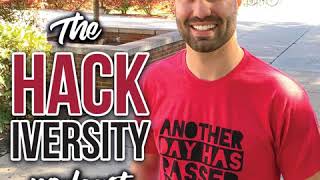
#018: Josh Thiel (28 yrs) on Getting Elected for Political Office in America’s Richest County...

Josh Thiel, a 28-year-old consultant and St. Francis University football kicker, ran for Leesburg town council in Virginia's wealthiest county. He lost his first race but won the second. He advises students to volunteer on campaigns and stay informed about local issues.
Questions this video answers
28 years old (says he'll be 29 in May).
First ran in November 2016 at age 27.
Councilman for the town of Leesburg, Virginia.
Consultant at Booz Allen Hamilton (business development group).
Degree in marketing and communications from St. Francis University.
Chapters
Welcome to the hackiversity podcast where students learn how to achieve more by doing less in college. Learn the hacks from wildly successful recent college graduates as your host, Kyle Whiney explores the colleges, majors and paths that produce the biggest results in college using less effort. It's hacking time. Ladies and gents, welcome to the hack of a podcast where I, Kyle Whiney, interview recent college graduates who have had rapid success immediately after college and deconstruct the reasons why I do this because I believe that students like my 18 year old self are desperate for quality career advice from those who actually do what it is they want to do. This brings me to Josh thiel. At only 28 years old, Josh organized a political campaign and was successfully elected to serve as councilman for the town of Leesburg, Virginia, which is the county seat of the richest county in the entire nation. In other words, at only 28 years old, Josh occupies a political office having a tremendous amount of importance and influence. And if running for and serving in a political office is not enough, Josh has a full time day job working for a premier consulting firm in the Washington, D.C. metro area. Josh graduated undergrad from St. Francis University, a small school located in Pennsylvania, with a degree in marketing and communications. While at St Francis, Josh started on the football team all four years, became an All American. In this episode, Josh and I tackle a host of items such as first, how students can quickly and effectively plug into the political arena, second, how to use failure to drive further success, and third, life as a Division 1 AA athlete at college. So without further ado, let's dig in. Happy hacking. Josh, welcome to the show.
Hey, how's it going?
Good. Thanks for joining me today. So, Josh, I want this podcast to do many things for students, but perhaps most importantly, I want this podcast to inspire people. I want to show students that incredible things in life are possible, including at a very young age. And so that's why I ask all my guests at the very beginning to how old they are. So how old are you?
So I'm 28 years old. I'll be 29 in May.
Great. So Josh, I want to take you back to about a year ago when you were elected to your position on the town council of Leesburg, Virginia. So why was running for town council important to you?
So I'm not sure if you know that much about me. I'm just kidding. But I grew up in Leesburg. I went to elementary school at Cool Spring elementary, which was right down the street from my house growing up. And then I went to Harper park was one of the first classes to go all the way through Harper Park. And then I went to Heritage High School, which was one of the first classes to go all four years through Heritage. So I've kind of seen the growth and been here alongside with the growth of Leesburg. You know, the main reason I decided to run for town council was to actually give back to the community because they'd given me so much. You know, the people that help teach me, mold me, make me the man I am today, I just wanted to do something, give back to them. You know, my wife and I were very involved in the community, but I always thought that there was a little bit more I could be doing. You know, we were youth ministers at our church. I was a high school soccer and football coach. You know, I owned my own business where I help local high school athletes get to the college level and college athletes get to the professional level. I just helped. I just wanted to help my community out any way I could. And also, there was some things that were going on in the community that I didn't necessarily agree with. I was on the economic development commission for the town of Leesburg, and economically, I didn't like where we were headed. We were kind of this old antique and boutique town that had a lot of potential, being so close to D.C. and Reston and Alexandria and all these other happening areas.
So suburbs of D.C. you're referencing? Yep.
Correct. Yes. So I just thought that there was an economic opportunity for us to grow and to thrive. So once I got involved, I started seeing some of the old habits. You know, I started hearing, we've done this for 30 years. Well, my thought process is, why? Why is it okay that we've done this for 30 years? Why can't we change it up? You know, times change. Why can't we change? So I decided to throw my hat in the ring, as most people say. And I was. I actually lost my first election, but someone actually stepped down Council.
You're referencing you lost your first race.
So my first race was November of 2016.
And how old were you at the time when you ran?
I was 27.
27. Okay. So that was the first time you ran for public office at 27 years old.
Correct.
Okay.
And then a few short months later, someone actually left Leesburg Town Council, and I was already in the campaign mood, so I just hopped back up on the horse and ended up winning that election by landslide. I think my messaging got a little better, and I worked twice as hard just because, you know, I really wanted to help my town out. And I felt like I had done that in my last campaign, but I worked even harder and was victorious.
I love that. Josh, one of the things I want to kind of emphasize for listeners as part of what you just said is, you know, you ran at 27 years old, but you didn't succeed your first time. But that didn't necessarily prevent you from trying again or tweaking your messaging. Like you said, you use that kind of failure as feedback, to pivot, try something different, but yet still attack the same goal that you had initially. So I think that's really important. You also mentioned, Josh, that kind of your younger perspective allowed you to think about challenges and difficulties much differently than the establishment. So was there ever any time when you were kind of confronting the old guard and just saying, hey, you know what? Maybe I'm too young for this? Maybe they just have a lot more wisdom than I do, and they just see things much more clear than I do because of their age. Maybe I'm too young for this. Did that ever cross your mind?
It never crossed my mind, but people often reminded me how young I was. But I never let that get in my way because what I knew was true to my heart and my convictions were solid, and I knew why I was doing the things I did, and I had the knowledge to back it up. So. So I often refer to. I actually brought the average age down of town council by almost 50 years because there was so many people there that had been dedicated servants for 10, 15, even 20 years. And I, being a local Leesburger, grew up in the town, never been in local politics, but, you know, served in other capacities in the community, but never really got into the local politics or even state or national politics, for that matter. And I was often reminded in debates how much lack of experience I had. And I was, you know, not fit for the job due to the my age. But I never let that get in my way because I just. I knew my convictions were solid. I said, you know, it's fine. You can believe how many years of experience may make me unfit for the job. But there's one thing that you're forgetting is that I will outwork you any day of the week because I have a lot more energy and I'm a lot more driven.
Yeah. So that's how you would deal with these challenges, is you would go back to your convictions and say, look, I know what I'm doing is the right thing. I. I know that I can make a difference. And so I'm going To rely on that as fuel to power me through these kind of challenges. Correct.
And I'd also, you know, say my energy. I have a lot more energy. I'd always crack jokes sometimes at the expense of my own self. Just saying, you know, being young actually gives me an advantage because it means I can. I can work a little harder than you older folks.
Yeah, Yeah, I like that. I think a lot of people see age as a real detriment, but I love what you did, Josh, and that is use what could be perceived as a disadvantage to your own advantage. And I think that's a really valuable takeaway here for listeners. Josh, what's your favorite part about the political process?
Meeting people. I have, actually, before the age of five, I was, like, deathly shy, and I still remember this. I was so afraid to even ask my teacher to go to the bathroom. I just wet my pants.
You'd actually wet your pants in class?
Oh, yeah, yeah. I remember it like third grade. Yeah. So afraid to talk to my teacher. I just. I was like, I'm just gonna go, so.
Wow. But not the case anymore. No.
And then my dad told me a story when I was, you know, five and a half, six, I was in line, a haunted house. And I was walking up and down the line, just shaking everybody's hand, saying, hey, how are you, Mr. Johnson? Hey, Mr. Anderson. Hey, how's your wife? You know, tell Johnny I said I hope his knee feels better. And my dad goes, well, I don't know what happened overnight, but he is now the most outgoing person and actually the mayor of the. Of the town that we were living in at the time in Fairhope, Alabama, came up to my dad and said, he's gonna be a politician one day. And my dad was like, well, I, you know, I can't say no to that. And then at my college graduation, the president of our school at St Francis came up to my parents and said, I don't know if you know this, but your son is gonna be a politician one day. And my dad said, we've heard that since he was five. So that's. And now I'm, you know, I like. Back to your question. I know that was a long, long winded answer, but I love meeting people. You know, I love knocking on doors, you know, knocking on a door and seeing my, you know, third and my fourth grade teacher, fifth grade teacher, or my crossing guard, you know, lunch ladies from high school, stuff like that, I love seeing. And they're like, oh, we're gonna vote for you. But it's great seeing you. I haven't seen these, you know, men and women in 15 years. And they treat me like, you know, I'm still the 10 year old that lives down the street. And I love seeing that. I love, you know, making their life better or at least trying to give something back to them, because these men and women helped make me the man I am today. Whether it was, you know, coaching me at soccer, football, or, you know, swimming and, or feeding me lunch, you know, they help me grow to the man I am today. So I just want to get back to that.
I love that. Do you think it's possible to, in light of what you're saying, Josh, do you think it's possible for students who want to get involved with politics to actually be an effective politician if they don't love people? Is that possible?
I'd say maybe I can only speak to my campaign and how I really did it, but I mean, I always encourage students to get informed, to be an informed voter. And if you do like it, I mean, I definitely suggest working on a campaign before you actually determine, just so you can see the hard work that, you know, a campaign manager and a campaign team does and then how much work the candidate actually does talking to people. I mean, you got to kind of have good people skills because you are working for the people. There are some very introverted politicians at the local and state level that I know, but it's work to them. So every campaign, every, you know, every elected official is very unique in their own way. So I'd say get involved and learn the back end of the campaign before you decide to just jump right in, because it's a ton of work and you'll get a good understanding of what a candidate should be doing.
Yeah, I like that. So the kind of primary advice you would give for students who are interested in becoming involved with politics is to first get involved with a campaign. Correct. And then test out the hypothesis from there.
Yep. And I've had people work on my campaign saying, oh, I'd love to get into politics, love to get into politics. And some can actually stick through and, you know, do it and then go on to bigger and better things. And some that after a couple months, they're like, I can't do this, and I don't hold it against them. I'm just, I say, you know, at least you tried it, and I'm glad you actually came and worked for me for a little bit. So I appreciate that.
So, Josh, how can people get involved with a campaign? Do they just Contact like cold call their local representative, do they show up at their office? What's that process look like?
Anyway? I've never met a politician or a campaign manager that will turn away any volunteers. So I would suggest writing them on Facebook, emailing them, go to their website and subscribe to their info page. Normally a good candidate will ask if you want to be involved somehow. It'll be on their website. So just shoot them an email, say, I'd love to help out, I'd love to knock doors, make phone calls, whatever. You know, if you're a finance major, say I can help with your campaign finances. You know, and majority of people will say, come on, bring on, we need all the help we can get.
Should students propose specific things that they can bring to the table for the politician or should they just say, hey, look, I have a broad skill set and I'm willing to help out in any way. You tell me how you want me to help.
Either or.
Either or. Okay.
Yeah. If they, if they want to be specific on how they're moving forward and campaign, like campaign finance or marketing, then I'd definitely highlight that and say I'm willing to help out in other capacities as well.
Great, great. I think that's awesome. Cool. So, Josh, I want to transition now, not into your college experience yet, but I want to kind of round out your professional career as it stands right now. So you're not only a full time politician on town council, you also have a day job and you work at a consulting firm called Booz Allen Hamilton. So how do you manage having a full time job and then serving on town council?
I get this question a lot, not only from people that have their own podcast. Believe it or not, being a politician, you have to go to a lot of events. I'm actually going to an event tonight. So that means I gotta leave here at 5, rush home and eat and then be at an event at 6, 6:30 to speak and introduce some people. So at Booz Allen, I'm part of a development team. I was just named a young emerging talent for the business development group.
Great, Congratulations.
Thank you very much. And it does, I do not have kids right now, otherwise that would be pretty, pretty crazy. We do have a 150 pound dog. That is quite a lot as you can imagine.
Could be considered a kid on some days, correct?
Yeah. For real. So, you know, it does get hard waking up early and getting to work and providing. That's, that's something I try to pride myself on is providing to my wife in our house. And our home and hope and hopefully soon kids. But you know, it does get very tired sometimes and tenuous going to these events and you know, making sure my meetings and reading up on all the local issues and also staying on top of my work at Booze. So it does get tiring. But I tell myself every day, you know, today is a blessing, tomorrow's not promised. Work, work like there is no tomorrow, you know. And I love my job. I love working for Booz Allen and I love, you know, working for the town. So it's not really I wake up and go, God, I gotta go to work today. It's, you know, God, I get it. I'm glad I get a chance to go to work today and you know, provide and actually be of value to people and my town. So that's that it's, it's kind of like a concept of how you look at it, you know, is it going to be a burden for you or is it going to be an opportunity for you? And that's how I've kind of looked at it. Work wise and life wise instead of a burden. Trying to look at the positives.
How many hours, Josh, would you say you dedicate a week to serving as town council and then also to your full time job at Booz?
Well, at Booze we, we pride ourselves on working the hell out of people. Yeah. So I do put in a fair amount of hours at Booz Allen and you know, it's until the work's done, there's no real hours. And that goes for town council too. There's no real hours that are set. I mean it's the works here. It's got to get done. And Booz Allen, you know, we're a lot bigger than the town of Leesburg. We have a lot more resources. So luckily I have a really wonderful team here to help me out. And at the town, I mean, I have wonderful people as well. Not to say we don't, but would.
You say like 20 hours a week at the town? 30, 40. I'm just trying to give students a sense of like if they are looking out and they say I want this in my life, but I don't know if my lifestyle can handle it. Like how would you encourage them in terms of providing an accurate portrayal of what they're probably in for?
So I probably work 45 to 50 hours at Booz Allen a week and then at the town I probably probably close to 20, 25. But it depends on what events I have that week and you know, how many emails and issues. If there's a big topic issue, a big development that's going to be happening and residents don't like it, you know, that'll cause, you know, a couple hundred emails that I have to sift through.
Yeah. So the bottom line is it's possible for students, you can have a demanding full time job during the day, but yet serve your community well around that schedule.
Oh, yeah. And as I mentioned earlier, I actually own my own company as well where I help local high school and college kids get to the next level.
So you have a part time job on top of your full time job and you still make town council work?
Correct.
Wow. Yes. That is impressive. That is impressive.
Yeah. Since I. Well, I know we're going to get into it later, but I played football in college and I had a little cup of couple tryouts in the NFL. So I help. And I was a kicker, so kicking is a very fine thing. So I help high school kickers in Loudoun county and college kickers help build them up to the next level. So I tend to stretch myself pretty thin, my wife says, but I love it.
But you love what you do and you make a difference. And I think that's really awesome. Josh, I want to ask you one final question before we transition into your college experience. And that is for students out there who say, I want to get involved with politics, just like Josh is, what are the kind of two or three things you can recommend to them today to have them get plugged in to the political arena today?
So the first thing is do your research. Know who your local politicians are at the city and town level, at the county level and state level and even national level. Know who your congress people are, know who your senators are, both at the state and national level, and research them and find out who you best fit with. And you'll never agree with someone 100%. If you do, then you're not thinking for yourself. You're not thinking very individually. So do your research and find out who actually you can stand behind. Who's that one person that you're going to say, you know, if they were going to battle, I'd be right there behind them and then join their campaign or at least try and talk to them. You know, find out more about them. And also every town, every county and state runs different elections differently. There's different times for different elections. There's, you know, I know in some parts of, you know, the U.S. the mayor doesn't really do much. I know I've even heard of dogs being Elected to mayor and the council, you know, gets. Gets the vote, but the dog is technically their mayor.
Is that for real? A dog has actually been elected.
I've. I've. I've read stories. I can't tell you if it's 100% accurate, but I have read stories that there are, you know, dogs as mayors, and, you know, they just don't give it a voting, a voting, a voting chance. But I. So, I mean, you know, in our town, the mayor carries a lot of weight, you know, has a lot of executive privilege and signs off on deals and pawns and all kinds of stuff, but you know, it. That's why I'm saying, do your research. You know, it's very fascinating to see how it actually works. And at the local level, you know, that's. People forget, you know, watching, you know, the president and all these congressmen and women and senators on tv talk a big game, talking about health care and, you know, immigration reform and stuff like that. It's not going to affect you as much as if your trash isn't picked up on Tuesday, if the snow is not plowed, if your roads aren't fixed. Those are the local issues that are actually more impactful on your life than something on the tv. So don't forget about your local elections. I mean, if your trash isn't picked up every Tuesday, you're gonna know and your trash is gonna build up and those baby diapers are gonna start stinking. So know the facts, know the people, and then get involved. Join a party at the county level. You know, do something. If you're, if you're. Don't just sit by the wayside and watch your town, county and state go away that you don't agree with and not say something. It's a beautiful right in our country is the right to vote and the right to be heard. You know, our first First Amendment. So do something. I love it.
I like that. So get involved and be informed is basically what I hear you saying. So I think those are really tactical takeaways. Those are great. Cool. So, Josh, let's transition to your college experience now. So you graduated from St. Francis University with a degree in marketing and communications. Why did you choose marketing and communications as your major? Given your interest in politics, why not something like political science or even English?
So, wonderful question. So at St. Francis, I was actually an exercise physiology major for my first year and then realized you actually have to be good at science to do that. So I made the conscious decision to switch my majors after my freshman year. Still graduated on time with a little help and a summer course or two. And I got into business and marketing communications because I loved marketing. I've always enjoyed marketing and communications. You know, I've always been fairly good at talking, so I thought, why not? But I didn't get into political science because I wanted to get involved with our student government organization. And, you know, we debated and things like that. I always thought that that was a little bit more. A little bit more beneficial for me. I've never really been a good test taker. You know, I never was the highest GPA on the team or anything like that. But I always worked hard. I worked hard for my B's and my C's, even if they were B's and C's. And I just thought that marketing communications for me was a better fit for my personality and would help me in the long run. And I have always enjoyed politics. So I was like, you know what? I'm gonna do that on the side of my schooling.
Cool. I like that. So, you know, I talk a lot about playing to your strengths, and I think that's exactly what you're saying you did. You said, I really enjoy people, I enjoy communicating. I enjoy the conduct of business, like the act of transacting. And so I'm going to learn what that looks like and I'm going to study that rather than something that I'm not as naturally gifted at. I think that's really valuable. Josh, how has your business degree influenced your political thoughts and some of the political ideas that you bring to the table?
So this is kind of what I do at Booz Allen is I help, you know, network. I help strike deals, I help negotiate, help bring teaming agreements together. We deal with a lot of RFPs, which are requests for proposals on pricing, things like that. And we do a lot of work with the federal government. Army, Navy, DoD, DHS, things like that. And, you know, it's helped me bring that to the town, that knowledge of, you know, how we actually work with people, how we actually, you know, pick certain contractors for certain specific jobs. And being on council, I actually bring out a fairly good perspective of how government, how the federal government runs, and bring that to the town level and make it so I think it's more unique and more suitable for the town. So that's. That's kind of how I brought the business aspect to the town.
Cool. So are you. Are you suggesting, Josh, that students interested in politics should major a business degree? Or are you saying, hey, look, that was just the right and appropriate major for me, but maybe it's not necessarily a good fit for other students who are interested in politics.
Yeah, that was. I think you put it perfectly. You know, it was just suitable for me and who I was. You know, I was. I kind of got a little nudge from. From my counselor to stick with business and my dad, you know, of course, I ran everything by my dad, and he was like, I think you'd be more suitable for business than, you know, political science. I said, all right, and that's what we'll do.
Cool. Are there particular majors that you think are better fits for the political arena?
Well, political science is pretty good. I think communications is a really good one. I think history is a very important topic. You know, you can't. Can't know where we're going unless you know where we've been kind of thing. There's been some wonderful politicians in the. And I think if you can learn something from them, you know, it may help you moving forward. So I think, you know, polyscience, business, communications, history, English, things. Things of that nature.
Do you think that English, though, or political science might be too abstract or. You know, that's often the knock against those kind of majors, those more liberal arts degrees is people say, well, that's just all theoretical stuff. Like, we need practical and tactical skills for you to deploy here in whatever political body we're operating within. Like, do you find that to be the case, or is that not a valid objection?
No, I. If. If I don't. I don't believe so. At least, you know, I know some wonderful guys out there that got degrees in the most, you know, abstract things in the world on underwater, basket weaving, things like that, and they're doing fine today.
So.
Let'S see if I can remember it. I never let. It's a famous quote.
I never let school get in the way of my education.
Yes, that's the perfect. That's the exact one I was looking for. You know, you are who you are, and you need to find out what drives you. And that's kind of where. Where I believe, you know, moving forward. If you want to be a political science major and, you know, go become a doctor later, go ahead and do it.
Yeah.
One of my good friends was an engineer and has been an engineer for 10 years and just decided he wants to be a nurse. A nurse now. So he's going back to school. So he'll be fine. I know he will. He's a smart guy.
Yeah. Okay, so basically, do what Plates your natural strengths is what you're saying, even if that is more the abstract stuff. Okay, cool, cool. Just let's talk about your athletic career in college. So you were an All American Division 1, Double A football athlete.
Correct.
What was it like playing football at that kind of level?
Well, I was a kicker, so some would say that that's not really a football player. But, you know, depending on if we win or lose the game, we are a football player.
Right. When the game's on the line, you become very important.
Yeah, very, very, very important. It's hay kicker until you make it and then everybody knows your name and you're the life of the party.
Right.
So, you know, I had, you know, kind of a interesting college career. I had, you know, offers to play at some pretty big universities and go walk on social media, some phenomenal programs. But I chose St. Francis because of the, you know, size and, you know, atmosphere of the school. And I, I liked a smaller campus. I liked being, you know, if I missed a course or a class or a lecture or something, my teacher, professor would text me and say, hey, you weren't in class today. Just wanted to make sure you were okay.
It would actually text you.
Oh, yeah, or email me. You know, it was. And they wanted the best for me, you know, and I really like that. So it kind of helped me to a better standard, I believe, because it was, it was that, you know, drive that I needed in and out of the classroom room and on the football field to continue to be successful. I had, I was the four year starter at St. Francis. I kind of struggled my freshman year. We had five blocks and, you know, I blamed the line, the line blamed me. And, you know, I was this 155 pound kicker from, you know, Virginia, going up to, you know, Pennsylvania, where these guys are massive. And I basically just like, don't eat me every week, right? We had, we had a guy that was.
I'm from pa. We eat mashed potatoes and meat all the time.
Yeah, like, it was crazy. And I mean, great, great guys.
I like to think we're pretty great guys.
Yeah, phenomenal. You know, I. It was right outside Pittsburgh, in between Altoona and Pittsburgh, in a small town called Loretto and middle of nowhere. And, you know, I formed brotherhoods with, you know, some of my teammates that, you know, I'll have forever. And then, you know, it kind of built. It built up to my senior year where I was, I was an All American. I was first team all conference. I was, you know, getting invited to drafts left and right from the NFL, from the NFL. Correct. And my first mini camp was with the New York jets. And I went up, tried out, you know, it was phenomenal. I had a blast. And you know, my dad, my dad rode up with me and he goes, I'm here to watch my son kick. And they said, you know, this private, this is a private workout, so you're not allowed there. And that broke my dad. He was, he was really upset. He goes, you know, I guess I'll just go to the mall and buy some new socks or something. Something snarky, watching my son kick. And I'm gonna, you know, go to the mall now, so that's cool. But he got to watch me later on in the practices where we were outside.
Good.
Yeah, it was a really, really interesting time. I mean, I think that's where I kind of learned how to do my work. Life balance, you know, college athletes, people don't realize how hard it is actually to become a college athlete. And then once you are a college athlete, the time management skills, you gotta have to make sure your grades are good, continue your courses, make all your workouts, and then travel for your football if you're away that week.
Would you say that was the biggest thing football taught you, Josh, was how to manage your time and balance all the activities and demands you had?
Without a doubt, yes. It was time management. And that's, that's what I tell my, my, my kids that, you know, are going into the college realm. I say, you know, your mom and dad aren't there anymore. They're not doing your laundry, they're not washing your dishes, you know, they're not going to tell you to do your homework. That's all on you now. You have to do it. You know, you got to make sure you're at class workouts, you're not late for games, you know, things like that.
Personal responsibility things. Yeah. Okay. And that has translated over to your political and professional career, correct? With what you're saying, balancing a full time job, a part time job, and then obviously your political, your political service in town council, correct? Yeah. Great. Josh, you were also a member of the Student Government Association. You referenced that a bit earlier. What did that do to kind of fuel some of your political ambitions?
So in college I had a mentor who also helped with the sga. His name was Bud Shuster. His son was Bob Schuster, and they are very well renowned congressmen. Bud Shuster was a congressman for 30 or 40 years for Western Pennsylvania. Named the transportation man of the century by President Bill Clinton. He was a very well respected Congressman in the area, there's a highway that runs right up through Altoona called Bud Schuster highway, and it's massive.
And he was your mentor?
He was my mentor.
Wow.
And he was also the sponsor for our fraternity, Sigma Chi.
Okay.
Which we founded the Lambda Row chapter of sigma chi at St. Francis. Me and a couple of my football buddies and a couple of my other friends, we found it Sigma Mackay at St Francis. And he was our sponsor for, you know, making sure we actually became a legitimate chapter. And he was involved with sga or he was. He kind of said, you know, you should probably get involved in sga. And I said, you know what? You're right. You know, I've always loved politics. I've loved helping people. And we weren't the biggest group, but there was definitely some opposing sides. Coming from a liberal arts school and me coming from a conservative background, there were some differing opinions. Shocker.
Right?
So. But we always left very civil. I was in multiple groups with other people. I was in the skiing group with a couple of my other partners in the sga, and we disagreed, but we were amicable, and we never let that get in the way of our friendship. So we've been fine ever since. And I think it helped me. You know, I think it helped me understand a rhetoric of respect for differing opinions.
Yeah, I think that's great. You know, Josh, you mentioned that Bob Schuster was your mentor. A lot of students wrestle with this idea of, do they need a mentor? And if the answer is yes, how do they go about doing it? Do they just, you know, cold call someone? Do they email someone? Do they just reach out to their network and their friends? So what is your thought about whether students need a mentor number one? And then if the answer is, look, they really ought to have one, what's the best way for them to go out and get one?
Mentors will help you make wonderful life decisions throughout your entire life. I think a mentor. I've had multiple mentors over my life. Some I've had for years. You know, my father is my biggest mentor. He's my best friend. He was my best man at my wedding. I know everybody's not as lucky as I am to have, you know, such a wonderful father to be so supportive to, you know, help me grow. So. And then I've had mentors that, you know, I've known for a couple months and that have helped me in that certain point in my life. And then they've moved and. Or I've moved, and, you know, it's kind of. We've kind of gone our separate ways, or, you know, they left the company. But I think mentors are a wonderful way to step. Stone you into the future. You know, one of my mentors now has been. I tell them all the time, I said, you know, I'm taking your job one day. I'm taking your job one day. I'm definitely taking the job one day. And I mean, what better way than to talk to the person whose job you want every day? And he's bringing, you know, 25 years of knowledge in that field, and I have two years.
Yeah.
So he's teaching me everything he knows. And it's not in the traditional way, like read a textbook. It's, hey, I'm gonna go call this guy. And this is how I normally handle this kind of deal or this kind of proposition that I'm gonna be proposing to him.
You can see it. You can feel it.
Yeah. It's like I'm looking over his shoulder as he's working. So, you know, when he's done moving on to the next thing, I can do that exact same thing or, you know, do it kind of my own way and see how it. See how it works. I think mentors can really, really help you out in life. You know, find the person you kind of aspire to be and, you know, hold on to it. Learn everything you can. I mean, Bud Schuster was, you know, he was a congressman for 30 or 40 years. One of the first things I did when I told him I was running for. For town council was that, you know, I'm running. He said, great. I knew you'd run. I said, I need some advice. Like, what the hell do I do? And he just told me everything. He said, this is kind of what you need to do. You need a campaign manager, yada, yada, yada. And it was. It was so helpful to. That I had him. I didn't talk to him in a couple months, and I called him and just said, hey, I'm running. He said, this is what you need to do. And it's good to have that contact in my pocket saying, hey, I got this guy that, you know, knows way more about, you know, the political life than I do. So I'm gonna give him a call.
And how should students form relationships with someone like that? Do they. Do they just reach out to them? Cold call them? What is. What does that process look like?
I mean, the best way is just to ask, say, hey, can we meet once a month? Once every two weeks? You know, I really want to learn everything that, you know, and most of the time I've never had anybody tell me no, because most of the time, mentors and mentees, the mentors are just looking to give their knowledge to somebody because if they leave, if they, you know, if they move on, then they don't have anybody to give it to and it's just wasted information. So they're begging for someone to come in through the door and say, hey, just sit me down and tell me everything you know and I'll do my best. I'll be your right hand man if you want me to be.
So I like that. So identify people that you want, want to form a mentorship relationship with. Find ways to kind of get to know them a little bit. And then after you do get to know them, ask them if they want to come up with some kind of structure, even once a month to sit down and talk about life together.
Yeah. Yeah, I like that. Some mentors have been better friends than professional acquaintances, but some have been the opposite. Not the best friend, but professionally they've helped me out a ton of times.
Yeah, great. Josh. I want to transition to the final segment of the show, and that is what I like to call the rapid fire question section. It's where I offer up some quick hitting questions, but that doesn't mean your answer has to be quick hitting. You ready?
Some, like, sound effects, like.
I'll talk to my editor guys, see if we can insert something like that. Yeah.
Rapid fire question time.
It's the time for rapid fire. Cool. Here's my first rapid fire. Is there a specific career path that a college student can follow to land them where you are today?
Absolutely not. It's very, it's very unique. Every person learns a different way. Like I mentioned earlier, I am not the best test taker. I was never the smartest guy in the class. But I'm also one of the first guys to ask. I don't, I don't get this. Can you show me how? My dad said something a long time ago. If you're the smartest person in the room, you're also the dumbest person in the room. Because you need to surround yourself with people that have different experiences and know certain areas that you don't better than you. So always strive to find people that you don't know anything about. And, and I could probably, if I was to go back in time, I don't know if there's any way I could do it the same way I did this time. So I don't think. I mean, you can you couldn't even.
Repeat your life if you wanted to.
I could not. I've become very lucky and very blessed along my life.
So, Josh, let's suppose that you are Josh Teal, the 18 year old high school student, senior preparing to graduate in four months. So rewind the clock back, but this time you're graduating in 2018. So this year, where are you going to concentrate most of your energy?
That's a great question. I'd probably be focusing more on school. I was, I was a class vice president. I stressed myself pretty thin in high school and in college. And still to this day, one thing I wish I had done is tried a little bit harder in school. I was always looking to hang out with my friends or, you know, work an extra couple hours to make a couple, couple extra bucks. But I think working a little bit harder at school is what I'd probably be doing.
Yeah, I like that. Yeah. Cool. Josh, what is one thing you want a college sophomore listening to this podcast to know.
No one is going to give you anything in life. You have to go out and earn it. And if you don't know what you want, you need to find out what you want and then go earn it. Everything comes with a little bit of hard work in the real world. You know, you're probably learning it right now that mom and dad aren't there for you at college, and it's probably gonna be the same way when you get out. If you. Unless you want to live with your parents forever, which may not be the worst thing in the world, but drive for something that you believe in, whether it's your professional career, your athletics, school, art, guitar, golf. I mean, find something that you love to do and stick to it. Too many times people will go down these paths and then realize, maybe this isn't for me, only to come back straight to the same thing that they left in the first place. Don't waste your time on people that aren't important or things that won't build you up as a person. Grow who you are. Know who you are.
Yeah, I like those. I think those are really practical and valuable. Cool. Josh, last question for you. If you could recommend something to a college student in the form of a tweet, what would it be?
I'm going to keep it really, really short. To persevere like that sounds like a.
Football saying that you guys had in the locker room or something.
Yeah, it was nice. Yeah. To persevere when adversity strikes, persevere when you get hit in the mouth, persevere you get knocked down. Persevere. Never give up. Never surrender.
Cool. And that's exactly what you did on your first failure to run for town council. You know, you persevered and now you're serving in Leesburg as a councilman. So really awesome. Josh. This has been fun. I love interviewing really interesting people of all walks of life. Where can people learn more about you and anything else that you find interesting?
Sure, they can visit my Facebook page or website theoforliesburg.com or @theoferliesburg, Twitter and Instagram as well. That's pretty much where you can find me. Or you can come to the town council meetings every second and fourth Monday and Tuesday, Leesburg Town hall and introduce yourself. Like I mentioned, I love talking to people and maybe we can help you out some way.
Awesome. I love that. I will put all those links that you just mentioned, Josh, in the show notes so that way people can easily access it. Josh, thanks again for coming on.
Thanks, Kyle. I really appreciate it and you have a wonderful day.
Hey everyone. There are two major takeaways that I want to emphasize before wrapping up. The first is volunteering. As Josh indicated, the easiest and most effective way of getting plugged into the political arena is to volunteer. That's it. Not some super complicated 10 step program or a hundred thousand dollar course. Just volunteering. Josh mentioned that the simple act of reaching out to local politicians and offering to help on their campaigns is the easiest way to jumpstart a political career. Why? Because suddenly you're rubbing elbows with people who can eventually help you. You're also learning firsthand what the political process looks like, how to run an effective campaign, and Josh's favorite part of the political process, speaking to people. The added bonus is that volunteering allows you to determine for yourself whether you even like politics before investing countless hours running for an elected office or even devoting an entire college career to studying politics. So in short, if you want to become involved in politics, start volunteering in a political campaign today. The second takeaway that I want to emphasize is perseverance through failure. As Josh indicated, he wasn't elected to town council on his first try. In fact, the first time Josh ran for public office, he suffered defeat. But through this failure, Josh learned how to run a more effective political campaign. He learned how to address the political issues that mattered most. And he learned how to better connect with his constituents. In a sense, Josh used his first failure as feedback for how to do round two more effectively. And that's exactly what students must do with failure. Failure does not in fact cannot mean the end of the road for you. If you do anything noteworthy in life, you're going to fail. But as one of my favorite inspirational speakers says, what's worth doing is at first worth failing at. For Josh, he wanted to become town councilman so badly that he wasn't going to let one unsuccessful campaign stop him. The same must be true for you. Whatever you want to achieve, expect failure along the way, but use that failure as feedback to better tackle the next time around. If you do like Josh, you may be able to achieve something amazing like winning an election as a 28 year old America's wealthiest county. I want to thank Josh for coming on. When we recorded, Josh was working at his day job, so I really appreciate him carving time out of his busy schedule to chat with me. That's all for this time. I'll catch you guys next time. If you want more hackiversity and achieving more by doing less in college, you can subscribe to the podcast on itunes or or grab the book on Amazon. For the show notes and the latest on Hackiversity, check out KyleWiny. Com. Don't forget to follow Kyle on Twitter at Kyle Whiney and on facebook@facebook.com hackaversity Till next time, happy hacking.
More from Kyle



#022: Dr. Mordecai Brownlee (St. Philip's College) on Community College vs University

#021: Rick Hess (American Enterprise Institute) on If Ivy League Schools are Worth It &...


Mickey Baines (Kennedy & Company) on College Marketing, Admissions Decisions, and the Value of...
#018: Josh Thiel (28 yrs) on Getting Elected for Political Office in America’s Richest County...

#017: Spencer Folmar (28 yrs) on Founding a Hollywood Movie Company, Producing 17 Films, and...

#015 Dietrich & Carlie Linde (29 yrs) on Paying Off $155k in Student Loans in 5 Years