Edward Scissorhands Rejection: Why Gabe Lullo Built a $100M+ Company on Verbal Scars
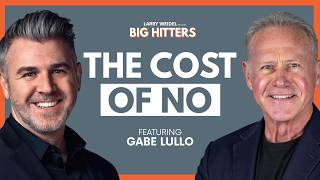
Gabe Lullo built Alleyoop into a $100M+ company by treating rejection as fuel and splitting sales into two roles: setters who book appointments and closers who seal deals. He grew the team fivefold in four years using video cover letters to hire from 4,000 applicants annually, and turned employee content into 1.3 million LinkedIn followers.
Chapters
you don't get battle wounds or scars for all the times you hear no or all the rejection you go through because it's always verbal. If we got scars, if you and I got scars for every time we had a rejection or someone, you know, say no to you, man, we would look like Edward Scissorhands with cuts all over our body. That for sure how you grow and how you persevere and how you become successful.
Welcome to Big Hitters. I'm Larry Weidel and this show is for people who are done playing small. Each week we break down what it actually takes to win at a high level, the decisions, the discipline, the adjustments that separate those who almost do it from those who do it. No theory, no fluff, just straight talk from someone who spent 50 years building winners. If you're serious about momentum, you're in the right place. Let's get into it. Good morning, afternoon, everybody, wherever you are in the world. We're talking with a return visit with Gabe Lulow. Hello, Gabe.
Hey, Larry, thanks so much for having me, man. So excited to see you again. My whole team's a huge fan of yours, so we appreciate the time.
Well, I still have the, the, you know, you get a vibe when you go to a party, you meet people or whatever. And I still have the good vibe from our first interview and was so glad that Joe and the gang at FAME set this back up again because And with a person like yourself, I feel like I always just scratch the surface. And, you know, that's what we'll do today. You know, we'll be scratching the surface, but hopefully it'll be— we'll scratch out some things that'll be useful to people. And so congratulations on all you are doing. You know, I'm just a great admirer of high achievers. Okay, we need more winners in this world and we need to salute winners, usually you get to the top by overcoming, you know, especially, you know, you start out, you're going to try to do great things and you get so much abuse and criticism, like even celebrities. You know, I— one of the greatest songs ever written, or lyrics, is Bob Dylan's Everybody Must Get Stoned, you know, and it doesn't matter who you are, they're going to be throwing rocks at you and It's really unfortunate with the high achievers because the high achievers do so much good in the world and they're kind of anchors against decay and they provide hope and inspiration. So thank you for what you're doing and continuing to fight and to move up because the result of that, Gabe, is that you're going to double, triple, and as Grant Cardone says, 10x or 100x your impact, just simply because you're being yourself and you're continuing to move forward. So congratulations on that and thanks for getting here again. And so let's dig into this, but first of all, tell me where you've been and what you've been doing.
Yeah, well, first off, I appreciate that. I wanna just kind of double down on you as well because you're an inspiration to so many. I love your hat, Hustler, right? It's all about hustling. And it's funny, my mom told me a long time ago, she's like, in your world, you don't get battle wounds or scars for all the times you hear no or all the rejection you go through because it's always verbal, right? But if you look, if we got scars, if you and I got scars for every time we had a rejection or someone say no to you, man, we would look like Edward Scissorhands with cuts all over our body, right? So that for sure is how you grow and how you persevere and how you become successful. So to your point, we've been busy. You know, we've actually quintupled the size of our company in the last 4 years. We've launched new products, new industries, new verticals. We've recruited a ton of new people to join the team. And we're doing this in really a world where AI is shaking up our industry so much that, you know, a lot of people would think we would be going backwards, but we're persevering going forwards. 'Cause we're just doing things a little bit differently. You know, we're trying to humanize the sales, you know, conversation and bring people not just old school ways of selling, but enabling them, leveling up, getting them more advanced in their technology wherewithal, but still bringing the human element and empathy to sales conversations. And we're having a lot of fun.
Yeah, and when you use AI, I mean, AI is fantastic, But when you use it, I think the people that use AI are the ones who realize that AI is never going to replace the human element because a robot's a robot. A tree's a tree, a robot's a robot. And no matter how much you humanize them, you might train the thing to beat me in chess, but it's not going to change me. It's not going to train me or train the robot to where If the robot gets beat 50 times in a row, you know, if the robot ever gets feelings, I think they're going to be vulnerable. You know, everyone says once the vulnerable, you know, they get feelings, you know, we're doomed. I think they're going to be vulnerable when they start getting feelings because that's what we have to deal with all the time. You have to work out these emotions in our head. But just for fun, talk about, explain, dig a little deeper. And you said you've expanded, you quintuple your business, you expand into different markets, you've been hiring more people. How about get, do a, do a little bit more to give people a background of what that means.
Yeah. So in our industry, we do first impressions. We are a sales development company. So essentially companies come to us and say, you know what, I'm too small to build my own sales team, or I'm just starting off and I need some sales, you know, muscles before I bring it in-house. Or I have huge companies like ZoomInfo, Peloton, Adobe. They come to us and say, hey, we have capacity issues and we need to like You know, bring on a new group of people to go out and market our services. So what we do is we make cold calls, we're doing LinkedIn outreach, we're doing email outreach, and we're doing that first call. So we're a sales development firm. We're one of the largest in the world in what we do. We're very proud by that because there's a lot of companies in our space that are very small boutique firms. But we were that one day and then when we started, of course, but we've grown into this huge organization where companies who really need more appointments on their calendar but don't have the time to spend prospecting rely on us to do that. And so that's what we're providing as a service to our clients.
I'm probably gonna have my son Adam call you because he's, uh, he's, uh, launching or expanding a financial services organization up in, uh, North Carolina. And, uh, as you, as you know, the, the, The issue is, you know, salespeople, you know, if you're recruiting, you're selling. And so in that situation, you spend 80, 85, 90% of your time finding someone to talk to and, you know, 10 to 15% of your time actually talking to people. So, you know, you were bright enough, you were smart enough to figure out, hey, and the thinking on that, Gabe, is so applicable to everything we do. You took and broke that apart. The 85% and the 15% and say, we'll get someone to do that. Now, first, that rang a bell with me when you told me that in our original conversation because, but you made it into a business. But when I got in financial services back at the turn of the previous century, one of the big heroes was this lady. She wrote a book called Money Dynamics. She's outta Houston. Her name was Vinita Van Caspel. And she was the one, person operation that the main thing that we did, we figured out how you could build, you know, copy the real estate model and you could, you know, have full-timers with part-timers. You could open offices and you could expand and reach the masses. But, you know, she didn't have that. You know, she, she had figured that out. Nobody, nobody figures everything else out. But she had figured out how you— money works, how to explain it to people. And, you know, she would get her her audience by doing group presentations and all. But again, she had— you have to follow up, you have to set up the appointment. So even back then when we met Veniva Caspell, the reason she was so prolific was she had an assistant. You see this? I see this repeated over and over again. You get a big gunslinger who really knows how to do it. But if they're fortunate enough to find the right-hand person who can actually do the skill of calling people, getting them to come in, set up the appointment, and then even, you know, in our world, if they're licensed, they can, you know, after you get everything settled on, you send them in the other room to write it all up. But that way you can maximize your time. In fact, we've got people who've gone to million-dollar incomes in our business where they've changed, you know, they're fortunate enough to have a 14-year-old daughter that they've trained to do that. But basically you say like, you know, we got one guy who's been like a machine for a decade just making sales after sales after sales. It's like, I mean, this, you know, he has to be a robot. But what it was, he had the 14-year-old daughter. First of all, you know, very, you know, they qualify people very tightly. They know they're really right in the market. But then he had the 14-year-old daughter and his spouse who would get in there and fill up his schedule. And he was just, it was just like shooting ducks in a pond by the time he got there. And that was how he was. So there's always a reason behind how people are productive. And you went in there and you made it into a system. And I think the biggest problem for you is that like people do not know you exist probably, you know, 'cause I think for everyone you get, I don't care if you're a multinational corporation to, you know, a guy starting a lawnmower business down in Kansas, I think for every one you get, there's probably 1,000 people that would sign up with you if they knew you existed. And so maybe this will be helpful to get this word out. And maybe, and what I wanted to do this time was to be a little bit more really specific in what you do in the service you offer because it really unleashes, like, you know, the main people, the entrepreneur, the professional, the go-to person, They've got the energy, the experience, the, you know, the drive and everything. And then it's really a waste for them to be out, you know, because when you prospect, it's like when we went over to UK, we went over to the UK to build a sales force, which in financial services, because there's really nothing like that over there. Unfortunately, we went over there and Enron imploded right as we, we landed basically. And all over the world, financial, you know, countries and their financial regulation departments went into lockdown mode and they started putting out, you can't do this, can't do that, can't do that, because they didn't want an Enron. And they eventually drove us out of the country after about, you know, we just couldn't figure a way to do business, you know. And so, but back then the thing was, we're over there, we have a lineup of million-dollar earners living at the same hotel, this international hotel. But we've got to go out. We've got to be rookies all over again. We got to go out on the streets and we got to meet people. And the fact that you're, a multimillion-dollar earner, the fact that you got 10,000, 20,000 people in your organization and hundreds and hundreds of offices reporting to you, the United States means nothing. Because if you went out and you said that to someone to get an appointment, they say, well, if that's true, why are you talking to me? Why are you over here? And so the big person, you know, I've got a— I'll tell you this. I've got a friend of mine down in Houston. He wanted to expand his organization. And so You know, this kid came in, he thought he'll be perfect for the business. So he said, I'm going to give him the, the, the, the, the, you know, the gold star treatment. So he said, I took him out to lunch, then I took him to my mansion. You know, I had like a $10,000 mansion. Then, you know, I drove him around in my big Mercedes, you know, then we went over and I took him to the airport and I showed him my plane. And then when I took him, I showed him to my office and then I never saw him again, you know, because the kid was just so overwhelmed, you know, he couldn't relate to this. And so all of the prestige and the trappings of success that the top people have are basically useless when it comes to prospecting, you know, unless you, you know, you're getting— it helps you to get in and network in with a big company or something. And so the thing that the service you have is just absolutely priceless. And so I want to make very clear to everyone, that's what you do. And there is a solution for that if you're having that problem. And so talk about also, you know, you said you went into other you've gotten into some other businesses because it is interesting. This is the serial winning aspect of success that I talk about in my book is like whenever you have success, you climb to the top of a mountain, you see all kind of other possibilities that nobody else can see because they're not standing on top of the mountain. And then you pursue those things. They say, what a genius. It's just like, well, you see things because of what you've done that they just don't even see yet. And so where— what kind of things have opened up for you that you've decided to pursue?
That's a great question, and I love hearing your stories. They're epic, man. We're such a big fan of yours. So this, the, this two-part sales process, what I call like the assembly line of sales where you're having setters and you're having closers in two separate functions, really kind of came out through the software business, SaaS software technology. And so they really fine-tuned the SDR, sales development rep role. And then the account executive, which is the closing role. And that two-part, two-man team, if you will, really was born in that space. But now what we're seeing with the advent of COVID and everyone working remotely and us having video communication like you and I are talking today, and people can sell not only services, products, technology, hardware now over Zoom calls versus having to physically, like you were talking about, Boots on the ground in-office appointments. Now other industries are rolling into this strategy where the salesperson is not responsible for both prospecting and closing. We can bring in appointment setters into new industries. So we've launched staffing firms, we've launched companies like your, your sons, which is financial services. We've launched lawn care cleaning companies. We've, we've helped, you know, authors bring more people into the events and book them for events. So there really isn't an industry— and we, by the way, only play in business to business. We're not business to consumer, but there really isn't an industry where we can't serve an appointment setting and closing type structure. And that's what we have done.
Those opportunities have come along. You need more people. And so talk about that, that side of it and, you know, the volume of it, how you've done it, what you've learned from doing that.
Yeah. So we used to have physical offices. We had offices. People came to work, they logged into their computer, And it was interesting because, you know, you're only able to recruit, as you know, locally to the office because of geographical constraints, right? No one wants to drive hours and hours into work. And I walked into the office a few years ago. This is pre-COVID, is about 2017. And every single person that was sitting at their desk working was on a GoToMeeting or a Zoom meeting at the desk. And I'm like, why are we all here sitting on video conferences with people that are not here? It doesn't make sense to me. So we went remote and with remote, it allowed us to have a global reach in recruitment. And now we're in over 22 different countries. Our employees sit all around the world and we've been able to grow and recruit that. Currently today for our business, which we have about 150 sales reps on our sales floor available to our clients to use, we're still having to sort through 4,000 applicants a year. So we're using new technology to do that. We're really excited. It's actually the client, one of our clients, is the technology company that we partner up with. They use us as well for appointment setting, but that wasn't until after we met them. What's interesting they do, uh, Larry, is they actually use video technology to do interviews with the candidate before they even come to us. So instead of looking at a resume, instead of doing a phone call, which is very analog, we're actually seeing a live video cover letter that's completely custom to the job that we're recruiting for. And it really resonates and cuts through the noise. And we've been able to triple our recruitment efforts without having to triple our recruitment staff to manage those candidates.
And so 4,000, you said?
4,000 last year.
That's a lot. Yeah.
And we hired about 2%. So I, and my mom, who's an educator, told me it's harder to get into Harvard than to work at your company. And we're not, these are not multi-six-figure jobs, right? So we are, of course, of course having to sort through some great people, but we have this demand and, and, and I'll turn the page there for a second. A big part of that isn't just putting ads on job boards, it's creating content. So me as the CEO talking to you right now, why is, why is that valuable use of my time? Well, we take this and we have a lot of people knocking on our door saying, I want to work at your company because of the content we're producing. And we're seeing a lot of applicants. Coming to us versus us having to go to them.
As I remember from our early conversation, you encourage people on your staff to use, you know, it's not like, oh, you know, here I am, I'm Gabe. I've got to get— I've got to be Alex Hormozi and Layla or whatever. And then I've got to hire a team of hundreds to put out you know, content for me on all the platforms. And so I can put out 600 posts a week from me, you know, and then you came and you said, well, I can put out a certain amount of content, but how about if we multiply by having people on my team put out content and you get a varied— what I've found is people get sick. I, I've always tried to have guests on my— in my meetings and my thing, because I found that, you know, even Frank Sinatra's kids got sick of hearing him sing, you know, and his band members, you know, when Frank started singing New York, New York, they're not like, oh, you know, a thrill went up and down their spine. It's like, here we go, New York, New York. And because— not again, even though it's fantastic. But, you know, people get sick of the same thing. People get bored. People get tired and you need to hear different voices. And I think you've done— that was such a smart move of tapping into that where you have voices from inside your team posting about what's going on at the team and why it's a great thing. And different, you know, because people, you know, different eyes, they'd see different things and they express it differently. And a lot of times we find they're a whole lot better at it than we are, you know. So, uh, you know, who knows what kind of gift they have until they start doing it. But talk about how you saw that, how you implement that and, and keep that going?
Well, I've always been a lover of Ozzy Osbourne, and when Ozzy Osbourne decided to create a whole new segment of television when he became a reality TV show with about his family, and then now look what's happened with the Kardashians. Look what happened with, you know, all the other shows, you know, that, that are out there. You know, it's a multi-billion dollar industry, which is reality TV. And the reason why it's so popular and people love it is because it's raw, it's real, and whether, whether you can relate to them or You still want to see the watch what's going on on the inside of the house versus just, you know, at the Oscars or on the TV shows. So at the end of the day, we were like, okay, let's just create a documentary about our life. You know, and maybe it's interesting. So we have from appointment setters to campaign directors to recruiters to sales reps to operations everywhere in our company. We have people literally creating content. Now we live mostly on LinkedIn because we're in the B2B space, but right now our LinkedIn creators are producing hundreds of videos and posts organically from their own profiles, which is 10 times, 100 times more than I could ever do by myself. Like, you know, what Hermosi or Vaynerchuk does for his companies. But now I have these, you know, mini influencers that are out there talking about what they do each and every day on camera. We send it out. And it attracts, you know, people to come do what we do. And it's really fun and it's exciting. And, you know, it's pretty much free, you know, if you think about it, because people are spending what, 20, 30 minutes of their week posting some posts. But the aggregation of all of that creates a big amount. We went from 20,000 followers. We tracked this. We looked at everyone's profile on LinkedIn for our entire staff. We've combined it all as about 22,000 followers across all of our profiles of people who worked here. And that was 4 years ago. Now we're at 1.3 million followers across all of our employees' profiles. So a little bit adds to a lot to, to that point.
And it allows your people to kind of build their own brand inside. And you've had, you know, you encourage people doing that and the best and brightest of them wind up going up, up and out the top of your company and starting other things. And you encourage that.
Yeah, we call it Alleyoop Alumni, right? Our name of our company. And we call it Alleyoop Alumni because not everyone, as you know, wants to be a setter or an appointment setter and prospector for the rest of their career. A lot of them want to go into that closing role and make that big money and be a negotiator and a big, big deal and be the, you know, the guy with the jet and the mansion and be the big, the bigwig. So growing into that career, we don't support that. So we support our reps to leave us and we would celebrate it. But interestingly, our clients actually now benefit from that. So our clients have the first right to hire those SDRs and turn them into their future closers. So it's actually a service we provide and they love that versus hiring someone brand new who hasn't proved anything versus hiring someone that they know, like, and trust that's been working on their campaign for a year or two with us. And then they can leave us and legally poach our reps, pay us a staffing fee, and now they're working directly for that company growing their career. And that branding that they, they made, the rep, uh, that they made on LinkedIn and their socials allows them to, to be, uh, significant and valuable to do that.
Yeah. And that's the way that, uh, companies have grown in key areas down through history. And, you know, they'll have a vendor. And when you work with a vendor, you're not working with the CEO and the president all day long because they're doing, you know, they're trying to grow their company. There's someone inside that structure that you want, you spend your time working with. And so, you know, the— is there— and you develop a relationship and then you find out they get— they learn about you, you learn about them. And then if it's really a match, you know, you say, well, You know, there's no reason for us to pay the freight working with this vendor any longer because we've kind of figured out what they do. You know, you hear that from, you know, just about everybody. And so it's like after a period of time, it's like, I've got this down. There's, you know, we've squeezed the orange. We know, we know what it's going to be, but you still have to implement it. And so you go and you say, we don't need the main company, the main vendor. But we still need the implementer. And if you can, if you can find a match and you can make a proposition to them and get them to come on board with you, you know, all the better. And that's what happens in life. You know, that's how people move up. You know, by the way, if you're still listening right now, you're different. You don't just consume content. You're actively looking for an edge. And that's who I built the Big Hitter community for. Not people chasing motivation, people chasing momentum. Not theory, proximity. Proximity to operators who are actually in the arena making real decisions and winning at a high level. Inside Big Hitter, you get conversations we don't have in the podcast, direct access to people who build what you're trying to build in a room that holds you to a higher standard every single week. This isn't a hype group. It's not networking for the sake of networking. It's where serious people go to sharpen their thinking thinking and compress their timeline. If you're done just listening and you're ready to be in the room where it actually happens, head to joinbighitters.com or click the link in the show notes. The right room changes everything. I'll see you inside.
Yeah, exactly. And I learned this the hard way, by the way. I had years ago a client that was doing great. We had 5 reps on the campaign. They built a relationship So if you asked me, Gabe, are they going to renew next year? I would've put all my money on the table and said, absolutely. And then I walked into the office and guess what? All 5 of those guys didn't show up to work that day. They didn't renew and they got a job at the client. And I'm like, oh my goodness. So we can either do the hard way, which is battle in court for stealing my team, or we can turn it into an actual service. And I will tell you that the ladder is a lot less stressful and much more exciting for everybody. But yeah, you're absolutely right.
Well, and the thing that can come back to where, uh, as the company grows, the things, the people who leave know what you're doing now.
Yes. This is such a good point. So I didn't mean to interrupt, but I have 3 clients on our team right now, 3 point of contacts, 3 clients of all people that used to work here. So guess what? They became sales reps. They, they were sales reps here. They grew their career and now they're vice presidents of sales at corporations. And as soon as they became the new VP at that company, they called me up, said, Gabe, we need appointments. I said, okay. And now, now they're our point of contact. Now I have to, you know, make them happy because, but I used to be their boss. So it's pretty cool how when you get some gray hair, uh, things start, start to happen like that.
Well, and the, the thing is that, you know, they go on. And, you know, they're implementing what they were implementing. And of course, they're growing and learning too. But, but you're in the driver's seat still over with multiple clients and learning from all the different type things that are happening with all your different clients. And you're, you know, you are going to be in an accelerated learning seat compared to them. And if the company does well, for one reason or another, you know, there's a good chance they'll come back to you if there's a good relationship. Exactly. Probably, probably not if you had a lawsuit against them.
100%. And again, it's all about relationships in the service business. So you're absolutely right. You're absolutely right.
And so the thing is that as you go in there, you wind up— how do you, how do you stay in touch with, you know, how do you keep up with this, this this organization that you can't eyeball. See, everybody, you know, kneecap to kneecap, eyeball to eyeball, you're key. Most great— I know this— most great revolutions are run by a few people. Most great companies are run by a few people. And the reason is there's so much happening at the top, so many changes in this, that, the other. And I love what Jensen, the head of Invidia said the other day when they asked him about, you know, what time does he have his planning meeting or meet with his planning group? He says, we don't have planning committees. We don't have planning. He said, we're on a spinning world. He said, everything's changing. He said, we never stop planning. Everybody at every phase of the company is planning, planning, planning, changing the planning, adjusting the planning. And so the thing is, in spite of that, as things are changing, You can't keep a huge, unlimited number of people aware of all of, you know, the multiple things you're talking about, but you got to have a few key voices around you. And so how do you stay in touch and in sync with your top people enough to where, you know, the company stays aligned and is understanding? Because as you and I both know, the importance of that is it's not that they do what they need to do. That, you know, you're setting the tone. It's that they do it with a good attitude. And the good attitude usually comes in because they understand, I may not like this, but I understand why Gabe had to do this and it's going to be good for all of us. And they wind up doing it with a much better attitude than they feel like they were, you know, drug, drug down the street and forced to do it, you know?
Yeah, absolutely. I mean, I think that's a great point because doing it remotely has a significant amount of challenges. There's pros and cons to everything, right? And there's a huge debate now, especially As COVID is, you know, very much past us, but people are still trying to figure out, okay, do we do hybrid? Do we do remote? Do we do in-office? And that's a debate for, you know, another time. My feeling is that if you're going to pick one, figure out the ways to support it to make it the best you possibly can. And so we chose remote. So we said, okay, we have to invest in technology and we have to invest in tools and a culture that allows for accountability, allows for measurement, it allows for an understanding that people aren't taking advantage, but on the flip side that we're also driving training and, and, and having a people-to-people relationship. So we buy every single person a camera, a high-definition camera when they work here so they can be on video calls and represent themselves professionally on camera. We create pods or cohorts. So every sales manager has a 10-person team and they're in a video sales floor. So it does feel like you're in an office,, but you're on video communicating, working together, making calls, prospecting, and you're celebrating when you win. You're high-fiving when you win, and then you're laughing when you fall and picking people up as well. So you're not on an island by yourself at home working, because it's, again, it's daunting. You're going to get a lot of rejection in prospecting. So you get punched in the face a lot of times, you know, sometimes you need some help to get, you know, cleaned up a little bit. So the reality is, is we do that through video conferencing and video sales force. And we also do constant training, myself included. We bring guests in, we do a team huddle, we call it our company huddle. We do that 2 to 3 times a week where we're providing training updates, appointment goals, incentives, contest winners. So there is a very much of a team environment happening. It's like a, you know, like a sports team, if you will.
How much of a time drag is that for you? You know, like the way I set up, you know, when I came up, There was not— we didn't even have fax machines, much less cell phones, internet. I mean, hey, Gabe, when we started our financial services, a lot, lot, lot of input, everything. We didn't even have a computer in the home office when I started. And so the thing is, you know, we operated off hardline phone, you know, phones. And I could remember having a 2-page front and back type single space list of phone numbers that I had to keep up with, folded up. When it, when it became tattered, I'd have the secretaries type it. All over again. But, you know, we had to— I get to the point I could never get anybody on the phone because I had to get them. They had to be at a desk or whatever. And so that's where I went to this Monday morning conference call type thing way back. As soon as people got at a distance to where we started moving them around the country and opening off where they couldn't drive in to the office. And because I said, I'm going to do it Monday morning, at 9:00, and if they don't get it, that's their problem. You know what I'm saying? It's like it's going to be probably inconvenient for a lot of people. Who cares? But I'm going to do it. I'm going to knock their socks off. I'm going to have, you know, guests and this, that, the other on there, keep it entertaining. And it's up to them. But I had to make it, you know, like a bicycle, spokes of a wheel. I, you know, every kingdom has to have a capital city. It has to have a throne. You know, if you're a king, you got to have a throne. You got to have a office that everything spirals off out of, mainly so people can find you. You know, I never believed in jet lag management where you're flying here, flying there, flying here, flying here, flying here, because it's like when people need you, how do they find you? You know, and obviously with Walmart, Sam Walton made that work. I don't think he was flying his plane around by a single-engine plane around, Cessna, by himself all the time. But that was what he's doing a lot of the time. But I always was thinking about what happens to all these stores when they want to find him. And nobody knows where the crap this guy is. You know, he's in some hayfield out in Iowa and he's jumping around like a frog from stores to store. But, you know, most of the time you can't, that doesn't work. You got, people are gonna be able to find you. You know, you've got to keep your finger on the pulse of what's happening with all these different nodes or offices. And what kind of, and for that to happen, you cannot be run ragged doing 400 meetings a day. You know, you've got to have some sanity to your schedule. Schedule, how do you bunch up your interaction? Uh, I got— what I had was I would have like 40, 40 or more direct people direct to me running offices. And so I would do my main meeting on Monday morning. Everybody could drive in, would drive in. The rest of it, it was on, on the phone. We didn't have video conferencing then. But the, the rest of it was— that freed up the rest of my week to do one-on-one meetings because I found out with the serious people, you know, they needed probably half hour to an hour. And I wanted my schedule to be maximum free to do as many of those breakfast, lunch, and dinner and in between as needed so I could stay in touch and give them the contact they needed. But as a group, we did it on Monday morning. That's where I still run in the community. I still run a locker room thing where we kick off the week with a bang. Everybody's in there trying to give them You know, we take the guesswork out of is this— does this— is this week going to have a chance to be the best week of your life? Are you going to grow by 1%? You know, we get everybody in there, we strike the match and we get every— we reboot their computers mentally and we, you know, we go to the races. But that's where that came from because I had to make it controllable for me. How do you do it?
Yeah. So I structure everything morning, afternoon. So my mornings are all internal meetings. My afternoons are external meetings. Client-facing, prospect-facing. So, and so when we do morning meetings, we have a senior staff every day. It's a standup, uh, senior staff. It's with all my vice presidents and a couple of directors. And so we get on a Zoom call and we talk about what's going on yesterday, what's going on today, and what do we need planned for tomorrow? And we break it down in those, we call it 4 A's.
Repeat, would you repeat that? Uh, because that's, that's very important. 'Cause when you have it specific like that, you can, you can cover a lot ground in a short period of time and not miss anything. So would you repeat that please?
Yeah, yeah, absolutely. So in the mornings I'm doing internal meetings. I'm, and we do a standup. It's a 30-minute meeting with literally 12 people. So think about that, that, that's really, it's a lot of people in 30 minutes. And we talk about what, what, what we accomplished yesterday. There's some things that, that are important to bring to that call. What we're working on today and what we need tomorrow. And it's really a place where everyone could actually ask each other. I don't always, I don't talk very much on those meetings unless something is needed from me. And everyone uses the 4 A's. This is super important. When I learned this, it changed my dynamics. Here are the 4 A's: Advice, Approval, Awareness, Action. So when you say anything to anybody, You are saying it for those 4 reasons, potentially. Do I need Gabe's advice on this? Hey, I'm going to run this, but I just need your advice, Gabe. What would you do in this scenario? Right? You've done this 100 times. I'm working for you, so I'm going to do it. But what would you do in this scenario? I just need some advice here. Approval. Hey, I need to know if we have the budget for this, or I need to know if I can give this discount, or I need to know if we can, you know, terminate early or something like that. So they're asking me for approval awareness. Hey, I'm just letting you know this is happening. Nothing you need to do, nothing I need to ask you for, but if it comes to your desk, it's, you're now, you're, I'm just planting the seed that you need to be aware. And then action, and action's usually a red flag. Like I need you to be on a call in 2 hours with this client to figure this out. And so those are the 4 A's and we come to the call with those things in mind and we're only talking about what we need to make happen for those 4.
Yeah, that is fantastic. And a long time ago, I went with our staff. We have like a 20-minute meeting on Mondays and we do it on what you're doing on a daily basis. We do it on a weekly basis because it's not that intense. But and they do 3 things in ours. It's like what they did last week, what they, what they didn't get done, the primary things they didn't get done, and then what their priorities are for this week. So, you know, bam, bam, bam. Everybody feels a part of it. Doing something like that makes people— is an invaluable part of your day in terms of making people feel connected.
100%. And then with the company, the macro level, we do 3 standups a week. Uh, this, the whole company comes in and usually those are thematic. We have a theme, whether we're doing a training, whether we're doing announcements, when we're doing new hire, you know, interviews or promotions. Uh, you know, we, we keep it to those typical themes unless we have a guest speaker coming in and we'll probably use the training one for that. So those are the 3 macro meetings we do, and the whole company's invited there, and that gives everyone at least a heartbeat of what I'm saying, what our leaders are saying. And it also gives a lot of face time and a lot of recognition and limelight to the junior employees that are our new rising stars, so they can get used to being in front of a room.
How long are those meetings?
Those are also 30 minutes. I don't like doing meetings more than 30 minutes. If you're in a meeting that's an hour longer, it's usually for a very specific reason, but you, people just start checking out. So I like to be punchy, especially if, you know, there's no really no meeting after the meeting or more meeting before the meeting. Like if the meeting starts, 'cause they're on Zoom, there's an end of the day. So I like those 30-minute punchy meetings unless I'm doing content with you or, or I'm doing like, you know, an in-depth, you know, proposal for a client, then, then, then it could get longer.
And do you find that on a monthly basis in terms of hitting monthly goals and things like that, How do you recognize that? Is there an end of the month meeting or end of the quarter meeting or things like that? Because salespeople, salespeople thrive for recognition and, you know, competition and things like that. So, you know, week, month, year, how do you divide up the cycles of growth? Week, month, year, how do you divide that up?
Great. So every first Monday of every month, we reflect on the previous month. So we talk about what we did, who accomplished it. We do stack rankings. Top 5 reps for doing this, top 5 reps for doing that. And so we have a very recognizing, you know, the winners. We give away incentives, we give away paid time off, promotions, TVs. So the first Monday of every month, we're reflecting on the previous month. And then the first week of the first or the next quarter, I actually do a State of the Union. So I'm doing a State of the Union every quarter, just a quarterly review essentially. Of what we accomplished and what we're planning on doing next quarter. So I do that 4 times a year.
Yeah, fantastic. So it's, it's a way— the way I visualize what you're doing there was the same way I ran our organization. It allows you to get unlimited big because, you know, you, you have your finger on the pulse of what's happening. But I envision it like you give them maximum freedom But you know where they are. It's kind of like you take the dog for a walk, you know, and you have them on a leash, you know, and it's not a short leash, you know, to where they're just like this all the time. You know, they have a long leash, but there is a leash. You know, you see these dog walkers, they get there, they got 40 dogs, you know, 20 in this hand, 20 in this hand. Dogs are going all over, but they never drop the leash.
Right, exactly. 100%. Yeah, exactly. I mean, we don't, we don't want to micromanage, but we don't want to not manage. So there's that balancing act, right, of creating independency. And if you have it, if you're a top producer, if you're in the top 5 every single month for 3 quarters in a row, frankly, you know, I don't, I don't really care what you're doing as long as you're in the top 5 next quarter. For the ones who are typically not producing, we obviously want to take a specific interest in that person, keep an eye on them. And support them as much as we possibly can. So yeah, that's— I would say that doing The Leash is exactly what I just mentioned in the real world.
Yeah. Well, Gabe, the— I don't know how much we talked about it the last time, but this was the year where I set up, you know, I've always done podcasts, I've always done Monday morning meetings, but I turned it into a community, the Big Hitter Community. And that's kind of like more or less a sponsor behind what we're doing here on the podcast. It's like you have to monetize everything. So we do this to pull in people who, 'cause we need winners and not everybody, what you have talked about in where you have these groups of 10. Well, what you have basically, you have communities inside a community, but your whole company, the well-run companies that grow are communities. They say family, but it's like there's a lot dysfunctional families.
You don't love all the people in our family.
There's, there's, there's a lot of families out there that hate each other's guts and will never see each other the rest of their lives. I don't know if family is the great description, but the thing about a community is you decide to be in the community, you have common interests in the community, and you're learning off each other. And the bulk of what you get is not from the guru at the top, but from people going through the similar type things that you're going through. And you just kind of learn by being a part, you know, the peer pressure, peer competition. And a lot of the times if you stall out, it's over some kind of little question that there's a lot of people that know the answer to. And if you're around that, you might not bring up in a meeting with Gabe, with everybody listening. But, you know, it's important that you get that answer. And so because you're stalled out and so in communities, people can ask, they can get the answers they need. They keep moving. They have that kind of subtle peer pressure on them. And what you've got is a group of communities in there at different levels. And in all communities, you know, you have your entry-level people that are just getting, you know, they're kind of getting into it. They're kind of in the more serious level. We have our big hitter level, we have our pro level, and I'm putting together like an inner circle founder level for, you know, the million-dollar, billion-dollar guys. And but But I haven't got that because I don't know. I don't know where I'm going to find the time to do it. But hopefully by the end of the year I'll have that. But the deal is that you have it, you know, it's just like in a company. You have the people who are in the 10, the people that are a level above that, that are not everybody's on the call with you all the time. And so well-run companies have the community, but there's a lot of people out there that don't have a community to plug into. That where, where they can get that kind of input, they can get that kind of semi-pressurized environment for growth, kind of a hothouse environment for growth. And that's what the community is all about. And so what I do is I wrap up these calls now after about 40 minutes, 45 minutes, and then we, you know, this is for the public and I'm going to get you to say a final word to kind of wrap this segment up. And then I'm going to keep you around for another 10 minutes or so and do kind of a mini mastermind little session for my pro-level people inside the community, if you're up for that.
Yeah, let's do it.
All right. Okay. So let's wrap this up. And by the way, anybody interested in joining the community, come on in. We need more winners. We need more winners, folks. We need more people doing great things, inspiring the masses to greatness, making millions of dollars so that other people can make hundreds of thousands of millions of dollars themselves. You heard on here with Gabe. Gabe breaks through. He's making— he's built a huge business for himself and he created an environment where people can come up through. They can sprout out, they can get that built in their own life if they're motivated to do that. And that's what winners do. And so anyway, joinbighitters.com is where you find the information about the community. And so, Gabe, what would you say is a— you'd like people to take away from our conversation today?
I think the big thing is that, you know, if you're out there right now spending 60, 70, 80% of your day prospecting, it doesn't have to be that way. You know, your job, and I'm sure you're more excited and most excited about making money, closing deals, negotiating, doing demos, building relationships, but you're inundated with doing the admin side of getting people's attention just to speak with you. We do that. So if that's something that is a pain point for your business or your sales team, give me a call and I'll go ahead and chat with you about it. It'll be a great conversation.
And they do that exactly. They would do the exact follow-up on that is to go to a website and ask for it or what?
Yeah, you can go to our website, which is aliyoup.io, or you can go to my LinkedIn. You just Google Gabe Lulow, you just Google my name and you can pull up my LinkedIn profile. Shoot me a direct message that you came from the show. We'll give you a nice discount.
Fantastic. And so thanks so much, Gabe. We got to make this a regular thing. I mean, you and I, you and I have too much fun talking together. And, you know, the, the fact that you're on the way up, it's great. You know, this will be a little mini reality show as people get a chance to check in with you periodically and hear what's happening inside the company. Because as you move up, you know, the funny, funny thing, it's like being in a hot air balloon. The higher you go, the faster you can go up because, you know, you're breaking free of gravity. And that's what you're doing in your career. You know, more opportunities are open. You got more power, more leverage. And so, you know, that doubling, tripling, quadrupling, I don't think is over for you.
Thank you. I appreciate that, man. We're just trying to be like you when we get older.
All right, man. Thanks so much. This has been great.
Thank you, Gabe. Thank you, sir.
That's it for this episode. If this resonated with you, do me a favor, share it with someone who's ready to level up. Winners find winners, and the right conversation at the right time can change everything. Want to go deeper? Join us inside the Big Hitter community at joinbighitters.com. That's where the real work happens. And if you haven't already, subscribe so you don't miss the next one. Remember that You're either growing or dying, and there's no standing still. Keep winning, and I'll see you next week.
More from Larry









Rick Jordan on Self-Engineered Proximity, Cyber Security Moats, and Truth-Based Leadership

Fire Fast or Fail Slow: Kevin Brittingham Reveals the One Rule That Built a $100M Empire
