Emotional Pain and Physical Pain Are the Same with Marisa Peer
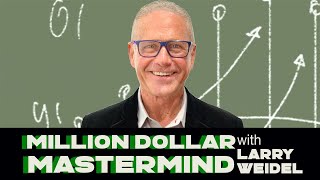
This is a YouTube interview (Million Dollar Mastermind) with Marisa Peer, a British therapist and author, discussing her Rapid Transformational Therapy (RTT) approach. Peer argues emotional pain is equivalent to physical pain and should be treated rapidly; she links many problems (addiction, low confidence, self-sabotage) to a core belief 'I'm not enough' formed in childhood. She describes her 'I can't to I can' school program, its adoption in hundreds of UK schools, and RTT's broader applications (schools, prisons, rehabs). Metadata: video by Larry Weidel, May 2022.
Welcome to this episode of the Million Dollar Mastermind. I'm Larry Weddell. And before we get started, if you want to know exactly how to win again and again, go to Wydell on winning.com webinar now to watch something I've put together for you. Now let's get going into this episode of Million Dollar Mastermind. I'm talking with Marissa Peer. Hello, Marissa.
Hey, how are you?
And it's exciting to talk to you from. Obviously people will pick up the accent. You're from England, but living on the canal in Venice, California.
California, that's it. Yeah, I'm from London, but I live in LA and I love it here.
Yes. And I've got great weather here. And Aspen, you got great weather in la where fortunate people. And so if we help people today, we do a good job. Part of it will be because we're fortunate enough to be in great environments, you know, and that's something that I know you address that setting yourself up for success does not happen by itself. And you work with people to help them take charge of their life. And you've got best selling author of five books. One of them is I Am Enough. Your most recent one is Tell Yourself a Better Lie. Weekly, you reach 25 million people across all platforms. Your YouTube channel has over 610,000 subscribers. You got, you know, your videos average 5,000 views. You've been named Best British Therapist by Men's Health magazine. And so, you know, you've won many, many awards. And you are the founder and creator of a therapy, rapid Transformational Therapy. And you're the only female, only lady to create a therapy like that. Talk about that for a minute.
Yeah. You know, Milton Erickson founded Ericksonian Therapy. Freud, of course, founded a therapy. And you know, men have had it their own way for a long time and women are really good at multitasking. And I, I've been a therapist my entire adult life, but I looked at therapy, but as a lord, you know, if you hurt your back, you go to a chiropractor. He fixes it while you're there. If you break your leg, you go to er, they fix it. If your tooth falls out, you go to a dentist and they fix it. And I never quite understood how you go to a therapist and they say, well, I will fix it. When we've established a relationship of trust and when you come back a lot, eventually I'll take away your pain. And I've always thought emotional pain and physical pain are the same. If you're in emotional Pain because someone your love has left or you can't find love, or you lack confidence, you're being bullied. And that's no different to having the pain of a stomach ulcer or a migraine. And the people seeing you have a duty to get you out of pain as fast as they possibly can. So I didn't understand the model that said it's going to take a long, long time to get you out of pain. In fact, I was recently teaching and I had someone sent to me by a doctor who sent a note saying it's going to take you years to get this girl better. Years and years. And I thought that was a very odd thing to write because she got better in a day. And so I wanted to create a therapy that was rather like going to the emergency room. It would find out the cause of your pain and fix it there and then. And that's why I called it rapid transformation. Rapid transformation theory. Let's find out the cause of your pain. You can't find love because you're rejected as a child. You self sabotage. You procrastinate because you feel unworthy. And that led me to my whole I am enough movement because I understood very fast because my client showed me. But almost all of their pain severed the belief that I'm not enough. Every addict I saw, every alcoholic, every binger, every kleptomaniac, every hoarder all had the same thing. I'm not enough, so I need more. So I thought, well, if that's the presenting problem, I should create something to fix it. And so I set about creating I'm enough. And I've had that in schools across England and America. And it's actually extraordinary what it's doing. So I think I created my own therapy brand because I saw a real need for it more than ever. I think social media is making a whole generation ill and unhappy and dissatisfied. And so I wanted to create something to counterbalance that and talk about your.
Work with children, the program you have, you talked about the I can't to I can challenge and talk about where that is.
Yeah, that was probably the highlight of my career. Makes me very emotional even thinking about it now. So last year we had 600 schools in the UK pick up this I can't to I can challenge. And what it does is it stops a child having a critical voice and instead they have a cheerleader that cheers them on and inspires them with incredible self belief. And it's now in America. I was just reading about it in the Kentucky newspapers yesterday. That so many schools in America saying we love this. It's up for an award. The Times Educational Supplement in England have shortlisted it for an award for the impact it's having on children. Because it helps their confidence, their learning, but it also helps their self esteem. And so many children are bullied or indeed they are the bully or they just don't feel good enough or you know, they're living in what we call a perma crisis. There's been Covid and now there's a war. And I really feel that children are suffering a lot and they internalize it because they don't have many coping skills unlike adults. Because I think I'll go and book a massage or I have some little retail therapy, I'll go on a date with someone. Children don't have many abilities to feel better. So we created this program, the I can't do I Can five day challenge. Where every day they do something to understand that their mind is an incredible tool to help make them feel good. They can have confidence and self esteem and self worth. And if every child had that, I think bullying would cease to exist. I think we'd end the epidemic of addictions and gun crimes and so many things because it's our job to raise the self esteem of the next generation. I mean I'd like to put myself out of business actually. I'd like to make the next generation so happy that they didn't need therapy. Obviously that's not going to happen, but that's always been my motivation.
The thing is that you, by doing this you're raising the concept that dealing with this, like if you're a victim of this, you're going through life and things happen to you and you feel bad and you're internalizing all that. You can learn coping skills, adapting skills like when you're bullied or when you're abused or when things happen or you get in a difficult, tough, tense situation. Some people, a lot of people have grown up where modeling their parents and all they know to do is to lash out and explode and scream and, or in business it comes into quit, you know, they're quitters, you know, they'll just, it gets tough and I just quit, you know, I'm not good enough. But learning how to win, you know, it goes back to the same premise that I've, I've had all along in my book is like learning how to win. Learning how to navigate life successfully, incorporate skills you can learn. Other people are working their way through it, so can you. And that sets off A cascade of change. Because all of a sudden, hope, the light of hope, the candle of hope, is inside their mind. And like what you say. And the other thing is that you can tell them that, but when they do something, they convince themselves that this is true. And that's. That's the important thing, isn't it?
Especially with children, they don't want. They want to be shown, not told. It's show, not tell. And when you show them that the power of their mind can make them happy, can make them healthy, can make them wealthy, that they have huge powers, you know, and it's never too early to do that. I do with my little girl. You know, I never gave her medicine. I'd always say, you know, you can do other things if you got a little headache. I would always help her cope better and be happy. Because, you know, happiness is an inside job. And being happy and being positive is often a choice. And many people don't. You know what you mean I can choose. Of course you can choose. It isn't what happens to you, it's how you feel about it. You know, if the event made us all feel the same, then everyone would feel the same about COVID Oh, it's terrible. I mean, I'm locked in my house. I might as well be in jail. It's awful. But people are saying, well, actually, I really like it. I love not going to work. I've had the best time at home with my kids. Others will say it's been the worst thing that's ever happened. But that's interesting. One situation is viewed by people differently. And so that's the point. It isn't what happens to you that affects you. Even though that may be hard to hear, it's how you feel about what happened to you that affects you. How you feel about what happened to you affects you more than what happened to you. And when you know that, you think, okay, well, but I can choose how I feel. Absolutely. That means that you can choose to feel better about any situation once you know how. And it's always been my life's mission to show people, look, if you change the meaning of what happened to you, it will change your entire life for the rest of your life. And so it's been my passion to show people how to do that rather than just tell them about it.
And you've been doing this how many years?
Oh, my entire adult life. I've been a therapist for 34 years. I created my RTT school in late 2015. So now we're coming up to six years. We've trained 13,000 therapists all over the world. We have it in schools, hospitals, we have it in some children's homes. We've got it everywhere. We're talking about putting into prisons now and rehab facilities, and it's really exciting that people are really noticing what a difference it can make. You know, I was having a conversation last week with a particular prison in the UK about how that would help the inmates. And because, you know, no matter where you are in the world, I mean, look at Nelson Mandela. He was in jail for 25 years. We'll say, I can't do Covid, but he was in jail for 27 years, actually, and came out the Prime Minister of that country because he had the ability to say, well, I can't change what's happening, but I can change what I'm going to do with it. And there are many people like him that show us, oh, you know, if you take back your own power, use certain strategies, change what something means, you know, the way we feel about everything is only down to two things. The pictures we make in our head and the words we construct. And that's actually very good news because you can change the pictures in your head and change the words at any time, and if you do that and make them positive, then that's a massive game changer for anyone and indeed everyone.
Now, let's talk about. Give me an example of the first, you know, first one that comes in your mind, let's say, of someone that you were able to help early in their life and then they've gone on and now they're, you know, 10 or 20 years older and have been able to do great things. Do people stay in touch with you?
Yeah, years ago I worked with a guy who was a trader in the city and he said, I don't know what's wrong with you, but I'm very scared to trade. You know, I enter a trade too late, I leave it too early or I leave it too late and I just can't do it. And I don't understand why. And when I took him back to have a look at why. Because it's always like being a therapist, like being a good detective. You're gathering information, looking for clues, trying to work something out. And the story was very simple, but nevertheless interesting because he said, you know, my parents had two daughters then me, and every time I'd smash, my tongue grips to go, look at your sisters. They're not breaking things, right? They're just combing their doll's hair. I'd raise them, look at your sisters, what's wrong with him? Every day they'd say, what's wrong? Why can't you be like those two girls? They're calm and peaceful and he didn't have the ability to say actually you know what it is? It's called testosterone. And I've got that and they haven't. And I'm supposed to break things and climb trees and jump up and down because it's like having a puppy and saying, why can't you be like a cat? Can't you just curl out in front of the fire and be quiet? And so when he understood that all his life he got this message that said he was wrong, there was something wrong with him, it left him, I go very risk averse. He was really scared to risk, to take risk. And he had a terrible problem dating women because his inner belief was there's something wrong with me. And that day he became an incredible trader. He's bought five houses now. He since got married, he's got three children. He said, you know, it's amazing that I also, I look at my boy when people say, oh, he's so aggressive, I go that it's called testosterone. He's actually acting age appropriate. And I always remember you said to me in my session, everything you did was age. And I use that with my own kids all the time. And so I love the fact that he's gone from having this pervasive feeling there's something wrong with it and what it is to saying, oh, I was always great and I can stay great. And he's incredibly successful. I mean he's one of hundreds of thousands of people. Sometimes their tales are absolutely tragic and other times they're not that tragic. But the tragedy is always that the client doesn't understand. It was just an interpretation. What I see a lot is my dad left when I was 2. He never saw me, therefore I'm not lovable. My mum wanted a boy and she had a third girl, therefore I'm not enough. My mom wanted a boy and my mum wanted a girl and I was the third boy. And so I'm always a disappointment. So when we've been on the planet for not many years at all, maybe eight or five or four, we come to a conclusion, I'm not good enough, this is my fault. You know when a childhood doesn't quite work out right and the kids needs aren't met, they never stop loving the parent, they immediately stop loving themselves and they blame themselves. And that's when they carry that with them their entire life until someone like me comes along and says, oh, let's have a look at this. You didn't actually do anything wrong. You made a decision that you were worthless when you've been on the planet for five years and now it's time to give that up and believe the truth that you are very worthless. Even if you put up for adoption. That doesn't mean you're not the most lovable thing on the planet, but many people have this huge issue with feeling unworthy, undeserving and not enough because of the way they were raised. Even with well meaning parents will say things like oh you should have been a boy or nearly died having you or oh, it's bankrupting me paying your school fees. Not quite getting it that this really impacts more children who because everything is real to them.
Knowing this, you know, having this presented to you from a third party in a, you know, objective way and taking a rational look at like why this is happening to you, you found really helps unravel the confusion, basically the state of losing their state of self defeat that so many people are in. And I can't wait to talk to you more about that. Appreciate you sharing if you enjoyed what you've heard and are dead serious about finding out for yourself exactly how this works in the real world. I've taken the most valuable business lessons I've learned over 40 years. Put them into something for you to watch. Go to whiteellawinning.com webinar now in order to move up as fast as possible. I'm Larry Wydell and I run the Million Dollar Mastermind. Go go Go.
More from Larry









Rick Jordan on Self-Engineered Proximity, Cyber Security Moats, and Truth-Based Leadership

Fire Fast or Fail Slow: Kevin Brittingham Reveals the One Rule That Built a $100M Empire
