Episode 47: From Obscurity in Denmark to a Global Photography Empire with World-Renowned Photogra...
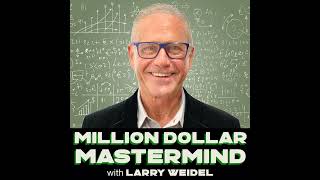
Interview (March 2024) between Larry Weidel and Thorsten von Overgaard about Thorsten's journey from Denmark to building a global photography business. Covers his shift from advertising/Internet entrepreneur to writer/photographer, his Leica-focused portrait and documentary work, worldwide workshops, product line (bags, prints, courses), and his creative/business philosophy of following personal curiosity then finding a business model.
Welcome to this episode of the Million Dollar Mastermind. I'm Larry Weidell and let's get started, let's get going with Thorsten von Overgaard. He's a multiple award winning Danish born writer and photographer. He specializes, this is off his website by the way and he's gonna, we're gonna give you more information about Thorsten because he's almost impossible to describe but specializing in portrait photography and documentary. Known for writings about photography and as an educator. He's also a businessman. He's got a endlessly curious mind and the ability to create ideas and then make them happen and bring them to the market in a big, big way. So. Hello Thorsten.
Hello Larry. Good to talk to you.
Yeah, thanks for joining me. And he's with us today from his new compound he set up in Clearwater and he was telling me that he shut down the Denmark location in the LA location and so now he's a Floridian and enjoying the good life there. Thorsten is a legend in his lifetime in the world of photography, particularly the world of Leica. For, for those of y' all that know anything about cameras, know that Leica has the finest lenses, the finest equipment, the unapologetically super expensive because they cut no corners and thu. Because he spent time on it, he's developed a workshop program that goes all over the world. He's going to be in, he's regularly in New York, but Hamburg, Germany, Paris, London. Where's Porto by the way? I don't know. Porto.
It's Porto. Porto. Porto is in Portugal. Yeah. Nice little city. Yeah.
Okay. Porto, Portugal and Yeah, Nuremberg, Stockholm. You know, he's been everywhere. He's going to be adding new locations. Silicon Valley, Johannesburg, Belgrade. Did I say Amsterdam? Rome, Paris again, London, Cuba, Chicago. He's pretty much been everywhere and if he hasn't done a workshop there, he's headed there. Dubai is on the calendar once things open up here. So he circles the globe regularly every year meeting people and making them, they're making them come alive in their love, create inspiration. Not only teaching the technical side of it, but getting people inspired about themselves and the things they can create. He's got an incredible website and from his travels and working, you know, in the, you know, because if there's things that you need, you can't find. He now has an expanding line of products and camera bags, the finest leather, the finest camera bags, travel bags. He's got just about everything. I hear he's coming out with even cashmere sweaters. He's of Course, he's got his own original prints. He's got also a credible lineup of courses and training that you can buy online on composition, lighting, making portraits. He's got an active mind. I don't know how he does it all. And he started it all out in Denmark in a country where he told me a long time ago, people don't have a lot of motivation and their minds are probably blown, Thorsten, by what you've done. So, Phil, let people. I'll let people let you talk now and kind of explain where you. You're coming from and how you built this worldwide presence and business and reputation and, you know, made money out of your passion.
Yeah, I mean, this is like a new. I feel. It's like I'm a new type of person. On your podcast, it also had your podcast, so. So I'm happy to be here and tell something about it. And, and I think, I mean, for me, what I do is. It's very simple. You could say everything I do is about being me, being true to myself, and doing what I think is fun. And that you could say, that's almost what I always say to people that you start out with, what would you like to do? And then you figure out the business model later. What you tend to learn in schools and in life is that you should choose education and a job. That you can be sure you have a job and be sure you make money. And, and you can say that that's also a strategy. But the problem is that if you become successful in, in something and that's not what you wanted to do, then suddenly that's. That's what you're doing, this life, you know, so instead I'm. I talk more about that. No, you should, you should do whatever you feel you want to do, and then you're going to figure out how it's going to be a business later. And if you do look around through history and through, around the world now, you'll see that people who have been very successful have been people who had a mission, who had an opinion about how things should be, and very often they have been slightly annoying to be around because they had these new ideas. But it turned out to be right and they turned out to get it their way, and they turned out to make a lot of money on it and be happy with it because they accomplished something in their life. So that's, that's kind of like the, the summary of it. And then of course, you could say, how, how. How do you go about. How do you go about with that, you know. And I did start out making a traditional company, you could say when I was 19, I started advertising agency. And then later in 95 I added Internet because I felt Internet. There's something about Internet that is really interesting. I have to be part of this. I don't know what it is yet, nobody knew, but I just know I have to be in the Internet. And for me that was kind of the beginning of the exit from the business world. I mean, I would literally like wear a silk tie and a cardigan and look very business like and have secretaries and telephones and assigned by the road and cars driving around the city with my logo on. But as soon as I went into lynching in 95, I went on a, on a track of like making money on advertising, spending the Internet because Internet was wasting money. And in 2000 I sold that business and worked for the owner for a year and then they kicked me out before they have to pay the big bonuses. And that was because it was like my change to, you could say a new life, a new version. Because then I decided I'm going to be an artist. I'm going to do whatever I feel like. I'm not going to do advertising, I'm not going to do Internet anymore. I'm just going to see what we feel like doing. And one of the things I felt like doing was that I wanted to do interviews with entrepreneurs. So I wanted to have some fresh off preferable. I would have somebody do an interview with somebody who had just left a well paid job and now they're sitting home in the basement and they've been sitting there for two weeks and realized I don't have any, the phone doesn't ring anymore, nobody cares what they're doing and I don't have a paycheck coming in two weeks. So why is it that people like that keep going for five years and I don't go bankrupt or become a success? So I wanted to write articles that was kind of like a guide for how do you, how do you follow your own ideas? How do you build something? I wanted to take photographs where you could see the soul of the person. I wanted to have big preferable full page photographs where you could sit and study the person and see what is this person made of. Like try to understand the person and probably learn something from it. And those photographs I did there was what led into and had more and more editors and people asking, can you photograph this front page? Can you do this? Can you do that? And I resisted for a long Time being a photographer, because I didn't feel I was that important. But in 2005, after doing this for like three or four years, I decided instead of. When people ask, what are you doing? I wouldn't tell. I was doing Wiremax and Internet telephony and all kinds of other projects. I would say, I'm a writer and photographer. And then they were kind of happy with that introduction. And that was the truth of it. That's what I became from that moment. It became more and more photography in the way that digital photography made it very easy to be a photographer and finish stuff fast and deliver it fast. And the writing part, I mean, I always had this idea that would be a famous writer, you know, like Hemingway or something like that. And I never really got into writing novels, but. But when I look at it, I'm actually writing a lot because I'm writing on my articles on my website and writing books about photographing and being an artist and stuff. So I'm kind of like doing that anyways, you know. And then you say, why is is that? I mean, if I. If I look at it, the reason I started the company was 19, was not to have a boss, not to have somebody tell me what to do, because I felt I knew better and I had something I wanted to contribute to the world. And you could say back then, it's totally valid what I did. It was like a good and booming business like that go to 36 people in I think, the first 18 months. But the naive thing was that I almost was. I wanted to make something that was different than everybody else. Like it has to be different. So I would actually study advertising agencies and I would do it differently than they did. Instead of doing. Instead of trying to figure out what do they do that is really smart and incorporate, I would just look at my. Do it differently. So that was not necessarily a great way to do it, but that was the. That was the mindset I had back then. And you could say that's the mindset you could say I was born with. I want to have, like, I want to decide for myself. I want to follow my own mind. And that's basically what I've done ever since. And then I would say I'm more sensible about it now. I'm like, I'm open to successful things from all that I can learn from, but I'm not following anybody else. I'm like, I'm doing things because this is how I want to do it. This is what I want to do and figure out a business model. And sometimes when I figure out the business model, I look at how is it done other places like how do people make money on the things and how can I use that in making money on what I'm doing? So I can also get food and airplane tickets.
Yeah, yeah. When it comes to the practical side of things, there's no reason to be reinvent things that work for other people. You know, like Facebook, you know, copies, Google and you know, you know, you, you imitate success on the practical side. But when it comes to creating content, that's where you followed your own. That's what attracts people. It's not, you know, how they pay their bills or how they buy it and everything. It's, it's the message that comes out. So thank you so much. Great content. Thank you, Thorsten.
Yeah, do that.
Thanks for listening to this episode of Million Dollar Mastermind with me, Larry Widell. If I've helped you in any way, leave us a five star rating and review on Apple podcasts. For more and more information like this, listen to our other Million Dooll Mastermind episodes and check out my WDell Academy YouTube channel and visit us on WDEL on winning.com I'm the Million Dooll Mastermind. And until next time, go, go, go.
More from Larry









Rick Jordan on Self-Engineered Proximity, Cyber Security Moats, and Truth-Based Leadership

Fire Fast or Fail Slow: Kevin Brittingham Reveals the One Rule That Built a $100M Empire
