Episode #637 - Achieving Business Success with Eric J. Gall, Founder at Edison Business Advisors
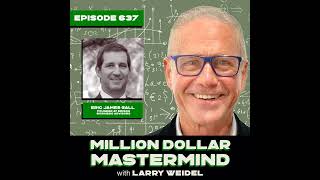
Eric J. Gall, founder of Edison Business Advisors, sold over $250M in businesses and became Florida's top volume-producing broker in 2021 with $32M in deals. He walks through how he shifted from running an investment group to brokering lower-middle-market sales, and what it takes to build buyer trust on bigger transactions.
Questions this video answers
2024-03-11
Episode #637
A little over $32 million in transaction volume in 2021.
Over $250 million of businesses (cumulative).
Chapters
Welcome to this edition of the million Dollar Mastermind podcast. This is where we pick the brains of high achievers from all walks of life and get their hard earned real world insights on winning. I'm your host, Larry Wydell. Folks, we're gonna have some fun this afternoon talking with Eric Gall. Hello, Eric.
Hi, Larry. How are you?
I'm doing great and looking forward to hearing what you've learned along the road in your business career because you've had lots of success. You may be the most decorated, award winning guy I've talked to. So you, you're definitely not somebody who, who operates in a tunnel, you know, hide your light under a bushel. You know, people, people know about you. People find out about you and they're impressed by you. And so, you know, you stand up well under the scrutiny of other eyes and come out on top. You know, I'm just glad I'm not competing with you in anything right now because I get the feeling based off your track record, you'd wind up finding a way to beat me. So.
Well, well, you know, they, you know, there's the art of self promotion, right? Yeah, you know, just look behind me, right?
Well, I guess, but you've got all kind of awards and everything. But the, the deal is hopefully we'll get. I'd start on that, but I really don't know where to start. But it's just like you're well recognized and what most people do that you're not guilty of, which is, you know, most people really are reticent about themselves. And the reason for that, I think part of that is when you grow up, you learn right off the bat that to give the credit to your people and just take the blame yourself. And so you're also. Most leaders are smart enough to realize they wouldn't be successful without their people. And you know, they're smart. You know, we're smart enough to know we didn't do it all. And so it's kind of hard to, you know, be out there shot, you know, unless. Except the narcissist among us, you know, who have no problem, you know, elbowing everybody else off the stage. But most of us, if, if we do anything, it's undersell ourselves. But people want to be a part of something special. They want to be a part of the award winning thing. They want to do business with Award win. Success breeds success. And so finding that balance is, is a, a thing for all of us to figure out. And you like to, you know, you got to promote yourself in this world, you know, or you're going to disappear, drop like a rock in the ocean. And so what, what are the things that, of these things, what are the thing your accomplishments that you're most proud of at this point and then we'll kind of back away from, from that, but from you evaluating your career achievements and milestones, what are the things that, that really give you the biggest pride, satisfaction looking back?
Well, you know, I set a goal probably about seven years ago of becoming the number one broker in the state of Florida. We have the largest state association of brokers in the country in Florida. There's about over 900 of us. So my goal is to be number one, the number one volume producer in the state of Florida. And you know, it took me a while, you know, I had to refine, you know, my craft, had to, you know, look for creative means to, you know, make myself known like we were talking about. And in 2021, I finally reached that pinnacle and achieved number one sales volume in the state of Florida. And I did it in the southwest Florida market, which is the Naples, Fort Myers area. And I was probably the first person to do that outside the major markets. The major markets being, you know, Miami, Fort Lauderdale, Orlando and the Tampa Bay area.
Yeah, and it seems like it'd be easy to do if you could pull in some of Those, you know, 40, 50, 60 million dollar single resident sales, but there's, there's not as many of those over in that part of the country. So what was your volume?
I ended up with a little over $32 million in transaction volume in 2021. But I didn't do it all in southwest Florida. So, you know, you spoke about getting your name out there. So I made affiliations with CPA firms and other referral partners, you know, not only in Florida, but in the Midwest, where, you know, I grew up. And that brought me some deals that I normally, you know, wouldn't seek out here in Florida. And, you know, and that helped push the number up much, much, much higher than I think it would have been if I just focused on southwest Florida.
And so where were you at that? How did you get to the point where you said, okay, I'm going to make a run for the top? And what I was getting ready to talk about was for framework or perspective. Usually we get in a business, we go through a phase where we get competent, we prove to ourselves, hey, I can do this, and then we learn the fundamentals, and then maybe we get a little bit of team or a network we build around that helps support us, you know, some support people sometimes working for us, sometimes just a network of friends and advisors and all. But we put that in place and we get, you know, kind of team that will allow us to expand and multiply. But then you start looking at number one, like, how can I go to number one? And you start to get feisty, you start to get competitive. And so how did you reach that point in your career? What was the ramp up to that?
Well, I really started Business Sales in 2009 in the state of Florida. Before that I ran kind of a little investment group, small private equity group where we purchased and sold some businesses on our own. And after that, you know, I wanted to stay in Florida and my wife wanted to stay in Florida. So we set down roots here and I needed something to do. So I hooked up with a small firm up in Orlando. It was actually, There was roughly 30 brokers in the firm, so it wasn't really small, but they were more focused on the main street business sales. So they were selling a lot of small restaurants, you know, hair salons, you know, maybe some, some larger service companies, service related companies like H vac companies and the like, but mostly Main street mom and pops stuff. So, you know, that's where I, you know, kind of learned the craft, you know, developed my skill set. But I had, you know, that itch to get back to doing a little bit bigger deals, like the ones that I was doing in our investment group and like ones that I actually did with Ford Motor Company prior to even starting that investment group. So in 2014, I decided that I needed to take a different direction so I could move into the little bit of the lower middle market type deals, you know, those, you know, 3, 4, 5, 10, 15, $20 million deals. So what I did is I started my own firm. I had a partner who wanted to join me. He since left. His deal volume wasn't, you know, in the same level as mine. So, you know, he was a little bit uncomfortable and we parted ways amicably. But the, the genesis of it all was the fact that I could rebrand under my own brand and go from being kind of that Main street type broker to someone who was focused on talking to those lower middle market guys. And it worked very well. And obviously and it allowed me in the door of those folks who were selling the businesses that were doing like a million dollars EBITDA Plus, I'm sure.
This is under what the total is, but we see that you sold over $250 million worth of businesses and Various things. But from that you get a real perspective on the marketplace and the people that are in the buy in business. And you get instincts for where the profitability is. And did that help inform your decision about where to go or was it something else?
Well, it, you know, it has a. It has a lot to do with it because when you look at a small Main street deal, you're usually, you know, working with unsophisticated buyers and unsophisticated sellers who are probably going through this process for the first time. Yeah. You know, so they don't really have a process. You have to hold their hands, the entire, you know, process every single step of the way.
Yeah.
Whereas if you go into the lower middle market, businesses, you know, they have their teams of advisors, both on the buy side and the sell side. So, you know, you're working with their cpa, their attorney, you know, maybe even their financial planner, you know, their cfo. So they've got folks who can step in and, you know, work the deal with you. It's still, you know, the same steps. It's still the same process. It's just that there's, you know, a level of sophistication that makes the deal go a little bit smoother, a little bit easier, you know, along that. That process.
Okay, let me just say what you probably don't want to say. All of those people are deal killers. You know, the accountants and the lawyers and everything. They all are. It's, it's, it's. It's a lot, A lot of them are like the journalists trying to make, you know, Woodward and Bernstein at the Washington Post. They're looking for a story to make. Make their careers. And a lot of times people are looking for things to establish, you know, the professional level, God bless them. But so much of that, they're headhunters in the sense that they want to establish that, thank goodness you had me involved, because otherwise you wouldn't have found this and you could have, you know, really got yourself into a mess. And so you find it's. It's hard the bigger, you know, because in financial service, we went through the same thing. It's sexy to say I just had a $3 million sale. Unbelievable. $4 million. Y. But how long did it take you to close that sucker? You know, how. How long did it take to get that whale in the boat? And so every sale comes down to a decision maker. You know, someone's gotta make the decision. And the bigger the decision, you know, the bigger the, you know, the doubt is about the other side. And so any. If you got a whole lot of people say, well, you know, maybe it's not a good idea to pull that thing in the boat. You know, maybe, you know, maybe we should go after a different kind of f. You know, maybe we, you know, maybe this, we're going to regret this, you know, and some you only it does take much of that before you're either stalled out or, you know, you're back to square one. And the smaller deals, somehow it's, you know, it's easier to get to the decision maker and you get to the decision maker, you find out what, what their main concerns are, you satisfy those bam, you know, you can close it and move on. Can't do that in the bigger ones quite as seamlessly, can you?
Well, I mean, the, it's easier to get to the single decision maker, you know, in the smaller deals. And yes, you have a large number of decision makers in the larger deals. And certainly I've come across, you know, the, I'll call it the hero CPA or the hero attorney who jumps in and, you know, pounds their chest and says, this isn't a good deal, you know, and usually, usually you find, you know, that, you know, whatever their, their, you know, hiccups are, you know, are usually easy to overcome. It's just a matter of, you know, communication between buyer, seller, you know, to straighten it all out, you know, or, you know, provide adequate protection for the buyer, you know, if it's their side you know, balking at the deal or adequate protection for the seller if it's their side. Yeah, you know, communication solves so many problems, you know, and I've found if you, you, you know, open those lines of communication early, generally you get around that hero cpa, that hero, you know, attorney, and, you know, you can get the deal done.
But, well, you know, so much come up. So much of business comes down to rubber meeting in the road. You got to sell something, folks. And so when you sell $250 million worth of properties and everything, you pick up some instincts. How would you go about. So we know this is going to be the bigger the deal. We know that's more than likely going to be more of an issue than the smaller deal. So how would you. The best way to solve objections is to head them off in advance. And so it seems like, seems like you were working to head off or to mitigate that being turning into a problem for you right from the beginning by establishing a relationship, getting to know the decision maker right from the beginning. How Would you go about doing that?
Well, I think the most important part of, you know, you know, avoiding pitfalls in the process is properly preparing the business for sale. So we spend a lot more time working with the seller and prepping that business for sale. So when we recast the financials, for example, we're getting into some of the nitty gritty that, you know, a buyer would look, you know, we're not getting quite as deep, you know, into, into, you know, what, what is it a legitimate, you know, add back to the bottom line or what isn't, isn't, you know, we don't get as deep as a buyer, but we get as close as we possibly can so that directionally we're correct. And when a buyer goes and does their financial due diligence, they're not going, oh my gosh, this is way off, or this is a ridiculous add back. And they, you break their trust. Because if you break the buyer's trust, it's hard to get it back.
Yeah.
So, you know, doing that preparation on both the financial side and on the business side. So really doing a deep dive into the operations of the business, how it works, how it operates. If I know that and I can communicate it in the documentation that we provide to a buyer. And then the buyer starts having that discussion with the seller. And the seller re emphasizes exactly what I've told them. You just build confidence quickly in the deal on the buy side. And at that point, you know, you know, you've got. If buyer and seller like and trust one another, you'll get a deal done.
Thanks for listening to the Million Dollar Mastermind. If you felt there were any valuable takeaways from this episode, please take a minute and leave us a five star review. Your feedback is important and really helps us get the word out to a wider audience. Remember, we have a valuable webinar that is after absolutely free. Register for it right now@whiteallonwinning.com thanks for listening.
More from Larry









Rick Jordan on Self-Engineered Proximity, Cyber Security Moats, and Truth-Based Leadership

Fire Fast or Fail Slow: Kevin Brittingham Reveals the One Rule That Built a $100M Empire
