Episode #638 - Building Business Relationships with Eric J. Gall, Founder at Edison Business Advi...
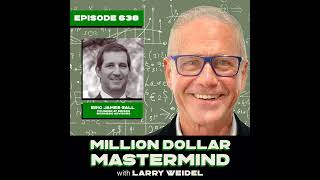
Eric J. Gall of Edison Business Advisors explains how to prepare your business for sale. Start exit planning early, keep transparent financials, and document your processes. Retention bonuses for your management team and recurring revenue models make buyers more confident.
Foreign.
Welcome to this edition of the Million Dollar Mastermind podcast. This is where we pick the brains of high achievers from all walks of life and get their hard earned real world insights on winning. I'm your host, Larry Wydell.
You're liable, you know, you got, you got, you're liable to start more businesses down the road just because you're going to get ideas and if you start another business, you're probably going to be selling something like the rest of us. How would you, how do you think that translates into other businesses and that, that strategy, that knowledge of kind of basically preparing the way in advance avoid, you know, taking the, you know, basically you're getting rid of the, the time bombs of the minefield. You know, you're removing the landline mines out there before you go so you don't get blown up. And what, what is that? That's getting to know the client, the customer, what, what they want. And that's one thing. But what would you say, you know, if you were going to start another business? How, how would you, how do you think that would carry over? You would use that knowledge to your advantage?
Well, certainly if you're going to start a business, you know, in today's environment and I'm making, I'm making you a.
Bit, I'm making you a business consultant right now. So if we have your business consultant, they say, okay, that's great for you, but how can I use that information in my business?
You know, you know, my, my intent is to grow that business and sell it. I mean, the most important thing you can do is, you know, have clean books. You know, the, you know, if you keep your books clean and, you know, they're easily understood by a buyer, it's, it's going to be hard for them to discount you on the riskiness of, you know, those numbers that you provide. You know, the other thing you can do is focus in on, you know, business or industry where you've got like a subscription model and repeat customers or locked in customers because that has value. Because, you know, the biggest concern when you're selling a business for a buyer is, is that the day you come in the door, either you're not going to be, be able to operate it as effectively as the outgoing owner or you're, you know, going to lose customers because they don't know who you are. So if there's any type of, you know, stickiness to that customer base, you know, that's helpful as well. So those are kind of two things that I would look at, you know, right off the bat, you know, and starting a new business.
Well, and kind of the assumption there is that people can pick up from this is right. You can do right from the beginning. You know, the old Stephen Cuffy begin with the end in mind. Start thinking about your exit plan on that business even while you're. You're starting. Because the thing is, you could lose interest, you could max out or you could get a disability or you could die. And then your family has to sell it. And so then what is, what's the exit plan? So what you're saying is, is a great point for us to cover on this. Get people thinking about it. It's like start to think from the beginning about how you're going to move this business on and make it super attractive to other people. And the first thing you say is the clean books.
Yeah, definitely clean books. And you know, to jump on your exit planning. Comments I think the latest statistics I read were, you know, 60% of small business owners right now are baby boomers. So they're looking at retirement, you know, in the next 10 years. And if you look at the number of those people who have exit plans, I think then it's like one in five. So you're gonna. 20% have actually prepared for exit. So, you know, if something comes up, you know, death, divorce, you know, disability or something of that nature, what's the plan for the business and the continuity of that business. So that retirement asset that you built, you know, because a lot of these business owners, they don't have, you know, a pension plan or a retirement plan.
Right.
You know, the sale of their business is that plan. So if something comes up to interrupt that process and, you know, destroys the value in that, you know, retirement plan, I mean, that can really, really harm someone significantly. So we're always, you know, emphasizing the importance of thinking about exit planning or even executing an exit plan. You early because it can be, you know, it can never be too early to create that exit plan, but it can be too late.
Yeah, it's kind of like planning for retirement, you know, it's like. And the thing is, if you have to, if you're doing it late, it's a chore. It's annoying. But it's like turning your homework in early. If you turn your homework, get your homework done early or as you go, it's. You still got to do the work, but it's not as quite the hassle, you know. And so as you're. These are some good things. And then you mentioned having Recurring customers, you know, you have everything where, where you built up a business where they're recurring sales built in there. But management teams, you know, like what buy the business, but what, you know, how much of the management team is going to stay there and what age are they and how motivated are they? What can I do to keep, make them take the transition and, you know, race out of the gate with a new owner rather than just kind of plod along. So what, what advice do you have on that? What have you seen work well on that?
Well, one of the things we've seen, especially in these lower middle market businesses where a solid management team's in place, is, you know, if we can create some type of incentive program either from the buy side or the sell side for retention of those key employees, I mean, that's helped significantly. And we've done everything from on the buy side, right. To putting in, you know, 12 months retention bonuses to on the sell side doing, you know, the same thing. Right. So we'll.
How would that work? How would that work? 12, 12 months?
Well, you know, if, if the individual stays for 12 months or 24 months or what have you, you know, they have, you know, either a vested pension plan, you know, put in place where that money becomes hard. If they leave, they leave with nothing. So, you know, we, we've worked on that, you know, with, you know, other advisors, you know, that we bring into the picture to, you know, help facilitate the deal.
Yeah, talk about what did you pick up that you find you're using? You know, it's like we go to college and we usually wind up in a different major and, but you pick up problem solving, you pick up relationships, you do pick up things and some of the technical knowledge you're going to use along the way. But if we looked at Your experience, your 17 years at Ford Motor Company, what art did you retain from that? What's the most useful from that for you on an ongoing basis in terms of your fundamentals, your platform for operating successfully as you go, you know, through all of these things?
Well, I got, I got my start as a process engineer. Okay. So, you know, for me it's all about, you know, all those checkpoints along the way. Once you've established your process, you know, you, you gather data along the way or you check boxes along the way to make sure you know that you haven't missed anything. So that's a big, let's just talk.
About this, talk about that for a minute. What is a process engineer at a big corporation? Because these, you Know, manufacturing operations, the big time, they're kind of like the airlines in the sense that. Checklist, checklist, checklist, checklist. And the reason why is they work. And you got a lot at stake, and you got to acquire a lot of people and train a lot of new people, so you got to have the checklist. And so talk about where you come in that, you know, explain that to people. And those are things that we all need to think about when we talk about checking our business. If you go in to buy a company and they've got a lot of their processes thought through and they've got tons of checklists to take the guesswork out of how you succeed, that's got to be comforting to a new buyer, don't you think?
Oh, absolutely. You know, you talk about adding value if you can document your processes, you know, for the new owner to take a look at. And everybody knows their roles, their responsibilities in the organization, you know, and they have those metrics in place, you know, to evaluate how not only if things are getting done, but how well they're getting done. You know, that's just a huge boost to a buyer from a confidence level. And, you know, most buyers will pay a slight premium for that. So, you know, there's like 15, you know, core factors that I talk about, you know, when buying a business, you know, that you should look for, you know, definitely documented processes is one of those.
And so when you came in and they started you in that position, you probably got operational pretty fast, didn't you? I mean, because it was a matter of following the. The checklist.
Well, I like to document pretty much everything, so I understand, you know, so if I don't, I. If I don't, you know, know the process coming in, by the time I've executed it once, yeah, I at least have a roadmap right from that roadmap, you know, you just continually improve it as you learn each time through. So that's, you know, that's something that I've, you know, embraced, you know, from day one and, you know, and helping businesses, you know, transact. So. So either from the buy side or sell side, you know, executing that process, refining that process, improving that process, and it's continual. There's always new technology coming in. You know, people are talking about AI right now. I just used two AI tools, you know, this past week to help me, you know, get over stumbling blocks I had in preparing a business for sale. So, you know, those kind of things will always be coming down the pipeline, and you have to Be aware of them, and you have to, you know, integrate them, you know, so you became, you know, you remain both efficient and effective. One of the two things I always want to be is efficient and effective.
And so what two things were those? And how did you learn how to, you know, figure out how to make them work for you, let's say, to make you more effective?
I'll give you a quick example. And it's, it's a new business I have, I just put. Put up for sale, and it's a structural engineering consulting firm. And I repeatedly asked the seller, what's your process? You know, if you had to put it down in steps, can you tell me, you know, and his answer is like, oh, well, you know, the customer calls and I go talk to him. And then we, you know, put a quote together and then, you know, we do work on the project and then, you know, it's done, and then we get paid. Well, can you elaborate on that? Well, no, that's about it, you know, nothing more. No, that's about it, you know, so I went into Chat GPT and I asked, Chat GPT, you know, tell me the, you know, key steps, you know, a structural engineering firm takes in, you know, managing a project, and bang, here's 10 steps and they're detailed.
Wow.
And so I, I send that over to my seller and I'm like, look at this and tell me if this describes what you do, you know, and his answer is like, oh, yeah, that's really good. That's exactly what we do, you know, so there, you know, what was a tough job. He was making a tough job for me, putting into my marketing documentation, you know, a description of what he does. You know, I got through AI that.
Great, and I'll have to remember that story when AI winds up replacing me.
Well, I got some good news for you. I did listen to an economist today talking about that, and he said that he didn't think that AI was going to take away jobs. What he thought was, is that people who use AI are going to take away jobs from people who don't.
Yeah, yeah, that's, that's very believable. That's very easy to swallow because it's really the answer or the take on all new technology. You know, like computers came, the railroad came. You know, the, you know, when all of these things come, you either use it or you get beat by the people who do. You know, it's just like you go to war and you like bows and arrows. And these, these guys got these newfangled rifles and everything. Who, you know, I don't understand all that smoke and everything. Yeah. You're going to get killed by a.
Bow no matter how I look at it.
Your bow and arrow, it's coming no matter.
It's coming no matter what. So you, you know, you're either going to embrace it and incorporate it, you know, and benefit from it.
Yeah.
You know, or you're going to sit there, quiver in fear and die from it.
Yeah. And what was the second thing that you, you, you used it for?
Well, we did the, we did the same thing with the, you know, additional marketing materials to go out to, you know, specific industries. So I wanted data and information specific to industries. And, you know, I went out and I asked the right question like, you know, what are the key steps, you know, to buy a H VAC business, for example? You know, and it, it brought me back information that said, you know, here's how you should, here's the steps you should go through to purchase an H VAC business. Now, I changed those significantly because, you know, the reality is, is, you know, the output's only as good as the input. Right, right. And, you know, it's gathering stuff from the web and it's synthesizing and analyzing it and it's spitting something out. Well, you know, the web's full of a ton of information and misinformation and sometimes it picks up some of that misinformation and spits it back out to you. So AI is great for creating like the backbone or format, you know, for something, you know, to go out, but it's not always perfect. So, you know, there's still a lot of refinement that needs to happen, you know, when you get something back from AI, you know, but I, I created like 12 blog articles and, you know, flip of a switch. But, you know, I did have to spend some time, you know, correcting some of the information in them. But yeah, that's the other piece of AI.
Yeah.
Thanks for listening to the Million Dollar Mastermind.
If you felt there were any valuable.
Takeaways from this episode, please take a minute. Leave us a five star review. Your feedback is important and really helps us get the word out to a wider audience. Remember, we have a valuable webinar that is absolutely free. Register for it right now@whiteallonwinning.com thanks for listening.
More from Larry









Rick Jordan on Self-Engineered Proximity, Cyber Security Moats, and Truth-Based Leadership

Fire Fast or Fail Slow: Kevin Brittingham Reveals the One Rule That Built a $100M Empire
